7 Results for "

Catheter infections

" in MedChemExpress (MCE) Product Catalog:
Products (7)

7 Results for "Catheter infections" in MCE Product Catalog:

1
1 Cited Publications
Cat. No.: HY-16485
CAS No.: 560130-42-9
Synonyms: TD-6424 hydrochloride
Target:  

Antibiotic Bacterial

Research Areas:  

Infection

Telavancin hydrochloride (TD-6424 hydrochloride) is a bactericidal agent that exhibits inhibitory activity against Staphylococcus aureus. Telavancin hydrochloride inhibits bacterial cell wall synthesis by binding to the lipid-linked N-acetylglucosamine-N-muramyl pentapeptide (with a D-Ala-D-Ala terminus), a peptidoglycan precursor, and blocks the transglycosylation and transpeptidation steps. Telavancin hydrochloride disrupts bacterial membrane barrier function, induces dissipation of bacterial membrane potential, and causes leakage of cytoplasmic ATP and potassium ions, with its activity restricted exclusively to bacterial membranes. Telavancin hydrochloride can be used in research on bacterial infections, central venous catheter-related bloodstream infections, and Gram-positive bacterial pneumonia .
loading...
    loading...
Cat. No.: HY-P2292
Target:  

Bacterial Fungal

Research Areas:  

Infection

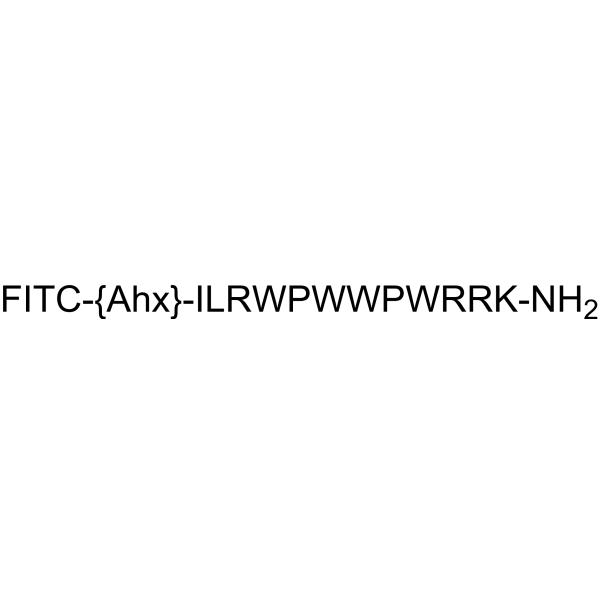
Omiganan, FITC labeled is a peptide-FITC complex composed of Omiganan and a FITC. Omiganan is a bactericidal and fungicidal cationic peptide being developed as a topical gel for prevention of catheter-associated infections. FITC is a derivative of fluorescein for the labeling of amines .
loading...
    loading...
Cat. No.: HY-140696D
CAS No.: 9004-74-4
Purity:  99.61%
Synonyms: mPEG10000-Hydroxy; Polyethylene glycol monomethyl ether 10000
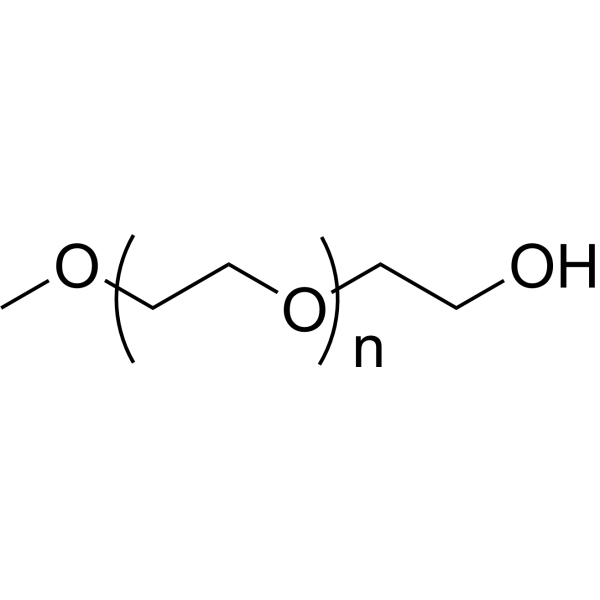
m-PEG10000-OH (mPEG10000-Hydroxy; Polyethylene glycol monomethyl ether 10000) is a hydroxyl-terminated methoxylated polyethylene glycol (PEG-based) compound that serves as a linker for PROTACs. m-PEG10000-OH is applicable to research on healthcare-associated infections .
loading...
    loading...
Cat. No.: HY-105048A
CAS No.: 269062-93-3
Target:  

Bacterial

Research Areas:  

Infection

Omiganan pentahydrochloride is a cationic peptide compound with a broad antibacterial profile. Omiganan pentahydrochloride is capable of inhibiting a variety of bacteria, including yeast, and is active against both gram-positive and gram-negative bacteria. Omiganan pentahydrochloride is able to interact with the bacterial cell membrane, causing the destruction of the cell membrane and the death of the bacteria. Omiganan pentahydrochloride can be used for the study of antimicrobial activity against pathogens commonly associated with catheter-associated infections, including strains with drug-resistant phenotypes .
loading...
    loading...
Cat. No.: HY-P2292A
Target:  

Bacterial Fungal

Research Areas:  

Infection

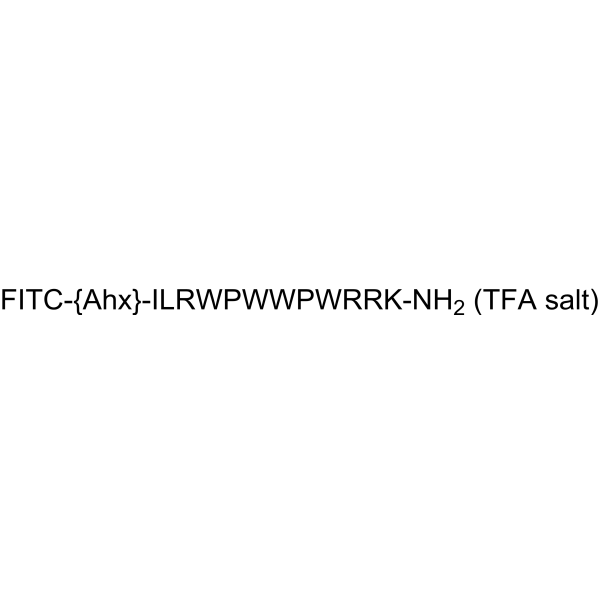
Omiganan, FITC labeled TFA is a peptide-FITC complex composed of Omiganan and a FITC. Omiganan is a bactericidal and fungicidal cationic peptide being developed as a topical gel for prevention of catheter-associated infections .
loading...
    loading...
Cat. No.: HY-187797
CAS No.: 2408524-70-7
Synonyms: GSK3882347
Target:  

Bacterial

Research Areas:  

Infection

Luxafimloc (GSK3882347) is a FimH inhibitor and anti-infective agent. Luxafimloc inhibits the activity of the FimH adhesin molecule. Luxafimloc reduces the bacterial load in the bladder of mice with acute cystitis induced by Klebsiella pneumoniae infection. Luxafimloc can be used in studies related to urinary tract infections, including cystitis, uncomplicated urinary tract infection, complicated urinary tract infection, catheter-associated urinary tract infection, acute urinary tract infection, recurrent urinary tract infection, and chronic urinary tract infection .
loading...
    loading...
Cat. No.: HY-184201
CAS No.: 3123310-71-1
Research Areas:  

Infection

Anti-MRSA agent 44 is a potent anti-methicillin-resistant Staphylococcus aureus (MRSA) agent. Anti-MRSA agent 44 exihibits antibiofilm activity against MRSA. Anti-MRSA agent 44 reduces bacterial counts and biofilm burdens, accelerates wound healing, lowers inflammatory cytokine levels in mouse models. Anti-MRSA agent 44 can be used for the research of MRSA skin wound infection and MRSA catheter-associated biofilm infection .
loading...
    loading...

