



Carbonic Anhydrase
Carbonate dehydratase
Carbonic anhydrase (CA) is a zinc-containing enzyme that catalyzes the reversible hydration of carbon dioxide: CO2 + H2O ⇋ HCO3- + H+. Eight genetically distinct carbonic anhydrase enzyme families (α-, β-, γ- δ-, ζ-, η-, θ- and ι- CAs) were described to date. Carbonic anhydrases are involved in numerous physiological and pathological processes. Many of them are important therapeutic targets with the potential to be inhibited to treat a range of disorders including oedema, glaucoma, obesity, cancer, epilepsy, and osteoporosis.
The carbonic anhydrase reaction is involved in many physiological and pathological processes, including respiration and transport of CO2 and bicarbonate between metabolizing tissues and lungs; pH and CO2 homeostasis; electrolyte secretion in various tissues and organs; biosynthetic reactions (such as gluconeogenesis, lipogenesis, and ureagenesis); bone resorption; calcification; and tumorigenicity. α-CAs are Zn2+ metalloproteins expressed in animals, vertebrates, prokaryotes, fungi, algae, protozoa, and plants. Sixteen mammalian α-CA isoforms are known to be involved in many diseases such as glaucoma, edema, epilepsy, obesity, hypoxic tumors, neuropathic pain, arthritis, neurodegeneration, etc.
Carbonic Anhydrase Isoform Specific Products
-
Carbonic Anhydrase
(193)
View all products
-
CA
(7)
View all products
-
CA I
(68)
View all products
-
CA Ⅱ
(120)
View all products
-
CA IX
(106)
View all products
-
CA XII
(64)
View all products
-
CA VII
(1)
View all products
-
CA VI
(2)
View all products
-
CA VA
(2)
View all products
-
CA VB
(2)
View all products
-
CA XIII
(2)
View all products
-
CA XIV
(2)
View all products
All Product Categories
-
Carbonic Anhydrase Inhibitors
(342)
View all products
-
Carbonic Anhydrase Activators
(6)
View all products
-
Carbonic Anhydrase Modulators
(4)
View all products
-
Carbonic Anhydrase Degrader
(1)
View all products
-
Carbonic Anhydrase Ligands
(3)
View all products
-
Carbonic Anhydrase Proteins
(33)
View all products
-
Carbonic Anhydrase 1 (CA1) Proteins
(1)
View all products
-
Carbonic Anhydrase 2 (CA-II) Proteins
(3)
View all products
-
Carbonic Anhydrase 4 (CA IV) Proteins
(3)
View all products
-
Carbonic Anhydrase 12 (CA-XII) Proteins
(1)
View all products
-
Carbonic Anhydrase Related Products (382)
Related Products (382)

-
Recombinant Proteins (33)
-
Carbonic Anhydrase Isoform Comparison
-
Methazolamide-d6
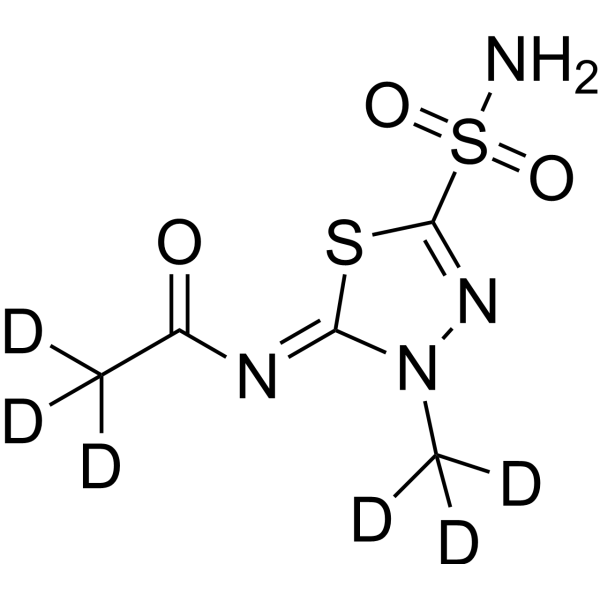 0 ImagesCat. No.: HY-B0553SCAS No.: 1795142-30-1Synonyms: L584601-d6Methazolamide-d6 is the deuterium labeled Methazolamide. Methazolamide (L584601) is a sulfonamide derivative used as a carbonic anhydrase inhibitor with a Ki of 14 nM for human carbonic anhydrase II. Methazolamide, an intraocular pressure-lowering agent, reduces intraocular pressure elevations associated with glaucoma and other ocular disorders.
-
STAT3/CAIX-IN-1
 0 ImagesCat. No.: HY-174457CAS No.: 3053583-60-8STAT3/CAIX-IN-1 is a dual-target inhibitor of STAT3 (Kd: 60.03 μM) and CAIX (IC50: 80.45 nM). STAT3/CAIX-IN-1 induces ferroptosis by increases the levels of reactive oxygen species (ROS) and lipid peroxides. STAT3/CAIX-IN-1 inhibits cell migration, induces apoptosis, and causes cell cycle arrest in MDA-MB-231 cells. STAT3/CAIX-IN-1 can be used for the study of triple-negative breast cancer (TNBC).
-
Multi-target kinase-IN-11
 0 ImagesCat. No.: HY-189488Multi-target kinase-IN-11 (compound 2a) is a potent multi-target inhibitor of Cholinesterase and Carbonic Anhydrase. Multi-target kinase-IN-11 inhibits AChE, BChE, hCA I, and hCA II with IC50 values of 2.78, 4.88, 0.94, and 4.15 μM, respectively. Multi-target kinase-IN-11 inhibits these enzymes through hydrogen bonding and electrostatic interactions with active site residues. Multi-target kinase-IN-11 can be used for research on Alzheimer's disease.
-
CAII-IN-11
 0 ImagesCat. No.: HY-180916CAII-IN-11 (Compound A1) is a dual-target compound that contains a hCA II inhibitor (IC₅₀ = 2 nM) portion and a NO donor portion. CAII-IN-11 also has inhibitory activity against hCA IX, hCA XII, and hCA I, with IC50 values of 6, 3, and 152 nM respectively. CAII-IN-11 significantly increases the intracellular cGMP level in human trabecular meshwork cells. CAII-IN-11 reduces the apoptosis of retinal ganglion cells by reducing oxidative stress (ROS levels), inhibiting astrocytes and the NLRP3 inflammasome activation. CAII-IN-11 has hypotensive activity in rabbit models and can be used for the study of glaucoma.
-
CA IX/VEGFR-2-IN-3
 0 ImagesCat. No.: HY-170551CA IX/VEGFR-2-IN-3 (Compound 6i) is an inhibitor of Carbonic Anhydrase IX and VEGFR-2, with IC50 values of 41 and 48 nM, respectively. CA IX/VEGFR-2-IN-3 exhibits anticancer activity, inhibiting the growth of MCF-7 breast cancer cells (with an IC50 of 22.33 μM) and mouse fibroblast cell line 3T3 (where cell viability is less than 40% at a concentration of 100 μM). CA IX/VEGFR-2-IN-3 can be used for research in the field of cancer treatment.
-
hCAIX-IN-10
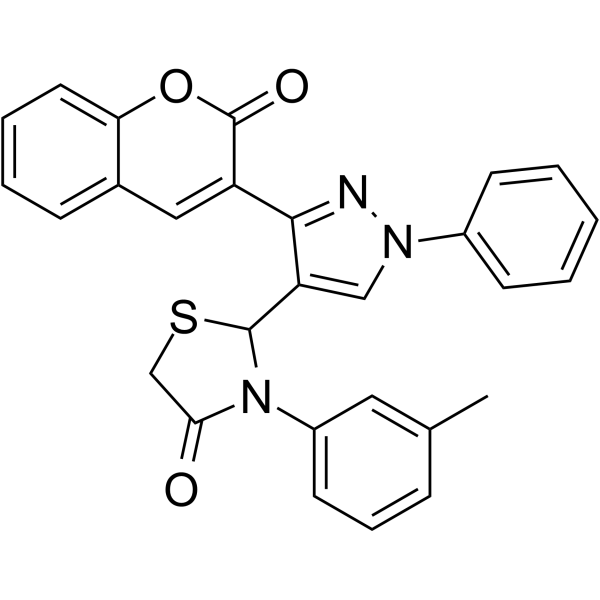 0 ImagesCat. No.: HY-147827CAS No.: 2497504-72-8hCAIX-IN-10 (Compound 6i) is a selective carbonic anhydrase IX and XII inhibitor with Ki s of 61.5 and 586.8 nM for hCA IX and hCA XII, respectively. hCA IX and hCA XII are transmembrane isoforms which have been characterized as biomarkers for several types of tumors. The hCA XII assists in maintenance of acid-base homoeostasis in normal as well as tumor cells.
-
Antitumor agent-163
 0 ImagesCat. No.: HY-163691Antitumor agent-163 (Compound 3) is a photosensitizer used in Molecular-Targeted Photodynamic Therapy (MT-PDT) targeting carbonic anhydrase IX (CAIX). Antitumor agent-163 inactivates CAIX protein via singlet oxygen under 540 nm wavelength light, without affecting internal standard proteins such as α-tubulin, β-actin, and proliferating cell nuclear antigen (PCNA). Antitumor agent-163 induces cell membrane damage, inhibits cell viability (IC50 is 0.2 and 0.05 μM for A549 and U87MG). Antitumor agent-163 exhibits antitumor efficacy in mouse model.
-
hCAXII-IN-4
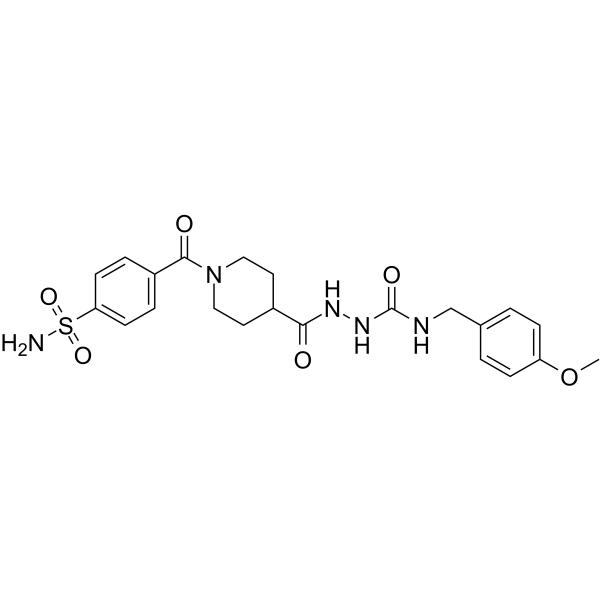 0 ImagesCat. No.: HY-146252CAS No.: 2414601-79-7
-
Carbonic anhydrase inhibitor 6
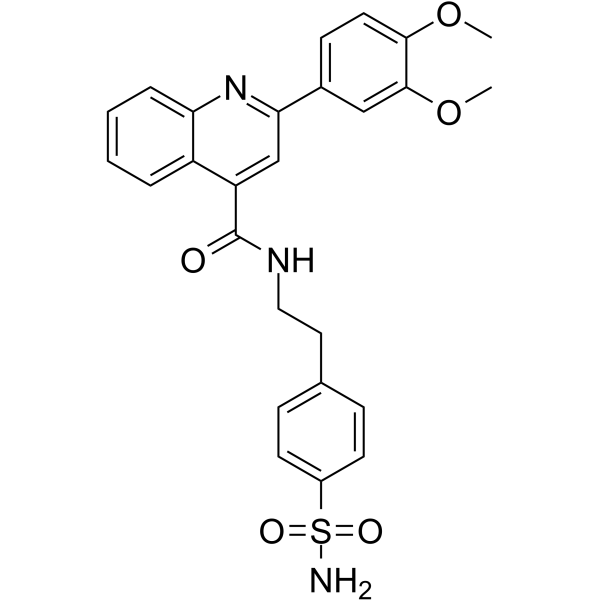 0 ImagesCat. No.: HY-144640CAS No.: 1013213-84-7Carbonic anhydrase inhibitor 6 (compound 9b) is a potent inhibitor of human carbonic anhydrase (hCA), with Kis of 9.7 nM, 35.2 nM, 88.5 nM, and 91.8 nM for hCA IX, hCA II, hCA XII and hCA I, respectively.
-
hCAII-IN-3
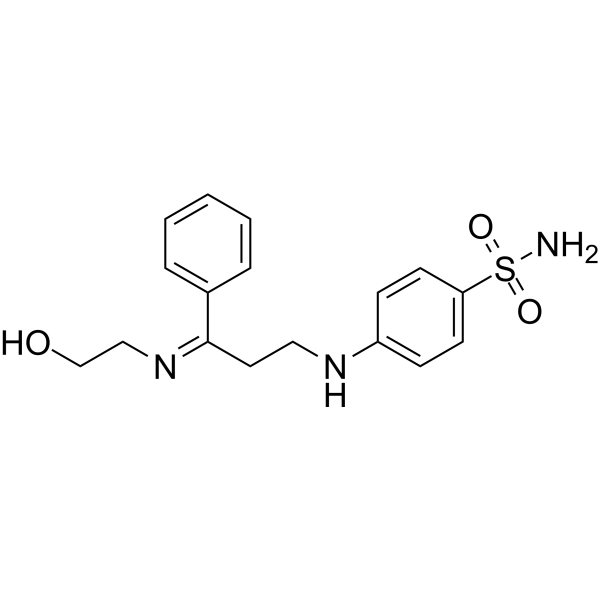 0 ImagesCat. No.: HY-146008CAS No.: 2770927-76-7hCAII-IN-3 (Compound 16) is a human carbonic anhydrase (hCA) inhibitor with Ki values of 403.8, 5.1, 10.2 and 5.2 nM against hCA I, hCA II, hCA IX and hCA XII, respectively. hCA IX-IN-2 shows anticancer activity.
-
CAI/II-IN-8
 0 ImagesCat. No.: HY-161507CAS No.: 3036136-18-9CAI/II-IN-8 (Compound 8) is a hydrazide derivative based on 4-hydroxybenzaldehyde. CAI/II-IN-8 primarily targets human carbonic anhydrase isomerase I (hCA I) and II (hCA II) for inhibition (IC50 = 21.35 ± 0.39 nM (CA I); 7.12 ± 0.12 nM (CA II)). CAI/II-IN-8 inhibits AChE and BChE as well(IC50 = 46.27 ±0.75 nM (AChE); 43.38 ± 0.83 nM (BChE)). ..
-
hCAIX-IN-23
 0 ImagesCat. No.: HY-168030hCAIX-IN-23 (Compound 27) is a human carbonic anhydrase (hCA) inhibitor with Ki values of 10.4 and 8.5 nM for hCA IX and hCA XII, respectively. In addition to inhibiting hCA activity, hCAIX-IN-23 releases NO, exhibiting dual antitumor activity. hCAIX-IN-23 induces apoptosis by regulating mitochondrial caspase activity and the ferroptosis pathway (ferroptosis) through the downregulation of hCA IX and iron-regulatory protein expression. hCAIX-IN-23 is useful for renal cancer research.

-
hCAII-IN-1
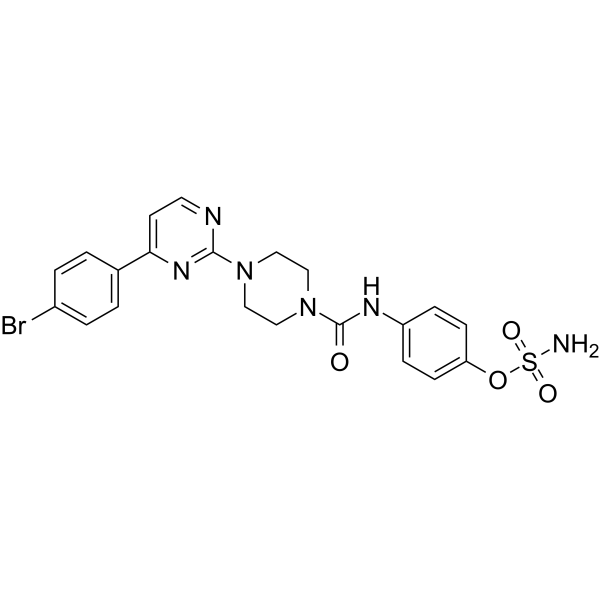 0 ImagesCat. No.: HY-146982CAS No.: 1807520-24-6hCAII-IN-1 (compound 7f) is a potent and selective inhibitor of carbonic anhydrase (CA II/IX) with Kis of 1.2 and 113.6 nM, respectively. hCAII-IN-1 has the potential for the research of cancer diseases.
-
hCAIX-IN-16
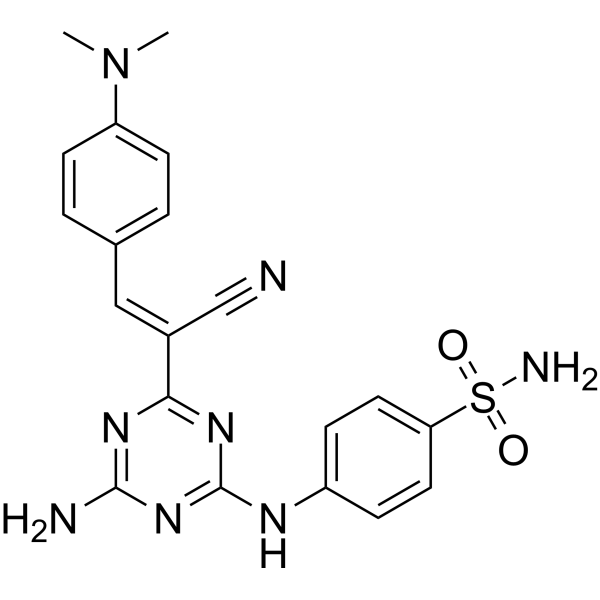 0 ImagesCat. No.: HY-151630CAS No.: 2849348-38-3hCAIX-IN-16 (Compound 12d) is hCA IX inhibitor, with Ki values of 190.0 and 187.9 nM for hCA IX and hCA XII, respectively. hCAIX-IN-16 can arrest the cell cycle of breast cancer MDA-MB-468 in G0-G1 and S phase and induce apoptosis. hCAIX-IN-16 shows good broad-spectrum anticancer activity and can be used for cancer research.
-
hCAIX/XII-IN-15
 0 ImagesCat. No.: HY-173394CAS No.: 69141-46-4hCAIX/XII-IN-15 (Compound 17β) is an inhibitor of hCA IX and hCA XII, with Kis of 0.42 and 4.37 μM respectively. hCAIX/XII-IN-15 has pro-apoptotic effect in multiple myeloma cells.
-
Catechol diacetate
 0 ImagesCat. No.: HY-W272201CAS No.: 635-67-6Catechol diacetate (Compound 15) is a carbonic anhydrase (CA) inhibitor. Catechol diacetate is promising for research of glaucoma, epilepsy, edema, and cancer.
-
CAII/VII-IN-1
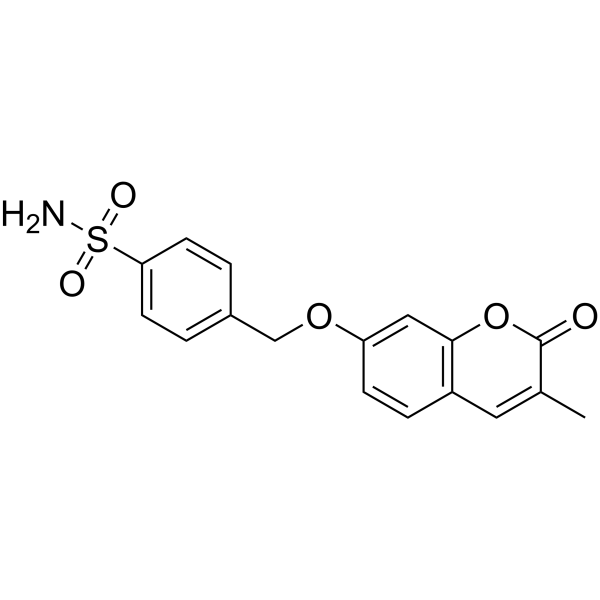
 0 ImagesCat. No.: HY-178362CAS No.: 3085155-69-4CAII/VII-IN-1 is an orally active hCA II (KI = 12.3 nM), and hCA VII (KI = 22.6 nM) inhibitor, showing no significant activity against hCA I. CAII/VII-IN-1 shows excellent neuroprotective activity in vivo Pilocarpine (HY-B0726A)-induced seizure model. CAII/VII-IN-1 can upregulate KCC2 and inhibit mTOR, exerting neuroprotective effects. CAII/VII-IN-1 does not show any significant neurotoxic effects or alterations in liver and kidney function. CAII/VII-IN-1 can be used for the study of epilepsy.
-
hCA-I/hCA-II-IN-1
 0 ImagesCat. No.: HY-174835hCA-I/hCA-II-IN-1 (Compound P4) is a potent dual human carbonic anhydrase I (hCA-I) and human carbonic anhydrase II (hCA-II) inhibitor with Ki values of 0.22 μM and 0.33 μM, respectively. hCA-I/hCA-II-IN-1 can be used in research on diseases related to CA enzymes such as glaucoma, hypertension, and ulcers.




