



Caspase 3
Caspase 3 is a central executioner caspase in apoptosis, where initiator caspase 9 activates executioner caspases 3 and 7 by proteolysis[1]. Mechanistically, caspase 3 cleaves caspase 9 at Asp330 and enhances apoptosis by relieving XIAP-mediated inhibition, rather than directly activating caspase 9[1]. This places caspase 3 within apoptosome-linked feedback control and inhibitor-of-apoptosis regulation, while preserving a distinct functional profile from caspase 7[1][2]. Compared with caspase 7, caspase 3 can cleave caspase 9 under physiologically relevant conditions, and engineered activation studies show that caspase 3 or caspase 7, but not caspase 6 alone, is sufficient to induce apoptosis[1][2]. In disease models, caspase 3 and caspase 7 deletion did not reduce infarct size or ventricular remodeling after transient myocardial ischemia-reperfusion, limiting assumptions about canonical caspase-dependent apoptosis in adult cardiomyocytes[3]. In prostate cancer samples, procaspase 3 and cleaved caspase 3 predicted biochemical progression after radical prostatectomy, supporting their use as apoptosis-related tumor markers[4]. For experimental applications, caspase 3 research benefits from isoform-aware probes because common DEVD-based peptide inhibitors and substrates cannot reliably distinguish caspase 3 from caspase 7[5].
References:
- [1]. Denault JB, et al. Caspase 3 attenuates XIAP (X-linked inhibitor of apoptosis protein)-mediated inhibition of caspase 9. Biochem J. 2007 Jul 1;405(1):11-9. [Content Brief]
- [2]. Gray DC, et al. Activation of specific apoptotic caspases with an engineered small-molecule-activated protease. Cell. 2010 Aug 20;142(4):637-46. [Content Brief]
- [3]. Inserte J, et al. Studies on the role of apoptosis after transient myocardial ischemia: genetic deletion of the executioner caspases-3 and -7 does not limit infarct size and ventricular remodeling. Basic Res Cardiol. 2016 Mar;111(2):18. [Content Brief]
- [4]. Rodríguez-Berriguete G, et al. Prognostic value of inhibitors of apoptosis proteins (IAPs) and caspases in prostate cancer: caspase-3 forms and XIAP predict biochemical progression after radical prostatectomy. BMC Cancer. 2015 Oct 27;15:809. [Content Brief]
- [5]. Batool A, et al. Eukaryotic initiation factor 4E is a novel effector of mTORC1 signaling pathway in cross talk with Mnk1. Mol Cell Biochem. 2020 Feb;465(1-2):13-26. [Content Brief]
All Product Categories
-
Caspase 3 Inhibitors
(129)
View all products
-
Caspase 3 Agonists
(28)
View all products
-
Caspase 3 Activators
(311)
View all products
-
Caspase 3 Modulators
(16)
View all products
-
Caspase 3 Chemical
(1)
View all products
-
Caspase 3 MDM2 Inhibitor
(1)
View all products
-
Caspase 3 Inducers
(26)
View all products
-
Caspase 3 Substrate
(1)
View all products
-
Caspase-3 Proteins
(3)
View all products
-
Caspase 3 Related Products (563)
Related Products (563)

-
Recombinant Proteins (3)
-
Antibodies (3)
-
FGFR-IN-25
 0 ImagesCat. No.: HY-181005FGFR-IN-25 (Compound 19E) is a FGFR inhibitor (IC50s: 1.30 nM and 0.85 nM for FGFR1 and FGFR2, respectively) and radiosensitizer. FGFR-IN-25 effectively reduces the phosphorylation of FGFR1 and its key downstream effectors, pAKT and pERK. FGFR-IN-25 exerts broad-spectrum antitumor activity against gastric cancer, colorectal carcinoma, hepatocellular carcinoma, breast cancer, triple-negative breast cancer, and glioblastoma. FGFR-IN-25, when combined with radiotherapy, synergistically activates the ROS-Caspase-3-GSDME axis, downregulates PD-L1 expression, and induces immunogenic cell death (ICD). FGFR-IN-25 combined with radiotherapy improves the antitumor efficacy.
-
C14-Tri-LAN-Gly
 0 ImagesCat. No.: HY-178899CAS No.: 1863978-06-6C14-Tri-LAN-Gly is a highly selective and potent NOD1 agonist. C14-Tri-LAN-Gly activates NOD1. C14-Tri-LAN-Gly inhibits the expression of cleaved-caspase3. C14-Tri-LAN-Gly upregulates A20 expression. C14-Tri-LAN-Gly protects mice from lethal hepatitis by inhibiting hepatocyte Apoptosis. C14-Tri-LAN-Gly inhibits osteoblastogenesis and promots osteoclastogenesis.
-
ICD inducer-2
 0 ImagesCat. No.: HY-181673CAS No.: 3069681-35-9ICD inducer-2 is a immunogenic cell death inducer. ICD inducer-2 binds to the colchicine binding site on tubulin to inhibit tubulin polymerization. ICD inducer-2 exhibits broad-spectrum antiproliferative activity across multiple cancer cell lines. ICD inducer-2 inhibits cells migration, causes G2/M phase and induces apoptosis. ICD inducer-2 promotes infiltration of CD4+ and CD8+ T cells into the tumor microenvironment. ICD inducer-2 downregulates antiapoptotic protein Bcl-2, upregulates proapoptotic proteins Bax and Bim-1, and increases cleaved caspase 3, cleaved caspase 9, and cleaved PARP levels. ICD inducer-2 overcomes paclitaxel resistance in xenograft models and achieves tumor growth inhibition. ICD inducer-2 can be used for the research of cancer, such as lung carcinoma.
-
RR-171
 0 ImagesCat. No.: HY-P11935CAS No.: 2410535-57-6RR-171 is an amino acid polypeptide and an inhibitor of the Wnt signaling pathway. RR-171 reduces the expression levels of Wnt-1, GSK3β and β-catenin. RR-171 induces apoptosis (Apoptosis) in pancreatic cancer cells, which is characterized by an increased Bax/Bcl-2 ratio, activation of Caspase-3/7/9, and increased Cleaved-PARP; this pro-apoptotic effect can be partially reversed by Z-VAD-FMK (HY-16658B). RR-171 also induces pyroptosis (Pyroptosis) in pancreatic cancer cells, which is manifested by activation of the NLRP-3 inflammasome, activation of Caspase-1, cleavage of GSDMD, upregulation of IL-1β and IL-18, and increased LDH release; this pro-pyroptotic effect can be partially reversed by VX-765 (HY-13205). RR-171 inhibits the viability, proliferation and colony formation of pancreatic cancer cells, with low cytotoxicity against normal cells. RR-171 downregulates the expression of Ki-67 and PCNA in tumor tissues in vivo, with favorable biosafety. RR-171 can be used in studies related to pancreatic cancer.
-
Topoisomerase II-IN-24
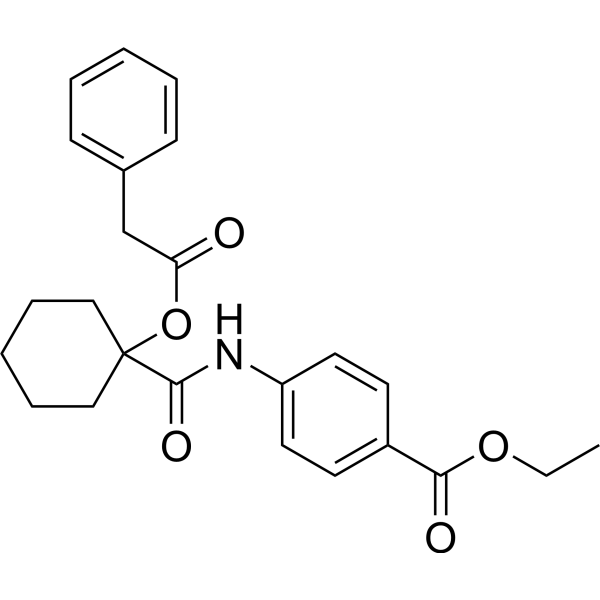
 0 ImagesCat. No.: HY-175853CAS No.: 613254-63-0Topoisomerase II-IN-24 is a Topoisomerase IIα inhibitor with an IC50 of 41.67 μM. Topoisomerase II-IN-24 can inhibit cancer cells proliferation, induce G2/M phase arrest and induce apoptosis. Topoisomerase II-IN-24 can be used for the research of cancer, such as colon cancer.
-
MTAAAR
 0 ImagesCat. No.: HY-P12337MTAAAR is a polypeptide obtained from the enzymatic hydrolysis of C-phycocyanin (HY-D1025) and possesses neuroprotective activity. MTAAAR enhances the activities of antioxidant enzymes SOD, CAT, and GSH-Px, reduces ROS, inhibits apoptosis and acetylcholinesterase (AChE) activity in brain tissue, and decreases protein carbonyl content. In the MPTP (HY-W114750)-induced zebrafish Parkinson's disease model, MTAAAR exhibits antioxidant effects, inhibits autophagy and apoptosis, reverses the loss of dopaminergic neurons and cerebral blood vessels, and alleviates motor deficits. MTAAAR can be used for research on Parkinson's disease.
-
PbQ
 0 ImagesCat. No.: HY-D3153CAS No.: 2693397-68-9PbQ is a tubulin inhibitor (with an IC50 of 5 μM against goat tubulin) and a fluorescent probe for cuprous ions Cu (I). PbQ can penetrate the membrane of peripheral blood mononuclear cells, form a stable 1:1 complex with Cu+ ions, and exhibits low toxicity and good biocompatibility toward macrophage cell lines. In addition, PbQ promotes tubulin degradation and disrupts the microtubule network in lung epithelial cells without affecting actin. PbQ also possesses genotoxicity by forming DNA base adducts, and it can activate caspase-3 and apoptosis-related genes, induce loss of mitochondrial membrane potential, and trigger cell apoptosis. PbQ can be used in studies related to chronic obstructive pulmonary disease.
-
Solanesol (Standard)
 0 ImagesCat. No.: HY-N0576RCAS No.: 13190-97-1Solanesol (Standard) is the analytical standard of Solanesol (HY-N0576). This product is intended for research and analytical applications. Solanesol is an orally active aliphatic terpene alcohol. Solanesol is mainly found in tobacco and other Solanaceae plants. Solanesol induces HO-1 and Hsp70 expression, activates p38 and Akt signaling pathways, and inhibits Apoptosis (reduces caspase-3 and PARP cleavage). Solanesol has antioxidant, anti-inflammatory, and neuroprotective activities. Solanesol can be used in the research of Huntington's disease, alcoholic liver disease, chronic inflammatory pain, anxiety, Alzheimer's disease, and bipolar disorder.
-
HDAC-IN-93
 0 ImagesCat. No.: HY-178104HDAC-IN-93 is a HDAC inhibitor with promising total pan-HDAC inhibitory activity. HDAC-IN-93 demonstrates significant broad-spectrum antiproliferative activity across various cancer cell lines. HDAC-IN-93 induces cell apoptosis along with necrosis. HDAC-IN-93 can be used for the studies of prostate cancer and breast cancer.
-
Jolkinolide B (Standard)
 0 ImagesCat. No.: HY-N0732RCAS No.: 37905-08-1Jolkinolide B (Standard) is the analytical standard of Jolkinolide B (HY-N0732). This product is intended for research and analytical applications. Jolkinolide B is a bioactive diterpene isolated from the roots of Euphorbia fischeriana Steud with oral activity. Jolkinolide B downregulates XIAP, cIAP1, cIAP2, and phosphorylated Akt, upregulates Smac, activates caspase-3 and caspase-9, and inhibits NF-κB, TGFβ/smad3 and JAK/STAT3 pathways. Jolkinolide B exerts comprehensive biological effects including inducing cancer cell apoptosis, suppressing inflammatory responses, improving lung function, alleviating hepatic steatosis and eliminating intracellular Mycobacterium tuberculosis. Jolkinolide B can be used for the research of leukemia, histiocytic lymphoma, asthma, metabolic dysfunction-associated steatotic liver disease and tuberculosis.
-
Anticancer agent 63
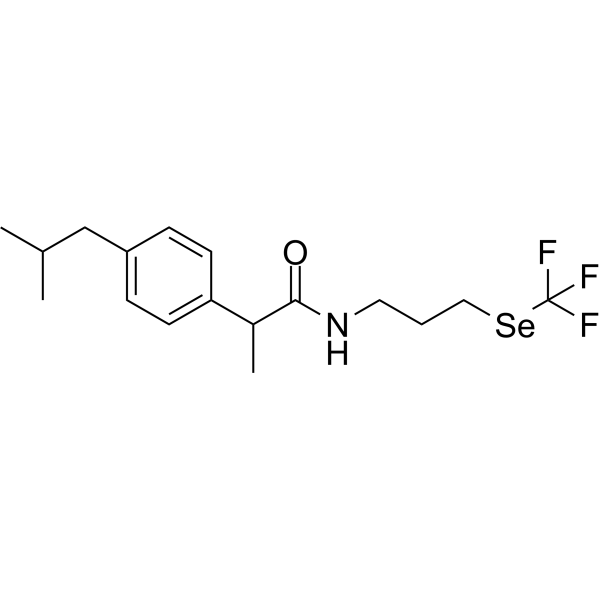 0 ImagesCat. No.: HY-147504CAS No.: 2529657-32-5Anticancer agent 63 (compound 3h) shows active in reducing the viability of different cancer cell lines, including SW480, HeLa, A549 and MCF-7, with IC50 values at 24 h of 4.9, 11.5, 9.4, and 3.4 μM, respectively. Anticancer agent 63 induce apoptosis in MCF-7 cells via down-regulating the expression of Bcl-2 and up-regulating the expression of IL-2 and Caspase-3. Anticancer agent 63 also shows antioxidant activity.
-
KTt-45
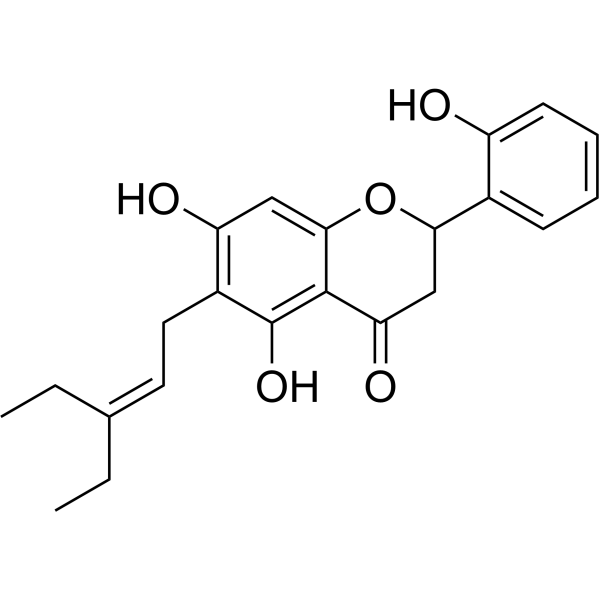 0 ImagesCat. No.: HY-161076CAS No.: 2244987-60-6KTt-45 is a T-type calcium channel blocker. KTt-45 has anticancer effect by inducing apoptosis on HeLa cervical cancer cell line.
-
Tubulin/LSD1-IN-1
 0 ImagesCat. No.: HY-176283Tubulin/LSD1-IN-1 is an effective dual inhibitor of Tubulin polymerization and LSD1 (IC50 = 1.72 μM). Tubulin/LSD1-IN-1 has broad-spectrum antiproliferative activity against cancer cell lines. Tubulin/LSD1-IN-1 inhibits tubulin polymerization by targeting colchicine binding sites, thereby disrupting the microtubule network in gastric cancer cells. Tubulin/LSD1-IN-1 increases the methylation levels of H3K4me1/2 and H3K9me2/3, thereby achieving epigenetic regulation. Tubulin/LSD1-IN-1 induces G2/M arrest, promotes apoptosis, and effectively inhibits colony formation of gastric cancer cells.
-
FKA-9i
 0 ImagesCat. No.: HY-181098CAS No.: 3060515-85-4FKA-9i is an orally active anticancer agent. FKA-9i directly binds to and promotes the degradation of oncoproteins LRPPRC (kd: 7.387 μM), YBX1 (kd: 16.52 μM) and RPN1 (kd: 26.82 μM). FKA-9i inhibits the MAPK signaling pathway and mitochondrial oxidative phosphorylation. FKA-9i also induces cancer cell cycle arrest, apoptosis, mitochondrial dysfunction and ROS accumulation. FKA-9i can be used in the research of tumors such as gastric cancer.
-
MRTX849-amide-C4-(o)-carborane
 0 ImagesCat. No.: HY-182044MRTX849-amide-C4-(o)-carborane is a KRASG12C inhibitor with mutation selectivity for cells expressing KRASG12C. MRTX849-amide-C4-(o)-carborane shows low intrinsic cytotoxicity in cancer cells. MRTX849-amide-C4-(o)-carborane covalently binds to Cys12 of KRASG12C, recruits Hsp70, promotes ubiquitination, and induces proteasome-dependent degradation of the target protein. MRTX849-amide-C4-(o)-carborane inhibits the activity of the downstream ERK signaling pathway and induces apoptosis signaling in cancer cells. MRTX849-amide-C4-(o)-carborane is applicable for the research of KRASG12C-positive cancers.
-
Ac-VDVAD-CHO
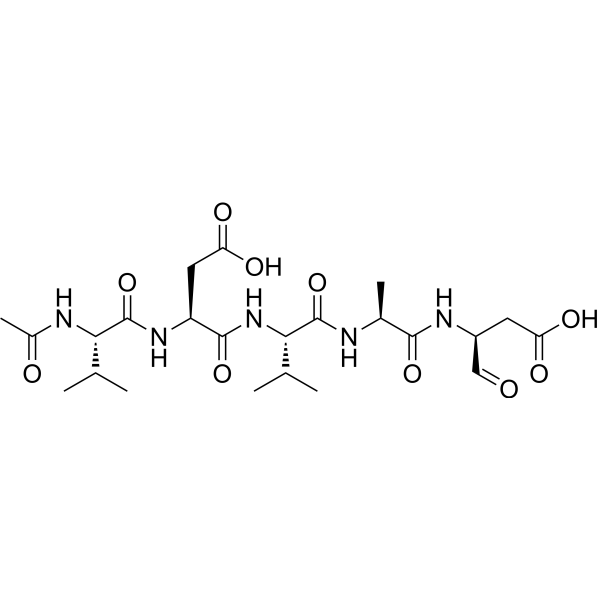 0 ImagesCat. No.: HY-134567CAS No.: 194022-51-0Ac-VDVAD-CHO is a caspase-2/3 inhibitor (IC50: 46 and 15 nM).
-
Ganoderic acid Mk
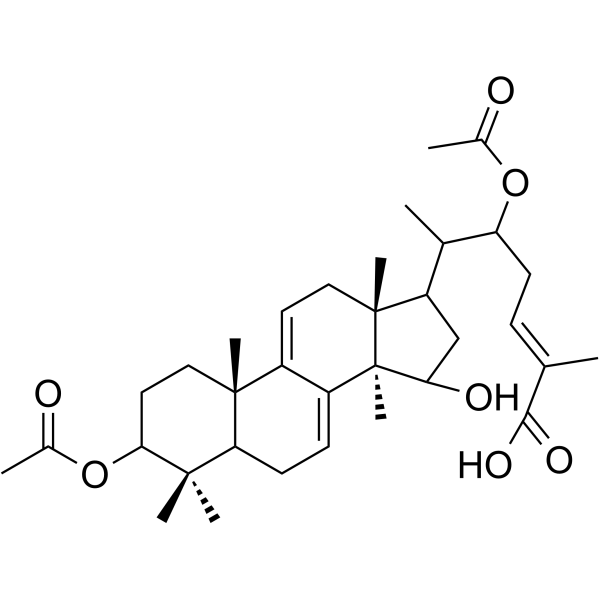 0 ImagesCat. No.: HY-N11643CAS No.: 110024-14-1Synonyms: GA-MkGanoderic acid Mk (GA-Mk) is a triterpenoid acid, that can be isolated from the mycelia of Ganoderma lucidum. Ganoderic acid Mk is efficiently anti-proliferative and can induce apoptosis of HeLa cells by mitochondria-mediated pathway. Ganoderic acid Mk can be used for cervical cancer research.
-
FLC-8
 0 ImagesCat. No.: HY-182937CAS No.: 3100242-36-9FLC-8 is an orally active FLT3 inhibitor with IC50 values of 10.2 nM, 11.6 nM and 24.10 nM against human FLT3-WT, FLT3-G697R and FLT3-N676D, respectively. FLC-8 inhibits FLT3 autophosphorylation and downstream STAT5, AKT and ERK signaling pathways, and induces apoptosis in acute myeloid leukemia (AML) cells. FLC-8 exhibits potent antitumor activity in the MV4-11 xenograft model. FLC-8 can be used for the research of acute myeloid leukemia.
-
MN33-47
 0 ImagesCat. No.: HY-182759MN33-47 is a multi-target anti-tumor compound with broad-spectrum anti-proliferative activity. MN33-47 relieves the inhibition of the mitochondrial apoptosis pathway by downregulating the anti-apoptotic protein Bcl-2, while activating caspase-3 and inhibiting Topoisomerase I activity, thereby promoting its degradation through the ubiquitin-proteasome and autophagy-lysosome pathways. MN33-47 can also induce DNA cross-linking and G2/M cell cycle arrest, inhibit cancer cell migration and activate the mitochondrial apoptosis pathway, thus exerting potent anti-tumor effects. MN33-47 can improve the water solubility of SN-38 (HY-13704), and exhibits dose-dependent tumor growth inhibition effects in CT26 tumor-bearing mouse models without obvious toxic and side effects. MN33-47 can be used in related studies on colorectal adenocarcinoma, cervical adenocarcinoma, hepatocellular carcinoma, alveolar basal epithelial adenocarcinoma, gastric cancer and colon cancer.




