



Caspase 3
Caspase 3 is a central executioner caspase in apoptosis, where initiator caspase 9 activates executioner caspases 3 and 7 by proteolysis[1]. Mechanistically, caspase 3 cleaves caspase 9 at Asp330 and enhances apoptosis by relieving XIAP-mediated inhibition, rather than directly activating caspase 9[1]. This places caspase 3 within apoptosome-linked feedback control and inhibitor-of-apoptosis regulation, while preserving a distinct functional profile from caspase 7[1][2]. Compared with caspase 7, caspase 3 can cleave caspase 9 under physiologically relevant conditions, and engineered activation studies show that caspase 3 or caspase 7, but not caspase 6 alone, is sufficient to induce apoptosis[1][2]. In disease models, caspase 3 and caspase 7 deletion did not reduce infarct size or ventricular remodeling after transient myocardial ischemia-reperfusion, limiting assumptions about canonical caspase-dependent apoptosis in adult cardiomyocytes[3]. In prostate cancer samples, procaspase 3 and cleaved caspase 3 predicted biochemical progression after radical prostatectomy, supporting their use as apoptosis-related tumor markers[4]. For experimental applications, caspase 3 research benefits from isoform-aware probes because common DEVD-based peptide inhibitors and substrates cannot reliably distinguish caspase 3 from caspase 7[5].
References:
- [1]. Denault JB, et al. Caspase 3 attenuates XIAP (X-linked inhibitor of apoptosis protein)-mediated inhibition of caspase 9. Biochem J. 2007 Jul 1;405(1):11-9. [Content Brief]
- [2]. Gray DC, et al. Activation of specific apoptotic caspases with an engineered small-molecule-activated protease. Cell. 2010 Aug 20;142(4):637-46. [Content Brief]
- [3]. Inserte J, et al. Studies on the role of apoptosis after transient myocardial ischemia: genetic deletion of the executioner caspases-3 and -7 does not limit infarct size and ventricular remodeling. Basic Res Cardiol. 2016 Mar;111(2):18. [Content Brief]
- [4]. Rodríguez-Berriguete G, et al. Prognostic value of inhibitors of apoptosis proteins (IAPs) and caspases in prostate cancer: caspase-3 forms and XIAP predict biochemical progression after radical prostatectomy. BMC Cancer. 2015 Oct 27;15:809. [Content Brief]
- [5]. Batool A, et al. Eukaryotic initiation factor 4E is a novel effector of mTORC1 signaling pathway in cross talk with Mnk1. Mol Cell Biochem. 2020 Feb;465(1-2):13-26. [Content Brief]
All Product Categories
-
Caspase 3 Inhibitors
(129)
View all products
-
Caspase 3 Agonists
(28)
View all products
-
Caspase 3 Activators
(311)
View all products
-
Caspase 3 Modulators
(16)
View all products
-
Caspase 3 Chemical
(1)
View all products
-
Caspase 3 MDM2 Inhibitor
(1)
View all products
-
Caspase 3 Inducers
(26)
View all products
-
Caspase 3 Substrate
(1)
View all products
-
Caspase-3 Proteins
(3)
View all products
-
Caspase 3 Related Products (563)
Related Products (563)

-
Recombinant Proteins (3)
-
Antibodies (3)
-
Orsellinic acid (Standard)
 0 ImagesOrsellinic acid (Standard) is an analytical standard of Orsellinic acid (HY-N3126). This product is intended for research and analytical applications. Orsellinic acid is a Benzoic acid (HY-N0216) derivative. Orsellinic acid can be isolated from Chaetomium globosum endophytic on Ephedra fasciculata (Mormon tea). Orsellinic acid blocks PAF-mediated Apoptosis, inhibits caspase-3/7 activation, and PARP cleavage. Orsellinic acid can be used in research of neurons and various tumors (non-small cell lung cancer, breast cancer, neuroblastoma, pancreatic cancer).
-
N-Hydroxyphthalimide (Standard)
 0 ImagesN-Hydroxyphthalimide (Standard) is the analytical standard of N-Hydroxyphthalimide (HY-Y0396). This product is intended for research and analytical applications. N-Hydroxyphthalimide is a blocking agent and catalyst. N-Hydroxyphthalimide promotes oxidation reactions by generating PINO free radicals and activating hydrogen atom transfer processes. N-Hydroxyphthalimide reduces the expression of anti-apoptotic proteins Survivin and Bcl-xL and activates caspase 9 and caspase 3. N-Hydroxyphthalimide induces Apoptosis. N-Hydroxyphthalimide inhibits the phosphorylation of mTOR (Ser2448, Ser2481) and Akt (Ser473). N-Hydroxyphthalimide has anticancer effects against breast and colon cancer.
-
STA-1474 sodium
 0 ImagesCat. No.: HY-13752BCAS No.: 1402907-09-8STA-1474 sodium is an orally active and highly selective HSP90 inhibitor, as well as a phosphate prodrug of the HSP90 inhibitor STA-9090 (HY-15205). STA-1474 sodium disrupts the chaperone function of HSP90 and promotes the degradation of client proteins. STA-1474 sodium inhibits the phosphorylation of Met, Akt and STAT3, thereby blocking related signaling pathways. STA-1474 sodium induces apoptosis and inhibits proliferation of osteosarcoma cells, and triggers the up-regulation of HSP70 and HSP90. STA-1474 sodium induces tumor regression and caspase-3 activation in mouse osteosarcoma xenograft models. STA-1474 sodium can be used in the research of osteosarcoma.
-
Diuvaretin
 0 ImagesCat. No.: HY-N13034CAS No.: 61463-04-5Diuvaretin is an antimalarial agent and a C-phenylated dihydrochalcone. Diuvaretin can be isolated from the roots of U. acuminata. Diuvaretin increases the activity of Caspase-3 and triggers Apoptosis. Diuvaretin exhibits antiparasitic activity against Plasmodium falciparum. Diuvaretin can be used in the research of promyelocytic leukemia and malaria.
-
Linichlorin A
 0 ImagesCat. No.: HY-126757CAS No.: 62462-98-0Linichlorin A is a p27Kip1 ubiquitination inhibitor that blocks p27Kip1 degradation by inhibiting the Skp2-Cks1–p27Kip1 interaction. Linichlorin A shows selective antiproliferative activity against tumor cells. Linichlorin A induces apoptosis in leukemia cells via cytochrome c release, caspase activation and PARP cleavage. Linichlorin A can be used in the study of leukemia, melanoma, cervical cancer and breast cancer.
-
Amsacrine lactate
 0 ImagesCat. No.: HY-13551DCAS No.: 80277-11-8Synonyms: m-AMSA lactate; Acridinyl anisidide lactateAmsacrine lactate (m-AMSA lactate) is a Topoisomerase II inhibitor. Amsacrine lactate intercalates into DNA. Amsacrine lactate induces Ca2+-mediated inactivation of ERK, and also downregulates AKT, promoting MCL1 downregulation mediated by GSK3β via reducing the phosphorylation level of GSK3β. Amsacrine lactate induces Apoptosis by activating Caspase-9 and Caspase-3. Amsacrine lactate blocks HERG potassium channels in the open/inactivated state. Amsacrine lactate induces chromosomal aberrations and sister chromatid exchanges, and inhibits the synthesis of RNA and DNA. Amsacrine lactate exhibits anti-leukemic activity. Amsacrine lactate causes cardiac repolarization disorders, QT interval prolongation, ventricular arrhythmias, and increases the risk of sudden cardiac death. Amsacrine lactate can be used in research related to acute myeloid leukemia, lymphoma and progressive malignancies.
-
Acanthoic acid
 0 ImagesCat. No.: HY-116136CAS No.: 119290-87-8Synonyms: NP1302Acanthoic acid (NP1302) is an orally active pimarane-type diterpenoid. Acanthoic acid is isolated from the root bark of Araliaceae family plant Eleutherococcus senticosus (Siberian ginseng). Acanthoic acid activates LXR and FXR. Acanthoic acid activates the AMPK-LKB1, SIRT1, and p38 MAPK signaling pathways and increases the phosphorylation level of ACC. Acanthoic acid downregulates the expression of SREBP-1, CYP2E1, HIF-1α, and PPARγ, and upregulates the expression of PPARα. Acanthoic acid induces Apoptosis by activating Caspase-3, promoting PARP cleavage, and downregulating Bcl-xL. Acanthoic acid exhibits antioxidant, anti-fibrotic, and hepatoprotective effects. It reduces lipid accumulation and lipogenesis. Acanthoic acid is used in studies on non-alcoholic fatty liver disease, alcoholic liver disease, acute promyelocytic leukemia, and Acetaminophen-induced hepatotoxicity.
-
GNE-140 racemate (Standard)
 0 ImagesCat. No.: HY-100742RCAS No.: 1802977-61-2GNE-140 racemate (Standard) is the analytical standard of GNE-140 racemate (HY-100742). This product is intended for research and analytical applications. GNE-140 racemate is a racemic mixture of (R)-GNE-140 (HY-100742A) and (S)-GNE-140 (HY-100742B), and also a tautomer of GNE-140 (HY-118241). GNE-140 racemate is an orally active lactate dehydrogenase inhibitor, with an IC50 of 3 nM against human LDHA and an IC50 of 5 nM against LDHB. GNE-140 racemate reduces the phosphorylation level and total protein expression of p38 MAPK, and inhibits EGF-induced AKT phosphorylation. GNE-140 racemate decreases lactate production, regulates glycolysis, the pentose phosphate pathway and nucleotide biosynthesis, increases extracellular pH, inhibits cell proliferation, migration and invasion, and induces caspase-3 activation and ROS accumulation. GNE-140 racemate can be used in research related to breast cancer, cystic fibrosis and pancreatic cancer.
-
GO-Y078
 0 ImagesCat. No.: HY-137059CAS No.: 1217503-60-0GO-Y078 is a curcumin (HY-N0005) analog. GO-Y078 activates p38/JNK1/2. GO-Y078 activates the MAPK pathway, Caspase 3/8/9, PARP, AP-1, DR5, and TP53, while inhibiting cIAP-1, XIAP, and NF-κB. GO-Y078 induces sub-G1/G2/M phase arrest and Apoptosis. GO-Y078 impairs angiogenesis. GO-Y078 can be used in research related to osteosarcoma, cervical cancer, oral squamous cell carcinoma, and peritoneal metastasis of gastric cancer.
-
Myrothecine A
 0 ImagesCat. No.: HY-N8508CAS No.: 910292-40-9Myrothecine A is a trichothecene mycotoxin found in M. roridum. Myrothecine A induces apoptosis, promotes the cytochrome c release, PARP-cleavage and phosphorylation of JNK, increases Bax and cleaved caspase-3, -5, and -8 levels. Myrothecine A has anticancer activities and promotes the maturation of DC cells in the microenvironment. Myrothecine A inhibits proliferation of A549, MCF-7, HepG2, and SMMC-7721 cancer cells with IC50s of 95, 70, 60, and 25 µM, respectively.
-
1,3,5-Tricaffeoylquinic acid
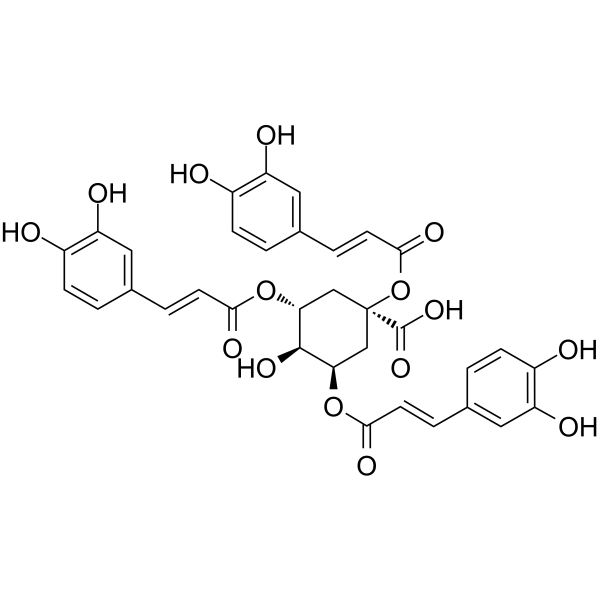 0 ImagesCat. No.: HY-N6926CAS No.: 1073897-80-91,3,5-Tricaffeoylquinic acid acts as an angiogenesis inhibitor and apoptosis inducer, and exhibits anti-HIV activity. 1,3,5-Tricaffeoylquinic acid inhibits the phosphorylation of VEGFR2, ERK, PI3K, Akt and mTOR in the angiogenesis signaling pathway. 1,3,5-Tricaffeoylquinic acid regulates apoptosis-related proteins, upregulates the levels of activated caspase-8, Bax, activated PARP and caspase-3/9, while downregulates the level of Bcl-2. 1,3,5-Tricaffeoylquinic acid inhibits tube formation and shows cytotoxicity against ovarian cancer cells. 1,3,5-Tricaffeoylquinic acid can be used in studies related to ovarian cancer.
-
N-Desmethyl clomipramine-d7
 0 ImagesCat. No.: HY-12388SSynonyms: Desmethylclomipramine-d7; Norclomipramine-d7N-Desmethyl clomipramine-d7 (Desmethylclomipramine-d7; Norclomipramine-d7) is the deuterated-labeled N-Desmethyl clomipramine (HY-12388). N-Desmethyl clomipramine is the orally active major active metabolite of the tricyclic antidepressant Clomipramine (HY-B0457A), possessing multiple activities including anti-inflammatory, antioxidant, antibacterial, and antiparasitic effects. N-Desmethyl clomipramine blocks autophagosome-lysosome fusion, leading to the accumulation of LC3-II, p62, ATG7, WIPI2, and ATG5-12, reactivates the p53/p21 pathway, induces apoptosis through C-PARP and C-CAS3, and inhibits the proliferation, migration, and invasion of renal cancer cells. N-Desmethyl clomipramine inhibits LdTOPIA, inducing R-loop accumulation in the nucleus of Leishmania, ultimately causing parasite death. N-Desmethyl clomipramine can be used for research on depression, metastatic renal cell carcinoma, and leishmaniasis.
-
AD-2646
 0 ImagesCat. No.: HY-124134CAS No.: 366487-89-0Synonyms: LCL102AD-2646 (LCL102), a ceramide analog, can kill leukemic T cells (EC50: 40 μM). AD-2646 triggers the cleavage of caspase-8, -9 and -3, as well as the caspase substrate PARP. AD-2646 is a ceramidase inhibitor. AD-2646 induces an accumulation of endogenous ceramide owing to perturbed ceramide metabolism.
-
PUMAi
 0 ImagesCat. No.: HY-167182CAS No.: 470695-03-5PUMAi is a PUMA inhibitor that disrupts the interaction between PUMA and BCL-xL. PUMAi inhibits apoptosis, caspase-3 activation, WNT/NOTCH pathway activation, and DNA damage. PUMAi protects intestinal tissues in mice, promotes the growth of colonoids, and reduces chemotherapy-induced weight loss, gastrointestinal damage, and lethality. PUMAi alleviates acetaminophen-induced liver injury and cytoplasmic translocation of HMGB1 in mice. PUMAi can be used in studies related to gastrointestinal injury, intestinal injury, and liver injury.
-
Esmolol
 0 ImagesCat. No.: HY-B1392ACAS No.: 81147-92-4Esmolol is an ultra-short-acting cardioselective β1-adrenergic blocker. Esmolol exerts its antiarrhythmic effect by activating Neurokinin 1 Receptor. Esmolol attenuates post resuscitation myocardial dysfunction. Esmolol improves diabetic wound healing by inhibiting aldose reductase and the production of advanced glycation end products and promoting fibroblast migration. Esmolol can be used to study cardiac diseases such as arrhythmias and diabetic foot ulcers.
-
EA-B2L
 0 ImagesCat. No.: HY-169350CAS No.: 1354444-72-6EA-B2L is a GSTP degrader with a DC50 of 48 μM in HeLa cells. EA-B2L inhibits GSTP enzymatic activity, induces dose-dependent GSTP degradation via the ubiquitin-proteasome and autophagy pathways, and does not activate the 20S proteasome subunit. EA-B2L induces dose-dependent apoptosis in cancer cells, a process associated with GSTP degradation, caspase 3 activation, and PARP cleavage. EA-B2L exerts dose-dependent antiproliferative effects on cancer cells with high GSTP expression. EA-B2L can be used in the research of cervical cancer, lung cancer, and fibrosarcoma.
-
Liguzinediol
 0 ImagesCat. No.: HY-121864CAS No.: 909708-65-2Liguzinediol is a Bcl-2 upregulator that exerts cardioprotective effects by upregulating Bcl-2, downregulating Bax and cleaved caspase-3, and inhibiting myocardial apoptosis, RAAS, oxidative stress, inflammation, and extracellular matrix remodeling. Liguzinediol can be used for research on heart failure and cardiac fibrosis.
-
3-Methylxanthine-d3
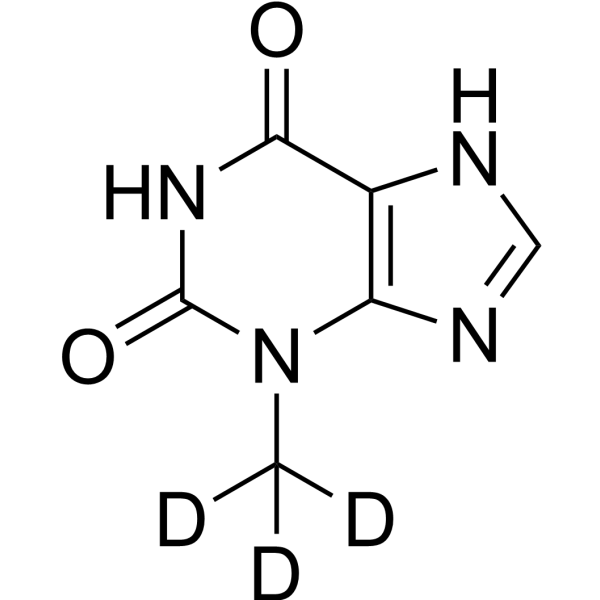 0 ImagesCat. No.: HY-50723S1Purity: 99.61%3-Methylxanthine-d3 is deuterated labeled 3-Methylxanthine (HY-50723). 3-Methylxanthine is a blood-brain barrier-permeable cyclic GMP phosphodiesterase inhibitor, with an IC50 of 920 μM against guinea pig cyclic GMP phosphodiesterase. 3-Methylxanthine relaxes the spontaneous tension of isolated guinea pig tracheal smooth muscle preparations. Through a DRD1-dependent pathway, 3-Methylxanthine upregulates the expression of γH2AX and activated caspase-3, downregulates the expression of Bcl-2, and enhances Cisplatin-induced apoptosis (apoptosis) in ovarian cancer cells both in vitro and in vivo. 3-Methylxanthine induces clonic convulsions in the central nervous system. 3-Methylxanthine is the major metabolite of Theophylline (HY-B0809). 3-Methylxanthine can be used in studies related to ovarian cancer and neurotoxic convulsions.
-
Quinidine (15% dihydroquinidine) (Standard)
 0 ImagesQuinidine (15% dihydroquinidine) (Standard) is the analytical standard of Quinidine (15% dihydroquinidine) (HY-B1751). This product is intended for research and analytical applications. Quinidine (15% dihydroquinidine) is an orally active antiarrhythmic agent. Quinidine (15% dihydroquinidine) reduces the expression level of P-gp, inhibits P-gp-mediated efflux, increases the intracellular accumulation of P-gp substrates, induces PARP cleavage and Caspase-3 activation, and elevates the proportion of Apoptotic cells at the sub-G1 phase. Quinidine (15% dihydroquinidine) exerts sustained block and open-channel block effects on IK(f). Quinidine (15% dihydroquinidine) alters the urinary metabolic ratio of Amphetamine, modulates the Pentylenetetrazol-induced seizure threshold, and regulates the anticonvulsant effect of Dextromethorphan. Quinidine (15% dihydroquinidine) can be used in studies related to uterine sarcoma and seizures.
-
N-Desmethyl clomipramine-d6
 0 ImagesCat. No.: HY-12388S1Synonyms: Desmethylclomipramine-d6; Norclomipramine-d6N-Desmethyl clomipramine-d6 (Desmethylclomipramine-d6; Norclomipramine-d6) is the deuterated-labeled N-Desmethyl clomipramine (HY-12388). N-Desmethyl clomipramine (Desmethylclomipramine; Norclomipramine) is the orally active major active metabolite of the tricyclic antidepressant Clomipramine (HY-B0457A), possessing multiple activities including anti-inflammatory, antioxidant, antibacterial, and antiparasitic effects. N-Desmethyl clomipramine blocks autophagosome-lysosome fusion, leading to the accumulation of LC3-II, p62, ATG7, WIPI2, and ATG5-12, reactivates the p53/p21 pathway, induces apoptosis through C-PARP and C-CAS3, and inhibits the proliferation, migration, and invasion of renal cancer cells. N-Desmethyl clomipramine inhibits LdTOPIA, inducing R-loop accumulation in the nucleus of Leishmania, ultimately causing parasite death. N-Desmethyl clomipramine can be used for research on depression, metastatic renal cell carcinoma, and leishmaniasis.




