



TNF Receptor
Tumor Necrosis Factor Receptor; TNFR
Tumor necrosis factor (TNF) is a major mediator of apoptosis as well as inflammation and immunity, and it has been implicated in the pathogenesis of a wide spectrum of human diseases, including sepsis, diabetes, cancer, osteoporosis, multiple sclerosis, rheumatoid arthritis, and inflammatory bowel diseases.
TNF-α is a 17-kDa protein consisting of 157 amino acids that is a homotrimer in solution. In humans, the gene is mapped to chromosome 6. Its bioactivity is mainly regulated by soluble TNF-α–binding receptors. TNF-α is mainly produced by activated macrophages, T lymphocytes, and natural killer cells. Lower expression is known for a variety of other cells, including fibroblasts, smooth muscle cells, and tumor cells. In cells, TNF-α is synthesized as pro-TNF (26 kDa), which is membrane-bound and is released upon cleavage of its pro domain by TNF-converting enzyme (TACE).
Many of the TNF-induced cellular responses are mediated by either one of the two TNF receptors, TNF-R1 and TNF-R2, both of which belong to the TNF receptor super-family. In response to TNF treatment, the transcription factor NF-κB and MAP kinases, including ERK, p38 and JNK, are activated in most types of cells and, in some cases, apoptosis or necrosis could also be induced. However, induction of apoptosis or necrosis is mainly achieved through TNFR1, which is also known as a death receptor. Activation of the NF-κB and MAPKs plays an important role in the induction of many cytokines and immune-regulatory proteins and is pivotal for many inflammatory responses.
TNF Receptor Isoform Specific Products
-
TNF Receptor
(701)
View all products
-
TNFRSF1A/
CD120a (8)View all products
-
TNFRSF3/
CD18 (1)View all products
-
TNFRSF4
(5)
View all products
-
TNFRSF5/
CD40 (142)View all products
-
TNFRSF6/
Fas/ (2)CD95 View all products
-
TNFRSF7/
CD27 (2)View all products
-
TNFRSF8/
CD30 (3)View all products
-
TNFRSF9/
4-1BB/ (3)CD137 View all products
-
TNFRSF10B/
DR5/ (1)CD262 View all products
-
TNFRSF12A/
TWEAK (5)View all products
-
TNFRSF16/
NGF Receptor/ (1)CD271 View all products
-
TNFRSF18/
GITR/ (6)CD357 View all products
All Product Categories
-
TNF Receptor Inhibitors
(903)
View all products
-
TNF Receptor Agonists
(35)
View all products
-
TNF Receptor Antagonists
(25)
View all products
-
TNF Receptor Activators
(80)
View all products
-
TNF Receptor Modulators
(8)
View all products
-
TNF Receptor Inducers
(11)
View all products
-
TNF Receptor Controls
(4)
View all products
-
TNF Receptor Ligands
(2)
View all products
-
TNF Receptor Superfamily Proteins
(282)
View all products
-
TNF Receptor Related Products (1268)
Related Products (1268)

-
Recombinant Proteins (282)
-
Antibodies (23)
-
TNF Receptor Signaling Pathway
-
TNF Receptor Isoform Comparison
-
Tolinapant dihydrochloride
 0 ImagesCat. No.: HY-109565BCAS No.: 1799328-50-9Synonyms: ASTX660 dihydrochlorideTolinapant dihydrochloride (ASTX660 dihydrochloride) is an orally active cIAP1/2 and XIAP antagonist, with an IC50 of < 40 nM against XIAP and an IC50 of <12 nM against cIAP1. Tolinapant dihydrochloride triggers TNFα-dependent Apoptosis in cancer cells. Tolinapant dihydrochloride inhibits tumor growth in mouse xenograft models. Tolinapant dihydrochloride can be used in research related to breast cancer, melanoma, lymphoma, multiple myeloma, acute lymphoblastic leukemia and advanced solid tumors.
-
TNFR1-IN-1
 0 ImagesCat. No.: HY-P11833CAS No.: 3053447-54-1TNFR1-IN-1 is a selective TNFR1 inhibitor with a Kd of 0.1 nM for hTNFR1. TNFR1-IN-1 inhibits TNFα-induced NF-κB signaling, with an IC50 value of 1.2 nM. TNFR1-IN-1 can be used in research related to inflammatory and immune diseases.
-
MDX-1115
 0 ImagesCat. No.: HY-P991645Purity: 98.86%Synonyms: MDX-1203 antibody; BMS-936561 antibodyMDX-1115 (MDX-1203 antibody; BMS-936561 antibody) is a humanized IgG1 monoclonal antibody targeting CD70. MDX-1115 can be used for synthesis of ADC BMS-936561.
-
NF-κB-IN-21
 0 ImagesCat. No.: HY-184716NF-κB-IN-21 is a NF-κB signaling pathway inhibitor. NF-κB-IN-21 reduces the phosphorylation levels of IκBα and p65, and inhibits the nuclear translocation of p65. NF-κB-IN-21 downregulates the expression of iNOS, inhibits nitric oxide production, and decreases the levels of pro-inflammatory cytokines TNF-α and IL-6. NF-κB-IN-21 is used in the research of inflammatory diseases.
-
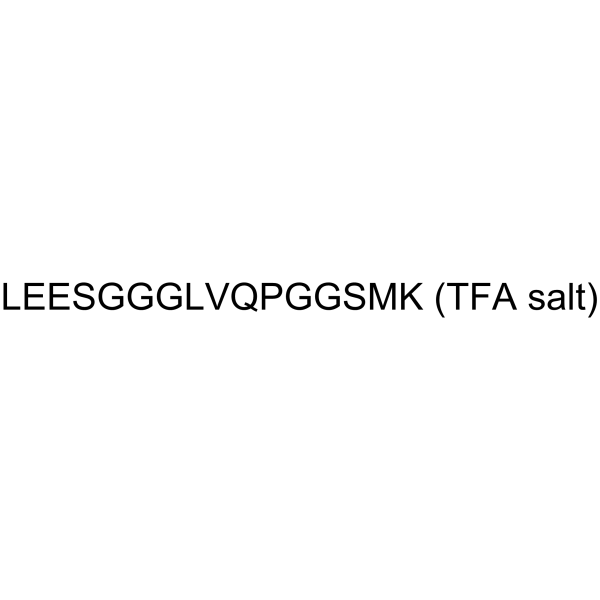
AMG-172 Antibody
 0 ImagesCat. No.: HY-P991661CAS No.: 1607838-85-6
-
Nrf2/HO-1 activator 4
 0 ImagesCat. No.: HY-184698CAS No.: 3072761-08-8Nrf2/HO-1 activator 4 is a Nrf2/HO-1 activator. Nrf2/HO-1 activator 4 inhibits nitric oxide production and the expression of pro-inflammatory cytokines IL-1β, IL-6, TNF-α, as well as upstream inflammatory enzymes COX-2 and iNOS. Nrf2/HO-1 activator 4 reduces ROS accumulation, and restores GSH levels and SOD activity. Nrf2/HO-1 activator 4 ameliorates depression-like behaviors in mice. Nrf2/HO-1 activator 4 can be used for research on major depressive disorder.
-
Hck-IN-3
 0 ImagesCat. No.: HY-178950CAS No.: 3115216-60-6Hck-IN-3 (compound 2D) is an orally effective inhibitor targeting HCK (KD = 3.92 μM). Hck-IN-3 can inhibit the release of NO. Hck-IN-3 has an IC50 of 6.52 μM in RAW264.7 cells. Hck-IN-3 can inhibit the release of TNF-α, IL-6, and IL-1β in a concentration dependent manner. Hck-IN-3 downregulates the protein expression of NLRP3, ASC, pro-caspase-1, and pro-IL-1β in a concentration dependent manner. Hck-IN-3 can be used for research on acute non traumatic inflammatory conditions.
-
Cot-IN-4
 0 ImagesCat. No.: HY-178726CAS No.: 1984784-10-2Cot-IN-4 (compound 32) is a potent cancer osaka thyroid (COT) kinase inhibitor with an IC50 of 6 nM. Cot-IN-4 inhibits the phosphorylation of ERK (IC50: 60 nM) and inhibits TNFα release (IC50: 60 nM). Cot-IN-4 also inhibits the formation of the pro-inflammatory cytokine IL-1β (IC50: 0.2 μM) in Uric acid (HY-B2130)-stimulated macrophages. Cot-IN-4 can be used for the study of inflammatory diseases.
-
N-Desmethyl clomipramine
 0 ImagesN-Desmethyl clomipramine (Desmethylclomipramine; Norclomipramine) is the orally active major active metabolite of the tricyclic antidepressant Clomipramine (HY-B0457A), possessing multiple activities including anti-inflammatory, antioxidant, antibacterial, and antiparasitic effects. N-Desmethyl clomipramine blocks autophagosome-lysosome fusion, leading to the accumulation of LC3-II, p62, ATG7, WIPI2, and ATG5-12, reactivates the p53/p21 pathway, induces apoptosis through C-PARP and C-CAS3, and inhibits the proliferation, migration, and invasion of renal cancer cells. N-Desmethyl clomipramine inhibits LdTOPIA, inducing R-loop accumulation in the nucleus of Leishmania, ultimately causing parasite death. N-Desmethyl clomipramine can be used for research on depression, metastatic renal cell carcinoma, and leishmaniasis.
-
BAY-356
 0 ImagesCat. No.: HY-P992321BAY-356, a potent TWEAK receptor agonist, is an aglycosylated anti-TWEAK receptor antibody. BAY-356 triggers TWEAKR hyperactivation, activates NFκB and STAT1 pathways, and undergoes TWEAKR-dependent internalization. BAY-356 can be used for the research of colorectal cancer, bladder cancer, non-small cell lung cancer and pancreatic cancer[1][2].
-
EGFR/Cytokine-IN-1
 0 ImagesCat. No.: HY-178353EGFR/Cytokine-IN-1 is an EGFR (IC50 = 0.03 μM) and Cytokine inhibitor (TNF-α, IC50 = 3.1 μM; IL-6, IC50 = 1.6 μM). EGFR/Cytokine-IN-1 shows potent anticancer activity on A549 and MCF7, respectively. EGFR/Cytokine-IN-1 significantly reduces IL-6 and TNF-α levels in A549 cells, and also shows promising ADMET profiles. EGFR/Cytokine-IN-1 can induce apoptosis in a dose-dependent manner. compound 5h can be used for the study of breast cancer and lung cancer.
-
CBS-3408
 0 ImagesCat. No.: HY-182579CAS No.: 452056-93-8
-
LBL-019
 0 ImagesCat. No.: HY-P992399LBL-019 is a humanized IgG1 monoclonal antibody targeting TNFR2. LBL-019 costimulates TNFR2 and activates the NF-κB signaling pathway in an Fc crosslinking-dependent manner. LBL-019 can be used for the research of advanced malignant tumors, including hepatocellular carcinoma and melanoma. The recommended isotype control is human IgG1 kappa (HY-P99001).
-
Anti-CD27 Antibody (M2191)
 0 ImagesCat. No.: HY-P991466Anti-CD27 Antibody (M2191) is a human monoclonal antibody (mAb) targeting TNFRSF7/CD27. Anti-CD27 Antibody (M2191) inhibits the binding of sCD70 to human CD27 ECD-Fc. Anti-CD27 Antibody (M2191) can be used in the study of anti-tumor immunity. Recommended isotype control: Human IgG1 kappa, Isotype Control (HY-P99001).
-
TAT-327
 0 ImagesCat. No.: HY-P10995TAT-327 is cell-penetrating peptide. TAT-327 selectively inserts into cancer cell membranes and shows potent antitumor activity. TAT-327 effectively inhibits cancer cells proliferation, induces apoptosis and disrupts EGFR signal pathway by inhibiting downstream signals (such as IL-2, TNF-α and IFN-γ) expression and the Eps8/EGFR interaction. TAT-327 significantly inhibits tumor growth in HT-29 xenograft mcie models.
-
TNF-α-IN-24
 0 ImagesCat. No.: HY-172608CAS No.: 3075686-66-4TNF-α-IN-24 (Example 15) is a TNF-α inhibitor with an IC50 of 4.1 nM. TNF-α-IN-24 can be used in study of inflammatory and autoimmune disorders such as rheumatoid arthritis and Crohn’s disease.
-
Trehalose 6-behenate
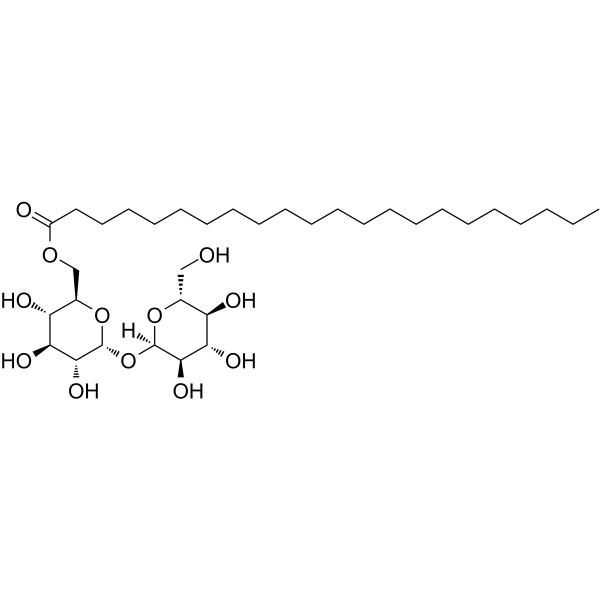 0 ImagesCat. No.: HY-101871CAS No.: 66755-19-9Trehalose 6-behenate is a Th1/Th17 skewing vaccine adjuvant.
-
ETI60
 0 ImagesETI60 is an orally active, selective TLR inhibitor that targets the nucleoside-binding Site I on TLR7 (IC50 = 0.68 μM) and TLR9 (IC50 = 0.12 μM), sparing surface TLRs (including TLR1/TLR2, TLR2/TLR6, TLR4 and TLR5). ETI60 potently inhibits endosomal TLR-mediated pro-inflammatory signaling with nanomolar activity in cellular, biophysical and in vivo assays. ETI60 modulates the expression of genes associated with inflammation. ETI60 effectively ameliorates symptoms in mouse models of psoriasis, and systemic lupus erythematosus (SLE). ETI60 can be used for autoimmune and inflammatory diseases research.
-
Hordenine (Standard)
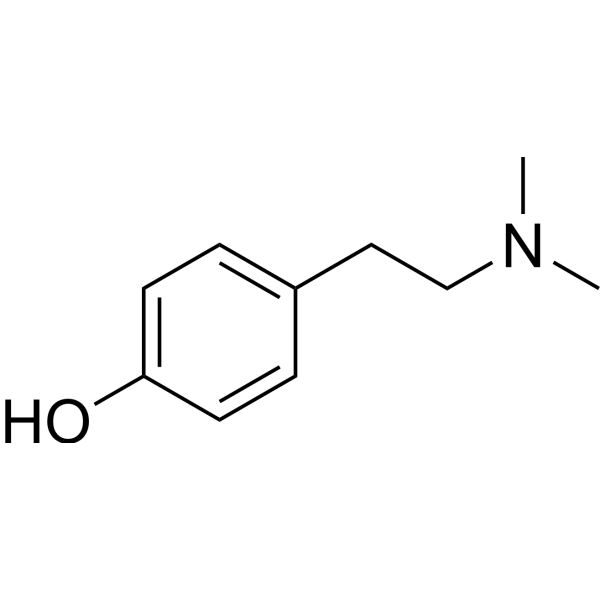 0 ImagesSynonyms: Ordenina (Standard); Peyocactine (Standard)Hordenine (Standard) (Ordenina (Standard); Peyocactine (Standard)) is the analytical standard of Hordenine (HY-N0113). This product is intended for research and analytical applications. Hordenine (Ordenina; Peyocactine) is a multifunctional alkaloid with oral activity and blood-brain barrier penetration. Hordenine inhibits LPS-induced phosphorylation of p38, JNK, ERK1/2, p65, IκB, and AKT, prevents p65 nuclear translocation, and suppresses inflammatory cytokines and mediators. Hordenine promotes M2 macrophage polarization, restores blood-milk barrier integrity, alleviates oxidative stress by reducing ROS and MDA, and attenuates LPS-induced lung injury and pulmonary edema. Hordenine inhibits cAMP production, CREB phosphorylation, and MITF expression, thereby suppressing melanin synthesis in melanocytes and reconstructed epidermis. Hordenine activates the Wnt/β-catenin signaling pathway, promotes dermal papilla cell proliferation and hair shaft elongation, and accelerates hair regeneration. Hordenine activates DRD2, acts as a D3R partial agonist, α2A-AR full agonist, and 5-HT2A-R antagonist, and inhibits SERT and DAT. Hordenine inhibits α-synuclein accumulation and ameliorates motor deficits in Parkinson's disease models. Hordenine limits alcohol intake, reduces relapse drinking behavior, and modulates alcohol-induced conditioned place preference. Hordenine can be used for research on mastitis, skin pigmentation, acute lung injury, foodborne diseases, hair loss, Parkinson's disease, bacterial infections, and alcohol use disorder.




