



TNF Receptor
Tumor Necrosis Factor Receptor; TNFR
Tumor necrosis factor (TNF) is a major mediator of apoptosis as well as inflammation and immunity, and it has been implicated in the pathogenesis of a wide spectrum of human diseases, including sepsis, diabetes, cancer, osteoporosis, multiple sclerosis, rheumatoid arthritis, and inflammatory bowel diseases.
TNF-α is a 17-kDa protein consisting of 157 amino acids that is a homotrimer in solution. In humans, the gene is mapped to chromosome 6. Its bioactivity is mainly regulated by soluble TNF-α–binding receptors. TNF-α is mainly produced by activated macrophages, T lymphocytes, and natural killer cells. Lower expression is known for a variety of other cells, including fibroblasts, smooth muscle cells, and tumor cells. In cells, TNF-α is synthesized as pro-TNF (26 kDa), which is membrane-bound and is released upon cleavage of its pro domain by TNF-converting enzyme (TACE).
Many of the TNF-induced cellular responses are mediated by either one of the two TNF receptors, TNF-R1 and TNF-R2, both of which belong to the TNF receptor super-family. In response to TNF treatment, the transcription factor NF-κB and MAP kinases, including ERK, p38 and JNK, are activated in most types of cells and, in some cases, apoptosis or necrosis could also be induced. However, induction of apoptosis or necrosis is mainly achieved through TNFR1, which is also known as a death receptor. Activation of the NF-κB and MAPKs plays an important role in the induction of many cytokines and immune-regulatory proteins and is pivotal for many inflammatory responses.
TNF Receptor Isoform Specific Products
-
TNF Receptor
(701)
View all products
-
TNFRSF1A/
CD120a (8)View all products
-
TNFRSF3/
CD18 (1)View all products
-
TNFRSF4
(5)
View all products
-
TNFRSF5/
CD40 (142)View all products
-
TNFRSF6/
Fas/ (2)CD95 View all products
-
TNFRSF7/
CD27 (2)View all products
-
TNFRSF8/
CD30 (3)View all products
-
TNFRSF9/
4-1BB/ (3)CD137 View all products
-
TNFRSF10B/
DR5/ (1)CD262 View all products
-
TNFRSF12A/
TWEAK (5)View all products
-
TNFRSF16/
NGF Receptor/ (1)CD271 View all products
-
TNFRSF18/
GITR/ (6)CD357 View all products
All Product Categories
-
TNF Receptor Inhibitors
(903)
View all products
-
TNF Receptor Agonists
(35)
View all products
-
TNF Receptor Antagonists
(25)
View all products
-
TNF Receptor Activators
(80)
View all products
-
TNF Receptor Modulators
(8)
View all products
-
TNF Receptor Inducers
(11)
View all products
-
TNF Receptor Controls
(4)
View all products
-
TNF Receptor Ligands
(2)
View all products
-
TNF Receptor Superfamily Proteins
(282)
View all products
-
TNF Receptor Related Products (1268)
Related Products (1268)

-
Recombinant Proteins (282)
-
Antibodies (23)
-
TNF Receptor Signaling Pathway
-
TNF Receptor Isoform Comparison
-
Murabutide
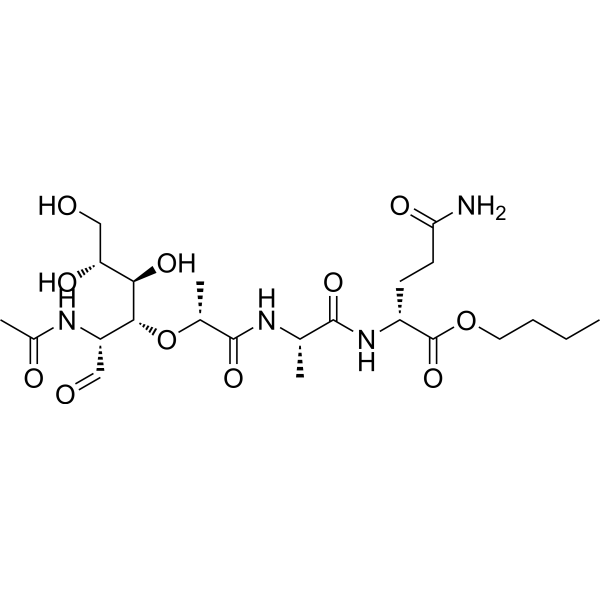 0 ImagesCat. No.: HY-106055CAS No.: 74817-61-1Murabutide is an immunomodulator and also a NOD2 receptor agonist. Murabutide enhances the signal transduction of ATR and NOD2, mediates the activation of the DDR pathway, and thereby repairs radiation-induced DNA double-strand breaks. Murabutide inhibits radiation-induced cell apoptosis and protects cells and mice from radiation-induced toxic damage. Murabutide induces the expression and DNA-binding activity of Oct-1 in macrophages, thereby inhibiting the transcription and replication of HIV-1. Murabutide reduces the expression levels of CD4 and CCR5 on the surface of macrophages, and induces the secretion of β-chemokines, TNF-α and IL-6. Murabutide enhances non-specific viral resistance and targets reticuloendothelial cells. Murabutide can be used in research related to radiation-induced damage and human immunodeficiency virus type 1 infection.

-
AN-2898
 0 ImagesCat. No.: HY-111167CAS No.: 906673-33-4AN-2898 is a selective PDE4 inhibitor with IC50 of 0.027 μM over other phosphodiesterase enzymes, such as PDE1A, PDE2A and PDE3A. AN-2898 also potently inhibits PDE4 subtypes (PDE4B1, PDE4A1A and PDE4D2). AN-2898 significantly inhibits the production of TNF-α, IL-2, IFN-γ, IL-5 and IL-10. AN-2898 can be used for mild to moderate atopic dermatitis (AD) and psoriasis research.
-
COX-2-IN-60
 0 ImagesCat. No.: HY-179142CAS No.: 3073624-74-2COX-2-IN-60 is a potent, orally active, and selective COX-2 inhibitor with an IC50 of 0.06 μM. COX-2-IN-60 exhibits ~100-fold selectivity over COX-1 (IC50 = 5.93 ). COX-2-IN-60 reduces oxidative stress and neuroinflammatory cytokines, and effectively counteracts epileptogenesis. COX-2-IN-60 exhibits significant anticonvulsant effects and protects against hippocampal injury by suppressing oxidative stress (reducing MDA and NO), pro-inflammatory signaling (reducing TNF-α and IL-6), and glial activationin in the Pilocarpine (HY-B0726A)-induced seizure mouse model. COX-2-IN-60 can be used for the research on neuroinflammatory and epilepsy.
-
H-Hyp-Leu-OH
 0 ImagesCat. No.: HY-P12327CAS No.: 637030-43-4H-Hyp-Leu-OH is a linear dipeptide of hydroxyproline-leucine with anti-inflammatory and antioxidant activities. H-Hyp-Leu-OH inhibits NO, IL-1β, IL-6, and TNF-α in macrophages, and upregulates IL-10. H-Hyp-Leu-OH extends lifespan, improves exercise capacity, reduces ROS and MDA, and increases SOD, CAT, and GSH-Px. H-Hyp-Leu-OH can be used for epithelial ovarian cancer and antioxidant-related research.
-
R-03201195
 0 ImagesCat. No.: HY-18794CAS No.: 249936-55-8R-03201195 is an efficient and selective p38 MAP kinase inhibitor with an IC50 for p38α of 0.7 nM. R-03201195 has inhibitory activity against TNF-α in THP-1 cells and against IL-1β in human whole blood, with IC50 values of 0.25 and 0.57 nM respectively. R-03201195 can be used for inflammatory diseases such as rheumatoid arthritis.
-
TNF-α-IN-11
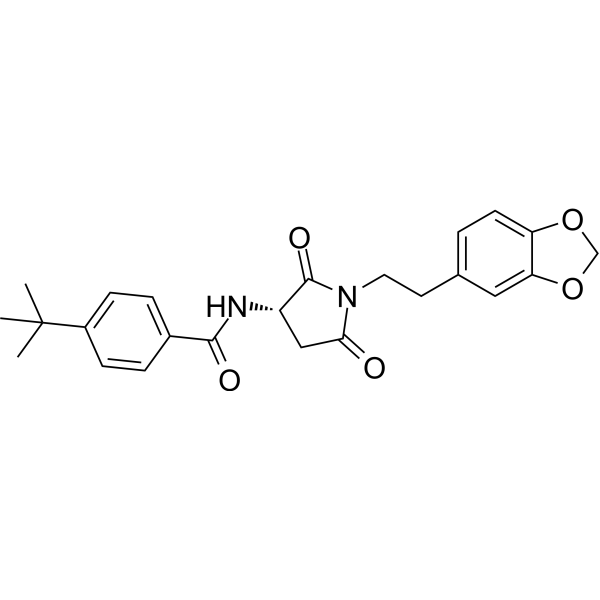 0 ImagesCat. No.: HY-149331CAS No.: 2945197-77-1TNF-α-IN-11 (Compound 10) is a TNF-α inhibitor with a KD value of 12.06 μM. TNF-α-IN-11 binds to TNF-α and blocks the activation of TNF-α-trigged caspase and NF-κB signaling pathway. TNF-α-IN-11 inhibits the phosphorylation of IκBα, as well as the nuclear translocation of NF κB p65. TNF-α-IN-11 can be used for research of TNF-α-mediated autoimmune diseases.
-
MN-25
 0 ImagesCat. No.: HY-124954CAS No.: 501926-82-5MN-25 (compound 4a) is an orally active indolpyridone that serves as a novel cannabinoid ligand. MN-25 has Ki of 245 nM and 11 nM for CB1 and CB2. MN-25 has CB2 agonist activity and inhibits TNF-R release in human peripheral blood mononuclear cells in vitro with an IC50 of 33 μM. MN-25 shows efficacy in a mouse acute inflammation model at oral doses up to 50 mg/kg>[1].
-
PHI-501
 0 ImagesCat. No.: HY-153858CAS No.: 2470433-36-2PHI-501 is a dual inhibitor targeting RAF/DDR. PHI-501 exhibits significant anti-proliferative effects in melanoma cell lines and significantly inhibits the colony formation of drug-resistant cells. PHI-501 strongly inhibits ERK and AKT phosphorylation. PHI-501 downregulates the gene sets in drug-resistant cells of TNFA-NFKB, IL6-JAK-STAT3, and KRAS signaling pathways as well as the epithelial-mesenchymal transition (EMT) signaling pathways. PHI-501 demonstrates significant anti-tumor effects in the SK-MEL3DR xenograft model. PHI-501 can be used for research on the problem of drug resistance in melanoma.
-
DPP-1-IN-2
 0 ImagesCat. No.: HY-181513DPP-1-IN-2 is a DPP-I inhibitor with a human IC50 of 36.8 nM and oral efficacy. DPP-1-IN-2 binds to intracellular DPP-I, increases its thermal stability, and reduces the activity and expression levels of downstream neutrophil serine proteases by inhibiting its enzymatic activity. DPP-1-IN-2 regulates the secretion of inflammatory factors and chemokines to exert anti-inflammatory effects. DPP-1-IN-2 reverses joint inflammation and tissue damage in adjuvant-induced arthritis rat models. DPP-1-IN-2 is applicable to research related to arthritis.
-
aptTNF-α sodium
 0 ImagesCat. No.: HY-177809aptTNF-α sodium is a TNF-α-targeting aptamer that has tissue protective effect and systemic anti-inflammatory effect upon acute tissue injury using the mouse acute lung injury (ALI) and acute liver failure (ALF) models.
-
PDE/TRPA1/CHIT1-IN-1
 0 ImagesCat. No.: HY-179503PDE/TRPA1/CHIT1-IN-1 is a phosphodiesterases (PDEs), TRPA1, and hCHIT1 (KD of 37.7 μM) inhibitor. PDE/TRPA1/CHIT1-IN-1 is a broad-spectrum PDE inhibitor, potently targeting key isoforms including PDE4B, PDE7A, PDE3A, and PDE8A with IC50s of 15.54, 15.15, 8.39 and 16.46 μM. PDE/TRPA1/CHIT1-IN-1 suppresses NLRP3 inflammasome activation and inhibits NF-κB phosphorylation, downregulating the expression of pro-inflammatory genes (TNF-α and IL-6) in vivo. PDE/TRPA1/CHIT1-IN-1 can be used for chronic obstructive pulmonary disease (COPD) and related inflammatory lung disorders research.
-
NPSR1 antagonist-1
 0 ImagesCat. No.: HY-175813CAS No.: 3113770-74-1NPSR1 antagonist-1 is a potent and peripherally restricted neuropeptide S receptor 1 (NPSR1) antagonist. NPSR1 antagonist-1 can inhibit IL-6, PTGS2, IL-20, and CXCL8 expression. NPSR1 antagonist-1 can reduce TNF-α cytokine levels. NPSR1 antagonist-1 can be used for the research of inflammation, such as peritonitis.
-
PDE4-IN-18
 0 ImagesCat. No.: HY-162797PDE4-IN-18 (compound 1l) is a PDE4 inhibitor (IC50=1.55 μM) with anti-inflammatory activity. PDE4-IN-18 exerts anti-inflammatory effects by reducing excessive immune cell infiltration and intestinal membrane formation, as well as reducing the mRNA expression of pro-inflammatory cytokines (such as TNF-α and IL-6) in synovial tissue. PDE4-IN-18 can be used in the study of rheumatoid arthritis and psoriasis.
-
SLP7111228
 0 ImagesCat. No.: HY-120152CAS No.: 1449765-82-5SLP7111228 is a selective sphingosine kinase 1 (SphK1) inhibitor and anti-inflammatory agent. SLP7111228 selectively inhibits SphK1 and reduces the production of sphingosine-1-phosphate. SLP7111228 decreases lipopolysaccharide-induced TNFα and IL-1β levels. SLP7111228 alleviates obliterative pulmonary arteriopathy, increases cardiac index and decreases total pulmonary vascular resistance index. SLP7111228 can be used in research related to neuroinflammatory diseases and pulmonary hypertension.
-
Apoptosis inducer 65
 0 ImagesCat. No.: HY-189411Apoptosis inducer 65 is an apoptosis inducer with antiproliferative activity against cancer cells. Apoptosis inducer 65 induces G0/G1 cell cycle arrest and intrinsic apoptosis by upregulating p53, BAX, and caspase-7, while downregulating Bcl-2. Apoptosis inducer 65 inhibits ROS, NO, TNF-α, IL-1β, and IL-6 in macrophages. Apoptosis inducer 65 can be used for research on hepatocellular carcinoma and inflammation.
-
Carveol (Standard)
 0 ImagesCat. No.: HY-W017370RCAS No.: 99-48-9Carveol (Standard) is the analytical standard of Carveol. This product is intended for research and analytical applications. Carveol is an orally active monoterpenoid alcohol with neuroprotective, antioxidant, anti-inflammatory, anticonvulsant, antidiabetic, hypolipidemic and hepatoprotective activities. Carveol upregulates the expression of Bcl2, downregulates the expression of caspase-3, TNF-α, IL1β and IL6, activates the Nrf2/HO-1 antioxidant signaling pathway, inhibits the RAGE/NF-κB signaling pathway, and suppresses neuroinflammation and neuronal apoptosis. Carveol inhibits α-synuclein aggregation, improves cognitive ability, and inhibits α-amylase activity. Carveol exerts neuroprotective effects in a rat model of Parkinson's disease. Carveol exhibits antidiabetic effects in alloxan-induced diabetic rats. Carveol alleviates PTZ-induced seizures in rats. Carveol can be used in research related to Parkinson's disease, epilepsy, diabetes and ischemic stroke.
-
TLR7/8 agonist 14
 0 ImagesCat. No.: HY-179336TLR7/8 agonist 14 is a TLR7 and TLR8 agonist with EC50 values of 0.53 μM and 4.3 μM, respectively. TLR7/8 agonist 14 increases the secretion of the proinflammatory cytokines TNF-α, IL-1β, IL-8 and IFN-γ. TLR7/8 agonist 14 increases cytokine secretion and expression of CD86. LR7/8 agonist 14 can be used for research colorectal carcinoma.
-
TNX-1500
 0 ImagesCat. No.: HY-P991921TNX-1500 is a crystallizable fragment-modified anti-CD154 antibody. TNX-1500 contains the hu5c8 fragment antigen-binding (Fab) domain from Ruplizumab (HY-P99315) and an IgG4 Fc region engineered to reduce FcγRIIa binding. TNX-1500 has significantly weaker binding affinity to FcγRI, FcγRIIaH, FcγRIIbF, FcγRIIIaF, and FcγRIIIaV compared to hu5c8 (Kd values: 8.7 nM, 7100 nM, 4900 nM, 8000 nM, 6000 nM respectively). TNX-1500 prolongs nonhuman primate renal allograft survival, prolongs nonhuman primate cardiac allograft survival. TNX-1500 can be used for the research of allograft rejection[1][2].
-
Anti-Mouse 4-1BB/CD137 Antibody (LOB12.3)
 0 ImagesCat. No.: HY-P990809Purity: 98.86%Anti-Mouse 4-1BB/CD137 Antibody (LOB12.3) is an agonistic mouse-derived IgG2a κ antibody, targeting to mouse 4-1BB/CD137. Anti-Mouse 4-1BB/CD137 Antibody (LOB12.3) can stimulate 4-1BB signaling and induce T cell mediated antitumor immunity. Anti-Mouse 4-1BB/CD137 Antibody (LOB12.3) can be used for the researches of cancer, infection, immunology and neurological disease, such as glioblastoma and retrovirus infection.




