



Reactive Oxygen Species (ROS) Activator
-
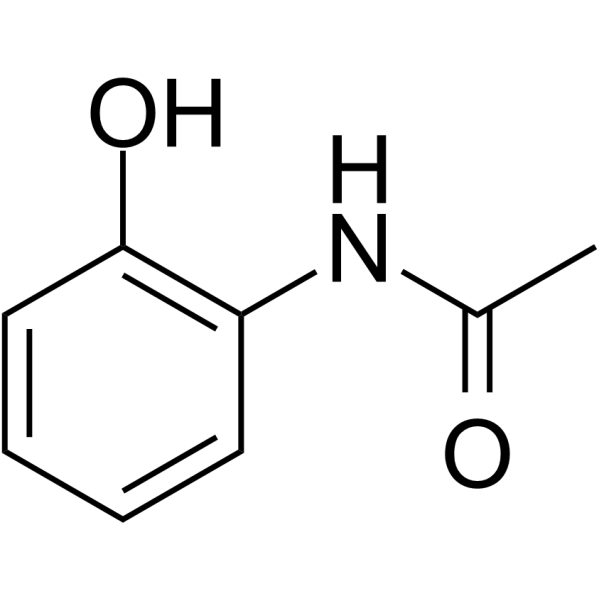
2-Acetamidophenol
 0 ImagesSynonyms: Orthocetamol
2-Acetamidophenol (Orthocetamol) is a regulator that targets ferroptosis and glutathione metabolic pathways, is the ortho-regioisomer of Paracetamol (HY-66005). 2-Acetamidophenol has anti-atherosclerotic activity, and inhibiting total cholesterol (TC) and triglyceride (TG) in a zebrafish hyperlipidemia model with IC50s for 30 μM and 40 μM, respectively. 2-Acetamidophenol upregulates the expression of glutathione synthesis-related genes (such as GCLC, GCLM, GSS) and iron ion transport genes (such as FPN1, FTH), reduces the accumulation of intracellular reactive oxygen species (ROS) and ferrous ions (Fe2+), and enhances the activity of glutathione peroxidase GPX4, thereby inhibiting macrophage phagocytosis of oxidized low-density lipoprotein (ox-LDL) and foam cell formation.
-
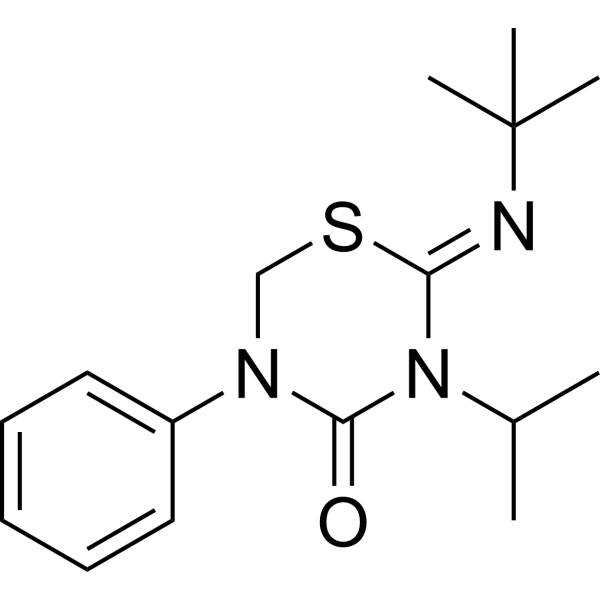
Buprofezin
 0 Images
Buprofezin is a broad-spectrum insecticide and chitin synthesis inhibitor that targets developmental stage coleopteran pests.Buprofezin promotes the conversion of energy metabolism from the aerobic tricarboxylic acid (TCA) cycle and oxidative phosphorylation to anaerobic glycolysis. Buprofezin also promotes the production of reactive oxygen species (ROS) by inhibiting cytochrome c oxidase.
-
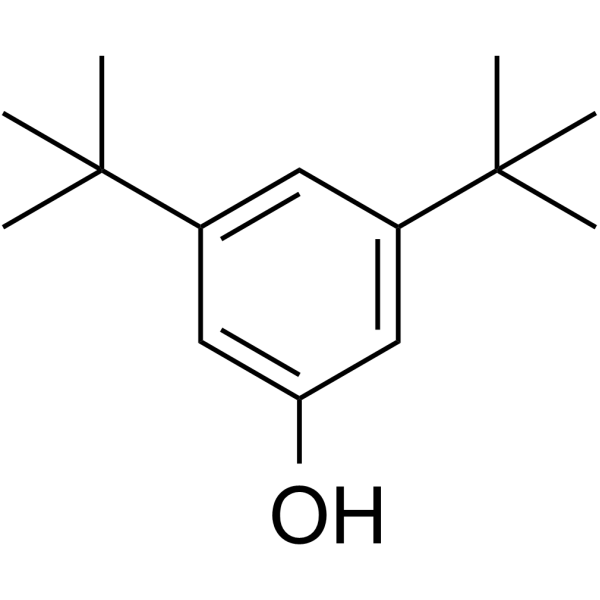
3,5-Di-tert-butylphenol
 0 Images
3,5-Di-tert-butylphenol is an volatile organic compound with anti-biofilm and antifungal activities. 3,5-Di-tert-butylphenol induces accumulation of reactive oxygen species (ROS) in C. albicans cells. 3,5-Di-tert-butylphenol also has antibacterial activities.
-
Sodium hippurate, 98%
 0 ImagesSynonyms: N-Benzoylglycine sodium, 98%
Sodium hippurate, 98% is an orally active metabolite. Sodium hippurate, 98% can be produced by intestinal microorganisms from the metabolism of polyphenols, benzoic acid. Sodium hippurate, 98% decreases NRF2, MMP9 and leads to ROS accumulation. Sodium hippurate, 98% activates TGFβ/SMAD signaling. Sodium hippurate, 98% improves hyperuricemia and colitis. Sodium hippurate, 98% can also be used in cardiovascular disease research. .
-
HDAC9-IN-1
 0 ImagesCat. No.: HY-169259
HDAC9-IN-1 is a selective class IIa HDAC inhibitor that binds to HDAC9 with an IC50 of 40 nM. HDAC9-IN-1 potently inhibits HDACs 4 and 7 while showing weak activity against HDAC6 (IC50 values: 180 nM (HDAC4), 190 nM (HDAC7), 970 nM (HDAC6)). HDAC9-IN-1 significantly inhibits several human cancer cells, induces apoptosis and DNA damage in human cancer cells, and modulates caspase-related proteins and p38 in human cancer cells. HDAC9-IN-1 can be used for the research of oral cancer, breast cancer, gastric cancer.
-
β-Elemonic acid
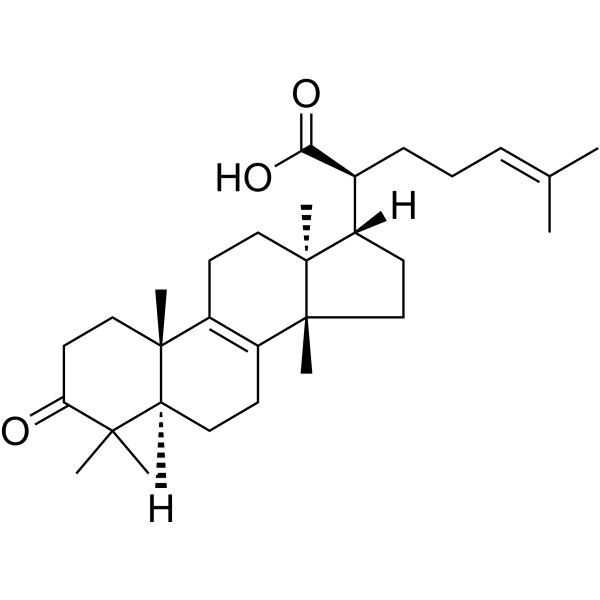 0 Images
β-Elemonic acid is a triterpene isolated from Boswellia carterii. β-Elemonic acid induces cell apoptosis, reactive oxygen species (ROS) and COX-2 expression and inhibits prolyl endopeptidase. β-Elemonic acid exhibits anticancer and anti-inflammatory effects.
-
Equisetin
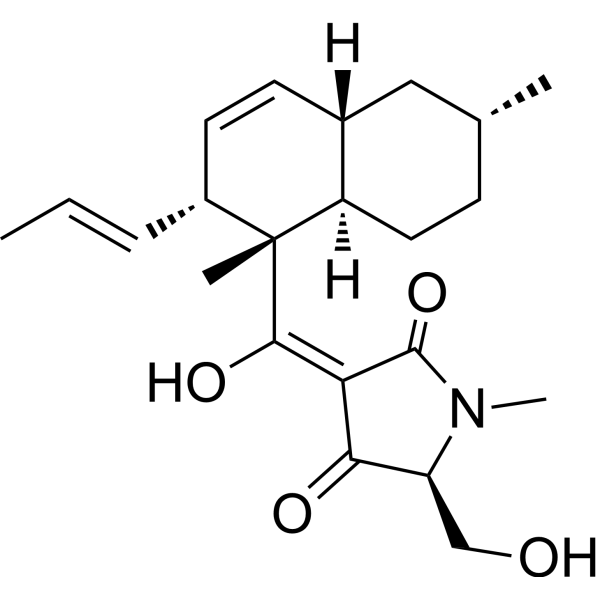 0 Images
Equisetin is an N-methylserine-derived acyl tetramic acid, quorum sensing inhibitor (QSI), herbicides and antibiotics. Equisetin specifically inhibits the anionic carriers of substrates in the inner mitochondrial membrane. Equisetin inhibits the activity of HIV-1 integrase, 11β-HSD1, and 2,4-dinitrophenol (Dnp)-stimulated ATPase (IC50 = ~8 nmol per mg of protein). Equisetin exhibits growth inhibition of bacteria, anti-inflammatory, amelioration of lipid-associated disorders, and cytotoxic effects.
-
Curzerenone
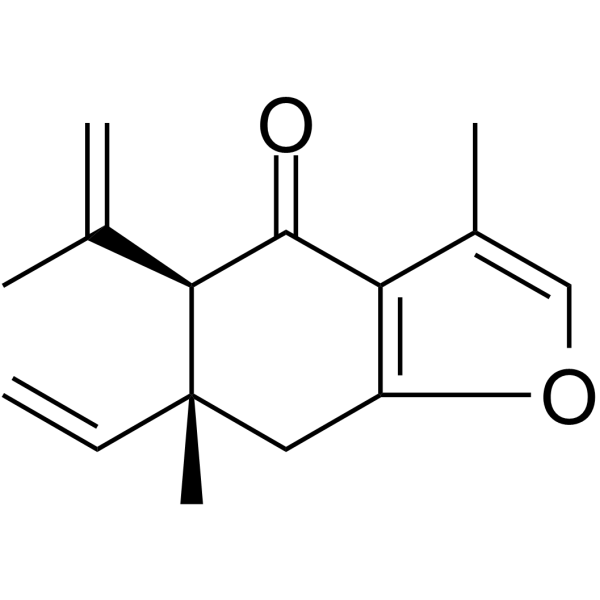 0 Images
Curzerenone is an orally active sesquiterpene compound and Antibacterial agent. Curzerenone can be isolated from Curcuma zedoaria and Curcuma aeruginosa plants. Curzerenone increases ROS levels, activates Apoptotic signaling pathways, and attenuates the PI3K/AKT/mTOR signaling pathway. Curzerenone exhibits anticancer activity against liver cancer and cervical cancer. Curzerenone has antioxidant effects. Curzerenone shows weak antibacterial activity against Escherichia coli. Curzerenone can be used in research related to hepatocellular carcinoma, cervical cancer, and Escherichia coli infection.

-
Perfluorododecanoic acid
 0 ImagesSynonyms: PFDoA
Perfluorododecanoic acid (PFDoA) is an orally active, blood-brain barrier-permeable perfluorinated compound. Perfluorododecanoic acid increases Caspase 3 activity, disrupts mitochondrial membrane potential, and elevates ROS levels. Perfluorododecanoic acid induces cognitive deficits. Perfluorododecanoic acid exhibits hepatotoxicity.
-
Methyl aminolevulinate hydrochloride
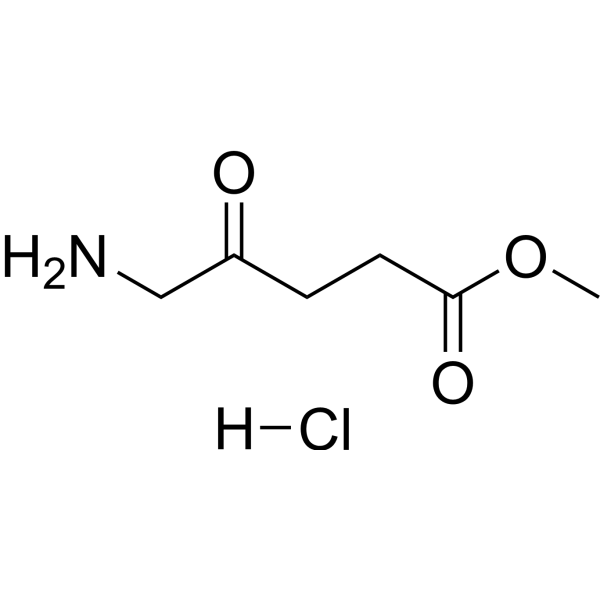 0 Images
Methyl aminolevulinate hydrochloride is a sensitizer used in photodynamic therapy (PDT). Methyl aminolevulinate hydrochloride penetrates the skin and induces the production of photoactive porphyrins including protoporphyrin IX in cells; upon exposure to appropriate light, it generates ROS, which triggers cellular oxidation and cell death. Methyl aminolevulinate hydrochloride acts as a photo-damage reversing agent through epidermal reconstruction, cytokine-mediated activation of dermal fibroblasts, elastin breakdown, new collagen formation, and compression of dilated capillaries. Methyl aminolevulinate hydrochloride reduces the expression of the proliferation marker Ki-67 and the early skin carcinogenesis marker TP53. Methyl aminolevulinate hydrochloride delays the onset of ultraviolet-induced skin tumors and reduces tumor burden in hairless mice. Methyl aminolevulinate hydrochloride is applicable to research related to actinic keratosis and basal cell carcinoma.
-
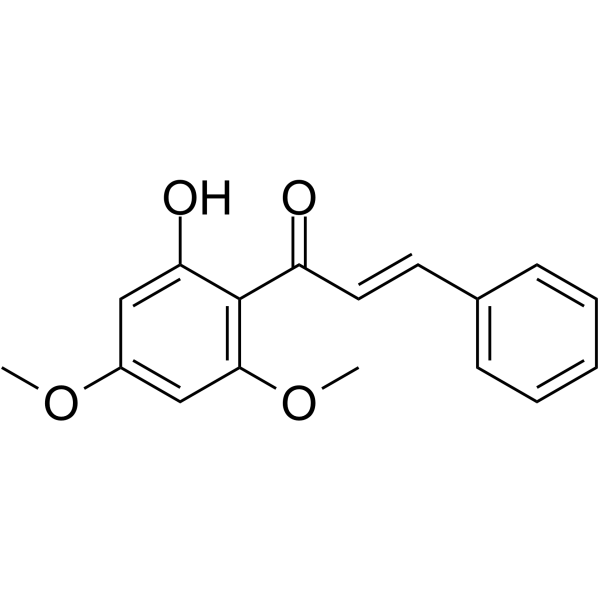
Flavokawain B
 0 Images
Flavokawain B (Flavokavain B) is an orally active chalcone. Flavokawain B results in activation of caspase-9, -3 and -8, cleavage of PARP. Flavokawain B down-regulates Bcl-2 with concomitant increase in Bax level. Flavokawain B inhibits NF-κB, PI3K/Akt and MAPK signaling pathway. Flavokawain B exhibits Apoptotic effects. Flavokawain B inhibits MMP-9 and promotes ROS generation. Flavokawain B inhibits multiple tumors and inflammation.
-
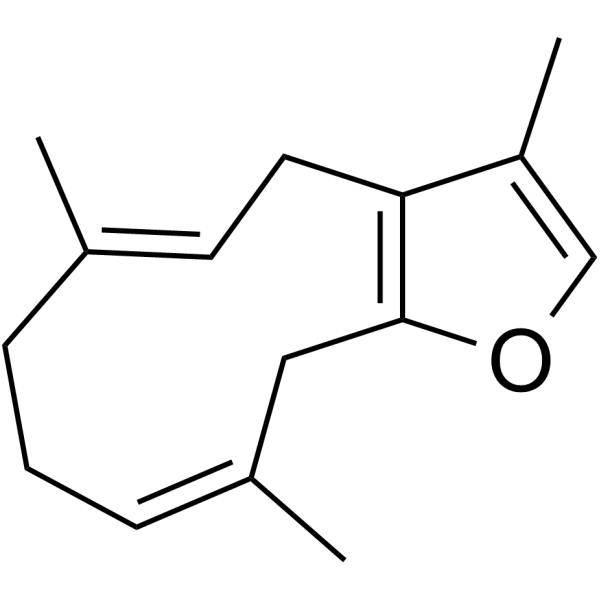
Furanodiene
 0 Images
Furanodiene is a natural terpenoid isolated from Rhizoma Curcumae. Furanodiene plays anti-cancer effects through anti-angiogenesis and inducing ROS production, DNA strand breaks and apoptosis. Furanodiene suppresseed efflux transporter Pgp (P-glycoprotein) function and reduced Pgp protein level.
-
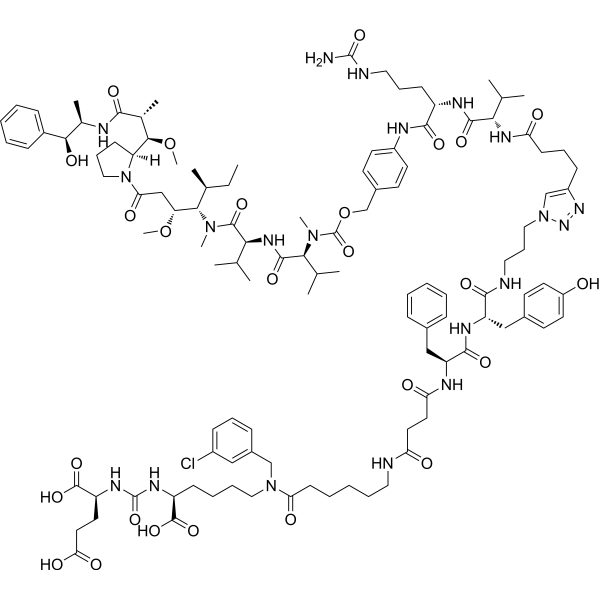
PSMA-Val-Cit-PAB-MMAE
 0 Images
PSMA-Val-Cit-PAB-MMAE is a small-molecule conjugate targeting PSMA, with Monomethyl auristatin E (MMAE) (HY-15162) as its cytotoxic payload. PSMA-Val-Cit-PAB-MMAE binds to PSMA, thereby being delivered into PSMA-expressing prostate cancer cells. Subsequently, the Val-Cit linker is cleaved under the mediation of cathepsin B, releasing active MMAE. PSMA-Val-Cit-PAB-MMAE inhibits CYP3A4 activity (IC50 = 11.2 μM), induces intracellular ROS production and oxidative stress, disrupts the cytoskeleton through microtubule destabilization, and induces prostate cancer cell death. PSMA-Val-Cit-PAB-MMAE can be used in research related to prostate cancer.
-
MT-125 free base
 0 Images
MT-125 free base is a specific and well-tolerated inhibitor of non-muscle myosin IIA (Ki,NMIIA = 2.7 μM) and IIB (EC50 = 1.7 μM). MT-125 free base can pass through the blood-brain barrier. MT-125 free base induces ferroptosis and DNA damage by increasing the levels of reactive oxygen species (ROS) within tumor cells. MT-125 free base can enhance the PDGFR signaling pathway. MT-125 free base can be used for research on glioblastoma.
-
iMQT_020
 0 Images
iMQT_020 is a selective allosteric SLC1A5_var inhibitor. iMQT_020 disrupts the trimeric assembly of SLC1A5_var, causing metabolic crisis in cancer cells and selectively suppressing their growth. iMQT_020 reduces glutamine anaplerosis and oxidative phosphorylation, resulting in a broad disruption of cancer metabolism. iMQT_020 reduces GSH levels and increases cellular ROS and mitochondrial ROS. iMQT_020 induces apoptosis and ferroptosis. iMQT_020 can epigenetically upregulate PD-L1 expression. iMQT_020 can be used for the study of pancreatic cancer, lung cancer, and colon cancer.
-
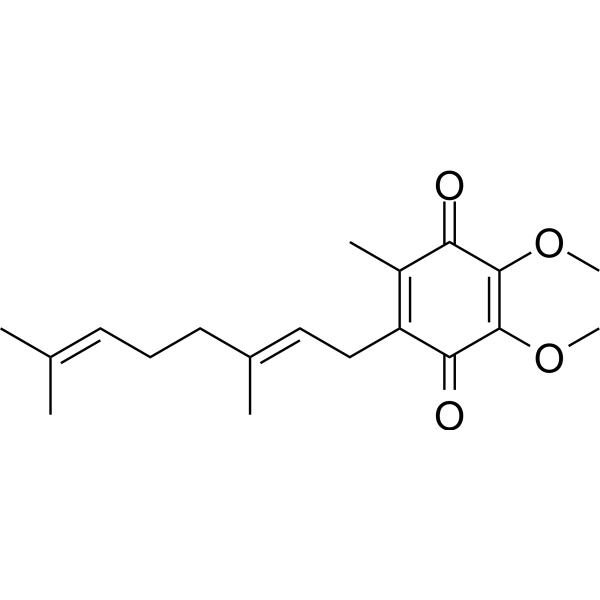
Coenzyme Q2
 0 Images
Coenzyme Q2 is a benzoquinone electron carrier in the mitochondrial electron transport chain and a p53-dependent apoptosis inducer. Coenzyme Q2 induces p53 phosphorylation at Ser15, promoting p53 accumulation and functional activation. Coenzyme Q2 induces ROS generation, caspase-3 activation, DNA fragmentation, phosphatidylserine externalization, mitochondrial permeability transition pore opening, and oxidative phosphorylation uncoupling. Coenzyme Q2 inhibits Complex I, Complex III, and Complex IV activities, disrupting electron transport and membrane potential generation. Coenzyme Q2 induces excessive mitochondrial proton leak in forebrain mitochondria. Coenzyme Q2 causes loss of righting reflex in mice, accompanied by slow-wave delta EEG activity and reversible loss of wakefulness. Coenzyme Q2 inhibits lipid peroxidation and scavenges superoxide radicals. Coenzyme Q2 is used in research on leukemia, myocardial ischemia-reperfusion injury, and mitochondrial encephalomyopathy.
-
YRDC-IN-1
 0 ImagesCat. No.: HY-Q66655CAS No.: 3120494-74-5
YRDC-IN-1 is a blood-brain barrier-permeable YRDC inhibitor. YRDC is a key enzyme that catalyzes the formation of N6-threonylcarbamoyladenosine at position 37 of tRNA (t6A37). YRDC-IN-1 selectively inhibits the translation of ANN codon-enriched FABP7, thereby reducing lipid droplet formation, increasing ROS, and reversing the acquired resistance of GBM to Temozolomide (TMZ) (HY-17364). YRDC-IN-1 can be used for the research of glioblastoma.



