



Benzoylpaeoniflorin

Based on 1 Customer Validation
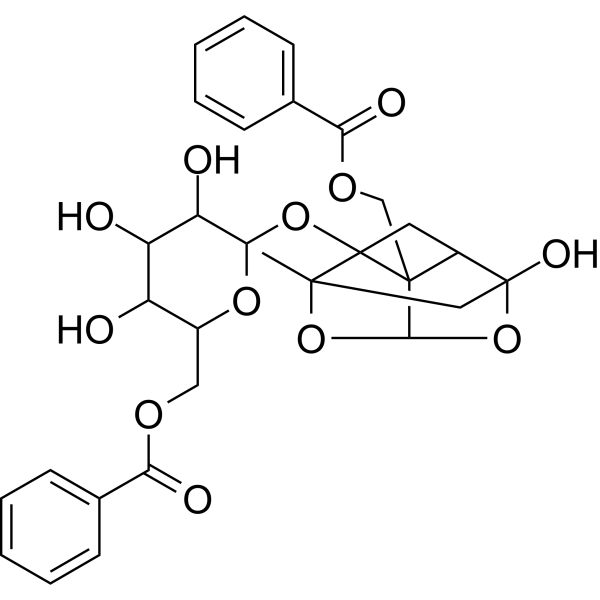
Benzoylpaeoniflorin is an orally active monoterpene glycoside compound. Benzoylpaeoniflorin exerts anti-inflammatory, anti-allergic, psoriasis-improving and sepsis-improving effects by inhibiting signaling pathways such as TNF/NF-κB and MAPK, as well as regulating immune homeostasis. Benzoylpaeoniflorin can be used in research related to immune, allergic and inflammatory diseases.
Nur für Forschungszwecke. Wir verkaufen nicht an Patienten.
- Reinheit : 98.47%
- CAS. Nr.: 38642-49-8
- Formel: C30H32O12
- Molecular Weight:584.57
-
Speicherung:Powder -20°C, 3 years , 4°C, 2 years ; In solvent -80°C, 6 months , -20°C, 1 month

To place orders, for customer services and technical support, please contact: MedChemExpress USA
Tel: 609-228-6898 E-mail: [email protected] [email protected]


-
 Biologische Aktivität
-
Chemical Information
-
Lösungsmittel & Löslichkeit
- Protokoll
- Reinheit & Dokumentation
- Verweise
-
 Help & FAQs


-
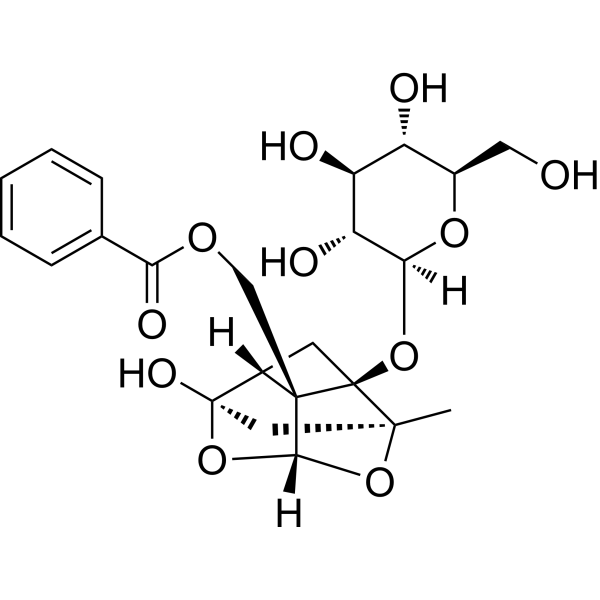
HY-N0293
PaeoniflorinHSP Activator -
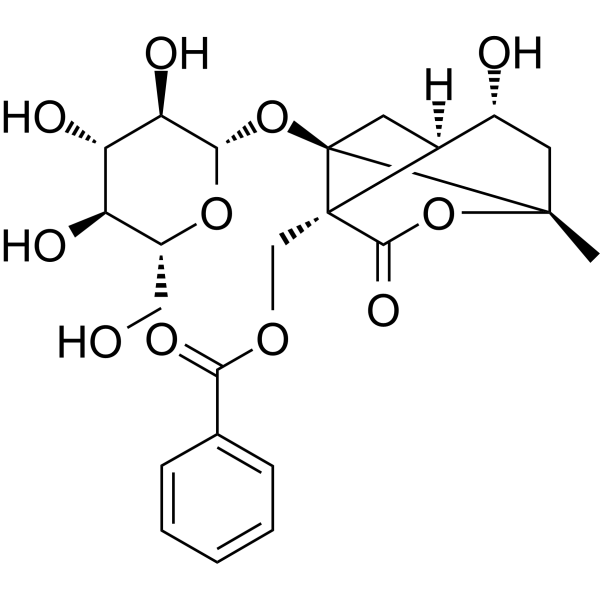
HY-N0037
AlbiflorinNeuroprotective Agent -
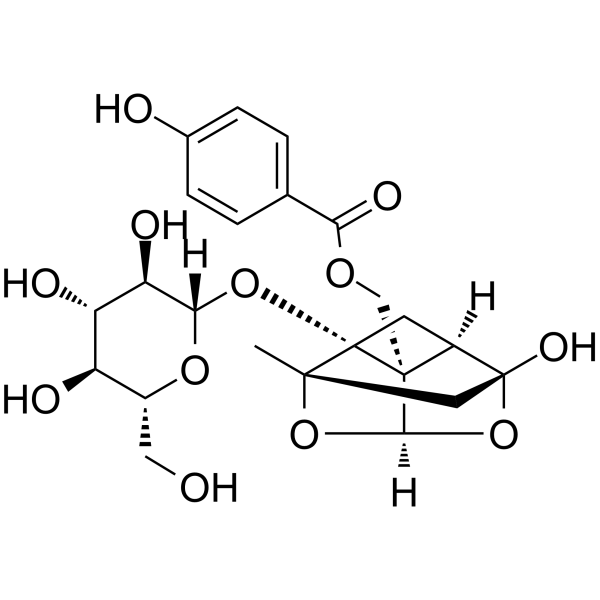
HY-N0748
OxypaeoniflorinMonoterpene Glycoside -
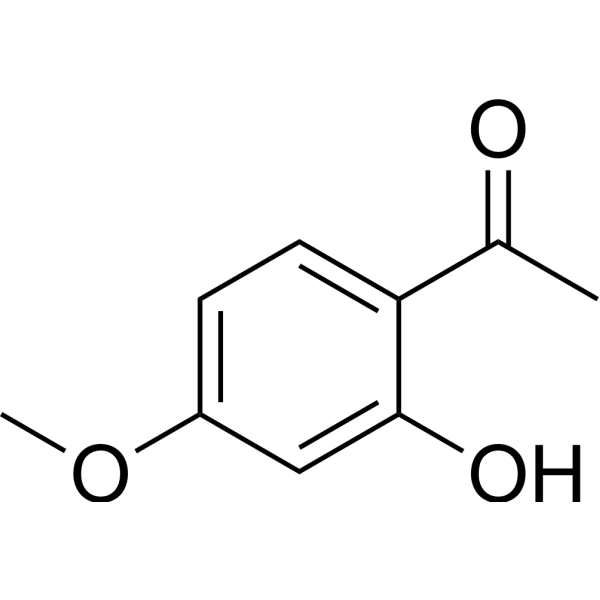
HY-N0159
PaeonolAutophagy Inducer -
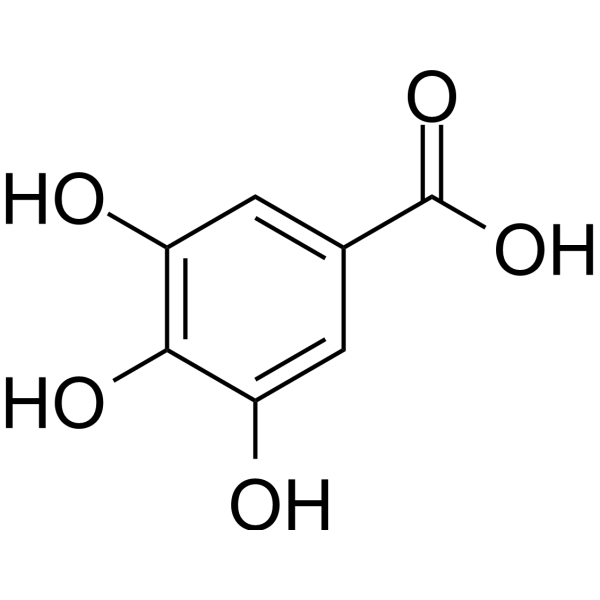
HY-N0523
Gallic acidBioactive Polyhydroxyphenolic Compound -
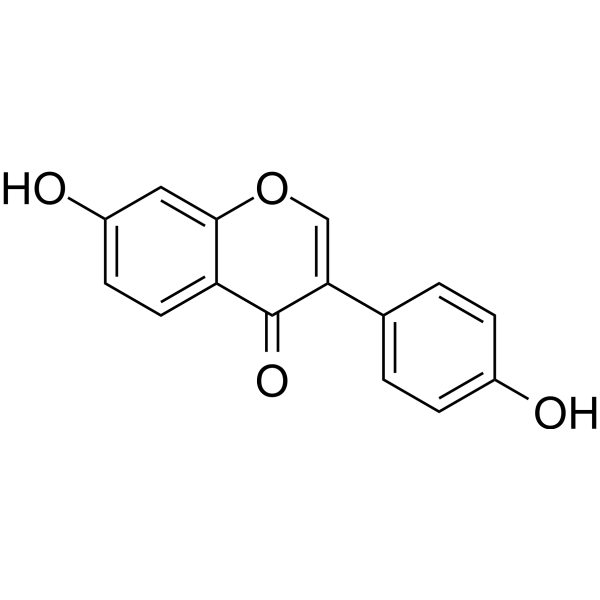
HY-N0019
DaidzeinEndogenous Metabolite -
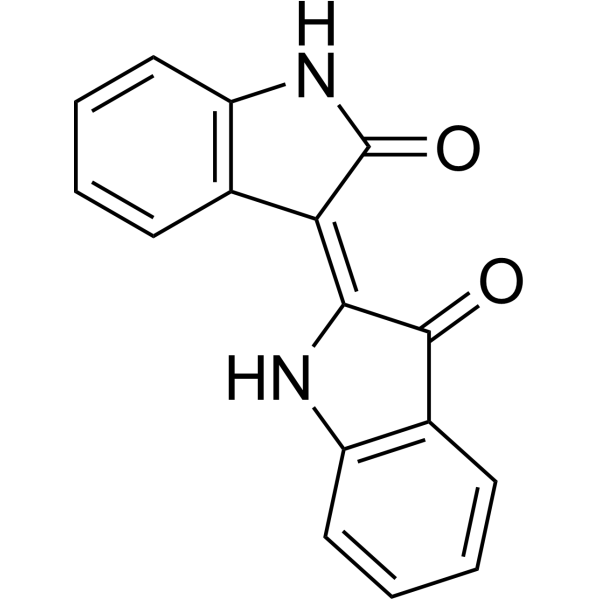
HY-N0117
IndirubinAnticancer Agent -
HY-N6984
GlycyrosideIsoflavone diglycoside


Biologische Aktivität
Beschreibung
IC50 & Target
[1]|
IL-1β |
IL-6 |
In Vitro
Benzoylpaeoniflorin (0-800 μM; 24-72 h) shows no cytotoxicity against human HaCaT keratinocytes at concentrations up to 200 μM and exposure durations up to 72 h, while higher concentrations induce dose- and time-dependent cytotoxicity[1].
Benzoylpaeoniflorin (200 μM; 0-14 d) inhibits TNF-α-induced proliferation of human HaCaT keratinocytes by arresting cell cycle progression, and a sustained antiproliferative effect is observable within 14 d[1].
Benzoylpaeoniflorin (200 μM) inhibits TNF-α-induced activation of the NF-κB pathway in human HaCaT keratinocytes, reduces the nuclear translocation of p-p65, and decreases the secretion of downstream proinflammatory cytokines IL-1β, IL-6 and CXCL10[1].
Benzoylpaeoniflorin (0-10 μM; 9-30 h) inhibits LPS (HY-D1056)-induced mRNA and protein expression of IL-6 and TNF-α in HUVECs and THP-1 macrophages in a time- and dose-dependent manner[2].
Benzoylpaeoniflorin (0-50 μM; 48 h) exhibits no cytotoxicity towards human umbilical vein endothelial cells (HUVECs) and THP-1 macrophages[2].
Benzoylpaeoniflorin (2-10 μM; 9-30 h) inhibits LPS-induced iNOS mRNA and protein expression in a time- and dose-dependent manner, as well as NO production in human umbilical vein endothelial cells (HUVECs) induced by LPS + IFN-γ[2].
Benzoylpaeoniflorin (2-10 μM; 7 h) inhibits the phosphorylation of NF-κB (p65) and mitogen-activated protein kinases (MAPKs, including p38, JNK, ERK) induced by LPS in human umbilical vein endothelial cells (HUVECs) and THP-1 macrophages in a time- and dose-dependent manner[2].
Benzoylpaeoniflorin (5-100 μM; 24 h) inhibits HDC activity in *Klebsiella pneumoniae* cultures, and incubation at 100 μM for 24 h reduces histamine production by up to 50%[3].
Benzoylpaeoniflorin (25 h) potently inhibits IgE-mediated mast cell degranulation in DNP-BSA-stimulated RBL-2H3 cells: it exhibits an EC50 of 6.34 μM for inhibiting β-HEX and an EC50 of 18.06 μM for inhibiting HIS, and shows no cytotoxicity at concentrations up to 100 μM[3].
Benzoylpaeoniflorin (5-100 μM; 25 h) downregulates the production of proinflammatory cytokines IL-3, IL-4, IL-5 and IL-13 in DNP-BSA-stimulated RBL-2H3 cells[3].
Benzoylpaeoniflorin inhibits the activation of the MAPK signaling pathway in DNP-BSA-stimulated RBL-2H3 cells by reducing the phosphorylation levels of p38, ERK1/2 and JNK proteins[3].
MedChemExpress (MCE) has not independently confirmed the accuracy of these methods. They are for reference only. Further protocols information, click here.
-
Cell Line:Human HaCaT keratinocytes
-
Concentration:0, 50, 100, 200, 300, 400, 600, 800 μM
-
Incubation Time:24, 48, 72 h
-
Result:Showed no significant cytotoxicity at concentrations below 200 μM after 72 h of continuous treatment.
Induced a dose-dependent and time-dependent decrease in cell viability at concentrations exceeding 300 μM.
Reduced cell survival rate to less than 50% after 72 h exposure at concentrations above 400 μM.
-
Cell Line:DNP-BSA-stimulated RBL-2H3 cells
-
Concentration:5, 25, 100 μM
-
Incubation Time:24 h (prior to 1 h DNP-BSA stimulation)
-
Result:Markedly downregulated the overproduction of IL-3, IL-4, IL-5, and IL-13 compared to the model group.
In Vivo
Benzoylpaeoniflorin (0.09-0.44 mg/kg; intravenous injection; single administration concurrent with LPS treatment) dose-dependently reduces the production of inflammatory cytokines in serum and peritoneal fluid of LPS-induced mice, alleviates lung tissue injury in mice with non-lethal sepsis, and improves the survival rate of mice[2].
Benzoylpaeoniflorin (45-180 mg/kg; p.o.; single administration) dose-dependently inhibits IgE-mediated passive cutaneous anaphylaxis in BALB/c mice[3].
MedChemExpress (MCE) has not independently confirmed the accuracy of these methods. They are for reference only.
-
Animal Model:SKH-1 hairless mice (female, 6 to 8-week-old)[1]
-
Dosage:0.3% cream; 0.6% cream
-
Administration:topical; daily; 7 days
-
Result:Improved the clinical symptoms and histological features of skin lesions.
Regulated the proportion of immune cells, restores the balance of Th17/Treg cells, and alleviated inflammatory responses by inhibiting the TNF-α/NF-κB signaling pathway.
-
Animal Model:C57BL/6 (male, 8-week-old, 27 ± 0.5 g, LPS-induced non-lethal septic shock model)[2]
-
Dosage:0.09, 0.22, 0.44 mg/kg
-
Administration:i.v.; single dose concurrent with LPS administration
-
Result:Reduced serum levels of IL-6, TNF-α, IL-1β, CXCL1, and CXCL2, as well as levels of these cytokines in peritoneal fluid.
Significantly reduced histopathological scores of lung tissue (based on inflammatory cell infiltration and lesion area).\nAlleviated LPS-induced lung damage as shown by H&E staining.
Achieved 40% survival rate (8 out of 20 mice) at 0.22 mg/kg.
Achieved 60% survival rate (12 out of 20 mice) at 0.44 mg/kg. Control group had 10% survival rate (2 out of 20 mice).
-
Animal Model:C57BL/6 (male, 8-week-old, 27 ± 0.5 g, cecal ligation and puncture (CLP)-induced sepsis model)[2]
-
Dosage:0.09, 0.22, 0.44 mg/kg
-
Administration:i.v.; administered post-CLP; repeated every 24 hours (survival study)
-
Result:Reduced levels of IL-6, TNF-α, and CXCL1 in peritoneal macrophages collected from CLP-operated mice.
Achieved 45% survival rate (9 out of 20 mice) at 0.22 mg/kg for 96 hours.
Achieved 65% survival rate (13 out of 20 mice) at 0.44 mg/kg for 96 hours.
-
Animal Model:BALB/c (5-week-old male)[3]
-
Dosage:45 mg/kg; 90 mg/kg; 180 mg/kg
-
Administration:p.o.; single dose
-
Result:Reduced Evans blue dye leakage from mouse ears in a dose-dependent manner.
Showed statistically significant decreases in absorbance at 620 nm compared to the model group for all tested doses.


Chemical Information
-
CAS. Nr. 38642-49-8
-
Appearance Solid
-
Molecular Weight 584.57
-
Formel C30H32O12
-
Color White to off-white
-
SMILES
O=C(C1=CC=CC=C1)OCC(C(C2(O)O3)C4)(C3OC5(C2)C)C45OC(C(C(O)C6O)O)OC6COC(C7=CC=CC=C7)=O
-
Structure Classification
-
Initial Source
-
Versand
Room temperature in continental US; may vary elsewhere.
-
Speicherung
Powder -20°C 3 years 4°C 2 years In solvent -80°C 6 months -20°C 1 month


Lösungsmittel & Löslichkeit
In Vitro:
DMSO : 100 mg/mL (171.07 mM; Need ultrasonic; Hygroscopic DMSO has a significant impact on the solubility of product, please use newly opened DMSO)
Please refer to the solubility information to select the appropriate solvent. Once prepared, please aliquot and store the solution to prevent product inactivation from repeated freeze-thaw cycles.
Storage method and period of stock solution: -80°C, 6 months; -20°C, 1 month. When stored at -80°C, please use it within 6 months. When stored at -20°C, please use it within 1 month.
Please refer to the solubility information to select the appropriate solvent. Once prepared, please aliquot and store the solution to prevent product inactivation from repeated freeze-thaw cycles.
Storage method and period of stock solution: -80°C, 6 months; -20°C, 1 month. When stored at -80°C, please use it within 6 months. When stored at -20°C, please use it within 1 month.
Konzentration (Stammlösung) × Volumen (Stammlösung) = Konzentration (Ziellösung) × Volumen (Ziellösung)
In Vivo:
Select the appropriate dissolution method based on your experimental animal and administration route.
- For the following dissolution methods, please ensure to first prepare a clear stock solution using an In Vitro approach and then sequentially add co-solvents:
- To ensure reliable experimental results, the clarified stock solution can be appropriately stored based on storage conditions. As for the working solution for In Vivo experiments, it is recommended to prepare freshly and use it on the same day.
- The percentages shown for the solvents indicate their volumetric ratio in the final prepared solution. If precipitation or phase separation occurs during preparation, heat and/or sonication can be used to aid dissolution.
Add each solvent one by one: 10% DMSO 40% PEG300 5% Tween-80 45% Saline
Solubility: ≥ 2.5 mg/mL (4.28 mM); Clear solution
This protocol yields a clear solution of ≥ 2.5 mg/mL (saturation unknown).
Taking 1 mL working solution as an example, add 100 μL DMSO stock solution (25.0 mg/mL) to 400 μL PEG300, and mix evenly; then add 50 μL Tween-80 and mix evenly; then add 450 μL Saline to adjust the volume to 1 mL.
Preparation of Saline: Dissolve 0.9 g sodium chloride in ddH₂O and dilute to 100 mL to obtain a clear Saline solution.
Add each solvent one by one: 10% DMSO 90% (20% SBE-β-CD in Saline)
Solubility: ≥ 2.5 mg/mL (4.28 mM); Clear solution
This protocol yields a clear solution of ≥ 2.5 mg/mL (saturation unknown).
Taking 1 mL working solution as an example, add 100 μL DMSO stock solution (25.0 mg/mL) to 900 μL 20% SBE-β-CD in Saline, and mix evenly.
Preparation of 20% SBE-β-CD in Saline (4°C, storage for one week): 2 g SBE-β-CD powder is dissolved in 10 mL Saline, completely dissolve until clear.
In Vivo Dissolution Calculator
Please enter the basic information of animal experiments:
-
-
-
-
Recommended: Prepare an additional quantity of animals to account for potential losses during experiments.
Please enter your animal formula composition:
-
%DMSO +
Recommended: Keep the proportion of DMSO in working solution below 2% if your animal is weak.
-
%+
-
+%Tween-80 + +
-
%Saline +
The co-solvents required include: DMSO, . All of co-solvents are available by MedChemExpress (MCE). , Tween 80. All of co-solvents are available by MedChemExpress (MCE).
Working solution concentration: 0.22 mg/mL
Method for preparing stock solution: mg drug dissolved in μL DMSO. Stock solution concentration: mg/mL.
1. Take μL DMSO stock solution;
2. Add μL .
μL , mix evenly;
3. Then add μL Tween 80, mix evenly;
4. Then add μL
Please ensure that the stock solution in the first step is dissolved to a clear state, and add co-solvents in sequence. You can use ultrasonic heating (ultrasonic cleaner, recommended frequency 20-40 kHz), vortexing, etc. to assist dissolution.

Protokoll
-
LPS-Induced Endotoxemia/Systemic Inflammation
Lipopolysaccharide (LPS)-induced endotoxemia is a widely used in vivo model of acute systemic inflammation in which LPS, a Gram-negative bacterial endotoxin, activates innate immune signaling primarily through TLR4, leading to rapid and transient induction of pro-inflammatory cytokines such as TNF-α, IL-6, and IL-1β in circulation and tissues. This cytokine surge is commonly used as a measurable readout of systemic inflammatory activation and immune dysregulation, and is typically assessed within hours after intraperitoneal LPS administration in mouse models of endotoxemia. The model captures key features of systemic inflammatory response syndrome, including cytokine release, immune cell activation, and downstream tissue responses, and has been used to evaluate anti-inflammatory interventions such as cytokine modulation, lipid mediators, and immune cell-targeting therapies.
-
Imiquimod-Induced Psoriasiform Dermatitis
Imiquimod (IMQ)-induced psoriasiform dermatitis is a widely used murine model in which topical application of IMQ, a Toll-like receptor 7 (TLR7) agonist, triggers innate immune activation in the skin and induces a psoriasis-like inflammatory cascade characterized by epidermal hyperplasia, immune cell infiltration, and cytokine production dominated by the IL-23/IL-17 axis. This inflammatory response is mediated through activation of dendritic cells and downstream induction of IL-23, IL-17A, IL-22, and related pro-inflammatory mediators, recapitulating key features of human plaque psoriasis and enabling mechanistic and therapeutic studies. The model is commonly induced using Aldara (5% IMQ cream) applied topically to murine skin, resulting in rapid onset of erythema, scaling, and thickening that can be quantified as disease severity indices and validated histologically.
-
Research Protocol for Inflammation-related Diseases
The NLRP3 inflammasome is a cytosolic innate immune signaling platform that integrates priming signals and danger-signal activation to promote caspase-1 activation, maturation of IL-1β and IL-18, and gasdermin D-mediated pyroptotic cell death. The core experimental logic is to determine whether inflammatory disease phenotypes are driven by increased NLRP3 expression, ASC-containing inflammasome assembly, caspase-1 cleavage, GSDMD cleavage, and extracellular release of IL-1β/IL-18 rather than by nonspecific cell injury alone. The pathway is strongly linked to inflammation-related disease phenotypes because monosodium urate crystals activate NALP3/NLRP3 inflammasome signaling in gout-like crystal inflammation, cholesterol crystals activate NLRP3 inflammasomes in atherogenesis models, and DSS-induced intestinal inflammation has been reported to involve NLRP3 inflammasome activity. However, experimental colitis studies also show context-dependent protective effects of NLRP3 inflammasome co


Reinheit & Dokumentation
-
Data Sheet (290 KB)
-
SDS (393 KB)
- English - EN (393 KB)
- Français - FR (393 KB)
- Deutsch - DE (393 KB)
- Norwegian - NO (393 KB)
- Español - ES (393 KB)
- Swedish - SV (393 KB)
- Italian - IT (393 KB)
- Korean - KR (393 KB)
- Portuguese - PT (393 KB)
-
Handling Instructions (2659 KB)
Verweise
[1]. Wei J, et al. Benzoylpaeoniflorin alleviates psoriasis-like inflammation by modulating immune balance and inhibiting NF-κB signaling pathway. Bioorg Chem. 2025;163:108711. [Content Brief]
[2]. Kim C, et al. Benzoylpaeoniflorin Activates Anti-Inflammatory Mechanisms to Mitigate Sepsis in Cell-Culture and Mouse Sepsis Models. Int J Mol Sci. 2022;23(21):13130. Published 2022 Oct 28. [Content Brief]
[3]. Zhong WC, et al. Anti-anaphylactic potential of benzoylpaeoniflorin through inhibiting HDC and MAPKs from Paeonia lactiflora. Chin J Nat Med. 2021;19(11):825-835. [Content Brief]


Complete Stock Solution Preparation Table
Please refer to the solubility information to select the appropriate solvent. Once prepared, please aliquot and store the solution to prevent product inactivation from repeated freeze-thaw cycles.
Storage method and period of stock solution: -80°C, 6 months; -20°C, 1 month. When stored at -80°C, please use it within 6 months. When stored at -20°C, please use it within 1 month.
| Optional Solvent | Concentration Solvent Mass | 1 mg | 5 mg | 10 mg | 25 mg |
|---|---|---|---|---|---|
| DMSO | 1 mM | 1.7107 mL | 8.5533 mL | 17.1066 mL | 42.7665 mL |
| 5 mM | 0.3421 mL | 1.7107 mL | 3.4213 mL | 8.5533 mL | |
| 10 mM | 0.1711 mL | 0.8553 mL | 1.7107 mL | 4.2766 mL | |
| 15 mM | 0.1140 mL | 0.5702 mL | 1.1404 mL | 2.8511 mL | |
| 20 mM | 0.0855 mL | 0.4277 mL | 0.8553 mL | 2.1383 mL | |
| 25 mM | 0.0684 mL | 0.3421 mL | 0.6843 mL | 1.7107 mL | |
| 30 mM | 0.0570 mL | 0.2851 mL | 0.5702 mL | 1.4255 mL | |
| 40 mM | 0.0428 mL | 0.2138 mL | 0.4277 mL | 1.0692 mL | |
| 50 mM | 0.0342 mL | 0.1711 mL | 0.3421 mL | 0.8553 mL | |
| 60 mM | 0.0285 mL | 0.1426 mL | 0.2851 mL | 0.7128 mL | |
| 80 mM | 0.0214 mL | 0.1069 mL | 0.2138 mL | 0.5346 mL | |
| 100 mM | 0.0171 mL | 0.0855 mL | 0.1711 mL | 0.4277 mL |


Benzoylpaeoniflorin Related Classifications
HY-N0852 Related Classifications
 Powered by Bioz