



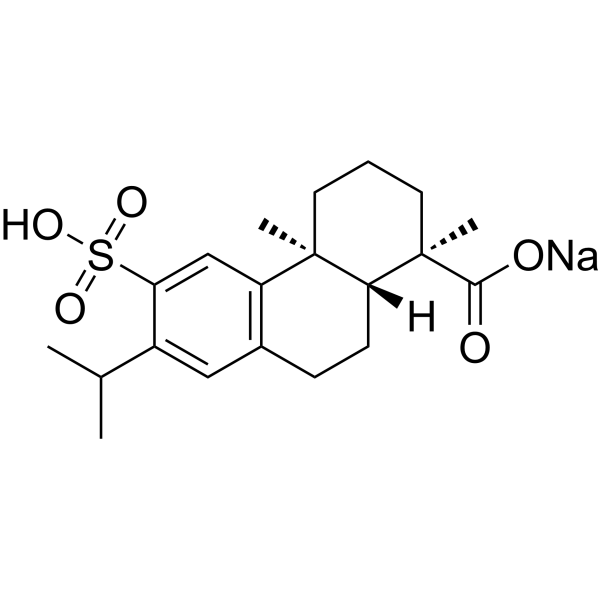
Ecabet sodium

Based on 1 Customer Validation
Ecabet sodium (TA-2711) is currently applied to some gastrointestinal disease by inhibiting the ROS production and improving Helicobacter pylori eradication. Ecabet sodium reduces apoptosis.
Para uso exclusivo en investigación. No vendemos a pacientes.
- Pureza : 98.0%
- No. CAS: 86408-72-2
- Fòrmula: C20H27NaO5S
- Peso molecular:402.48
-
Almacenamiento:
4°C, sealed storage, away from moisture
* In solvent : -80°C, 6 months; -20°C, 1 month (sealed storage, away from moisture)

To place orders, for customer services and technical support, please contact: MedChemExpress USA
Tel: 609-228-6898 E-mail: [email protected] [email protected]


-
 Actividad biológica
-
Chemical Information
-
Solvente y solubilidad
- Protocolo
- Pureza y Documentación
- Referencias
-
 Help & FAQs


-
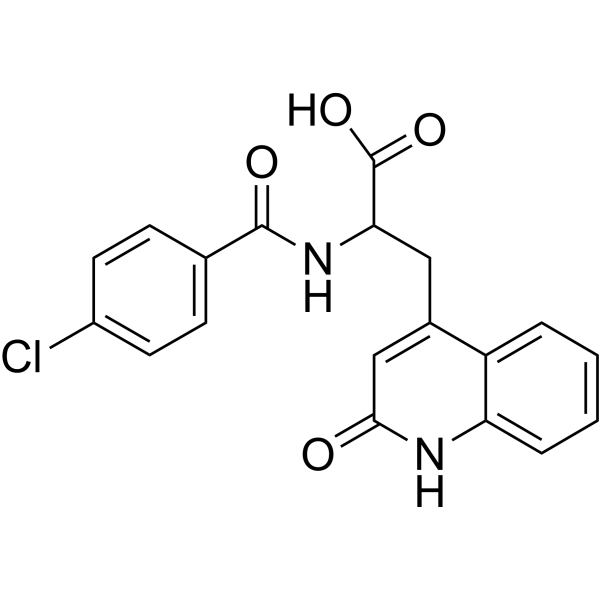
HY-B0360
RebamipideGastroprotective Agent -
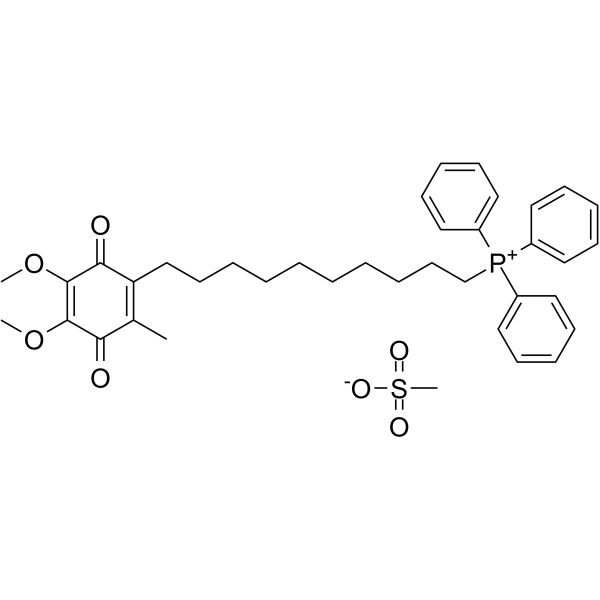
HY-100116A
Mitoquinone mesylateAntioxidant -
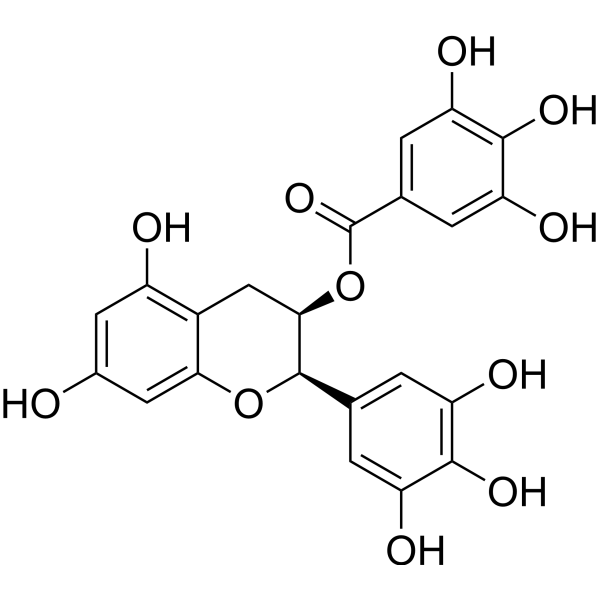
HY-13653
(-)-Epigallocatechin GallateAnticancer Agent -
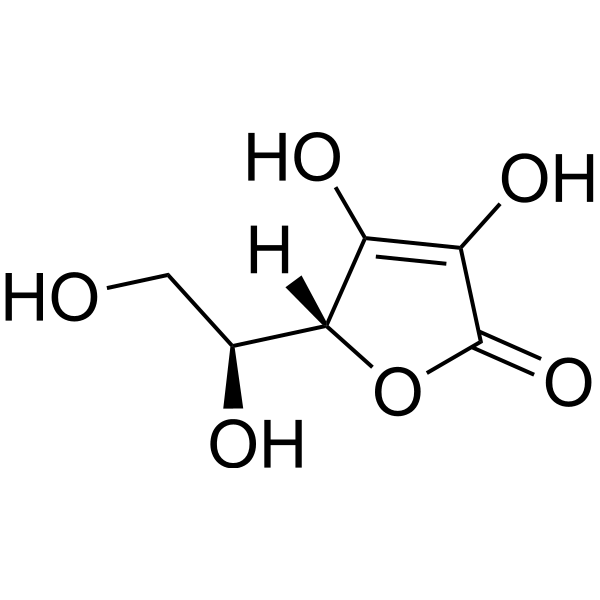
HY-B0166
L-Ascorbic acidAntioxidant -
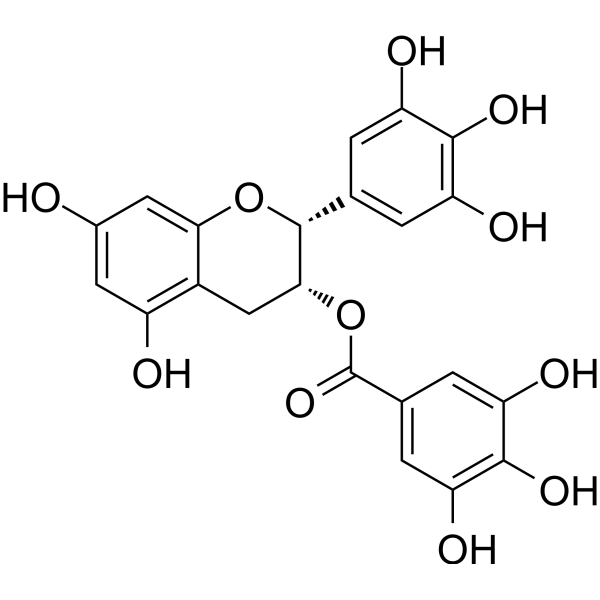
HY-13653R
(-)-Epigallocatechin Gallate (Standard) -
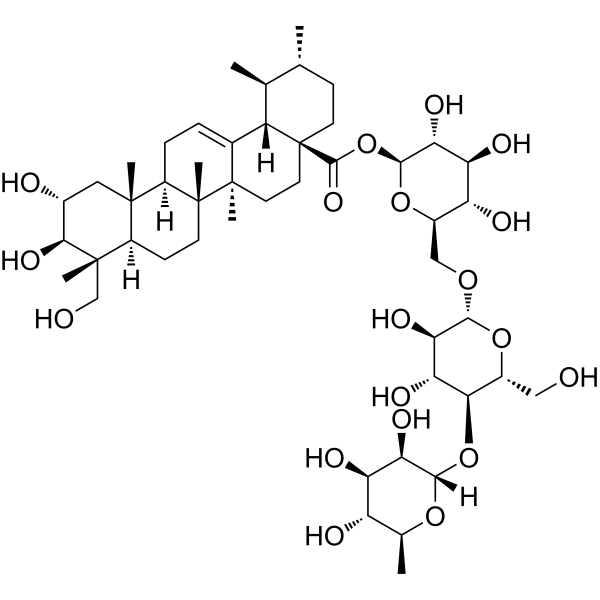
HY-N0439
AsiaticosideTriterpene Glycoside -
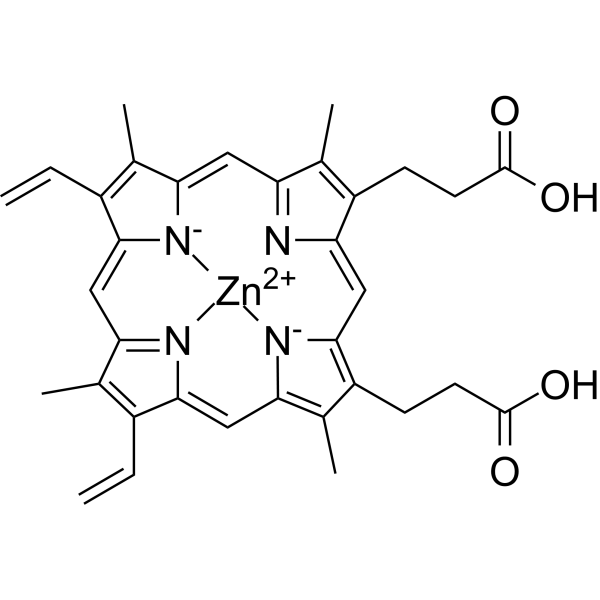
HY-101193
Zinc ProtoporphyrinHO-1 Inhibitor -
HY-B0166G
L-Ascorbic acid (GMP)Antioxidant -

HY-B0166R
L-Ascorbic acid (Standard)Antioxidant -

HY-N0439R
Asiaticoside (Standard)Triterpene Glycoside -
HY-111226
GSK5182ERRγ Inverse Agonist


Actividad biológica
Descripciòn
IC50 & Target


Chemical Information
-
No. CAS 86408-72-2
-
Appearance Solid
-
Peso molecular 402.48
-
Fòrmula C20H27NaO5S
-
Color White to off-white
-
SMILES
O=C([C@]1(C)CCC[C@]2(C)C3=C(CC[C@@]12[H])C=C(C(C)C)C(S(=O)(O)=O)=C3)O[Na]
-
Synonyms
TA-2711
-
Envío
Room temperature in continental US; may vary elsewhere.
-
Almacenamiento
4°C, sealed storage, away from moisture
* In solvent : -80°C, 6 months; -20°C, 1 month (sealed storage, away from moisture)


Solvente y solubilidad
In Vitro:
DMSO : 100 mg/mL (248.46 mM; Need ultrasonic; Hygroscopic DMSO has a significant impact on the solubility of product, please use newly opened DMSO)
Please refer to the solubility information to select the appropriate solvent. Once prepared, please aliquot and store the solution to prevent product inactivation from repeated freeze-thaw cycles.
Storage method and period of stock solution: -80°C, 6 months; -20°C, 1 month (sealed storage, away from moisture). When stored at -80°C, please use it within 6 months. When stored at -20°C, please use it within 1 month.
Please refer to the solubility information to select the appropriate solvent. Once prepared, please aliquot and store the solution to prevent product inactivation from repeated freeze-thaw cycles.
Storage method and period of stock solution: -80°C, 6 months; -20°C, 1 month (sealed storage, away from moisture). When stored at -80°C, please use it within 6 months. When stored at -20°C, please use it within 1 month.
Concentration (start) × Volume (start) = Concentration (final) × Volume (final)
In Vivo:
Select the appropriate dissolution method based on your experimental animal and administration route.
- For the following dissolution methods, please ensure to first prepare a clear stock solution using an In Vitro approach and then sequentially add co-solvents:
- To ensure reliable experimental results, the clarified stock solution can be appropriately stored based on storage conditions. As for the working solution for In Vivo experiments, it is recommended to prepare freshly and use it on the same day.
- The percentages shown for the solvents indicate their volumetric ratio in the final prepared solution. If precipitation or phase separation occurs during preparation, heat and/or sonication can be used to aid dissolution.
Add each solvent one by one: 10% DMSO 40% PEG300 5% Tween-80 45% Saline
Solubility: ≥ 2.5 mg/mL (6.21 mM); Clear solution
This protocol yields a clear solution of ≥ 2.5 mg/mL (saturation unknown).
Taking 1 mL working solution as an example, add 100 μL DMSO stock solution (25.0 mg/mL) to 400 μL PEG300, and mix evenly; then add 50 μL Tween-80 and mix evenly; then add 450 μL Saline to adjust the volume to 1 mL.
Preparation of Saline: Dissolve 0.9 g sodium chloride in ddH₂O and dilute to 100 mL to obtain a clear Saline solution.
Add each solvent one by one: 10% DMSO 90% (20% SBE-β-CD in Saline)
Solubility: ≥ 2.5 mg/mL (6.21 mM); Clear solution
This protocol yields a clear solution of ≥ 2.5 mg/mL (saturation unknown).
Taking 1 mL working solution as an example, add 100 μL DMSO stock solution (25.0 mg/mL) to 900 μL 20% SBE-β-CD in Saline, and mix evenly.
Preparation of 20% SBE-β-CD in Saline (4°C, storage for one week): 2 g SBE-β-CD powder is dissolved in 10 mL Saline, completely dissolve until clear.
In Vivo Dissolution Calculator
Please enter the basic information of animal experiments:
-
-
-
-
Recommended: Prepare an additional quantity of animals to account for potential losses during experiments.
Please enter your animal formula composition:
-
%DMSO +
Recommended: Keep the proportion of DMSO in working solution below 2% if your animal is weak.
-
%+
-
+%Tween-80 + +
-
%Saline +
The co-solvents required include: DMSO, . All of co-solvents are available by MedChemExpress (MCE). , Tween 80. All of co-solvents are available by MedChemExpress (MCE).
Working solution concentration: 0.22 mg/mL
Method for preparing stock solution: mg drug dissolved in μL DMSO. Stock solution concentration: mg/mL. * In solvent : -80°C, 6 months; -20°C, 1 month (sealed storage, away from moisture)
1. Take μL DMSO stock solution;
2. Add μL .
μL , mix evenly;
3. Then add μL Tween 80, mix evenly;
4. Then add μL
Please ensure that the stock solution in the first step is dissolved to a clear state, and add co-solvents in sequence. You can use ultrasonic heating (ultrasonic cleaner, recommended frequency 20-40 kHz), vortexing, etc. to assist dissolution.


Pureza y Documentación
-
Ficha de datos (275 KB)
-
SDS (252 KB)
- English - EN (252 KB)
- Français - FR (252 KB)
- Deutsch - DE (252 KB)
- Norwegian - NO (252 KB)
- Español - ES (252 KB)
- Swedish - SV (252 KB)
- Italian - IT (252 KB)
- Korean - KR (252 KB)
- Portuguese - PT (252 KB)
-
Instrucciones de manejo (2659 KB)
Referencias
[1]. Wang Y, et al. Efficacy and safety of ecabet sodium as an adjuvant therapy for Helicobacter pylori eradication: a systematic review and meta-analysis. Helicobacter. 2014 Oct;19(5):372-81. [Content Brief]
[2]. Rah YC, et al. Ecabet sodium alleviates neomycin-induced hair cell damage. Free Radic Biol Med. 2015 Dec;89:1176-83. [Content Brief]
[3]. Kenji Kusumoto, et al. Ecabet sodium inhibits Helicobacter pylori lipopolysaccharide-induced activation of NADPH oxidase 1 or apoptosis of guinea pig gastric mucosal cells. Am J Physiol Gastrointest Liver Physiol [Content Brief]


Complete Stock Solution Preparation Table
Please refer to the solubility information to select the appropriate solvent. Once prepared, please aliquot and store the solution to prevent product inactivation from repeated freeze-thaw cycles.
Storage method and period of stock solution: -80°C, 6 months; -20°C, 1 month (sealed storage, away from moisture). When stored at -80°C, please use it within 6 months. When stored at -20°C, please use it within 1 month.
| Optional Solvent | Concentration Solvent Mass | 1 mg | 5 mg | 10 mg | 25 mg |
|---|---|---|---|---|---|
| DMSO | 1 mM | 2.4846 mL | 12.4230 mL | 24.8460 mL | 62.1149 mL |
| 5 mM | 0.4969 mL | 2.4846 mL | 4.9692 mL | 12.4230 mL | |
| 10 mM | 0.2485 mL | 1.2423 mL | 2.4846 mL | 6.2115 mL | |
| 15 mM | 0.1656 mL | 0.8282 mL | 1.6564 mL | 4.1410 mL | |
| 20 mM | 0.1242 mL | 0.6211 mL | 1.2423 mL | 3.1057 mL | |
| 25 mM | 0.0994 mL | 0.4969 mL | 0.9938 mL | 2.4846 mL | |
| 30 mM | 0.0828 mL | 0.4141 mL | 0.8282 mL | 2.0705 mL | |
| 40 mM | 0.0621 mL | 0.3106 mL | 0.6211 mL | 1.5529 mL | |
| 50 mM | 0.0497 mL | 0.2485 mL | 0.4969 mL | 1.2423 mL | |
| 60 mM | 0.0414 mL | 0.2070 mL | 0.4141 mL | 1.0352 mL | |
| 80 mM | 0.0311 mL | 0.1553 mL | 0.3106 mL | 0.7764 mL | |
| 100 mM | 0.0248 mL | 0.1242 mL | 0.2485 mL | 0.6211 mL |


Ecabet sodium Related Classifications
HY-B0691A Related Classifications
 Powered by Bioz