



Bax
BAX (BCL2-associated X protein) is a pro-apoptotic member of the BCL-2 family that regulates programmed cell death through mitochondrial apoptosis and functions as a critical determinant of cellular survival following apoptotic stimuli[1][2]. BAX forms heterodimers with anti-apoptotic BCL-2 proteins, and the balance between BAX and BCL-2 influences mitochondrial outer membrane permeabilization (MOMP), cytochrome c release, and activation of the intrinsic apoptotic pathway[2][3][4]. Mechanistically, BAX belongs to the pore-forming executioner subgroup of the BCL-2 family and undergoes activation in response to cellular stress signals, including p53-dependent apoptotic signaling, thereby promoting mitochondrial membrane permeabilization and irreversible cell death commitment[1][3][5]. In disease models, dysregulated BAX activity contributes to the pathophysiology of cancer, neurodegenerative disorders, and other apoptosis-associated conditions, making mitochondrial apoptosis a major target for therapeutic intervention[3][4][6]. Compared with related BCL-2 family isoforms, BAX is distinguished by its direct executioner function in apoptosis, whereas many alternative BCL-2 family isoforms display variable anti-apoptotic or context-dependent activities that remain incompletely characterized[3]. A notable BAX isoform, BaxΔ2, retains pro-apoptotic activity despite N-terminal alterations, highlighting functional diversity within the BAX locus and providing experimental models for studying non-canonical apoptotic mechanisms[7]. For experimental applications, BAX-dependent signaling is widely used to evaluate mitochondrial apoptosis, while therapeutic strategies targeting BCL-2 family interactions, including BH3 mimetics, are actively investigated to modulate BAX-mediated cell death in cancer research[3][6].
References:
- [1]. Brady HJ, et al. Bax. The pro-apoptotic Bcl-2 family member, Bax. Int J Biochem Cell Biol. 1998 Jun;30(6):647-50. [Content Brief]
- [2]. Bax gene information from NCBI.
- [3]. Warren CFA, et al. BCL-2 family isoforms in apoptosis and cancer. Cell Death Dis. 2019 Feb 21;10(3):177. [Content Brief]
- [4]. Vogler M, et al. The BCL2 family: from apoptosis mechanisms to new advances in targeted therapy. Signal Transduct Target Ther. 2025 Mar 21;10(1):91. [Content Brief]
- [5]. Maes ME, et al. BAX to basics: How the BCL2 gene family controls the death of retinal ganglion cells. Prog Retin Eye Res. 2017 Mar;57:1-25. [Content Brief]
- [6]. Huang Y, et al. The adjuvant treatment role of ω-3 fatty acids by regulating gut microbiota positively in the acne vulgaris. J Dermatolog Treat. 2024 Dec;35(1):2299107. [Content Brief]
- [7]. Rabezanahary H, et al. Live virus neutralizing antibodies against pre and post Omicron strains in food and retail workers in Québec, Canada. Heliyon. 2024 May 21;10(10):e31026. [Content Brief]
-
Bax Related Products (220)
Related Products (220)

-
Antibodies (3)
-
8-Acetonyldihydronitidine
 0 ImagesCat. No.: HY-N21597CAS No.: 80330-39-88‑Acetonyldihydronitidine is a naturally occurring benzophenanthridine alkaloid with antibacterial, antifungal, and anti-proliferative activities against colorectal cancer cells. 8‑Acetonyldihydronitidine inhibits Staphylococcus aureus and exerts a potent antifungal effect against Cladosporium cladosporioides. 8‑Acetonyldihydronitidine activates the p53 signaling pathway, upregulates the expression of target genes including p21, BAX, and FAS, downregulates cyclin A and cyclin B, and induces cell cycle arrest and apoptosis, thereby suppressing the proliferation of colorectal cancer cells. 8‑Acetonyldihydronitidine is used in research related to colorectal cancer, fungal infections, and bacterial infections.
-
α-D-Manp(3→1)-α-D-Manp(2→1)-α-D-Glu
 0 ImagesCat. No.: HY-181015α-D-Manp(3→1)-α-D-Manp(2→1)-α-D-Glu (Compound C) is an oligosaccharide. α-D-Manp(3→1)-α-D-Manp(2→1)-α-D-Glu activates the PI3K/AKT signaling pathway. α-D-Manp(3→1)-α-D-Manp(2→1)-α-D-Glu significantly inhibits Apoptosis by regulating the Bcl-2/BAX ratio. α-D-Manp(3→1)-α-D-Manp(2→1)-α-D-Glu shows cytoprotective activity by reducing ROS and LDH levels, decreasing MDA activity, and increasing CAT, SOD, and GSH activities. α-D-Manp(3→1)-α-D-Manp(2→1)-α-D-Glu shows neuroprotective effects and antioxidant capacity.
-
Anticancer agent 64
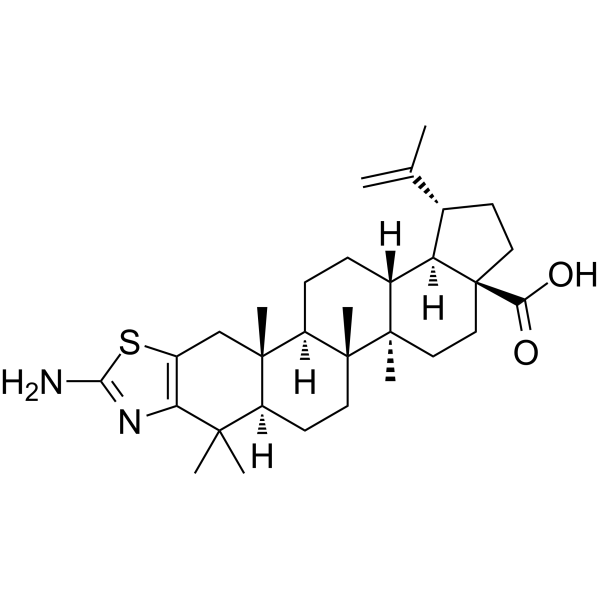 0 ImagesCat. No.: HY-147514CAS No.: 2387902-92-1Anticancer agent 64 (compound 5m) shows cytotoxic activity in CCRF-CEM cells, with IC50 of 2.4 μM. Anticancer agent 64 shows good anticancer activity through apoptosis induction. Anticancer agent 64 induces caspase 3 and 7 activation and PARP cleavage. Anticancer agent 64 induces significant effect of mitochondria depolarization.
-
EGFR/VEGFR2-IN-9
 0 ImagesCat. No.: HY-178942CAS No.: 3123724-88-6EGFR/VEGFR2-IN-9 (Compound 9b) is an inhibitor of VEGFR-2 (IC50 = 1.325 μM) and EGFR (IC50 = 1.891 μM). EGFR/VEGFR2-IN-9 significantly inhibits the proliferation of multiple cancer cell lines, particularly leukemia cells. EGFR/VEGFR2-IN-9 upregulates the expression levels of Bax, caspase-3, and p53, while downregulating the expression of Bcl-2. EGFR/VEGFR2-IN-9 induces apoptosis and arrests the cell cycle in the G1 phase. EGFR/VEGFR2-IN-9 can be used to investigate anti-tumor angiogenesis and multi-drug resistant cancers.
-
Stigmast-5-en-3-ol
 0 ImagesStigmast-5-en-3-ol induces cancer cell apoptosis and inhibits proliferation by increasing the production of Bax, Caspase-9, p53, and PARP cleavage and reducing Bcl-xl expression. Stigmast-5-en-3-ol exhibits potent inhibitory activity against glucoamylase and α-amylase and possesses high antioxidant activity. Stigmast-5-en-3-ol can be used in the research of diseases such as leukemia, breast cancer, type 2 diabetes, and obesity.
-
Candidone
 0 ImagesCat. No.: HY-180324CAS No.: 77727-18-5Candidone is a type of flavanone phenolic compound with anti-cancer and antibacterial activities. Candidone inhibits the proliferation of hepatoblastoma and cholangiocarcinoma cells and induces their apoptosis by up-regulating p21, Bax, and caspase 3/9, and down-regulating Bcl-2 and survivin. It reduces the metastatic ability of cancer cells by inhibiting the expression of phosphorylated p38 and matrix metalloproteinase MMP-9. Candidone has inhibitory effects on multidrug-resistant bacterial strains. Candidone binds to the base pairs of DNA in a groove-binding manner, thereby slightly altering the conformation of DNA.
-
MPQPPAK
 0 ImagesCat. No.: HY-P12336MPQPPAK is a polypeptide obtained from the enzymatic hydrolysis of C-phycocyanin (HY-D1025) and possesses neuroprotective activity. MPQPPAK enhances the activities of antioxidant enzymes SOD, CAT, and GSH-Px, reduces ROS, inhibits apoptosis and acetylcholinesterase (AChE) activity in brain tissue, and decreases protein carbonyl content. In the MPTP (HY-W114750)-induced zebrafish Parkinson's disease model, MPQPPAK exhibits antioxidant effects, inhibits autophagy and apoptosis, reverses the loss of dopaminergic neurons and cerebral blood vessels, and alleviates motor deficits. MPQPPAK can be used for research on Parkinson's disease.
-
iMPZ-8
 0 ImagesCat. No.: HY-181019iMPZ-8 is a β-tubulin polymerization inhibitor that inhibits β-tubulin protein expression, disrupts microtubule structure, impairs microtubule organization. iMPZ-8 inhibits proliferation and reduces cellular migration and colonization in cancer cells. iMPZ-8 induces G2/M phase arrestand induces apoptosis via the BAX-Caspase-3 intrinsic apoptotic signaling pathway. iMPZ-8 can be used for the research of cancer, suah as breast cancer, neuroblastoma and colon cancer.
-
CAIX/CDK-2-IN-1
 0 ImagesCat. No.: HY-179022CAIX/CDK-2-IN-1 is a dual-acting inhibitor of carbonic anhydrase IX (CA IX) and cyclin-dependent kinase-2 (CDK-2) with IC50 values of 0.29 μM and 0.32 μM. The zein nanoparticls of CAIX/CDK-2-IN-1 can induce cancer cells apoptosis. CAIX/CDK-2-IN-1 can be used for the research of cancer, such as lung cancer.
-
MA203
 0 ImagesCat. No.: HY-179157MA203 is a selective CHK1 PROTAC degrader. MA203 targets activated CHK1 for degradation by recruiting the CRBN E3 ubiquitin ligase, thereby completely abolishing both its catalytic and non-catalytic functions and ultimately triggering DNA replication catastrophe and apoptosis. MA203 can be used in research related to pancreatic ductal adenocarcinoma, colorectal cancer, and acute lymphoblastic leukemia.
-
Bcl-2-IN-6
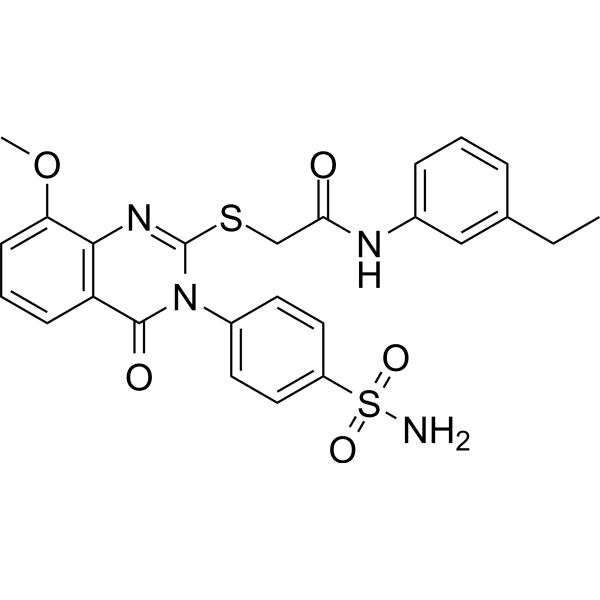 0 ImagesCat. No.: HY-144791CAS No.: 3027734-50-2Bcl-2-IN-6 (compound 10) is a potent Bcl-2 (B-cell lymphoma-2) inhibitor. Bcl-2-IN-7 down-regulates the expression of Bcl-2, and increases the expression of p53, Bax, and caspase-7 mRNA. Bcl-2-IN-7 induces cell cycle arrest and apoptosis in breast cancer MCF-7 cells. Bcl-2-IN-7 shows good anticancer activity, with IC50 values of 20.91, 22.30, 42.29, and 48.00 μM against MCF-7, LoVo, HepG2, and A549 cell lines, respectively.
-
Apoptosis inducer 45
 0 ImagesCat. No.: HY-178099Apoptosis inducer 45 is an apoptosis inducer. Apoptosis inducer 45 is cytotoxically active against the MCF-7 cell line. Apoptosis inducer 45 elicits MCF-7 cell apoptosis via the mitochondrial pathway (increases the Bax/Bcl-2 ratio) by activating cleavage of caspase-9, thereby inducing the fragmentation of DNA repair protein PARP. Apoptosis inducer 45 also can induce caspase-8 cleavage, subsequently initiating cleavage of caspase-3 and its downstream protein PARP to culminate in the extrinsic apoptosis. Apoptosis inducer 45 can be used in the research of breast cancer.
-
PI3K/mTOR-IN-22
 0 ImagesCat. No.: HY-183327PI3K/mTOR-IN-22 is an orally active PI3K/mTOR kinase dual inhibitor with IC50 values of 400.5 nM and 8.2 nM. PI3K/mTOR-IN-22 downregulates phosphorylation of the AKT and mTOR, upregulates pro-apoptotic proteins Bax and caspase-3 and downregulates anti-apoptotic protein Bcl-2. PI3K/mTOR-IN-22 exhibits antiproliferative activity against cancer cells, induces apoptosis and ROS production, and reduces mitochondrial membrane potential. PI3K/mTOR-IN-22 exhibits antitumor activity in breast cancer mice models.
-
VEGFR/PD-L1-IN-1
 0 ImagesCat. No.: HY-183369CAS No.: 2675913-94-5VEGFR/PD-L1-IN-1 is a VEGFR2 and PD-L1 inhibitor, with IC50 values of 0.383 μM and 134.407 pg/mL against VEGFR2 and PD-L1, respectively. VEGFR/PD-L1-IN-1 enhances the secretion of INF-γ, induces G0/G1 cell cycle arrest in cancer cells, and triggers cancer cell apoptosis. VEGFR/PD-L1-IN-1 upregulates the expression of BAX and Caspase-3, and downregulates the expression of Bcl-2. VEGFR/PD-L1-IN-1 can be used in research related to hepatocellular carcinoma, prostate cancer, and colorectal cancer.
-
Multi-kinase-IN-7
 0 ImagesCat. No.: HY-178142Multi-kinase-IN-7 is a multikinase inhibitor with IC50s of 2.19, 2.95, 3.59 and 9.31 μM against EGFR, VEGFR2, TrKA and CDK2, respectively. Multi-kinase-IN-7 shows moderate and weaker activity against FAK, AKT1, GSK3β and CDK5 with IC50 values of 6.3, 9.2, 11.7 and 23.4 μM, respectively. Multi-kinase-IN-7 displays broad spectrum antiproliferative potential against NCI cancer cell lines. Multi-kinase-IN-7 induces cell cycle arrest, apoptosis and necrosis. Multi-kinase-IN-7 Inhibitor can be used for the study of breast cancer.
-
BW-AQ-113
 0 ImagesCat. No.: HY-177208CAS No.: 1537900-10-9BW-AQ-113 is an Anthraquinone (HY-N0354) derivative. BW-AQ-113 can specifically degrade MDM2 and activate the p53 pathway. BW-AQ-113 can induce apoptosis by downregulating anti-apoptotic gene Bcl-2 and regulating pro-apoptotic gene Bax and CASP3. BW-AQ-113 can be used for research of p53 wild-type hematological malignancies.
-
Bcl-2-IN-7
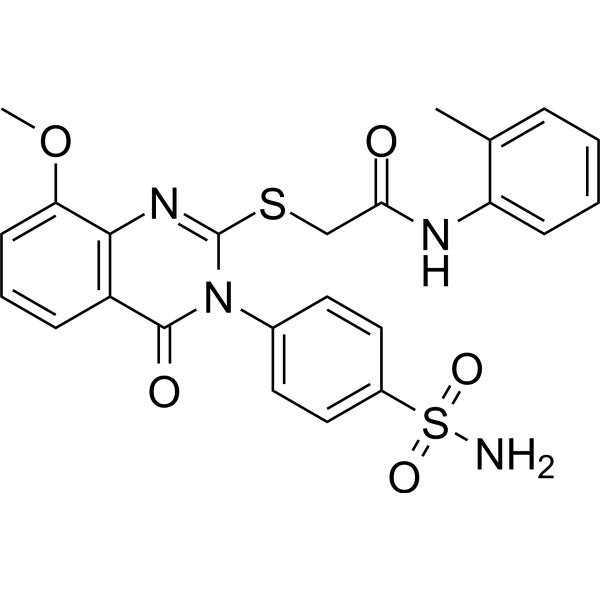 0 ImagesCat. No.: HY-144792CAS No.: 3027734-46-6Bcl-2-IN-7 (compound 6) is a potent Bcl-2 (B-cell lymphoma-2) inhibitor. Bcl-2-IN-7 down-regulates the expression of Bcl-2, and increases the expression of p53, Bax, and caspase-7 mRNA. Bcl-2-IN-7 induces cell cycle arrest and apoptosis in breast cancer MCF-7 cells. Bcl-2-IN-7 shows good anticancer activity, with IC50 values of 20.17, 22.64, 45.57, and 51.50 μM against MCF-7, LoVo, HepG2, and A549 cell lines, respectively.
-
4-Hydroxyresveratrol
 0 ImagesCat. No.: HY-126311CAS No.: 331443-00-6Synonyms: 3,4,5,4'-Tetrahydroxystibene4-Hydroxyresveratrol (3,4,5,4'-Tetrahydroxystibene), a Resveratrol (HY-16561) analog, differentially induces pro-apoptotic p53/Bax gene expression. 4-Hydroxyresveratrol induces apoptosis in SV40 virally transformed WI38 cells (WI38VA) cells, but not in WI38 cells. 4-Hydroxyresveratrol significantly induces the expression of p53, GADD45 and Bax genes and concomitantly suppresses the expression of bcl-2 gene in WI38VA.
-
BChE-IN-49
 0 ImagesCat. No.: HY-181248BChE-IN-49 is an orally active BChE inhibitor with IC50 values of 0.73 μM and 6.43 μM against BChE and AChE, respectively. BChE-IN-49 reduces AChE levels to inhibit the degradation of acetylcholine. By inhibiting GSK-3β, BChE-IN-49 potently activates the Wnt/β-catenin signaling pathway, exerting potent anti-Aβ, antioxidant, anti-neuroinflammatory and anti-apoptotic effects. BChE-IN-49 can be used in research related to Alzheimer's disease.
-
Santamarine
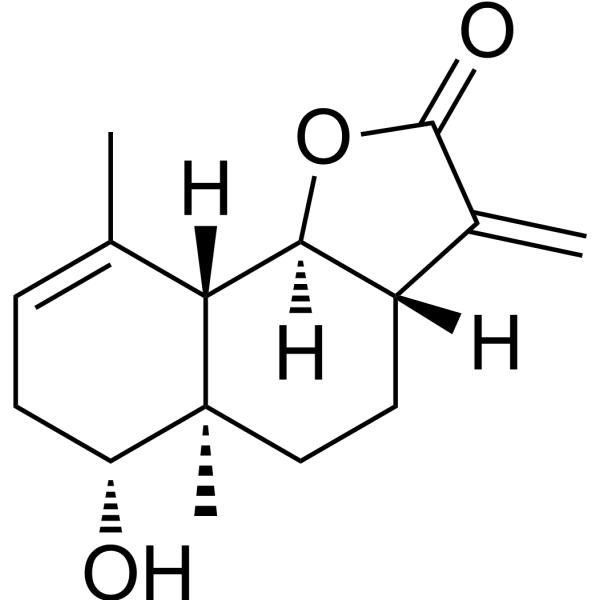 0 ImagesSantamarine (Santamarin; Balchanin) is a sesquiterpene lactone found in Artemisia scoparia. Santamarine shows anti-inflammatory, antioxidant, anticancer and anti-photoaging activities. Santamarine suppresses UVA-induced phosphorylation of JNK and p38 MAPK, nuclear translocation of phosphorylated c-Fos and c-Jun, and AP-1-mediated MMP-1 transcription and secretion. Santamarine suppresses NF-κB signaling, iNOS, COX-2, TNF-α, and IL-1β production. Santamarine inhibits thioredoxin reductase activity, induces ROS production, mitochondrial apoptosis, G2/M cell cycle arrest, and DNA damage, and reduces cancer cell growth. Santamarine can be used for the photoaging, inflammatory diseases and cancer.




