HDAC
Histone deacetylases
HDAC (Histone deacetylases) are a class of enzymes that remove acetyl groups (O=C-CH3) from an ε-N-acetyl lysine amino acid on ahistone, allowing the histones to wrap the DNA more tightly. This is important because DNA is wrapped around histones, and DNA expression is regulated by acetylation and de-acetylation. Its action is opposite to that of histone acetyltransferase. HDAC proteins are now also called lysine deacetylases (KDAC), to describe their function rather than their target, which also includes non-histone proteins. Together with the acetylpolyamine amidohydrolases and the acetoin utilization proteins, the histone deacetylases form an ancient protein superfamily known as the histone deacetylase superfamily.
HDAC Isoform Specific Products
-
HDAC
(393)
View all products
-
HDAC1
(316)
View all products
-
HDAC2
(210)
View all products
-
HDAC3
(204)
View all products
-
HDAC4
(72)
View all products
-
HDAC5
(56)
View all products
-
HDAC6
(337)
View all products
-
HDAC7
(53)
View all products
-
HDAC8
(189)
View all products
-
HDAC9
(41)
View all products
-
HDAC10
(67)
View all products
-
HDAC11
(73)
View all products
-
HD1
(3)
View all products
-
HD2
(4)
View all products
All Product Categories
-
HDAC Inhibitors
(781)
View all products
-
HDAC Antagonists
(3)
View all products
-
HDAC Activators
(14)
View all products
-
HDAC Modulators
(4)
View all products
-
HDAC MDM2 Inhibitor
(1)
View all products
-
HDAC Degraders
(45)
View all products
-
HDAC Controls
(4)
View all products
-
HDAC Substrates
(4)
View all products
-
HDAC Ligands
(15)
View all products
-
HDAC Related Products (920)
Related Products (920)

-
Antibodies (16)
-
HDAC Signaling Pathway
-
HDAC Isoform Comparison
-
Valproic acid-d4
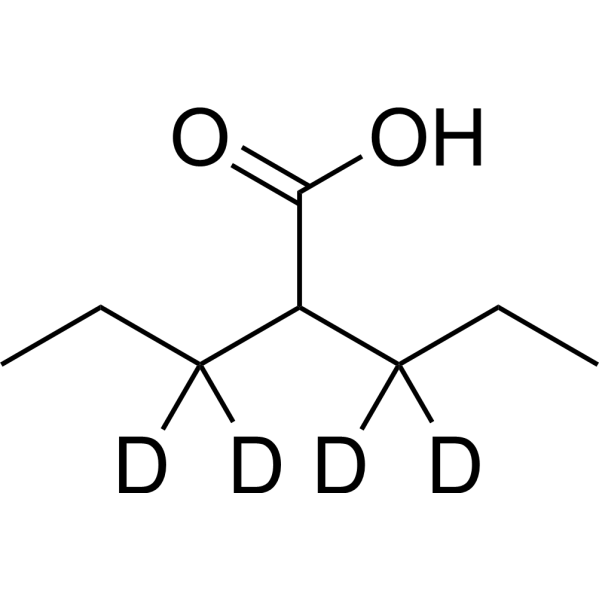 0 ImagesSynonyms: VPA-d4; 2-Propylpentanoic acid-d4Valproic acid-d4 is the deuterium labeled Valproic acid. Valproic acid (VPA; 2-Propylpentanoic Acid) is an HDAC inhibitor, with IC50 in the range of 0.5 and 2 mM, also inhibits HDAC1 (IC50, 400 μM), and induces proteasomal degradation of HDAC2. Valproic acid activates Notch1 signaling and inhibits proliferation in small cell lung cancer (SCLC) cells. Valproic acid sodium salt is used in the treatment of epilepsy, bipolar disorder and prevention of migraine headaches.
-
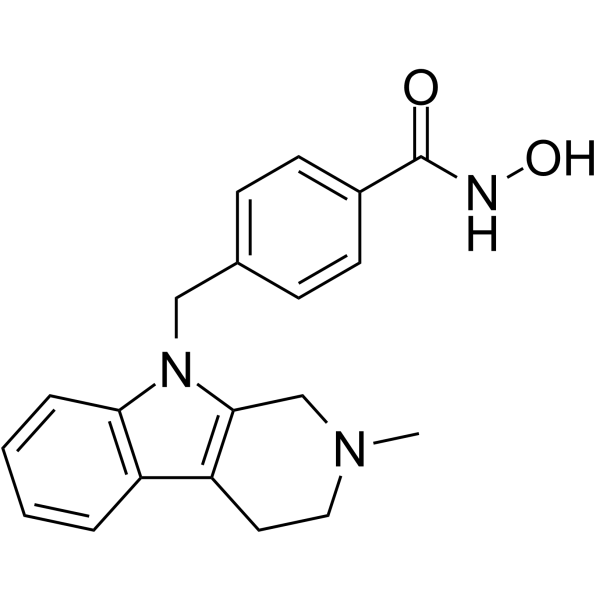
MC1742
 0 ImagesMC1742 is a potent HDAC inhibitor, with IC50s of 0.1 μM, 0.11 μM, 0.02 μM, 0.007 μM, 0.61 μM, 0.04 μM and 0.1 μM for HDAC1, HDAC2, HDAC3, HDAC6, HDAC8, HDAC10 and HDAC11, respectively. MC1742 can increase acetyl-H3 and acetyl-tubulin levels and inhibits cancer stem cells growth. MC1742 can induce growth arrest, apoptosis, and differentiation in sarcoma CSC.
-
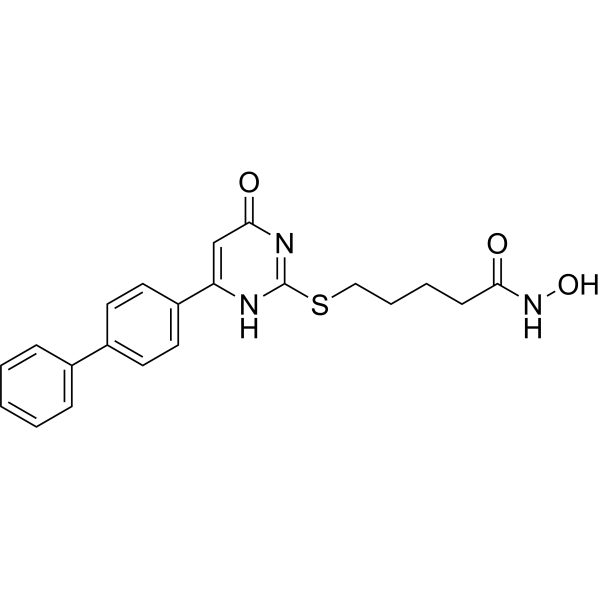
SelSA
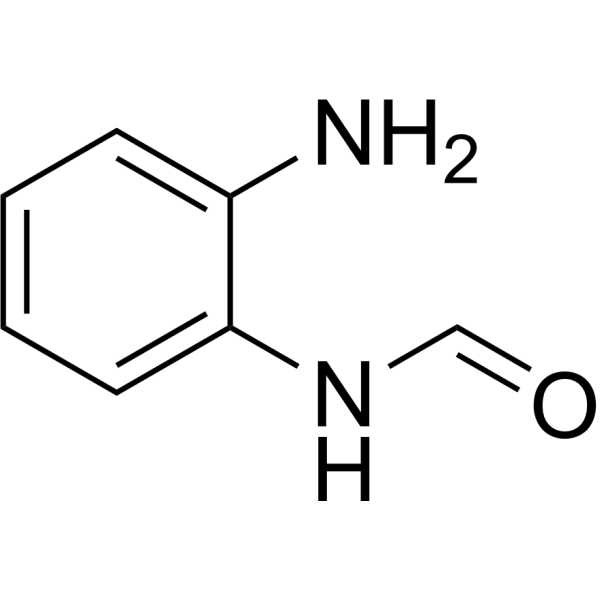
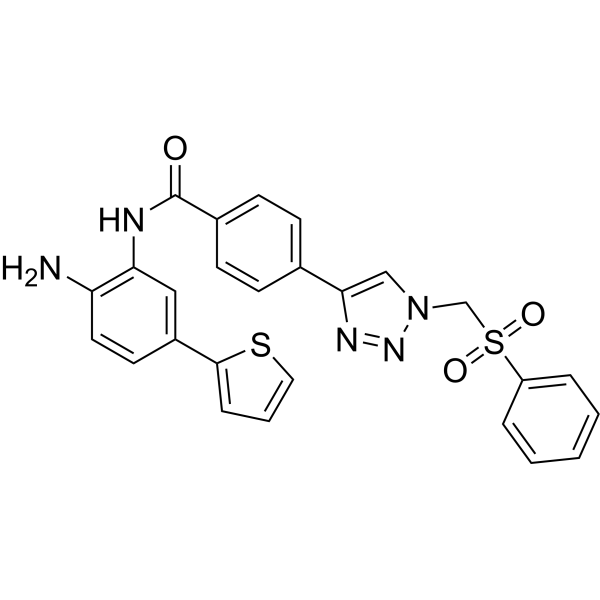
 0 ImagesSelSA is a selective, orally active inhibitor for histone deacetylase 6 (HDAC6) with IC50 of 56.9 nM. SelSA inhibits the phosphorylation of ERK1/2. SelSA inhibits the proliferation of breast cancer cells and hepatocellular carcinoma cells with IC50 of 0.58-2.6 μM, inhibits cell migration and invasion of Huh7, and induces apoptosis. SelSA exhibits antitumor activity in mouse model.

-
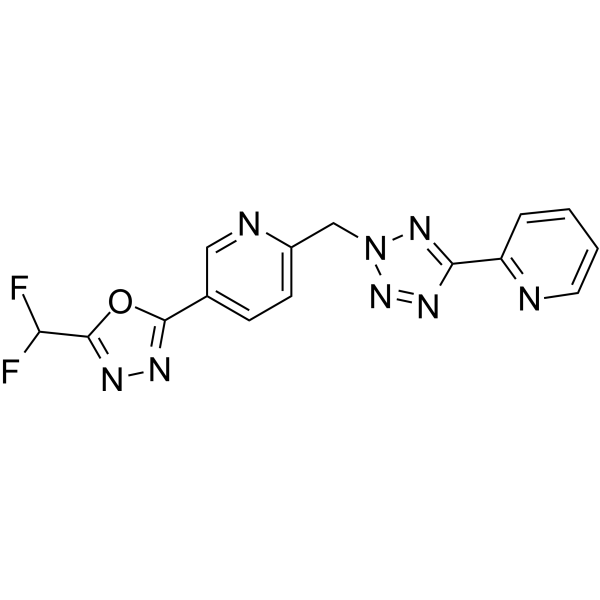
G194-0712
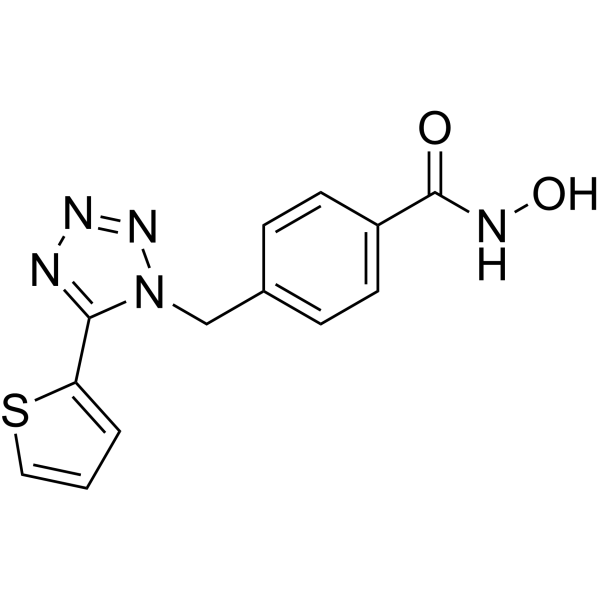
 0 ImagesG194-0712 is a selective histone deacetylase 5 (HDAC5) activator with an EC50 of 7.96 μM and a Kd of 2.53 μM. G194-0712 restores ACTN4-K417 deacetylation and nuclear import, and increases CSTA expression. G194-0712 accelerates wound closure in chronic wound models, reducing wound area and epithelial gap. G194-0712 can be used for the research of chronic skin wounds, such as diabetic wounds, ischemic wounds, radiation injury wounds.
-
HDAC11-IN-3
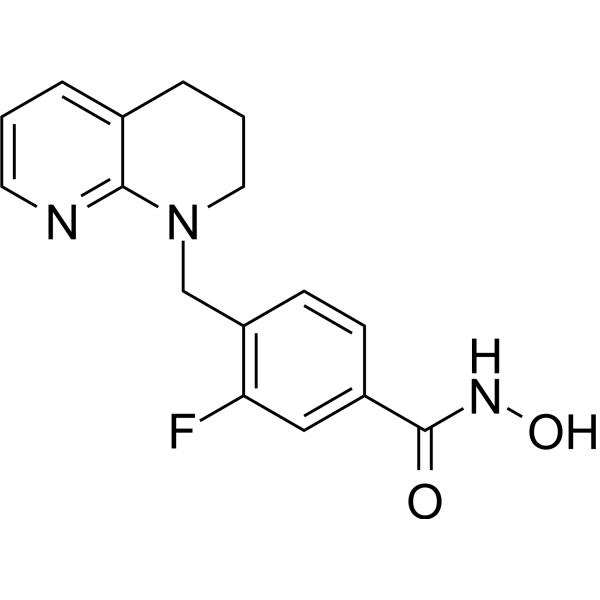
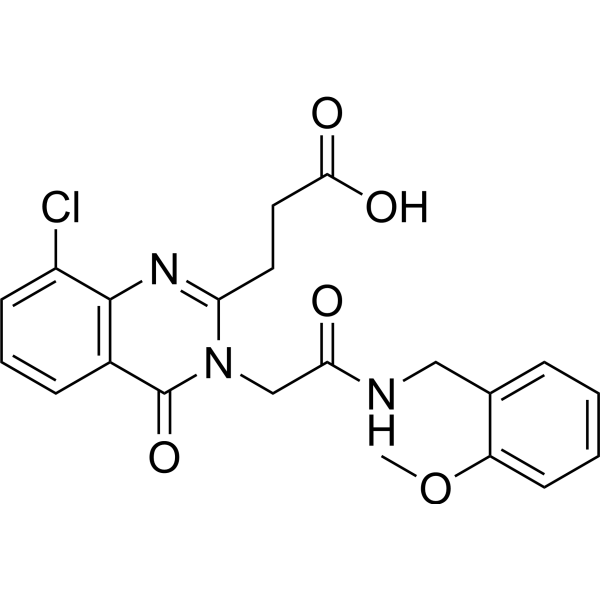
 0 ImagesHDAC11-IN-3 (Compound A9) is a selective HDAC11 inhibitor (IC50: 4.1 nM). HDAC11-IN-3 has inhibitory effects on U937 and OCI-AML2 acute myeloid leukemia (AML) cell lines (IC50: 10 μM). HDAC11-IN-3 has significant anti-AML activity, inducing apoptosis, cell cycle arrest, and differentiation. HDAC11-IN-3 upregulates the iron transporters transferrin (TF) and transferrin receptor (TFRC), and activates the p62-Keap1-Nrf2-HMOX1 pathway, which together lead to increased intracellular iron levels and induce ferroptosis in AML cells. HDAC11-IN-3 can be used alone or in combination with Cytarabine (HY-13605) for AML research.

-
HDAC3-IN-2
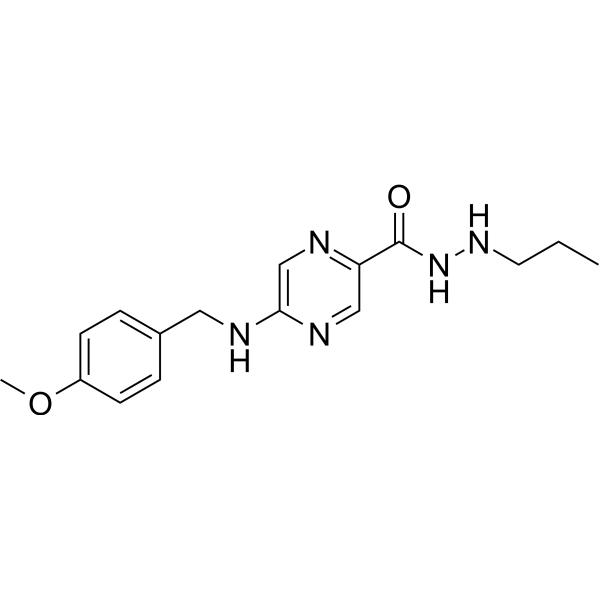 0 ImagesCat. No.: HY-156096CAS No.: 3033039-28-7HDAC3-IN-2 (compound 4i) is a pyrazinyl hydrazide-based HDAC3 inhibitor (IC50: 14 nM) that efficiently targets triple-negative breast cancer cells. HDAC3-IN-2 is cytotoxic with an IC50 of 0.55 μM against 4T1 and an IC50 of 0.74 μM against MDA-MB-231. HDAC3-IN-2 has anti-tumor efficacy in vivo in tumor-bearing mouse models, selectively increasing the acetylation levels of H3K9, H3K27 and H4K12, increasing the contents of apoptosis-related caspase-3, caspase-7 and cytochrome c, and reducing Proliferation-related Bcl-2, CD44, EGFR, and Ki-67 levels.
-
Triciferol
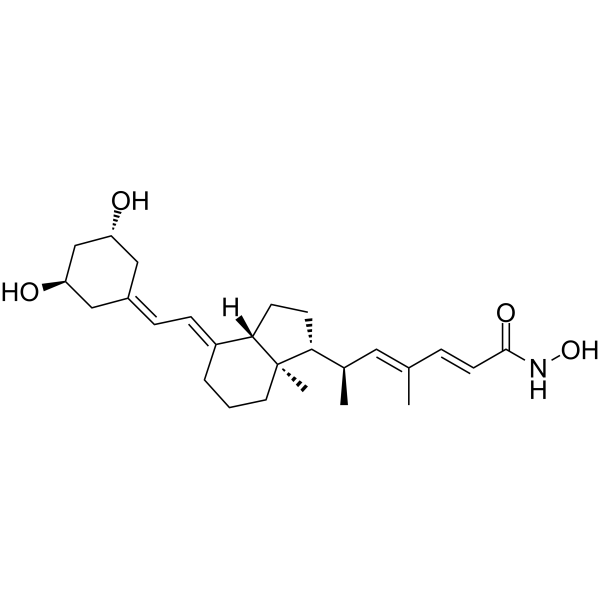 0 ImagesTriciferol functions as a multiple ligand with combined VDR agonist and HDAC antagonist activities. Triciferol binds directly to the VDR (IC50=87 nM), and functions as an agonist with 1,25D-like potency on several 1,25D target genes. Triciferol induces marked tubulin hyperacetylation, and augments histone acetylation. Antiproliferative and cytotoxic activities.

-
1-Stearoyl-sn-glycero-3-phosphocholine-d35
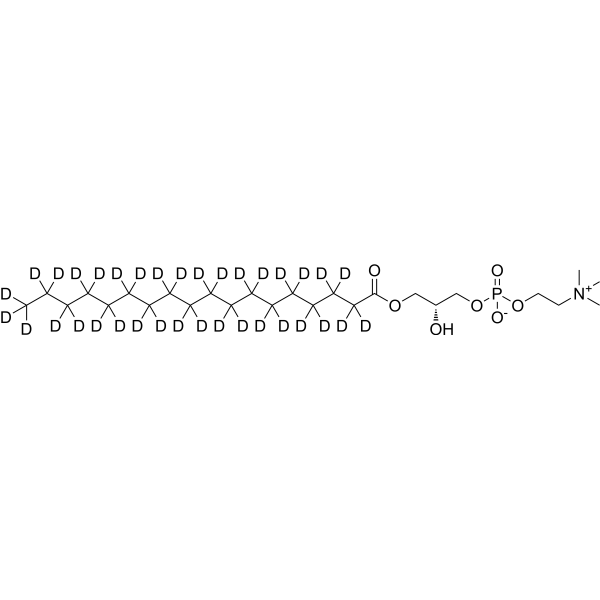 0 ImagesSynonyms: 18:0 Lyso-PC-d35; LPC(18:0)-d351-Stearoyl-sn-glycero-3-phosphocholine-d35 is deuterium labeled 1-Stearoyl-sn-glycero-3-phosphocholine (HY-125771). 1-Stearoyl-sn-glycero-3-phosphocholine is a lysophosphatidylcholine that inhibits HDAC3 activity and phosphorylation of STAT3 in K562 cells. 1-Stearoyl-sn-glycero-3-phosphocholine induces apoptosis and exhibits anticancer activity in chronic myelogenous leukemia (CML) K562 cells.

-
HDAC-IN-27 dihydrochloride
 0 ImagesHDAC-IN-27 dihydrochloride (Compound 11h) is a potent, orally active class I HDAC-selective inhibitor with IC50 values ranging from 0.43 to 3.01 nM against HDAC1-3. HDAC-IN-27 dihydrochloride exhibits both in vivo and in vitro antitumor activity. HDAC-IN-27 dihydrochloride demonstrates significant anti-proliferative activity against acute myeloid leukemia (AML) cell lines by inducing apoptosis and histone acetylation (AcHH3 and AcHH4). HDAC-IN-27 dihydrochloride can be used for research in acute myeloid leukemia (AML).