



JNK
JNK is a stress-activated MAPK that phosphorylates the N-terminal transactivation domain of c-Jun and regulates proliferation, apoptosis, motility, metabolism, and DNA repair[1]. Mechanistically, MKK4 and MKK7 increase JNK activity through phosphorylation, linking development and stress responses to downstream transcriptional control[2]. In disease models, dysregulated JNK signaling contributes to neurodegeneration, chronic inflammation, cancer, ischemia/reperfusion injury, and apoptosis-related pathology[1][3]. Compared with related isoforms, JNK1 and JNK2 are widely expressed, whereas JNK3 is mainly expressed in the brain, with lower expression in heart and testis[4]. This isoform distinction is experimentally important because JNK3 disruption protected mice from kainic acid-induced seizure activity and hippocampal neuronal apoptosis[5]. For experimental applications, SP600125 provides a reversible ATP-competitive JNK inhibitor that blocks JNK1/2/3 and supports pathway-dissection studies, although inhibitor-based conclusions require target-specific validation[6].
References:
- [1]. Johnson GL, et al. The c-jun kinase/stress-activated pathway: regulation, function and role in human disease. Biochim Biophys Acta. 2007 Aug;1773(8):1341-8. [Content Brief]
- [2]. Los AP, et al. Protein kinase C inhibits binding of diacylglycerol kinase-zeta to the retinoblastoma protein. Biochim Biophys Acta. 2007 Mar;1773(3):352-7. [Content Brief]
- [3]. Cui J, et al. JNK pathway: diseases and therapeutic potential. Acta Pharmacol Sin. 2007 May;28(5):601-8. [Content Brief]
- [4]. Nakano R, et al. Biological Properties of JNK3 and Its Function in Neurons, Astrocytes, Pancreatic β-Cells and Cardiovascular Cells. Cells. 2020 Jul 29;9(8):1802. [Content Brief]
- [5]. Yang DD, et al. Absence of excitotoxicity-induced apoptosis in the hippocampus of mice lacking the Jnk3 gene. Nature. 1997 Oct 23;389(6653):865-70. [Content Brief]
- [6]. Bennett BL, et al. SP600125, an anthrapyrazolone inhibitor of Jun N-terminal kinase. Proc Natl Acad Sci U S A. 2001 Nov 20;98(24):13681-6. [Content Brief]
-
JNK Related Products (377)
Related Products (377)

-
Antibodies (8)
-
Parbendazole hydrochloride
 0 ImagesCat. No.: HY-115364ACAS No.: 83601-81-4Synonyms: SKF 29044 hydrochlorideParbendazole hydrochloride (SKF‑29044 hydrochloride) is an orally active benzimidazole carbamate compound with multiple biological activities. Parbendazole hydrochloride binds to free tubulin and inhibits microtubule polymerization; it also activates the JNK/c‑Jun signaling axis and upregulates the expression of the downstream axonal repulsion factor Sema3A. Parbendazole hydrochloride upregulates KAL-1 mRNA expression, reduces nerve growth factor levels, and promotes the terminal differentiation of normal human epidermal keratinocytes. Parbendazole hydrochloride induces apoptosis in differentiated acute myeloid leukemia monocytes and exerts antileukemic activity in a mouse xenograft model of acute myeloid leukemia. Parbendazole hydrochloride exhibits broad-spectrum anthelmintic activity against various animal nematodes. Parbendazole hydrochloride is used in research related to acute myeloid leukemia and parasitic infections.
-
CGC-11144 hydrochloride
 0 ImagesCat. No.: HY-187643CAS No.: 304911-07-7CGC-11144 hydrochloride is a polyamine analog. CGC-11144 hydrochloride reduces the kinase activities of CDK4, CDK2 and CDK6, induces activation of the p53 pathway and p53-dependent p21 expression, and mediates cell cycle regulation, growth inhibition and apoptosis. CGC-11144 hydrochloride induces G1 phase cell cycle arrest, downregulates cyclin D1 and cyclin B1, upregulates cyclin E, induces dephosphorylation of pRb, and inhibits ERα-mediated transcriptional activity by disrupting the DNA binding of Sp1/Sp3 to the ERα promoter, while also stimulating activation of the JNK/AP-1 pathway. CGC-11144 hydrochloride can be used in research related to breast cancer, choroidal neovascularization and cancer.
-
Pratol
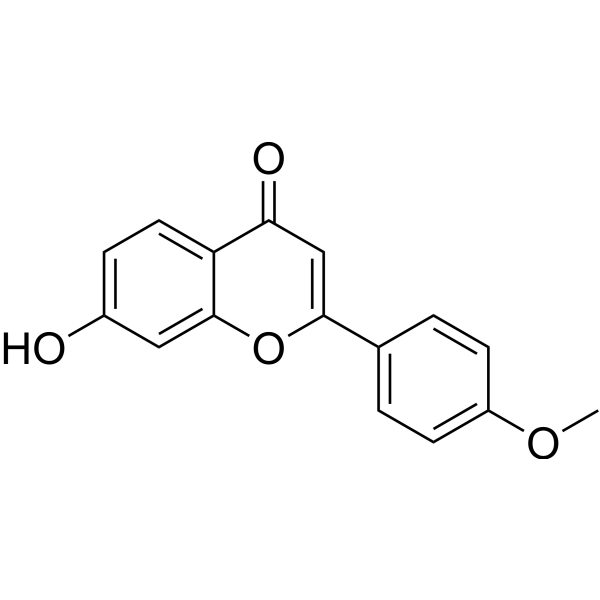 0 ImagesPratol (7-Hydroxy-4'-methoxyflavone) is an NF-κB inhibitor. Pratol also inhibits NO, PGE2, TNF-α, IL-1β, and IL-6 production. Pratol increases the phosphorylation of p38 MAPK, JNK, and ERK, decreases AKT phosphorylation, and upregulates MITF, tyrosinase, TRP-1, and TRP-2 through a PKA-dependent signaling pathway. Pratol reduces iNOS and COX-2 protein expression, inhibits p65 phosphorylation, and protects IκBα from degradation, thereby inhibiting NF-κB nuclear translocation. Pratol can be used in research on hypopigmentary disorders, inflammatory diseases, cervical cancer, and colon cancer.
-
7-Acetoxycoumarin
 0 ImagesCat. No.: HY-N20744CAS No.: 10387-49-2Synonyms: Acetylumbelliferone7-Acetoxycoumarin (Acetylumbelliferone) is an anti-inflammatory inhibitor with antibacterial and amoebicidal activities. 7-Acetoxycoumarin reduces the phosphorylation levels of ERK, JNK, NF-κB and p38 MAPK. 7-Acetoxycoumarin downregulates the protein and mRNA expression levels of iNOS and COX-2. 7-Acetoxycoumarin inhibits the production of IL-1β, IL-6, TNF-α, NO and PG2. 7-Acetoxycoumarin reduces the degradation of IκBα. 7-Acetoxycoumarin can be used in studies related to amoebiasis and Bacillus lentus infection.
-
Phillygenin-O-β-glucosaminide
 0 ImagesCat. No.: HY-189489Phillygenin-O-β-glucosaminide is an orally active Nrf2 inducer and NF-κB inhibitor that inhibits osteoclast differentiation and ROS production by promoting Nrf2 nuclear translocation, suppressing NF-κB and JNK phosphorylation, and downregulating NFATc1, c-Fos, MMP9, and CTSK expression. Phillygenin-O-β-glucosaminide can be used for research on osteoarthritis.
-
ADA-07
 0 ImagesCat. No.: HY-122859CAS No.: 2252153-94-7ADA-07 is a TOPK inhibitor with activity at the ATP-binding pocket that does not inhibit MEK1 activity. ADA-07 suppresses solar ultraviolet (SUV)-induced phosphorylation of ERK1/2, p38, and JNKs, and inhibits AP-1 activity. ADA-07 attenuates tumor incidence, multiplicity, and volume in SUV-exposed SKH-1 hairless mice. ADA-07 can be used for the research of solar ultraviolet-induced skin carcinogenesis.
-
Flavokawain A (Standard)
 0 ImagesFlavokawain A is a chalcone compound and an orally active inhibitor of PRMT5 and cytochrome P450. Flavokawain A has anti-inflammatory, anti-tumor, and immunomodulatory effects. Flavokawain A can inhibit the proliferation of tumor cells and induce apoptosis. Flavokawain A can be used in the research of diseases such as bladder cancer.
-
Isovitexin (Standard)
 0 ImagesCat. No.: HY-N0773RCAS No.: 38953-85-4Synonyms: Saponaretin (Standard); Homovitexin (Standard)Isovitexin (Standard) is the analytical standard of Isovitexin. This product is intended for research and analytical applications. Isovitexin is a flavonoid isolated from passion flower, Cannabis and, and the palm, possesses anti-inflammatory and anti-oxidant activities; Isovitexin acts like a JNK1/2 inhibitor and inhibits the activation of NF-κB.
-
Saquinavir (Standard)
 0 ImagesSynonyms: Ro 31-8959 (Standard)Saquinavir (Standard) (Ro 31-8959 (Standard)) is the analytical standard of Saquinavir (HY-17007). This product is intended for research and analytical applications. Saquinavir (Ro 31-8959) is an orally active HIV protease inhibitor that can be used in the research of AIDS. Saquinavir also has anti-inflammatory activity and can induce apoptosis of human red blood cells.
-
GQ-16 (Standard)
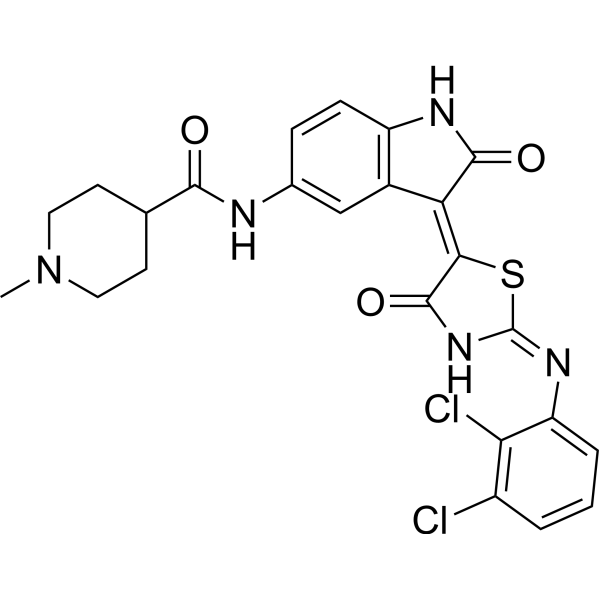
 0 ImagesCat. No.: HY-111254RCAS No.: 870554-67-9GQ-16 (Standard) is the analytical standard of GQ-16 (HY-111254). This product is intended for research and analytical applications. GQ-16 is an orally active PPARγ partial agonist with an IC50 of 1.84 μM and a Ki of 160 nM against human PPARγ. GQ-16 inhibits Cdk5-mediated Ser-273 phosphorylation. GQ-16 improves insulin sensitivity and glucose tolerance in obese and diabetic mice. GQ-16 also exhibits certain cytotoxicity against tumor cells. GQ-16 can be used in research related to obesity, diabetes and cancer.
-
Ecliptasaponin A (Standard)
 0 ImagesCat. No.: HY-N1508RCAS No.: 78285-90-2Ecliptasaponin A (Standard) is the analytical standard for Ecliptasaponin A (HY-N1508). Ecliptasaponin A is an orally active pentacyclic triterpenoid saponin. Ecliptasaponin A exerts anti-tumor activity by activating ASK1/JNK pathway, inducing apoptosis and autophagy in lung cancer cells. Ecliptasaponin A exerts anti-inflammatory/anti-fibrotic effects and protects the cardiovascular system by inhibiting the HMGB1/TLR4/NF-κB pathway, and the expression of COX-2 and MMP-9. Ecliptasaponin A can enhance SOD activity, reduce MDA levels, and alleviate oxidative stress damage. Ecliptasaponin A exerts chondroprotective effects by inhibiting the expression of MMP13 and regulating inflammatory factors. Ecliptasaponin A improves ovarian function and regulates sex hormones by upregulating the expression of ESR1 receptors.
-
Benzoylpaeoniflorin (Standard)
 0 ImagesCat. No.: HY-N0852RCAS No.: 38642-49-8Benzoylpaeoniflorin (Standard) is an analytical standard for Benzoylpaeoniflorin (HY-N0852). This product is intended for research and analytical applications. Benzoylpaeoniflorin is an orally active monoterpene glycoside compound. Benzoylpaeoniflorin exerts anti-inflammatory, anti-allergic, psoriasis-improving and sepsis-improving effects by inhibiting signaling pathways such as TNF/NF-κB and MAPK, as well as regulating immune homeostasis. Benzoylpaeoniflorin can be used in research related to immune, allergic and inflammatory diseases.
-
ML-7
 0 ImagesCat. No.: HY-119038CAS No.: 109376-83-2ML-7 is a selective and highly specific myosin light chain kinase (MLCK) inhibitor that acts as a trabecular meshwork (TM) relaxant. ML-7 enhances Quinocetone (HY-123581)-induced phosphorylation of ERK, p38 MAPK and JNK, attenuates Akt activation, and promotes apoptosis of hepatocellular carcinoma cells. ML-7 reduces Th2 cytokine secretion by inhibiting MLCK, while alleviating smooth muscle hyperplasia and collagen deposition. As a non-antibiotic adjuvant, ML-7 restores the sensitivity of drug-resistant bacteria to Tigecycline (HY-B0117). ML-7 can be used in research related to glaucoma, hepatocellular carcinoma, asthma, and Klebsiella pneumoniae infection.
-
JNK Inhibitor VIII (Standard)
 0 ImagesCat. No.: HY-107598RCAS No.: 894804-07-0Synonyms: TCS JNK 6o (Standard)JNK Inhibitor VIII (Standard) is the analytical standard of JNK Inhibitor VIII (HY-107598). This product is intended for research and analytical applications. JNK Inhibitor VIII (TCS JNK 6o) is a c-Jun N-terminal Kinases (JNK-1, -2, and -3) inhibitor with Ki values of 2 nM, 4 nM, 52 nM, respectively, and has IC50 values of 45 nM and 160 nM for JNK-1 and -2, respectively.
-
Dehydrodiisoeugenol (Standard)
 0 ImagesDehydrodiisoeugenol (Standard) is the analytical standard of Dehydrodiisoeugenol (HY-N0589). This product is intended for research and analytical applications. Dehydrodiisoeugenol is an orally active anti-inflammatory and anti-tumor agent. Dehydrodiisoeugenol inhibits the proliferation of colorectal cancer cells, and induces apoptosis, autophagy, endoplasmic reticulum stress and cell cycle arrest. Dehydrodiisoeugenol also exerts anti-inflammatory effects by inhibiting the activation of NF-κB and the expression of COX-2. Dehydrodiisoeugenol can be used in the research related to colorectal cancer, inflammatory diseases and ulcerative colitis.
-
IQ-3 (Standard)
 0 ImagesCat. No.: HY-107600RCAS No.: 312538-03-7IQ-3 (Standard) is the analytical standard of IQ-3 (HY-107600). This product is intended for research and analytical applications. IQ-3 is a specific inhibitor of the c-Jun N-terminal Kinase (JNK) family, with preference for JNK3. IQ-3 exhibits Kd values of 0.24 μM, 0.29 μM and 0.066 μM for JNK1, JNK2 and JNK3, respectively.
-
S-Diclofenac (Standard)
 0 ImagesSynonyms: ACS 15 (Standard); ATB-337 (Standard)S-Diclofenac (Standard) is the analytical standard of S-Diclofenac. This product is intended for research and analytical applications. S-Diclofenac (ACS 15) is a hybrid molecule of an H2S donor and the NSAID diclofenac. S-Diclofenac activates the p53 signaling pathway, and inhibits the activation of JNK. S-Diclofenac exhibits antioxidant and anti-inflammatory activities.
-
Oroxylin A-7-O-glucuronide (Standard)
 0 ImagesCat. No.: HY-N2481RCAS No.: 36948-76-2Synonyms: Oroxyloside (Standard); Oroxylin A-7-O-β-D-glucuronide (Standard)Oroxylin A-7-O-glucuronide (Standard) is the analytical standard of Oroxylin A-7-O-glucuronide (HY-N2481). This product is intended for research and analytical applications. Oroxylin A-7-O-glucuronide (oroxyloside) is an orally active flavonoid glucuronide and metabolite of Oroxylin A (HY-N0560). Oroxylin A-7-O-glucuronide can be extracted from the dried root of Scutellaria baicalensis. Oroxylin A-7-O-glucuronide exhibits prolyl oligopeptidase inhibitory activity. Oroxylin A-7-O-glucuronide inhibits the JNK pathway, upregulates PPARγ, and inhibits NF-κB p65 nuclear translocation. Oroxylin A-7-O-glucuronide reduces cytokine (IL-1β, IL-6) production. Oroxylin A-7-O-glucuronide exhibits anti-angiogenic, anti-tumor (glioma, liver cancer), anti-inflammatory, and hepatoprotective activities.
-
n-Butyl α-D-fructofuranoside
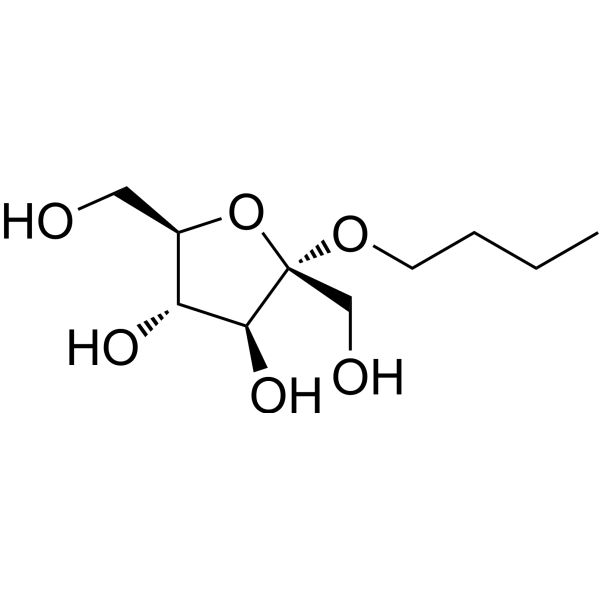 0 ImagesCat. No.: HY-N12344CAS No.: 80971-59-1n-Butyl α-D-fructofuranoside, isolated from the root barks of Ulmus davidiana var. japonica, enhances Nrf2 activity through activation of JNK and has antiinflammation activity.




