



iNOS
iNOS is an inducible nitric oxide synthase that produces nitric oxide from L-arginine and acts as a key mediator of immune activation and inflammation[1]. Mechanistically, inflammatory cells such as macrophages produce nitric oxide mainly through iNOS during inflammatory processes, where nitric oxide functions as an innate immune effector molecule[2]. iNOS expression is regulated by inflammatory signaling pathways, including PKC, NF-κB, STAT3-NF-κB interaction, and PKCδ-IRF1 signaling, which connect cytokine or LPS stimulation to nitric oxide production[2][3][4]. In disease models, dysregulated iNOS has been linked to sepsis, cancer, neurodegeneration, pain, arthritis, inflammatory bowel disease, liver fibrosis, and neurological disease models[1][5][6][7]. Compared with nNOS and eNOS, iNOS differs by stimulus-responsive expression and high nitric oxide output, whereas nNOS mainly supports neuronal signaling and eNOS supports endothelial vascular regulation[8]. However, iNOS is not solely pathological, because traumatic brain injury models showed worse outcomes after iNOS inhibition or iNOS gene deletion[9]. For experimental applications, selective iNOS inhibitors remain useful tools for testing nitric oxide-dependent mechanisms, although no iNOS inhibitor is approved for human use[1].
Références:
- [1]. Cinelli MA, et al. Inducible nitric oxide synthase: Regulation, structure, and inhibition. Med Res Rev. 2020 Jan;40(1):158-189. [Content Brief]
- [2]. Leppänen T, et al. Protein kinase C and its inhibitors in the regulation of inflammation: inducible nitric oxide synthase as an example. Basic Clin Pharmacol Toxicol. 2014 Jan;114(1):37-43. [Content Brief]
- [3]. Yu Z, et al. Signal transducers and activators of transcription 3 (STAT3) inhibits transcription of the inducible nitric oxide synthase gene by interacting with nuclear factor kappaB. Biochem J. 2002 Oct 1;367(Pt 1):97-105. [Content Brief]
- [4]. Leppänen T, et al. Down-regulation of protein kinase Cδ inhibits inducible nitric oxide synthase expression through IRF1. PLoS One. 2013;8(1):e52741. [Content Brief]
- [5]. Kolios G, et al. Nitric oxide in inflammatory bowel disease: a universal messenger in an unsolved puzzle. Immunology. 2004 Dec;113(4):427-37. [Content Brief]
- [6]. Cinar R, et al. Hybrid inhibitor of peripheral cannabinoid-1 receptors and inducible nitric oxide synthase mitigates liver fibrosis. JCI Insight. 2016;1(11):e87336. [Content Brief]
- [7]. Gage MC, et al. Inhibitors of Src Family Kinases, Inducible Nitric Oxide Synthase, and NADPH Oxidase as Potential CNS Drug Targets for Neurological Diseases. CNS Drugs. 2021 Jan;35(1):1-20. [Content Brief]
- [8]. Förstermann U, et al. Nitric oxide synthases: regulation and function. Eur Heart J. 2012 Apr;33(7):829-37, 837a-837d. [Content Brief]
- [9]. Sinz EH, et al. Inducible nitric oxide synthase is an endogenous neuroprotectant after traumatic brain injury in rats and mice. J Clin Invest. 1999 Sep;104(5):647-56. [Content Brief]
-
iNOS Produits associés (206)
Produits associés (206)

-
Mariaterpenoside A
 0 ImagesCat. No.: HY-N19854CAS No.: 2097442-40-3Mariaterpenoside A is an inducible nitric oxide synthase (iNOS) inhibitor. Mariaterpenoside A interacts with the active cavity of iNOS protein via hydrogen bonds with specific residues of the binding site. Mariaterpenoside A suppresses NO release in LPS (HY-D1056)-induced murine microglial BV-2 cells. Mariaterpenoside A can be used for the research of neurodegenerative disease.
-
iNOs-IN-5
 0 ImagesCat. No.: HY-168096CAS No.: 3067565-40-3iNOs-IN-5 (Compound BN-4) is an inhibitor for iNOS with an IC50 of 0.1707 μM, and reduces NO levels in LPS (HT-D1056)-induced RAW264.7 cells. iNOs-IN-5 reduces the hypoxic injury stimulated ROS and lactate dehydrogenase expression, and exhibits anti-necrosis and anti-apoptosis efficacy. iNOs-IN-5 exhibits anti-cerebral ischemia and neuroprotective activities in SD rat models. iNOs-IN-5 is blood-brain barrier penetrable.
-
FGT-4
 0 ImagesCat. No.: HY-172934FGT-4 is a FR-β-targeted chimeric molecule. FGT-4 acts as a TLR7 agonist. FGT-4 binds to FR-β to enable delivery to tumor-associated macrophages and myeloid-derived suppressor cells. FGT-4 promotes the secretion of iNOS (associated with M1 macrophages) and the pro-inflammatory cytokine IL-6, and enhances the proliferation of cytotoxic CD8+ T cells. FGT-4 can be used for the research of breast cancer.
-
Sampsonione P
 0 ImagesCat. No.: HY-N21705CAS No.: 1562672-80-3Sampsonione P is an RXRα inhibitor isolated and extracted from Hypericum sampsonii. Sampsonione P inhibits RXRα transcriptional activity and can downregulate the expression of pro-inflammatory proteins such as iNOS and COX-2, thereby exerting anti-inflammatory effects. Sampsonione P has antitumor activity. Sampsonione P can be used for research on inflammatory diseases and cancer.
-
Dendrocandin U
 0 ImagesCat. No.: HY-N21802CAS No.: 1922084-93-2Dendrocandin U is a bibenzyl compound found in Dendrobium officinale that exhibits anti-inflammatory activity and α-glucosidase inhibitory effect (IC50 = 9.46 mM). Dendrocandin U inhibits the expression of TLR4 and MyD88 in the TLR4/MyD88/NF-kB pathway, suppresses the phosphorylation of NF-kB p65 and I-kBα, and blocks the nuclear translocation of NF-kB p65. Dendrocandin U inhibits M1 polarization, NO secretion, and TNF-α release in alveolar macrophages, and reduces inflammatory morphological changes in macrophages. Dendrocandin U promotes neurite outgrowth in PC12 cells. Dendrocandin U can be used for research on inflammation-related diseases and type 2 diabetes.
-
β-Funaltrexamine
 0 ImagesCat. No.: HY-160938CAS No.: 72782-05-9Synonyms: β-FNAβ-Funaltrexamine (β-FNA) is a blood-brain barrier-permeable, selective and irreversible μ-opioid receptor antagonist with immunomodulatory, anti-inflammatory and neuroprotective activities. β-Funaltrexamine inhibits p38 MAPK and TLR4 signaling by blocking μ-opioid receptors, and reduces the transcriptional activities of NF-κB, AP-1, CREB and Stat. Furthermore, β-Funaltrexamine inhibits iNOS activation and pro-inflammatory microglial polarization, converting microglia to an anti-inflammatory phenotype, thereby downregulating neuroinflammation and ameliorating neuronal degeneration. β-Funaltrexamine is widely applicable to research related to stroke, cerebral ischemia/reperfusion injury and neurodegenerative diseases.
-
Anti-inflammatory agent 112
 0 ImagesCat. No.: HY-181156Anti-inflammatory agent 112 is an inducible nitric oxide synthase (iNOS) inhibitor, a COX-2 inhibitor, and an anti-inflammatory agent. Anti-inflammatory agent 112 suppresses i-NOS and COX-2 protein expression, reduces nitric oxide, IL-6, and TNF-α production, and attenuates lipopolysaccharide (LPS)-induced inflammatory responses. Anti-inflammatory agent 112 can be used for the research of inflammatory disorders.
-
Asperflavin
 0 ImagesCat. No.: HY-N15651CAS No.: 1415764-41-8Asperflavin is an anti-inflammatory compound that can be produced by the marine fungus Eurotium amstelodami. Asperflavin inhibits the production of NO, PGE2, and proinflammatory cytokines, as well as the expression of inducible NOS (iNOS) in RAW 264.7 cells treated with LPS (HY-D1056). Asperflavin can be used in the study of inflammatory diseases.
-
Leupeptin hemisulfate (Standard)
 0 ImagesLeupeptin hemisulfate (Standard) is the analytical standard of Leupeptin hemisulfate (HY-18234A ). This product is intended for research and analytical applications. Leupeptin hemisulfate is a broad-spectrum protease inhibitor. By inhibiting the activation of the PTEN/PI3K/Akt/NF-κB/ERK1/2/p38 signaling pathway, Leupeptin hemisulfate significantly reduces LPS-induced NO and ROS production, mitochondrial membrane potential hyperpolarization, phagocytic activity, pro-inflammatory cytokine release, and M1 polarization in mouse peritoneal macrophages, and reverses autophagic flux impairment. It also decreases Concanavalin A (HY-P2149)-induced proliferation index of mouse splenic lymphocytes and the Th1/IL-10 and Th2/IL-10 cytokine ratios, thereby modulating innate and adaptive immune responses. Leupeptin hemisulfate inhibits blood coagulation and tumorigenesis in mouse skin. Leupeptin hemisulfate can be used in research on chronic inflammatory diseases and skin tumorigenesis.
-
HDAC6-IN-71
 0 ImagesCat. No.: HY-180829CAS No.: 3062867-16-4HDAC6-IN-71 (Compound 24) is a HDAC6 inhibitor with IC50 values for HDAC6 and HDAC1 of 13.68 and 443.12 nM respectively. HDAC6-IN-71 effectively inhibits the production of NO by mouse macrophages, with its IC50 being 2.31 μM. HDAC6-IN-71 inhibits the HDAC6-NF-κB signaling pathway, reduces the levels of phosphorylated IκB-α and IKK-α/β, and suppresses the expression of downstream inflammatory proteins COX-2 and iNOS. HDAC6-IN-71 significantly alleviates ulcerative colitis in mice.
-
(±)-Methotrexate-d3
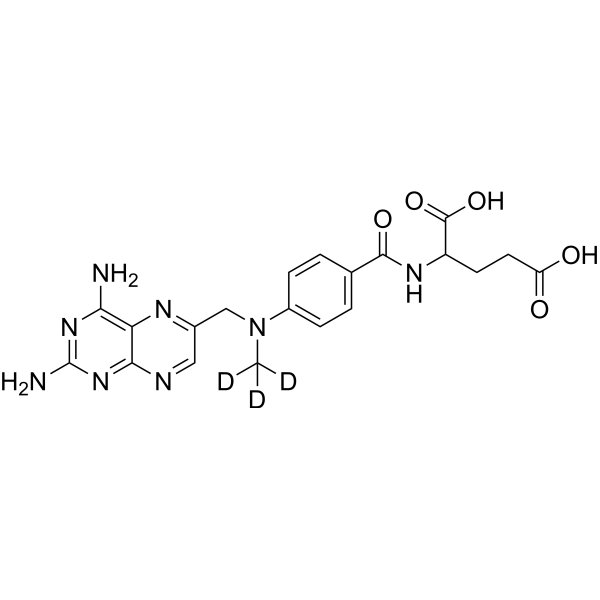 0 ImagesCat. No.: HY-121151SSynonyms: (±)-Amethopterin-d3; (±)-CL14377-d3; (±)-WR19039-d3(±)-Methotrexate-d3 ((±)-Amethopterin-d3; (±)-CL14377-d3; (±)-WR19039-d3) is the deuterated-labeled (±)-Methotrexate (HY-121151). (±)-Methotrexate is the racemate of Methotrexate (HY-14519). Methotrexate is an orally active antifolate (Antifolate). Methotrexate inhibits dihydrofolate reductase (DHFR), blocks tetrahydrofolate production, suppresses purine/pyrimidine synthesis and transmethylation, and causes intracellular accumulation of AICAR. Methotrexate promotes extracellular adenosine release, regulates the cytokine network, and inhibits the alarmin function of HMGB1. Methotrexate induces apoptosis and cytotoxicity, upregulates the expression of iNOS and COX-2, suppresses hippocampal neurogenesis, and induces pulmonary fibrosis. Methotrexate is used in the research of various immune and inflammation-related diseases such as arthritis, psoriasis, systemic lupus erythematosus, as well as pulmonary fibrosis and breast cancer.
-
NF-κB/STAT3/iNOS-IN-1
 0 ImagesCat. No.: HY-184692NF-κB/STAT3/iNOS-IN-1 is a NF-κB/STAT3/iNOS inhibitor. NF-κB/STAT3/iNOS-IN-1 reduces the expression of inflammatory mediators TNF-α, IL-1β, IL-6, IL-8 and COX-2. NF-κB/STAT3/iNOS-IN-1 upregulates the expression of epithelial barrier-related proteins E-cadherin, Occludin and Zonula occludens-1. NF-κB/STAT3/iNOS-IN-1 alleviates disease severity and histopathological damage in mouse colitis models. NF-κB/STAT3/iNOS-IN-1 can be used for the research of inflammatory bowel disease (colitis).
-
Anti-inflammatory agent 118
 0 ImagesCat. No.: HY-184341Anti-inflammatory agent 118 is a bergenin derivative with anti-inflammatory activity. Anti-inflammatory agent 118 inhibits the expression of iNOS through negative feedback regulation mediated by NO release, while blocking the phosphorylation of p65 protein and reducing the secretion levels of two pro-inflammatory cytokines, TNF-α and IL-6. Anti-inflammatory agent 118 can be used for the research of inflammation-related diseases.
-
Triflusal-d3
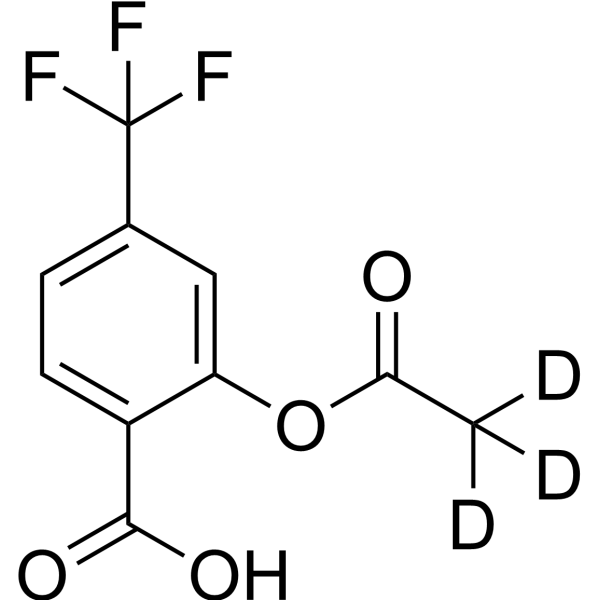 0 ImagesCat. No.: HY-B0531SCAS No.: 2748541-63-9Triflusal-d3 is deuterium labeled Triflusal (HY-B0531). Triflusal is an orally bioavailable, blood-brain barrier-permeable dual Cyclooxygenase-1 (COX-1)/cAMP phosphodiesterase inhibitor. Triflusal inhibits platelet aggregation, NF-κB activation, iNOS activity, and prostaglandin synthesis in ischaemic tissue. Triflusal stimulates neutrophil nitric oxide production, eNOS protein expression, and cNOS activity. Triflusal alleviates cerebral ischemic injury in rats and ameliorates pathological lesions and related gene expression in transgenic Alzheimer’s disease models. Triflusal can be used for the research of thromboembolic/ischemic cardiovascular and cerebrovascular diseases, and Alzheimer’s disease.
-
NOS-IN-2
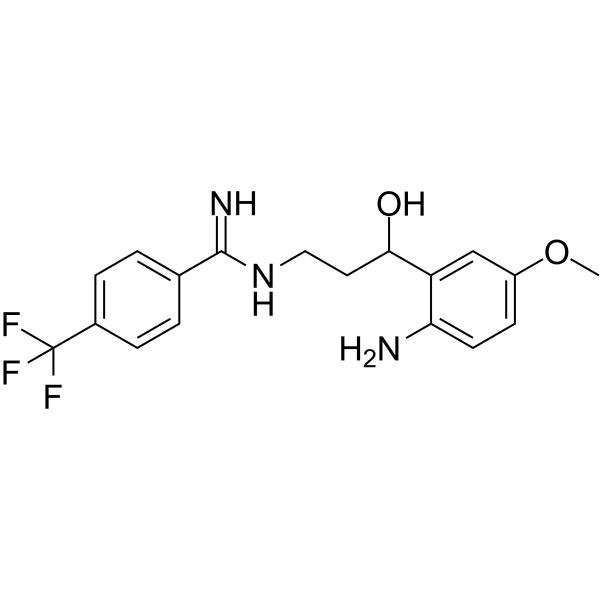 0 ImagesCat. No.: HY-115916CAS No.: 2766146-79-4
-
(±)-Methotrexate
 0 ImagesCat. No.: HY-121151CAS No.: 60388-53-6Synonyms: (±)-Amethopterin; (±)-CL14377; (±)-WR19039(±)-Methotrexate ((±)-Amethopterin; (±)-CL14377; (±)-WR19039) is the racemate of Methotrexate (HY-14519). Methotrexate is an orally active antifolate (Antifolate). Methotrexate inhibits dihydrofolate reductase (DHFR), blocks tetrahydrofolate production, suppresses purine/pyrimidine synthesis and transmethylation, and causes intracellular accumulation of AICAR. Methotrexate promotes extracellular adenosine release, regulates the cytokine network, and inhibits the alarmin function of HMGB1. Methotrexate induces apoptosis and cytotoxicity, upregulates the expression of iNOS and COX-2, suppresses hippocampal neurogenesis, and induces pulmonary fibrosis. Methotrexate is used in the research of various immune and inflammation-related diseases such as arthritis, psoriasis, systemic lupus erythematosus, as well as pulmonary fibrosis and breast cancer.
-
Kaempferol 3-O-(2G-glucosylrutinoside)-7-O-glucoside
 0 ImagesCat. No.: HY-N18025CAS No.: 131559-50-7Kaempferol 3-O-(2G-glucosylrutinoside)-7-O-glucoside is an anti-inflammatory agent. Kaempferol 3-O-(2G-glucosylrutinoside)-7-O-glucoside exerts significant anti-inflammatory effects in LPS (HY-D1056)-induced RAW 264.7 macrophages by inhibiting the NF-κB, MAPK and Akt signaling pathways, thereby reducing the production of inflammatory mediators (NO, PGE2) and pro-inflammatory cytokines (TNF-α, IL-1β, IL-6).
-
Antrodin D
 0 ImagesCat. No.: HY-N12368CAS No.: 656832-04-1Antrodin D is an iNOS inhibitor isolated and extracted from the mycelium of Antrodia camphorata. Antrodin D inhibits LPS (HY-D1056)-induced nitric oxide production in macrophages. Antrodin D can be used for research on inflammatory diseases.
-
Akt/NF-κB/MAPK-IN-1
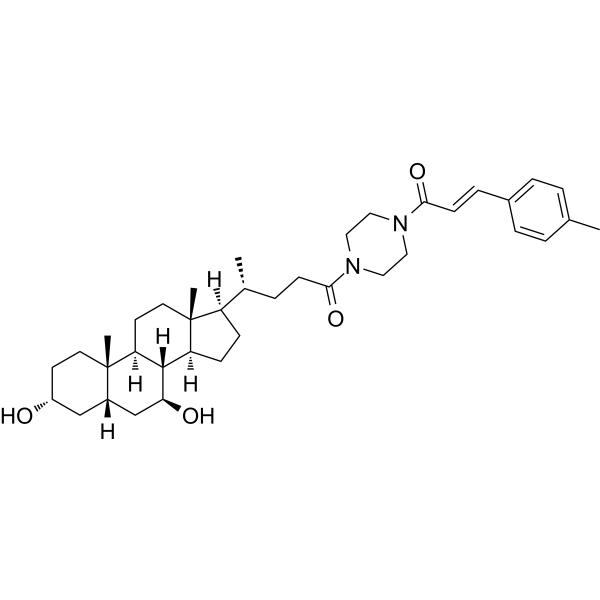 0 ImagesCat. No.: HY-149496CAS No.: 2994215-72-2Akt/NF-κB/MAPK-IN-1 (compound 2m) is a potent and orally active inhibitor against NO (IC50=7.70 μM) with no significant toxicity. Akt/NF-κB/MAPK-IN-1 shows anti-inflammatory activity by inhibiting Akt/NF-κB and MAPK signaling pathways.
-
N1-Acetyl-5-methoxykynuramine hydrochloride
 0 ImagesCat. No.: HY-W587743CAS No.: 1215711-91-3Synonyms: AMK hydrochlorideN1-Acetyl-5-methoxykynuramine hydrochloride (AMK hydrochloride) is an active metabolite of Melatonin (HY-B0075) with antioxidant activity and blood-brain barrier permeability. N1-Acetyl-5-methoxykynuramine hydrochloride inhibits LPS-induced activation of inducible nitric oxide synthase and COX-2, scavenges ROS, hydroxyl radicals, carbonate radicals and ABTS cation radicals, and protects bovine serum albumin from peroxyl radical-mediated damage. N1-Acetyl-5-methoxykynuramine hydrochloride reduces the increase in cytoplasmic and mitochondrial lipid peroxidation in the substantia nigra and striatum in MPTP (HY-15608)-induced mouse models of Parkinson's disease. N1-Acetyl-5-methoxykynuramine hydrochloride can be used in studies related to Parkinson's disease, metabolism-related diseases and oxidative stress.



