



TNF Receptor
Tumor Necrosis Factor Receptor; TNFR
Tumor necrosis factor (TNF) is a major mediator of apoptosis as well as inflammation and immunity, and it has been implicated in the pathogenesis of a wide spectrum of human diseases, including sepsis, diabetes, cancer, osteoporosis, multiple sclerosis, rheumatoid arthritis, and inflammatory bowel diseases.
TNF-α is a 17-kDa protein consisting of 157 amino acids that is a homotrimer in solution. In humans, the gene is mapped to chromosome 6. Its bioactivity is mainly regulated by soluble TNF-α–binding receptors. TNF-α is mainly produced by activated macrophages, T lymphocytes, and natural killer cells. Lower expression is known for a variety of other cells, including fibroblasts, smooth muscle cells, and tumor cells. In cells, TNF-α is synthesized as pro-TNF (26 kDa), which is membrane-bound and is released upon cleavage of its pro domain by TNF-converting enzyme (TACE).
Many of the TNF-induced cellular responses are mediated by either one of the two TNF receptors, TNF-R1 and TNF-R2, both of which belong to the TNF receptor super-family. In response to TNF treatment, the transcription factor NF-κB and MAP kinases, including ERK, p38 and JNK, are activated in most types of cells and, in some cases, apoptosis or necrosis could also be induced. However, induction of apoptosis or necrosis is mainly achieved through TNFR1, which is also known as a death receptor. Activation of the NF-κB and MAPKs plays an important role in the induction of many cytokines and immune-regulatory proteins and is pivotal for many inflammatory responses.
TNF Receptor Isoform Specific Products
-
TNF Receptor
(701)
View all products
-
TNFRSF1A/
CD120a (8)View all products
-
TNFRSF3/
CD18 (1)View all products
-
TNFRSF4
(5)
View all products
-
TNFRSF5/
CD40 (142)View all products
-
TNFRSF6/
Fas/ (2)CD95 View all products
-
TNFRSF7/
CD27 (2)View all products
-
TNFRSF8/
CD30 (3)View all products
-
TNFRSF9/
4-1BB/ (3)CD137 View all products
-
TNFRSF10B/
DR5/ (1)CD262 View all products
-
TNFRSF12A/
TWEAK (5)View all products
-
TNFRSF16/
NGF Receptor/ (1)CD271 View all products
-
TNFRSF18/
GITR/ (6)CD357 View all products
All Product Categories
-
TNF Receptor Inhibitors
(903)
View all products
-
TNF Receptor Agonists
(35)
View all products
-
TNF Receptor Antagonists
(25)
View all products
-
TNF Receptor Activators
(80)
View all products
-
TNF Receptor Modulators
(8)
View all products
-
TNF Receptor Inducers
(11)
View all products
-
TNF Receptor Controls
(4)
View all products
-
TNF Receptor Ligands
(2)
View all products
-
TNF Receptor Superfamily Proteins
(282)
View all products
-
TNF Receptor Related Products (1268)
Related Products (1268)

-
Recombinant Proteins (282)
-
Antibodies (23)
-
TNF Receptor Signaling Pathway
-
TNF Receptor Isoform Comparison
-
HS-276 formic
 0 ImagesCat. No.: HY-147141BHS-276 formic is an orally active, potent and highly selective TAK1 inhibitor, with a Ki of 2.5 nM. HS-276 formic shows significant inhibition of TAK1, CLK2, GCK, ULK2, MAP4K5, IRAK1, NUAK, CSNK1G2, CAMKKβ-1, and MLK1, with IC50 values of 8.25, 29, 33, 63, 125, 264, 270, 810, 1280, and 5585 nM, respectively. HS-276 formic reduces the expression of TNF, IL-6, and IL-1β. HS-276 formic can be used for rheumatoid arthritis (RA) research.
-
TNF-α-IN-15
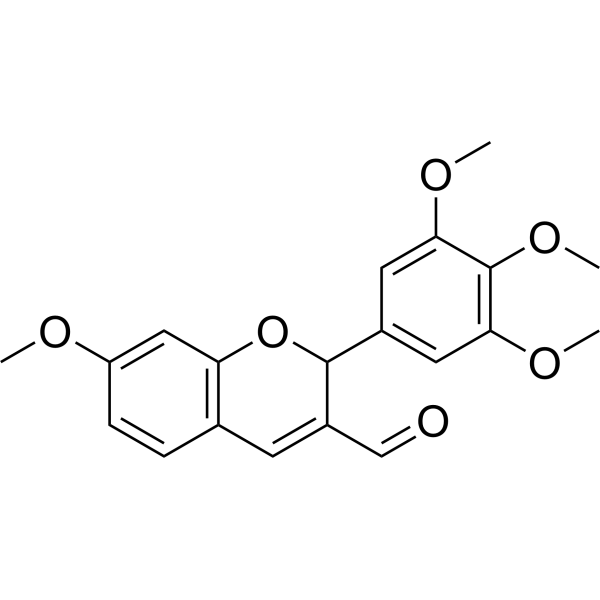 0 ImagesCat. No.: HY-160436CAS No.: 364039-58-7TNF-α-IN-15 is a TNF-α inhibitor. TNF-α-IN-15 can decrease the TNF-α blood levels.
-
Anethole trithione derivative-1
 0 ImagesCat. No.: HY-189057Anethole trithione derivative-1 is a derivative of Anethole trithione (HY-B1223), and also a regulator of sulfide:quinone oxidoreductase (SQR) and uncoupling protein 2 (UCP2), with mitochondrial uncoupling-inducing activity and neuroprotective activity. Anethole trithione derivative-1 mediates mitochondrial uncoupling via SQR-dependent reverse electron transport of complex I, ROS-dependent UCP2 activation, and reduction of mitochondrial membrane potential. Anethole trithione derivative-1 reduces brain damage and improves function in mouse models of ischemic and hemorrhagic stroke. Anethole trithione derivative-1 can be used in stroke research.
-
NIK-IN-3
 0 ImagesCat. No.: HY-179701NIK-IN-3 is a potent and orally active NF-κB-inducing kinase (NIK) inhibitor with an IC50 of 5.2 nM. NIK-IN-3 suppresses non-canonical NF-κB pathway activation and inhibits the secretion of pro-inflammatory cytokines, such as TNF-α, IL-6, IL-1β and chemokine CXCL12. NIK-IN-3 shows significant anti-inflammatory effects in LPS (HY-D1056)-induced sepsis mice model and DSS (HY-116282)-induced colitis model. NIK-IN-3 can be used for the research of inflammation, such as colitis.
-
VTX-0811
 0 ImagesCat. No.: HY-P991432VTX-0811 is a human IgG4 monoclonal antibody (mAb) targeting PSGL1/CD162. VTX-0811 up-regulates TNF-α/NF-κB and chemokine-mediated signaling and down-regulates oxidative phosphorylation, fatty acid metabolism, and Myc signaling pathways. VTX-0811 increases the proportion of CD8+ T cells among infiltrating T cells. VTX-0811 has antitumor activity in a humanized mouse PDX model of melanoma.
-
Malvidin-3-glucoside chloride (Standard)
 0 ImagesCat. No.: HY-125740RCAS No.: 7228-78-6Synonyms: Malvidin-3-O-glucoside chloride (Standard); Oenin chloride (Standard)Malvidin-3-glucoside (Malvidin-3-O-glucoside; Oenin) chloride (Standard) is the analytical standard of Malvidin-3-glucoside chloride (HY-125740). This product is intended for research and analytical applications. Malvidin-3-glucoside chloride is an orally active inhibitor of the NF-κB pathway, which blocks inflammatory responses induced by TNF-α, reduces IκB-α degradation and p65 nuclear translocation, and upregulates endothelial nitric oxide synthase eNOS to increase NO production. Malvidin-3-glucoside chloride exerts anti-inflammatory and antioxidant effects by inhibiting pro-inflammatory molecules such as MCP-1, ICAM-1, and IL-6, and regulating intestinal microorganisms and metabolites, while protecting endothelial cells and improving intestinal microecological dysbiosis under inflammatory conditions. Malvidin-3-glucoside chloride can be used to study chronic inflammatory-related diseases such as atherosclerosis and inflammatory bowel disease, and has the potential to prevent vascular inflammation and improve intestinal health.
-
Butrin
 0 ImagesButrin is a compound found in Butea monosperma flowers. Butrin reduces expression of SIRT1, AURKB, cyclin D1, pAKT, GSK-3β, β-catenin, and TGF-3β expression, enhances apoptosis and ROS production in cancer cells. Butrin downregulates Wnt and NF-κB signaling, mitigates oxidative stress, reduces proinflammatory cytokine (TNF-α, IL-6 and IL-8) production and suppresses neuroinflammation. Butrin inhibits IKK enzyme activity. Butrin can be used for the researches of colorectal cancer, Alzheimer’s disease, and rheumatoid arthritis.
-
SAP 2.8 peptide
 0 ImagesCat. No.: HY-P11819CAS No.: 3100335-76-7SAP 2.8 peptide is an antimicrobial peptide. SAP 2.8 peptide induces bacterial membrane rupture and permeabilization, triggers an increase in intracellular ROS production, and causes bacterial death. SAP 2.8 peptide inhibits bacterial biofilm formation and disrupts established biofilms. SAP 2.8 peptide reduces bacterial load in animal models. SAP 2.8 peptide can be used for research on bacterial infections, skin and soft tissue infections, and peritonitis.
-
Anti-inflammatory agent 105
 0 ImagesCat. No.: HY-177305CAS No.: 382630-14-0Anti-inflammatory agent 105 (Compound 12) is an anti-inflammatory compound. The IC50 of Anti-inflammatory agent 105 for the inhibition of TNF-α synthesis and release in the human macrophage cell line U937 is 0.124 nM.
-
(20S)-18,20-Epoxydigitoxigenin α-L-thvetoside
 0 ImagesCat. No.: HY-N19640CAS No.: 71129-71-0(20S)-18,20-Epoxydigitoxigenin α-L-thvetoside is a cardenolide glycoside found in the bark of Thevetia peruviana. (20S)-18,20-Epoxydigitoxigenin α-L-thvetoside is a tumor necrosis factor (TNF)-related apoptosis-inducing ligand (TRAIL) resistance-overcoming agent. (20S)-18,20-Epoxydigitoxigenin α-L-thvetoside synergistically sensitizes TRAIL-resistant gastric adenocarcinoma cells to TRAIL, reducing cell viability when combined with TRAIL. (20S)-18,20-Epoxydigitoxigenin α-L-thvetoside can be used for the research of human gastric adenocarcinoma.
-
TNF-α-IN-9
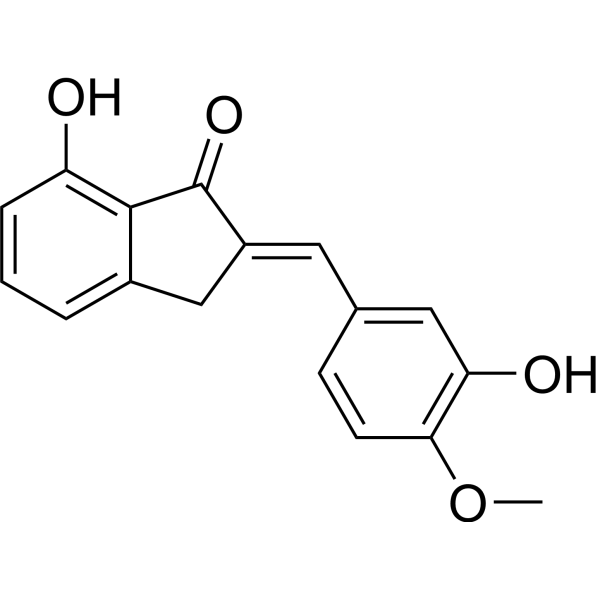 0 ImagesCat. No.: HY-153329CAS No.: 2054199-25-4TNF-α-IN-9 (compound 48) is a analog of NDM-1 inhibitor-3 (HY-150758). TNF-α-IN-9 is a TNF-α inhibitor. TNF-α-IN-9 shows low inhibitory activity.
-
NF-κB/STAT3/iNOS-IN-1
 0 ImagesCat. No.: HY-184692NF-κB/STAT3/iNOS-IN-1 is a NF-κB/STAT3/iNOS inhibitor. NF-κB/STAT3/iNOS-IN-1 reduces the expression of inflammatory mediators TNF-α, IL-1β, IL-6, IL-8 and COX-2. NF-κB/STAT3/iNOS-IN-1 upregulates the expression of epithelial barrier-related proteins E-cadherin, Occludin and Zonula occludens-1. NF-κB/STAT3/iNOS-IN-1 alleviates disease severity and histopathological damage in mouse colitis models. NF-κB/STAT3/iNOS-IN-1 can be used for the research of inflammatory bowel disease (colitis).
-
GAP214
 0 ImagesCat. No.: HY-182034GAP214 is a monosaccharide lipid A analogue and TLR4/MD-2 complex modulator.GAP214 binds to the TLR4/MD-2 complex via hydrophobic interactions, salt bridges, and hydrogen bonds, induces dimerization of the complex to initiate intracellular signaling cascades.GAP214 functions as an immunostimulant and vaccine adjuvant, enhances antigen-specific IgG antibody production in a mouse model.
-
CAY10512
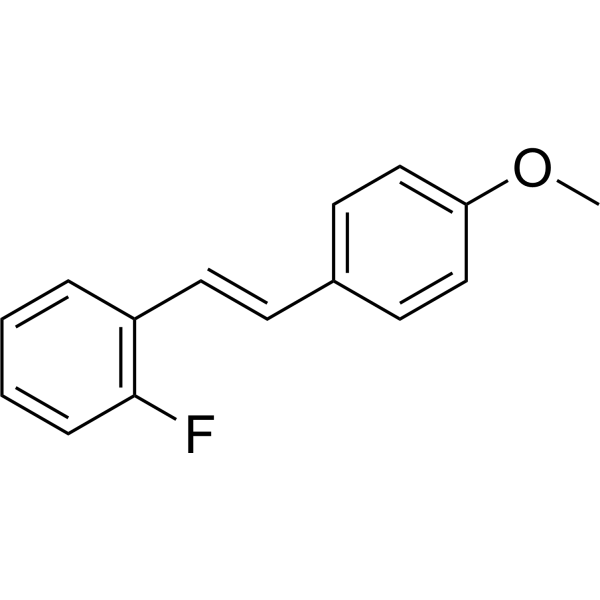 0 ImagesCat. No.: HY-120269CAS No.: 139141-12-1CAY10512 is a NF-κB inhibitor. CAY10512 can suppress the upregulation of NF-κB-sensitive proinflammatory miRNAs (miRNA-9, miRNA-125b, miRNA-146a, miRNA-155) in cerebrospinal fluid and extracellular fluid. CAY10512 significantly reduces the release of pro-inflammatory cytokines (such as TNF-α, MCP-1, IL-8, IL-6). CAY10512 can be used for researchs on neuroinflammation, islet transplantation and microRNA regulation.
-
Anti-inflammatory agent 118
 0 ImagesCat. No.: HY-184341Anti-inflammatory agent 118 is a bergenin derivative with anti-inflammatory activity. Anti-inflammatory agent 118 inhibits the expression of iNOS through negative feedback regulation mediated by NO release, while blocking the phosphorylation of p65 protein and reducing the secretion levels of two pro-inflammatory cytokines, TNF-α and IL-6. Anti-inflammatory agent 118 can be used for the research of inflammation-related diseases.
-
Immuno modulator-1
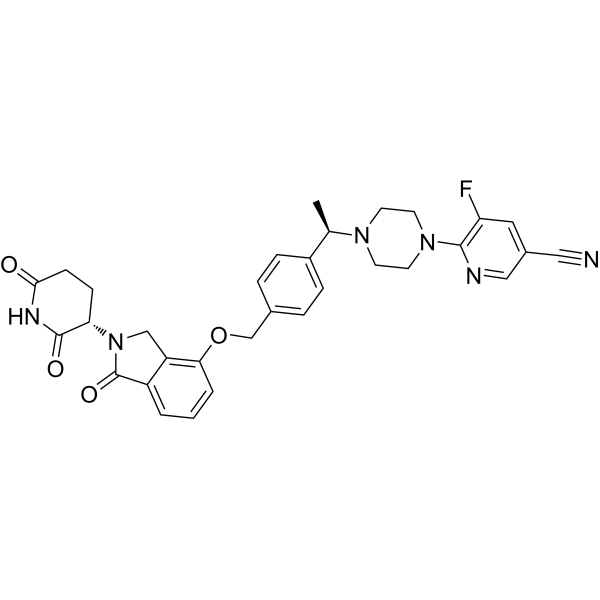 0 ImagesCat. No.: HY-153952CAS No.: 2757469-20-6Immuno modulator-1 (compound 22) inhibits TNFα and IL-2 secretion in human peripheral blood mononuclear cells (hPBMC), with IC50 values of 4.7 and 26 nM, respectively. Immuno modulator-1 shows hERG potassium channel blocking effect, with Inhibitory percentage of 20% at 3 μM.
-
Cloricromen
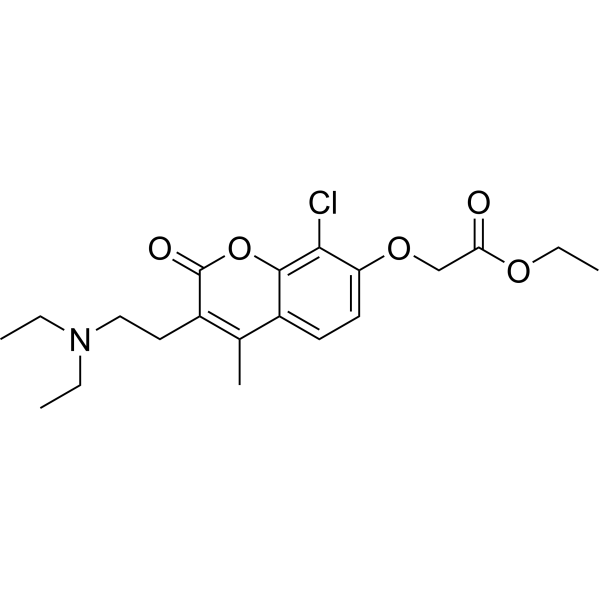 0 ImagesCat. No.: HY-116678CAS No.: 68206-94-0Synonyms: Cloricromene; AD6Cloricromen (Cloricromene) is an orally active platelet inhibitor. Cloricromen inhibits thromboxane B2 release, β-thromboglobulin, and thrombus formation. Cloricromen inhibits LPS (HY-D1056)-induced NF-κB activation, oxidative activity, and TNF-α expression. Cloricromen exhibits protective activity in animal models of shock and peripheral ischaemia. Cloricromen can be used for the research of myocardial ischaemia/reperfusion injury, and ischaemic cerebrovascular disease.
-
Antitumor agent-173
 0 ImagesCat. No.: HY-161821Antitumor agent-173 (Compound 4b) is a prodrug of Cycloicaritin (HY-N1940). Antitumor agent-173 is a substrate for OATP2B1. Antitumor agent-173 selectively inhibits the growth of tumor Antitumor agent-173 significantly increases the oral bioavailability of Cycloicaritin and exerts good antitumor activity and safety.
-
ADG-106
 0 ImagesCat. No.: HY-P991070ADG-106 is a fully human agonistic monoclonal IgG4 antibody against CD137 (4-1BB). ADG-106 has the mechanism to activate CD137 via strong FcγRIIB-mediated crosslinking while antagonizing CD137 ligands. The isotype control for ADG-106 can refer to Human IgG4 (S228P) kappa, Isotype Control (HY-P99003).
-
BC011
 0 ImagesCat. No.: HY-P991403BC011 is a human monoclonal antibody (mAb) targeting TNFRSF1B. BC011 promotes CD8+T cell proliferation and depletes Treg cells, thereby increasing the proportion of effector T cells in the tumor microenvironment. BC011 can be used in tumor Immunity research.




