



Dendrobine
Based on 7 publication(s) in Google Scholar
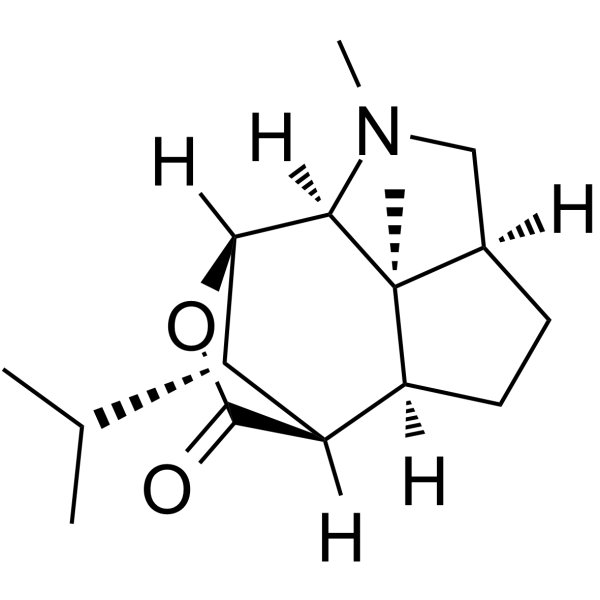
Dendrobine is an alkaloid isolated from Dendrobium nobile. Dendrobine possesses antiviral activity against influenza A viruses, with IC50s of 3.39 μM, 2.16 μM and 5.32 μM for A/FM-1/1/47 (H1N1), A/Puerto Rico/8/34 H274Y (H1N1) and A/Aichi/2/68 (H3N2), respectively. Dendrobine activates the JNK/p38/Nrf2 signaling pathway. Dendrobine exhibits antiviral, antitumor, anti-inflammatory, and neuroprotective properties.
Nos produits utilisent uniquement pour la recherche. Nous ne vendons pas aux patients.
- Pureté : 99.92%
- CAS No.: 2115-91-5
- Formule: C16H25NO2
- Masse moléculaire:263.38
-
Stockage:
4°C, protect from light
* In solvent : -80°C, 6 months; -20°C, 1 month (protect from light)

To place orders, for customer services and technical support, please contact: MedChemExpress USA
Tel: 609-228-6898 E-mail: [email protected] [email protected]


-
 Activité biologique
-
Chemical Information
-
Solvant et solubilité
- Protocole
- Pureté et documentation
- Références
-
 Help & FAQs


-

HY-P0035
Insulin (human)Recombinant Human Insulin -
HY-N0045
Ginsenoside Rg1Apoptosis Inducer -
HY-N0359
CynarinAntioxidant -

HY-N0638R
Dendrobine (Standard)Antiviral Agent -
HY-N0766
IsorhynchophyllineVasodilator -
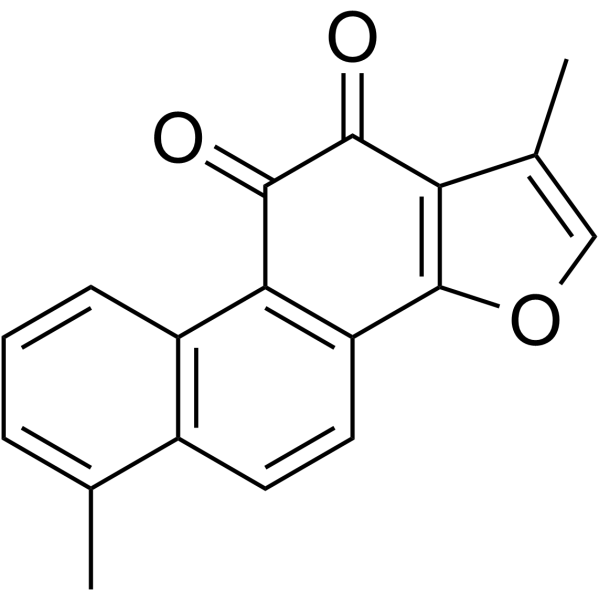
HY-N0134
Tanshinone IPhospholipase Inhibitor -
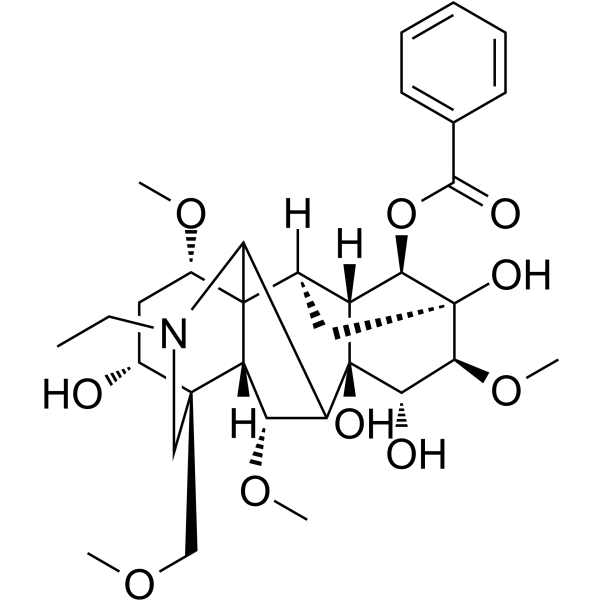
HY-N0217
BenzoylaconineAnti-inflammatory Agent -

HY-N0134R
Tanshinone I (Standard)Phospholipase Inhibitor -

HY-N0766R
Isorhynchophylline (Standard)Vasodilator
Publications Citing Use of MedChemExpress (MCE) Dendrobine
More- Phytomedicine. 2025 Aug:144:156952. [Abstract]
- J Ethnopharmacol. 2025 Apr 25:346:119634. [Abstract]
- J Agric Food Chem. 2024 Jul 31;72(30):16739-16748. [Abstract]
- Int Immunopharmacol. 2025 Jun 5:157:114741. [Abstract]
- Drug Dev Res. 2022 Aug;83(5):1125-1137. [Abstract]
- J Pharmacol Sci. 2026 Aug;161(4):119-129. [Abstract]
- Vet Microbiol. 2026 May:316:110992. [Abstract]


Activité biologique
Description
IC50 & Target
IC50: 3.39 μM (A/FM-1/1/47), 2.16 μM (A/Puerto Rico/8/34 H274Y), 5.32 μM (A/Aichi/2/68)[1]
Cellular Effect
|
Cell Line

|
Type | Value | Description | References |
|---|---|---|---|---|
| A549 | IC50 |
>40 μM
Compound: 5
|
Cytotoxicity against human A549 cells assessed as reduction in cell viability after 48 hrs by MTS assay
Cytotoxicity against human A549 cells assessed as reduction in cell viability after 48 hrs by MTS assay
|
[PMID: 29338260] |
| HL-60 | IC50 |
>40 μM
Compound: 5
|
Cytotoxicity against human HL60 cells assessed as reduction in cell viability after 48 hrs by MTS assay
Cytotoxicity against human HL60 cells assessed as reduction in cell viability after 48 hrs by MTS assay
|
[PMID: 29338260] |
| MCF7 | IC50 |
>40 μM
Compound: 5
|
Cytotoxicity against human MCF7 cells assessed as reduction in cell viability after 48 hrs by MTS assay
Cytotoxicity against human MCF7 cells assessed as reduction in cell viability after 48 hrs by MTS assay
|
[PMID: 29338260] |
| SMMC-7721 | IC50 |
>40 μM
Compound: 5
|
Cytotoxicity against human SMMC7721 cells assessed as reduction in cell viability after 48 hrs by MTS assay
Cytotoxicity against human SMMC7721 cells assessed as reduction in cell viability after 48 hrs by MTS assay
|
[PMID: 29338260] |
| SW480 | IC50 |
>40 μM
Compound: 5
|
Cytotoxicity against human SW480 cells assessed as reduction in cell viability after 48 hrs by MTS assay
Cytotoxicity against human SW480 cells assessed as reduction in cell viability after 48 hrs by MTS assay
|
[PMID: 29338260] |
In Vitro
Dendrobine (1-10 μg/mL, 24 h) inhibits the cell viability, migration and invasion of cancer cell A549[2].
Dendrobine (0.001-0.1 µM, 36 h) inhibits Aβ1−42-induced apoptosis in cell PC12 by inhibiting the activation of CDK5, and regulating the apoptosis-related proteins[3].
Dendrobine (0.01-1 µM, 36 h) inhibits the ROS and MDA generation, activates the antioxidant enzymes SOD, CAT and GSH-Px, thereby exhibiting antioxidant efficacy in HACAT cell[4].
MedChemExpress (MCE) has not independently confirmed the accuracy of these methods. They are for reference only. Further protocols information, click here.
-
Cell Line:A549
-
Concentration:1-10 μg/mL
-
Incubation Time:24 h
-
Result:Inhibited cell viability.
-
Cell Line:PC12
-
Concentration:0.001-0.1 µM
-
Incubation Time:12 h
-
Result:Upregulated the expression of Bcl-2, downregulated the expression of Bax, cytochrome c and caspase-3.
In Vivo
Dendrobine (20 mg/kg, po for 20 days) ameliorates gestational diabetes mellitus (GDM) in mouse models[5].
MedChemExpress (MCE) has not independently confirmed the accuracy of these methods. They are for reference only.
-
Animal Model:A549 xenograft BALB/c mouse models[2]
-
Dosage:25 mg/kg
-
Administration:ip for 14 days
-
Result:Inhibited tumor growth.
-
Animal Model:GDM mouse models[5]
-
Dosage:20 mg/kg
-
Administration:po for 20 days
-
Result:Improved glucose and insulin tolerance, reduced Th17 cells in the spleen of GDM mice.


Chemical Information
-
CAS No. 2115-91-5
-
Appearance Solid
-
Masse moléculaire 263.38
-
Formule C16H25NO2
-
Color White to yellow
-
SMILES
O=C1O[C@]2([H])[C@@H](C(C)C)[C@@]1([H])[C@@](CC3)([H])[C@]4(C)[C@@]3([H])CN(C)[C@]24[H]
-
Structure Classification
-
Initial Source
-
Livraison
Room temperature in continental US; may vary elsewhere.
-
Stockage
4°C, protect from light
* In solvent : -80°C, 6 months; -20°C, 1 month (protect from light)


Publications (7)
-
Journal Impact Factor
-
Most Recent
-
Phytomedicine
Dendrobine attenuates lipopolysaccharide-induced acute lung injury by modulating FAM134B-mediated endoplasmic reticulum autophagy and mitochondrial function. [Abstract]2025 Aug:144:156952. PMID: 40532488 -
J Ethnopharmacol
Dendrobine alleviates LPS-induced acute lung injury via activation of the PI3K/AKT/GSK3β pathway. [Abstract]2025 Apr 25:346:119634. PMID: 40089200 -
J Agric Food Chem
Dendrobine Ameliorates Glucocorticoid-Induced Osteoporosis by Promoting Osteogenesis through JNK/p38 MAPK Pathway Activation and GR Nuclear Translocation Inhibition. [Abstract]2024 Jul 31;72(30):16739-16748. PMID: 39033544 -
Int Immunopharmacol
Dendrobine attenuates sepsis-associated acute kidney injury by promoting PINK1/PARKIN-mediated mitophagy. [Abstract]2025 Jun 5:157:114741. PMID: 40306112 -
Drug Dev Res
Dendrobine modulates autophagy to alleviate ox-LDL-induced oxidative stress and senescence in HUVECs. [Abstract]2022 Aug;83(5):1125-1137. PMID: 35417048 -
J Pharmacol Sci
Dendrobine alleviates lung injury in septic mice by inhibiting mitochondrial-endoplasmic reticulum crosstalk-mediated NLRP3 inflammasome activation. [Abstract]2026 Aug;161(4):119-129. PMID: 42303347 -
Vet Microbiol
The Chinese medicine monomer Schisandrin C inhibits PRRSV infection by regulating the OGT-PI3K/AKT/mTOR signaling pathway. [Abstract]2026 May:316:110992. PMID: 41865607


Solvant et solubilité
In Vitro:
DMSO : 33.33 mg/mL (126.55 mM; Need ultrasonic; Hygroscopic DMSO has a significant impact on the solubility of product, please use newly opened DMSO)
Please refer to the solubility information to select the appropriate solvent. Once prepared, please aliquot and store the solution to prevent product inactivation from repeated freeze-thaw cycles.
Storage method and period of stock solution: -80°C, 6 months; -20°C, 1 month (protect from light). When stored at -80°C, please use it within 6 months. When stored at -20°C, please use it within 1 month.
Please refer to the solubility information to select the appropriate solvent. Once prepared, please aliquot and store the solution to prevent product inactivation from repeated freeze-thaw cycles.
Storage method and period of stock solution: -80°C, 6 months; -20°C, 1 month (protect from light). When stored at -80°C, please use it within 6 months. When stored at -20°C, please use it within 1 month.
Concentration (start) × Volume (start) = Concentration (final) × Volume (final)
In Vivo:
Select the appropriate dissolution method based on your experimental animal and administration route.
- For the following dissolution methods, please ensure to first prepare a clear stock solution using an In Vitro approach and then sequentially add co-solvents:
- To ensure reliable experimental results, the clarified stock solution can be appropriately stored based on storage conditions. As for the working solution for In Vivo experiments, it is recommended to prepare freshly and use it on the same day.
- The percentages shown for the solvents indicate their volumetric ratio in the final prepared solution. If precipitation or phase separation occurs during preparation, heat and/or sonication can be used to aid dissolution.
Add each solvent one by one: 10% DMSO 40% PEG300 5% Tween-80 45% Saline
Solubility: ≥ 2.5 mg/mL (9.49 mM); Clear solution
This protocol yields a clear solution of ≥ 2.5 mg/mL (saturation unknown).
Taking 1 mL working solution as an example, add 100 μL DMSO stock solution (25.0 mg/mL) to 400 μL PEG300, and mix evenly; then add 50 μL Tween-80 and mix evenly; then add 450 μL Saline to adjust the volume to 1 mL.
Preparation of Saline: Dissolve 0.9 g sodium chloride in ddH₂O and dilute to 100 mL to obtain a clear Saline solution.
Add each solvent one by one: 10% DMSO 90% (20% SBE-β-CD in Saline)
Solubility: ≥ 2.5 mg/mL (9.49 mM); Clear solution
This protocol yields a clear solution of ≥ 2.5 mg/mL (saturation unknown).
Taking 1 mL working solution as an example, add 100 μL DMSO stock solution (25.0 mg/mL) to 900 μL 20% SBE-β-CD in Saline, and mix evenly.
Preparation of 20% SBE-β-CD in Saline (4°C, storage for one week): 2 g SBE-β-CD powder is dissolved in 10 mL Saline, completely dissolve until clear.
In Vivo Dissolution Calculator
Please enter the basic information of animal experiments:
-
-
-
-
Recommended: Prepare an additional quantity of animals to account for potential losses during experiments.
Please enter your animal formula composition:
-
%DMSO +
Recommended: Keep the proportion of DMSO in working solution below 2% if your animal is weak.
-
%+
-
+%Tween-80 + +
-
%Saline +
The co-solvents required include: DMSO, . All of co-solvents are available by MedChemExpress (MCE). , Tween 80. All of co-solvents are available by MedChemExpress (MCE).
Working solution concentration: 0.22 mg/mL
Method for preparing stock solution: mg drug dissolved in μL DMSO. Stock solution concentration: mg/mL. * In solvent : -80°C, 6 months; -20°C, 1 month (protect from light)
1. Take μL DMSO stock solution;
2. Add μL .
μL , mix evenly;
3. Then add μL Tween 80, mix evenly;
4. Then add μL
Please ensure that the stock solution in the first step is dissolved to a clear state, and add co-solvents in sequence. You can use ultrasonic heating (ultrasonic cleaner, recommended frequency 20-40 kHz), vortexing, etc. to assist dissolution.

Protocole
-
Research Protocol for Infectious Diseases
Infectious-disease experiments test how pathogens interact with host barriers, innate immune receptors, inflammatory signaling, pathogen replication, and tissue injury; pattern-recognition receptors such as TLRs, RIG-I-like receptors, NOD-like receptors, and inflammasomes detect microbial molecules and activate NF-κB, interferon, and cytokine responses. The central hypothesis is that infection severity reflects the balance between pathogen burden and host response: protective inflammation restricts pathogen growth, whereas excessive or mislocalized inflammation contributes to tissue damage and disease phenotype. Unresolved questions include which host pathways are protective versus pathogenic, why some infection models fail to translate to human disease, and which combined readouts best predict clinically relevant infection outcomes.
-
Research Protocol for Inflammation-related Diseases
The NLRP3 inflammasome is a cytosolic innate immune signaling platform that integrates priming signals and danger-signal activation to promote caspase-1 activation, maturation of IL-1β and IL-18, and gasdermin D-mediated pyroptotic cell death. The core experimental logic is to determine whether inflammatory disease phenotypes are driven by increased NLRP3 expression, ASC-containing inflammasome assembly, caspase-1 cleavage, GSDMD cleavage, and extracellular release of IL-1β/IL-18 rather than by nonspecific cell injury alone. The pathway is strongly linked to inflammation-related disease phenotypes because monosodium urate crystals activate NALP3/NLRP3 inflammasome signaling in gout-like crystal inflammation, cholesterol crystals activate NLRP3 inflammasomes in atherogenesis models, and DSS-induced intestinal inflammation has been reported to involve NLRP3 inflammasome activity. However, experimental colitis studies also show context-dependent protective effects of NLRP3 inflammasome co


Pureté et documentation
-
Fiche technique (288 KB)
-
SDS (394 KB)
- English - EN (394 KB)
- Français - FR (394 KB)
- Deutsch - DE (394 KB)
- Norwegian - NO (394 KB)
- Español - ES (394 KB)
- Swedish - SV (394 KB)
- Italian - IT (394 KB)
- Korean - KR (394 KB)
- Portuguese - PT (394 KB)
-
Instruction de manipulation (2659 KB)
Références
[1]. Li R, et al. Anti-influenza A Virus Activity of Dendrobine and Its Mechanism of Action. J Agric Food Chem. 2017 May 10;65(18):3665-3674. [Content Brief]
[2]. Kim YR, et al., Dendrobine Inhibits γ-Irradiation-Induced Cancer Cell Migration, Invasion and Metastasis in Non-Small Cell Lung Cancer Cells. Biomedicines. 2021 Aug 3;9(8):954. [Content Brief]
[3]. Zhang CC, et al., Two new alkaloids from Dendrobium nobile Lindl. exhibited neuroprotective activity, and dendrobine alleviated Aβ1-42 -induced apoptosis by inhibiting CDK5 activation in PC12 cells. Drug Dev Res. 2023 Apr;84(2):262-274. [Content Brief]
[4]. Yue Q, et al., Dendrobine protects HACAT cells from H2O2-induced oxidative stress and apoptosis damage via Nrf2/Keap1/ARE signaling pathway. Toxicol Appl Pharmacol. 2022 Nov 1;454:116217. [Content Brief]
[5]. Feng Y, et al., Dendrobine attenuates gestational diabetes mellitus in mice by inhibiting Th17 cells. Basic Clin Pharmacol Toxicol. 2021 Mar;128(3):379-385. [Content Brief]


Complete Stock Solution Preparation Table
Please refer to the solubility information to select the appropriate solvent. Once prepared, please aliquot and store the solution to prevent product inactivation from repeated freeze-thaw cycles.
Storage method and period of stock solution: -80°C, 6 months; -20°C, 1 month (protect from light). When stored at -80°C, please use it within 6 months. When stored at -20°C, please use it within 1 month.
| Optional Solvent | Concentration Solvent Mass | 1 mg | 5 mg | 10 mg | 25 mg |
|---|---|---|---|---|---|
| DMSO | 1 mM | 3.7968 mL | 18.9839 mL | 37.9678 mL | 94.9195 mL |
| 5 mM | 0.7594 mL | 3.7968 mL | 7.5936 mL | 18.9839 mL | |
| 10 mM | 0.3797 mL | 1.8984 mL | 3.7968 mL | 9.4920 mL | |
| 15 mM | 0.2531 mL | 1.2656 mL | 2.5312 mL | 6.3280 mL | |
| 20 mM | 0.1898 mL | 0.9492 mL | 1.8984 mL | 4.7460 mL | |
| 25 mM | 0.1519 mL | 0.7594 mL | 1.5187 mL | 3.7968 mL | |
| 30 mM | 0.1266 mL | 0.6328 mL | 1.2656 mL | 3.1640 mL | |
| 40 mM | 0.0949 mL | 0.4746 mL | 0.9492 mL | 2.3730 mL | |
| 50 mM | 0.0759 mL | 0.3797 mL | 0.7594 mL | 1.8984 mL | |
| 60 mM | 0.0633 mL | 0.3164 mL | 0.6328 mL | 1.5820 mL | |
| 80 mM | 0.0475 mL | 0.2373 mL | 0.4746 mL | 1.1865 mL | |
| 100 mM | 0.0380 mL | 0.1898 mL | 0.3797 mL | 0.9492 mL |


Dendrobine Related Classifications
HY-N0638 Related Classifications
 Powered by Bioz