



Trimebutine

Based on 1 Customer Validation
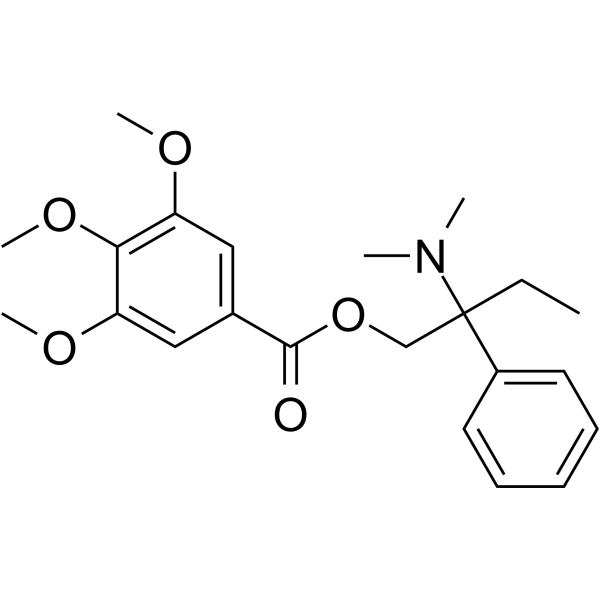
Trimebutine is a multi-target inhibitor and opioid receptor agonist with antimuscarinic activity. Trimebutine inhibits L-type Ca2+ channels and large-conductance calcium-activated potassium channels (BKCa channels), thereby inhibiting extracellular calcium influx and potassium ion efflux. Trimebutine also targets Toll-like receptors, inhibits Toll-like receptor 2/4/7/8/9 signals, and inhibits LPS-induced IRAK1 activation, as well as ERK1/2, JNK and NF-κB activation, thereby exerting anti-inflammatory effects. Trimebutine also induces tumor cell apoptosis by inhibiting the AKT/ERK pathway. Trimebutine also inhibits excessive contraction of smooth muscle and can be used in the study of gastrointestinal disorders such as irritable bowel syndrome (IBS).
Nos produits utilisent uniquement pour la recherche. Nous ne vendons pas aux patients.
- Pureté : 99.42%
- CAS No.: 39133-31-8
- Formule: C22H29NO5
- Masse moléculaire:387.47
-
Stockage:
4°C, protect from light
* In solvent : -80°C, 6 months; -20°C, 1 month (protect from light)

To place orders, for customer services and technical support, please contact: MedChemExpress USA
Tel: 609-228-6898 E-mail: [email protected] [email protected]


-
 Activité biologique
-
Chemical Information
-
Solvant et solubilité
- Protocole
- Pureté et documentation
- Références
-
 Help & FAQs


-
HY-17417
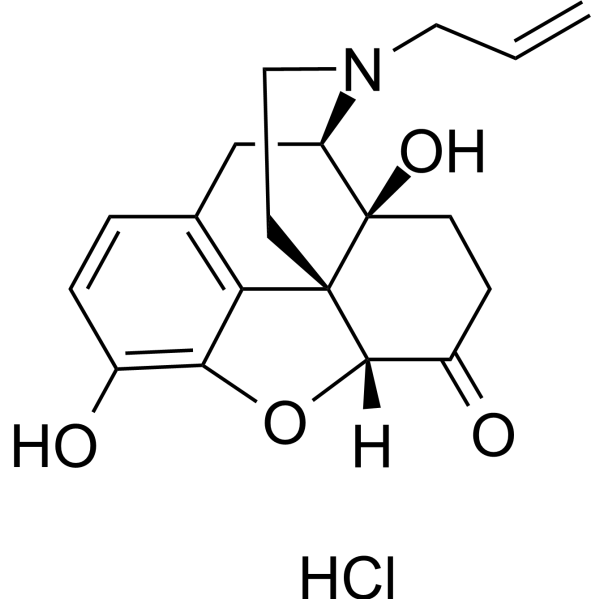
Naloxone hydrochlorideOpioid Receptor Antagonist -

HY-B0380R
Trimebutine (Standard)Opioid Receptor Agonist -
HY-P0210
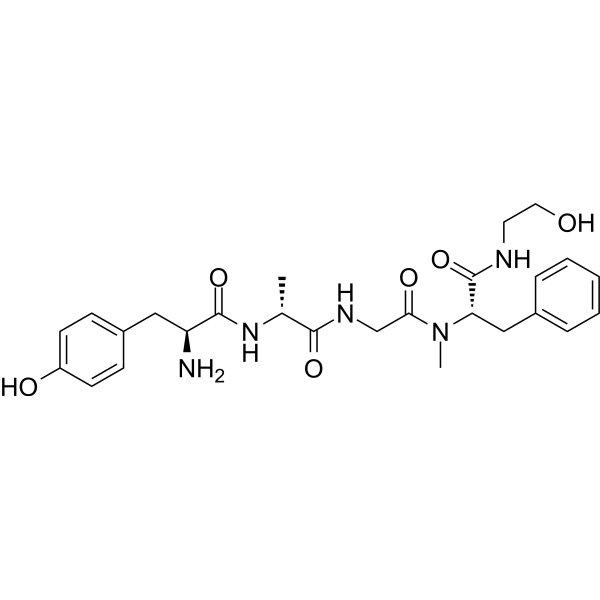
DAMGOμ-OPR Agonist -
HY-B0380A
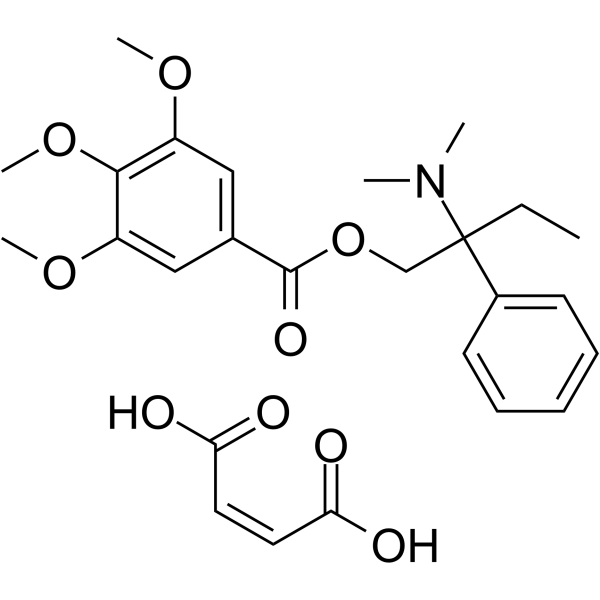
Trimebutine maleateOpioid Receptor Agonist -
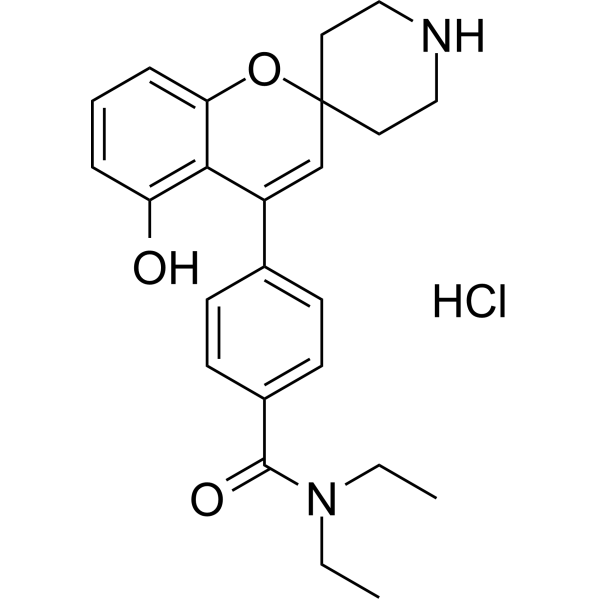
HY-13044
ADL-5859 hydrochlorideOpioid Receptor Agonist -
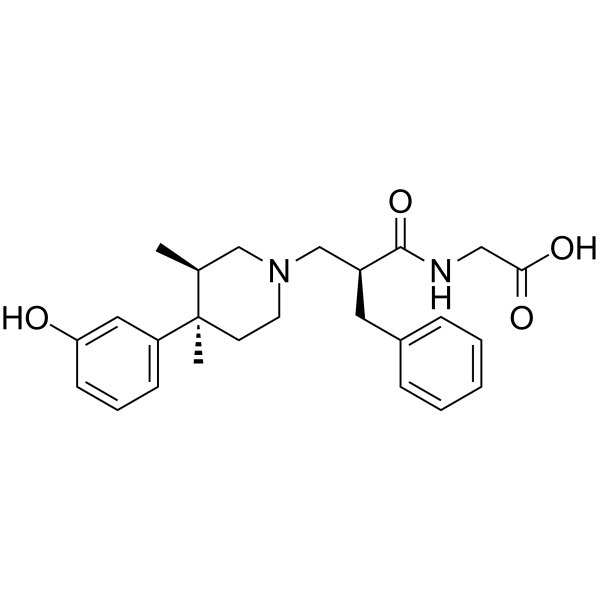
HY-13243
Alvimopanμ-opioid Receptor Antagonist -
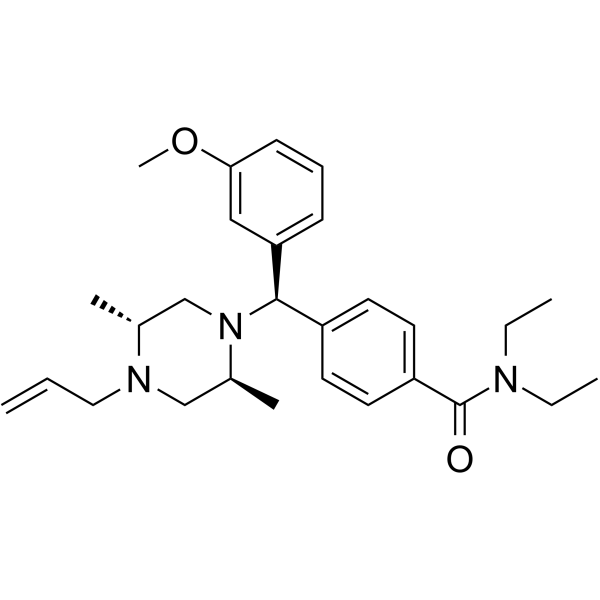
HY-101202
SNC80δ-opioid Receptor Agonist -
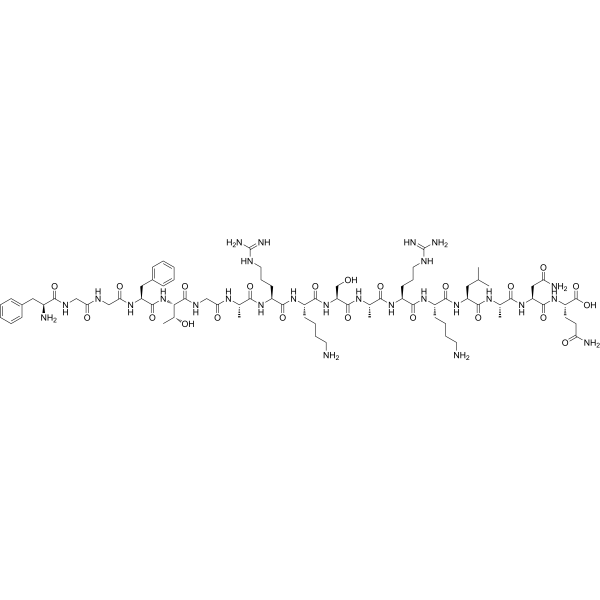
HY-P0183
NociceptinNociceptin Receptor Ligand -
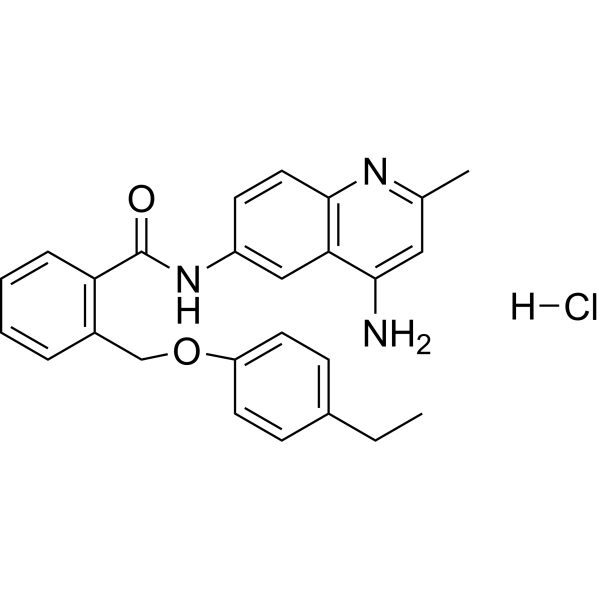
HY-13274
JTC-801Opioid Receptor Antagonist -

HY-105343
BW-180COpioid Receptor Agonist -
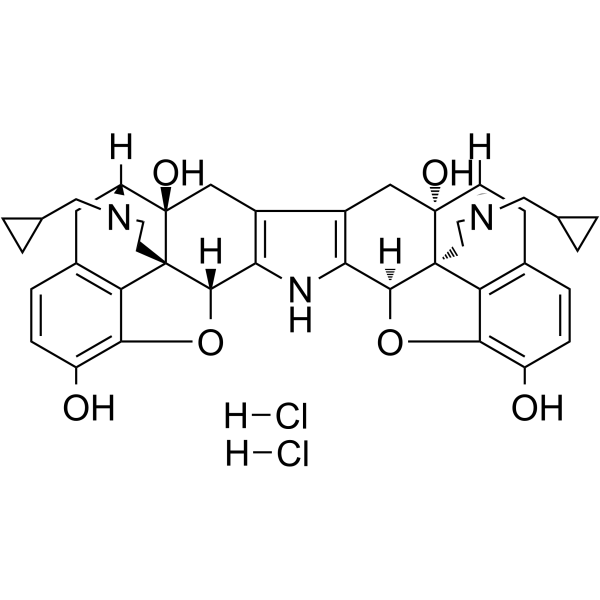
HY-100903
Norbinaltorphimine dihydrochlorideκ-opioid receptor Antagonist -

HY-P1502
β-Endorphin, humanOpioid Receptor Agonist
Voir tous les produits spécifiques à Isoform Opioid Receptor
MoreVoir tous les produits spécifiques à Isoform Calcium Channel
More

Activité biologique
Description
IC50 & Target
|
μ Opioid Receptor/MOR |
L-type calcium channel |
IRAK-1 |
ERK1 |
ERK2 |
In Vitro
Trimebutine (0-1000 μM; 48 h) significantly inhibits the viability of SHG44, U251, and U-87 MG glioma cells, with IC50 of 98.28 μM, 128.27 μM, and 204.06 μM, respectively, and has low toxicity to normal HEB cells[1].
Trimebutine (0-200 μM; 24-72 h) inhibits the migration of U-87 MG cells in a concentration- and time-dependent manner[1].
Trimebutine (0-200 μM; 48-72 h) induces apoptosis in glioma cells, downregulates Bcl-2, upregulates Bax and activates Caspase-3, while inhibiting the phosphorylation of AKT (Ser473) and ERK (Thr202/Tyr204)[1].
MedChemExpress (MCE) has not independently confirmed the accuracy of these methods. They are for reference only. Further protocols information, click here.
-
Cell Line:SHG44, U251, U-87 MG
-
Concentration:0, 10, 50, 100, 200 μM
-
Incubation Time:48 h and 72 h
-
Result:Reduced phosphorylated AKT (Ser473) and ERK (Thr202/Tyr204) levels in a dose-dependent manner at both time points, while total AKT and ERK protein levels remained unchanged.
The inhibition was more pronounced at 72 h for higher concentrations (100-200 μM).
In Vivo
Trimebutine (50 mg/kg; oral; single dose) significantly reduces pain response at 60 mmHg pressure in the colorectal distension model of male mice after 4 hours of treatment, exhibits weaker overall effect than GIC-1001 (HY-B0380B) at an equimolar dose[2].
MedChemExpress (MCE) has not independently confirmed the accuracy of these methods. They are for reference only.
-
Animal Model:
-
Dosage:
-
Administration:
-
Result:Animal Model: Female nude mice (4-week-old), subcutaneous U-87 MG glioblastoma xenograft model[1] Dosage (solvent): 100 mg/kg/day (DMSO) Administration: Intraperitoneal injection (i.p.), once daily for 7 days, starting when tumors reached ~2 mm3; monitored at days 7, 10, 14, 16, 18, 21. Result: Significantly reduced tumor volume compared to the vehicle control group, with final tumor weight decreasing by ~30%. Histological analysis showed increased TUNEL-positive apoptotic cells in tumor sections.
Downregulated Bcl-2 and upregulated Bax protein levels, along with reduced phosphorylation of AKT (Ser473) and ERK (Thr202/Tyr204), indicating modulation of apoptotic and proliferative signaling pathways.
No significant toxicity was observed in treated mice, as body weight and general activity remained comparable to controls.
-
Animal Model:Female nude mice (4-week-old), subcutaneous U-87 MG glioblastoma xenograft model[1]
-
Dosage:100 mg/kg/day
-
Administration:Intraperitoneal injection (i.p.), once daily for 7 days, starting when tumors reached ~2 mm3; monitored at days 7, 10, 14, 16, 18, 21.
-
Result:Significantly reduced tumor volume compared to the vehicle control group, with final tumor weight decreasing by ~30%. Histological analysis showed increased TUNEL-positive apoptotic cells in tumor sections.
Downregulated Bcl-2 and upregulated Bax protein levels, along with reduced phosphorylation of AKT (Ser473) and ERK (Thr202/Tyr204), indicating modulation of apoptotic and proliferative signaling pathways.
No significant toxicity was observed in treated mice, as body weight and general activity remained comparable to controls.
Essai clinique
| NCT Number | Sponsor | Condition | Start Date |
Phase

|
|---|---|---|---|---|
| NCT01329991 | Plexxikon| | 2011-05 | PHASE1 |


Chemical Information
-
CAS No. 39133-31-8
-
Appearance Solid
-
Masse moléculaire 387.47
-
Formule C22H29NO5
-
Color White to off-white
-
SMILES
O=C(OCC(C1=CC=CC=C1)(N(C)C)CC)C2=CC(OC)=C(OC)C(OC)=C2
-
Livraison
Room temperature in continental US; may vary elsewhere.
-
Stockage
4°C, protect from light
* In solvent : -80°C, 6 months; -20°C, 1 month (protect from light)


Solvant et solubilité
In Vitro:
DMSO : 100 mg/mL (258.08 mM; Need ultrasonic; Hygroscopic DMSO has a significant impact on the solubility of product, please use newly opened DMSO)
Please refer to the solubility information to select the appropriate solvent. Once prepared, please aliquot and store the solution to prevent product inactivation from repeated freeze-thaw cycles.
Storage method and period of stock solution: -80°C, 6 months; -20°C, 1 month (protect from light). When stored at -80°C, please use it within 6 months. When stored at -20°C, please use it within 1 month.
Please refer to the solubility information to select the appropriate solvent. Once prepared, please aliquot and store the solution to prevent product inactivation from repeated freeze-thaw cycles.
Storage method and period of stock solution: -80°C, 6 months; -20°C, 1 month (protect from light). When stored at -80°C, please use it within 6 months. When stored at -20°C, please use it within 1 month.
Concentration (start) × Volume (start) = Concentration (final) × Volume (final)

Protocole
-
Apoptosis
Apoptosis, also called programmed cell death, is generally characterized by distinct morphological characteristics.
-
TUNEL staining for apoptotic DNA fragmentation
TUNEL staining detects DNA strand breaks by using terminal deoxynucleotidyl transferase to add labeled nucleotides to exposed 3′-OH DNA termini, generating either microscopic staining in fixed cells or tissue sections, or fluorescence/cytometric signal in cell suspensions. TUNEL positivity reflects DNA fragmentation but should not be interpreted alone as definitive apoptosis, because TUNEL can also label necrotic, autolytic, mechanically damaged, or DNA-repair-associated DNA breaks.
-
Annexin V plus membrane-impermeant dye apoptosis staining
Annexin V-based apoptosis assays rely on the detection of phosphatidylserine (PS) externalization from the inner leaflet of the plasma membrane to the outer leaflet, an early biochemical hallmark of apoptosis. Fluorescently labeled Annexin V binds PS in a calcium-dependent manner, enabling identification of early apoptotic cells by flow cytometry or fluorescence microscopy. When combined with a membrane-impermeant DNA-binding dye (e. g. , propidium iodide), this approach allows discrimination between viable (Annexin V−/dye−), early apoptotic (Annexin V+/dye−), and late apoptotic or necrotic (Annexin V+/dye+) cell populations by assessing membrane integrity and PS exposure.
-
Apoptosis Solutions
Apoptosis is a regulated, generally non-lytic cell-death pathway that removes unwanted, damaged, infected, or abnormal cells through coordinated morphological changes, caspase activation, DNA fragmentation, and membrane remodeling. The intrinsic apoptosis pathway is controlled mainly by mitochondrial outer membrane permeabilization, BCL-2 family proteins, cytochrome c release, apoptosome formation, caspase-9 activation, and downstream executioner caspase-3/7 activation. The extrinsic apoptosis pathway is initiated by death receptors such as Fas, TNFR, and TRAIL receptors, which recruit adaptor proteins and activate caspase-8 before engaging executioner caspases or mitochondrial amplification through BID cleavage. Apoptosis is linked to many phenotypes, including cancer cell killing, tissue homeostasis, immune regulation, neurodegeneration, infection response, and treatment-induced cytotoxicity; unresolved questions include how apoptosis interacts with necroptosis, pyroptosis, ferroptos
-
Ca2+ Staining Technique
Ca2+ staining is an experimental technique that utilizes specific fluorescent probes (such as Fluo-4 AM, Fura-2, etc.) to qualitatively or quantitatively detect dynamic changes in intracellular Ca2+ concentrations; this is achieved by monitoring the changes in fluorescent signals generated when these probes bind to free intracellular calcium ions. The underlying principle relies primarily on the presence of chelating groups within the probe's molecular structure that possess high affinity for calcium ions.
-
Research Protocol for Inflammation-related Diseases
The NLRP3 inflammasome is a cytosolic innate immune signaling platform that integrates priming signals and danger-signal activation to promote caspase-1 activation, maturation of IL-1β and IL-18, and gasdermin D-mediated pyroptotic cell death. The core experimental logic is to determine whether inflammatory disease phenotypes are driven by increased NLRP3 expression, ASC-containing inflammasome assembly, caspase-1 cleavage, GSDMD cleavage, and extracellular release of IL-1β/IL-18 rather than by nonspecific cell injury alone. The pathway is strongly linked to inflammation-related disease phenotypes because monosodium urate crystals activate NALP3/NLRP3 inflammasome signaling in gout-like crystal inflammation, cholesterol crystals activate NLRP3 inflammasomes in atherogenesis models, and DSS-induced intestinal inflammation has been reported to involve NLRP3 inflammasome activity. However, experimental colitis studies also show context-dependent protective effects of NLRP3 inflammasome co


Pureté et documentation
-
Fiche technique (282 KB)
-
SDS (393 KB)
- English - EN (393 KB)
- Français - FR (393 KB)
- Deutsch - DE (393 KB)
- Norwegian - NO (393 KB)
- Español - ES (393 KB)
- Swedish - SV (393 KB)
- Italian - IT (393 KB)
- Korean - KR (393 KB)
- Portuguese - PT (393 KB)
-
Instruction de manipulation (2659 KB)
Références
[1]. Fan YP, et al. Trimebutine Promotes Glioma Cell Apoptosis as a Potential Anti-tumor Agent. Front Pharmacol. 2018 Jun 21;9:664. [Content Brief]
[2]. Cenac N, et al. A novel orally administered trimebutine compound (GIC-1001) is anti-nociceptive and features peripheral opioid agonistic activity and Hydrogen Sulphide-releasing capacity in mice. Eur J Pain. 2016 May;20(5):723-30. [Content Brief]
[3]. Long Y, et al. Effectiveness of trimebutine maleate on modulating intestinal hypercontractility in a mouse model of postinfectious irritable bowel syndrome. Eur J Pharmacol. 2010 Jun 25;636(1-3):159-65. [Content Brief]
[4]. Tan W, et al. Effects of trimebutine maleate on colonic motility through Ca²+-activated K+ channels and L-type Ca²+ channels. Arch Pharm Res. 2011 Jun;34(6):979-85. [Content Brief]
[5]. Xu J, et al. Trimebutine, a small molecule mimetic agonist of adhesion molecule L1, contributes to functional recovery after spinal cord injury in mice. Dis Model Mech. 2017 Sep 1;10(9):1117-1128. [Content Brief]
[6]. Ogawa N, et al. Trimebutine suppresses Toll-like receptor 2/4/7/8/9 signaling pathways in macrophages. Arch Biochem Biophys. 2021 Oct 30;711:109029. [Content Brief]


Complete Stock Solution Preparation Table
Please refer to the solubility information to select the appropriate solvent. Once prepared, please aliquot and store the solution to prevent product inactivation from repeated freeze-thaw cycles.
Storage method and period of stock solution: -80°C, 6 months; -20°C, 1 month (protect from light). When stored at -80°C, please use it within 6 months. When stored at -20°C, please use it within 1 month.
| Optional Solvent | Concentration Solvent Mass | 1 mg | 5 mg | 10 mg | 25 mg |
|---|---|---|---|---|---|
| DMSO | 1 mM | 2.5808 mL | 12.9042 mL | 25.8084 mL | 64.5211 mL |
| 5 mM | 0.5162 mL | 2.5808 mL | 5.1617 mL | 12.9042 mL | |
| 10 mM | 0.2581 mL | 1.2904 mL | 2.5808 mL | 6.4521 mL | |
| 15 mM | 0.1721 mL | 0.8603 mL | 1.7206 mL | 4.3014 mL | |
| 20 mM | 0.1290 mL | 0.6452 mL | 1.2904 mL | 3.2261 mL | |
| 25 mM | 0.1032 mL | 0.5162 mL | 1.0323 mL | 2.5808 mL | |
| 30 mM | 0.0860 mL | 0.4301 mL | 0.8603 mL | 2.1507 mL | |
| 40 mM | 0.0645 mL | 0.3226 mL | 0.6452 mL | 1.6130 mL | |
| 50 mM | 0.0516 mL | 0.2581 mL | 0.5162 mL | 1.2904 mL | |
| 60 mM | 0.0430 mL | 0.2151 mL | 0.4301 mL | 1.0754 mL | |
| 80 mM | 0.0323 mL | 0.1613 mL | 0.3226 mL | 0.8065 mL | |
| 100 mM | 0.0258 mL | 0.1290 mL | 0.2581 mL | 0.6452 mL |


Trimebutine Related Classifications
HY-B0380 Related Classifications
 Powered by Bioz