



Akt
Akt (protein kinase B, PKB) is a serine/threonine kinase family that functions as a central effector of phosphatidylinositol 3-kinase (PI3K) signaling and regulates cell survival, proliferation, metabolism, apoptosis suppression, and glucose homeostasis through phosphorylation-dependent signaling networks[1][2]. Akt activation occurs after PI3K-generated phosphoinositides recruit Akt to the plasma membrane, where phosphorylation at conserved regulatory residues enables full kinase activity and downstream signaling toward substrates involved in growth and metabolic control[2][3]. Mechanistically, Akt signaling integrates growth factor, insulin, cytokine, and receptor-mediated inputs, thereby linking extracellular stimulation to cellular biosynthesis, survival, and metabolic adaptation[2][4]. Dysregulated Akt signaling is strongly associated with cancer, diabetes, cardiovascular disorders, and immune-mediated diseases, making the pathway a major experimental and therapeutic target[2][4][5]. The Akt family comprises three highly homologous isoforms, Akt1, Akt2, and Akt3, encoded by distinct genes but exhibiting partially nonredundant biological functions[1][4]. Compared with related isoforms, Akt1 is primarily associated with cell growth, proliferation, and tumor initiation, whereas Akt2 contributes more strongly to glucose metabolism, cell migration, invasion, and metastatic progression[1][5]. Akt3 shows enriched expression in neural tissues and has been implicated in brain development and selected malignancies, including melanoma models[1][5]. For experimental applications, both pan-Akt and emerging isoform-selective inhibitors are widely used to investigate pathway dependence, therapeutic resistance, and isoform-specific signaling mechanisms in disease models[5][6].
References:
- [1]. Khalili M, et al. Underserved Does Not Mean Undeserved: Unfurling the HCV Care in the Safety Net. Dig Dis Sci. 2018 Dec;63(12):3250-3252. [Content Brief]
- [2]. Manola A, et al. Mastocytosis causing refractory hypotension after coronary angiography. Int J Cardiol. 2012 Apr 19;156(2):e43-4. [Content Brief]
- [3]. Nitulescu GM, et al. The Akt pathway in oncology therapy and beyond (Review). Int J Oncol. 2018 Dec;53(6):2319-2331. [Content Brief]
- [4]. Guerau-de-Arellano M, et al. Akt isoforms in the immune system. Front Immunol. 2022 Aug 23;13:990874. [Content Brief]
- [5]. Hassan D, et al. AKT kinases as therapeutic targets. J Exp Clin Cancer Res. 2024 Nov 29;43(1):313. [Content Brief]
- [6]. Wang Y, et al. Corrigendum to \"Mechanical stress protects against chondrocyte pyroptosis through TGF-β1-mediated activation of Smad2/3 and inhibition of the NF-κB signaling pathway in an osteoarthritis model\" [Biomed. Pharmacother., 2023 Mar:159:114216. [Content Brief]
All Product Categories
-
Akt Inhibitors
(619)
View all products
-
Akt Agonists
(4)
View all products
-
Akt Activators
(196)
View all products
-
Akt Modulators
(18)
View all products
-
Akt Inducers
(8)
View all products
-
Akt Degraders
(6)
View all products
-
Akt Control
(1)
View all products
-
Akt Substrate
(1)
View all products
-
Akt Ligands
(4)
View all products
-
Akt Related Products (936)
Related Products (936)

-
Antibodies (2)
-
AKT-IN-14 free base
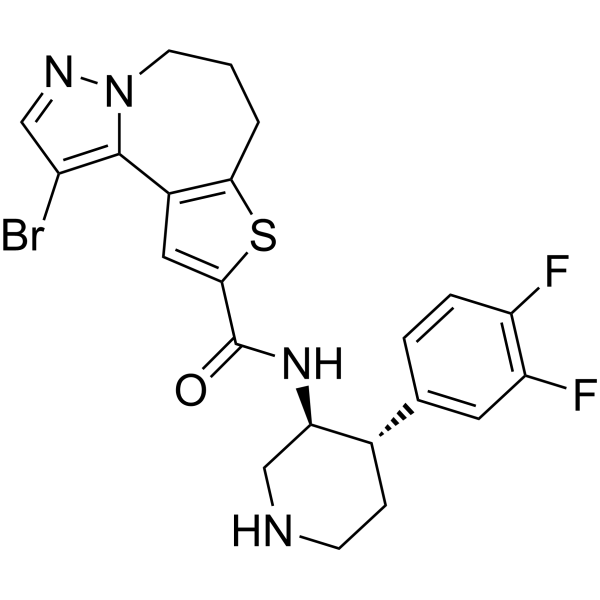 0 ImagesCat. No.: HY-153640ACAS No.: 2781918-27-0
-
DDN
 0 ImagesCat. No.: HY-138842CAS No.: 118006-14-7DDN is a selective insulin receptor (Insulin Receptor) activator, an insulin sensitizer, and a glucose-lowering insulin mimetic with oral bioavailability. DDN can directly bind to the receptor kinase domain and induce Akt and ERK phosphorylation, and it can also enhance insulin's effect on glucose uptake. DDN significantly reduces blood glucose levels in wild-type and diabetic ob/ob and db/db mice.
-
L-Valine-d7
 0 ImagesCat. No.: HY-178304SCAS No.: 1021439-16-6L-Valine-d7 is the deuterium labeled L-Valine (HY-N0717). L-Valine ((S)-Valine) is a nonlinear semiorganic material. L-Valine causes lipid peroxidation and accumulation of malondialdehyde (MDA), exhibits inhibitory activity against cyanobacteria. L-Valine inhibits multidrug-resistant bacteria through activation of PI3K/Akt signaling pathway and inhibition of arginase.
-
Hederacolchiside A1 (Standard)
 0 ImagesCat. No.: HY-N6950RCAS No.: 106577-39-3Hederacolchiside A1 (Standard) is the analytical standard of Hederacolchiside A1. This product is intended for research and analytical applications. Hederacolchiside A1, isolated from Pulsatilla chinensis, suppresses proliferation of tumor cells by inducing apoptosis through modulating PI3K/Akt/mTOR signaling pathway. Hederacolchiside A1 has antischistosomal activity, affecting parasite viability both in vivo and in vitro.
-
Doxycycline (hydrochloride) (GMP)
 0 ImagesCat. No.: HY-N0565AGCAS No.: 10592-13-9Doxycycline hydrochloride GMP is Doxycycline (hydrochloride) (HY-N0565A) produced by using GMP guidelines. GMP small molecules works appropriately as an auxiliary reagent for cell therapy manufacture. Doxycycline hydrochloride is an orally active highly lipophilic, tissue-permeable MMP inhibitor with broad-spectrum antibacterial activity. Doxycycline hydrochloride is also a semi-synthetic antibiotic with chelating properties, which blocks bacterial protein synthesis and inhibits extracellular matrix degradation through interactions with zinc and calcium atoms. Doxycycline hydrochloride also inhibits mitochondrial biogenesis, translation, and the expression of respiratory chain proteins. Doxycycline hydrochloride induces apoptosis, inhibits autophagy and EMT, downregulates stem cell markers, and activates the PI3K-AKT pathway, thereby effectively inhibiting the viability and proliferation of cancer cells such as breast cancer cells. Doxycycline hydrochloride also promotes the survival and self-renewal of embryonic stem cells and neural stem cells, and reduces the frequency of medium changes in culture. Doxycycline hydrochloride has been applied in studies related to breast cancer, prostate cancer, bladder cancer, and other cancers.
-
Leupeptin hydrochloride
 0 ImagesCat. No.: HY-183478CAS No.: 39740-82-4Leupeptin hydrochloride is a broad-spectrum protease inhibitor. By inhibiting the activation of the PTEN/PI3K/Akt/NF-κB/ERK1/2/p38 signaling pathway, Leupeptin hydrochloride significantly reduces LPS-induced NO and ROS production, mitochondrial membrane potential hyperpolarization, phagocytic activity, pro-inflammatory cytokine release, and M1 polarization in mouse peritoneal macrophages, and reverses autophagic flux impairment. It also decreases Concanavalin A (HY-P2149)-induced proliferation index of mouse splenic lymphocytes and the Th1/IL-10 and Th2/IL-10 cytokine ratios, thereby modulating innate and adaptive immune responses. Leupeptin hydrochloride inhibits blood coagulation and tumorigenesis in mouse skin. Leupeptin hydrochloride can be used in research on chronic inflammatory diseases and skin tumorigenesis.
-
BMS-554417
 0 ImagesCat. No.: HY-10263CAS No.: 468741-42-6BMS-554417 is an orally active inhibitor of insulin receptor and insulin-like growth factor-I receptor (IGF-1R) kinases, with IC50 values of 50.6 nM and 67.9 nM, respectively. BMS-554417 blocks downstream signal transduction via the ERK and PI3K/Akt pathways. BMS-554417 induces G0-G1 cell cycle arrest, prevents cyclin D1 accumulation in the nucleus, triggers mitochondrial pathway-mediated apoptosis, promotes HER2 phosphorylation, and inhibits the proliferation and growth of cancer cells. BMS-554417 can be used in research related to colon cancer, ovarian cancer, and breast cancer.
-
Sapanisertib (Standard)
 0 ImagesSynonyms: INK-128 (Standard); MLN0128 (Standard); TAK-228 (Standard)Sapanisertib (INK-128; MLN0128; TAK-228) Standard is the analytical standard of Sapanisertib (HY-13328). This product is intended for research and analytical applications. Sapanisertib (INK-128; MLN0128; TAK-228) is an orally active dual mTORC1/mTORC2 inhibitor. Sapanisertib directly and simultaneously inhibits mTORC1/2 activity through competitive binding with ATP, thereby comprehensively blocking downstream processes such as protein and lipid synthesis and cytoskeletal reorganization, consequently suppressing tumor cell proliferation and promoting apoptosis. Sapanisertib is applicable to research on melanoma, ovarian cancer, pulmonary fibrosis, and hematological malignancies.
-
HS-72
 0 ImagesCat. No.: HY-117252CAS No.: 1118861-60-1HS-72 is a selective allosteric inducible heat shock protein 70 Hsp70i inhibitor. HS-72 reduces ATP affinity of Hsp70i, elevates caspase 3/7 apoptotic activity, and promotes degradation of Hsp70 client proteins, including HER2 and Akt, and blocks DENV entry by disrupting Hsp70i association with the DENV receptor complex. HS-72 can be used for breast cancer and dengue virus infection research.
-
RV-6153
 0 ImagesCat. No.: HY-124459CAS No.: 1628139-03-6RV-6153 is a potent and selective dual inhibitor of PI3Kδ and PI3Kγ, with IC50 values of 2.5 nM and 28 nM, respectively. RV-6153 dually inhibits PI3Kδ and PI3Kγ, blocking Akt phosphorylation, thereby inhibiting ROS production and cytokine release at the cellular level, and reducing neutrophil and macrophage accumulation in the airways in vivo. RV-6153 can be used in research on chronic obstructive pulmonary disease, asthma, and other inflammatory diseases.
-
Pratol
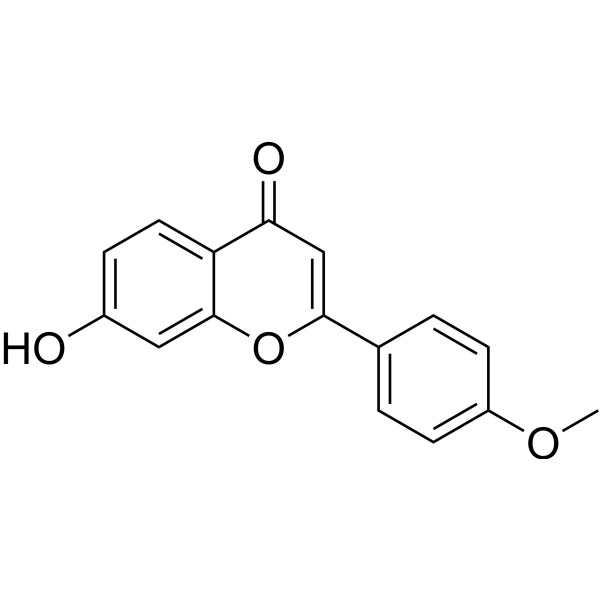 0 ImagesPratol (7-Hydroxy-4'-methoxyflavone) is an NF-κB inhibitor. Pratol also inhibits NO, PGE2, TNF-α, IL-1β, and IL-6 production. Pratol increases the phosphorylation of p38 MAPK, JNK, and ERK, decreases AKT phosphorylation, and upregulates MITF, tyrosinase, TRP-1, and TRP-2 through a PKA-dependent signaling pathway. Pratol reduces iNOS and COX-2 protein expression, inhibits p65 phosphorylation, and protects IκBα from degradation, thereby inhibiting NF-κB nuclear translocation. Pratol can be used in research on hypopigmentary disorders, inflammatory diseases, cervical cancer, and colon cancer.
-
4-Methoxybenzyl alcohol (Standard)
 0 ImagesSynonyms: P-Methoxy-benzyl alcoho (Standard); (4-Methoxyphenyl)methanol (Standard)4-Methoxybenzyl alcohol (Standard) (P-Methoxy-benzyl alcoho (Standard); (4-Methoxyphenyl)methanol (Standard)) is the analytical standard of 4-Methoxybenzyl alcohol (HY-W015777). This product is intended for research and analytical applications. 4-Methoxybenzyl alcohol (P-Methoxy-benzyl alcoho; (4-Methoxyphenyl) methanol) is a naturally derived volatile aromatic compound. 4-Methoxybenzyl alcohol upregulates the phosphorylation level of PI3K/Akt pathway proteins, downregulates the expression of pro-inflammatory factors, increases the content of tight junction proteins occludin and claudin-5, and alleviates structural damage to the blood-brain barrier. 4-Methoxybenzyl alcohol improves the decrease in viability and NO level of cerebral microvascular endothelial cells induced by oxygen-glucose deprivation/reperfusion, and reduces the release of lactate dehydrogenase. 4-Methoxybenzyl alcohol serves as a substrate in the two-phase persulfate-mediated electro-oxidation system, where it is directionally oxidized to p-anisaldehyde. 4-Methoxybenzyl alcohol acts as a substrate for wild-type fungal aryl alcohol oxidase. 4-Methoxybenzyl alcohol can be used in studies related to ischemic stroke, as well as in research across various fields such as chemical synthesis, including the synthesis of fragrances and flavorings.
-
Nivitol
 0 ImagesCat. No.: HY-108046CAS No.: 869743-37-3Synonyms: UP302Nivitol (UP302) is a natural phenolic compound discovered from Dianella ensifolia and also acts as a Tyrosinase inhibitor. Nivitol competitively and reversibly inhibits tyrosinase, suppressing melanin production. Nivitol inhibits homogentisate 1,2-dioxygenase (HGD). In human leukemia cells, Nivitol inhibits PI3K/AKT pathway phosphorylation, increases ROS, decreases mitochondrial membrane potential, and induces G2/M cell cycle arrest, apoptosis, and PINK1/Parkin-mediated mitophagy. Nivitol exhibits inhibition of tumor growth in the MV411 xenograft mouse model. Nivitol is used for research on exogenous ochronosis, hyperpigmentation, and leukemia.
-
STA-1474 sodium
 0 ImagesCat. No.: HY-13752BCAS No.: 1402907-09-8STA-1474 sodium is an orally active and highly selective HSP90 inhibitor, as well as a phosphate prodrug of the HSP90 inhibitor STA-9090 (HY-15205). STA-1474 sodium disrupts the chaperone function of HSP90 and promotes the degradation of client proteins. STA-1474 sodium inhibits the phosphorylation of Met, Akt and STAT3, thereby blocking related signaling pathways. STA-1474 sodium induces apoptosis and inhibits proliferation of osteosarcoma cells, and triggers the up-regulation of HSP70 and HSP90. STA-1474 sodium induces tumor regression and caspase-3 activation in mouse osteosarcoma xenograft models. STA-1474 sodium can be used in the research of osteosarcoma.
-
(Z)-Doxepin
 0 Images(Z)-Doxepin is an isomer of Doxepin (HY-B0725A). Doxepin is an orally active, blood-brain barrier penetrant tricyclic antidepressant with multiple activities including hypnosis, sedation, analgesia and vasodilation. Doxepin enhances the expression of PSD-95 and synapsin 1 via the PI3K/AKT/mTOR signaling pathway, and is metabolized to Desmethyldoxepin in vivo. Doxepin can be used in research related to various diseases such as depression, anxiety, obesity and atopic dermatitis.
-
Endoxifen (Z-isomer methanesulfonate)
 0 ImagesCat. No.: HY-18719HCAS No.: 1032008-71-1Endoxifen Z-isomer methanesulfonate is an orally active selective PKCβ1 inhibitor with an IC50 of 360 nM against human PKCβ1. It also acts as an estrogen receptor modulator and antiestrogen. Endoxifen Z-isomer methanesulfonate binds to and blocks ERα, ERβ and PKCβ1, inhibits estrogen and PI3K/AKT/mTORC1 signaling pathways, suppresses the expression of genes associated with cell cycle, cell proliferation and extracellular matrix remodeling, and induces apoptosis, reactive oxygen species (ROS) production and hypoxic features. Endoxifen Z-isomer methanesulfonate inhibits tumor growth in breast tumor and glioblastoma models, reduces bone turnover and blood lipid levels, and does not require metabolism via CYP2D6. It can be used in research related to ER+ breast cancer, invasive breast cancer, glioblastoma multiforme, type I bipolar disorder, desmoid tumor, gynecological malignancies, melanoma and hormone receptor-positive solid tumors.
-
Izorlisib methanesulfonate
 0 ImagesCat. No.: HY-15466ACAS No.: 2242053-82-1Synonyms: CH5132799 methanesulfonateIzorlisib (CH5132799) methanesulfonate is an orally active, selective Class I PI3K inhibitor with an IC50 value of 14 nM against PI3Kα. Izorlisib methanesulfonate specifically inhibits Class I PI3K (particularly PI3Kα and its mutants) and blocks the PI3K/Akt/mTOR pathway; this leads to cell cycle arrest at the G1 phase and apoptosis without triggering feedback activation of Akt by competitively binding to the ATP-binding site of PI3K. Izorlisib methanesulfonate can be used in research on cancers harboring PIK3CA mutations or PTEN loss (such as breast, ovarian, prostate, and endometrial cancers).
-
GNE-140 racemate (Standard)
 0 ImagesCat. No.: HY-100742RCAS No.: 1802977-61-2GNE-140 racemate (Standard) is the analytical standard of GNE-140 racemate (HY-100742). This product is intended for research and analytical applications. GNE-140 racemate is a racemic mixture of (R)-GNE-140 (HY-100742A) and (S)-GNE-140 (HY-100742B), and also a tautomer of GNE-140 (HY-118241). GNE-140 racemate is an orally active lactate dehydrogenase inhibitor, with an IC50 of 3 nM against human LDHA and an IC50 of 5 nM against LDHB. GNE-140 racemate reduces the phosphorylation level and total protein expression of p38 MAPK, and inhibits EGF-induced AKT phosphorylation. GNE-140 racemate decreases lactate production, regulates glycolysis, the pentose phosphate pathway and nucleotide biosynthesis, increases extracellular pH, inhibits cell proliferation, migration and invasion, and induces caspase-3 activation and ROS accumulation. GNE-140 racemate can be used in research related to breast cancer, cystic fibrosis and pancreatic cancer.
-
O-Methylbulbocapnine
 0 ImagesO-Methylbulbocapnine is an aporphine alkaloid that acts as an inhibitor of LPS-induced inflammatory signaling and a dopamine D1R antagonist. O-Methylbulbocapnine inhibits LPS-induced phosphorylation of p38, ERK1/2, c-Jun, NF-κB p65 at Ser536, and Akt, decreases MyD88 protein levels, and reduces NF-κB nuclear translocation and DNA-binding activity. O-Methylbulbocapnine inhibits LPS-induced production of IL-6, TNF-α, PGE2, and NO, and decreases COX-2 and iNOS expression. O-Methylbulbocapnine can be used for research on Alzheimer's disease, cervical cancer, breast cancer, and malaria.
-
DCZ3112
 0 ImagesCat. No.: HY-187653CAS No.: 2556837-25-1DCZ3112 is a Hsp90/Cdc37 protein-protein interaction inhibitor, with a Kd value of 4.98 µM against human Hsp90. DCZ3112 binds to the N-terminal domain of Hsp90, disrupts the Hsp90-Cdc37 interaction, and does not inhibit the ATPase activity of Hsp90. DCZ3112 induces G1 phase cell cycle arrest, apoptosis, reduces the phosphorylation levels of AKT and ERK, and inhibits the proliferation of HER2-positive breast cancer cells. DCZ3112 can be used in breast cancer-related research.




