



Akt
Akt (protein kinase B, PKB) is a serine/threonine kinase family that functions as a central effector of phosphatidylinositol 3-kinase (PI3K) signaling and regulates cell survival, proliferation, metabolism, apoptosis suppression, and glucose homeostasis through phosphorylation-dependent signaling networks[1][2]. Akt activation occurs after PI3K-generated phosphoinositides recruit Akt to the plasma membrane, where phosphorylation at conserved regulatory residues enables full kinase activity and downstream signaling toward substrates involved in growth and metabolic control[2][3]. Mechanistically, Akt signaling integrates growth factor, insulin, cytokine, and receptor-mediated inputs, thereby linking extracellular stimulation to cellular biosynthesis, survival, and metabolic adaptation[2][4]. Dysregulated Akt signaling is strongly associated with cancer, diabetes, cardiovascular disorders, and immune-mediated diseases, making the pathway a major experimental and therapeutic target[2][4][5]. The Akt family comprises three highly homologous isoforms, Akt1, Akt2, and Akt3, encoded by distinct genes but exhibiting partially nonredundant biological functions[1][4]. Compared with related isoforms, Akt1 is primarily associated with cell growth, proliferation, and tumor initiation, whereas Akt2 contributes more strongly to glucose metabolism, cell migration, invasion, and metastatic progression[1][5]. Akt3 shows enriched expression in neural tissues and has been implicated in brain development and selected malignancies, including melanoma models[1][5]. For experimental applications, both pan-Akt and emerging isoform-selective inhibitors are widely used to investigate pathway dependence, therapeutic resistance, and isoform-specific signaling mechanisms in disease models[5][6].
References:
- [1]. Khalili M, et al. Underserved Does Not Mean Undeserved: Unfurling the HCV Care in the Safety Net. Dig Dis Sci. 2018 Dec;63(12):3250-3252. [Content Brief]
- [2]. Manola A, et al. Mastocytosis causing refractory hypotension after coronary angiography. Int J Cardiol. 2012 Apr 19;156(2):e43-4. [Content Brief]
- [3]. Nitulescu GM, et al. The Akt pathway in oncology therapy and beyond (Review). Int J Oncol. 2018 Dec;53(6):2319-2331. [Content Brief]
- [4]. Guerau-de-Arellano M, et al. Akt isoforms in the immune system. Front Immunol. 2022 Aug 23;13:990874. [Content Brief]
- [5]. Hassan D, et al. AKT kinases as therapeutic targets. J Exp Clin Cancer Res. 2024 Nov 29;43(1):313. [Content Brief]
- [6]. Wang Y, et al. Corrigendum to \"Mechanical stress protects against chondrocyte pyroptosis through TGF-β1-mediated activation of Smad2/3 and inhibition of the NF-κB signaling pathway in an osteoarthritis model\" [Biomed. Pharmacother., 2023 Mar:159:114216. [Content Brief]
All Product Categories
-
Akt Inhibitors
(619)
View all products
-
Akt Agonists
(4)
View all products
-
Akt Activators
(196)
View all products
-
Akt Modulators
(18)
View all products
-
Akt Inducers
(8)
View all products
-
Akt Degraders
(6)
View all products
-
Akt Control
(1)
View all products
-
Akt Substrate
(1)
View all products
-
Akt Ligands
(4)
View all products
-
Akt Related Products (936)
Related Products (936)

-
Antibodies (2)
-
F16 (Standard)
 0 ImagesCat. No.: HY-100395RCAS No.: 36098-33-6F16 (Standard) is the analytical standard of F16 (HY-100395). This product is intended for research and analytical applications. F16 is a mitochondrial permeability transition pore (PTP) modulator with an EC50 of 30 μM in mice. F16 promotes PTP opening, accumulates in cancer cell mitochondria, and induces mitochondrial depolarization, swelling, cristae disruption, outer membrane rupture, ATP depletion, reactive oxygen species (ROS) production, cytochrome c release and mitochondrial uncoupling. F16 induces cell cycle arrest at the G1 (occasionally G2) phase, reduces the phosphotyrosine content of Neu, as well as the levels of phosphorylated PKB/Akt and phosphorylated MAP kinase, downregulates the protein expression levels of Neu and PKB, triggers apoptosis in cells with moderate Bcl-2 expression, and induces necrosis in cells with overexpressed Bcl-2. F16 can be used in research related to breast cancer and gastric cancer.
-
CNBDA
 0 ImagesCat. No.: HY-156487CAS No.: 2101321-90-6CNBDA is a selective SHP2 inhibitor with an IC50 of 5 μM. CNBDA binds to the active site of SHP2 through interactions with surrounding positively charged and polar amino acids, inhibits the PTPase activity of SHP2, and blocks the autodephosphorylation of SHP2. CNBDA inhibits the transformed phenotype, proliferation, anchorage-independent growth, and mammosphere formation of breast cancer cells, as well as EGF-induced Ras-ERK and PI3K-Akt signaling pathways, downregulates HER2 expression, and induces cell death. CNBDA can be used in breast cancer-related research.
-
Sapanisertib phosphate
 0 ImagesCat. No.: HY-13328ACAS No.: 1422006-47-0Synonyms: INK-128 phosphate; MLN0128 phosphate; TAK-228 phosphateSapanisertib (INK-128; MLN0128; TAK-228) phosphate is an orally active dual mTORC1/mTORC2 inhibitor. Sapanisertib phosphate directly and simultaneously inhibits mTORC1/2 activity through competitive binding with ATP, thereby comprehensively blocking downstream processes such as protein and lipid synthesis and cytoskeletal reorganization, consequently suppressing tumor cell proliferation and promoting apoptosis. Sapanisertib phosphate is applicable to research on melanoma, ovarian cancer, pulmonary fibrosis, and hematological malignancies.
-
Flavokawain A (Standard)
 0 ImagesFlavokawain A is a chalcone compound and an orally active inhibitor of PRMT5 and cytochrome P450. Flavokawain A has anti-inflammatory, anti-tumor, and immunomodulatory effects. Flavokawain A can inhibit the proliferation of tumor cells and induce apoptosis. Flavokawain A can be used in the research of diseases such as bladder cancer.
-
Cryptanoside A
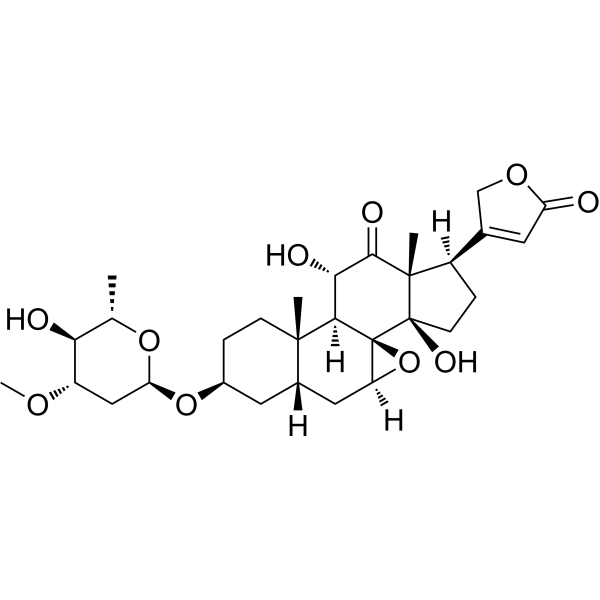 0 ImagesCat. No.: HY-N9149CAS No.: 98570-81-1
-
2,6-Dimethoxy-1,4-benzoquinone (Standard)
 0 Images2,6-Dimethoxy-1,4-benzoquinone (Standard) is the analytical standard of 2,6-Dimethoxy-1,4-benzoquinone (HY-N1677). This product is intended for research and analytical applications. 2,6-Dimethoxy-1,4-benzoquinone is a 1,4-benzoquinone derivative. 2,6-Dimethoxy-1,4-benzoquinone promotes phosphorylation of AKT, S6K, mTOR, 4E-BP1, and AMPK, and attenuates mTORC1 activity as part of the AKT/mTOR pathway. 2,6-Dimethoxy-1,4-benzoquinone stimulates myoblast differentiation, increases myotube size, elevates MHC protein expression, enhances mitochondrial biogenesis, respiration, and DNA content, and increases skeletal muscle weights, fiber size, grip strength, and treadmill performance. 2,6-Dimethoxy-1,4-benzoquinone exerts anti-cancer, anti-inflammatory, anti-adipogenic, antibacterial, and antimutagenic effects, inhibits adipogenic transcription factors, nitric oxide production, skin tumor development, Magnaporthe oryzae growth, spore germination, appressorium formation, and growth of select bacterial species, induces H2O2 generation and rice defense gene expression, and reduces rice blast lesion formation. 2,6-Dimethoxy-1,4-benzoquinone can be used for the research of obesity, skin tumorigenesis, rice blast disease, and food-borne illness.
-
7α-Hydroxycholesterol (Standard)
 0 Images7α-Hydroxycholesterol is a cholesterol oxide and can serve as a biomarker for oxidative stress and lipid peroxidation. 7α-Hydroxycholesterol has cytotoxic and pro-inflammatory activities. 7α-Hydroxycholesterol can also inhibit sterol synthesis and reduce the activity of HMG-CoA reductase. 7α-Hydroxycholesterol can be used in the research of diseases such as diabetes and atherosclerosis.
-
Ovalitenone
 0 ImagesCat. No.: HY-N15267CAS No.: 64280-22-4Ovalitenone is a flavonoid compound that can be isolated from the plant Millettia peguensis. It shows no cytotoxic effects on lung cancer H460 and A549 cells, but it significantly inhibits anchorage-independent growth, CSC-like phenotypes, colony formation, and the migration and invasion capabilities of cancer cells. Ovalitenone can significantly reduce the levels of N-cadherin, snail, and slug, while increasing E-cadherin, thus inhibiting the EMT pathway. Additionally, Ovalitenone suppresses the signaling pathways regulated by focal adhesion kinase (FAK), ATP-dependent tyrosine kinase (AKT), mammalian target of rapamycin (mTOR), and cell division cycle 42 (Cdc42).
-
Isoacteoside (Standard)
 0 ImagesSynonyms: Isoverbascoside (Standard)Isoacteoside (Standard) is the analytical standard of Isoacteoside. This product is intended for research and analytical applications. Isoacteoside is a natural product that can significantly inhibit the formation of glycation end products. Isoacteoside Standard regulates the AKT/PI3K/m-TOR/NF-κB signaling pathway, induces apoptosis in OVCAR-3 cell. Isoacteoside Standard exhibits antitumor, anti-inflammatory, anti-obesity and neuroprotective activities.
-
Bruceoside B
 0 ImagesCat. No.: HY-N20733CAS No.: 69687-69-0Bruceoside B is a PI3K/Akt/NF-κB inhibitor. Bruceoside B reduces LPS (HY-D1056)-induced nitric oxide release and the secretion of TNF-α, IL-6 and IL-1β, and decreases the activation level of apoptosis. Bruceoside B inhibits the replication, coat protein accumulation and local lesion formation of tobacco mosaic virus (TMV), and enhances the anti-infection ability of plants. Bruceoside B can be used in studies related to acute lung injury and tobacco mosaic virus infection.
-
Heclin (Standard)
 0 ImagesCat. No.: HY-110204RCAS No.: 890605-54-6Heclin (Standard) is the analytical standard of Heclin (HY-110204). This product is intended for research and analytical applications. Heclin is a HECT E3 ubiquitin ligases inhibitor. Heclin inhibits Smurf2, Nedd4, WWP1 (IC50 values are 6.8, 6.3, 6.9 μM) and can be used for the research of gastric cancer.
-
Arenobufagin (Standard)
 0 ImagesArenobufagin is a natural bufadienolide that can be extracted from toad venom. Arenobufagin can induce apoptosis and autophagy in human hepatocellular carcinoma cells through inhibition of PI3K/Akt/mTOR pathway. Arenobufagin has potent antineoplastic activity against HCC HepG2 cells as well as corresponding multidrug-resistant HepG2/ADM cells. Arenobufagin can inhibit VEGF-mediated angiogenesis through suppression of VEGFR-2 signaling pathway.
-
Cyclocarioside H
 0 ImagesCat. No.: HY-N10035CAS No.: 1403937-87-0Cyclocarioside H is an AMPK agonist. Cyclocarioside H suppresses inflammatory insult-induced IKKβ phosphorylation, alleviates IRS-1 serine hyperphosphorylation and restores insulin-triggered Akt activation in differentiated 3T3-L1 adipocytes. Cyclocarioside H enhances insulin-independent and insulin-mediated 2-NBDG glucose uptake to improve adipocyte insulin resistance under inflammatory stress. Cyclocarioside H can be used for research on inflammation-associated type 2 diabetes and insulin resistance.
-
Honokiol (Standard)
 0 ImagesSynonyms: NSC 293100 (Standard)Honokiol (Standard) is the analytical standard of Honokiol. This product is intended for research and analytical applications. Honokiol is a bioactive, biphenolic phytochemical that possesses potent antioxidative, anti-inflammatory, antiangiogenic, and anticancer activities by targeting a variety of signaling molecules. It inhibits the activation of Akt. Honokiol can readily cross the blood brain barrier.
-
Guaiazulene (Standard)
 0 ImagesGuaiazulene (Standard) is the analytical standard of Guaiazulene (HY-N6951). This product is intended for research and analytical applications. Guaiazulene is a bicyclic sesquiterpene that can cross the blood-brain barrier. Guaiazulene exhibits various biological activities such as anti-inflammatory, antioxidant, hepatoprotective, antibacterial, and anti-tumor properties. Guaiazulene is also commonly used as a colorant in cosmetics. Guaiazulene shows in vitro cytotoxicity to rat neuronal cells and N2a neuroblastoma cells at high concentrations.
-
ML-7
 0 ImagesCat. No.: HY-119038CAS No.: 109376-83-2ML-7 is a selective and highly specific myosin light chain kinase (MLCK) inhibitor that acts as a trabecular meshwork (TM) relaxant. ML-7 enhances Quinocetone (HY-123581)-induced phosphorylation of ERK, p38 MAPK and JNK, attenuates Akt activation, and promotes apoptosis of hepatocellular carcinoma cells. ML-7 reduces Th2 cytokine secretion by inhibiting MLCK, while alleviating smooth muscle hyperplasia and collagen deposition. As a non-antibiotic adjuvant, ML-7 restores the sensitivity of drug-resistant bacteria to Tigecycline (HY-B0117). ML-7 can be used in research related to glaucoma, hepatocellular carcinoma, asthma, and Klebsiella pneumoniae infection.
-
Etilefrine (Standard)
 0 ImagesEtilefrine (Standard) is the analytical standard of Etilefrine. This product is intended for research and analytical applications. Etilefrine is a sympathetic nerve agonist and AMPK activator that selectively targets α1/β1 adrenergic receptors. Etilefrine stimulates α1 adrenergic receptors, leading to contraction of vascular smooth muscle and increased peripheral resistance. Etilefrine also stimulates β1 receptors to enhance myocardial contractility and increase heart rate, thereby increasing blood pressure and improving cardiac output. Etilefrine also bidirectionally regulates the AMPK/Akt pathway and modulates the phosphorylation levels. Etilefrine can be used in cardiovascular research, such as postural hypotension, chylothorax, and improving low cardiac output.
-
Jervine hydriodide
 0 ImagesCat. No.: HY-N0836ACAS No.: 60326-37-6Synonyms: 11-Ketocyclopamine hydriodideJervine hydriodide (11-Ketocyclopamine hydriodide) is an orally active steroidal alkaloid and Hedgehog signaling pathway inhibitor. Jervine hydriodide can be isolated from Veratrum californicum. Jervine hydriodide regulates Wnt, inhibits the AKT/mTOR signaling pathway, and activates the AMPK signaling pathway. Jervine hydriodide induces DNA damage, Apoptosis, Autophagy, ROS production and Mitochondrial damage. Jervine hydriodide exhibits anti-cancer and anti-inflammatory activities. Jervine hydriodide reduces tumor growth rate and weight in xenograft models. Jervine hydriodide can be used in studies related to triple-negative breast cancer, nasopharyngeal carcinoma and non-small cell lung cancer.
-
Molephantin
 0 ImagesCat. No.: HY-N12531CAS No.: 50656-66-1Molephantin is a blood-brain barrier permeable anti-glioblastoma compound. Molephantin induces ROS generation, leading to mitochondrial damage, Mitophagy flux blockage and Apoptosis induction. Molephantin can suppress the PI3K/Akt/mTOR signaling pathway. Molephantin demonstrates antitumor effects against glioblastoma.
-
M2698 (Standard)
 0 ImagesSynonyms: MSC2363318A (Standard)M2698 (Standard) is the analytical standard of M2698 (HY-100501). This product is intended for research and analytical applications. M2698 (MSC2363318A) is an orally active, ATP competitive, selective p70S6K and Akt dual-inhibitor with IC50s of 1 nM for p70S6K, Akt1 and Akt3. M2698 can cross the blood-brain barrier and has anti-cancer activity.




