



ERK1
ERK1 (MAPK3) is a serine/threonine protein kinase that functions as an essential effector of the MAPK/ERK signaling cascade and transduces extracellular signals controlling cell proliferation, differentiation, migration, and survival[1][2]. Mechanistically, ERK1 operates downstream of the Ras/Raf/MEK pathway, where dual phosphorylation activates ERK signaling and enables phosphorylation of numerous substrates across multiple cellular compartments, thereby regulating gene expression and diverse physiological processes[2]. Because the MAPK/ERK pathway integrates growth factor, hormone, and stress-associated signals, dysregulated ERK signaling contributes to pathological conditions including cancer and other diseases characterized by aberrant cellular proliferation and survival signaling[1]. In experimental systems, ERK1 has been extensively investigated in developmental, vascular, and disease models to define its contribution to signal transduction and tissue responses[2][3]. Compared with the closely related isoform ERK2 (MAPK1), ERK1 exhibits highly conserved activation mechanisms, substrate recognition properties, and signaling outputs, and current evidence generally supports substantial functional redundancy between the two kinases[2]. Nevertheless, isoform-specific studies have identified distinct biological contexts in which ERK1 and ERK2 contribute differently to physiological processes, including vascular remodeling and arteriogenesis, indicating that isoform-dependent functions can emerge in specific cellular environments[3]. For experimental applications, pharmacological ERK1/2 inhibitors are widely used to interrogate terminal MAPK pathway signaling and to investigate mechanisms of therapeutic resistance associated with reactivation of ERK signaling downstream of RAF or MEK inhibition[1].
References:
- [1]. Sah VK, et al. Advances in ERK1/2 inhibition: a medicinal chemistry perspective on structure and regulation. J Enzyme Inhib Med Chem. 2025 Dec;40(1):2555510. [Content Brief]
- [2]. Buscà R, et al. ERK1 and ERK2 Map Kinases: Specific Roles or Functional Redundancy? Front Cell Dev Biol. 2016 Jun 8;4:53. [Content Brief]
- [3]. Ricard N, et al. Isoform-Specific Roles of ERK1 and ERK2 in Arteriogenesis. Cells. 2019 Dec 21;9(1):38. [Content Brief]
-
ERK1 Related Products (245)
Related Products (245)

-
Antibodies (7)
-
SHY-867
 0 ImagesSHY-867 is a pan RAS inhibitor. SHY-867 effectively prevents the binding of K-Ras proteins and other members of the Ras superfamily of small GTPases with EC50 values of 0.5-3 μM. SHY-867 effectively inhibits the phosphorylation of MEK, ERK1/2, and AKT downstream of K-Ras. SHY-867 inhibits the formation of the Ras-GTP activity complex. SHY-867 can be used to the studies of pancreatic cancer and non-small cell lung cancer.
-
Erlotinib-d6 hydrochloride
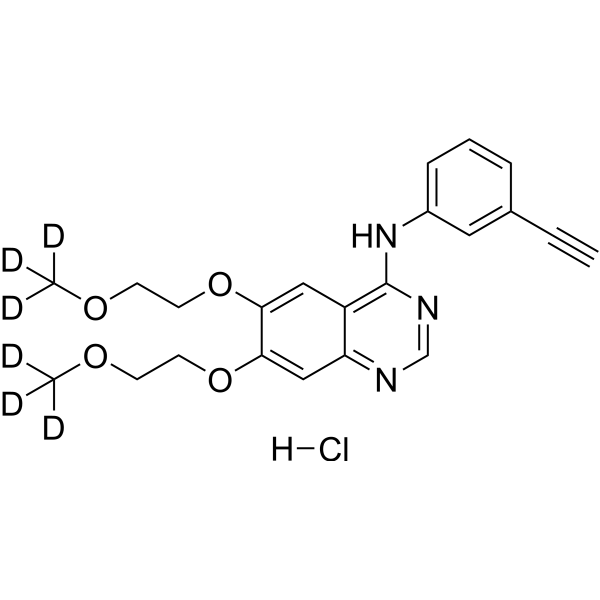 0 ImagesSynonyms: CP-358774-d6 hydrochloride; NSC 718781-d6 hydrochloride; OSI-774-d6 hydrochlorideErlotinib-d6 hydrochloride (CP-358774-d6 hydrochloride) is the deuterated-labeled Erlotinib Hydrochloride (HY-12008). Erlotinib (CP-358774) Hydrochloride is a selective, orally active EGFR tyrosine kinase inhibitor. Erlotinib Hydrochloride also acts as a substrate and inhibitor of OATP2B1, with an IC50 of approximately 0.079 μM for inhibiting OATP2B1-mediated uptake of estrone 3-sulfate. Erlotinib Hydrochloride blocks EGFR phosphorylation, downstream signal transduction, as well as the growth and proliferation of cancer cells. Erlotinib Hydrochloride inhibits MMP-10-mediated renal injury, fibrotic lesions, the ERK1/2, GSK-3β and β-catenin signaling pathways, as well as the deposition of fibronectin, α-SMA, collagen and renal injury markers. Erlotinib Hydrochloride is metabolized via CYP3A to produce the active metabolite OSI-420. Erlotinib Hydrochloride can be used in research related to non-small cell lung cancer, gastric cancer, papillary renal cell carcinoma, EGFR inhibitor resistance and renal fibrosis.
-
18:0-22:6 DG
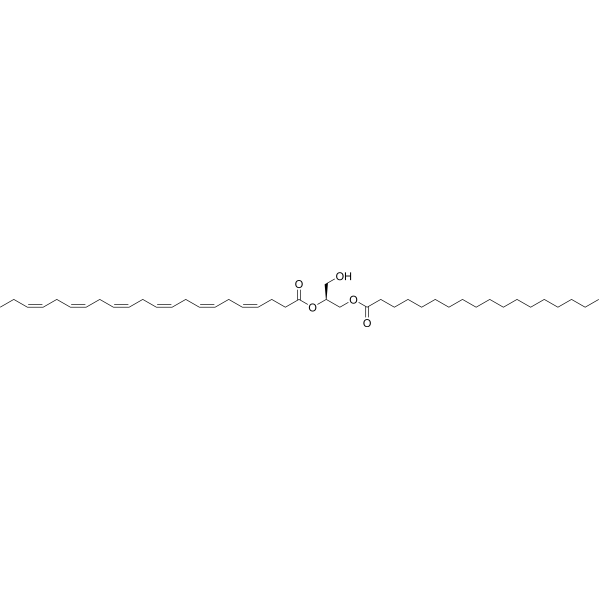 0 ImagesSynonyms: 1-Stearoyl-2-docosahexaenoyl-sn-glycerol18:0-22:6 DG (1-Stearoyl-2-docosahexaenoyl-sn-glycerol) is a diacylglycerol (DG) that can interact with RasGRP (Ras guanine nucleotide-releasing protein) (Ki = 8.37 μM) and modulate the activation of MAP kinases (such as ERK1/ERK2), which play a crucial role in cellular signaling processes. 18:0-22:6 DG can also activate protein kinase C (PKC) isozyme. 18:0-22:6 DG can be used for research of cancer, immunology and metabolic disease.
-
AG01
 0 ImagesCat. No.: HY-P991664AG01 is a monoclonal antibody against progranulin (GP88). AG01 inhibits triple-negative breast cancer (TNBC) cell proliferation and migration, reduces the expression of phosphorylated protein kinases p-Src, p-AKT, and p-ERK, and reduces the expression of oncogenic proteins such as Axl, c-MET, HIF-1α, and VEGF. AG01 inhibits tumor growth and Ki67 expression in a TNBC xenograft mouse model. AG01 can be used in the research of TNBC and other cancers.
-
ERK-CLIPTAC
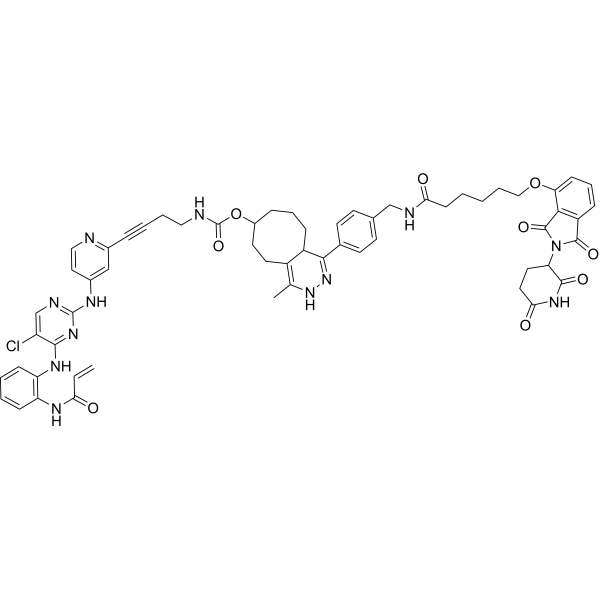 0 ImagesCat. No.: HY-153735CAS No.: 2087490-46-6ERK-CLIPTAC is a ERK CLIPTAC (click chemistry-synthesized proteolysis-targeting chimera) degrader. ERK-CLIPTAC forms intracellularly via click chemistry from ERK1/2-IN-14 (HY-175578) and Tz-thalidomide (HY-101460). The formed ERK-CLIPTAC recruits the E3 ubiquitin ligase CRBN to ERK1/2, thereby inducing ubiquitination and subsequent degradation of ERK1/2. Due to its lack of cell permeability, ERK-CLIPTAC cannot induce ERK1/2 degradation in cells. ERK-CLIPTAC can be used in research related to melanoma and colorectal cancer.
-
TCB-32
 0 ImagesCat. No.: HY-176862CAS No.: 352513-86-1TCB-32 (Compound I-1) is a FGFR1 agonist with an EC50 of 0.88 μM. TCB-32 significantly increases cell proliferation through activating FGFR1 signaling pathway as bFGF and its downstream ERK1/2 with excellent thermal stability. TCB-32 can replace bFGF in serum-free cell culture media. TCB-32 can be used for tissue repair and wound healing related diseases like psoriasis and eczema research.
-
CMIT/MIT (2.0-2.5% in water)
 0 ImagesCat. No.: HY-W017982ACAS No.: 55965-84-9Synonyms: CMI/MI (2.0-2.5% in water)CMIT/MIT (2.0-2.5% in water) (CMI/MI (2.0-2.5% in water)) is a mixture of CMIT and MIT, and is also a preservative and skin sensitizer. CMIT/MIT (2.0-2.5% in water) increases the levels of phosphorylated ERK1/2, p38, JNK1/2, p53, p21 and Bax, decreases the level of Bcl-2, and activates the Nrf-2/HO-1 signaling pathway. CMIT/MIT (2.0-2.5% in water) increases LDH release and lipid peroxidation levels, impairs antioxidant defense capacity, promotes pro-inflammatory cytokine release, induces apoptosis, triggers cell cycle arrest, exhibits neurotoxicity in neuroblastoma cells, and causes dysregulation of Th2/Th17 immune responses. CMIT/MIT (2.0-2.5% in water) can be used in studies related to allergy, atopic dermatitis and lung injury.
-
β-Patchoulene
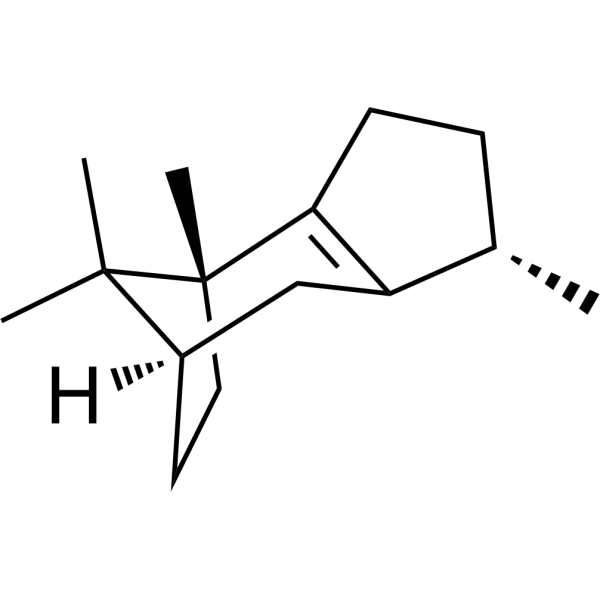 0 Imagesβ-Patchoulene is an orally active anti-inflammatory, antioxidant, and anti-apoptotic agent. β-Patchoulene inhibits the NF-κB, TLR4, and cAMP/PKA/CREB signaling pathways; activates the Sirt1/Nrf2 and AMPK signaling pathways; and targets Fas/FasL, Caspase-3, ERK1/2, ROCK1/MLC2 for inhibition. β-Patchoulene regulates cytokine secretion, inflammatory cell infiltration, lipid peroxidation, cell polarization, gut microbiota, and lipid metabolism, restores barrier function, mitochondrial function, and cell viability, and exhibits repellent activity against Spodoptera exigua larvae. β-Patchoulene can be used in research related to various inflammatory, ischemic, fibrosis-associated diseases, as well as hepatocellular carcinoma.
-
Antiproliferative agent-37
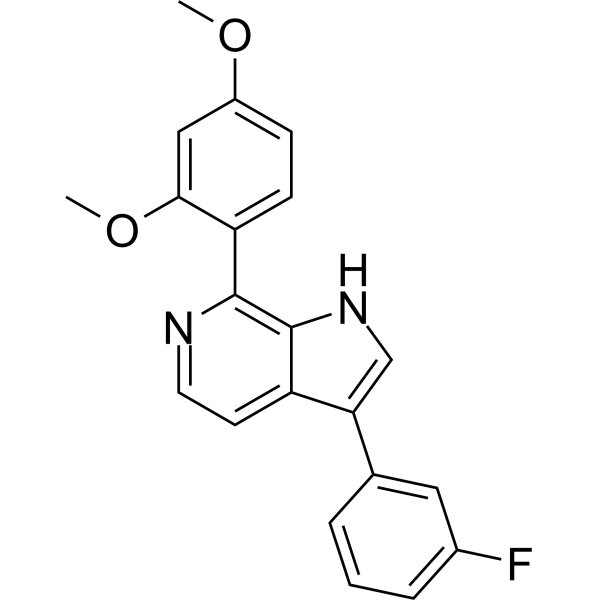 0 ImagesAntiproliferative agent-37 (compound 10J) shows anti-proliferative effect by arresting the cells at the G2/M phase of the cell cycle.
-
FTI-277
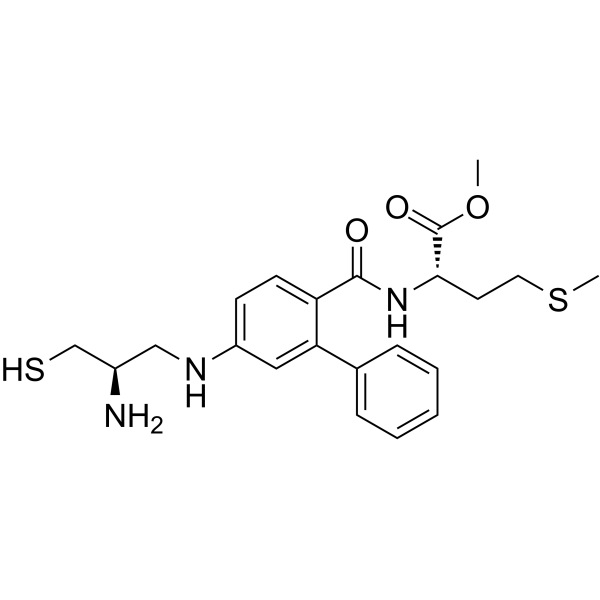 0 ImagesCat. No.: HY-15872CAS No.: 170006-73-2FTI-277 is a farnesyltransferase (FTase) inhibitor. FTI-277 inhibits Ras farnesylation, blocks the phosphorylation of downstream ERK1/2 and mTOR, and reduces membrane-bound active N-ras protein. FTI-277 activates caspase 3, upregulates Bim expression, induces cell apoptosis, suppresses regulatory T cell expansion, enhances macrophage phagocytosis, and improves bacterial clearance. FTI-277 activates the PI3K/Akt signaling pathway, inhibits osteoblast differentiation, and reduces the proliferation ability of neuroblastoma cells. FTI-277 can be used in research related to head and neck squamous cell carcinoma, neuroblastoma, sepsis, and vascular calcification.
-
RNK08954
 0 ImagesCat. No.: HY-180200CAS No.: 3032602-44-8RNK08954 is an orally active KRASG12D inhibitor with a Kd of 0.0395 nM. RNK08954 selectively binds the inactive GDP-bound KRASG12D form, suppresses downstream KRAS-mediated signaling pathways p-ERK1/2 experssion. RNK08954 inhibits KRASG12D-mutant cell proliferation, induces G0-G1 cell cycle arrest, and inhibits tumor growth in mouse xenograft models. RNK08954 can be used for the research of non-small cell lung cancer, pancreatic ductal adenocarcinoma.
-
Leupeptin
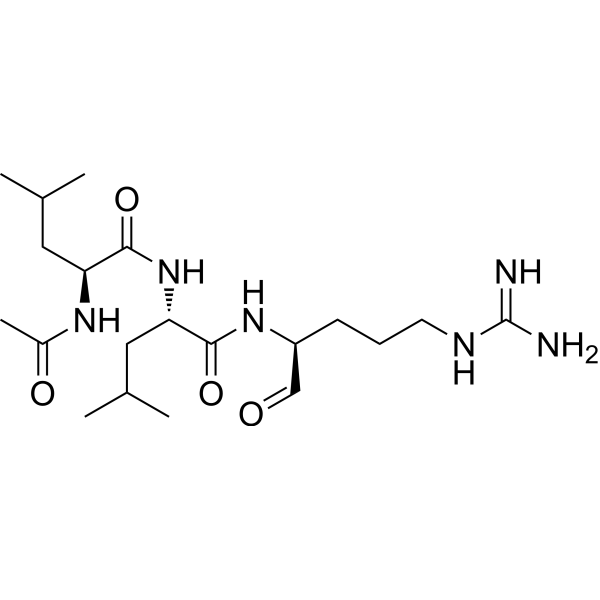 0 ImagesCat. No.: HY-18234CAS No.: 55123-66-5Leupeptin is a broad-spectrum protease inhibitor. By inhibiting the activation of the PTEN/PI3K/Akt/NF-κB/ERK1/2/p38 signaling pathway, Leupeptin significantly reduces LPS-induced NO and ROS production, mitochondrial membrane potential hyperpolarization, phagocytic activity, pro-inflammatory cytokine release, and M1 polarization in mouse peritoneal macrophages, and reverses autophagic flux impairment. It also decreases Concanavalin A (HY-P2149)-induced proliferation index of mouse splenic lymphocytes and the Th1/IL-10 and Th2/IL-10 cytokine ratios, thereby modulating innate and adaptive immune responses. Leupeptin inhibits blood coagulation and tumorigenesis in mouse skin. Leupeptin can be used in research on chronic inflammatory diseases and skin tumorigenesis.
-
Autotaxin-IN-8
 0 ImagesCat. No.: HY-181931CAS No.: 3058084-21-9Autotaxin-IN-8 (Compound 14E) is an orally active Autotaxin inhibitor with an IC50 of 14.2 nM against hAutotaxin. Autotaxin-IN-8 inhibits Autotaxin activity, MAPK activation, LPAR1 and p-ERK1/2. Autotaxin-IN-8 reduces the phosphorylation levels of JNK and p38. Autotaxin-IN-8 decreases collagen deposition in a mouse model of pulmonary fibrosis. Autotaxin-IN-8 can be used in research related to pulmonary fibrosis.
-
MK-8353 hydrochloride
 0 ImagesCat. No.: HY-111407ACAS No.: 1951448-73-9Synonyms: SCH900353 hydrochloride; MK-8353-001MK-8353 (SCH900353) hydrochloride is a potent, selective, orally active ERK1/2 inhibitor with IC50 values of 23.0 nM and 8.8 nM, respectively. MK-8353 exhibits antitumor activity.
-
RWT9996
 0 ImagesCat. No.: HY-179606CAS No.: 2877694-62-5RWT9996 is a GPR17 antagonist. RWT9996 inhibits GPR17-mediated signal transduction processes, including G protein activation and β-arrestin-2 recruitment. RWT9996 inhibits MDL-29951 (HY-16312)-mediated phosphorylation of ERK1/2, phosphorylation of CREB, and accumulation of inositol phosphate (IP1) in oligodendrocyte precursor cells in vitro. RWT9996 can be used in studies related to demyelinating diseases.
-
Zoniporide mesylate
 0 ImagesCat. No.: HY-105064ACAS No.: 249296-45-5Synonyms: CP-597396 mesylateZoniporide mesylate (CP-597396 mesylate) is a selective Na+/H+ exchanger subtype 1 (NHE1) inhibitor with cardioprotective activity, with IC50 values of 67 nM and 73 nM against rat NHE1. Zoniporide mesylate reduces intracellular Na+ and Ca2+ overload, preserves mitochondrial integrity, activates pro-survival ERK1/2 and STAT3 signaling pathways, reduces necrosis and apoptosis, and decreases neutrophil aggregation. Zoniporide mesylate is applicable to research related to myocardial ischemia-reperfusion injury and heart graft ischemia-reperfusion injury.
-
Zoniporide hydrochloride
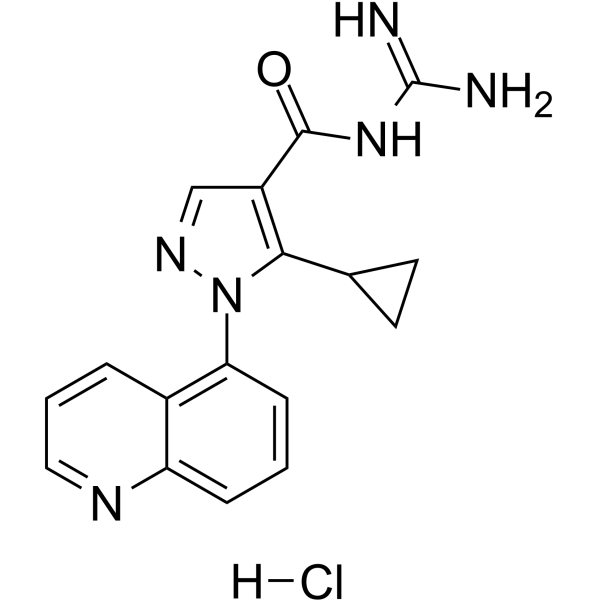 0 ImagesCat. No.: HY-105064BCAS No.: 241800-97-5Synonyms: CP-597396 hydrochlorideZoniporide hydrochloride (CP-597396 hydrochloride) is a selective Na+/H+ exchanger subtype 1 (NHE1) inhibitor with cardioprotective activity, with IC50 values of 67 nM and 73 nM against rat NHE1. Zoniporide hydrochloride reduces intracellular Na+ and Ca2+ overload, preserves mitochondrial integrity, activates pro-survival ERK1/2 and STAT3 signaling pathways, reduces necrosis and apoptosis, and decreases neutrophil aggregation. Zoniporide hydrochloride is applicable to research related to myocardial ischemia-reperfusion injury and heart graft ischemia-reperfusion injury.
-
Sargachromanol E
 0 ImagesCat. No.: HY-123364CAS No.: 856414-54-5Sargachromanol E is an apoptosis inducer, anti-inflammatory agent, and anti-aging agent. Sargachromanol E activates caspase-3, mediates PARP cleavage, downregulates Bcl-xL and upregulates Bax levels, and drives sub-G1 phase cell cycle arrest, inhibits LPS-induced COX-2 and iNOS transcription and expression (NO: IC50 = 6.99 μg/mL), reduces p38 MAPK and ERK1/2 phosphorylation levels, and suppresses the release of pro-inflammatory mediators such as TNF-α, IL-1β, and prostaglandin E2 (PGE2). Sargachromanol E can be used for research on skin aging, leukemia, oral squamous cell carcinoma, and inflammation-related studies.
-
Hordenine-d6 hydrochloride
 0 ImagesCat. No.: HY-N0113BSSynonyms: Ordenina-d6 hydrochloride; Peyocactine-d6 hydrochlorideHordenine-d6 hydrochloride (Ordenina-d6 hydrochloride; Peyocactine-d6 hydrochloride) is the deuterated-labeled Hordenine hydrochloride (HY-N0113B). Hordenine hydrochloride (Ordenina hydrochloride; Peyocactine hydrochloride) is a multifunctional alkaloid with oral activity and blood-brain barrier penetration. Hordenine hydrochloride inhibits LPS-induced phosphorylation of p38, JNK, ERK1/2, p65, IκB, and AKT, prevents p65 nuclear translocation, and suppresses inflammatory cytokines and mediators. Hordenine hydrochloride inhibits melanin synthesis in melanocytes and reconstructed epidermis. Hordenine hydrochloride activates the Wnt/β-catenin signaling pathway. Hordenine hydrochloride activates DRD2, acts as a D3R partial agonist, α2A-AR full agonist, and 5-HT2A-R antagonist, and inhibits SERT and DAT. Hordenine hydrochloride inhibits α-synuclein accumulation and ameliorates motor deficits in Parkinson's disease models. Hordenine hydrochloride limits alcohol intake, reduces relapse drinking behavior. Hordenine hydrochloride can be used for research on mastitis, skin pigmentation, acute lung injury, foodborne diseases, hair loss, Parkinson's disease, bacterial infections, and alcohol use disorder.
-
α4β1 antagonist-1
 0 ImagesCat. No.: HY-175286α4β1 antagonist-1 (Compound 4) is a highly selective α4β1 integrin antagonist (IC50=15 nM). α4β1 antagonist-1 inhibits integrin-mediated cell adhesion and ERK1/2 signaling activation. α4β1 antagonist-1 also exhibits partial agonism toward αMβ2 integrin (EC50=23 nM). α4β1 antagonist-1 is promising for research of chronic inflammatory diseases (e.g., rheumatoid arthritis, multiple sclerosis) and cancers.




