



Integrin
Integrins, a family of heterodimeric adhesion receptors for diverse extracellular matrices, have consistently been implicated as crucial drivers of ovarian cancer development and progression. A number of the RGD-based members of the integrin family, including α5β1, and αvβ3 or αvβ5 integrins, are markedly elevated in aggressive ovarian tumors. These adhesion receptors appear to promote cell adhesion, survival, motility and invasion during ovarian tumor growth or metastatic progression. Importantly, the functions of these integrins are strongly dependent on the activation of focal adhesion kinase (FAK) and its downstream signaling, including the PI3K/Akt- and Ras/MAPK-dependent pathways.
Integrins are transmembrane proteins and are major receptors for cell-extracellular matrix (ECM) and cell-cell adhesion. Modulation of these molecules, particularly αv integrin family, has exhibited profound effects on fibrosis in multiple organ and disease state. Based on the several studies, the integrins αvβ3, αvβ5, αvβ6, and αvβ8 have been known to modulate the fibrotic process via activation of latent transforming growth factor (TGF)-β in pre-clinical models of fibrosis.
Each integrin is typically formed by the non-covalent pairing of one α subunit, of which, 18 types are known to exist, and one β subunit, of which 8 types are known to exist. Together, 24 distinct heterodimers have been identified to date. The αv subunit can form heterodimers with the β1, β3, β5, β6 or β8 subunits and β1 can associate with many different α subunits from α1 to α11, and αv, indicating that not all theoretically possible α and subunit pairs form. Interestingly, the activation of TGF-β appears to be a common function of multiple αv integrins.
Integrin Isoform Specific Products
-
Integrin
(383)
View all products
-
αvβ1
(7)
View all products
-
αvβ3
(35)
View all products
-
αvβ5
(13)
View all products
-
αvβ6
(25)
View all products
-
αvβ8
(11)
View all products
-
α5β1
(19)
View all products
-
α1β1
(3)
View all products
-
α2β1
(9)
View all products
-
α4β1
(22)
View all products
-
α9β1
(4)
View all products
-
αIIbβ3
(14)
View all products
-
α4β7
(18)
View all products
-
αLβ2
(3)
View all products
All Product Categories
-
Integrin Inhibitors
(254)
View all products
-
Integrin Agonists
(10)
View all products
-
Integrin Antagonists
(96)
View all products
-
Integrin Activators
(8)
View all products
-
Integrin Modulators
(6)
View all products
-
Integrin Chemicals
(2)
View all products
-
Integrin Inducers
(3)
View all products
-
Integrin Degrader
(1)
View all products
-
Integrin Controls
(4)
View all products
-
Integrin Substrate
(1)
View all products
-
Integrin Ligands
(26)
View all products
-
Integrin alpha 1 beta 1 Proteins
(2)
View all products
-
Integrin alpha V beta 3 Proteins
(5)
View all products
-
Integrin alpha V beta 5 Proteins
(4)
View all products
-
Integrin alpha V beta 6 Proteins
(8)
View all products
-
Integrin alpha V beta 8 Proteins
(8)
View all products
-
Integrin Related Products (519)
Related Products (519)

-
Recombinant Proteins (27)
-
Antibodies (31)
-
Integrin Isoform Comparison
-
RBN012811
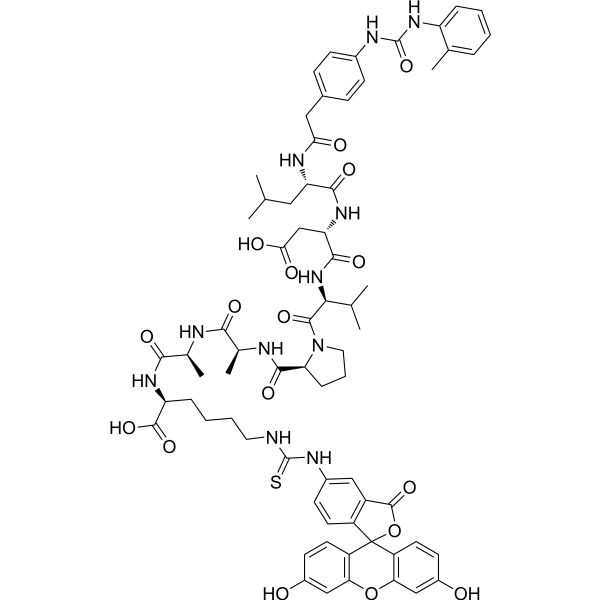
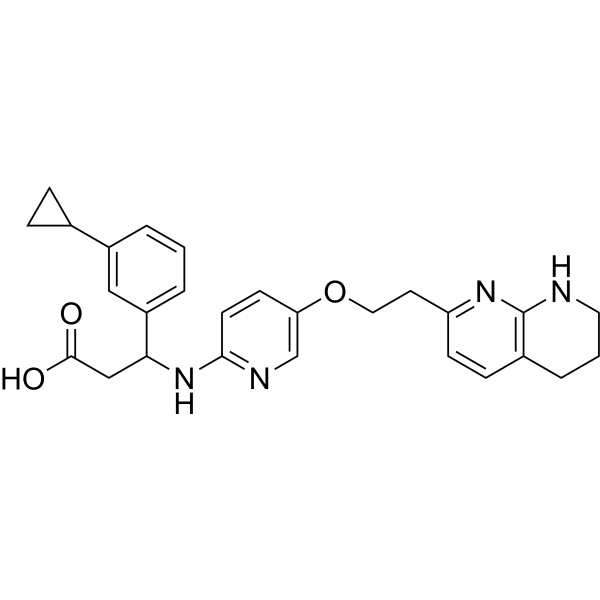
 0 ImagesRBN012811 is a highly selective PROTAC-based PARP14 degrader. RBN012811 forms a ternary complex with cereblon by binding to the NAD+ site of PARP14, and mediates the specific degradation of PARP14 via the ubiquitin-proteasome pathway (IC50=10 nM). RBN012811 effectively depletes endogenous PARP14 in various cell lines and primary human macrophages, thereby downregulating IL-10 production and IFN-β mRNA levels, increasing phosphorylated STAT1 levels to enhance inflammatory signaling, and inhibiting interferon-induced ADPr condensate formation. RBN012811 also modulates viral replication, exhibiting increased HSV1 replication while reducing VSV replication. RBN012811 has important application value in research related to cancer and viral infections.
-
Enlimomab
 0 ImagesCat. No.: HY-P99336CAS No.: 142864-19-5Synonyms: BI-RR 0001; Anti-Human IL6 Recombinant AntibodyEnlimomab (BI-RR 0001), a murine IgG2a monoclonal antibody to the human ICAM-1, inhibits leukocyte adhesion to the vascular endothelium, thereby decreasing leukocyte extravasation and inflammatory tissue injury. Enlimomab has anti-inflammatory effects, and can be used for stroke research .
-
SB-267268
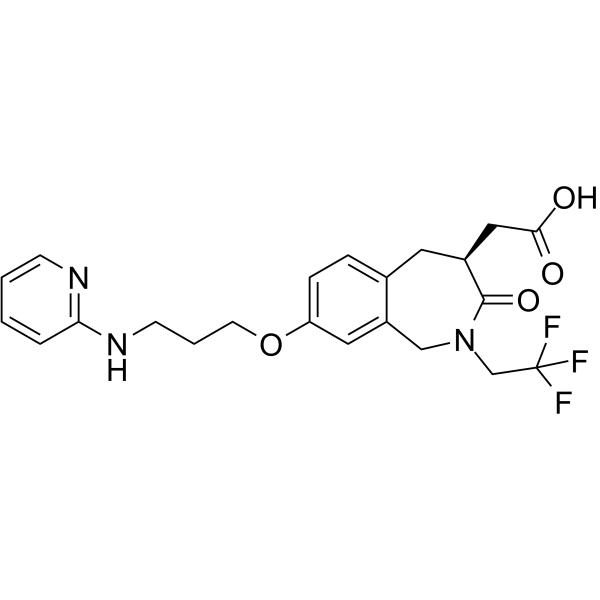 0 ImagesSB-267268 is a selective and nonpeptidic alpha(v)beta3 (αvβ3) and alpha(v)beta5 (αvβ5) integrins antagonist, with Kis of 0.9, 0.5 and 0.7 nM for human αvβ3, monkey αvβ3 and human αvβ5, respectively. SB-267268 inhibits human and mouse αvβ3 with IC50s of 0.68 and 0.29 nM, respectively. SB-267268 reduces angiogenesis and VEGF expression.

-
Cyclo(Arg-Gly-Asp-D-Phe-Cys) TFA
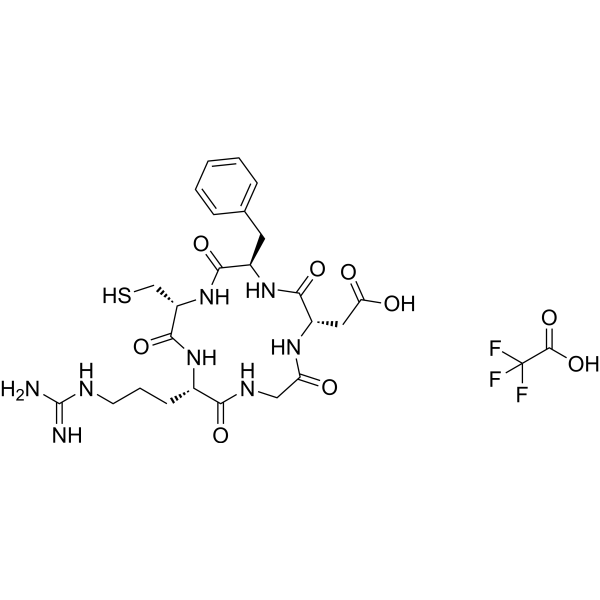 0 ImagesCat. No.: HY-P2300APurity: 98.69%Synonyms: Cyclo(RGDfC) TFACyclo(Arg-Gly-Asp-D-Phe-Cys) (Cyclo RGDfC) TFA, a cyclic RGD peptide which has high affinity to αvβ3, can disrupt cell integrin interactions. Cyclo(Arg-Gly-Asp-D-Phe-Cys) TFA inhibits pluripotent marker expression in embryonic stem cells (ESCs) and the tumorigenic potential of mESCs in vivo. Cyclo(Arg-Gly-Asp-D-Phe-Cys) TFA can be used in the research of tumors.
-
Fibrinogen Binding Inhibitor Peptide
 0 ImagesFibrinogen Binding Inhibitor Peptide is a dodecapeptide (HHLGGAKQAGDV, H12), which is a fibrinogen γ-chain carboxy-terminal sequence (γ400-411). Fibrinogen Binding Inhibitor Peptide is a specific binding site of the ligand for activated glycoprotein (GP) IIb/IIIa.
-
Rondaptivon pegol
 0 ImagesSynonyms: BT200Rondaptivon pegol (BT200) is a pegylated aptamer targeting von Willebrand factor (VWF), with an EC50 of 33 nM in humans. Rondaptivon pegol effectively alleviates acute myocardial ischemia-reperfusion injury in mice by inhibiting VWF activity, reducing microvascular obstruction, inflammatory responses and cardiomyocyte apoptosis (apoptosis). Rondaptivon pegol inhibits the binding of VWF to platelet glycoprotein GPIb, thereby preventing arterial thrombosis in cynomolgus monkeys. Rondaptivon pegol can be used in research related to arterial thrombosis, stroke, myocardial infarction and myocardial ischemia-reperfusion injury.
-
Lys-Gln-Ala-Gly-Asp-Val
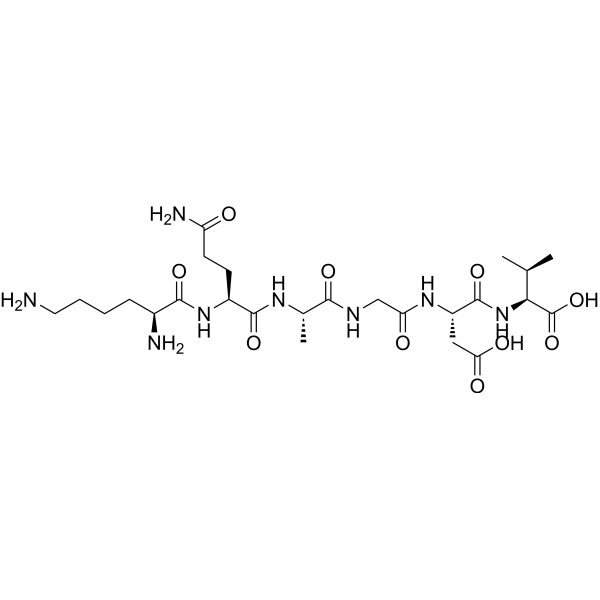 0 ImagesLys-Gln-Ala-Gly-Asp-Val (KQAGDV) is the six most carboxyl-terminal amino acids in the fibrinogen γ-chain sequence. Lys-Gln-Ala-Gly-Asp-Val is a cell adhesion peptide which is mediated through the α2bβ3 integrin. Lys-Gln-Ala-Gly-Asp-Val is a potent adhesion ligand for smooth muscle cells (SMCs).
-
THR-123 TFA
 0 ImagesCat. No.: HY-P11354APurity: 99.91%THR-123 TFA is an orally active ALK3 peptide agonist. THR-123 TFA has a relatively weak binding to ALK2, but does not bind to ALK6. THR-123 TFA suppresses inflammation, Apoptosis and the epithelial-to-mesenchymal transition program and reverses established fibrosis in five mouse models of acute and chronic renal injury. THR-123 TFA can be used for the study of kidney fibrosis.
-
diABZI-4
 0 ImagesdiABZI-4 is a STING activator and broad-spectrum antiviral agent with immunostimulatory activity. diABZI-4 triggers the TBK1-IRF3 and NF-κB signaling cascades by inducing STING oligomerization, thereby promoting the production of type I/III interferons and various proinflammatory cytokines. diABZI-4 exhibits broad-spectrum antiviral activity and effectively inhibits the replication of influenza A virus, SARS-CoV-2, herpes simplex virus, and other viruses. diABZI-4 also activates lymphocytes and macrophages to provide significant pre- and post-exposure protection in viral disease models. diABZI-4 can be used to study COVID-19, respiratory viral infections, and related immunopathological mechanisms.
-
Rovelizumab
 0 ImagesCat. No.: HY-P99891CAS No.: 339086-79-2Synonyms: Hu23F2GRovelizumab is a humanized monoclonal leukointegrin antibody. Rovelizumab is a monoclonal antibody directed against the CD11/CD18 cell adhesion proteins. Rovelizumab can be used for research of multiple sclerosis (MS), hemorrhagic shock, myocardial infarction (MI) and stroke.
-
αVβ8-IN-1
 0 ImagesCat. No.: HY-164360CAS No.: 3048440-55-4
-
α7β1 integrin modulator-1
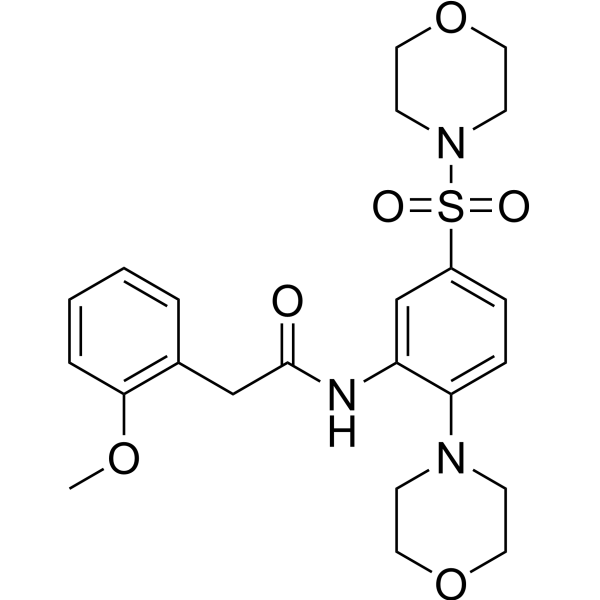 0 Imagesα7β1 integrin modulator-1 is a potent α7β1 integrin modulator. α7β1 integrin modulator-1 has the potential for the research of muscular dystrophy.
-
YRGDS Fibronectin Fragment
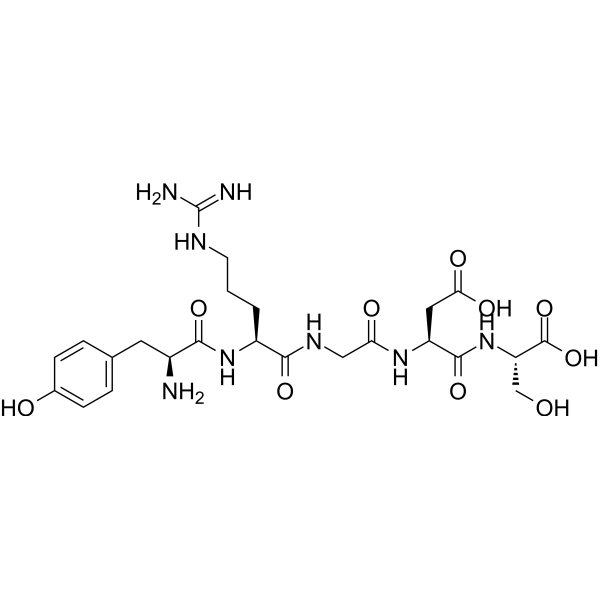 0 ImagesYRGDS Fibronectin Fragment is a fibronectin fragment, an adhesion peptide that displays strong binding affinity to thrombin-stimulated platelets.
-
ITGB3-IN-1
 0 ImagesITGB3-IN-1 is an orally active integrin subunit beta 3 ITGB3 inhibitor with a Kd of 7.26 μM. ITGB3-IN-1 exhibits potent anti-orthopoxvirus effects with an EC50 for vaccinia virus (VACV) of 1.82 μM. ITGB3-IN-1 inhibits hERG with an IC50 of 1.13 μM. ITGB3-IN-1 can be used for the study of orthopoxvirus.
-
Eptifibatide acetate
 0 ImagesEptifibatide acetate is a cyclic heptapeptide, acts as a competitive antagonist for the activated platelet glycoprotein IIb/IIIa receptor, with anti-platelet activity.
-
mP6 TFA
 0 ImagesCat. No.: HY-P10038APurity: 98.48%Synonyms: Myr-FEEERA-OH TFA




