



TNF Receptor
Tumor Necrosis Factor Receptor; TNFR
Tumor necrosis factor (TNF) is a major mediator of apoptosis as well as inflammation and immunity, and it has been implicated in the pathogenesis of a wide spectrum of human diseases, including sepsis, diabetes, cancer, osteoporosis, multiple sclerosis, rheumatoid arthritis, and inflammatory bowel diseases.
TNF-α is a 17-kDa protein consisting of 157 amino acids that is a homotrimer in solution. In humans, the gene is mapped to chromosome 6. Its bioactivity is mainly regulated by soluble TNF-α–binding receptors. TNF-α is mainly produced by activated macrophages, T lymphocytes, and natural killer cells. Lower expression is known for a variety of other cells, including fibroblasts, smooth muscle cells, and tumor cells. In cells, TNF-α is synthesized as pro-TNF (26 kDa), which is membrane-bound and is released upon cleavage of its pro domain by TNF-converting enzyme (TACE).
Many of the TNF-induced cellular responses are mediated by either one of the two TNF receptors, TNF-R1 and TNF-R2, both of which belong to the TNF receptor super-family. In response to TNF treatment, the transcription factor NF-κB and MAP kinases, including ERK, p38 and JNK, are activated in most types of cells and, in some cases, apoptosis or necrosis could also be induced. However, induction of apoptosis or necrosis is mainly achieved through TNFR1, which is also known as a death receptor. Activation of the NF-κB and MAPKs plays an important role in the induction of many cytokines and immune-regulatory proteins and is pivotal for many inflammatory responses.
TNF Receptor Isoform Specific Products
-
TNF Receptor
(701)
View all products
-
TNFRSF1A/
CD120a (8)View all products
-
TNFRSF3/
CD18 (1)View all products
-
TNFRSF4
(5)
View all products
-
TNFRSF5/
CD40 (142)View all products
-
TNFRSF6/
Fas/ (2)CD95 View all products
-
TNFRSF7/
CD27 (2)View all products
-
TNFRSF8/
CD30 (3)View all products
-
TNFRSF9/
4-1BB/ (3)CD137 View all products
-
TNFRSF10B/
DR5/ (1)CD262 View all products
-
TNFRSF12A/
TWEAK (5)View all products
-
TNFRSF16/
NGF Receptor/ (1)CD271 View all products
-
TNFRSF18/
GITR/ (6)CD357 View all products
All Product Categories
-
TNF Receptor Inhibitors
(903)
View all products
-
TNF Receptor Agonists
(35)
View all products
-
TNF Receptor Antagonists
(25)
View all products
-
TNF Receptor Activators
(80)
View all products
-
TNF Receptor Modulators
(8)
View all products
-
TNF Receptor Inducers
(11)
View all products
-
TNF Receptor Controls
(4)
View all products
-
TNF Receptor Ligands
(2)
View all products
-
TNF Receptor Superfamily Proteins
(282)
View all products
-
TNF Receptor Related Products (1268)
Related Products (1268)

-
Recombinant Proteins (282)
-
Antibodies (23)
-
TNF Receptor Signaling Pathway
-
TNF Receptor Isoform Comparison
-
Mulberroside A (Standard)
 0 ImagesMulberroside A (Standard) is the analytical standard of Mulberroside A. This product is intended for research and analytical applications. Mulberroside A is one of the main bioactive constituent in mulberry (Morus alba L.). Mulberroside A decreases the expressions of TNF-α, IL-1β, and IL-6 and inhibits the activation of NALP3, caspase-1, and NF-κB and the phosphorylation of ERK, JNK, and p38, exhibiting anti-inflammatory antiapoptotic effects. Mulberroside A shows inhibitory activity against mushroom tyrosinase with an IC50 of 53.6 μM.
-
IDT
 0 ImagesCat. No.: HY-116426CAS No.: 18138-19-7IDT is a safe and effective TNFα and innate immune system modulator. IDT significantly reduced paired helical filament tau and fibrillar amyloid accumulation and increased the infiltrating neutrophil population while reducing TNFα expression in this population. IDT can be used in Alzheimer's disease research.
-
TMI-1 (Standard)
 0 ImagesSynonyms: WAY-171318 (Standard)TMI-1 (Standard) is the analytical standard of TMI-1 (HY-101448). This product is intended for research and analytical applications. TMI-1 (WAY-171318) inhibits TNF converting enzyme (TACE) (IC50 of 8.4 nM), ADAM-TS-4, ADAM-17 and various MMPs with oral activity. TMI-1 significantly suppresses the secretion of TNF-α , alleviating collagen-induced arthritis in mice. TMI-1 inhibits cancer cell proliferation, induces apoptosis through a caspase-dependent pathway. TMI-1 also reverses TRPV1 upregulation and lowers the levels of inflammatory factors (TNF-α、IL-1β、IL-6) in nerve cells, protecting against paclitaxel-induced neurotoxicity. TMI-1 leads to changes in pro-atherogenic lipoprotein profiles, but does not affect the progression of early lesions.
-
Pratol
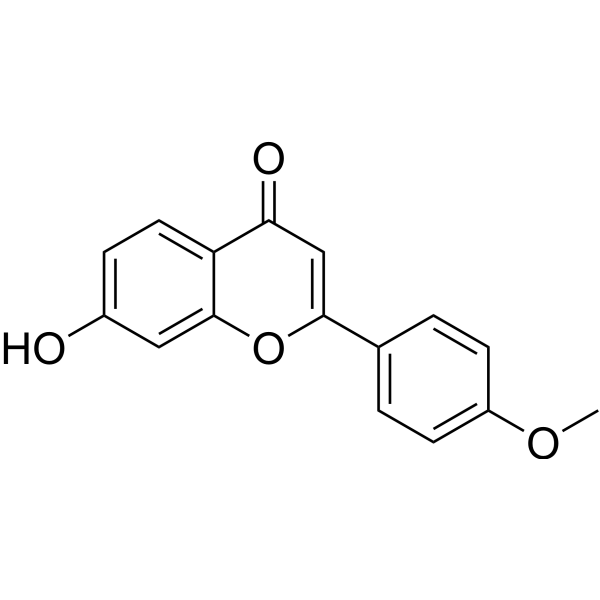 0 ImagesPratol (7-Hydroxy-4'-methoxyflavone) is an NF-κB inhibitor. Pratol also inhibits NO, PGE2, TNF-α, IL-1β, and IL-6 production. Pratol increases the phosphorylation of p38 MAPK, JNK, and ERK, decreases AKT phosphorylation, and upregulates MITF, tyrosinase, TRP-1, and TRP-2 through a PKA-dependent signaling pathway. Pratol reduces iNOS and COX-2 protein expression, inhibits p65 phosphorylation, and protects IκBα from degradation, thereby inhibiting NF-κB nuclear translocation. Pratol can be used in research on hypopigmentary disorders, inflammatory diseases, cervical cancer, and colon cancer.
-
Hibiscetin
 0 ImagesHibiscetin is an orally active anti-inflammatory, antioxidant, antihyperglycemic, hypolipidemic, hepatoprotective and neuroprotective agent. Hibiscetin reduces the levels of TNF-α, IL-1β and IL-6. Hibiscetin inhibits lipid peroxidation, reduces MDA levels, and induces the activities of antioxidant enzymes CAT, GSH and SOD. Hibiscetin lowers blood glucose, reverses reduced insulin levels, regulates adipokine levels, and reduces elevated AST and ALT levels. Hibiscetin alleviates Rotenone (HY-B1756)-induced akinesia and catalepsy, normalizes neurotransmitter levels, and modulates the activities of activated caspase 3 and BDNF. Hibiscetin can be used in the research of type 2 diabetes, Parkinson's disease and Huntington's disease.
-
5-O-Methylvisammioside (Standard)
 0 ImagesCat. No.: HY-N0442RCAS No.: 84272-85-5Synonyms: 4'-O-β-D-Glucosyl-5-O-methylvisamminol (Standard)5-O-Methylvisammioside (4'-O-β-D-Glucosyl-5-O-methylvisamminol) (Standard) is the analytical standard of 5-O-Methylvisammioside. This product is intended for research and analytical applications. 5-O-Methylvisammioside is an orally active natural chromone glycoside and multiple biological activities. 5-O-Methylvisammioside inhibits ferroptosis by activating the Nrf2/HO-1 signaling axis. 5-O-Methylvisammioside alleviates intestinal barrier damage by inhibiting the ROS/NF-κB/NLRP3 pathway. 5-O-Methylvisammioside exerts a protective effect against acute liver injury by reducing ALT/AST, decreasing inflammatory infiltration, and inhibiting IκB-α phosphorylation and NF-κB nuclear translocation. 5-O-Methylvisammioside blocks the HMGB1/RAGE/MEK/ERK signaling axis to exert anti-tumor and anti-angiogenic effects. 5-O-Methylvisammioside improves depression-like behaviors by inhibiting Src kinase and the NF-κB pathway.
-
Omeprazole-d6
 0 ImagesCat. No.: HY-B0113S5CAS No.: 922731-02-0Synonyms: H 16868-d6Omeprazole-d6 (H 16868-d6) is deuterium labeled Omeprazole. Omeprazole (H 16868) is an orally active H+,K+-ATPase inhibitor and a proton pump inhibitor. Omeprazole competitively inhibits CYP2C19, CYP3A4, and CYP2C9 activity. Omeprazole inhibits gastric acid secretion and can be used for acid-related gastrointestinal disorders. Omeprazole inhibits pancreatic cancer cell proliferation, induces apoptosis, autophagosome accumulation (elevated LC3-I and LC3-II levels), oxidative stress, and cytogenetic imbalance, modulates lysosomal transport, reduces inflammatory cytokines. Omeprazole alters small intestinal morphology and magnesium absorption, and induces gastric mucosa morphologic changes. Omeprazole also has neuroprotective and antibacterial effects.
-
Resatorvid (Standard)
 0 ImagesCat. No.: HY-11109RCAS No.: 243984-11-4Synonyms: TAK-242 (Standard); CLI-095 (Standard)Resatorvid (Standard) is the analytical standard of Resatorvid (HY-11109). This product is intended for research and analytical applications. Resatorvid (TAK-242) is a selective Toll-like receptor 4 (TLR4) inhibitor. Resatorvid inhibits NO, TNF-α and IL-6 production with IC50s of 1.8 nM, 1.9 nM and 1.3 nM, respectively. Resatorvid downregulates expression of TLR4 downstream signaling molecules MyD88 and TRIF. Resatorvid inhibits autophagy and plays pivotal role in various inflammatory diseases.
-
IKK 16 (Standard)
 0 ImagesIKK 16 (Standard) is the analytical standard of IKK 16. This product is intended for research and analytical applications. IKK 16 hydrochloride is an orally active IKK inhibitor. IKK 16 hydrochloride shows IC50s of 40 nM, 70 nM, 200 nM, and 50 nM for IKK2, IKK complex, IKK1, and LRRK 2, respectively. IKK 16 hydrochloride is also a pan-PKD inhibitor, inhibiting PKD1, PKD2, and PKD3 with IC50s of 153.9, 115, and 99.7 nM, respectively. IKK 16 hydrochloride is also an ABCB1 inhibitor, interfering with the binding of ABCB1 to its substrates. IKK 16 hydrochloride protects against LPS (HY-D1056)-induced multiple organ dysfunction by reducing the acute inflammatory response induced by endotoxin exposure. IKK 16 hydrochloride can restore renal function and alleviate fibrosis in acute kidney injury. IKK 16 hydrochloride attenuates cardiac dysfunction associated with polymicrobial sepsis in mice with type 2 diabetes mellitus (T2DM) by inhibiting the NF-κB pathway.
-
Cornuside (Standard)
 0 ImagesCat. No.: HY-N0631RCAS No.: 131189-57-6Cornuside (Standard) is the analytical standard of Cornuside (HY-N0631). This product is intended for research and analytical applications. Cornuside is an iridoid glycoside with anti-allergic, anti-inflammatory, and neuroprotective activities. Cornuside exerts anti-allergic activity by downregulating the p38 MAPK, JNK, and NF-κB signaling pathways, and inhibits IgE-mediated histamine release from mast cells. Cornuside improves cognitive impairment in mice by inhibiting BACE1 activity (IC50 = 55.84 μg/mL) and enhancing ChAT activity. Cornuside inhibits LPS (HY-D1056)-induced inflammatory mediators, including iNOS, COX-2, PGE2, TNF-α, IL-6, and IL-1β, by suppressing NF-κB activation.
-
Paeonidanin
 0 ImagesCat. No.: HY-187062CAS No.: 209969-75-5Paeonidanin is a monoterpenoid glycoside with an IC50 > 100 μM for nitric oxide production inhibition in lipopolysaccharide-activated microglia and macrophages. Paeonidanin suppresses lipopolysaccharide-induced production of nitric oxide, interleukin-6, and tumor necrosis factor alpha in macrophages and microglia.Paeonidanin can be used for the research of inflammation.
-
Lubiprostone (Standard)
 0 ImagesCat. No.: HY-B0679RCAS No.: 136790-76-6Synonyms: RU-0211 (Standard); SPI-0211 (Standard)Lubiprostone (Standard) is the analytical standard of Lubiprostone. This product is intended for research and analytical applications. Lubiprostone (SPI-0211) increases intestinal fluid secretion through generation of CIC-2/CFTR and activation of cAMP signaling pathway. Lubiprostone inhibits myeloperoxidase (MPO) activity, downregulates Indomethacin (HY-14397)-induced iNOS and TNFα expression. Lubiprostone can be used for chronic constipation research.
-
Thunberginol C
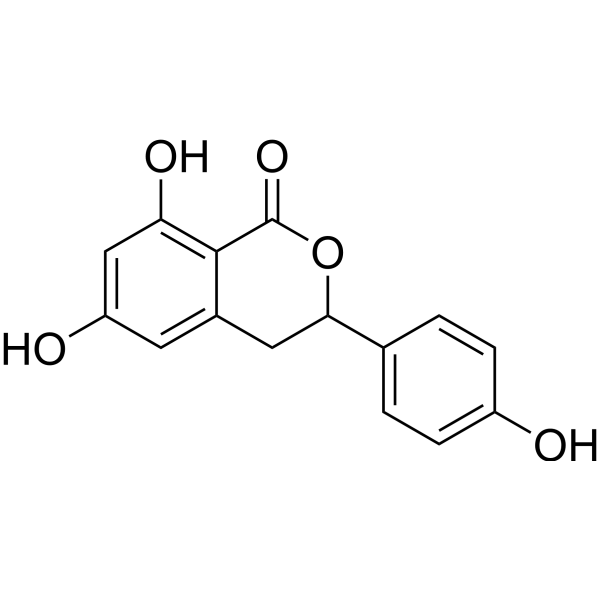 0 ImagesCat. No.: HY-N1151CAS No.: 147517-06-4Thunberginol C is an orally active, selective, and non-competitive inhibitor of AChE and BChE, with IC50 values of 41.96 and 42.36 μM, respectively. Thunberginol C exerts cytoprotective, pro-collagen type I restorative, MMP-1 inhibitory, hyaluronic acid restorative, anti-photoaging effects in skin cells. Thunberginol C exerts neuroprotective, anxiolytic, TNF-α inhibitory, neuroinflammation inhibitory, and oxidative stress inhibitory effects. Thunberginol C can be used for the research of Alzheimer’s disease, UVB-induced skin photoaging, allergic reactions, oral bacterial infections, and stress-induced anxiety.
-
rel-(1S,2R)-Dihydro bupropion-d9
 0 ImagesCat. No.: HY-W777138CAS No.: 1217684-77-9rel-(1S,2R)-Dihydro bupropion-d9 is the deuterium labeled rel-(1S,2R)-Dihydro bupropion (HY-178240). rel-(1S,2R)-Dihydro bupropion is a metabolite of bupropion. rel-(1S,2R)-Dihydro bupropion can promote endogenous IL-10 production and inhibit Th1 cytokines (IL-12 and TNF-α). rel-(1S,2R)-Dihydro bupropion can induce immune response transition from Th1 to Th2. rel-(1S,2R)-Dihydro bupropion can be used for research on inflammatory conditions.
-
Resolvin D2 n-3 DPA
 0 ImagesCat. No.: HY-168782CAS No.: 2093111-29-4Resolvin D2 n-3 DPA is a specialized proresolving mediator (SPM). Resolvin D2 n-3 DPA (1 nM) can reduce the chemotaxis and adhesion of human neutrophils induced by TNF-α. Resolvin D2 n-3 DPA (100 ng/mouse; intravenous injection) can reduce neutrophil infiltration in the peritoneum and the levels of IL-6 and the chemokine (C-C motif) ligand 2 (CCL2) in a mouse model of inflammation induced by zinc oxide.
-
11β,13-Dihydrolactucopicrin
 0 ImagesCat. No.: HY-N9932CAS No.: 125519-47-311β,13-Dihydrolactucopicrin is a sesquiterpene lactone and the main bitter component of chicory root. 11β,13-Dihydrolactucopicrin inhibits yeast α-glucosidase activity (IC50 = 27.49 μM) and inhibits Crz1 activation and nuclear accumulation. 1β,13-Dihydrolactucopicrin possesses blood-brain barrier penetration capacity in an in vitro HBMEC blood-brain barrier model and can generate cysteine-conjugated metabolites within brain microvascular endothelial cells. 11β,13-Dihydrolactucopicrin can regulate the lncRNA H19/miR-21-3p signaling axis; it upregulates the expression of ABCG2 and lncRNA H19, downregulates miR-21-3p, inhibits the release of IL-6, TNF-α, and hs-CRP pro-inflammatory mediators, and alleviates urate-induced inflammatory injury in renal epithelial cells. 11β,13-Dihydrolactucopicrin can be used in research on diabetes and renal urate deposition.

-
meso-Zeaxanthin
 0 ImagesCat. No.: HY-167632CAS No.: 31272-50-1Synonyms: (3R,3′S)-Zeaxanthinmeso-Zeaxanthin ((3R,3′S)-Zeaxanthin) is an orally active xanthophyll carotenoid. meso-Zeaxanthin inhibits CYP1A1, CYP1A2, CYP2B1/2, COX-2, TNF-α and iNOS, and enhances the activities of Uridine diphosphate glucuronosyltransferase and Glutathione-S-transferase. meso-Zeaxanthin quenches oxygen free radicals. meso-Zeaxanthin filters short-wavelength blue light, alleviates oxidative damage and visual abnormalities. meso-Zeaxanthin reduces tumor incidence, prolongs tumor latency and survival rate of tumor-bearing mice, and inhibits paw edema. meso-Zeaxanthin can be used in research related to sarcoma and age-related macular degeneration.
-
Chaetoglobosin Vb
 0 ImagesCat. No.: HY-N9541CAS No.: 1399690-75-5Chaetoglobosin Vb is a cytochalasin alkaloid with anti-inflammatory and antioxidant activities. Chaetoglobosin Vb attenuates LPS (HY-D1056)-induced TLR4 inflammatory signaling and IFN-β release by downregulating TRIF, MyD88, TLR4 mRNA and IRF7 expression. Chaetoglobosin Vb downregulates the expression and release of inflammatory mediators such as iNOS, COX-2, TNF-α and IL-6 by blocking MAPK/NF-κB pathway activation. Chaetoglobosin Vb reduces excessive ROS production and protects SOD enzyme activity against LPS-induced oxidative stress. Chaetoglobosin Vb inhibits the growth of certain bacteria and radish seedling roots. Chaetoglobosin Vb can be used in research related to colorectal cancer, bacterial infection, and radish growth.
-
4-Methoxybenzyl alcohol (Standard)
 0 ImagesSynonyms: P-Methoxy-benzyl alcoho (Standard); (4-Methoxyphenyl)methanol (Standard)4-Methoxybenzyl alcohol (Standard) (P-Methoxy-benzyl alcoho (Standard); (4-Methoxyphenyl)methanol (Standard)) is the analytical standard of 4-Methoxybenzyl alcohol (HY-W015777). This product is intended for research and analytical applications. 4-Methoxybenzyl alcohol (P-Methoxy-benzyl alcoho; (4-Methoxyphenyl) methanol) is a naturally derived volatile aromatic compound. 4-Methoxybenzyl alcohol upregulates the phosphorylation level of PI3K/Akt pathway proteins, downregulates the expression of pro-inflammatory factors, increases the content of tight junction proteins occludin and claudin-5, and alleviates structural damage to the blood-brain barrier. 4-Methoxybenzyl alcohol improves the decrease in viability and NO level of cerebral microvascular endothelial cells induced by oxygen-glucose deprivation/reperfusion, and reduces the release of lactate dehydrogenase. 4-Methoxybenzyl alcohol serves as a substrate in the two-phase persulfate-mediated electro-oxidation system, where it is directionally oxidized to p-anisaldehyde. 4-Methoxybenzyl alcohol acts as a substrate for wild-type fungal aryl alcohol oxidase. 4-Methoxybenzyl alcohol can be used in studies related to ischemic stroke, as well as in research across various fields such as chemical synthesis, including the synthesis of fragrances and flavorings.




