



Pegloxenatide

Based on 1 Customer Validation
Pegloxenatide (Polyethylene glycol loxenatide) is a long-acting glucagon-like peptide-1 receptor (GLP-1RA) agonist. Pegloxenatide has various activities such as lowering blood glucose, lowering blood lipids, improving body weight, anti-inflammation, promoting wound healing, protecting the liver, and protecting the heart. Pegloxenatide can be used in the research of type 2 diabetes and its multiple complications.
Nos produits utilisent uniquement pour la recherche. Nous ne vendons pas aux patients.
- Pureté : 90.00%
- CAS No.: 2420483-82-3
- Formule: (C₂H₄O)n(C₂H₄O)nC₂₀₆H₃₁₇N₅₅O₆₇S
-
Stockage:
Please store the product under the recommended conditions in the Certificate of Analysis.

To place orders, for customer services and technical support, please contact: MedChemExpress USA
Tel: 609-228-6898 E-mail: [email protected] [email protected]


-
 Activité biologique
-
Chemical Information
- Protocole
- Pureté et documentation
- Références
-
 Help & FAQs


-

HY-P0014
LiraglutideGLP-1R Agonist -
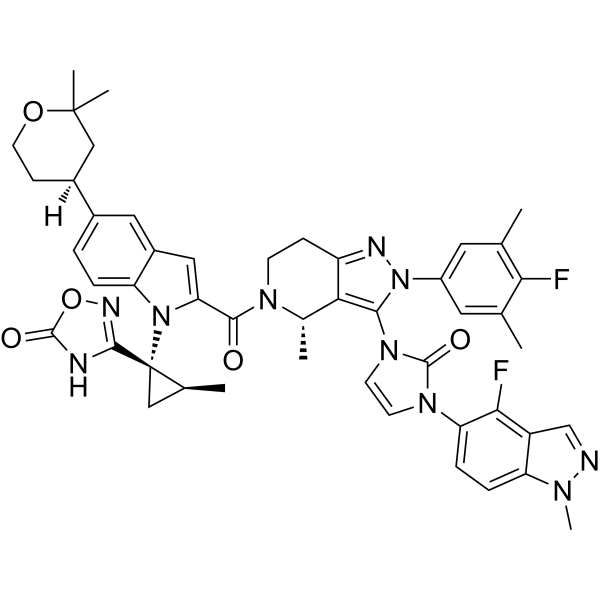
HY-112185
OrforglipronGLP-1R Agonist -

HY-P0054A
GLP-1(7-36), amideGCGR Agonist -
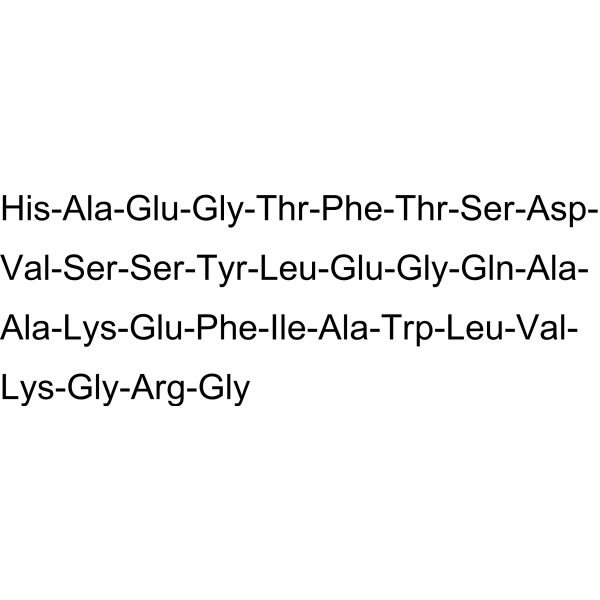
HY-P0055
GLP-1(7-37)Intestinal Insulinotropic Hormone -
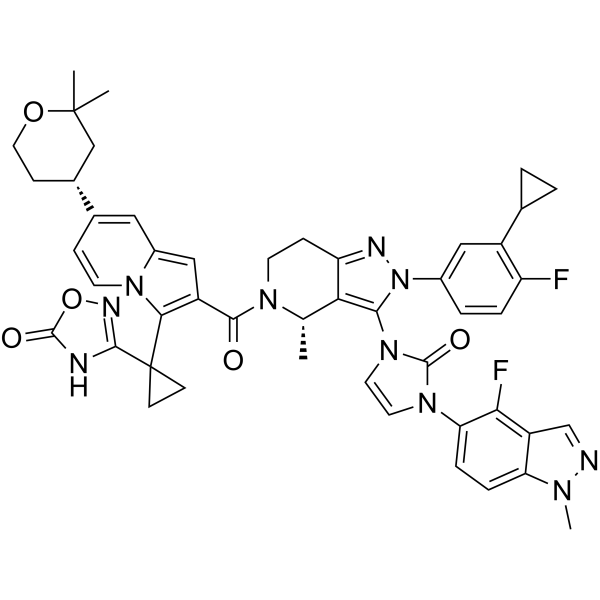
HY-156968
GLP-1 receptor agonist 14GLP-1 Receptor Agonist -
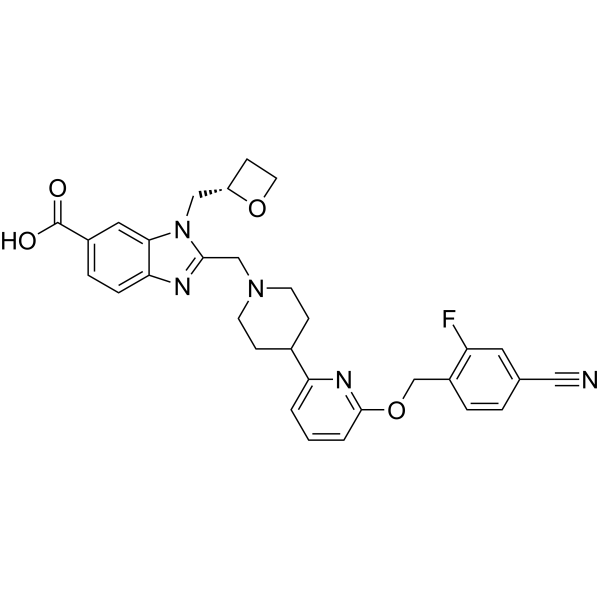
HY-125824
DanuglipronGLP-1R Agonist -

HY-P0120
DulaglutideGLP-1 Receptor Agonist -

HY-P0119
LixisenatideGLP-1 Agonist -
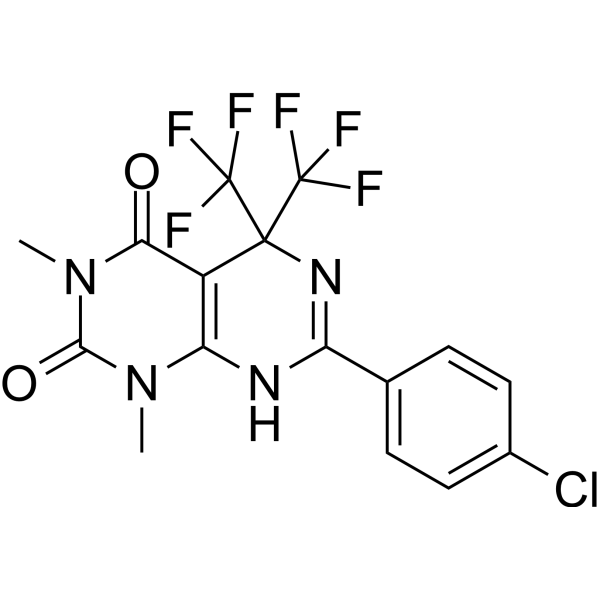
HY-101116
GLP-1R Antagonist 1GLP-1R Antagonist -

HY-P3463
BeinaglutideAnti-obesity Agent -

HY-P5311
AlbiglutideGLP-1 Receptor Agonist -
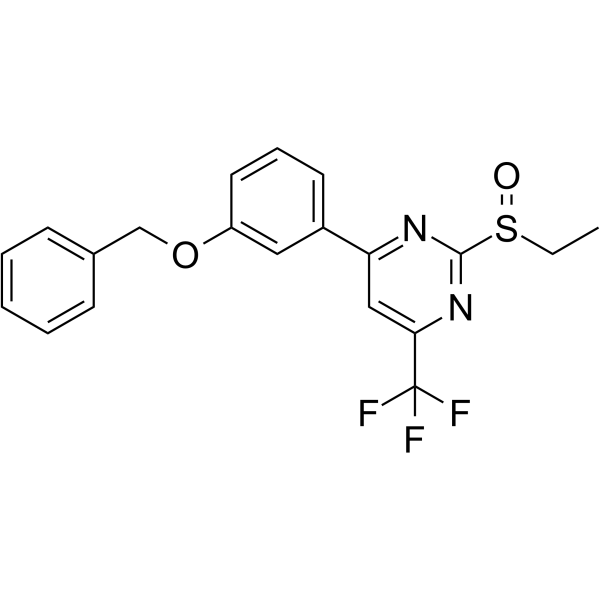
HY-103546
BETPGLP-1 Agonist
Voir tous les produits spécifiques à Isoform AMPK
More

Activité biologique
Description
In Vitro
Pegloxenatide (100-200 nM; 24 h) can activate the PI3K/AKT pathway in high glucose-treated HepG2 cells, while the PI3K inhibitor LY294002 (HY-10108) can inhibit its activation[1].
Pegloxenatide (250 nM; 24 h) can restore tube formation and migratory capacity, increase NO production, reduce mitochondrial ROS generation, improve mitochondrial membrane potential and respiratory function, and restore autophagic flux in human endothelial progenitor cells treated with high glucose and Palmitic acid (HY-N0830)[2].
MedChemExpress (MCE) has not independently confirmed the accuracy of these methods. They are for reference only.
-
Cell Line:High glucose-treated HepG2 cells
-
Concentration:100 and 200 nM
-
Incubation Time:24 h
-
Result:Significantly increased the levels of p-PI3K and p-AKT.
In Vivo
Pegloxenatide (0.03 mg/kg/week; intraperitoneal injection; 12 weeks) has activities of improving glucose metabolism, anti-inflammation and accelerating wound healing in db/db mice[2].
MedChemExpress (MCE) has not independently confirmed the accuracy of these methods. They are for reference only.
-
Animal Model:C57BL/6-db/db male mice[1]
-
Dosage:0.3 and 1 mg/kg
-
Administration:Subcutaneous injection; once every 3 days; 4 weeks
-
Result:Significantly reduced body weight and fasting glucose, mincreased glucose tolerance, improved serum and liver biochemical parameters, and attenuated hepatic steatosis and liver and pancreatic tissue damages in db/db mice.
Considerably inhibited oxidative stress, decreased pro-inflammatory factor (TNF-α, IL-6, and MCP-1) levels, increased anti-inflammatory factor IL-10 levels, upregulated Sirt1, p-AMPK, and p-ACC expressions in the Sirt1/AMPK/ACC pathway, promoted GLP-1R expression by inhibiting β-cell apoptosis, and activated the insulin PI3K/AKT pathway to exert hypoglycemic and hepatoprotective effects.
Essai clinique
| NCT Number | Sponsor | Condition | Start Date |
Phase

|
|---|---|---|---|---|
| NCT01329991 | Plexxikon| | 2011-05 | PHASE1 |


Chemical Information
-
CAS No. 2420483-82-3
-
Appearance Liquid
-
Formule (C₂H₄O)n(C₂H₄O)nC₂₀₆H₃₁₇N₅₅O₆₇S
-
Color Colorless to light yellow
-
Synonyms
Polyethylene glycol loxenatide; PEX 168
-
Sequence
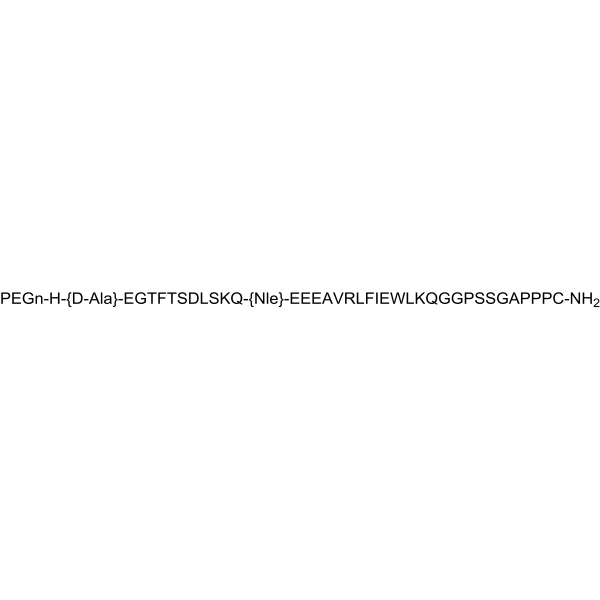
PEGn-His-{d-Ala}-Glu-Gly-Thr-Phe-Thr-Ser-Asp-Leu-Ser-Lys-Gln-{Nle}-Glu-Glu-Glu-Ala-Val-Arg-Leu-Phe-Ile-Glu-Trp-Leu-Lys-Gln-Gly-Gly-Pro-Ser-Ser-Gly-Ala-Pro-Pro-Pro-Cys-NH2
-
Sequence Shortening
PEGn-H-{d-Ala}-EGTFTSDLSKQ-{Nle}-EEEAVRLFIEWLKQGGPSSGAPPPC-NH2
-
Livraison
Room temperature in continental US; may vary elsewhere.
-
Stockage
Please store the product under the recommended conditions in the Certificate of Analysis.


Pureté et documentation
-
Fiche technique (270 KB)
-
SDS (252 KB)
- English - EN (252 KB)
- Français - FR (252 KB)
- Deutsch - DE (252 KB)
- Norwegian - NO (252 KB)
- Español - ES (252 KB)
- Swedish - SV (252 KB)
- Italian - IT (252 KB)
- Korean - KR (252 KB)
- Portuguese - PT (252 KB)
-
Instruction de manipulation (2659 KB)
Références
[1]. Zhang Y, et al. Protective Effects and Mechanisms of Polyethylene Glycol Loxenatide Against Hyperglycemia and Liver Injury in db/db diabetic Mice. Front Pharmacol. 2021 Dec 6;12:781856. [Content Brief]
[2]. Ding Z, et al. Polyethylene Glycol Loxenatide Accelerates Diabetic Wound Healing by Downregulating Systemic Inflammation and Improving Endothelial Progenitor Cell Functions. Int J Mol Sci. 2025 Mar 6;26(5):2367. [Content Brief]
[3]. Wang J, et al. Polyethylene glycol loxenatide (PEX168) in subjects with renal impairment: A pharmacokinetic study. Br J Clin Pharmacol. 2019 Dec;85(12):2714-2720. [Content Brief]
[4]. Li XY, et al. Effect of polyethylene Glycol Loxenatide (long-acting GLP-1RA) on lipid, glucose levels and weight in type 2 diabetes mellitus patients with obesity. Eur Rev Med Pharmacol Sci. 2022 Nov;26(21):7996-8003. [Content Brief]

Calculators
Concentration (start) × Volume (start) = Concentration (final) × Volume (final)


Pegloxenatide Related Classifications
HY-P3491 Related Classifications
 Powered by Bioz
Keywords
- Pegloxenatide
- 2420483-82-3
- Polyethylene glycol loxenatide
- PEX 168
- PEX168
- PEX 168
- PEX-168
- GCGR
- PI3K
- Akt
- Reactive Oxygen Species (ROS)
- Autophagy
- Interleukin Related
- Sirtuin
- AMPK
- Apoptosis
- polyethylene glycol loxenatide
- long-acting
- glucagon-like peptide-1 receptor
- type 2 diabetes mellitus (T2DM)
- db/db male mice
- Inhibitor
- inhibitor
- inhibit