



Multiple Myeloma
-
Multiple Myeloma (163)


- Molecular Weight: 145.26 kDa
Daratumumab (PBS) (Anti-Human CD38) is the first-in-class human-specific anti-CD38 monoclonal antibody (IgG1). Daratumumab (PBS) has anti-multiple myeloma (MM) effect. Daratumumab (PBS) impairs MM cell adhesion, which results in an increased sensitivity of MM to proteasome inhibition.

- Molecular Weight: 144.84 kDa
Ulocuplumab (Anti-Human CXCR4 Recombinant Antibody/BMS-936564/MDX1338) is a fully human IgG4 anti-CXCR4 antibody. Ulocuplumab induces apoptosis and inhibits CXCL12 mediated CXCR4 activation-migration of chronic lymphocytic leukemia (CLL). Ulocuplumab exhibits antitumor activity in established tumors including acute myeloid leukemia (AML), non-Hodgkin lymphoma (NHL), and multiple myeloma xenograft models.
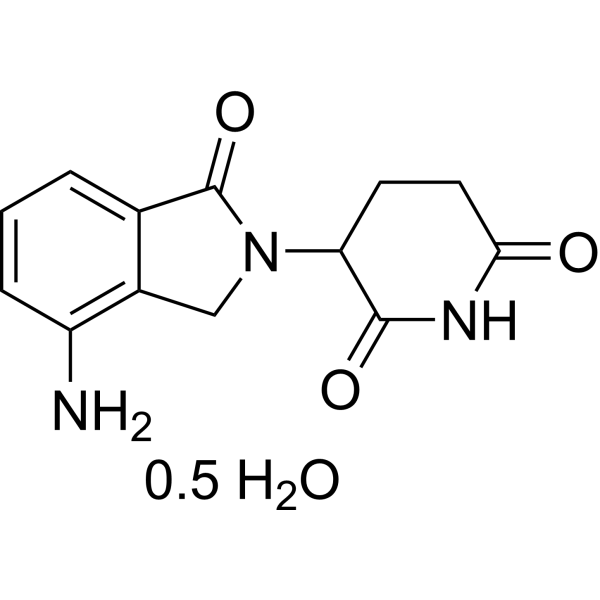
- Formula: C13H14N3O3.5
- Molecular Weight: 268.27
Lenalidomide hemihydrate (CC-5013 hemihydrate) is an orally active immunomodulatory agent that binds CRBN as a molecular glue to alter substrate specificity, inducing ubiquitination and proteasome-dependent degradation of IKZF1, IKZF3 and CK1α. Lenalidomide hemihydrate induces apoptosis by degrading IKZF1/3, and activates p53 by degrading CK1α. Lenalidomide hemihydrate promotes IL-2 release and effector functions of CD8+ T/NK cells, while inhibiting TNF-α secretion and M1-type pyroptosis. Lenalidomide hemihydrate can be used in research related to hematological malignancies, acute liver failure and acute kidney injury.
- Molecular Weight: 146.32 kDa
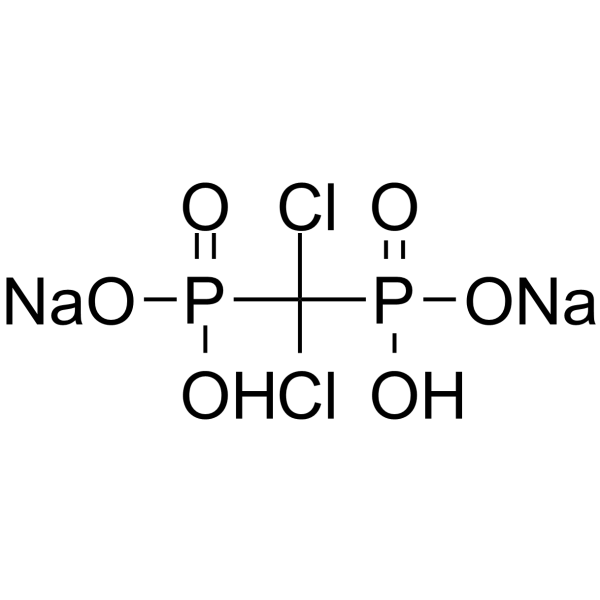
- Formula: CH2Cl2Na2O6P2
- Molecular Weight: 288.86
Clodronic acid (Clodronate) disodium salt is an orally active bisphosphonate. Clodronic acid disodium salt inhibits osteoclast-mediated bone resorption. Clodronic acid disodium salt reduces skeletal event risk in malignant bone disease, impairs malignant osteolysis, blocks bone matrix growth-factor release, induces apoptosis in osteoclasts and macrophages. Clodronic acid disodium salt is effective in the maintenance or improvement of bone mineral density. Clodronic acid disodium salt can be used for the research of multiple myeloma and postmenopausal osteoporosis.
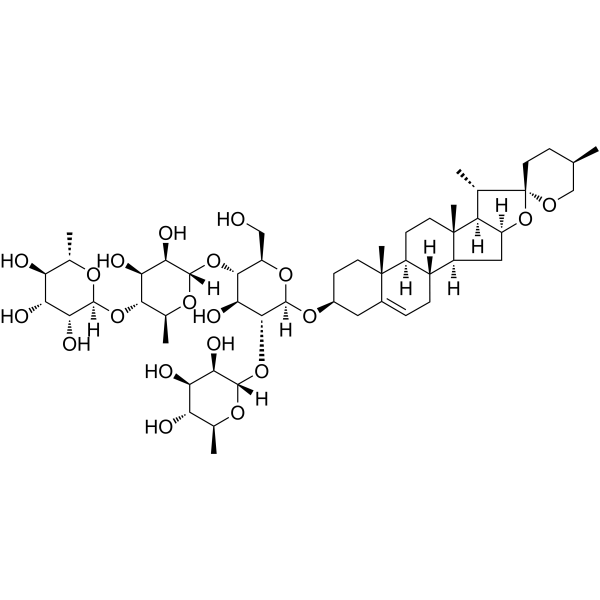
- Formula: C51H82O20
- Molecular Weight: 1015.18
Formosanin C is a diosgenin saponin with multiple biological activities. Formosanin C possesses multiple anti-tumor mechanisms, including inducing apoptosis and autophagy, blocking the cell cycle, inhibiting metastasis and inducing ferroptosis. Formosanin C can inhibit the NF-κB signaling pathway to exert anti-inflammatory effects, and enhance the activity of immune cells. Formosanin C exhibits the inhibiting effect against C. albicans. Formosanin C can be used for the study of anti-inflammation, antifungal anti and anti-cancer (including lung cancer, liver cancer, breast cancer and colorectal cancer, etc.).

- Molecular Weight: 145.04 kDa
Zigakibart (BION-1301) is an IgG4-kappa, humanized monoclonal antibody against TNFSF13 (tumor necrosis factor (TNF) superfamily member 13, APRIL, CD256). Zigakibart exhibits anti-inflammatory activity.
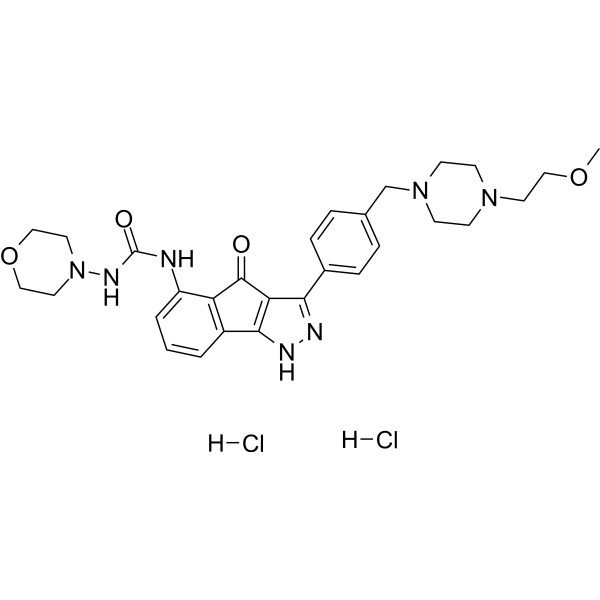
- Formula: C29H37Cl2N7O4
- Molecular Weight: 618.55
RGB-286638 is a potent inhibitor of CDK and MAPK9. RGB-286638 inhibits the activities of cyclin T1-CDK9, cyclin B1-CDK1, cyclin E-CDK2, cyclin D1-CDK4, cyclin E-CDK3 and p35-CDK5, with IC50 values of 1, 2, 3, 4, 5 and 5 nM, respectively. RGB-286638 inhibits GSK-3β and TAK1, with IC50 values of 3 nM and 5 nM, respectively. RGB-286638 induces caspase-dependent Apoptosis in cells. RGB-286638 delays tumor growth in an orthotopic glioblastoma mouse model. RGB-286638 extends survival in multiple myeloma models. RGB-286638 can be used in research related to glioblastoma and multiple myeloma.

- Formula: C20H16N4O3
- Molecular Weight: 360.37
SB-405483 is a CRBN orthosteric ligand bindign enhancer. SB-405483 potentiates degradation of CRBN substrates including CK1α, Wee1, IKZF1/3. SB-405483 stabilizes CRBN and reduces CRBN autoubiquitination. SB-405483 can be used for the research of cancer, such as multiple myeloma and acute myeloid leukemia.
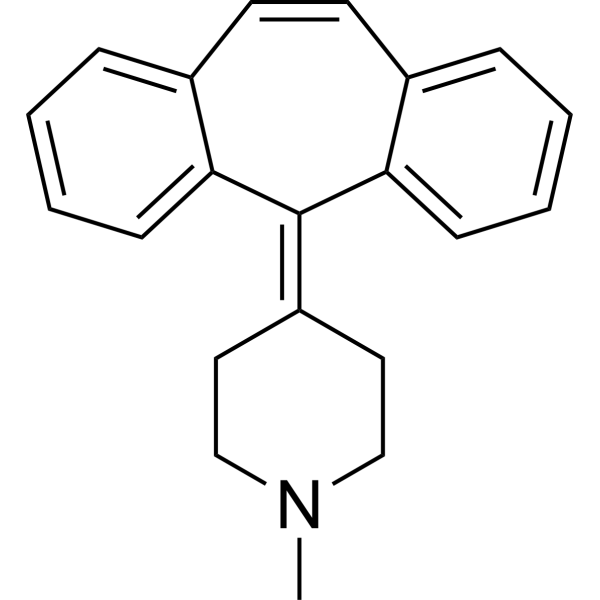
- Formula: C21H21N
- Molecular Weight: 287.40
Cyproheptadine acts as a p38 MAP kinase activator, CHK2 activator, histamine H1 receptor inhibitor and serotonin receptor inhibitor. Cyproheptadine mediates cell cycle arrest via G1 phase arrest, G1/S transition arrest, G0/G1 phase arrest, reduced expression of cyclins D1/D2/D3, upregulated expression of HBP1, p16, p21, p27, and decreased phosphorylation of retinoblastoma protein. Cyproheptadine induces Apoptosis by increasing PARP and cleaved PARP, as well as activating the mitochondrial caspase pathway. Cyproheptadine inhibits tumor growth with extremely low toxicity to normal cells. Cyproheptadine can be used in research related to hepatocellular carcinoma, multiple myeloma and acute myeloid leukemia.
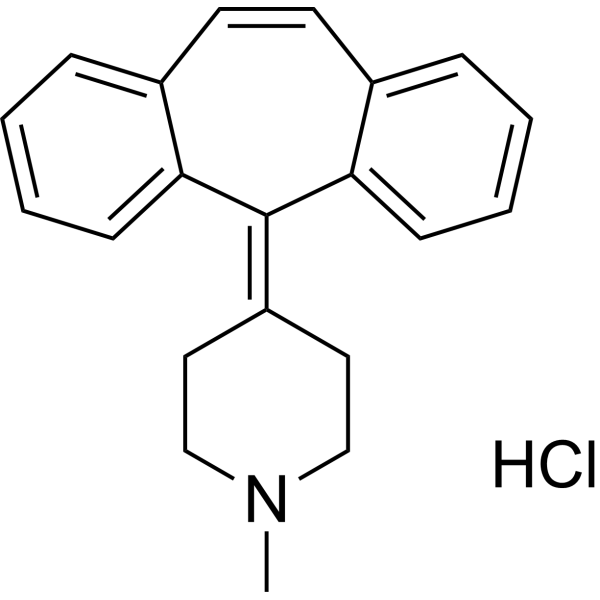
- Formula: C21H22ClN
- Molecular Weight: 323.86
Cyproheptadine hydrochloride (Cyproheptadine HCl) acts as a p38 MAP kinase activator, CHK2 activator, histamine H1 receptor inhibitor and serotonin receptor inhibitor. Cyproheptadine hydrochloride mediates cell cycle arrest via G1 phase arrest, G1/S transition arrest, G0/G1 phase arrest, reduced expression of cyclins D1/D2/D3, upregulated expression of HBP1, p16, p21, p27, and decreased phosphorylation of retinoblastoma protein. Cyproheptadine hydrochloride induces Apoptosis by increasing PARP and cleaved PARP, as well as activating the mitochondrial caspase pathway. Cyproheptadine hydrochloride inhibits tumor growth with extremely low toxicity to normal cells. Cyproheptadine hydrochloride can be used in research related to hepatocellular carcinoma, multiple myeloma and acute myeloid leukemia.
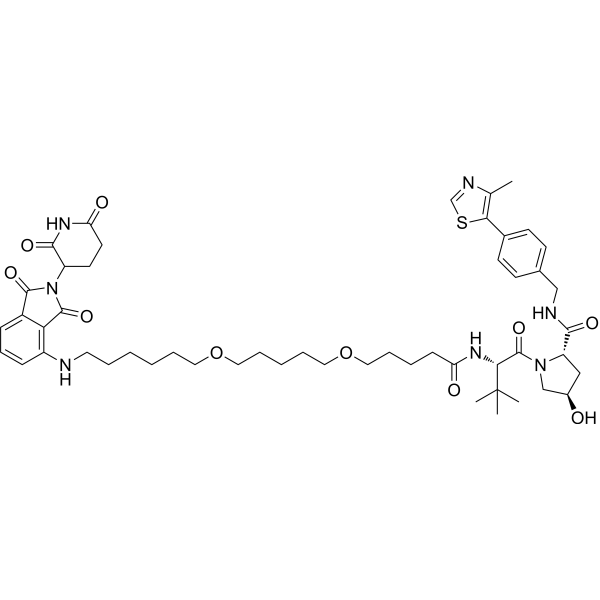
- Formula: C51H69N7O10S
- Molecular Weight: 972.20
CRBN-6-5-5-VHL is a potent and selective VHL E3 ligand-based Cereblon (CRBN) PROTAC degrader with a DC50 value of 1.5 nM. CRBN-6-5-5-VHL forms a heterotrimeric complex with CRBN and VHL E3 ligase, thereby promoting CRBN ubiquitination and proteasomal degradation without inducing VHL degradation. CRBN-6-5-5-VHL protects myeloma from the toxic effects of IMiDs. CRBN-6-5-5-VHL can be used in the research of multiple myeloma.

- Formula: C5H7NO2
- Molecular Weight: 113.11
Glutarimide is a CRBN binder. Glutarimide exerts its function by binding to the thalidomide-binding domain of the CRBN protein. Glutarimide serves as an important structural component of many biologically active compounds. Glutarimide can be used in studies related to anemia, multiple myeloma and cycloheximide.
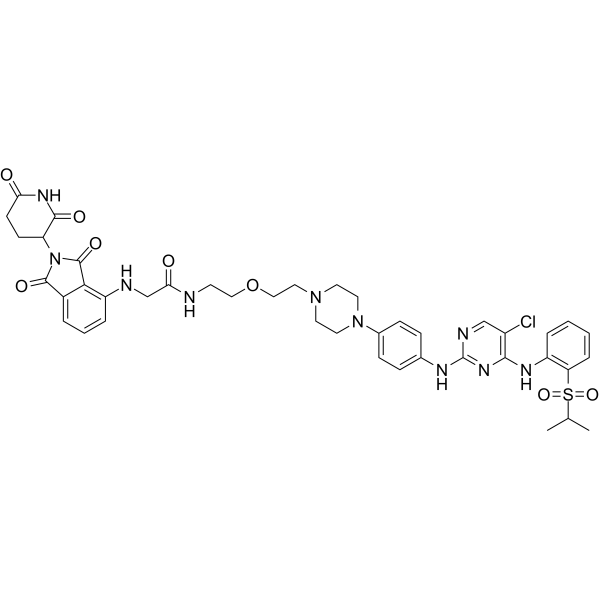
- Formula: C42H47ClN10O8S
- Molecular Weight: 887.40
SK-3-91 is a multi-kinase PROTAC degrader that induces the degradation of the maximum number of unique kinases (over 125 distinct kinases) simultaneously. SK-3-91 induces protein degradation via the ubiquitin biotinylation (E-STUB) pathway, such as inducing the degradation of YTHDF2. SK-3-91 also inhibits cell proliferation and induces cell morphological changes. SK-3-91 can be used in research related to acute lymphoblastic leukemia, multiple myeloma, neuroblastoma, ovarian cancer, mantle cell lymphoma, and gastric cancer.

- Formula: C21H16ClF3N4O3
- Molecular Weight: 464.83
Sorafenib (Standard) (Bay 43-9006 (Standard)) is the analytical standard of Sorafenib (HY-10201). This product is intended for research and analytical applications. Sorafenib (Bay 43-9006) is a potent oral active multikinase inhibitor. Sorafenib blocks autophosphorylation and activity of receptor tyrosine kinases (VEGFR-2, VEGFR-3) and RAF family kinases, thereby suppressing the RAF/MEK/ERK and PI3K/Akt pathways, inhibiting STAT3 phosphorylation, and selectively inhibiting the MAPK pathway in cancer cells. Sorafenib induces cell cycle arrest, autophagy, apoptosis, and PARP cleavage, reduces Bcl-2, Bcl-XL, cyclin D1 levels, and activates Bak and Bax. Sorafenib inhibits tumor growth and metastasis in mouse and rat models. Sorafenib can be used for cancer research, such as colon, breast, non-small-cell lung cancer (NSCLC), ovarian, pancreatic, melanoma, colorectal and hepatocellular carcinoma.
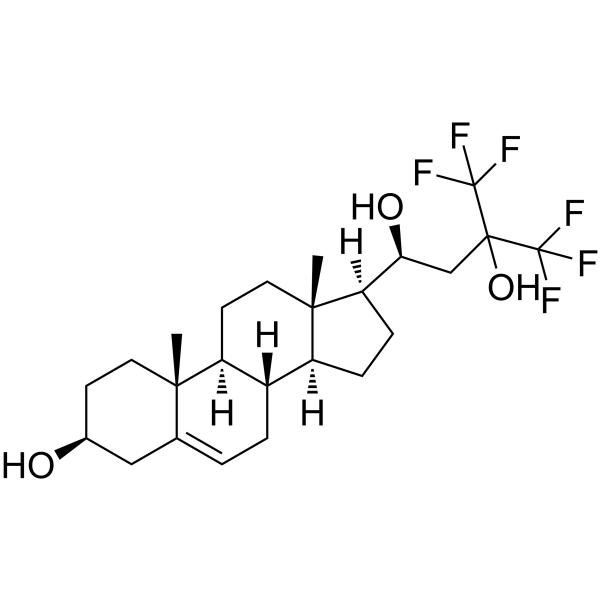
- Formula: C24H34F6O3
- Molecular Weight: 484.52
NSC12 is an orally active pan-FGF trap. NSC12 inhibits the interaction between FGF2/FGFR. NSC12 suppresses the phosphorylation of FGFR3. NSC12 reduces c-Myc levels, induces DNA damage, triggers the cleavage of Caspase 3, and promotes ROS production. NSC12 exhibits anticancer activity against lung cancer and multiple myeloma.
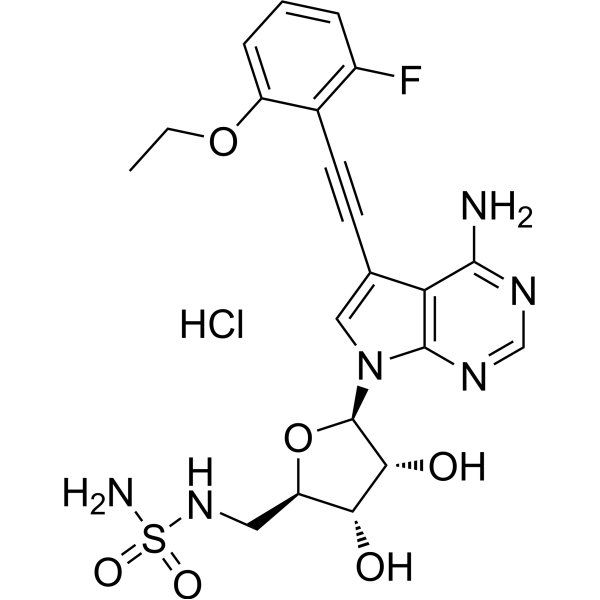
- Formula: C21H24ClFN6O6S
- Molecular Weight: 542.97
TAS4464 hydrochloride is a long-acting, highly selective covalent inhibitor targeting NEDD8-activating enzyme (NAE) (IC50=0.955 nM), and also inhibits CAII with an IC50 of 0.73 μM, which is less potent than MLN4924 (HY-70062). The IC50 values of TAS4464 hydrochloride against other E1 enzymes UAE and SAE are 449 nM and 1280 nM, respectively. TAS4464 hydrochloride targets NEDD8 in an ATP-dependent manner to inhibit NAE, blocks the neddylation pathway, causes accumulation of CRL ubiquitin ligase substrates (such as CDT1, p27, phosphorylated IκBα), and further induces tumor cell apoptosis. TAS4464 hydrochloride exhibits antiproliferative and cytotoxic effects, and has broad-spectrum antitumor activity against various hematologic and solid tumor cell lines as well as patient-derived tumor cells. TAS4464 hydrochloride has a wide therapeutic window, without obvious toxicity. TAS4464 hydrochloride can be used in the research of hematologic malignancies (leukemia, lymphoma, multiple myeloma, etc.) and solid tumors (small cell lung cancer, colorectal cancer, sarcoma, endometrial cancer, ovarian cancer, etc.).

- Formula: C13H13N3O3
- Molecular Weight: 259.26
Lenalidomide (Standard) (CC-5013 (Standard)) is the analytical standard of Lenalidomide (HY-A0003). This product is intended for research and analytical applications. Lenalidomide (CC-5013) is an orally active immunomodulatory agent that binds CRBN as a molecular glue to alter substrate specificity, inducing ubiquitination and proteasome-dependent degradation of IKZF1, IKZF3 and CK1α. Lenalidomide induces apoptosis by degrading IKZF1/3, and activates p53 by degrading CK1α. Lenalidomide promotes IL-2 release and effector functions of CD8+ T/NK cells, while inhibiting TNF-α secretion and M1-type pyroptosis. Lenalidomide can be used in research related to hematological malignancies, acute liver failure and acute kidney injury.
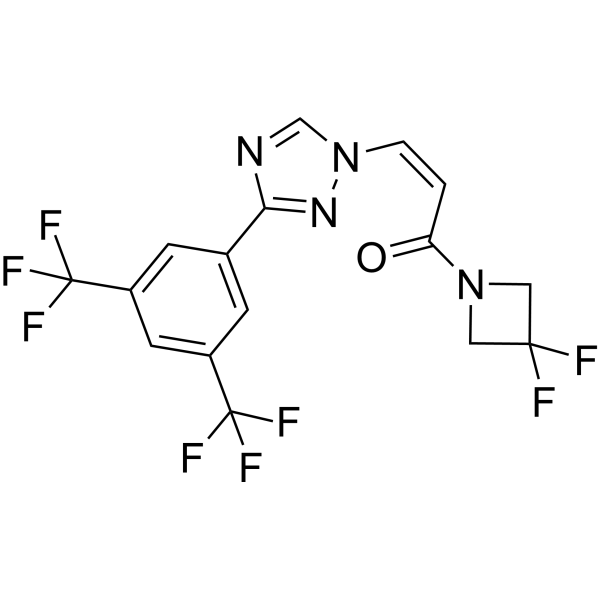
- Formula: C16H10F8N4O
- Molecular Weight: 426.26
KPT-276 is an orally active and blood-brain barrier-penetrant selective XPO1/CRM1 inhibitor. KPT-276 blocks XPO1-mediated nuclear export function and promotes nuclear retention of various tumor suppressor proteins. KPT-276 induces apoptosis and G1 cell cycle arrest in tumor cells, and downregulates c-MYC, CDC25A, and BRD4. KPT-276 reduces immune cell proliferation through nuclear accumulation of cell cycle inhibitors, rescues TDP-43 cytoplasmic mislocalization, and restores axon growth and growth rate in mutant PFN1 motor neurons. KPT-276 maintains axonal cytoskeletal integrity and mitochondrial function, and inhibits tumor growth. KPT-276 can be used for research on glioblastoma, non-Hodgkin lymphoma, amyotrophic lateral sclerosis, multiple myeloma, and non-small cell lung cancer.
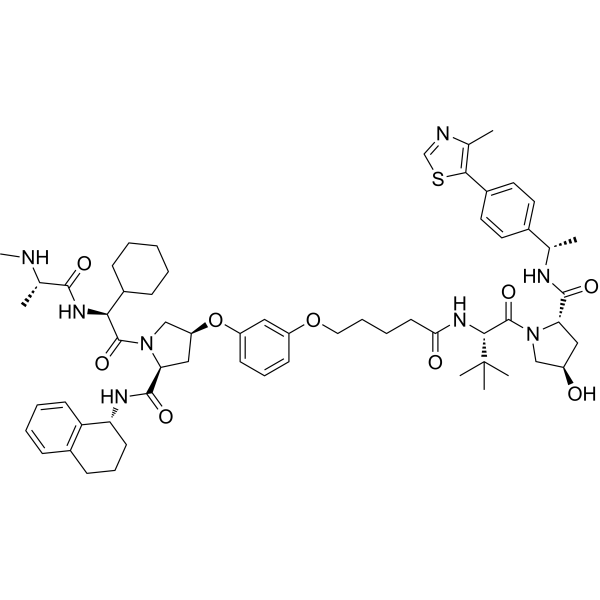
- Formula: C61H82N8O9S
- Molecular Weight: 1103.42
CST626 is a PROTAC degrader targeting IAP, with DC50 values of 0.7 nM, 2.4 nM and 6.2 nM against XIAP, cIAP1 and cIAP2, respectively. This compound recruits the VHL E3 ubiquitin ligase to form a heterotrimeric complex, thereby inducing ubiquitination and proteasomal degradation of the target proteins. CST626 also exhibits certain degrading activity against VHL30 and VHL19. CST626 inhibits the proliferation and induces apoptosis of various hematologic tumor cell lines, and its anti-tumor effect is further enhanced when used in combination with TNF-α. CST626 can be used in research related to multiple myeloma, acute myeloid leukemia and diffuse large B-cell lymphoma.



