



Visual System Disease
-
Visual System Disease (186)


- Formula: C22H22N2O3S
- Molecular Weight: 394.49
TH251 is a LIMK1 and LIMK2 inhibitor with IC50s of 52 nM and 47 nM against LIMK1 and LIMK2, respectively. TH251 binds to inactive αC-out and DFG-out LIMK1 conformations, inhibits unphosphorylated LIMK1 and LIMK2 enzymatic activity, and exhibits unchanged potency despite PAK-mediated phosphorylation of either kinase. TH251 can be used for the research of cancers, glaucoma, and CNS diseases.

- Formula: C23H26F3NO4S
- Molecular Weight: 469.52
CP-432 (CP-734432) is a EP4 receptor agonist with an IC50 of 2 nM for human sources, 8 nM for canine sources, and an EC50 of 1 nM for human sources. CP-432 stimulates cAMP production and activates β-lactamase (β-lactamase) activity via the cAMP response element signaling pathway. CP-432 is applicable to research related to glaucoma.

- Formula: C22H18FNO3
- Molecular Weight: 363.39
KUNG94 is a selective Grp94/HSP90B inhibitor (IC50=8 nM). By inhibiting the chaperone function of Grp94, KUNG94 reduces the maturation and cell surface trafficking of its specific client proteins. KUNG94 can be used for studies on Grp94-related biological mechanisms, as well as diseases including cancer and primary open-angle glaucoma.

FAM labled Ultevursen sodiumis a FAM labled Ultevursen sodium (HY-147412A). Ultevursen sodium (QR-421a) is a splice-modulating antisense oligonucleotide targeting exon 13 of the USH2A gene, which restores the functional expression of Usherin protein by inducing exon skipping. Ultevursen sodium binds to USH2A pre-mRNA and modulates the splicing process to specifically skip exon 13 carrying the pathogenic mutation c.2299delG, generating an in-frame transcript and a truncated yet functionally normal protein. Ultevursen sodium exhibits concentration-dependent exon skipping activity in human cells and retinal organoid models, and restores Usherin expression and retinal function in zebrafish and gene-edited mouse models. Ultevursen sodium can be used for related research on type 2 Usher syndrome and non-syndromic retinitis pigmentosa.

Cy3 labled Ultevursen sodium is a Cy3 labled Ultevursen sodium (HY-147412A). Ultevursen sodium (QR-421a) is a splice-modulating antisense oligonucleotide targeting exon 13 of the USH2A gene, which restores the functional expression of Usherin protein by inducing exon skipping. Ultevursen sodium binds to USH2A pre-mRNA and modulates the splicing process to specifically skip exon 13 carrying the pathogenic mutation c.2299delG, generating an in-frame transcript and a truncated yet functionally normal protein. Ultevursen sodium exhibits concentration-dependent exon skipping activity in human cells and retinal organoid models, and restores Usherin expression and retinal function in zebrafish and gene-edited mouse models. Ultevursen sodium can be used for related research on type 2 Usher syndrome and non-syndromic retinitis pigmentosa.

- Formula: 13CH615N4
- Molecular Weight: 79.05
Aminoguanidine-13C,15N4 (Pimagedine-13C,15N4) is the 13C,15N4-labeled Aminoguanidine (HY-W020772). Aminoguanidine is an inhibitor of diamine oxidase (DAO) and nitric oxide synthase (NOS). Aminoguanidine can reduce the formation of advanced glycation end products (AGEs). Aminoguanidine has a dose-dependent inhibitory effect on Doxorubicin (HY-15142)-induced cell apoptosis. Aminoguanidine has antioxidant properties. Aminoguanidine can be used in the research of diabetic nephropathy.
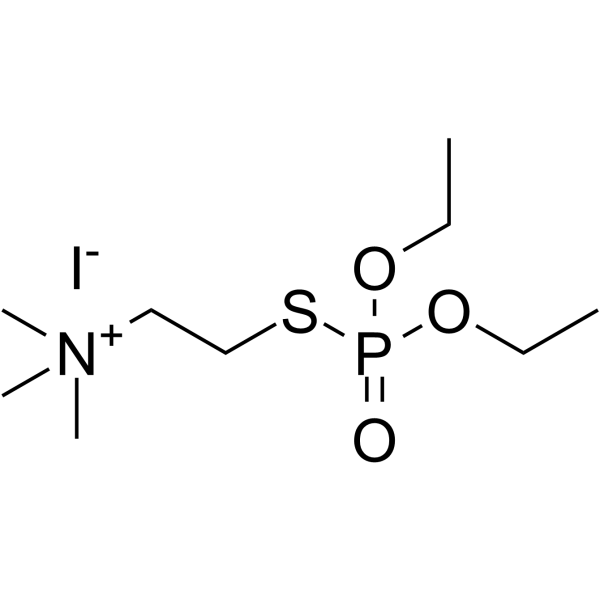
- Formula: C9H23INO3PS
- Molecular Weight: 383.23
Echothiopate iodide (Echothiophate iodide) is an acetylcholinesterase (AChE) inhibitor. Echothiopate iodide irreversibly inhibits acetylcholinesterase, prevents the enzymatic hydrolysis of acetylcholine, and increases the local acetylcholine concentration in the ciliary muscle, thereby driving muscarinic receptor downregulation and regulatory hyposensitivity to Pilocarpine Hydrochloride. Echothiopate iodide can be used in the study of glaucoma.

- Formula: C9H23ClNO3PS
- Molecular Weight: 291.78
Echothiopate chloride (Echothiophate chloride) is an acetylcholinesterase (AChE) inhibitor. Echothiopate chloride irreversibly inhibits acetylcholinesterase, prevents the enzymatic hydrolysis of acetylcholine, and increases the local acetylcholine concentration in the ciliary muscle, thereby driving muscarinic receptor downregulation and regulatory hyposensitivity to Pilocarpine Hydrochloride. Echothiopate chloride can be used in the study of glaucoma.

- Formula: C39H36O9
- Molecular Weight: 648.70
Chalcomoracin is an orally active anticancer agent. Chalcomoracin exhibits anticancer, antibacterial, and α-glucosidase inhibitory activities, with an IC50 of 14.23 µM against yeast α-glucosidase and an IC50 of 5.5 μM against FabI of Staphylococcus aureus. Chalcomoracin reduces the phosphorylation levels of ERK, JNK, and P38; enhances the phosphorylation level of ERK1/2; regulates the MAPK, mTOR, AKT, and p53 signaling pathways; upregulates the expression of Chop, Bip, PINK1, GRP78, and GADD153; and downregulates the expression of Alix. Chalcomoracin induces apoptosis (apoptosis), endoplasmic reticulum stress (endoplasmic reticulum stress), paraptosis (paraptosis), ROS production, mitophagy (mitophagy), and autophagy (autophagy); it inhibits cancer cell viability, colony-forming ability, migration, invasion, proliferation, tumorigenesis, fatty acid synthesis, S. aureus growth, vitreous-stimulated retinal cell activity, and cell cycle progression at the G0/G1 phase. Chalcomoracin can be used in research related to hepatocellular carcinoma, non-small cell lung cancer, triple-negative breast cancer, prostate cancer, proliferative vitreoretinopathy, pancreatic cancer, diabetes, and bacterial infections.

- Formula: C16H7N2NaO5
- Molecular Weight: 330.23
Pirenoxine sodium (Catalin K sodium) is an antioxidant with lens-protective activity. Pirenoxine sodium inhibits lens sclerosis, prevents lipid peroxidation and suppresses lens protein opacification. Pirenoxine sodium blocks benzoquinone acetic acid-induced cataract progression. Pirenoxine sodium can be used in research related to presbyopia and cataracts.

- Formula: C20H32N6O12S3·xC2HF3O2
- Molecular Weight: 644.70 (free base)
Glutathione trisulfide TFA (GSSSG TFA) is an orally active, blood-brain barrier permeable neuroprotective agent. Glutathione trisulfide TFA inactivates intracellular tyrosinase, regulates the expression of Cars2, Cbs, MITF and TYR, inhibits α-MSH (HY-P0252)-induced melanogenesis, and restores intracellular persulfide levels reduced by α-MSH. Glutathione trisulfide TFA scavenges free radicals, quenches ROS, reduces Paclitaxel (HY-B0015)-induced superoxide production, upregulates the expression of antioxidant protein genes, and inhibits oxidative stress-induced cell death. Glutathione trisulfide TFA promotes ERK1/2 activation, prevents NF-κB p65 activation, inhibits TAK1 phosphorylation, reduces pro-inflammatory cytokine expression, and blocks microglial activation. Glutathione trisulfide TFA can be used in research related to dry age-related macular degeneration, inflammation-associated eye diseases, Alzheimer's disease, Parkinson's disease, etc.

- Formula: C19H20N4O2
- Molecular Weight: 336.40
ROCK2-IN-20 is a selective ROCK2 inhibitor with an IC50 value of 12 nM. ROCK2-IN-20 can be used for research on multiple sclerosis, pulmonary arterial hypertension, and glaucoma.

- Formula: C16H21NO3
- Molecular Weight: 275.34
Noratropine is a major metabolite of Atropine (HY-B1205). Noratropine can be formed from Atropine via oxidative N-demethylation and can also be isolated from Anthocercis littorea. Atropine is a competitive muscarinic acetylcholine receptor (mAChR) antagonist. Atropine can be used in research on anti-myopia and bradycardia.

- Molecular Weight: 13345.07
Bevasiranib is a siRNA that targets and silences VEGF-A. Bevasiranib activates the RNA-induced silencing complex to degrade VEGF-A mRNA, mediates TLR3-related inhibition of choroidal neovascularization, and triggers RNA interference-mediated gene silencing through endogenous eukaryotic RNAi mechanisms. After intravitreal injection, Bevasiranib distributes to various ocular tissues and resists degradation by intraocular nucleases, reducing choroidal neovascularization area and alleviating vascular leakage. Bevasiranib can be used in research related to macular degeneration.

- Formula: C20H22ClNO2
- Molecular Weight: 343.85
Moxaverine hydrochloride is a phosphodiesterase (PDE) inhibitor. Moxaverine hydrochloride also interacts with calmodulin (calmodulin), thereby enhancing the inhibition of calmodulin-dependent PDE. Moxaverine hydrochloride can be used in studies related to microcirculation regulation and ocular tissue distribution.
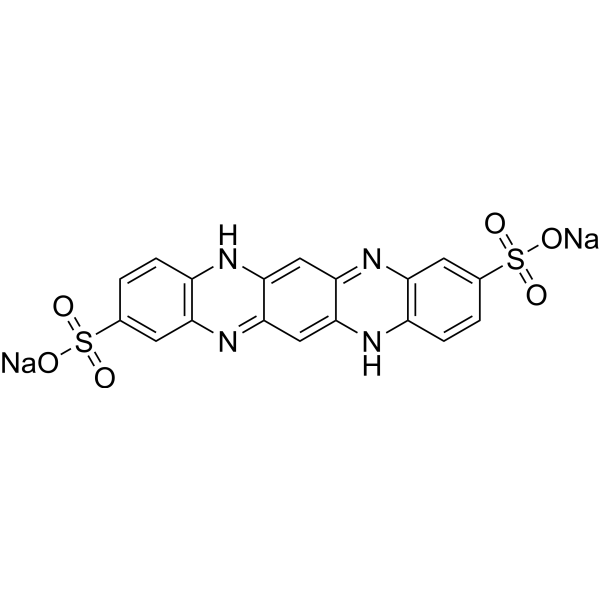
- Formula: C18H10N4Na2O6S2
- Molecular Weight: 488.40
Azapentacene (Phacolysine) sodium is an anti-cataract compound. Azapentacene sodium prevents cataract formation in guinea pigs with vitamin C deficiency and delays the progression of congenital cataract in Nakano mice. Azapentacene sodium undergoes reversible one-electron oxidation to form a stable radical cation, undergoes irreversible secondary oxidation to form a hydrolyzable unstable dication, and can also be oxidized by thallium (III) trifluoroacetate in trifluoroacetic acid to generate a detectable radical cation. Azapentacene sodium is used in research related to cataracts, vitamin C deficiency-induced cataracts, and congenital cataracts.

- Formula: C21H29Cl2NO4S
- Molecular Weight: 462.43
Besvoprost is a prostaglandin receptor activator with antiglaucoma activity. Besvoprost can be used for the research of glaucoma.

DSPE-PEG2000-Carboxy NHS sodium is a linker. DSPE-PEG2000-Carboxy NHS sodium enables conjugation of targeting peptides to lipid nanoparticles after their preparation. DSPE-PEG2000-Carboxy NHS sodium is applicable to the research of hereditary retinal degeneration.

- Formula: C198H313N63O56S3
- Molecular Weight: 4568.19
TAT-N24 is a cell-penetrating peptide and also an inhibitor of p55PIK. TAT-N24 disrupts the interactions between p55PIK and p53, PCNA or Rb, blocks the p53-dependent ubiquitin-mediated degradation process, and inhibits the nuclear translocation and phosphorylation of NF-κB p65. TAT-N24 enhances MMS-induced p53-dependent cell apoptosis, inhibits DNA synthesis, reduces the expression of Cyclin D1, and induces cell cycle arrest at the G0/G1 or S phase. TAT-N24 inhibits the activation of NLRP3 and NLRC4 inflammasomes, reduces the expression of ZBP1-PANoptosome components, and suppresses PANoptosis. TAT-N24 can be used in research related to leukemia, colon cancer, cervical cancer, liver cancer, corneal neovascularization, restenosis and acute glaucoma.

- Formula: C9H19NO2
- Molecular Weight: 173.25
TEMPOL-H is the reduced hydroxylamine form of the stable nitroxide radical Tempol (HY-100561), and serves as the active metabolite of OT-551 (HY-W556870). TEMPOL-H acts as a potent antioxidant and free radical scavenger. TEMPOL-H protects retinal pigment epithelial cells from acute light-induced damage, and protects mice from lethal whole-body radiation. TEMPOL-H inhibits lens opacification in mice, prevents glutathione loss in rat lenses under stress, blocks protein leakage in rhesus monkey lenses under stress, and maintains the 3H-choline accumulation capacity of the lens. TEMPOL-H can be used in studies related to light-induced retinal pigment epithelial degeneration and age-related cataract.



