



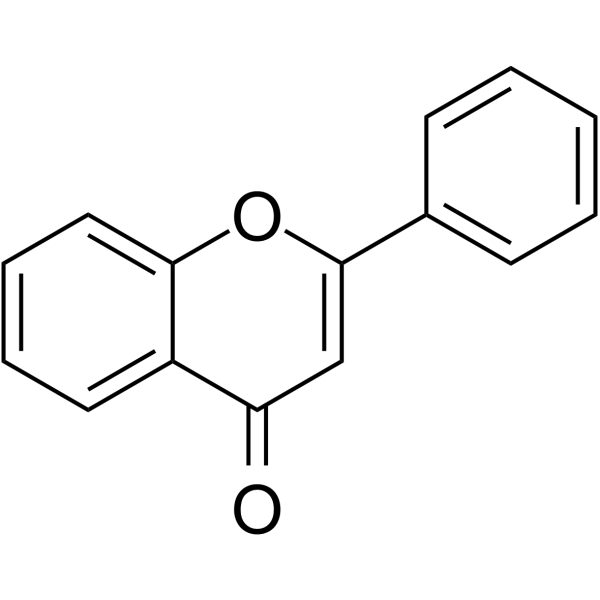
Flavone

Based on 1 Customer Validation
Flavone is an anti-tumor compound that targets cell cycle regulatory proteins (such as cyclin B1) and apoptosis-related factors (such as p21waf1, PIG3). Flavone selectively induces mitochondrial-mediated apoptosis pathways in tumor cells, inhibits cyclin B1 protein expression, upregulates p21waf1, and activates p63/p73 proteins. Flavone has immunomodulatory functions that enhance natural killer cell (NK cell) activity and lymphocyte proliferation. Flavone is used in cancer research, especially for its inhibitory potential in solid tumor models such as esophageal cancer and liver cancer.
For research use only. We do not sell to patients.
- Purity : 99.85%
- CAS No.: 525-82-6
- Formula: C15H10O2
- Molecular Weight:222.24
-
Storage:
4°C, protect from light
* In solvent : -80°C, 6 months; -20°C, 1 month (protect from light)

To place orders, for customer services and technical support, please contact: MedChemExpress USA
Tel: 609-228-6898 E-mail: [email protected] [email protected]


-
 Biological Activity
-
Chemical Information
-
Solvent & Solubility
- Protocols
- Purity & Documentation
- References
-
 Help & FAQs


-
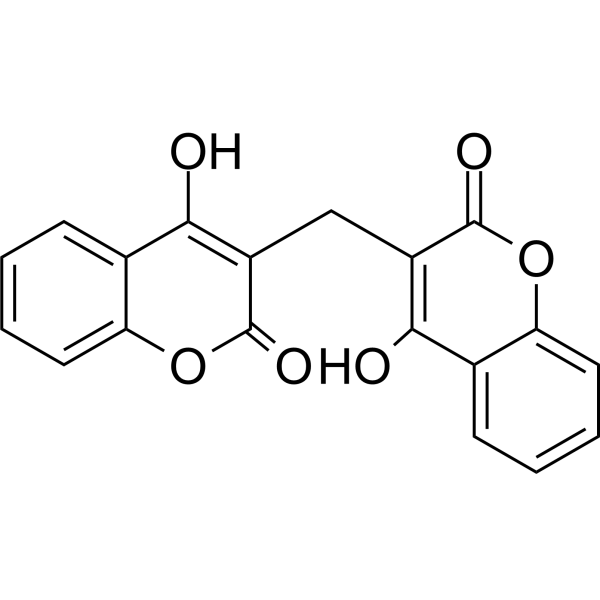
HY-N0645
DicoumarolPDHK Inhibitor -
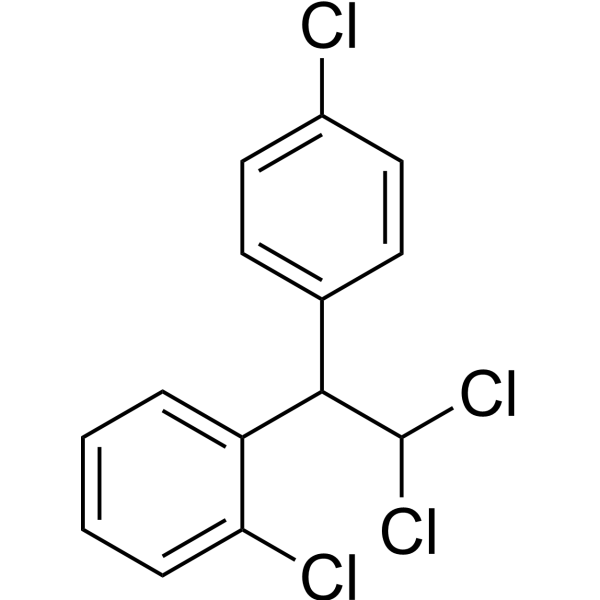
HY-13690
MitotaneAntineoplastic Agent -
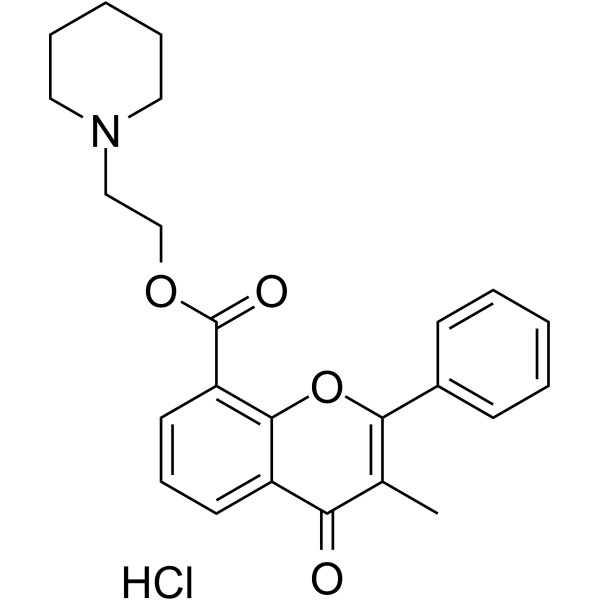
HY-B0549A
Flavoxate hydrochlorideCa Channel Inhibitor -

HY-N2424R
Flavone (Standard)Endogenous Metabolite -
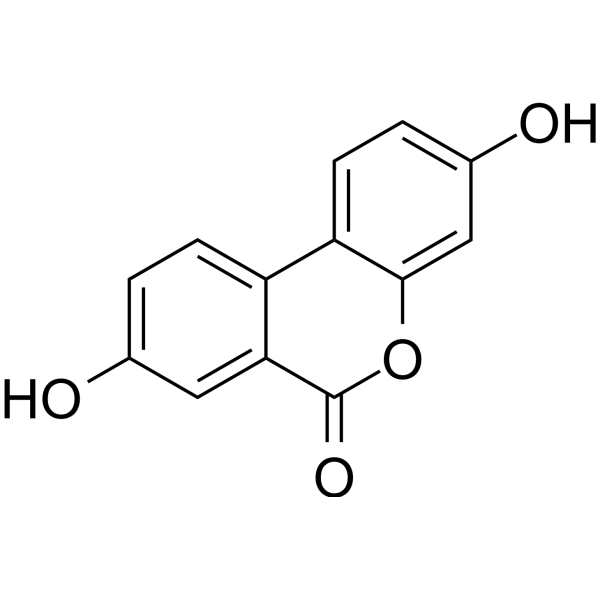
HY-100599
Urolithin AMitophagy Activator -
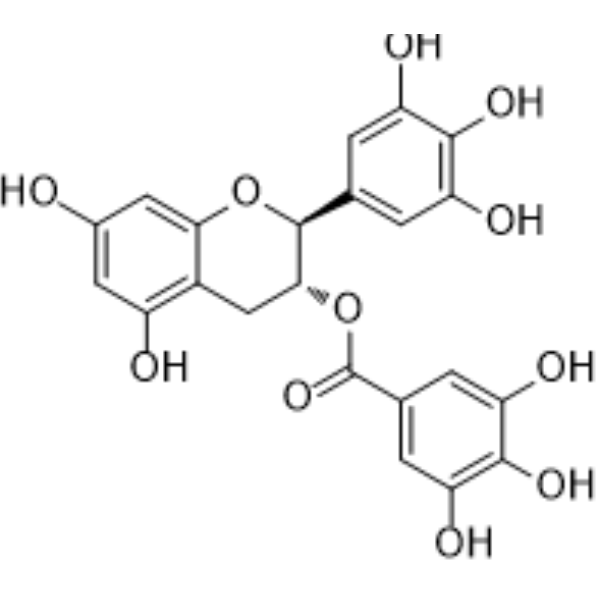
HY-N0522
(-)-Gallocatechin gallateAnticancer Agent -
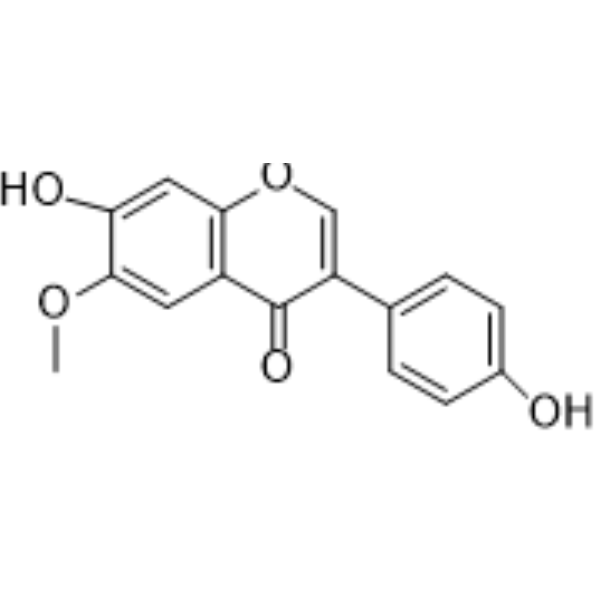
HY-N0016
GlyciteinApoptosis Inducer -
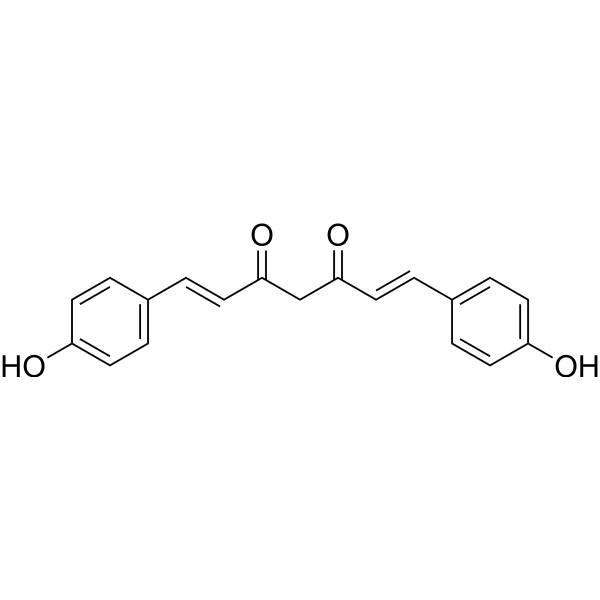
HY-N0007
(E,E)-BisdemethoxycurcuminAutophagy Inducer -
HY-N0034
ArctiinNF-κB Inhibitor -
HY-N0423
SophoricosideIsoflavone Glycoside -
HY-103166
PSB-603A2B Receptor Antagonist -
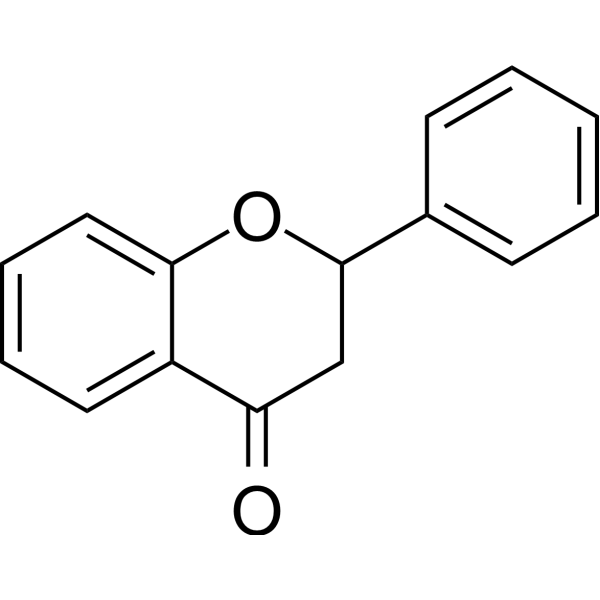
HY-N7128
FlavanoneFlavones
All Caspase Isoforms
More

Biological Activity
Description
IC50 & Target
|
CDK1/cyclinB1 |
Caspase 3 |
Caspase-9 |
Cellular Effect
|
Cell Line

|
Type | Value | Description | References |
|---|---|---|---|---|
| A-431 | IC50 |
5 x 10⁻¹μg/mL
Compound: 59
|
Inhibition of EGFR in human A431 cells
Inhibition of EGFR in human A431 cells
|
[PMID: 1479375] |
| BALB/3T3 | IC50 |
287.1 μM
Compound: 1
|
Growth inhibition of BALB/c mouse cloned 3T3/A31 cells after 72 hrs by nigrosin assay
Growth inhibition of BALB/c mouse cloned 3T3/A31 cells after 72 hrs by nigrosin assay
|
[PMID: 10096863] |
| Caco-2 | IC50 |
21.01 μM
Compound: 24
|
Cytotoxicity in human Caco2 cells after 72 hrs by MTT assay
Cytotoxicity in human Caco2 cells after 72 hrs by MTT assay
|
[PMID: 28793973] |
| H9 | EC50 |
50 μM
Compound: 9
|
Antiviral activity against HIV1 3B infected in human H9 cells assessed as inhibition of viral replication after 3 days by p24 antigen capture assay
Antiviral activity against HIV1 3B infected in human H9 cells assessed as inhibition of viral replication after 3 days by p24 antigen capture assay
|
[PMID: 8158164] |
| H9 | IC50 |
68 μM
Compound: 9
|
Cytotoxicity against human H9 cells after 3 days
Cytotoxicity against human H9 cells after 3 days
|
[PMID: 8158164] |
| HeLa | IC50 |
>10 μM
Compound: 68
|
Inhibition of DNA dependent protein kinase isolated from HeLa cells
Inhibition of DNA dependent protein kinase isolated from HeLa cells
|
[PMID: 15658870] |
| HepG2 | GI50 |
50.6 μM
Compound: 1a
|
Cytotoxicity against Homo sapiens (human) HepG2 cells after 48 hr by SRB assay
Cytotoxicity against Homo sapiens (human) HepG2 cells after 48 hr by SRB assay
|
10.1007/s00044-012-0423-1 |
| MCF7 | GI50 |
69.3 μM
Compound: 1a
|
Cytotoxicity against Homo sapiens (human) MCF7 cells after 48 hr by SRB assay
Cytotoxicity against Homo sapiens (human) MCF7 cells after 48 hr by SRB assay
|
10.1007/s00044-012-0423-1 |
| MCF7 | IC50 |
0.3 μM
Compound: Flavone
|
Antiproliferative activity against human MCF7 cells assessed as inhibition of cell growth incubated for 6 days by SRB assay
Antiproliferative activity against human MCF7 cells assessed as inhibition of cell growth incubated for 6 days by SRB assay
|
[PMID: 33257172] |
| MCF7 | IC50 |
26 μM
Compound: 7
|
Inhibition of BCRP expressed in MCF-7 MX cells using Hoechst 33342 staining
Inhibition of BCRP expressed in MCF-7 MX cells using Hoechst 33342 staining
|
[PMID: 21354800] |
| MDCK | IC50 |
17 μM
Compound: 7
|
Inhibition of BCRP expressed in MDCK cells using Hoechst 33342 staining
Inhibition of BCRP expressed in MDCK cells using Hoechst 33342 staining
|
[PMID: 21354800] |
| Monocyte | IC50 |
166 μM
Compound: flavone
|
Inhibition of TNFalpha expression in LPS-stimulated human monocytes treated 30 mins before LPS challenge measured after 14 hrs by ELISA
Inhibition of TNFalpha expression in LPS-stimulated human monocytes treated 30 mins before LPS challenge measured after 14 hrs by ELISA
|
[PMID: 10096854] |
| Neutrophil | IC50 |
57 μM
Compound: 1a
|
Inhibition of oxidative burst in PMA-stimulated human neutrophils assessed as inhibition of superoxide anion radical-induced lucigenin oxidation incubated for 5 mins prior to PMA challenge by chemiluminescence assay
Inhibition of oxidative burst in PMA-stimulated human neutrophils assessed as inhibition of superoxide anion radical-induced lucigenin oxidation incubated for 5 mins prior to PMA challenge by chemiluminescence assay
|
[PMID: 23871908] |
| Neutrophil | IC50 |
64.9 μM
Compound: 1a
|
Inhibition of oxidative burst in PMA-stimulated human neutrophils assessed as inhibition of HOCl-induced oxidation of APF after 6 mins by fluorescence assay
Inhibition of oxidative burst in PMA-stimulated human neutrophils assessed as inhibition of HOCl-induced oxidation of APF after 6 mins by fluorescence assay
|
[PMID: 23871908] |
| RAW264.7 | IC50 |
0.5 μM
Compound: 4a
|
Evaluated for inhibition of COX-2 catalyzed PGE-2 production from LPS induced RAW 264.7 cells
Evaluated for inhibition of COX-2 catalyzed PGE-2 production from LPS induced RAW 264.7 cells
|
[PMID: 14980657] |
In Vitro
Flavone (10-80 μM; 24-72 h) inhibits the cell viability of the human esophageal squamous cell carcinoma cell line KYSE-510 in a dose- and time-dependent manner[2].
Flavone (80 μM; 24 h) induces G2/M arrest in KYSE-510 cells, accompanied by upregulation of p21waf1 mRNA and protein expression and downregulation of cyclin B1 expression[2].
Flavone (80 μM; 24 h) triggeres apoptosis in KYSE-510 cells, as evidenced by DNA fragmentation, increases number of Annexin V/PI double-stained positive cells, and activation of caspase-9 and caspase-3[2].
MedChemExpress (MCE) has not independently confirmed the accuracy of these methods. They are for reference only.
-
Cell Line:Human esophageal squamous cell carcinoma cell line (KYSE-510)
-
Concentration:10, 20, 40, 80 μM
-
Incubation Time:24, 48, 72 h
-
Result:Significantly reduced cell viability in a dose- and time-dependent manner.
In Vivo
MedChemExpress (MCE) has not independently confirmed the accuracy of these methods. They are for reference only.
-
Animal Model:Kunming mice (male and female, 18-21 g) with S180 sarcoma or H22 hepatoma xenografts[3]
-
Dosage:25, 50, 100 mg/kg
-
Administration:Intraperitoneal injection, once daily for 10 days
-
Result:Significantly reduced tumor weight in both models compared to the negative control.
For S180 sarcoma, tumor weights were 1.38 g (25 mg/kg), 1.07 g (50 mg/kg), and 1.25 g (100 mg/kg) vs. 2.12 g in the control, with inhibition rates of 34.91%, 50.47%, and 41.04%, respectively.
For H22 hepatoma, tumor weights were 1.47 g (25 mg/kg), 1.01 g (50 mg/kg), and 1.30 g (100 mg/kg) vs. 2.16 g in the control, with inhibition rates of 31.94%, 53.24%, and 39.81%, respectively.
The middle dose (50 mg/kg) showed the strongest effect, comparable to the positive control (cyclophosphamide, CTX).
- RNA extraction experimental
- Western Blot
- Annexin V plus membrane-impermeant dye apoptosis staining
- BrdU Incorporation Assay
- CFSE Dye Dilution Proliferation Assay
- Protocol for Cell Cycle
- Liver Cancer Modeling
- Protocol For Protein Expression And Purification
- Cell Viability Determination by MTT Colorimetric Assay
- Detection of Apoptosis
- TUNEL staining for apoptotic DNA fragmentation
- Flow cytometric DNA-content cell-cycle staining
- Apoptosis Solutions
Clinical Trial
| NCT Number | Sponsor | Condition | Start Date |
Phase
|
|---|---|---|---|---|
| NCT01329991 | Plexxikon| | 2011-05 | PHASE1 |


Chemical Information
-
CAS No. 525-82-6
-
Appearance Solid
-
Molecular Weight 222.24
-
Formula C15H10O2
-
Color White to off-white
-
SMILES
O=C1C=C(C2=CC=CC=C2)OC3=CC=CC=C13
-
Synonyms
2-Phenyl-4-chromone
-
Structure Classification
-
Initial Source
-
Shipping
Room temperature in continental US; may vary elsewhere.
-
Storage
4°C, protect from light
* In solvent : -80°C, 6 months; -20°C, 1 month (protect from light)


Solvent & Solubility
In Vitro:
DMSO : 100 mg/mL (449.96 mM; Need ultrasonic; Hygroscopic DMSO has a significant impact on the solubility of product, please use newly opened DMSO)
Please refer to the solubility information to select the appropriate solvent. Once prepared, please aliquot and store the solution to prevent product inactivation from repeated freeze-thaw cycles.
Storage method and period of stock solution: -80°C, 6 months; -20°C, 1 month (protect from light). When stored at -80°C, please use it within 6 months. When stored at -20°C, please use it within 1 month.
Please refer to the solubility information to select the appropriate solvent. Once prepared, please aliquot and store the solution to prevent product inactivation from repeated freeze-thaw cycles.
Storage method and period of stock solution: -80°C, 6 months; -20°C, 1 month (protect from light). When stored at -80°C, please use it within 6 months. When stored at -20°C, please use it within 1 month.
Concentration (start) × Volume (start) = Concentration (final) × Volume (final)
In Vivo:
Select the appropriate dissolution method based on your experimental animal and administration route.
- For the following dissolution methods, please ensure to first prepare a clear stock solution using an In Vitro approach and then sequentially add co-solvents:
- To ensure reliable experimental results, the clarified stock solution can be appropriately stored based on storage conditions. As for the working solution for In Vivo experiments, it is recommended to prepare freshly and use it on the same day.
- The percentages shown for the solvents indicate their volumetric ratio in the final prepared solution. If precipitation or phase separation occurs during preparation, heat and/or sonication can be used to aid dissolution.
Add each solvent one by one: 10% DMSO 40% PEG300 5% Tween-80 45% Saline
Solubility: ≥ 4.55 mg/mL (20.47 mM); Clear solution
This protocol yields a clear solution of ≥ 4.55 mg/mL (saturation unknown).
Taking 1 mL working solution as an example, add 100 μL DMSO stock solution (45.5 mg/mL) to 400 μL PEG300, and mix evenly; then add 50 μL Tween-80 and mix evenly; then add 450 μL Saline to adjust the volume to 1 mL.
Preparation of Saline: Dissolve 0.9 g sodium chloride in ddH₂O and dilute to 100 mL to obtain a clear Saline solution.
Add each solvent one by one: 10% DMSO 90% (20% SBE-β-CD in Saline)
Solubility: ≥ 2.5 mg/mL (11.25 mM); Clear solution
This protocol yields a clear solution of ≥ 2.5 mg/mL (saturation unknown).
Taking 1 mL working solution as an example, add 100 μL DMSO stock solution (25.0 mg/mL) to 900 μL 20% SBE-β-CD in Saline, and mix evenly.
Preparation of 20% SBE-β-CD in Saline (4°C, storage for one week): 2 g SBE-β-CD powder is dissolved in 10 mL Saline, completely dissolve until clear.
In Vivo Dissolution Calculator
Please enter the basic information of animal experiments:
-
-
-
-
Recommended: Prepare an additional quantity of animals to account for potential losses during experiments.
Please enter your animal formula composition:
-
%DMSO +
Recommended: Keep the proportion of DMSO in working solution below 2% if your animal is weak.
-
%+
-
+%Tween-80 + +
-
%Saline +
The co-solvents required include: DMSO, . All of co-solvents are available by MedChemExpress (MCE). , Tween 80. All of co-solvents are available by MedChemExpress (MCE).
Working solution concentration: 0.22 mg/mL
Method for preparing stock solution: mg drug dissolved in μL DMSO. Stock solution concentration: mg/mL. * In solvent : -80°C, 6 months; -20°C, 1 month (protect from light)
1. Take μL DMSO stock solution;
2. Add μL .
μL , mix evenly;
3. Then add μL Tween 80, mix evenly;
4. Then add μL
Please ensure that the stock solution in the first step is dissolved to a clear state, and add co-solvents in sequence. You can use ultrasonic heating (ultrasonic cleaner, recommended frequency 20-40 kHz), vortexing, etc. to assist dissolution.


Purity & Documentation
-
Data Sheet (277 KB)
-
SDS (393 KB)
- English - EN (393 KB)
- Français - FR (393 KB)
- Deutsch - DE (393 KB)
- Norwegian - NO (393 KB)
- Español - ES (393 KB)
- Swedish - SV (393 KB)
- Italian - IT (393 KB)
- Korean - KR (393 KB)
- Portuguese - PT (393 KB)
-
Handling Instructions (2659 KB)
References
[1]. Chirumbolo S. The role of quercetin, flavonols and flavones in modulating inflammatory cell function. Inflamm Allergy Drug Targets. 2010 Sep;9(4):263-85. [Content Brief]
[2]. Zhang Q, et al. Cytotoxicity of flavones and flavonols to a human esophageal squamous cell carcinoma cell line (KYSE-510) by induction of G2/M arrest and apoptosis. Toxicol In Vitro. 2009 Aug;23(5):797-807. [Content Brief]
[3]. Liu S, et al. Tumor inhibition and improved immunity in mice treated with flavone from Cirsium japonicum DC. Int Immunopharmacol. 2006 Sep;6(9):1387-93. [Content Brief]


Complete Stock Solution Preparation Table
Please refer to the solubility information to select the appropriate solvent. Once prepared, please aliquot and store the solution to prevent product inactivation from repeated freeze-thaw cycles.
Storage method and period of stock solution: -80°C, 6 months; -20°C, 1 month (protect from light). When stored at -80°C, please use it within 6 months. When stored at -20°C, please use it within 1 month.
| Optional Solvent | Concentration Solvent Mass | 1 mg | 5 mg | 10 mg | 25 mg |
|---|---|---|---|---|---|
| DMSO | 1 mM | 4.4996 mL | 22.4982 mL | 44.9964 mL | 112.4910 mL |
| 5 mM | 0.8999 mL | 4.4996 mL | 8.9993 mL | 22.4982 mL | |
| 10 mM | 0.4500 mL | 2.2498 mL | 4.4996 mL | 11.2491 mL | |
| 15 mM | 0.3000 mL | 1.4999 mL | 2.9998 mL | 7.4994 mL | |
| 20 mM | 0.2250 mL | 1.1249 mL | 2.2498 mL | 5.6245 mL | |
| 25 mM | 0.1800 mL | 0.8999 mL | 1.7999 mL | 4.4996 mL | |
| 30 mM | 0.1500 mL | 0.7499 mL | 1.4999 mL | 3.7497 mL | |
| 40 mM | 0.1125 mL | 0.5625 mL | 1.1249 mL | 2.8123 mL | |
| 50 mM | 0.0900 mL | 0.4500 mL | 0.8999 mL | 2.2498 mL | |
| 60 mM | 0.0750 mL | 0.3750 mL | 0.7499 mL | 1.8748 mL | |
| 80 mM | 0.0562 mL | 0.2812 mL | 0.5625 mL | 1.4061 mL | |
| 100 mM | 0.0450 mL | 0.2250 mL | 0.4500 mL | 1.1249 mL |


Flavone Related Classifications
HY-N2424 Related Classifications
 Powered by Bioz