



CDPPB
Based on 1 publication(s) in Google Scholar
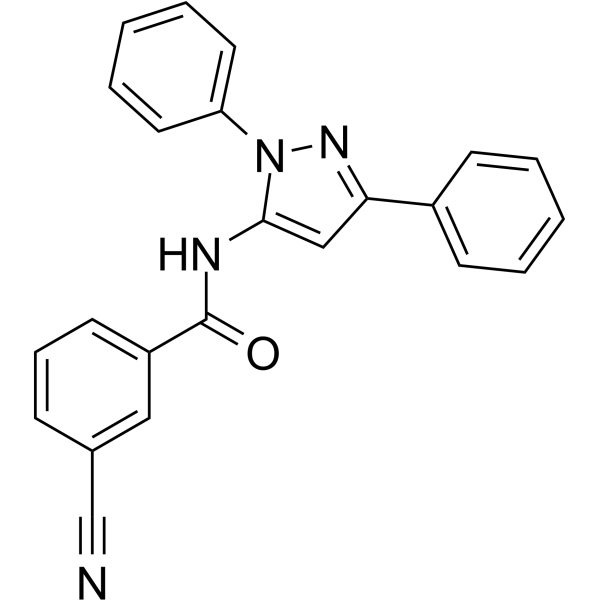
CDPPB is a selective, orally active and brain-penetrant mGluR5 allosteric modulator. CDPPB increases AKT and ERK1/2 activation and augments the BDNF mRNA. CDPPB inhibits caspase-3 activation and mitochondrial dysfunction. CDPPB improves cognitive impairment, depression, and Huntington's disease.
연구목적의 판매만을 진행합니다. 환자를 대상으로 한 판매는 하지 않습니다.
- Purity : 98.01%
- CAS No.: 781652-57-1
- 화학식: C23H16N4O
- 분자량:364.40
-
보관:Powder -20°C, 3 years , 4°C, 2 years ; In solvent -80°C, 2 years , -20°C, 1 year

To place orders, for customer services and technical support, please contact: MedChemExpress USA
Tel: 609-228-6898 E-mail: [email protected] [email protected]


-
 Biological Activity
-
Chemical Information
-
용액&용해도
- Protocol
- 순도&문서
- References
-
 Help & FAQs


-
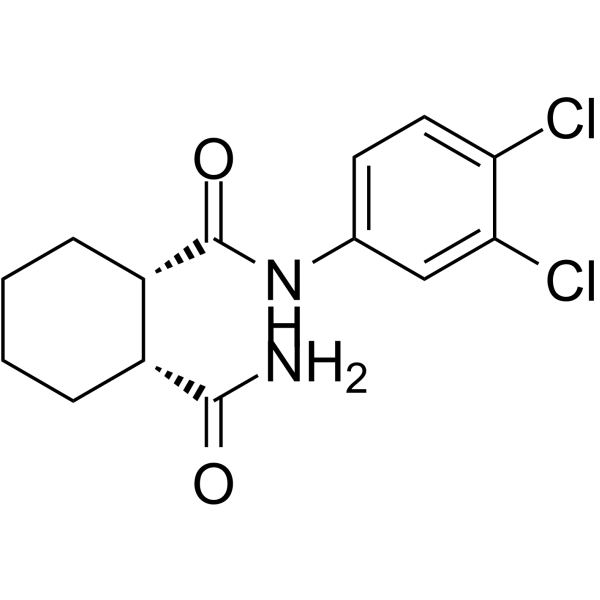
HY-100366
Lu AF21934mGlu4 Receptor PAM -
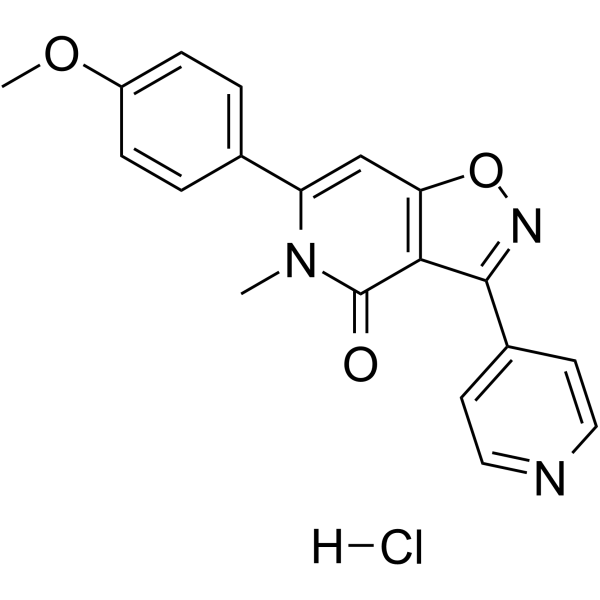
HY-103111
MMPIP hydrochloridemGluR7 Antagonist -
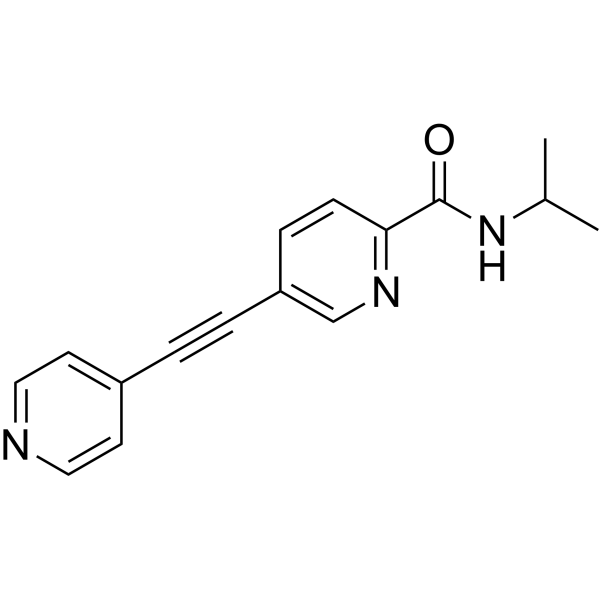
HY-110152
LSN2463359mGlu5 Modulator -
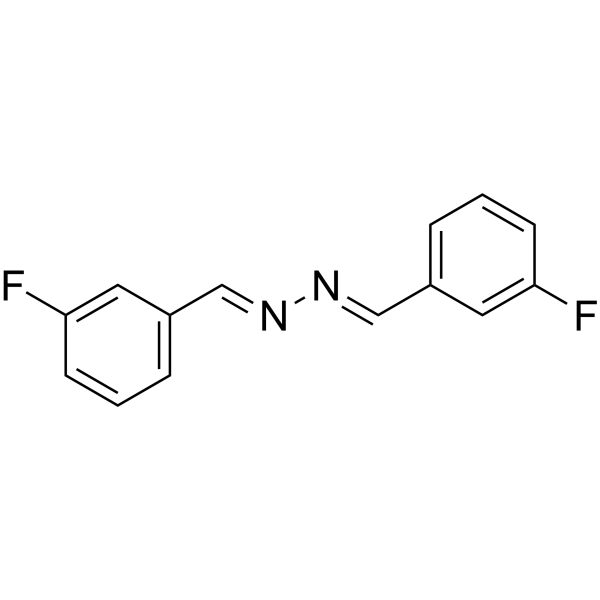
HY-14611
3,3'-DifluorobenzaldazinemGluR5 Positive Allosteric Modulator -

HY-100366R
Lu AF21934 (Standard)mGlu4 Receptor PAM -
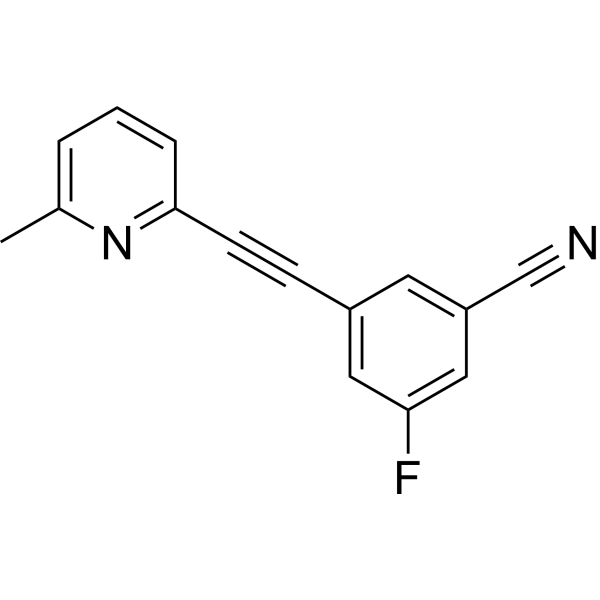
HY-103575
MFZ 10-7mGluR5 Antagonist -

HY-103575R
MFZ 10-7 (Standard)Reference Standard -

HY-103111R
MMPIP hydrochloride (Standard)Reference Standard -
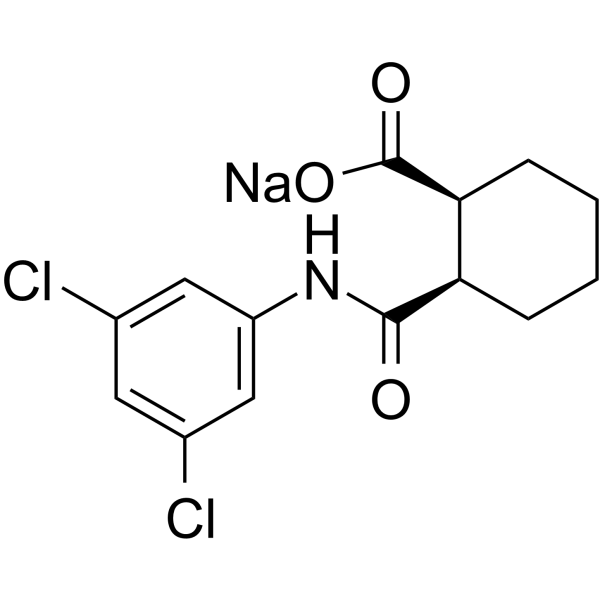
HY-14417B
VU0155041 sodiummGluR4 Allosteric Agonist
Publications Citing Use of MedChemExpress (MCE) CDPPB
MoreAll Caspase Isoforms
More

Biological Activity
제품 설명
IC50 & Target
[1]|
mGluR5 27 nM (EC50) |
Cellular Effect
|
Cell Line

|
Type | Value | Description | References |
|---|---|---|---|---|
| CHO | EC50 |
10 nM
Compound: 8q
|
Effective concentration against metabotropic glutamate receptor 5 of human transfected into CHO cells
Effective concentration against metabotropic glutamate receptor 5 of human transfected into CHO cells
|
[PMID: 15537338] |
| CHO | EC50 |
27 nM
Compound: 6, CDPPB
|
Positive allosteric modulation of human mGluR5 stably expressed in CHO cells assessed as Ca2+ flux by FLIPR assay
Positive allosteric modulation of human mGluR5 stably expressed in CHO cells assessed as Ca2+ flux by FLIPR assay
|
[PMID: 24050755] |
| CHO | EC50 |
98 nM
Compound: 6, CDPPB
|
Positive allosteric modulation of rat mGluR5 stably expressed in CHO cells assessed as Ca2+ flux by FLIPR assay
Positive allosteric modulation of rat mGluR5 stably expressed in CHO cells assessed as Ca2+ flux by FLIPR assay
|
[PMID: 24050755] |
| HEK293 | EC50 |
176 nM
Compound: 1, CDPPB
|
Positive allosteric modulation of human mGluR5a transfected in HEK293 cells by calcium mobilization assay
Positive allosteric modulation of human mGluR5a transfected in HEK293 cells by calcium mobilization assay
|
[PMID: 23947773] |
In Vitro
CDPPB (above 1 μM) exhibits agonist-like activity on CHO cells expressing mGluR5[1].
CDPPB (0.1 mM, 30 min) inhibits SO2-induced protein radical formation and mitochondrial dysfunction through activation of Akt in mouse hippocampal HT22 cells[2].
CDPPB (0.02-0.2 mM, 2 h before traumatic neuronal injury) suppresses the increase of LDH release and caspase-3 activation induced by traumatic neuronal injury in a dose-dependent manner[3].
MedChemExpress (MCE) has not independently confirmed the accuracy of these methods. They are for reference only. Further protocols information, click here.
In Vivo
CDPPB (10 mg/kg/day, i.p., 14 days) improves Phencyclidine-induced cognitive deficits in mice[4].
CDPPB (5 mg/kg, i.p., 14 days) improves cognitive impairment and partially reverses the lesion-induced changes in eNOS and nNOS expressions in olfactory bulbectomized rats[5].
CDPPB (1.5 mg/kg, s.c., 18 weeks) ameliorates pathology and phenotypic signs of Huntington's disease mice[6].
CDPPB (20 mg/kg, p.o., single) attenuates depressive-like behavior induced by repeated social defeat stress in mice[7].
CDPPB (10 mg/kg, i.p., adolescence) reverses MK-801 (HY-15084B)-induced locomotor hyperactivity and anhedonia in mice[8].
CDPPB (1-5 mg/kg, i.p., 8 days) improves neuronal survival and prevents memory deficits in C57BL/6 mice injected intrahippocampally with Aβ. [9].
MedChemExpress (MCE) has not independently confirmed the accuracy of these methods. They are for reference only.
-
Animal Model:Male Sprague-Dawley rats (250–300 g at the time of surgery, age not specified in this context for this part) with olfactory bulbectomy[5]
-
Dosage:2.5 or 5 mg/kg, dissolved in 0.5% methylcellulose
-
Administration:Intraperitoneal injection (i.p.), once daily for 14 days
-
Result:Reversed the cognitive impairment in the passive avoidance test at 5 mg/kg.
Partially abolished the lesion-induced increase in total eNOS protein in the prefrontal cortex.
Reversed the lesion - induced changes in both total eNOS protein and D/M ratio in the striatum.
Had no impact on the lesion - induced decrease in total nNOS protein in the hippocampus but counteracted the lesion - induced increase in total nNOS protein in the striatum.
Decreased DDAH1 expression in the hippocampus and striatum of lesioned animals and reduced RAGEs expression in the hippocampi of sham animals and in the striata of OB animals.


Chemical Information
-
CAS No. 781652-57-1
-
Appearance Solid
-
분자량 364.40
-
화학식 C23H16N4O
-
Color White to off-white
-
SMILES
O=C(NC1=CC(C2=CC=CC=C2)=NN1C3=CC=CC=C3)C4=CC=CC(C#N)=C4
-
선적
Room temperature in continental US; may vary elsewhere.
-
보관
Powder -20°C 3 years 4°C 2 years In solvent -80°C 2 years -20°C 1 year


Publications (1)
-
Journal Impact Factor
-
Most Recent
-
Psychopharmacology (Berl)
2024 Jul;241(7):1399-1415. PMID: 38459971


용액&용해도
In Vitro:
DMSO : 100 mg/mL (274.42 mM; Need ultrasonic; Hygroscopic DMSO has a significant impact on the solubility of product, please use newly opened DMSO)
Please refer to the solubility information to select the appropriate solvent. Once prepared, please aliquot and store the solution to prevent product inactivation from repeated freeze-thaw cycles.
Storage method and period of stock solution: -80°C, 2 years; -20°C, 1 year. When stored at -80°C, please use it within 2 years. When stored at -20°C, please use it within 1 year.
Please refer to the solubility information to select the appropriate solvent. Once prepared, please aliquot and store the solution to prevent product inactivation from repeated freeze-thaw cycles.
Storage method and period of stock solution: -80°C, 2 years; -20°C, 1 year. When stored at -80°C, please use it within 2 years. When stored at -20°C, please use it within 1 year.
Concentration (start) × Volume (start) = Concentration (final) × Volume (final)
In Vivo:
Select the appropriate dissolution method based on your experimental animal and administration route.
- For the following dissolution methods, please ensure to first prepare a clear stock solution using an In Vitro approach and then sequentially add co-solvents:
- To ensure reliable experimental results, the clarified stock solution can be appropriately stored based on storage conditions. As for the working solution for In Vivo experiments, it is recommended to prepare freshly and use it on the same day.
- The percentages shown for the solvents indicate their volumetric ratio in the final prepared solution. If precipitation or phase separation occurs during preparation, heat and/or sonication can be used to aid dissolution.
In Vivo Dissolution Calculator
Please enter the basic information of animal experiments:
-
-
-
-
Recommended: Prepare an additional quantity of animals to account for potential losses during experiments.
Please enter your animal formula composition:
-
%DMSO +
Recommended: Keep the proportion of DMSO in working solution below 2% if your animal is weak.
-
%+
-
+%Tween-80 + +
-
%Saline +
The co-solvents required include: DMSO, . All of co-solvents are available by MedChemExpress (MCE). , Tween 80. All of co-solvents are available by MedChemExpress (MCE).
Working solution concentration: 0.22 mg/mL
Method for preparing stock solution: mg drug dissolved in μL DMSO. Stock solution concentration: mg/mL.
1. Take μL DMSO stock solution;
2. Add μL .
μL , mix evenly;
3. Then add μL Tween 80, mix evenly;
4. Then add μL
Please ensure that the stock solution in the first step is dissolved to a clear state, and add co-solvents in sequence. You can use ultrasonic heating (ultrasonic cleaner, recommended frequency 20-40 kHz), vortexing, etc. to assist dissolution.

Protocol
-
RNA extraction experimental
By lysing cells, releasing RNA, and removing impurities such as proteins and DNA, high-purity RNA products are finally obtained. The commonly used traditional method is the guanidine isothiocyanate/phenol/chloroform method (Trizol), which is suitable for a variety of animal materials including animal tissues, microorganisms, cultured cells, etc., and most plant materials.
-
Mitochondrial membrane-potential and mitochondrial mass staining
Mitochondrial membrane potential staining measures the electrochemical polarization across the mitochondrial inner membrane in live cells using lipophilic cationic fluorescent probes; early rhodamine-based work showed that selective mitochondrial dye accumulation is lost when the mitochondrial transmembrane potential is dissipated. JC-1 reports mitochondrial polarization by shifting from green monomer fluorescence to red J-aggregate fluorescence as dye concentration increases within energized mitochondria; therefore, the red/green fluorescence ratio is used as a relative readout of mitochondrial membrane potential. TMRE or TMRM staining provides a single-channel relative readout because these cationic rhodamine esters accumulate in polarized mitochondria, and lower fluorescence indicates reduced mitochondrial polarization when acquisition and dye-loading conditions are controlled. Mitochondrial mass staining is commonly performed with MitoTracker Green FM or related MitoTracker dyes as
-
Apoptosis Solutions
Apoptosis is a regulated, generally non-lytic cell-death pathway that removes unwanted, damaged, infected, or abnormal cells through coordinated morphological changes, caspase activation, DNA fragmentation, and membrane remodeling. The intrinsic apoptosis pathway is controlled mainly by mitochondrial outer membrane permeabilization, BCL-2 family proteins, cytochrome c release, apoptosome formation, caspase-9 activation, and downstream executioner caspase-3/7 activation. The extrinsic apoptosis pathway is initiated by death receptors such as Fas, TNFR, and TRAIL receptors, which recruit adaptor proteins and activate caspase-8 before engaging executioner caspases or mitochondrial amplification through BID cleavage. Apoptosis is linked to many phenotypes, including cancer cell killing, tissue homeostasis, immune regulation, neurodegeneration, infection response, and treatment-induced cytotoxicity; unresolved questions include how apoptosis interacts with necroptosis, pyroptosis, ferroptos
-
Alzheimer’s Disease Modeling
Alzheimer’s Disease (AD) is a neurodegenerative disorder characterized by a progressive decline in cognitive functions and loss of specific types of neurons and synapses. Alzheimer's symptoms can be simulated in mice by injecting drugs (such as Aβ) or genetically modified.


순도&문서
-
Data Sheet (284 KB)
-
SDS (393 KB)
- English - EN (393 KB)
- Français - FR (393 KB)
- Deutsch - DE (393 KB)
- Norwegian - NO (393 KB)
- Español - ES (393 KB)
- Swedish - SV (393 KB)
- Italian - IT (393 KB)
- Korean - KR (393 KB)
- Portuguese - PT (393 KB)
-
Handling Instructions (2659 KB)
References
[1]. Kinney GG, et, al. A novel selective positive allosteric modulator of metabotropic glutamate receptor subtype 5 has in vivo activity and antipsychotic-like effects in rat behavioral models. J Pharmacol Exp Ther. 2005 Apr; 313(1):199-206. [Content Brief]
[2]. Guan DF, et al. The mGluR5 positive allosteric modulator CDPPB inhibits SO₂-induced protein radical formation and mitochondrial dysfunction through activation of Akt in mouse hippocampal HT22 cells. Cell Mol Neurobiol. 2015 May;35(4):573-83. [Content Brief]
[3]. Chen T, et al. Protective effects of mGluR5 positive modulators against traumatic neuronal injury through PKC-dependent activation of MEK/ERK pathway. Neurochem Res. 2012 May;37(5):983-90. [Content Brief]
[5]. Płoska A, et al. Neurochemical changes underlying cognitive impairment in olfactory bulbectomized rats and the impact of the mGlu5-positive allosteric modulator CDPPB. Brain Res. 2021 Oct 1;1768:147577. [Content Brief]
[6]. Doria JG, et al. The mGluR5 positive allosteric modulator, CDPPB, ameliorates pathology and phenotypic signs of a mouse model of Huntington's disease. Neurobiol Dis. 2015 Jan;73:163-73. [Content Brief]
[7]. Zhang L, et al. Post-stress Social Interaction and 3-Cyano-N-(1,3-Diphenyl-1H-Pyrazol-5-yl) Benzamide Treatment Attenuate Depressive-like Behavior Induced by Repeated Social Defeat Stress. Neuroscience. 2024 Feb 6;538:11-21. [Content Brief]
[9]. Bellozi PMQ, et al. A positive allosteric modulator of mGluR5 promotes neuroprotective effects in mouse models of Alzheimer's disease. Neuropharmacology. 2019 Dec 1;160:107785. [Content Brief]


Complete Stock Solution Preparation Table
Please refer to the solubility information to select the appropriate solvent. Once prepared, please aliquot and store the solution to prevent product inactivation from repeated freeze-thaw cycles.
Storage method and period of stock solution: -80°C, 2 years; -20°C, 1 year. When stored at -80°C, please use it within 2 years. When stored at -20°C, please use it within 1 year.
| Optional Solvent | Concentration Solvent Mass | 1 mg | 5 mg | 10 mg | 25 mg |
|---|---|---|---|---|---|
| DMSO | 1 mM | 2.7442 mL | 13.7212 mL | 27.4424 mL | 68.6059 mL |
| 5 mM | 0.5488 mL | 2.7442 mL | 5.4885 mL | 13.7212 mL | |
| 10 mM | 0.2744 mL | 1.3721 mL | 2.7442 mL | 6.8606 mL | |
| 15 mM | 0.1829 mL | 0.9147 mL | 1.8295 mL | 4.5737 mL | |
| 20 mM | 0.1372 mL | 0.6861 mL | 1.3721 mL | 3.4303 mL | |
| 25 mM | 0.1098 mL | 0.5488 mL | 1.0977 mL | 2.7442 mL | |
| 30 mM | 0.0915 mL | 0.4574 mL | 0.9147 mL | 2.2869 mL | |
| 40 mM | 0.0686 mL | 0.3430 mL | 0.6861 mL | 1.7151 mL | |
| 50 mM | 0.0549 mL | 0.2744 mL | 0.5488 mL | 1.3721 mL | |
| 60 mM | 0.0457 mL | 0.2287 mL | 0.4574 mL | 1.1434 mL | |
| 80 mM | 0.0343 mL | 0.1715 mL | 0.3430 mL | 0.8576 mL | |
| 100 mM | 0.0274 mL | 0.1372 mL | 0.2744 mL | 0.6861 mL |


CDPPB Related Classifications
HY-14569 Related Classifications
 Powered by Bioz