14 Results for "

upper respiratory tract infections

" in MedChemExpress (MCE) Product Catalog:
Products (14)

14 Results for "upper respiratory tract infections" in MCE Product Catalog:

1
1 Cited Publications
Cat. No.: HY-N0677A
CAS No.: 76958-99-1
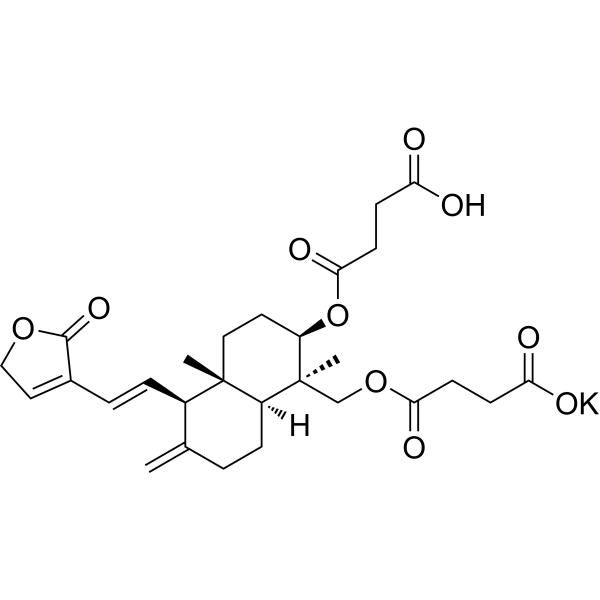
Synonyms: Potassium dehydroandrographolide succinate
Kalii Dehydrographolidi Succinas (Potassium dehydroandrographolide succinate) is an antibiotic. Kalii Dehydrographolidi Succinas exerts immunostimulatory, anti-infective and anti-inflammatory effects . Kalii Dehydrographolidi Succinas shows potential for research on viral pneumonia and viral upper respiratory tract infections .
loading...
    loading...
1
1 Cited Publications
Cat. No.: HY-N0677
CAS No.: 786593-06-4
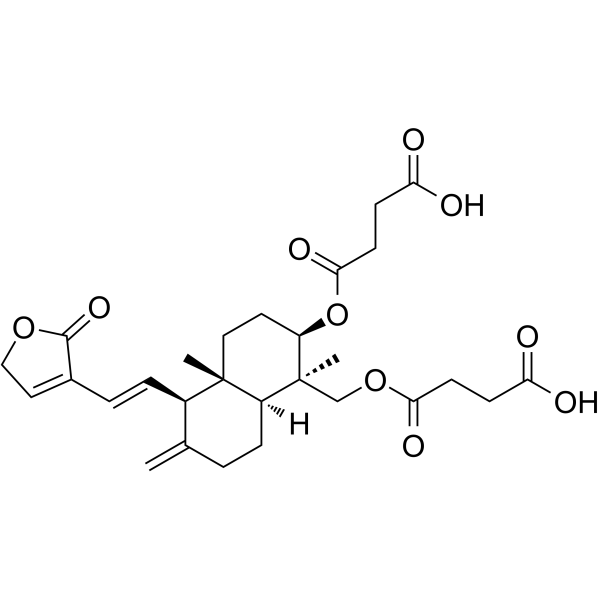
Dehydroandrographolide succinate can be extracted from herbal medicine Andrographis paniculata (Burm f) Nees, is widely used in research for viral pneumonia and viral upper respiratory tract infections because of its immunostimulatory, anti-infective and anti-inflammatory effect. Dehydroandrographolide succinate exerts antithrombotic effect. Dehydroandrographolide succinate significantly inhibits the platelet aggregation rate (ED50 = 386.9 mg/kg) by decreasing TXB2 levels. Dehydroandrographolide succinate mitigates muscle astrophy via the Akt/GSK3β and MuRF-1 pathways .
loading...
    loading...
1
1 Cited Publications
Cat. No.: HY-N2120
CAS No.: 88509-91-5
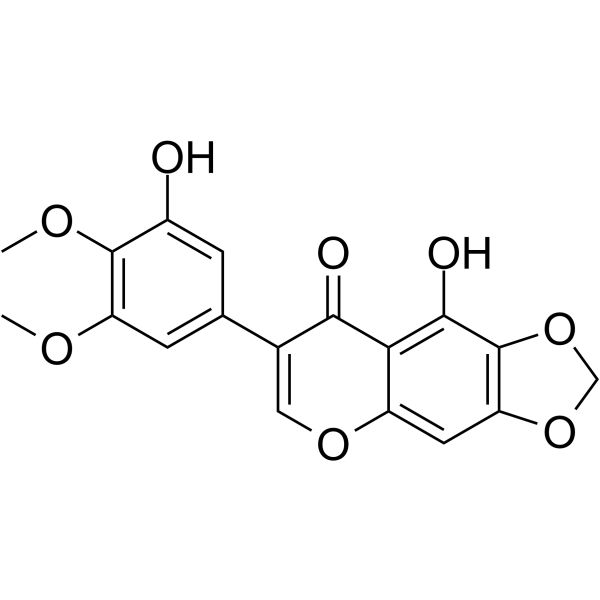
Dichotomitin is an isoflavonoid compound isolated from the rhizomes of Belamcanda chinensis. Dichotomitin exhibits antioxidant activity, alleviates oxidative stress, reduces intracellular reactive oxygen species (ROS) levels, and upregulates the expression of SOD1, SOD2 and CAT. Dichotomitin increases ALP activity while upregulating the expression of RUNX2, OPN and OCN. Dichotomitin has antitussive activity and helps improve symptoms of upper respiratory tract infections .
loading...
    loading...
Cat. No.: HY-P990774
CAS No.: 2768386-15-6
Synonyms: ASP-7266; TRAB-1; UPB-101

Target:  

Interleukin Related

Research Areas:  

Inflammation/Immunology

Verekitug (ASP-7266; TRAB-1; UPB-101) is a human monoclonal antibody targeting the thymic stromal lymphopoietin receptor (TSLPR), with a mean half-life of approximately 20 days. At doses of Verekitug ≥100 mg, complete and sustained TSLPR-specific occupancy is achieved, and the antibody does not bind to IL-7Rα. By inhibiting TSLP-driven inflammatory responses, Verekitug blocks TSLP-induced cell proliferation and TARC expression, while reducing fractional exhaled NO levels, blood eosinophil counts, and levels of IL-5 and IgE. Verekitug significantly improves scores for nasal polyps, nasal congestion and olfactory dysfunction, with favorable safety and good tolerability; potential adverse reactions include headache, upper respiratory tract infection, sinusitis and nasopharyngitis. Verekitug is used in relevant studies on asthma, chronic rhinosinusitis with nasal polyps and chronic obstructive pulmonary disease .
loading...
    loading...
Cat. No.: HY-A0161A
CAS No.: 511-13-7
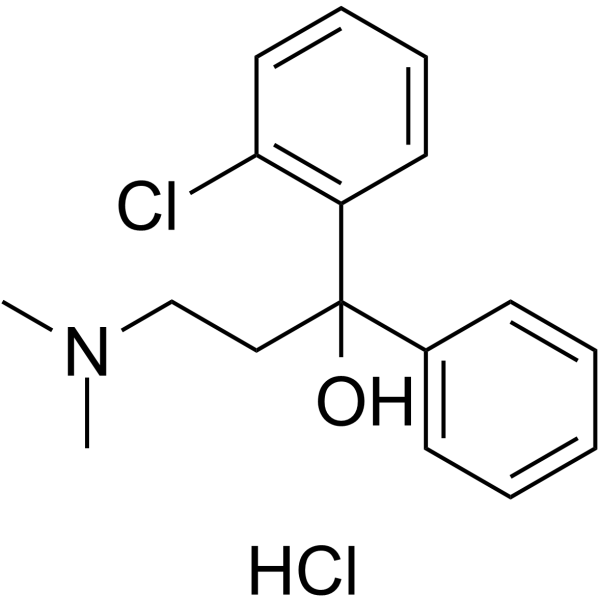
Synonyms: Clofedanol hydrochloride; Calmotusin hydrochloride; NSC 113595 hydrochloride
Target:  

Others

Research Areas:  

Infection

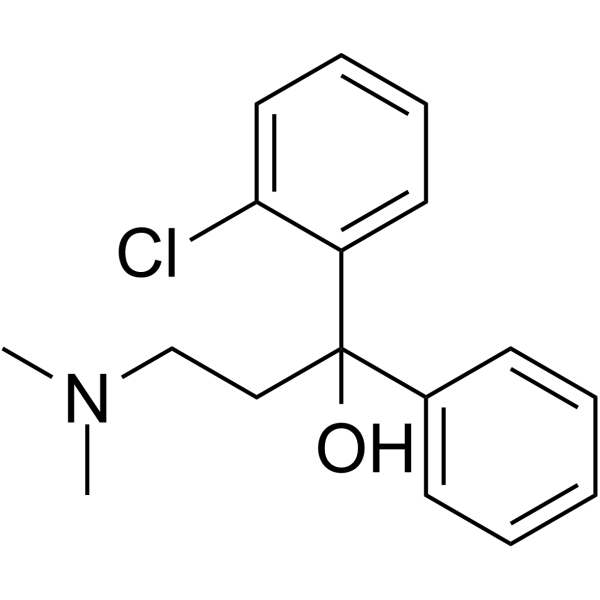
Chlophedianol (Clofedanol) hydrochloride is an orally active and potent antitussive agent. Chlophedianol hydrochloride can be used for the research of acute cough due to upper respiratory tract infections (URIs) .
loading...
    loading...
Cat. No.: HY-N7101
CAS No.: 87239-81-4
Synonyms: U-76,252; CS-807
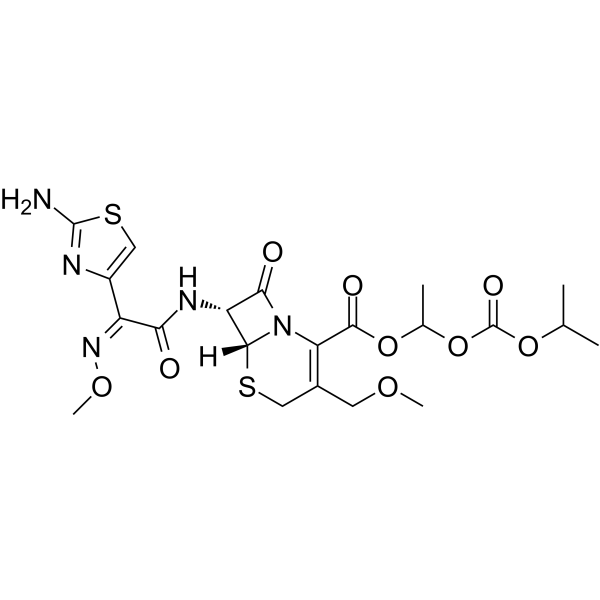
Cefpodoxime Proxetil is an orally active broad spectrum third-generation cephalosporin with potent antibacterial activity against both Gram-positive and Gram-negative bacteria including staphylococci, streptococci, Haemophilus influenzae, Neisseria gonorrhoeae, Escherichia coli, Klebsiella pnuemoniae, Citrobacter spp, and Proteus spp. Cefpodoxime Proxetil binds to penicillin binding proteins (PBPs), which inhibits peptidoglycan synthesis, finally results in interfering bacterial cell wall biosynthesis. Cefpodoxime Proxetil can be used against skin structure infections, acute otitis media, pharyngitis, tonsillitis, upper respiratory tract infection, urinary tract infections and sexually transmitted diseases .
loading...
    loading...
Cat. No.: HY-A0161
CAS No.: 791-35-5
Synonyms: Clofedanol; Calmotusin; NSC 113595
Target:  

Others

Research Areas:  

Infection

Chlophedianol (Clofedanol) is an orally active and potent antitussive agent. Chlophedianol can be used for the research of acute cough due to upper respiratory tract infections (URIs) .
loading...
    loading...
Cat. No.: HY-A0161AR
CAS No.: 511-13-7
Synonyms: Clofedanol hydrochloride (Standard); Calmotusin hydrochloride (Standard); NSC 113595 hydrochloride (Standard)
Research Areas:  

Infection

Chlophedianol (hydrochloride) (Standard) is the analytical standard of Chlophedianol (hydrochloride). This product is intended for research and analytical applications. Chlophedianol (Clofedanol) hydrochloride is an orally active and potent antitussive agent. Chlophedianol hydrochloride can be used for the research of acute cough due to upper respiratory tract infections (URIs) .
loading...
    loading...
Cat. No.: HY-B1149
CAS No.: 50972-17-3
Research Areas:  

Infection

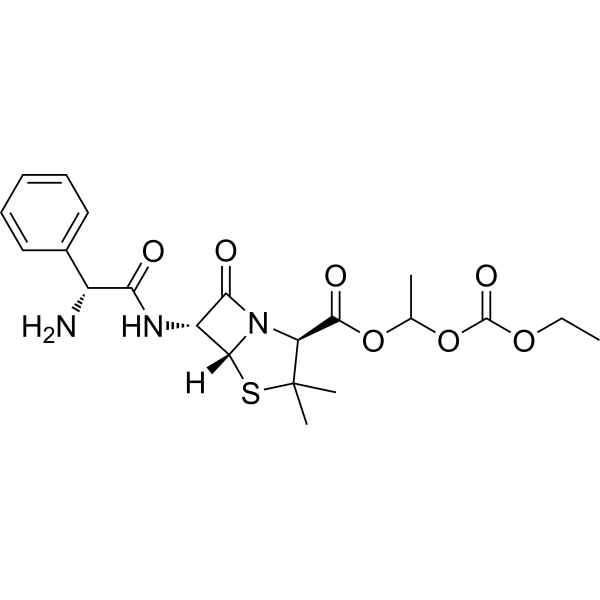
Bacampicillin is an orally active semi-synthetic aminopenicillin derivative, prodrug and bactericide that is readily inactivated by β-lactamases. Bacampicillin is hydrolyzed by carboxylester hydrolases and non-specific esterases in the gastrointestinal wall and plasma to form Ampicillin (HY-B0522), and produces higher levels of Ampicillin in rodents in vivo. Bacampicillin exhibits bactericidal activity against Gram-positive and Gram-negative bacteria. Bacampicillin can be used in studies related to bacterial infections .
loading...
    loading...
Cat. No.: HY-A0161S
Synonyms: Clofedanol-13C6; Calmotusin-13C6; NSC 113595-13C6
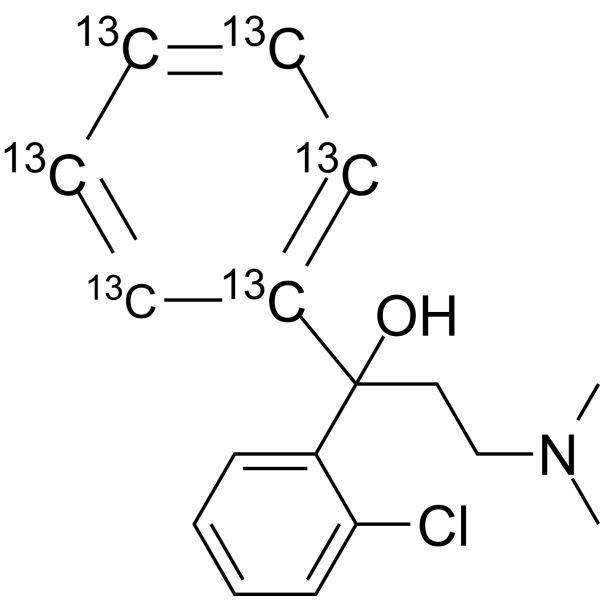
Chlophedianol- 13C6 is the 13C labeled Chlophedianol (HY-A0161). Chlophedianol is an orally active and potent antitussive agent. Chlophedianol can be used for the research of acute cough due to upper respiratory tract infections (URIs) .
loading...
    loading...
Cat. No.: HY-N7101R
CAS No.: 87239-81-4
Synonyms: U-76,252 (Standard); CS-807 (Standard)
Cefpodoxime Proxetil (Standard) is the analytical standard of Cefpodoxime Proxetil. This product is intended for research and analytical applications. Cefpodoxime Proxetil is an orally active broad spectrum third-generation cephalosporin with potent antibacterial activity against both Gram-positive and Gram-negative bacteria including staphylococci, streptococci, Haemophilus influenzae, Neisseria gonorrhoeae, Escherichia coli, Klebsiella pnuemoniae, Citrobacter spp, and Proteus spp. Cefpodoxime Proxetil binds to penicillin binding proteins (PBPs), which inhibits peptidoglycan synthesis, finally results in interfering bacterial cell wall biosynthesis. Cefpodoxime Proxetil can be used against skin structure infections, acute otitis media, pharyngitis, tonsillitis, upper respiratory tract infection, urinary tract infections and sexually transmitted diseases .
loading...
    loading...
Cat. No.: HY-N7101S
Synonyms: U-76-d7,252-d7; CS-807-d7
Cefpodoxime proxetil-d7 (U-76-d7,252-d7; CS-807-d7) is the deuterium labeled Cefpodoxime Proxetil (HY-N7101). Cefpodoxime Proxetil is an orally active broad spectrum third-generation cephalosporin with potent antibacterial activity against both Gram-positive and Gram-negative bacteria including staphylococci, streptococci, Haemophilus influenzae, Neisseria gonorrhoeae, Escherichia coli, Klebsiella pnuemoniae, Citrobacter spp, and Proteus spp. Cefpodoxime Proxetil binds to penicillin binding proteins (PBPs), which inhibits peptidoglycan synthesis, finally results in interfering bacterial cell wall biosynthesis. Cefpodoxime Proxetil can be used against skin structure infections, acute otitis media, pharyngitis, tonsillitis, upper respiratory tract infection, urinary tract infections and sexually transmitted diseases .
loading...
    loading...
Cat. No.: HY-P10134
CAS No.: 335080-41-6
Target:  

Bacterial

Research Areas:  

Infection

Salivaricin B is a broad-spectrum bacteriocin produced by Lactobacillus M7. Salivaricin B reduces cell wall thickness, induces abnormal septum formation, and exerts rapid bactericidal activity against susceptible Gram-positive bacteria without disrupting cytoplasmic membrane integrity or dissipating membrane potential. Salivaricin B inhibits the growth of oral, upper respiratory tract and food-related Gram-positive pathogens, spoilage bacteria, lactobacilli, and SboB-non-producing Streptococcus salivarius strains. Its activity is strain-dependent, and it has no effect on Gram-negative bacteria. Salivaricin B can be used in studies related to bacterial infections .
loading...
    loading...
Cat. No.: HY-N20412
Category:  

Extract

Target:  

Others

Hedera helix extract is an extract of Hedera helix that can be used to treat coughs caused by acute upper respiratory tract infections and bronchitis.
loading...
    loading...
  • 1

