



Caspase
Caspase is a family of cysteine proteases that play essential roles in apoptosis (programmed cell death), necrosis, and inflammation. There are two types of apoptotic caspases: initiator (apical) caspases and effector (executioner) caspases. Initiator caspases (e.g., CASP2, CASP8, CASP9, and CASP10) cleave inactive pro-forms of effector caspases, thereby activating them. Effector caspases (e.g., CASP3, CASP6, CASP7) in turn cleave other protein substrates within the cell, to trigger the apoptotic process. The initiation of this cascade reaction is regulated by caspase inhibitors. CASP4 and CASP5, which are overexpressed in some cases of vitiligo and associated autoimmune diseases caused by NALP1 variants, are not currently classified as initiator or effector in MeSH, because they are inflammatory enzymes that, in concert with CASP1, are involved in T-cell maturation.
Alle Caspase Isoform-spezifische Produkte anzeigen
-
Caspase 1
(79)
View all products
-
Caspase 2
(11)
View all products
-
Caspase 3
(547)
View all products
-
Caspase 4
(11)
View all products
-
Caspase 5
(5)
View all products
-
Caspase 6
(12)
View all products
-
Caspase 7
(108)
View all products
-
Caspase 8
(111)
View all products
-
Caspase 9
(197)
View all products
-
Caspase 10
(6)
View all products
-
Caspase 12
(3)
View all products
-
Caspase
(599)
View all products
-
Caspase 11
(2)
View all products
-
Caspase-13
(1)
View all products
All Product Categories
-
Caspase Inhibitors
(449)
View all products
-
Caspase Agonists
(41)
View all products
-
Caspase Activators
(627)
View all products
-
Caspase Modulators
(48)
View all products
-
Caspase Chemicals
(4)
View all products
-
Caspase MDM2 Inhibitor
(1)
View all products
-
Caspase Inducers
(49)
View all products
-
Caspase Degrader
(1)
View all products
-
Caspase Control
(1)
View all products
-
Caspase Substrates
(4)
View all products
-
Caspase Proteins
(10)
View all products
-
Caspase-1 Proteins
(3)
View all products
-
Caspase-3 Proteins
(3)
View all products
-
Caspase 7 Proteins
(1)
View all products
-
Caspase-8 Proteins
(1)
View all products
-
Caspase-10 Proteins
(1)
View all products
-
Caspase Verwandte Produkte (1404)
Verwandte Produkte (1404)

-
Recombinant Proteins (10)
-
Antibodies (35)
-
Caspase Signalweg
-
Caspase Isoform Comparison
-
Esmolol
 0 ImagesArt. -Nr.: HY-B1392ACAS. Nr.: 81147-92-4Esmolol is an ultra-short-acting cardioselective β1-adrenergic blocker. Esmolol exerts its antiarrhythmic effect by activating Neurokinin 1 Receptor. Esmolol attenuates post resuscitation myocardial dysfunction. Esmolol improves diabetic wound healing by inhibiting aldose reductase and the production of advanced glycation end products and promoting fibroblast migration. Esmolol can be used to study cardiac diseases such as arrhythmias and diabetic foot ulcers.
-
Daphnoretin (Standard)
 0 ImagesDaphnoretin (Dephnoretin; Thymelol) (Standard) is the analytical standard of Daphnoretin (HY-N0699). This product is used for research and analytical applications. Daphnoretin is a protein kinase C (PKC) activator that can inhibit the expression of hepatitis B virus (HBV) surface antigen (HBsAg) and has antiviral activity. Daphnoretin exerts its anti-tumor effect by inhibiting the activation of the PI3K/AKT signaling pathway, triggering the mitochondrial apoptosis pathway. Daphnoretin alleviates chondrocyte apoptosis and inflammatory responses by inhibiting endoplasmic reticulum stress and the activation of the NLRP3 inflammasome. Daphnoretin can regulate the differentiation and maturation of dendritic cells, by down-regulating the phosphorylation level of JNK, inhibiting its immune stimulating function, thereby playing a protective role in skin transplant rejection reactions.
-
Perillyl alcohol (Standard)
 0 ImagesPerillyl alcohol (Standard) is the analytical standard of Perillyl alcohol (HY-N7000). Perillyl alcohol is an orally active monoterpene. Perillyl alcohol exhibits multiple activities such as analgesic, anti-inflammatory, anti-tumor, anti-angiogenic, and anti-nociceptive effects. Perillyl alcohol can induce apoptosis and cell cycle arrest in tumor cells.
-
(Rac)-Z-FA-FMK
 0 ImagesArt. -Nr.: HY-123185CAS. Nr.: 96922-64-4(Rac)-Z-FA-FMK is the racemate of Z-FA-FMK. (Rac)-Z-FA-FMK is an inhibitor of cathepsin B with a Ki of 1.5 μM. (Rac)-Z-FA-FMK inhibits caspase-2, -3, -6, -7, and -9 with IC50s of 6.147, 15.41, 32.45, 9.077, and 110.7 μM. (Rac)-Z-FA-FMK inhibits the main protease of SARS-CoV-2 replication with an IC50 of 11.39 μM. (Rac)-Z-FA-FMK inhibits the increased IL-1β level induced by LPS and NF-κB transactivation in macrophages.
-
Zenidolol (Standard)
 0 ImagesArt. -Nr.: HY-100543RCAS. Nr.: 72795-26-7Synonyms: ICI-118551 (Standard)Zenidolol (ICI-118551) (Standard) is the analytical standard of Zenidolol (HY-100543). This product is intended for research and analytical applications. Zenidolol is a selective β2-adrenergic receptor antagonist with Ki values of Zenidolol for β2, β1 and β3 adrenergic receptors of 0.7, 49.5 and 611 nM, respectively. Zenidolol exerts antitumor effects via inducing apoptosis, inhibiting tumor sphere formation, and downregulating the HIF pathway by blocking β2-AR on tumor cells. Zenidolol exhibits a unique pulmonary vessel-specific vasodilatory effect in mouse models. Zenidolol can be used as an intraocular pressure-lowering agent in ophthalmic disease research.
-
RKS262
 0 ImagesArt. -Nr.: HY-113720CAS. Nr.: 1041469-97-9RKS262 is an orally active cyclin/CDK inhibitor. RKS262 is also an apoptosis inducer and cell cycle regulator, exhibiting cytotoxic activity against cancer cells. RKS262 induces caspase-3 cleavage, ROS generation, SAPK/JNK activation, and upregulates the expression of p53, Bid, Bad, Bok, and p27. RKS262 inhibits the expression of Bcl-2, Mcl-1, Bcl-xL, p21, cyclin D1, cyclin B1, cdc-2, cyclin D4, and DNA-pk KU-80 subunit. RKS262 suppresses the phosphorylation of the IGF-1R/PI3K/PKC pathway, ras oncogene activity, and Cdk-6, while increasing total Akt expression. RKS262 induces G2/M or S phase cell cycle arrest, disrupts mitochondrial transmembrane potential, and reduces tumor burden in xenograft models. RKS262 is used in research on neuroblastoma and ovarian cancer.
-
Myristoyllysophosphatidylcholine
 0 ImagesArt. -Nr.: HY-165316CAS. Nr.: 13699-45-1Myristoyllysophosphatidylcholine is a NLRP3 inflammasome inhibitor with multiple activities including anti-inflammatory and antioxidant effects. Myristoyllysophosphatidylcholine inhibits LPS-induced NLRP3 inflammasome activation, reduces pro-inflammatory cytokine secretion, decreases ROS and MDA levels, alleviates lung tissue and cell damage, and mediates apoptosis. Myristoyllysophosphatidylcholine serves as a myristate donor for myristoylation of the Glucose-6-Phosphate Isomerase (GPI) anchor in Trypanosoma brucei and undergoes hydrolysis. Myristoyllysophosphatidylcholine acts as a biomarker for the severity of community-acquired pneumonia. Myristoyllysophosphatidylcholine can be used in research related to diseases such as community-acquired pneumonia and acute lung injury.
-
EA-B2L
 0 ImagesArt. -Nr.: HY-169350CAS. Nr.: 1354444-72-6EA-B2L is a GSTP degrader with a DC50 of 48 μM in HeLa cells. EA-B2L inhibits GSTP enzymatic activity, induces dose-dependent GSTP degradation via the ubiquitin-proteasome and autophagy pathways, and does not activate the 20S proteasome subunit. EA-B2L induces dose-dependent apoptosis in cancer cells, a process associated with GSTP degradation, caspase 3 activation, and PARP cleavage. EA-B2L exerts dose-dependent antiproliferative effects on cancer cells with high GSTP expression. EA-B2L can be used in the research of cervical cancer, lung cancer, and fibrosarcoma.
-
Liguzinediol
 0 ImagesArt. -Nr.: HY-121864CAS. Nr.: 909708-65-2Liguzinediol is a Bcl-2 upregulator that exerts cardioprotective effects by upregulating Bcl-2, downregulating Bax and cleaved caspase-3, and inhibiting myocardial apoptosis, RAAS, oxidative stress, inflammation, and extracellular matrix remodeling. Liguzinediol can be used for research on heart failure and cardiac fibrosis.
-
ANA-12 (Standard)
 0 ImagesANA-12 (Standard) is an analytical standard of ANA-12 (HY-12479). This product is intended for research and analytical applications. ANA-12 is a brain-penetrant, selective TrkB antagonist with IC50 values of 45.6 nM and 41.1 μM, and Kd values of 10 nM and 12 μM, for high- and low-affinity sites, respectively. ANA-12 specifically inhibits BDNF-induced TrkB receptor activation and its downstream signaling cascades by directly and non-competitively binding to the TrkB receptor, without affecting the functions of TrkA and TrkC. ANA-12 is used in research concerning neuropsychiatric disorders (such as depression and anxiety), acute and chronic pain, neuroimmune inflammation, and the mechanisms of learning and memory.
-
Forsythoside I (Standard)
 0 ImagesForsythoside I (Standard) is the analytical standard of Forsythoside I (HY-N5042). This product is intended for research and analytical applications. Forsythoside I is an orally active caffeoyl phenylethanoid glycoside (CPG) that can be isolated from Forsythia suspense (Thunb.) Vahl. Forsythoside I has anti-inflammatory activity and can exert a protective effect in a mouse model of acute lung injury.
-
Ac-VDQQD-pNA
 0 ImagesArt. -Nr.: HY-P10666CAS. Nr.: 189684-52-4Ac-VDQQD-pNA is a substrate of Caspase 2 and can be cleaved to produce yellow pNA (p-nitroaniline).
-
FTI-277 TFA
 0 ImagesArt. -Nr.: HY-110038CAS. Nr.: 1217447-06-7FTI-277 TFA is a farnesyltransferase (FTase) inhibitor. FTI-277 TFA inhibits Ras farnesylation, blocks the phosphorylation of downstream ERK1/2 and mTOR, and reduces membrane-bound active N-ras protein. FTI-277 TFA activates caspase 3, upregulates Bim expression, induces cell apoptosis, suppresses regulatory T cell expansion, enhances macrophage phagocytosis, and improves bacterial clearance. FTI-277 TFA activates the PI3K/Akt signaling pathway, inhibits osteoblast differentiation, and reduces the proliferation ability of neuroblastoma cells. FTI-277 TFA can be used in research related to head and neck squamous cell carcinoma, neuroblastoma, sepsis, and vascular calcification.
-
MMPSI (Standard)
 0 ImagesArt. -Nr.: HY-103346RCAS. Nr.: 220509-74-0MMPSI (Standard) is the analytical standard of MMPSI (HY-103346). This product is intended for research and analytical applications. MMPSI is a potent and selective small molecule caspase 3 and caspase 7 inhibitor with an IC50 of 1.7 μM for human caspase-3. MMPSI can significantly reduce ischemia-reperfusion-induced infarct size in the isolated rabbit heart, and reduce apoptosis in both the ischemic myocardium and isolated cardiomyocytes. MMPSI can be used for researching cardioprotection.
-
3-Methylxanthine-d3
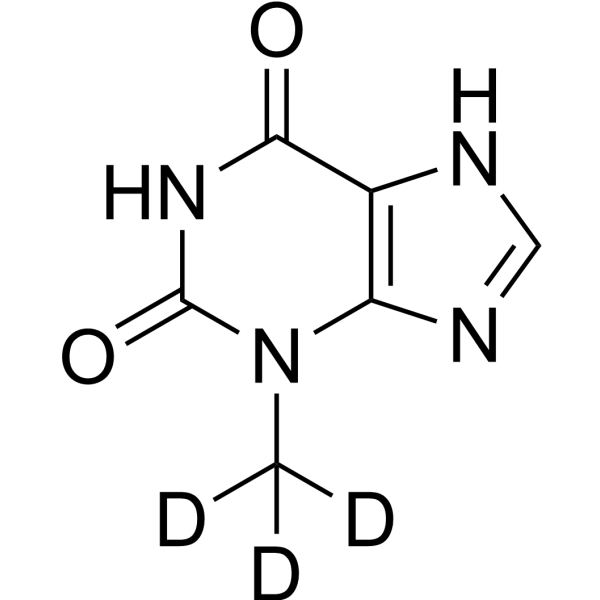 0 ImagesArt. -Nr.: HY-50723S1Reinheit: 99.61%3-Methylxanthine-d3 is deuterated labeled 3-Methylxanthine (HY-50723). 3-Methylxanthine is a blood-brain barrier-permeable cyclic GMP phosphodiesterase inhibitor, with an IC50 of 920 μM against guinea pig cyclic GMP phosphodiesterase. 3-Methylxanthine relaxes the spontaneous tension of isolated guinea pig tracheal smooth muscle preparations. Through a DRD1-dependent pathway, 3-Methylxanthine upregulates the expression of γH2AX and activated caspase-3, downregulates the expression of Bcl-2, and enhances Cisplatin-induced apoptosis (apoptosis) in ovarian cancer cells both in vitro and in vivo. 3-Methylxanthine induces clonic convulsions in the central nervous system. 3-Methylxanthine is the major metabolite of Theophylline (HY-B0809). 3-Methylxanthine can be used in studies related to ovarian cancer and neurotoxic convulsions.
-
IG-105
 0 ImagesArt. -Nr.: HY-111175CAS. Nr.: 905978-63-4IG-105 is an orally active and potent tubulin inhibitor that competitively inhibits [3H] colchicine binding to tubulin with an IC50 of 0.6 μM and inhibits tubulin polymerization with an IC50 of 3 μM. IG-105 inhibits microtubule polymerization by binding to the colchicine pocket of tubulin, induces G2-M phase arrest, and subsequently activates the caspase cascade through Bcl-2 inactivation and p53 upregulation, inducing apoptosis. IG-105 effectively overcomes multidrug resistance as a non-Pgp substrate. IG-105 can be used for research on leukemia, breast cancer, liver cancer, prostate cancer, lung cancer, melanoma, pancreatic cancer, and colon cancer.
-
Idasanutlin (Standard)
 0 ImagesSynonyms: RG7388 (Standard)Idasanutlin (Standard) (RG7388 (Standard)) is the analytical standard of Idasanutlin (HY-15676). This product is intended for research and analytical applications. Idasanutlin (RG7388) is an orally bioavailable MDM2 inhibitor with an IC50 of 6 nM. Idasanutlin disrupts MDM2-p53 binding, stabilizes and activates p53, triggering cell cycle arrest, apoptosis, and reduced cancer cell viability. Idasanutlin reduces EGFR protein expression and phosphorylation, suppresses downstream SHP2, MEK1/2, ERK1/2, AKT, mTOR, p70(S6K1), and S6 signaling. Idasanutlin induces mitochondrial ROS production, drives p38 MAPK phosphorylation, upregulates NOXA, and mediates caspase-3-dependent apoptosis and gasdermin E-mediated pyroptosis. Idasanutlin can be used for the research of TP53-mutant non-small cell lung cancer, T-cell acute lymphoblastic leukemia, colorectal carcinoma, melanoma, diffuse large B-cell lymphoma, mantle cell lymphoma, non-Hodgkin lymphoma, severe fever with thrombocytopenia syndrome, neuroblastoma, acute lymphoblastic leukemia, relapsed or refractory acute myeloid leukemia, osteosarcoma, solid tumors, and hematological tumors.
-
Z-VAD (Standard)
 0 ImagesArt. -Nr.: HY-164388RCAS. Nr.: 162852-62-2Z-VAD (Standard) is the analytical standard of Z-VAD (HY-164388). This product is intended for research and analytical applications. Z-VAD is an irreversible, broad-spectrum pan-caspase inhibitor that can inhibit a variety of caspases including caspase-3, -6, -7, -8, -9, etc. (with a weaker inhibitory effect on caspase-2). Z-VAD can block apoptosis signaling pathways, induce autophagy and necrosis in tumor cells, and has anti-angiogenic activity. Z-VAD can enhance the sensitivity of breast cancer and lung cancer cells to radiotherapy in vitro and in vivo, and prolong the growth delay of tumor xenograft models. Z-VAD is well tolerated and is mainly used in research related to cancer radiosensitization and cell death pathway regulation.
-
Curcumenol (Standard)
 0 ImagesArt. -Nr.: HY-N2259RCAS. Nr.: 19431-84-6Synonyms: (+)-Curcumenol (Standard)Curcumenol (Standard) ((+)-Curcumenol (Standard)) is the analytical standard of Curcumenol (HY-N2259). This product is intended for research and analytical applications. Curcumenol ((+)-Curcumenol) is a natural compound with oral efficacy, exhibiting an IC50 of 12.6 μM and a Ki of 10.8 μM against human CYP3A4. Curcumenol inhibits TNFα-induced phosphorylation/degradation of IκBα, phosphorylation/nuclear translocation of NF-κB p65, as well as the upregulation of MMP3, MMP9, MMP13, TRAF3, IL1RL1, TNFα and IL-1β. Curcumenol suppresses LPS-induced phosphorylation of Akt and p38 MAPK, as well as the production of pro-inflammatory mediators/proteins, and downregulates the SLC7A11/NF-κB/TGF-β pathway. Curcumenol binds to and inhibits the activation of Fyn and Lyn, blocks the function of downstream FcεRI signaling components, and reduces the release of allergic mediators/cytokines. Curcumenol upregulates the expression of KDM6B, and promotes chondrocyte proliferation and cartilage repair. Curcumenol induces ferroptosis and apoptosis, regulates the EMT process, and inhibits tumor growth and metastasis of triple-negative breast cancer. Curcumenol possesses anti-inflammatory, neuroprotective, antioxidant, antitumor, antiviral and hepatoprotective activities. Curcumenol can be used in research related to intervertebral disc degeneration, cancer, inflammation, central nervous system neurodegenerative diseases, allergic reactions and knee osteoarthritis.
-
Berberine
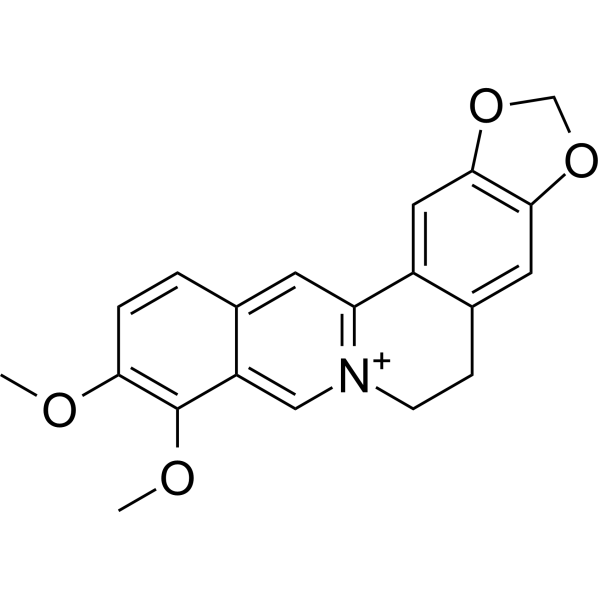 0 ImagesBerberine (Natural Yellow 18) is an alkaloid isolated from the Chinese herbal medicine Huanglian, as an antibiotic. Berberine (Natural Yellow 18) induces reactive oxygen species (ROS) generation and inhibits DNA topoisomerase. Berberine (Natural Yellow 18) has antineoplastic properties. The sulfate form (HY-N0716B) improves bioavailability.




