



Glaucine

Based on 1 Customer Validation
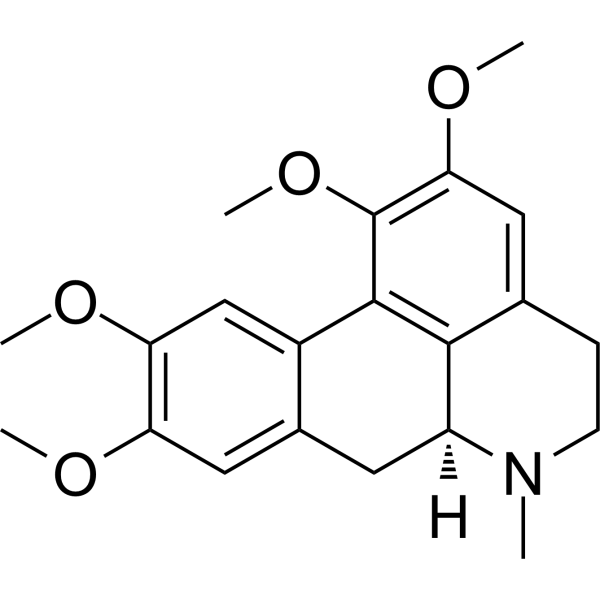
Glaucine (O,O-Dimethylisoboldine) is an alkaloid extracted from Glaucium flavum that possesses various activities, including cough relief, bronchodilation, anti-inflammatory effects, analgesia, antipyretic properties, and anticancer effects. Glaucine acts as a selective and orally active inhibitor of phosphodiesterase 4 (PDE4), with a Ki of 3.4 µM in human bronchial tissues and polymorphonuclear leukocytes. Glaucine induces relaxation of human isolated bronchi by antagonizing calcium channels. Additionally, Glaucine inhibits the activation of NF-κB, leading to a reduction in the expression of the MMP-9 gene, thereby suppressing the migration and invasion of breast cancer cells. Therefore, Glaucine holds potential for research in asthma and breast cancer.
For research use only. We do not sell to patients.
- Purity : 99.55%
- CAS No.: 475-81-0
- Formula: C21H25NO4
- Molecular Weight:355.43
-
Storage:
4°C, protect from light
* In solvent : -80°C, 6 months; -20°C, 1 month (protect from light)

To place orders, for customer services and technical support, please contact: MedChemExpress USA
Tel: 609-228-6898 E-mail: [email protected] [email protected]


-
 Biological Activity
-
Chemical Information
-
Solvent & Solubility
- Protocols
- Purity & Documentation
- References
-
 Help & FAQs



All Calcium Channel Isoforms
More

Biological Activity
Description
IC50 & Target
|
PDE4 |
Cellular Effect
|
Cell Line

|
Type | Value | Description | References |
|---|---|---|---|---|
| B-cell | IC50 |
>100 μM
Compound: 18
|
Inhibition of LPS-induced BALB/c mouse B cell proliferation
Inhibition of LPS-induced BALB/c mouse B cell proliferation
|
[PMID: 17081761] |
| HeLa | CC50 |
182 μM
Compound: 1
|
Antiviral activity against Human rhinovirus type 14 in human HeLa Ohio-1 cells
Antiviral activity against Human rhinovirus type 14 in human HeLa Ohio-1 cells
|
[PMID: 18590964] |
| HeLa | IC50 |
22 μM
Compound: 1
|
Cytotoxicity against human HeLa Ohio-1 cells
Cytotoxicity against human HeLa Ohio-1 cells
|
[PMID: 18590964] |
| T-cell | IC50 |
>100 μM
Compound: 18
|
Inhibition of ConA-induced BALB/c mouse T cell proliferation
Inhibition of ConA-induced BALB/c mouse T cell proliferation
|
[PMID: 17081761] |
In Vitro
Glaucine (0.1 μM-1 mM; 30 min) produces a concentration-dependent inhibition of both spontaneous tension and histamine (HY-B1204)-induced tension in isolated human bronchial tissues[1]. Glaucine (10 μM-1 mM; 30 min) concentration-dependently inhibits the concentration of calcium ions in isolated human bronchial tissues induced by potassium depolarization[1]. Glaucine (0.1-3 mM; 120 min) concentration-dependently inhibits the release of peroxidase from human eosinophils[1]. Glaucine (0-50 μM; 24 and 48 h) inhibits the proliferation of MCF-7 cells induced by Phorbol 12-myristate 13-acetate (HY-18739) in a concentration-dependent manner[4]. Glaucine (0-30 μM; 36 h) significantly blocks the expression and activity of MMP-9 in MCF-7 cells induced by Phorbol 12-myristate 13-acetate (HY-18739) in a dose-dependent manner[4]. Glaucine (0-30 μM; 24 h) significantly inhibits the invasion of MDA-MB-231 cells in a dose-dependent manner[4].
MedChemExpress (MCE) has not independently confirmed the accuracy of these methods. They are for reference only. Further protocols information, click here.
-
Cell Line:PMA-induced MCF-7 cells
-
Concentration:0, 1, 3, 15, 30 and 50 µM
-
Incubation Time:24 and 48 h
-
Result:Inhibited PMA-induced colony formation by 48 and 63 % at a dose of 15 and 30 µM.
-
Cell Line:PMA-induced MCF-7 cells
-
Concentration:0, 15 and 30 µM
-
Incubation Time:36 h
-
Result:Inhibited PMA-induced phosphorylation of IκBα in a dose-dependent manner and decreased nuclear NF-κB p65 subunit levels.
In Vivo
MedChemExpress (MCE) has not independently confirmed the accuracy of these methods. They are for reference only.
-
Animal Model:Ovalbumins (HY-W250978) sensitized guinea pigs to inhaled aerosol antigens[5]
-
Dosage:10 mg/mL
-
Administration:inhale; 10 min
-
Result:Reduced airway hyperresponsiveness to histamine and lung eosinophil accumulation 30 minutes and 3 hours after inhalation of the antigen. Increased eosinophil peroxidase activity in bronchoalveolar lavage fluid 24 hours after inhalation of aerosol antigen.


Chemical Information
-
CAS No. 475-81-0
-
Appearance Solid
-
Molecular Weight 355.43
-
Formula C21H25NO4
-
Color White to light brown
-
SMILES
CN1CCC2=CC(OC)=C(OC)C3=C2[C@]1([H])CC4=CC(OC)=C(OC)C=C34
-
Synonyms
O,O-Dimethylisoboldine; S-(+)-Glaucine; NSC 34396
-
Structure Classification
-
Initial Source
-
Shipping
Room temperature in continental US; may vary elsewhere.
-
Storage
4°C, protect from light
* In solvent : -80°C, 6 months; -20°C, 1 month (protect from light)


Solvent & Solubility
In Vitro:
DMSO : 100 mg/mL (281.35 mM; Need ultrasonic; Hygroscopic DMSO has a significant impact on the solubility of product, please use newly opened DMSO)
Please refer to the solubility information to select the appropriate solvent. Once prepared, please aliquot and store the solution to prevent product inactivation from repeated freeze-thaw cycles.
Storage method and period of stock solution: -80°C, 6 months; -20°C, 1 month (protect from light). When stored at -80°C, please use it within 6 months. When stored at -20°C, please use it within 1 month.
Please refer to the solubility information to select the appropriate solvent. Once prepared, please aliquot and store the solution to prevent product inactivation from repeated freeze-thaw cycles.
Storage method and period of stock solution: -80°C, 6 months; -20°C, 1 month (protect from light). When stored at -80°C, please use it within 6 months. When stored at -20°C, please use it within 1 month.
Concentration (start) × Volume (start) = Concentration (final) × Volume (final)
In Vivo:
Select the appropriate dissolution method based on your experimental animal and administration route.
- For the following dissolution methods, please ensure to first prepare a clear stock solution using an In Vitro approach and then sequentially add co-solvents:
- To ensure reliable experimental results, the clarified stock solution can be appropriately stored based on storage conditions. As for the working solution for In Vivo experiments, it is recommended to prepare freshly and use it on the same day.
- The percentages shown for the solvents indicate their volumetric ratio in the final prepared solution. If precipitation or phase separation occurs during preparation, heat and/or sonication can be used to aid dissolution.
Add each solvent one by one: 10% DMSO 40% PEG300 5% Tween-80 45% Saline
Solubility: ≥ 2.5 mg/mL (7.03 mM); Clear solution
This protocol yields a clear solution of ≥ 2.5 mg/mL (saturation unknown).
Taking 1 mL working solution as an example, add 100 μL DMSO stock solution (25.0 mg/mL) to 400 μL PEG300, and mix evenly; then add 50 μL Tween-80 and mix evenly; then add 450 μL Saline to adjust the volume to 1 mL.
Preparation of Saline: Dissolve 0.9 g sodium chloride in ddH₂O and dilute to 100 mL to obtain a clear Saline solution.
Add each solvent one by one: 10% DMSO 90% (20% SBE-β-CD in Saline)
Solubility: ≥ 2.5 mg/mL (7.03 mM); Clear solution
This protocol yields a clear solution of ≥ 2.5 mg/mL (saturation unknown).
Taking 1 mL working solution as an example, add 100 μL DMSO stock solution (25.0 mg/mL) to 900 μL 20% SBE-β-CD in Saline, and mix evenly.
Preparation of 20% SBE-β-CD in Saline (4°C, storage for one week): 2 g SBE-β-CD powder is dissolved in 10 mL Saline, completely dissolve until clear.
In Vivo Dissolution Calculator
Please enter the basic information of animal experiments:
-
-
-
-
Recommended: Prepare an additional quantity of animals to account for potential losses during experiments.
Please enter your animal formula composition:
-
%DMSO +
Recommended: Keep the proportion of DMSO in working solution below 2% if your animal is weak.
-
%+
-
+%Tween-80 + +
-
%Saline +
The co-solvents required include: DMSO, . All of co-solvents are available by MedChemExpress (MCE). , Tween 80. All of co-solvents are available by MedChemExpress (MCE).
Working solution concentration: 0.22 mg/mL
Method for preparing stock solution: mg drug dissolved in μL DMSO. Stock solution concentration: mg/mL. * In solvent : -80°C, 6 months; -20°C, 1 month (protect from light)
1. Take μL DMSO stock solution;
2. Add μL .
μL , mix evenly;
3. Then add μL Tween 80, mix evenly;
4. Then add μL
Please ensure that the stock solution in the first step is dissolved to a clear state, and add co-solvents in sequence. You can use ultrasonic heating (ultrasonic cleaner, recommended frequency 20-40 kHz), vortexing, etc. to assist dissolution.

Protocols
-
RNA extraction experimental
By lysing cells, releasing RNA, and removing impurities such as proteins and DNA, high-purity RNA products are finally obtained. The commonly used traditional method is the guanidine isothiocyanate/phenol/chloroform method (Trizol), which is suitable for a variety of animal materials including animal tissues, microorganisms, cultured cells, etc., and most plant materials.
-
Mitochondrial membrane-potential fluorescent assay
Mitochondrial membrane potential fluorescent assays estimate ΔΨm in living cells using lipophilic cationic dyes such as TMRM, TMRE, rhodamine 123, and JC-1, which accumulate in mitochondria according to membrane polarization; loss of signal after FCCP or CCCP treatment is interpreted as mitochondrial depolarization. TMRM/TMRE and rhodamine 123 are commonly used for semi-quantitative live-cell microscopy or flow cytometry, while JC-1 can report a shift from red aggregate fluorescence to green monomer fluorescence during depolarization; interpretation requires controls because dye concentration, quenching mode, cell type, dye efflux, and mitochondrial mass can affect fluorescence independently of ΔΨm.
-
Cell migration
Cell migration is a method that plays an important role in wound healing, cell differentiation, embryonic development, etc.
-
Mitochondrial membrane-potential and mitochondrial mass staining
Mitochondrial membrane potential staining measures the electrochemical polarization across the mitochondrial inner membrane in live cells using lipophilic cationic fluorescent probes; early rhodamine-based work showed that selective mitochondrial dye accumulation is lost when the mitochondrial transmembrane potential is dissipated. JC-1 reports mitochondrial polarization by shifting from green monomer fluorescence to red J-aggregate fluorescence as dye concentration increases within energized mitochondria; therefore, the red/green fluorescence ratio is used as a relative readout of mitochondrial membrane potential. TMRE or TMRM staining provides a single-channel relative readout because these cationic rhodamine esters accumulate in polarized mitochondria, and lower fluorescence indicates reduced mitochondrial polarization when acquisition and dye-loading conditions are controlled. Mitochondrial mass staining is commonly performed with MitoTracker Green FM or related MitoTracker dyes as
-
Cell invasion
Cell invasion is the ability of cells to migrate from one area to another via the extracellular matrix. Cell invasion is the response of normal and cancer cells to chemical and mechanical stimuli. Before migrating to a new region, the extracellular matrix is degraded by proteases within the cell. Cell invasion often occurs during wound repair, vascularization and inflammation, abnormal tissue invasion, and tumor cell metastasis.
-
Research Protocol for Inflammation-related Diseases
The NLRP3 inflammasome is a cytosolic innate immune signaling platform that integrates priming signals and danger-signal activation to promote caspase-1 activation, maturation of IL-1β and IL-18, and gasdermin D-mediated pyroptotic cell death. The core experimental logic is to determine whether inflammatory disease phenotypes are driven by increased NLRP3 expression, ASC-containing inflammasome assembly, caspase-1 cleavage, GSDMD cleavage, and extracellular release of IL-1β/IL-18 rather than by nonspecific cell injury alone. The pathway is strongly linked to inflammation-related disease phenotypes because monosodium urate crystals activate NALP3/NLRP3 inflammasome signaling in gout-like crystal inflammation, cholesterol crystals activate NLRP3 inflammasomes in atherogenesis models, and DSS-induced intestinal inflammation has been reported to involve NLRP3 inflammasome activity. However, experimental colitis studies also show context-dependent protective effects of NLRP3 inflammasome co
-
Breast Cancer Modeling
Breast cancer is a heterogeneous cancer, and it has been distinguished into four subtypes: luminal A, luminal B, HER2-positive and basal-like. Molecular mutations, epigenetic alterations, hormone exposure and immune microenvironment are related to the progression of breast cancer.


Purity & Documentation
-
Data Sheet (284 KB)
-
SDS (396 KB)
- English - EN (396 KB)
- Français - FR (396 KB)
- Deutsch - DE (396 KB)
- Norwegian - NO (396 KB)
- Español - ES (396 KB)
- Swedish - SV (396 KB)
- Italian - IT (396 KB)
- Korean - KR (396 KB)
- Portuguese - PT (396 KB)
-
Handling Instructions (2659 KB)
References
[1]. J Cortijo, et al. Bronchodilator and Anti-Inflammatory Activities of Glaucine: In Vitro Studies in Human Airway Smooth Muscle and Polymorphonuclear Leukocytes. Br J Pharmacol. 1999 Aug;127(7):1641-51. [Content Brief]
[2]. Golo M J Meyer, et al. Studies on the in Vivo Contribution of Human Cytochrome P450s to the Hepatic Metabolism of Glaucine, a New Drug of Abuse. Biochem Pharmacol. 2013 Nov 15;86(10):1497-506. [Content Brief]
[3]. Maya Spasova, et al. Cinnamoyl- And Hydroxycinnamoyl Amides of Glaucine and Their Antioxidative and Antiviral Activities. Bioorg Med Chem. 2008 Aug 1;16(15):7457-61. [Content Brief]
[4]. Hyereen Kang, et al. "Glaucine inhibits breast cancer cell migration and invasion by inhibiting MMP-9 gene expression through the suppression of NF-κB activation." Molecular and cellular biochemistry 403 (2015): 85-94. [Content Brief]
[5]. Pons, et al. "Effects of inhaled glaucine on pulmonary responses to antigen in sensitized guinea pigs." European journal of pharmacology 397.1 (2000): 187-195. [Content Brief]


Complete Stock Solution Preparation Table
Please refer to the solubility information to select the appropriate solvent. Once prepared, please aliquot and store the solution to prevent product inactivation from repeated freeze-thaw cycles.
Storage method and period of stock solution: -80°C, 6 months; -20°C, 1 month (protect from light). When stored at -80°C, please use it within 6 months. When stored at -20°C, please use it within 1 month.
| Optional Solvent | Concentration Solvent Mass | 1 mg | 5 mg | 10 mg | 25 mg |
|---|---|---|---|---|---|
| DMSO | 1 mM | 2.8135 mL | 14.0675 mL | 28.1349 mL | 70.3373 mL |
| 5 mM | 0.5627 mL | 2.8135 mL | 5.6270 mL | 14.0675 mL | |
| 10 mM | 0.2813 mL | 1.4067 mL | 2.8135 mL | 7.0337 mL | |
| 15 mM | 0.1876 mL | 0.9378 mL | 1.8757 mL | 4.6892 mL | |
| 20 mM | 0.1407 mL | 0.7034 mL | 1.4067 mL | 3.5169 mL | |
| 25 mM | 0.1125 mL | 0.5627 mL | 1.1254 mL | 2.8135 mL | |
| 30 mM | 0.0938 mL | 0.4689 mL | 0.9378 mL | 2.3446 mL | |
| 40 mM | 0.0703 mL | 0.3517 mL | 0.7034 mL | 1.7584 mL | |
| 50 mM | 0.0563 mL | 0.2813 mL | 0.5627 mL | 1.4067 mL | |
| 60 mM | 0.0469 mL | 0.2345 mL | 0.4689 mL | 1.1723 mL | |
| 80 mM | 0.0352 mL | 0.1758 mL | 0.3517 mL | 0.8792 mL | |
| 100 mM | 0.0281 mL | 0.1407 mL | 0.2813 mL | 0.7034 mL |


Glaucine Related Classifications
HY-N3945 Related Classifications
 Powered by Bioz