1. Search Result
Search Result
Pathways Recommended: Anti-infection
Results for "

upper respiratory infection

" in MedChemExpress (MCE) Product Catalog:

13

Inhibitors & Agonists

1

Inhibitory Antibodies

4

Natural
Products

2

Isotope-Labeled Compounds

Targets Recommended:
Cat. No. Product Name Target Research Areas Chemical Structure
  • HY-P990774

    ASP-7266; TRAB-1; UPB-101

    Interleukin Related Inflammation/Immunology
    Verekitug (ASP-7266; TRAB-1; UPB-101) is a human monoclonal antibody targeting the thymic stromal lymphopoietin receptor (TSLPR), with a mean half-life of approximately 20 days. At doses of Verekitug ≥100 mg, complete and sustained TSLPR-specific occupancy is achieved, and the antibody does not bind to IL-7Rα. By inhibiting TSLP-driven inflammatory responses, Verekitug blocks TSLP-induced cell proliferation and TARC expression, while reducing fractional exhaled NO levels, blood eosinophil counts, and levels of IL-5 and IgE. Verekitug significantly improves scores for nasal polyps, nasal congestion and olfactory dysfunction, with favorable safety and good tolerability; potential adverse reactions include headache, upper respiratory tract infection, sinusitis and nasopharyngitis. Verekitug is used in relevant studies on asthma, chronic rhinosinusitis with nasal polyps and chronic obstructive pulmonary disease .
    Verekitug
  • HY-N0677A
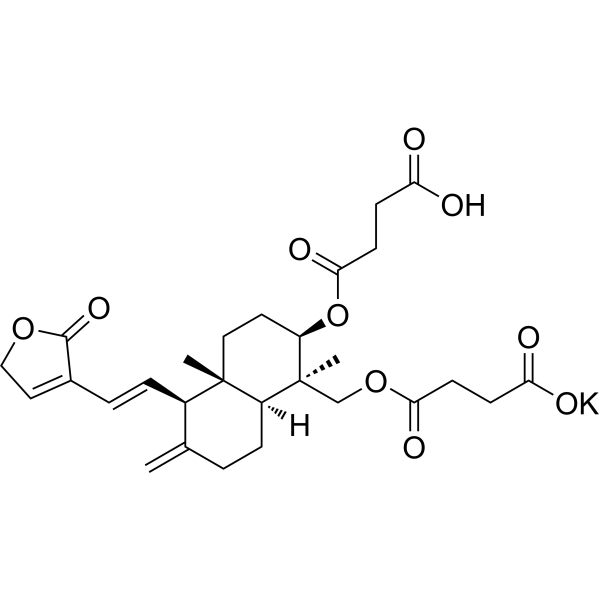
    Kalii Dehydrographolidi Succinas
    1 Publications Verification

    Potassium dehydroandrographolide succinate

    Antibiotic Infection Inflammation/Immunology
    Kalii Dehydrographolidi Succinas (Potassium dehydroandrographolide succinate) is an antibiotic. Kalii Dehydrographolidi Succinas exerts immunostimulatory, anti-infective and anti-inflammatory effects . Kalii Dehydrographolidi Succinas shows potential for research on viral pneumonia and viral upper respiratory tract infections .
    Kalii Dehydrographolidi Succinas
  • HY-A0161A

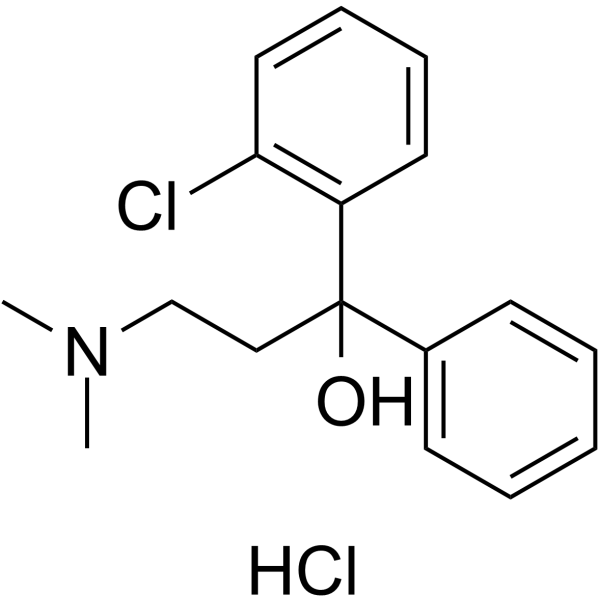
    Clofedanol hydrochloride; Calmotusin hydrochloride; NSC 113595 hydrochloride

    Others Infection
    Chlophedianol (Clofedanol) hydrochloride is an orally active and potent antitussive agent. Chlophedianol hydrochloride can be used for the research of acute cough due to upper respiratory tract infections (URIs) .
    Chlophedianol hydrochloride
  • HY-N7101

    U-76,252; CS-807

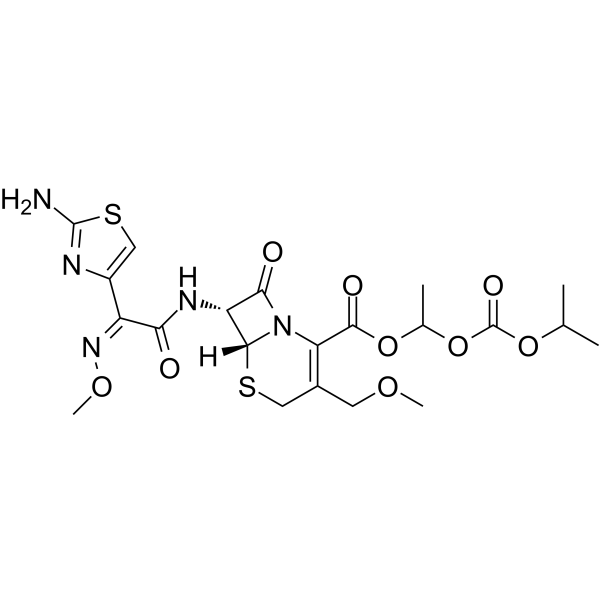
    Bacterial Antibiotic Penicillin-binding protein (PBP) Infection
    Cefpodoxime Proxetil is an orally active broad spectrum third-generation cephalosporin with potent antibacterial activity against both Gram-positive and Gram-negative bacteria including staphylococci, streptococci, Haemophilus influenzae, Neisseria gonorrhoeae, Escherichia coli, Klebsiella pnuemoniae, Citrobacter spp, and Proteus spp. Cefpodoxime Proxetil binds to penicillin binding proteins (PBPs), which inhibits peptidoglycan synthesis, finally results in interfering bacterial cell wall biosynthesis. Cefpodoxime Proxetil can be used against skin structure infections, acute otitis media, pharyngitis, tonsillitis, upper respiratory tract infection, urinary tract infections and sexually transmitted diseases .
    Cefpodoxime Proxetil
  • HY-N0677
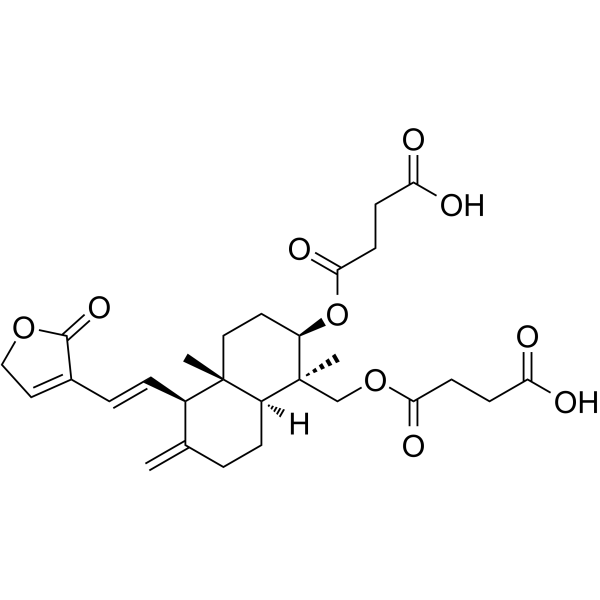
    Dehydroandrographolide succinate
    1 Publications Verification

    Influenza Virus Prostaglandin Receptor Akt GSK-3 Infection Inflammation/Immunology Cancer
    Dehydroandrographolide succinate can be extracted from herbal medicine Andrographis paniculata (Burm f) Nees, is widely used in research for viral pneumonia and viral upper respiratory tract infections because of its immunostimulatory, anti-infective and anti-inflammatory effect. Dehydroandrographolide succinate exerts antithrombotic effect. Dehydroandrographolide succinate significantly inhibits the platelet aggregation rate (ED50 = 386.9 mg/kg) by decreasing TXB2 levels. Dehydroandrographolide succinate mitigates muscle astrophy via the Akt/GSK3β and MuRF-1 pathways .
    Dehydroandrographolide succinate
  • HY-W709856

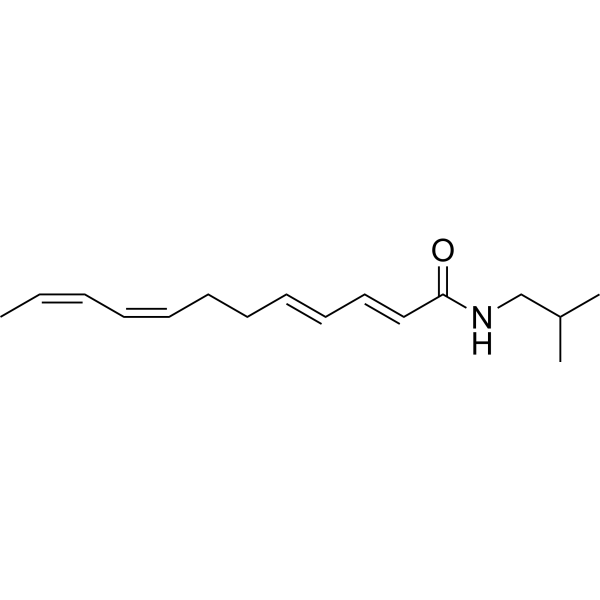
    Influenza Virus Infection
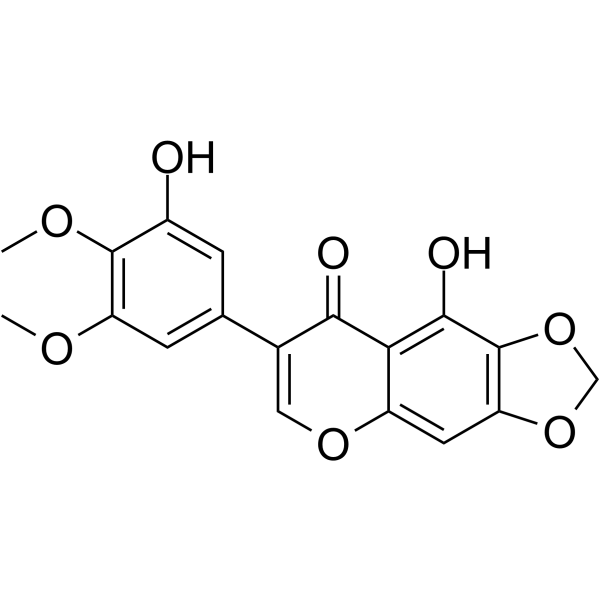
    Dodeca-2E,4E,8Z,10Z/E-N-tetraenoic acid isobutylamide is a brain-penetrant substance and the main alkamide in Echinacea preparations, which might be used for research of common cold and various upper respiratory infections .
    Dodeca-2E,4E,8Z,10Z/E-N-tetraenoic acid isobutylamide
  • HY-A0161

    Clofedanol; Calmotusin; NSC 113595

    Others Infection
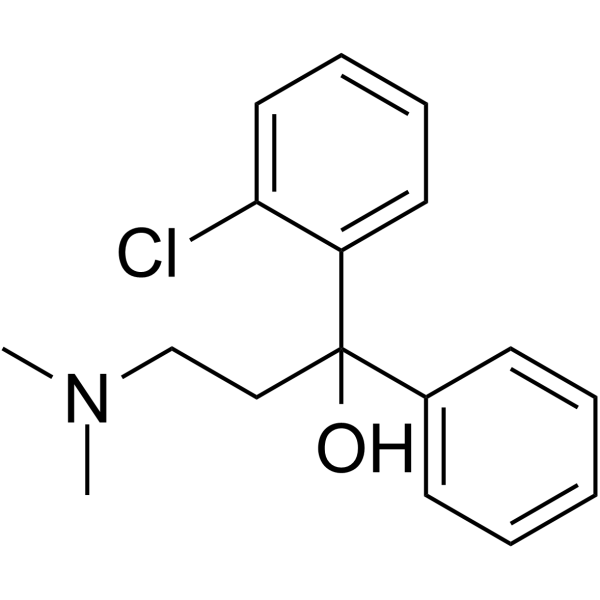
    Chlophedianol (Clofedanol) is an orally active and potent antitussive agent. Chlophedianol can be used for the research of acute cough due to upper respiratory tract infections (URIs) .
    Chlophedianol
  • HY-A0161AR

    Clofedanol hydrochloride (Standard); Calmotusin hydrochloride (Standard); NSC 113595 hydrochloride (Standard)

    Sigma Receptor Reference Standards Infection
    Chlophedianol (hydrochloride) (Standard) is the analytical standard of Chlophedianol (hydrochloride). This product is intended for research and analytical applications. Chlophedianol (Clofedanol) hydrochloride is an orally active and potent antitussive agent. Chlophedianol hydrochloride can be used for the research of acute cough due to upper respiratory tract infections (URIs) .
    Chlophedianol hydrochloride (Standard)
  • HY-B1149

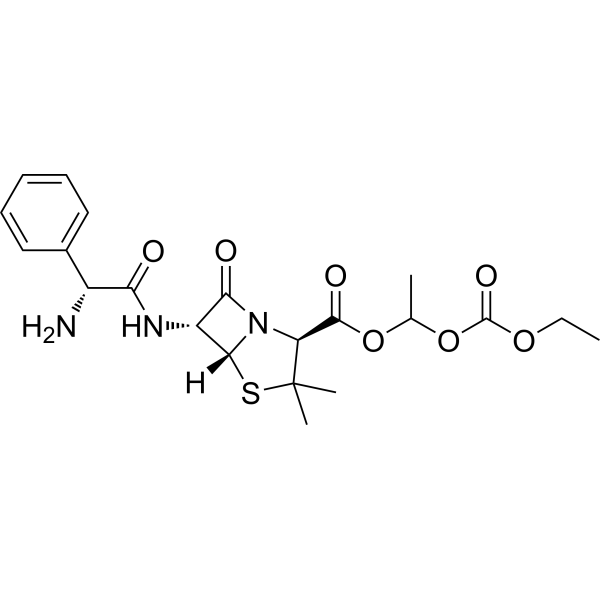
    Drug Derivative Bacterial Antibiotic Infection
    Bacampicillin is an orally active semi-synthetic aminopenicillin derivative, prodrug and bactericide that is readily inactivated by β-lactamases. Bacampicillin is hydrolyzed by carboxylester hydrolases and non-specific esterases in the gastrointestinal wall and plasma to form Ampicillin (HY-B0522), and produces higher levels of Ampicillin in rodents in vivo. Bacampicillin exhibits bactericidal activity against Gram-positive and Gram-negative bacteria. Bacampicillin can be used in studies related to bacterial infections .
    Bacampicillin
  • HY-A0161S

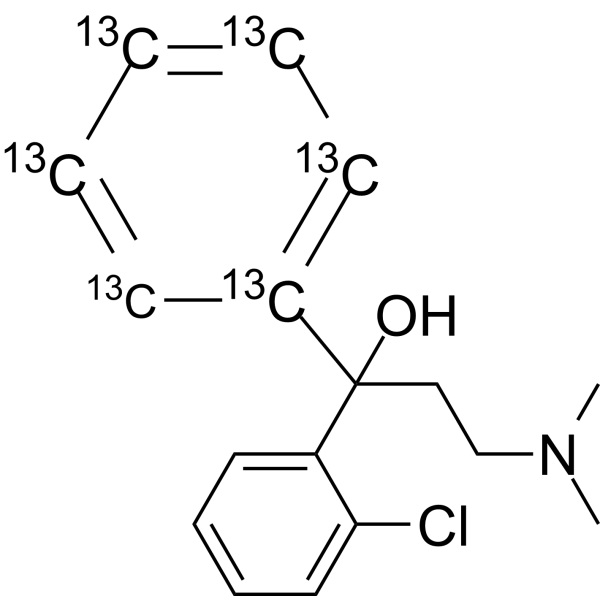
    Clofedanol-13C6; Calmotusin-13C6; NSC 113595-13C6

    Isotope-Labeled Compounds Infection
    Chlophedianol- 13C6 is the 13C labeled Chlophedianol (HY-A0161). Chlophedianol is an orally active and potent antitussive agent. Chlophedianol can be used for the research of acute cough due to upper respiratory tract infections (URIs) .
    Chlophedianol-13C6
  • HY-N7101R

    U-76,252 (Standard); CS-807 (Standard)

    Reference Standards Bacterial Antibiotic Penicillin-binding protein (PBP) Infection
    Cefpodoxime Proxetil (Standard) is the analytical standard of Cefpodoxime Proxetil. This product is intended for research and analytical applications. Cefpodoxime Proxetil is an orally active broad spectrum third-generation cephalosporin with potent antibacterial activity against both Gram-positive and Gram-negative bacteria including staphylococci, streptococci, Haemophilus influenzae, Neisseria gonorrhoeae, Escherichia coli, Klebsiella pnuemoniae, Citrobacter spp, and Proteus spp. Cefpodoxime Proxetil binds to penicillin binding proteins (PBPs), which inhibits peptidoglycan synthesis, finally results in interfering bacterial cell wall biosynthesis. Cefpodoxime Proxetil can be used against skin structure infections, acute otitis media, pharyngitis, tonsillitis, upper respiratory tract infection, urinary tract infections and sexually transmitted diseases .
    Cefpodoxime Proxetil (Standard)
  • HY-N7101S

    U-76-d7,252-d7; CS-807-d7

    Isotope-Labeled Compounds Bacterial Antibiotic Penicillin-binding protein (PBP) Infection
    Cefpodoxime proxetil-d7 (U-76-d7,252-d7; CS-807-d7) is the deuterium labeled Cefpodoxime Proxetil (HY-N7101). Cefpodoxime Proxetil is an orally active broad spectrum third-generation cephalosporin with potent antibacterial activity against both Gram-positive and Gram-negative bacteria including staphylococci, streptococci, Haemophilus influenzae, Neisseria gonorrhoeae, Escherichia coli, Klebsiella pnuemoniae, Citrobacter spp, and Proteus spp. Cefpodoxime Proxetil binds to penicillin binding proteins (PBPs), which inhibits peptidoglycan synthesis, finally results in interfering bacterial cell wall biosynthesis. Cefpodoxime Proxetil can be used against skin structure infections, acute otitis media, pharyngitis, tonsillitis, upper respiratory tract infection, urinary tract infections and sexually transmitted diseases .
    Cefpodoxime proxetil-d7
  • HY-N15249

    Isovalerylspiramycin I; Shengjimycin E

    Topoisomerase DNA/RNA Synthesis Checkpoint Kinase (Chk) Apoptosis Bacterial Infection Cancer
    4"-Isovalerylspiramycin I (Isovalerylspiramycin I) is a topoisomerase 1 (TOP1) inhibitor and an antitumor agent. 4"-Isovalerylspiramycin I directly binds to TOP1, suppresses DNA replication, and induces DNA damage. 4"-Isovalerylspiramycin I downregulates phosphorylated CHEK1 and the ATR/CHEK1 DNA damage repair pathway, blocks DNA repair, and augments DNA damage. 4"-Isovalerylspiramycin I suppresses proliferation, migration, and invasion of osteosarcoma cells. 4"-Isovalerylspiramycin I induces apoptosis and cell cycle arrest in osteosarcoma cells. 4"-Isovalerylspiramycin I exerts antibacterial activity against methicillin-resistant Staphylococcus aureus. 4"-Isovalerylspiramycin I can be used for the research of osteosarcoma, upper respiratory bacterial infections, and methicillin-resistant Staphylococcus aureus infection .
    4

Inquiry Online

Your information is safe with us. * Required Fields.

Salutation


Country or Region *

Applicant Name *


Organization Name *

Department *


Email Address *


Product Name *

Cat. No.


Requested quantity *

Phone Number *


Remarks

Inquiry Online

Inquiry Information

Product Name:
Cat. No.:
Quantity:
MCE Japan Authorized Agent:

