



Caspase 3
Caspase 3 is a central executioner caspase in apoptosis, where initiator caspase 9 activates executioner caspases 3 and 7 by proteolysis[1]. Mechanistically, caspase 3 cleaves caspase 9 at Asp330 and enhances apoptosis by relieving XIAP-mediated inhibition, rather than directly activating caspase 9[1]. This places caspase 3 within apoptosome-linked feedback control and inhibitor-of-apoptosis regulation, while preserving a distinct functional profile from caspase 7[1][2]. Compared with caspase 7, caspase 3 can cleave caspase 9 under physiologically relevant conditions, and engineered activation studies show that caspase 3 or caspase 7, but not caspase 6 alone, is sufficient to induce apoptosis[1][2]. In disease models, caspase 3 and caspase 7 deletion did not reduce infarct size or ventricular remodeling after transient myocardial ischemia-reperfusion, limiting assumptions about canonical caspase-dependent apoptosis in adult cardiomyocytes[3]. In prostate cancer samples, procaspase 3 and cleaved caspase 3 predicted biochemical progression after radical prostatectomy, supporting their use as apoptosis-related tumor markers[4]. For experimental applications, caspase 3 research benefits from isoform-aware probes because common DEVD-based peptide inhibitors and substrates cannot reliably distinguish caspase 3 from caspase 7[5].
References:
- [1]. Denault JB, et al. Caspase 3 attenuates XIAP (X-linked inhibitor of apoptosis protein)-mediated inhibition of caspase 9. Biochem J. 2007 Jul 1;405(1):11-9. [Content Brief]
- [2]. Gray DC, et al. Activation of specific apoptotic caspases with an engineered small-molecule-activated protease. Cell. 2010 Aug 20;142(4):637-46. [Content Brief]
- [3]. Inserte J, et al. Studies on the role of apoptosis after transient myocardial ischemia: genetic deletion of the executioner caspases-3 and -7 does not limit infarct size and ventricular remodeling. Basic Res Cardiol. 2016 Mar;111(2):18. [Content Brief]
- [4]. Rodríguez-Berriguete G, et al. Prognostic value of inhibitors of apoptosis proteins (IAPs) and caspases in prostate cancer: caspase-3 forms and XIAP predict biochemical progression after radical prostatectomy. BMC Cancer. 2015 Oct 27;15:809. [Content Brief]
- [5]. Batool A, et al. Eukaryotic initiation factor 4E is a novel effector of mTORC1 signaling pathway in cross talk with Mnk1. Mol Cell Biochem. 2020 Feb;465(1-2):13-26. [Content Brief]
All Product Categories
-
Caspase 3 Inhibitors
(129)
View all products
-
Caspase 3 Agonists
(28)
View all products
-
Caspase 3 Activators
(311)
View all products
-
Caspase 3 Modulators
(16)
View all products
-
Caspase 3 Chemical
(1)
View all products
-
Caspase 3 MDM2 Inhibitor
(1)
View all products
-
Caspase 3 Inducers
(26)
View all products
-
Caspase 3 Substrate
(1)
View all products
-
Caspase-3 Proteins
(3)
View all products
-
Caspase 3 Related Products (563)
Related Products (563)

-
Recombinant Proteins (3)
-
Antibodies (3)
-
Clerodin
 0 ImagesClerodin (3-Deoxycaryoptinol) is a natural diterpenoid compound that can be isolated from traditional Chinese medicinal plants such as Clerodendrum infortunatum. Clerodin exhibits caspase-3 regulation, apoptosis induction, cell cycle arrest, ROS induction and glutathione depletion effects, along with anti-cancer and antifeedant activities. It shows selective cytotoxicity against leukemia cells and breast cancer cells, but has no obvious toxicity to normal human blood cells and lymphocytes. Clerodin also reduces the feeding behavior of Helicoverpa armigera larvae on cabbage leaf discs, but has no significant contact toxicity to these larvae. Clerodin can be used in research related to acute monocytic leukemia and human breast cancer.
-
Prodelphinidin B3
 0 ImagesCat. No.: HY-W714933CAS No.: 78362-05-7Synonyms: (4,8)-(+)-Gallocatechin-(+)-catechinProdelphinidin B3 is a proanthocyanidin compound that exhibits significant anti-tumor activity. Prodelphinidin B3 induces cell cycle arrest at the G1/G0 phase in PC-3 cells, activates caspase-3, and promotes apoptosis. Prodelphinidin B3 can induce the differentiation of leukemia cells and synergistically enhance retinoic acid (HY-14649)-induced granulocytic differentiation and sodium butyrate (HY-B0350A)-induced monocytic differentiation in HL-60 cells. Prodelphinidin B3 also possesses antioxidant activity. Prodelphinidin B3 is used in research on prostate cancer and leukemia.
-
Longan cerebroside II
 0 ImagesCat. No.: HY-N15466CAS No.: 220873-86-9
-
Meglumine cyclic adenylate
 0 ImagesCat. No.: HY-188122CAS No.: 113960-50-2Meglumine cyclic adenylate is a cAMP analog. Meglumine cyclic adenylate promotes STAT3 phosphorylation at Ser727 and mitochondrial translocation. Meglumine cyclic adenylate inhibits cell apoptosis by reducing cytochrome c release and caspase-3 activation. Meglumine cyclic adenylate suppresses the expression of NF-κBp65, activates adenylate cyclase 3, and inhibits phosphodiesterase 4D. Meglumine cyclic adenylate enhances myocardial contractility, increases myocardial Ca2+ influx, dilates peripheral blood vessels, improves hypotension and bradycardia, promotes spinal cord function recovery, and regulates fear extinction and anxiety-like behaviors. Meglumine cyclic adenylate can be used in research related to cerebral ischemia/reperfusion injury, systemic inflammatory response syndrome, acute T4 thoracic spinal cord injury, and post-traumatic stress disorder (PTSD).
-
PHA-793887 hydrochloride
 0 ImagesCat. No.: HY-11001ACAS No.: 718630-60-5PHA-793887 hydrochloride is a CDK inhibitor (with IC50 values of 8 nM for Cdk2, 60 nM for Cdk1, 62 nM for Cdk4, 138 nM for Cdk9). PHA-793887 hydrochloride inhibits purified GSK3β (IC50 79 nM). PHA-793887 hydrochloride reduces the phosphorylation level of nucleophosmin/cdc6, induces G1/G2/M phase arrest, and triggers Apoptosis by activating Caspase-3. PHA-793887 hydrochloride exhibits anticancer activity against leukemia. PHA-793887 hydrochloride can be used in research related to acute leukemia, chronic myeloid leukemia, and advanced/metastatic solid tumors.
-
Pinusolide
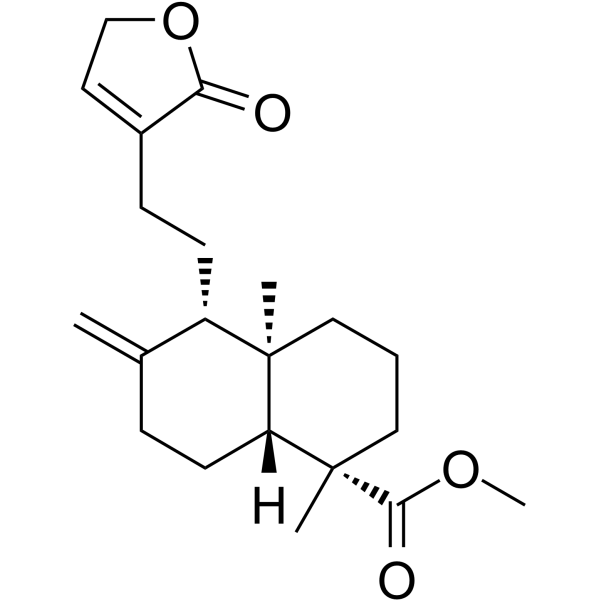 0 ImagesPinusolide is an AMPK activator and PAF receptor antagonist. Pinusolide activates AMPK, phosphorylates ACC, enhances IRS-1 tyrosine phosphorylation, boosts glucose uptake, and modulates insulin signaling. Pinusolide inhibits caspase-3/7 activation, intracellular calcium elevation, reactive oxygen species overproduction, lipid peroxidation, and tumor cell proliferation. Pinusolide stabilizes superoxide dismutase activity, reduces apoptotic hallmarks, induces mitochondrial pathway apoptosis, and triggers DNA fragmentation. Pinusolide can be used for the research of type 2 diabetes, neurodegenerative diseases, acute lymphoblastic leukemia, acute myeloid leukemia, and Burkitt lymphoma.
-
Quinidine sulfate dihydrate
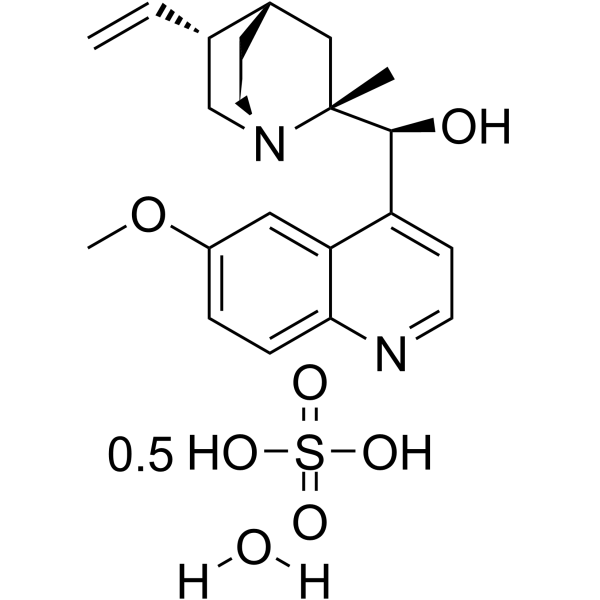 0 ImagesQuinidine sulfate dihydrate is an orally active antiarrhythmic agent. Quinidine sulfate dihydrate reduces the expression level of P-gp, inhibits P-gp-mediated efflux, increases the intracellular accumulation of P-gp substrates, induces PARP cleavage and Caspase-3 activation, and elevates the proportion of Apoptotic cells at the sub-G1 phase. Quinidine sulfate dihydrate exerts sustained block and open-channel block effects on IK(f). Quinidine sulfate dihydrate alters the urinary metabolic ratio of Amphetamine, modulates the Pentylenetetrazol-induced seizure threshold, and regulates the anticonvulsant effect of Dextromethorphan. Quinidine sulfate dihydrate can be used in studies related to uterine sarcoma and seizures.
-
5F-203 (Standard)
 0 ImagesCat. No.: HY-124421RCAS No.: 260443-89-8Synonyms: NSC-703786 (Standard)5F-203 (Standard) (NSC-703786 (Standard)) is the analytical standard of 5F-203 (HY-124421). This product is intended for research and analytical applications. 5F-203 (NSC-703786) is an aryl hydrocarbon receptor (AhR) agonist and the active moiety of the water-soluble benzothiazole prodrug Phortress (HY-103223). 5F-203 binds to cytosolic AhR and induces CYP1A1 and CYP1B1 expression. 5F-203 activates AhR signaling to induce DNA damage, cell cycle arrest, apoptosis, caspase-3/-7 activation, lysosomal membrane permeabilization, and Cathepsin B release. 5F-203 induces CYGB and pro-apoptotic protein expression and NAG-1 mRNA/protein induction through RNA stabilization. 5F-203 is used in research related to cancers such as triple-negative breast cancer and colorectal cancer.
-
Amsacrine isethionate
 0 ImagesCat. No.: HY-13551CCAS No.: 80277-14-1Synonyms: m-AMSA isethionate; Acridinyl anisidide isethionateAmsacrine isethionate (m-AMSA isethionate) is a Topoisomerase II inhibitor. Amsacrine isethionate intercalates into DNA. Amsacrine isethionate induces Ca2+-mediated inactivation of ERK, and also downregulates AKT, promoting MCL1 downregulation mediated by GSK3β via reducing the phosphorylation level of GSK3β. Amsacrine isethionate induces Apoptosis by activating Caspase-9 and Caspase-3. Amsacrine isethionate blocks HERG potassium channels in the open/inactivated state. Amsacrine isethionate induces chromosomal aberrations and sister chromatid exchanges, and inhibits the synthesis of RNA and DNA. Amsacrine isethionate exhibits anti-leukemic activity. Amsacrine isethionate causes cardiac repolarization disorders, QT interval prolongation, ventricular arrhythmias, and increases the risk of sudden cardiac death. Amsacrine isethionate can be used in research related to acute myeloid leukemia, lymphoma and progressive malignancies.
-
Hibiscetin
 0 ImagesHibiscetin is an orally active anti-inflammatory, antioxidant, antihyperglycemic, hypolipidemic, hepatoprotective and neuroprotective agent. Hibiscetin reduces the levels of TNF-α, IL-1β and IL-6. Hibiscetin inhibits lipid peroxidation, reduces MDA levels, and induces the activities of antioxidant enzymes CAT, GSH and SOD. Hibiscetin lowers blood glucose, reverses reduced insulin levels, regulates adipokine levels, and reduces elevated AST and ALT levels. Hibiscetin alleviates Rotenone (HY-B1756)-induced akinesia and catalepsy, normalizes neurotransmitter levels, and modulates the activities of activated caspase 3 and BDNF. Hibiscetin can be used in the research of type 2 diabetes, Parkinson's disease and Huntington's disease.
-
Triptophenolide (Standard)
 0 ImagesCat. No.: HY-N0475RCAS No.: 74285-86-2Synonyms: Hypolide (Standard); (+)-Triptophenolide (Standard)Triptophenolide (Standard) (Hypolide) is the analytical standard of Triptophenolide (HY-N0475). This product is intended for research and analytical applications. Triptophenolide is a colorless crystal isolated from the ethyl acetate extract of Tripterygium wilfordii. Triptophenolide is an orally active pan‑antagonist of the androgen receptor (AR) with an IC50 of 467 nM against human wild‑type AR. Triptophenolide reduces AR expression, inhibits AR nuclear translocation, downregulates prostate‑specific antigen mRNA levels, and suppresses the growth of AR‑positive prostate cancer cells. Triptophenolide shows anti-tumor effects against breast cancer by inhibiting cell proliferation and migration, inducing G1-phase arrest and apoptosis, repressing xenograft tumor growth. Triptophenolide inhibits pyroptosis, alleviates tissue inflammation, and ameliorates synovial injury. Triptophenolide can be used for the study of prostate cancer, rheumatoid arthritis and breast cancer.
-
Benfluron hydrochloride
 0 ImagesCat. No.: HY-106419ACAS No.: 80427-58-3Synonyms: Benflurone hydrochlorideBenfluron hydrochloride is an Apoptosis inducer and inhibitor of the HIV-1 Rev-RRE complex, with an IC50 of 5.0 μM against the HIV-1 Rev-RRE complex. Benfluron hydrochloride induces p53 activation, and triggers phosphorylation of Chk1 at serine 345, Chk2 at threonine 68, as well as ERK1/2 at threonine 202 and tyrosine 204. Benfluron hydrochloride activates Caspase 8, Caspase 9 and Caspase 3/7, inhibits HIV-1 viral transcription, and acts as a substrate for 11β-HSD 1 and cytosolic carbonyl reductase. Benfluron hydrochloride can be used in research related to leukemia and HIV-1 infection.
-
Polyporenic acid C (Standard)
 0 ImagesPolyporenic acid C (Standard) is an analytical standard of Polyporenic acid C (HY-N2993). This product is intended for research and analytical applications. Polyporenic acid C is a lanostane-type triterpenoid. Polyporenic acid C can be isolated from Poria cocos. Polyporenic acid C causes the cleavage of caspase-8 and caspase-3, as well as the cleavage of PARP. Polyporenic acid C reduces the phosphorylation level of Akt (Ser473), increases the phosphorylation of PTEN and p53 (Ser15), and activates JNK. Polyporenic acid C induces Apoptosis. Polyporenic acid C shows anticancer activity against non-small cell lung cancer.
-
Quinidine hydrochloride monohydrate (Standard)
 0 ImagesQuinidine hydrochloride monohydrate (Standard) is the analytical standard of Quinidine hydrochloride monohydrate (HY-B1302). This product is intended for research and analytical applications. Quinidine hydrochloride monohydrate is an orally active antiarrhythmic agent. Quinidine hydrochloride monohydrate reduces the expression level of P-gp, inhibits P-gp-mediated efflux, increases the intracellular accumulation of P-gp substrates, induces PARP cleavage and Caspase-3 activation, and elevates the proportion of Apoptotic cells at the sub-G1 phase. Quinidine hydrochloride monohydrate exerts sustained block and open-channel block effects on IK(f). Quinidine hydrochloride monohydrate alters the urinary metabolic ratio of Amphetamine, modulates the Pentylenetetrazol-induced seizure threshold, and regulates the anticonvulsant effect of Dextromethorphan. Quinidine hydrochloride monohydrate can be used in studies related to uterine sarcoma and seizures.
-
(-)-Isoproterenol
 0 Images(-)-Isoproterenol (Levisoprenalinel) is the R-isomer of Isoproterenol. (-)-Isoproterenol can reduce the cleavage of caspase 3 and TNFα levels in retinal endothelial cells (REC). (-)-Isoproterenol can be used for the study of diabetic retinopathy.
-
Mofarotene
 0 ImagesCat. No.: HY-127149CAS No.: 125533-88-2Synonyms: Ro 40-8757Mofarotene (Ro 40-8757), an arotinoid, is anticancer compound. Mofarotene induces apoptosis, associated with mitochondrial membrane depolarization, activation of caspase-3 and -9, and enhanced production of reactive oxygen species. Mofarotene inhibits hematopoiesis in vitro by inhibiting maturation from primitive progenitor cells.
-
HDAC-IN-82
 0 ImagesCat. No.: HY-169922HDAC-IN-82 (Compound 18b) is a histone deacetylase (HDAC) inhibitor with selective antiplasmodial and anticancer activity. HDAC-IN-82 shows potent antiproliferative activity and caspase 3/7 activation in cancer cells. HDAC-IN-82 causes hyperacetylation of histone H3 and α-tubulin.
-
Nivitol
 0 ImagesCat. No.: HY-108046CAS No.: 869743-37-3Synonyms: UP302Nivitol (UP302) is a natural phenolic compound discovered from Dianella ensifolia and also acts as a Tyrosinase inhibitor. Nivitol competitively and reversibly inhibits tyrosinase, suppressing melanin production. Nivitol inhibits homogentisate 1,2-dioxygenase (HGD). In human leukemia cells, Nivitol inhibits PI3K/AKT pathway phosphorylation, increases ROS, decreases mitochondrial membrane potential, and induces G2/M cell cycle arrest, apoptosis, and PINK1/Parkin-mediated mitophagy. Nivitol exhibits inhibition of tumor growth in the MV411 xenograft mouse model. Nivitol is used for research on exogenous ochronosis, hyperpigmentation, and leukemia.
-
NCP26
 0 ImagesCat. No.: HY-183004CAS No.: 2396683-89-7NCP26 is an ATP-competitive ProRS inhibitor (with a KD of 271 nM in the absence of proline, and a KD of 0.35 nM in the presence of 100 μM proline). NCP26 activates AAR, induces G0/G1 phase arrest, Apoptosis, Caspase cleavage, and PARP cleavage. NCP26 downregulates MYC, TCF3, and CCND1. NCP26 inhibits the growth of multiple myeloma cells. NCP26 can be used for the research of multiple myeloma.
-
TASIN-1 hydrochloride
 0 ImagesCat. No.: HY-116572CAS No.: 1678515-13-3TASIN-1 hydrochloride is a selective inhibitor of truncated APCTR (adenomatous polyposis coli gene) that exerts cytotoxic effects by inhibiting cholesterol biosynthesis. TASIN-1 hydrochloride specifically targets colorectal cancer (CRC) cells carrying APC truncated mutations, while having no significant toxicity to wild-type APC cells. TASIN-1 hydrochloride exerts cytotoxic effects by targeting Emopamil binding protein (EBP) to inhibit cholesterol biosynthesis, triggering endoplasmic reticulum (ER) stress, reactive oxygen species (ROS) generation, and JNK-mediated apoptosis, and inhibiting Akt survival signaling. TASIN-1 hydrochloride can be used to prevent and intervene in APC mutant colorectal cancer.




