



ERK
Extracellular signal regulated kinases
ERKs (Extracellular-signal-regulated kinases) are widely expressed protein kinase intracellular signalling molecules that are involved in functions including the regulation of meiosis, mitosis, and postmitotic functions in differentiated cells. Many different stimuli, including growth factors, cytokines, virus infection, ligands for heterotrimeric G protein-coupled receptors, transforming agents, and carcinogens, activate the ERK pathway. In the MAPK/ERK pathway, Ras activates c-Raf, followed by mitogen-activated protein kinase kinase (abbreviated as MKK, MEK, or MAP2K) and then MAPK1/2 (below). Ras is typically activated by growth hormones through receptor tyrosine kinases and GRB2/SOS, but may also receive other signals. ERKs are known to activate many transcription factors, such as ELK1, and some downstream protein kinases. Disruption of the ERK pathway is common in cancers, especially Ras, c-Raf and receptors such as HER2.
ERK Isoform Specific Products
All Product Categories
-
ERK Inhibitors
(762)
View all products
-
ERK Agonists
(10)
View all products
-
ERK Activators
(267)
View all products
-
ERK Modulators
(19)
View all products
-
ERK Chemical
(1)
View all products
-
ERK Inducers
(17)
View all products
-
ERK Degraders
(2)
View all products
-
ERK Controls
(3)
View all products
-
ERK Ligands
(2)
View all products
-
ERK Related Products (1167)
Related Products (1167)

-
Antibodies (22)
-
ERK Isoform Comparison
-
trans-Zeatin (Standard)
 0 Imagestrans-Zeatin (Standard) is the analytical standard of trans-Zeatin. This product is intended for research and analytical applications. trans-Zeatin is a plant cytokinin, which plays an important role in cell growth, differentiation, and division; trans-Zeatin also inhibits UV-induced MEK/ERK activation.
-
SMU-14a
 0 ImagesCat. No.: HY-176192SMU-14a is a selective Toll-like receptor 3 (TLR3) inhibitor wirh an IC50 of 0.18 μM. SMU-14a reduces phosphorylation of p65, ERK, and TBK1 via NF-κB, MAPK, and IRF3 signaling pathways. SMU-14a inhibits IL-6 secretion in mouse peritoneal macrophages, downregulates TNF-α in human peripheral blood monocytes and decreases serum alanine aminotransferase (ALT) and aspartate aminotransferase (AST) levels. SMU-14a can be used for the research of acute hepatitis.
-
Antiproliferative agent-37
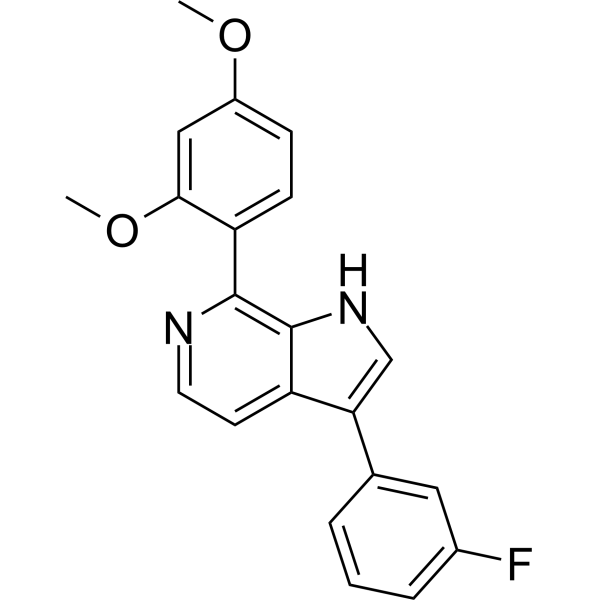 0 ImagesAntiproliferative agent-37 (compound 10J) shows anti-proliferative effect by arresting the cells at the G2/M phase of the cell cycle.
-
Lidocaine (GMP)
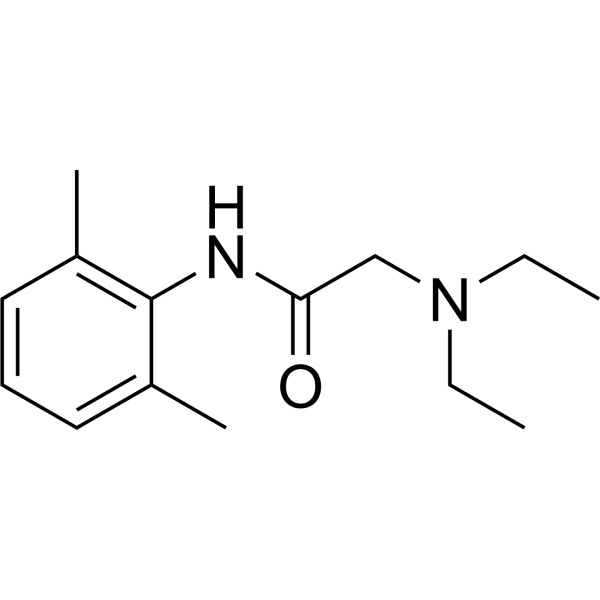 0 ImagesLidocaine (GMP) is Lidocaine (HY-B0185) produced by using GMP guidelines. GMP small molecules work appropriately as an auxiliary reagent for cell therapy manufacture. Lidocaine inhibits sodium channels involving complex voltage and using dependence. Lidocaine decreases growth, migration and invasion of gastric carcinoma cells via up-regulating miR-145 expression and further inactivation of MEK/ERK and NF-κB signaling pathways. Lidocaine is an amide derivative and has potential for the research of ventricular arrhythmia.
-
(R)-VX-11e
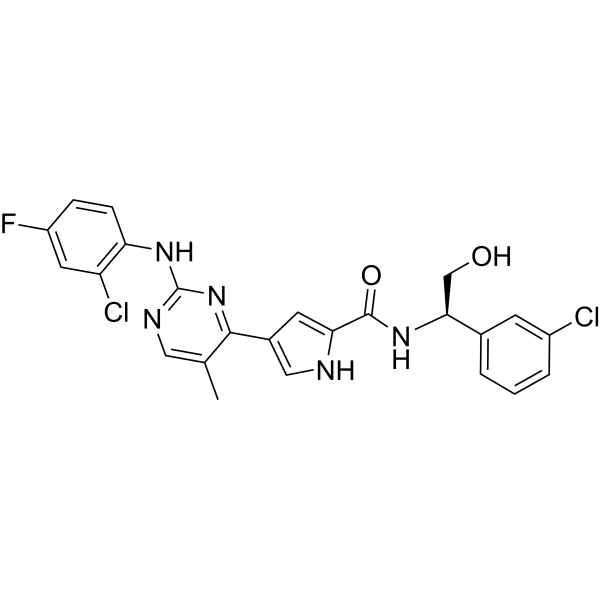 0 Images(R)-VX-11e (Compound 1) is an ERK2 inhibitor.
-
Desipramine hydrochloride (Standard)
 0 ImagesDesipramine hydrochloride (Standard) is the analytical standard of Desipramine hydrochloride (HY-B1272). This product is intended for research and analytical applications. Desipramine hydrochloride is a first-generation tricyclic antidepressant. Desipramine hydrochloride selectively binds to norepinephrine transporter and blocks neuronal norepinephrine reuptake. Desipramine hydrochloride activates MAPK signaling via ERK1/2, JNK, and p38, represses NF-κB and AP-1 activity, and induces apoptosis via ROS elevation, mitochondrial membrane potential reduction, and intracellular calcium increase. Desipramine hydrochloride also shows anyi-inflammatory activity, inhibiting TNF-α production. Desipramine hydrochloride can be used for the research of hepatocellular cancer, inflammation, and neurological diseases.
-
12(S)-HETE-d8
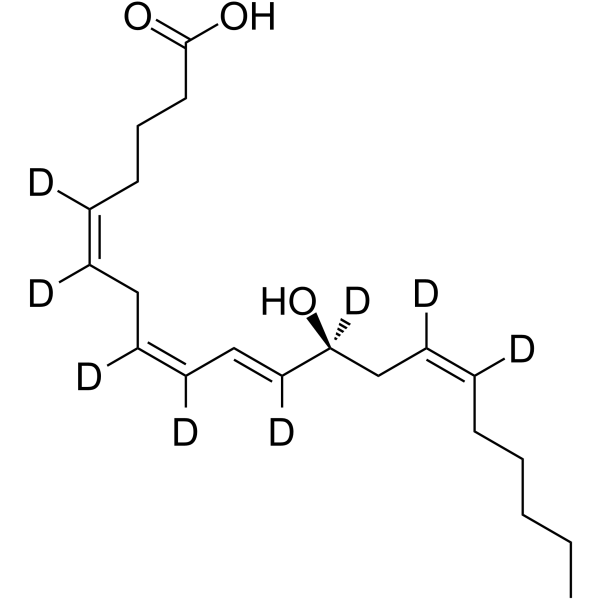 0 ImagesCat. No.: HY-123023CAS No.: 84807-90-912(S)-HETE-d8 contains eight deuterium atoms at the 5, 6, 8, 9, 11, 12, 14 and 15 positions. 12(S)-HETE-d8 is intended for use as an internal standard for the quantification of 12(S)-HETE by GC- or LC-mass spectrometry (MS). 12(S)-HETE-d8 is the predominant lipoxygenase product of mammalian platelets. It enhances tumor cell adhesion to endothelial cells, fibronectin, and the subendothelial matrix at 0.1 µM.
-
7-Ketositosterol
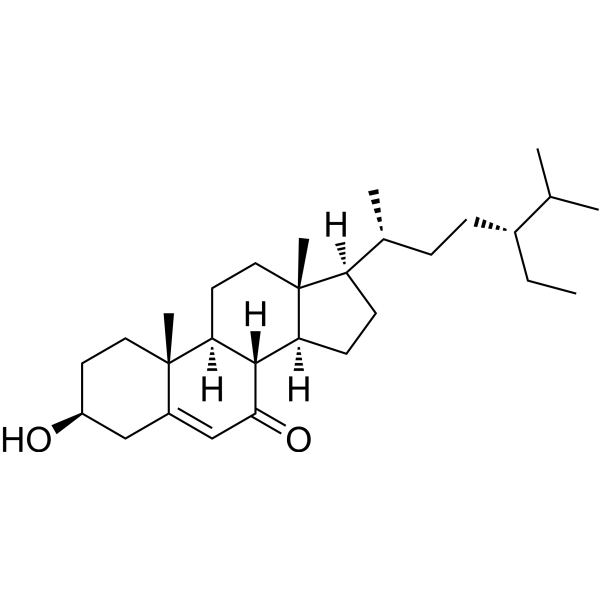 0 Images7-Ketositosterol is an orally active inducer of apoptosis and ferroptosis. 7-Ketositosterol inhibits the phosphorylation of ERK1/2 and NF-κB, promotes the opening of the mitochondrial/apoptotic pathway, and induces ferroptosis in macrophages by increasing the levels of malondialdehyde, Fe2+ and ROS. 7-Ketositosterol upregulates the expression of gut microbiota-dependent PDLIM3, activates the p38MAPK/NF-κB signaling pathway, alters the composition of gut microbiota, increases the abundance of pathogenic bacteria, and exacerbates colitis in mice. 7-Ketositosterol can be used in studies related to breast cancer, liver cancer, and colitis.
-
Mianserin hydrochloride (Standard)
 0 ImagesSynonyms: Org GB 94 (Standard)Mianserin hydrochloride (Org GB 94) (Standard) is the analytical standard of Mianserin hydrochloride. This product is intended for research and analytical applications. Mianserin hydrochloride is an orally active H1 receptor antagonist. Mianserin hydrochloride can activate κ-opioid receptor and octopamine receptor. Mianserin hydrochloride increases ERK1/2 and CREB phosphorylation, and antagonizes full κ-opioid agonist and Dynorphin A (HY-P1333)-induced MAPK phosphorylation. Mianserin hydrochloride modulates social and exploratory behaviour, raises electroconvulsive thresholds. Mianserin hydrochloride can be used for the research of neurological disease, such as depression and epilepsy.
-
(Rac)-AAA
 0 Images(Rac)-AAA is a regulator and inhibitor targeting GPR75. By blocking the 20-HETE-induced downregulation of GPR75 expression, (Rac)-AAA effectively inhibits the activation of key downstream signaling pathways including EGFR, AKT, NF-κB and FAK. (Rac)-AAA reverses 20-HETE-mediated epithelial-mesenchymal transition, which is specifically characterized by downregulating vimentin (vimentin), upregulating E-Cadherin, as well as reducing MMP-2 activity and cancer cell migration ability. (Rac)-AAA also abolishes the 20-HETE-induced upregulation of HIC-5 expression and anchorage-independent growth, and modulates the subcellular localization of PKC-α and phosphorylated AKT. (Rac)-AAA is investigated in androgen-independent prostate cancer (castration-resistant prostate cancer).
-
Farrerol (Standard)
 0 ImagesSynonyms: (-)-Farrerol (Standard)Farrerol (Standard) is the analytical standard of Farrerol. This product is intended for research and analytical applications. Farrerol is a bioactive constituent of Rhododendron, with broad activities such as anti-oxidative, anti-inflammatory, anti-tumor, neuroprotective and hepatoprotective effects.
-
Salbutamol-d9
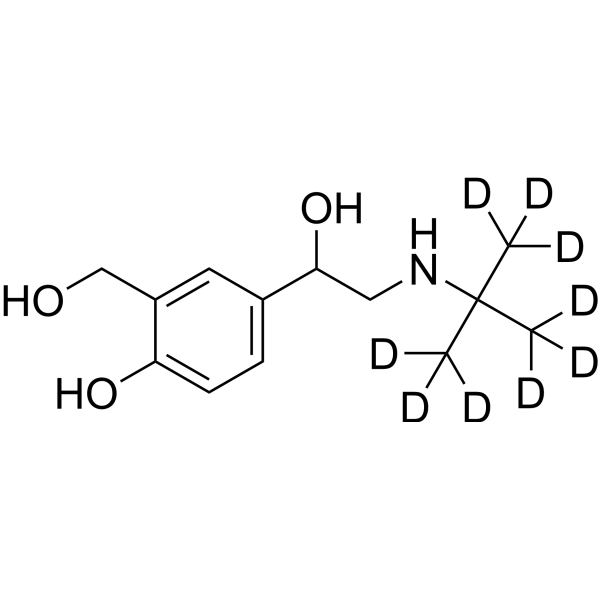 0 ImagesSynonyms: Albuterol-d9; AH-3365-d9Salbutamol-d9 (Albuterol-d9) is the deuterium labeled Salbutamol (HY-B1037). Salbutamol (Albuterol) is an orally active short-acting β2-adrenergic receptor agonist. Salbutamol promotes tumorigenesis in gastric cancer cells through the β2-AR/ERK/EMT pathway. Salbutamol can relax bronchial smooth muscle and is used to study bronchospasm induced by asthma and chronic obstructive pulmonary disease.
-
Piezo1 agonist 1-d2
 0 ImagesCat. No.: HY-169332CAS No.: 3058199-62-2Piezo1 agonist 1-d2 is a Piezo1 agonist and osteogenesis promoter with an EC50 of 2.21 μM. Piezo1 agonist 1-d2 activates Piezo1 and induces calcium ion influx in mesenchymal stem cells. Piezo1 agonist 1-d2 activates the Erk signaling pathway and promotes osteogenesis of mesenchymal stem cells. Piezo1 agonist 1-d2 alleviates disuse osteoporosis in a hindlimb unloading rat model. Piezo1 agonist 1-d2 can be used for research on osteoporosis.
-
TM-2-51
 0 ImagesTM-2-51 is a HDAC8 activator with a Kd value of 0.28 μM. TM-2-51 inhibits α-glucosidase with an IC50 of 171.21 μM. TM-2-51 upregulates HDAC8 expression, modulates the TP53, STAT3/ERK and PI3K-AKT pathways, alleviates LeTx-induced cell cycle arrest, downregulates JMJD3 and increases H3K27me3 levels. TM-2-51 selectively induces apoptosis in tumor cell and upregulates p53/p21 expression. TM-2-51 inhibits tumor cell proliferation, migration and invasion, induces G1-phase arrest and suppresses tumor growth in vivo. TM-2-51 can be used in research on osteosarcoma, anthrax, type 2 diabetes and neuroblastoma.
-
MD-3-A45
 0 ImagesMD-3-A45 is an inhibitor of fibroblast growth factor 23 (FGF-23). MD-3-A45 blocks the activation of the FGFRs/α-klotho signaling pathway by FGF-23 and inhibits FGF-23-induced ERK activation. MD-3-A45 can be used in the research of chronic kidney disease, hereditary hypophosphatemic rickets and acquired hypophosphatemic rickets.
-
FTI-277
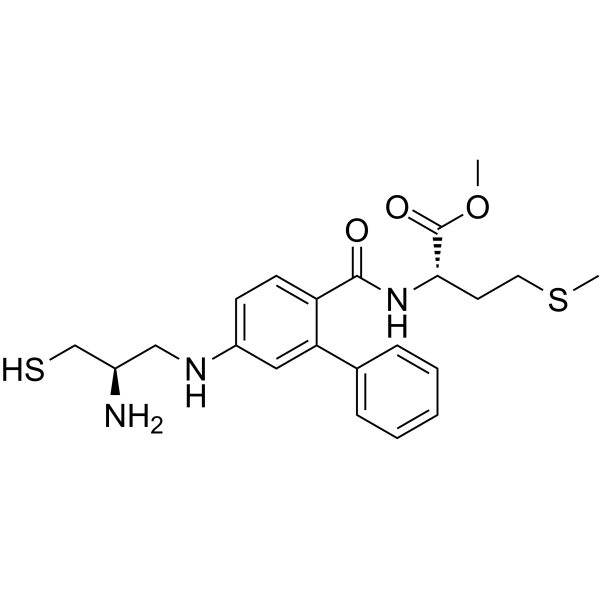 0 ImagesCat. No.: HY-15872CAS No.: 170006-73-2FTI-277 is a farnesyltransferase (FTase) inhibitor. FTI-277 inhibits Ras farnesylation, blocks the phosphorylation of downstream ERK1/2 and mTOR, and reduces membrane-bound active N-ras protein. FTI-277 activates caspase 3, upregulates Bim expression, induces cell apoptosis, suppresses regulatory T cell expansion, enhances macrophage phagocytosis, and improves bacterial clearance. FTI-277 activates the PI3K/Akt signaling pathway, inhibits osteoblast differentiation, and reduces the proliferation ability of neuroblastoma cells. FTI-277 can be used in research related to head and neck squamous cell carcinoma, neuroblastoma, sepsis, and vascular calcification.
-
Napyradiomycin B4
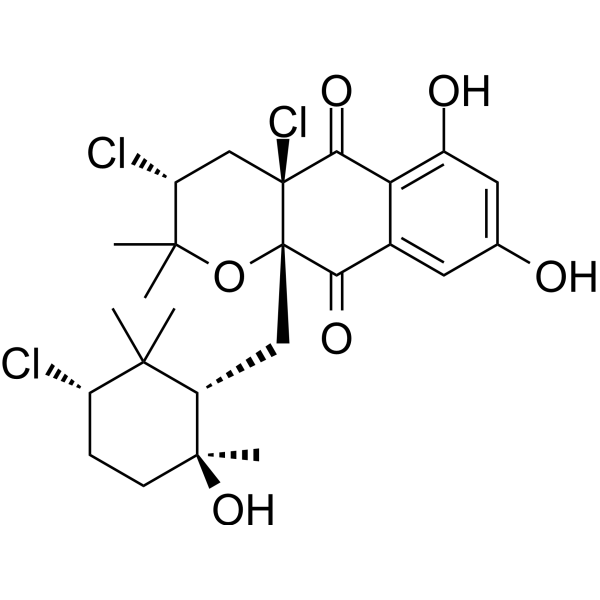 0 ImagesCat. No.: HY-N12740CAS No.: 111216-63-8Napyradiomycin B4 is a Napyradiomycin derivative, which inhibits the RANKL-induced MEK-ERK signaling pathway. Napyradiomycin B4 attenuates osteoclastogenesis and prevents alveolar bone destruction in experimental periodontitis.
-
Sorafenib-d4
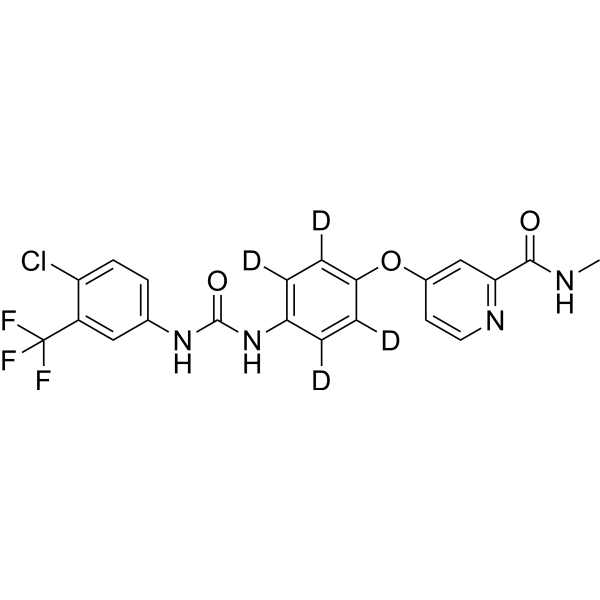 0 ImagesSynonyms: Bay 43-9006-d4Sorafenib-d4 (Bay 43-9006-d4) is the deuterated-labeled Sorafenib (HY-10201). Sorafenib (Bay 43-9006) is a potent oral active multikinase inhibitor. Sorafenib blocks autophosphorylation and activity of receptor tyrosine kinases (VEGFR-2, VEGFR-3) and RAF family kinases, thereby suppressing the RAF/MEK/ERK and PI3K/Akt pathways, inhibiting STAT3 phosphorylation, and selectively inhibiting the MAPK pathway in cancer cells. Sorafenib induces cell cycle arrest, autophagy, apoptosis, and PARP cleavage, reduces Bcl-2, Bcl-XL, cyclin D1 levels, and activates Bak and Bax. Sorafenib inhibits tumor growth and metastasis in mouse and rat models. Sorafenib can be used for cancer research, such as colon, breast, non-small-cell lung cancer (NSCLC), ovarian, pancreatic, melanoma, colorectal and hepatocellular carcinoma.
-
Prexigebersen sodium scrambled negative control
 0 ImagesCat. No.: HY-153495CPrexigebersen sodium scrambled negative control is the sequence scrambled negative control of Prexigebersen sodium.
-
RNK08954
 0 ImagesCat. No.: HY-180200CAS No.: 3032602-44-8RNK08954 is an orally active KRASG12D inhibitor with a Kd of 0.0395 nM. RNK08954 selectively binds the inactive GDP-bound KRASG12D form, suppresses downstream KRAS-mediated signaling pathways p-ERK1/2 experssion. RNK08954 inhibits KRASG12D-mutant cell proliferation, induces G0-G1 cell cycle arrest, and inhibits tumor growth in mouse xenograft models. RNK08954 can be used for the research of non-small cell lung cancer, pancreatic ductal adenocarcinoma.




