HDAC
Histone deacetylases
HDAC (Histone deacetylases) are a class of enzymes that remove acetyl groups (O=C-CH3) from an ε-N-acetyl lysine amino acid on ahistone, allowing the histones to wrap the DNA more tightly. This is important because DNA is wrapped around histones, and DNA expression is regulated by acetylation and de-acetylation. Its action is opposite to that of histone acetyltransferase. HDAC proteins are now also called lysine deacetylases (KDAC), to describe their function rather than their target, which also includes non-histone proteins. Together with the acetylpolyamine amidohydrolases and the acetoin utilization proteins, the histone deacetylases form an ancient protein superfamily known as the histone deacetylase superfamily.
HDAC Isoform Specific Products
-
HDAC
(393)
View all products
-
HDAC1
(316)
View all products
-
HDAC2
(210)
View all products
-
HDAC3
(204)
View all products
-
HDAC4
(72)
View all products
-
HDAC5
(56)
View all products
-
HDAC6
(337)
View all products
-
HDAC7
(53)
View all products
-
HDAC8
(189)
View all products
-
HDAC9
(41)
View all products
-
HDAC10
(67)
View all products
-
HDAC11
(73)
View all products
-
HD1
(3)
View all products
-
HD2
(4)
View all products
All Product Categories
-
HDAC Inhibitors
(781)
View all products
-
HDAC Antagonists
(3)
View all products
-
HDAC Activators
(14)
View all products
-
HDAC Modulators
(4)
View all products
-
HDAC MDM2 Inhibitor
(1)
View all products
-
HDAC Degraders
(45)
View all products
-
HDAC Controls
(4)
View all products
-
HDAC Substrates
(4)
View all products
-
HDAC Ligands
(15)
View all products
-
HDAC Related Products (920)
Related Products (920)

-
Antibodies (16)
-
HDAC Signaling Pathway
-
HDAC Isoform Comparison

-
HDAC6-IN-8
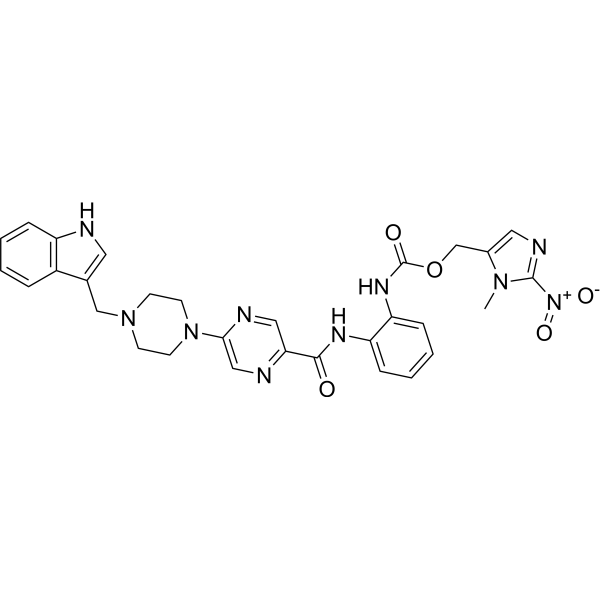
 0 ImagesCat. No.: HY-147730CAS No.: 2796282-49-8A variety of compounds were designed and synthesized by modifying cap groups. The enzyme inhibition test showed that compound 12C had broad-spectrum enzyme inhibitory activity, and compounds 9m and 9q were more inclined to inhibit HDAC6, showing a certain selective inhibitory activity among the representative subtypes.
-
HDAC6-IN-83
 0 ImagesCat. No.: HY-184304CAS No.: 3053098-60-2HDAC6-IN-83 is a selective histone deacetylase 6 (HDAC6) inhibitor with an IC50 value of 11.49 nM. HDAC6-IN-83 selectively increases the acetylation level of α-tubulin without affecting histone H3. HDAC6-IN-83 induces cell apoptosis, induces cell cycle arrest, inhibits cancer cell proliferation, suppresses cancer cell invasion and inhibits angiogenesis. HDAC6-IN-83 can be used in non-small cell lung cancer research.
-
NN-390
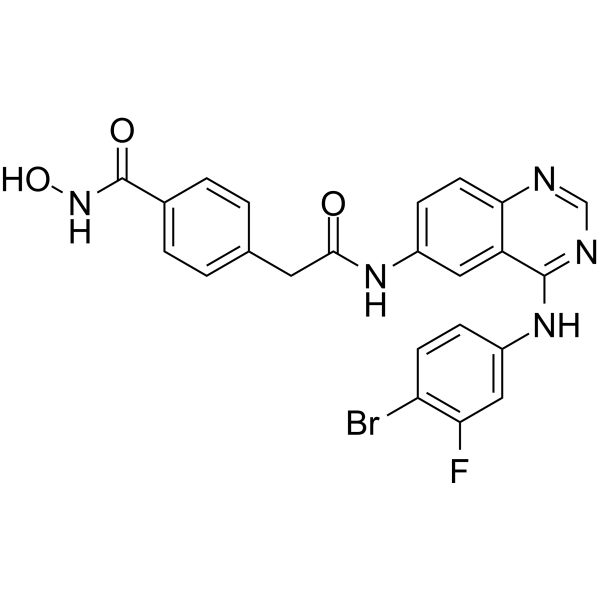
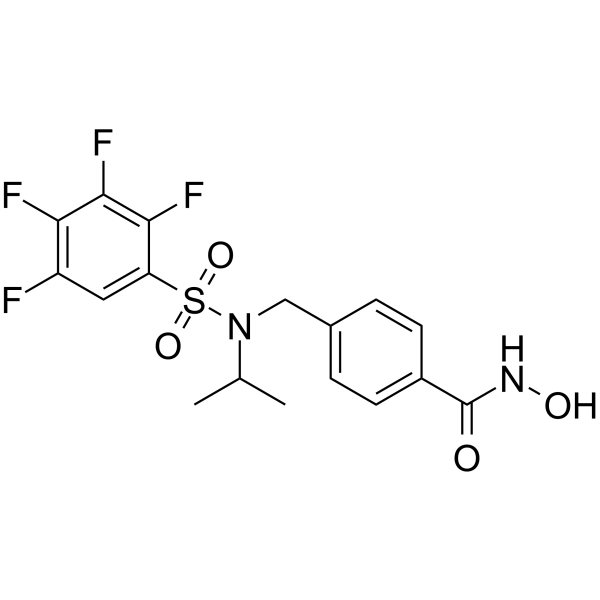 0 ImagesCat. No.: HY-143877CAS No.: 2490284-25-6NN-390 is a potent and selective HDAC6 inhibitor, with an IC50 of 9.8 nM. NN-390 penetrates the blood-brain barrier (BBB). NN-390 shows study potential in metastatic Group 3 MB (medulloblastoma).
-
Curcuphenol
 0 ImagesCat. No.: HY-119505CAS No.: 69301-27-5Curcuphenol is a compound with histone deacetylase enhancing activity and has the activity of reversing immune escape. Curcuphenol can reverse the immune escape of tumors by restoring the expression of antigen presentation machinery. Its two synthetic analogs have histone deacetylase enhancing activity and play an important role in the immune recognition of metastatic tumors.

-
HDAC-IN-104
 0 ImagesCat. No.: HY-184574HDAC-IN-104 is a potent and selective class I Histone deacetylases (HDAC) inhibitor with an IC50 of 25 nM. HDAC-IN-104 exerts potent antiproliferative and antitumor effects by inhibiting glycolysis and OXPHOS via blockade of the PI3K/AKT signaling pathway, and these effects are synergistically enhanced when combined with the FMS-like tyrosine kinase 3 (FLT3) inhibitor Quizartinib (AC220) (HY-13001). HDAC-IN-104 induces significant early and late apoptosis. HDAC-IN-104 can be used for acute myeloid leukemia (AML) research.
-
Sodium butyrate (Standard)
 0 ImagesCat. No.: HY-B0350ARCAS No.: 156-54-7Synonyms: Butanoic acid sodium (Standard); Butyric acid sodium (Standard)Sodium butyrate (Standard) is the analytical standard of Sodium butyrate (HY-B0350A). This product is intended for research and analytical applications. Sodium Butyrate (sodium butanoate) is an inhibitor of HDAC, possessing anti-tumor activity.
-
G4/HDAC-IN-1
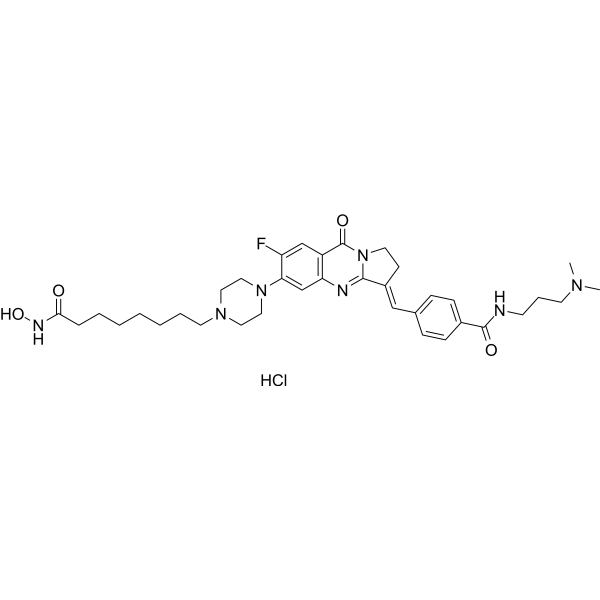 0 ImagesCat. No.: HY-151263CAS No.: 3031784-60-5G4/HDAC-IN-1 (compound a6) is a G4/HDAC dual-targeting compound. G4/HDAC-IN-1 inhibits intracellular HDAC activity with an IC50 value of 1.1 μM, and induces G4 formation. G4/HDAC-IN-1 inhibits TNBC proliferation and tumor growth in TNBC xenograft model. G4/HDAC-IN-1 can be used for the research of cancer.
-
HDAC8-IN-17
 0 ImagesCat. No.: HY-187382HDAC8-IN-17 is a histone deacetylase 8 inhibitor with human IC50 values of 0.08 μM, 0.44 μM, and 1.9 μM, and high selectivity over HDAC1, HDAC2, HDAC3, and HDAC6. HDAC8-IN-17 exhibits slow-binding, reversible uncompetitive inhibition via allosteric binding to the enzyme-substrate complex. HDAC8-IN-17 induces selective hyperacetylation of SMC3. HDAC8-IN-17 can be used for the research of cancer.
-
HDAC6/HSP90-IN-1
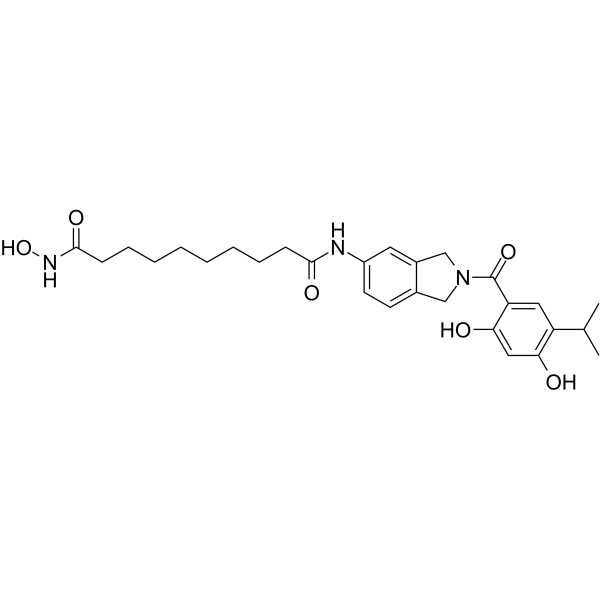 0 ImagesCat. No.: HY-146293CAS No.: 2411955-43-4HDAC6/HSP90-IN-1 (compound 17) is a potent and selective dual inhibitor of HDAC6 and HSP90, with IC50 values of 4.3 and 46.8 nM, respectively. HDAC6/HSP90-IN-1 down-regulates PD-L1 expression in INF-γ treated H1975 lung cancer cells. HDAC6/HSP90-IN-1 inhibits tumor growth in human H1975 xenograft mice.
-
HDAC8 ligand 1
 0 ImagesCat. No.: HY-168176HDAC8 ligand 1 is a PROTAC target protein-ligand of PROTAC HDAC8 Degrader-2 (HY-168174).
-
HDAC6-IN-63
 0 ImagesCat. No.: HY-178022HDAC6-IN-63 (Compound 7) is an orally active HDAC6 inhibitor with an IC50 of 145 nM. HDAC6-IN-63 inhibits the expression of Sp1 and RAD51, thereby inducing Caspase-dependent apoptosis. HDAC6-IN-63 has antitumor activity and sensitizes Etoposide (HY-13629) and Gemcitabine (HY-17026), promoting synergistic death of NSCLC cells through the inhibition of homologous recombination and non-homologous end joining (NHEJ) pathways involved in DNA DSB repair. HDAC6-IN-63 can be used for chemotherapy of cancers like NSCLC research.
-
Largazole thiol
 0 ImagesCat. No.: HY-170890CAS No.: 1132667-11-8

-
XP5
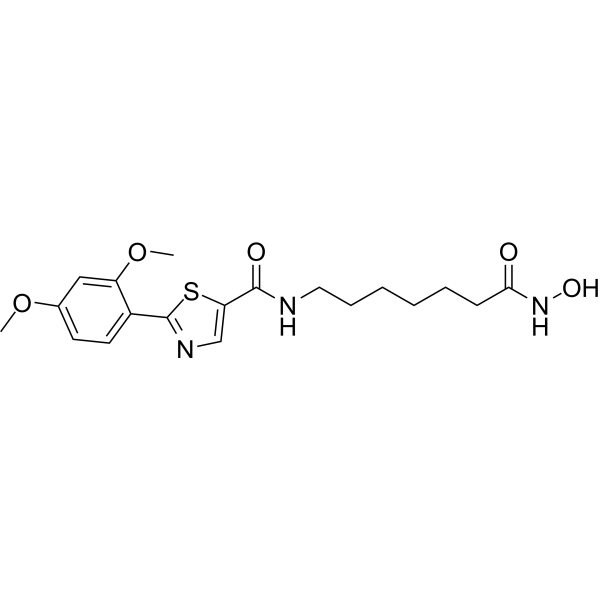 0 ImagesCat. No.: HY-115885CAS No.: 2760511-91-7XP5 is a potent, orally active HDAC6 inhibitor with an IC50 of 31 nM. XP5 displays high antiproliferative activity against various cancer cell lines including the HDACi-resistant YCC3/7 gastric cancer cells (IC50=0.16-2.31 μM). XP5 enhances antitumor immunity when combined with a PD-L1 inhibitor in melanoma.
-
HDAC6/HSP90-IN-3
 0 ImagesCat. No.: HY-175467HDAC6/HSP90-IN-3 (Compound 17) is an orally active dual histone deacetylase 6 (HDAC6) and heat shock protein 90 (HSP90) inhibitor with IC50 values of 28 nM and 0.88 μM, respectively. HDAC6/HSP90-IN-3 is promising for research of malignant tumors such as prostate cancer.
-
IMPDH II/HDAC1-IN-1
 0 ImagesCat. No.: HY-174221IMPDH II/HDAC1-IN-1 (Compound C12) is an orally active, selective dual IMPDH II/HDAC1 inhibitor, with an IC50 of 84.69 nM against hIMPDH II and an IC50 of 81.75 nM against HDAC1. IMPDH II/HDAC1-IN-1 inhibits the proliferation of chronic myeloid leukemia cells. IMPDH II/HDAC1-IN-1 can be used for the research of chronic myeloid leukemia.
-
HDAC-IN-37
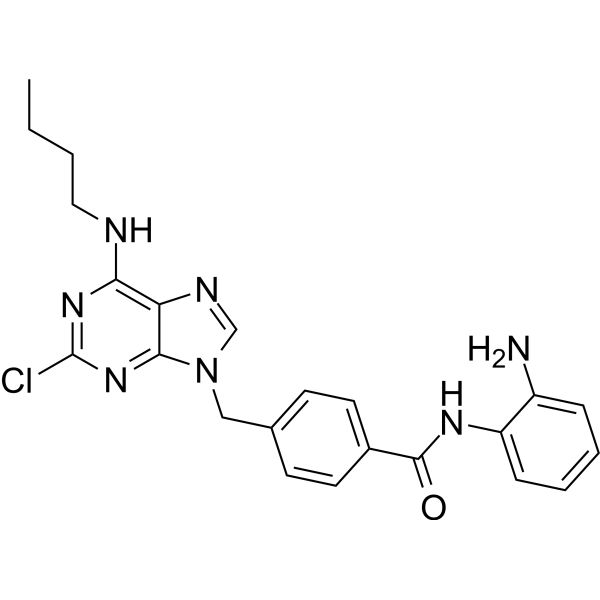 0 ImagesCat. No.: HY-146750CAS No.: 2766466-56-0