



IL-1
IL-1 is a core inflammatory cytokine family that links innate inflammation with acquired immunity and regulates host responses to infection, tissue injury, and sterile danger signals[1]. Mechanistically, IL-1α and IL-1β signal through IL-1R1, recruit accessory receptor components, and activate inflammatory gene programs that amplify cytokines, chemokines, COX-2, iNOS, and matrix metalloproteinases[2]. In disease models and human inflammatory disorders, deregulated IL-1α/IL-1β signaling contributes to severe acute or chronic inflammation, autoimmune disease, autoinflammatory disease, metabolic disease, neurological disease, degenerative disease, and cancer[3]. Compared with related isoforms, IL-1α can act as an active precursor and is often cell-associated, whereas IL-1β requires enzymatic processing and functions mainly as a secreted inflammatory mediator[2][3]. This isoform distinction matters in tumor models, where IL-1β promotes inflammation, tumor invasiveness, and immunosuppression, while cell-associated IL-1α can stimulate anti-tumor cell immunity[2]. For experimental and translational research, IL-1 inhibitors provide pathway tools because anakinra, bermekimab, canakinumab, gevokizumab, and rilonacept have been evaluated across immune-mediated disorders[4].- IL-1α and IL-1β share receptors but differ in localization, processing, and inflammatory context.- IL-1 blockade supports mechanistic studies of autoinflammation, tissue injury, tumor immunity, and cytokine amplification.
References:
- [1]. Dinarello CA. Overview of the IL-1 family in innate inflammation and acquired immunity. Immunol Rev. 2018 Jan;281(1):8-27. doi: 10.1111/imr.12621. PMID: 29247995; PMCID: PMC5756628. et al. Overview of the IL-1 family in innate inflammation and acquired immunity. Immunol Rev. 2018 Jan;281(1):8-27. [Content Brief]
- [2]. Voronov E, et al. Unique Versus Redundant Functions of IL-1α and IL-1β in the Tumor Microenvironment. Front Immunol. 2013 Jul 8;4:177. [Content Brief]
- [3]. Galozzi P, et al. The revisited role of interleukin-1 alpha and beta in autoimmune and inflammatory disorders and in comorbidities. Autoimmun Rev. 2021 Apr;20(4):102785. [Content Brief]
- [4]. Arnold DD, et al. Systematic Review of Safety and Efficacy of IL-1-Targeted Biologics in Treating Immune-Mediated Disorders. Front Immunol. 2022 Jul 6;13:888392. [Content Brief]
All Product Categories
-
IL-1 Inhibitors
(380)
View all products
-
IL-1 Agonist
(1)
View all products
-
IL-1 Antagonists
(2)
View all products
-
IL-1 Activators
(15)
View all products
-
IL-1 Modulators
(28)
View all products
-
IL-1 Inducers
(23)
View all products
-
IL-1 Degrader
(1)
View all products
-
IL-1 Ligands
(2)
View all products
-
IL-1 Proteins
(43)
View all products
-
IL-1 Related Products (483)
Related Products (483)

-
Recombinant Proteins (45)
-
Antibodies (1)
-
CK-119
 0 ImagesCat. No.: HY-123195CAS No.: 197917-10-5CK-119 is a potent interleukin-1 blocker. CK-119 inhibits the cell growth of fibroblast-like corneal and conjunctival cells, mainly by inhibiting DNA and RNA syntheses.
-
Phoenixin-20 TFA
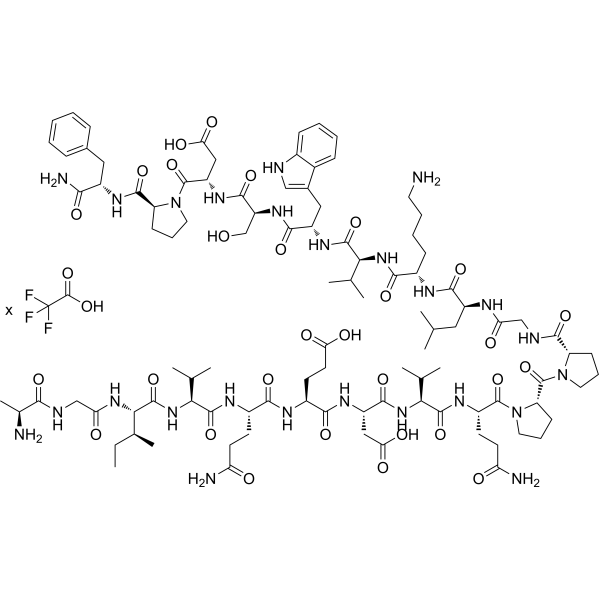 0 ImagesCat. No.: HY-P5763ASynonyms: PNX-20 TFAPhoenixin-20 TFA (PNX-20 TFA) is a neuropeptide that activates GPR173. Phoenixin-20 TFA inhibits LPS-induced TLR-4/MyD88/NF-κB signaling, pro-inflammatory cytokines, adhesion molecules, MMPs, and cytotoxicity. Phoenixin-20 TFA increases SIRT1 and inhibits NLRP3/ASC/caspase-1, oxidative stress, and IL-1β/IL-18. Phoenixin-20 TFA alleviates ox-LDL-induced endothelial dysfunction, monocyte adhesion, adhesion molecules, cytokines, NADPH oxidase/NOX-4, and ROS. Phoenixin-20 TFA promotes GPR173/STAT6-mediated anti-inflammatory polarization of microglia and neuroprotection. Phoenixin-20 TFA can be used in research on dental pulp infection, pulmonary arterial hypertension, atherosclerosis, neuroinflammation, anxiety, and neurodegenerative diseases.
-
2-ARA-LysoPtdEtn
 0 ImagesCat. No.: HY-185709CAS No.: 53847-31-7Synonyms: 1-Lyso-2-arachidonoyl-sn-glycero-3-phosphoethanolamine2-ARA-LysoPtdEtn (1-Lyso-2-arachidonoyl-sn-glycero-3-phosphoethanolamine) is an orally active polyunsaturated acyl lysophosphatidylethanolamine. 2-ARA-LysoPtdEtn diminishes formation of LTC4, LTB4, and 12-HETE. 2-ARA-LysoPtdEtn lowers levels of IL-1β, IL-6, TNF-α, and NO. 2-ARA-LysoPtdEtn augments IL-10 levels and upgrades formation of 15-HETE and LXA4. 2-ARA-LysoPtdEtn can be used for the research of peritonitis.
-
Lemairamin
 0 ImagesSynonyms: Wgx-50Lemairamin (Wgx-50) is a hydroxylamine compound. Lemairamin can be isolated from the pericarps of the Zanthoxylum plants. Lemairamin activates α7nAChR, stimulates the expression of IL-10 and POMC. Lemairamin shows a decrease in Akt. Lemairamin attenuates DSS-induced intestinal inflammation. Lemairamin alleviates pain hypersensitivity.
-
Maxadilan TFA
 0 ImagesCat. No.: HY-P3483AMaxadilan TFA is a specific irreversible PAC1 receptor agonist and a potent vasodilator peptide present in the salivary glands of sand flies. Maxadilan TFA exhibits anti-apoptotic activity in hADSCs. Maxadilan TFA inhibits pro-inflammatory cytokines (TNF-α) and enhances anti-inflammatory mediators (IL-10). Maxadilan TFA can activate leukocytes and inhibit vascular permeability through PAC1 receptors. Maxadilan TFA promotes neural differentiation of human adipose-derived stem cells. Maxadilan TFA can be used to study endotoxin shock, atherosclerosis, and neurodegenerative diseases[1][2][3][4][5].
-
N,N-Diethylacetamide
 0 ImagesCat. No.: HY-W008829CAS No.: 685-91-6N,N-Diethylacetamide is a polar solvent widely used in film and fiber manufacturing, as well as in laboratories as a carrier for water-insoluble chemicals. N,N-Diethylacetamide exerts potent anti-inflammatory effects by inhibiting the NF-κB pathway, suppressing the expression of NO and iNOS, and downregulating key inflammatory cytokines such as TNF-α and IL-6, without affecting the MAPK pathway. N,N-Diethylacetamide can be used to study inflammatory preterm birth.
-
Semapimod
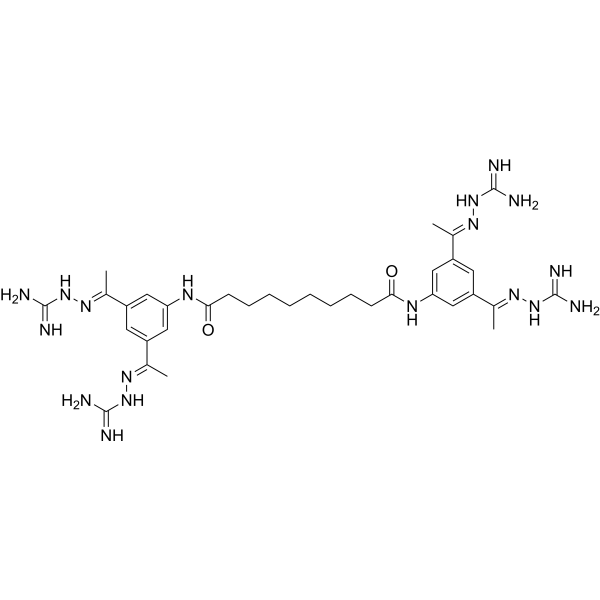 0 ImagesCat. No.: HY-15509CAS No.: 352513-83-8Synonyms: CNI-1493 free base; CPSI-2364Semapimod, an inhibitor of proinflammatory cytokine production, can inhibit TNF-α, IL-1β, and IL-6. Semapimod inhibits TLR4 signaling (IC50≈0.3 μM). Semapimod inhibits p38 MAPK and nitric oxide production in macrophages. Semapimod has potential in a variety of inflammatory and autoimmune disorders.
-
Lithocholic amide-C2-N(didecane)
 0 ImagesCat. No.: HY-178721CAS No.: 2768690-22-6Lithocholic amide-C2-N(didecane) (Compound LC10) is a Lithocholic acid (HY-B0172) analogue. Lithocholic amide-C2-N(didecane) can form lipid nanoparticles spontaneously in the aqueous milieu, permeate through the skin, penetrate the deeper dermal layers, and exert anti-inflammatory effects against psoriasis-like chronic skin inflammations. Lithocholic amide-C2-N(didecane) can inhibit abnormal proliferation of keratinocytes, downregulate the mRNA expression of the psoriasis-associated receptor EphA2 and reduce serum levels of multiple pro-inflammatory factors such as IL-1α, IL-1β, and IFN-γ by inhibiting activation of the Th17/Th2 inflammatory pathway.
-
NLRP3-IN-86
 0 ImagesCat. No.: HY-180830CAS No.: 2361570-54-7NLRP3-IN-86 (Compound 8a), a derivative of Songorine (HY-N2080), is a potent and selective NLRP3 inflammasome inhibitor. NLRP3-IN-86 can reduce LPS (HY-D1056)- and Nigericin (HY-127019)-stimulated lactate dehydrogenase (LDH) release (IC50 = 2.69 μM in THP-1 cells and 1.75 μ M in J774A.1 cells). NLRP3-IN-86 can inhibit gasdermin D (GSDMD) cleavage and IL-1β secretion. NLRP3-IN-86 can inhibit cell pyroptosis. NLRP3-IN-86 can be used for research of inflammation.
-
Anti-inflammatory agent 95
 0 ImagesCat. No.: HY-168935Anti-inflammatory agent 95 (Compound 2e) is an anti-inflammatory agent that exhibits the most potent anti-inflammatory activity in LPS (HY-D1056)-induced RAW 264.7 mouse macrophages. It significantly inhibits the production of NO, with an IC50 of 8.8 μM, and reduces the secretion of TNF-α and IL-1β, with inhibition rates reaching 60% and over 90%, respectively, at a concentration of 100 μM. Anti-inflammatory agent 95 holds promise for research in the field of inflammatory diseases.
-
GSK702
 0 ImagesCat. No.: HY-185009CAS No.: 2260944-69-0GSK702, a PROTAC, is a the less active cis-(S,S)-enantiomer of GSK983 (P300/CBP-associated factor (PCAF)/general control nonderepressible 5 (GCN5) PROTAC). GSK702 induces only a small decrease of PCAF protein levels. GSK702 binds to CRBN and causes a reduction of IL-1β in macrophages. GSK702 can be used for the study of inflammatory mediators.
-
URAT1-IN-16
 0 ImagesCat. No.: HY-184199CAS No.: 2864442-74-8URAT1-IN-16 is an orally active URAT1 inhibitor with an IC50 value of 0.19 μM. URAT1-IN-16 also functions as an NLRP3 inflammasome pathway inhibitor by effectively suppressing mature IL-1β secretion (IC50 = 2.52 μM). URAT1-IN-16 exhibits remarkable serum uric acid-lowering and anti-inflammatory activities in vivo, and can be used for hyperuricemia and gout research.
-
MNP2
 0 ImagesCat. No.: HY-P11581MNP2 is a NLRP3-ASC interaction inhibitor. MNP2 selectively binds to the PYD domain of ASC (Ka=149 nM) and blocks ASC-PYM binding (Ka=58 nM), thereby inhibiting the interaction between ASC and NLRP3 and suppressing the formation of the NLRP3 inflammasome. MNP2 inhibits IL-1β release and caspase-1 maturation, and reduces the efflux of potassium and chloride ions. MNP2 prevents mitochondrial damage and reactive oxygen species production, and significantly decreases NLRP3 inflammasome formation in neurodegenerative pathologies induced by β-amyloid, Tau protein and α-synuclein. MNP2 is applicable for the research of neurodegenerative diseases.
-
AChE-IN-85
 0 ImagesCat. No.: HY-173144AChE-IN-85 (Compound 7k) is an AChE inhibitor with an IC50 of 0.083 μM. AChE-IN-85 can inhibit the release of NO, the production of TNF-α and IL-1β, the levels of LDH and ROS, as well as the aggregation of Aβ42. AChE-IN-85 has anti-inflammatory and neuroprotective effects and can be used in the research of diseases such as Alzheimer's disease.
-
BChE-IN-49
 0 ImagesCat. No.: HY-181248BChE-IN-49 is an orally active BChE inhibitor with IC50 values of 0.73 μM and 6.43 μM against BChE and AChE, respectively. BChE-IN-49 reduces AChE levels to inhibit the degradation of acetylcholine. By inhibiting GSK-3β, BChE-IN-49 potently activates the Wnt/β-catenin signaling pathway, exerting potent anti-Aβ, antioxidant, anti-neuroinflammatory and anti-apoptotic effects. BChE-IN-49 can be used in research related to Alzheimer's disease.
-
Santamarine
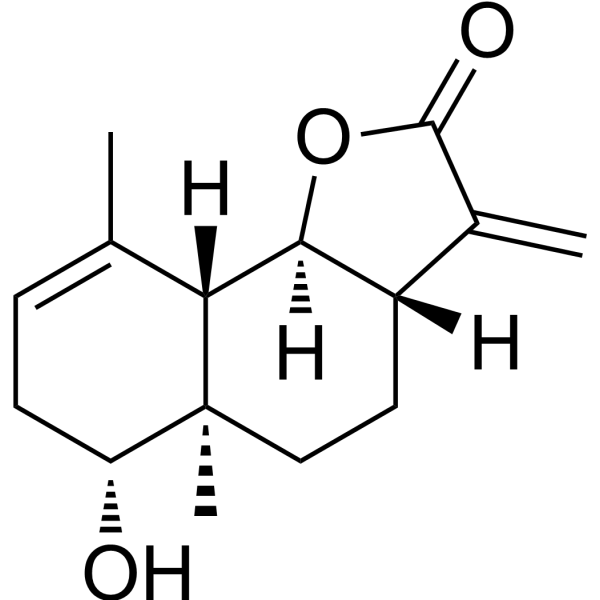 0 ImagesSantamarine (Santamarin; Balchanin) is a sesquiterpene lactone found in Artemisia scoparia. Santamarine shows anti-inflammatory, antioxidant, anticancer and anti-photoaging activities. Santamarine suppresses UVA-induced phosphorylation of JNK and p38 MAPK, nuclear translocation of phosphorylated c-Fos and c-Jun, and AP-1-mediated MMP-1 transcription and secretion. Santamarine suppresses NF-κB signaling, iNOS, COX-2, TNF-α, and IL-1β production. Santamarine inhibits thioredoxin reductase activity, induces ROS production, mitochondrial apoptosis, G2/M cell cycle arrest, and DNA damage, and reduces cancer cell growth. Santamarine can be used for the photoaging, inflammatory diseases and cancer.
-
Anti-inflammatory agent 115
 0 ImagesCat. No.: HY-183367CAS No.: 1504587-21-6Anti-inflammatory agent 115 is a potent anti-inflammatory agent. Anti-inflammatory agent 115 reduces secretion of myeloperoxidase (MPO), TNF-α, IL-1β, and IL-6. Anti-inflammatory agent 115 decreases ear tissue thickness and neutrophil infiltration in 12-O-tetradecanoylphorbol-13-acetate (TPA) (HY-18739)-induced topical edema in mice. Anti-inflammatory agent 115 can be used for the research of inflammatory diseases.
-
Panaxytriol
 0 ImagesCat. No.: HY-W709413CAS No.: 87005-03-6Panaxytriol is an active component of ginseng. Panaxytriol inhibits the nuclear translocation of NF-κB, thereby reducing the production of pro-inflammatory factors (such as TNF-α, IL-1β, IL-6) and nitric oxide (NO) induced by LPS (HY-D1056). Panaxytriol upregulates CYP3A4 by activating the nuclear receptor PXR/CAR. Panaxytriol improves motor dysfunction in a mouse model of brain inflammation. Panaxytriol can be used in the research of neurodegenerative diseases (such as Alzheimer's disease).
-
Ginsenoside Rh1 (Standard)
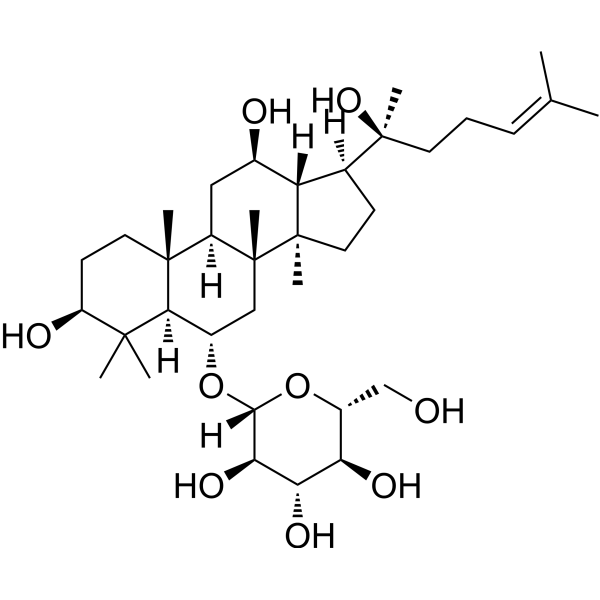 0 ImagesCat. No.: HY-N0604RCAS No.: 63223-86-9Synonyms: Prosapogenin A2 (Standard); Sanchinoside B2 (Standard); Sanchinoside Rh1 (Standard)Ginsenoside Rh1 (Standard) is the analytical standard of Ginsenoside Rh1. This product is intended for research and analytical applications. Ginsenoside Rh1 (Prosapogenin A2) inhibits the expression of PPAR-γ, TNF-α, IL-6, and IL-1β.
-
IL-1β-IN-3
 0 ImagesCat. No.: HY-P11836CAS No.: 3068072-16-9IL-1β-IN-3 is a IL-1β inhibitor with an IC50 value of 0.021 nM. IL-1β-IN-3 can be used in the research of atherosclerosis and inflammatory diseases.




