



STAT
STAT is a family of cytoplasmic protein that regulates many aspects of growth, survival and differentiation in cells. The transcription factors of this family are activated by Janus kinase and dysregulation of this pathway is frequently observed in primary tumours and leads to increased angiogenesis, enhanced survival of tumours and immunosuppression. Gene knockout studies have provided evidence that STAT proteins are involved in the development and function of the immune system and play a role in maintaining immune tolerance and tumour surveillance. STAT proteins were originally described as latent cytoplasmic transcription factors that require phosphorylation for nuclear retention. The unphosphorylated STAT proteins shuttle between cytosol and the nucleus waiting for its activation signal. Once the activated transcription factor reaches the nucleus, it binds to consensus DNA-recognition motif called gamma-activated sites (GAS) in the promoter region of cytokine-inducible genes and activates transcription of these genes.
STAT Isoform Specific Products
All Product Categories
-
STAT Inhibitors
(723)
View all products
-
STAT Agonists
(9)
View all products
-
STAT Antagonists
(5)
View all products
-
STAT Activators
(82)
View all products
-
STAT Modulators
(24)
View all products
-
STAT Inducers
(2)
View all products
-
STAT Degraders
(26)
View all products
-
STAT Controls
(2)
View all products
-
STAT Ligands
(7)
View all products
-
STAT Related Products (943)
Related Products (943)

-
Antibodies (25)
-
STAT Isoform Comparison

-
STAT3 antagonist-1
 0 ImagesCat. No.: HY-189287STAT3 antagonist-1 is a selective STAT3 antagonist. STAT3 antagonist-1 induces Autophagy-associated cell death. STAT3 antagonist-1 inhibits cancer stemness and epithelial-mesenchymal transition. STAT3 antagonist-1 can be used for research on pancreatic cancer and colorectal cancer.
-
SNX631
 0 ImagesCat. No.: HY-187035CAS No.: 868066-26-6SNX631 is an orally active and selective CDK8/CDK19 inhibitor. SNX631 reduces the phosphorylation of STAT1/STAT3 S727, and upregulates miR-21-5p, miR-21-3p and miR-221 in cancer cells. SNX631 transcription-independently inhibits meiotic resumption in mouse oocytes, blocks nuclear envelope breakdown, first polar body extrusion and mitochondrial expansion and aggregation, with no cytotoxicity. SNX631, in combination with Lapatinib (HY-50898) or Trastuzumab (HY-P9907), synergistically inhibits cancer cell growth, upregulates the tumor suppressor BTG2, prevents Lapatinib-induced upregulation of oncogenic miRNAs, overcomes drug resistance, reduces the infiltration of αSMA+ stromal fibroblasts and ARG1+ M2 macrophages, and exhibits favorable biosafety. SNX631 can be used in studies related to HER2-positive breast cancer and cancer.

-
JAK2/STAT3-IN-2
 0 ImagesCat. No.: HY-183370JAK2/STAT3-IN-2 is an orally active JAK2/STAT3 inhibitor. JAK2/STAT3-IN-2 inhibits the phosphorylation of tyrosine residues in JAK2 and STAT3, blocks downstream signal transduction, disrupts the dimerization and nuclear translocation of STAT3, and suppresses pro-inflammatory transcriptional activity. JAK2/STAT3-IN-2 inhibits the expression of IL-17A and IL-17F, reduces immune cell infiltration, and inhibits the production of NO simultaneously. JAK2/STAT3-IN-2 exerts a protective effect in a mouse model of ulcerative colitis induced by DSS (HY-116282C). JAK2/STAT3-IN-2 can be used for the research of ulcerative colitis.
-
Ginkgolic acid C17:1 (Standard)
 0 ImagesCat. No.: HY-N2116RCAS No.: 111047-30-4Ginkgolic acid C17:1 (Standard) is the analytical standard of Ginkgolic acid C17:1. This product is intended for research and analytical applications. Ginkgolic acid C17:1 is a fatty acid synthase (FAS) inhibitor with an IC50 of 10.5 µM. Ginkgolic acid C17:1 shows anti-tumor activity by inhibiting the phosphorylation of STAT3 and inducing apoptosis. Ginkgolic acid C17:1 can block the interaction between S-RBD and ACE2, and has anti-SARS-CoV-2-S pseudovirus activity. Ginkgolic acid C17:1 inhibits the biofilm formation of enterohemorrhagic Escherichia coli and Staphylococcus aureus.
-
NW16
 0 ImagesCat. No.: HY-169403NW16 is an orally active inhibitor for STAT3 with Kd of 11.0 μM. NW16 arrests the cell cycle at S phase, induces apoptosis in HCT116, and inhibits the proliferation of cancer cell HCT116, A549, and B16 with IC50s of 0.28, 1.22, and 9.86 μM, respectively. NW16 induces the production of ROS, inhibits the PI3K/AKT signaling pathway, and thus exhibits antitumor efficacy in mouse model.
-
FLT3/VEGFR2-IN-1
 0 ImagesCat. No.: HY-168493FLT3/VEGFR2-IN-1 (Compound 26) is a FLT3/VEGFR2/HDAC inhibitor with IC50 values of 14.5 nM, 3.9 nM, and 30.8 nM for FLT3, VEGFR2, and HDAC1, respectively. FLT3/VEGFR2-IN-1 can inhibit the phosphorylation of STAT3 and ERK1/2 and the proliferation of leukemia cells. FLT3/VEGFR2-IN-1 has anti-tumor activity and can be used for the research of acute myeloid leukemia.
-
STAT6-IN-6
 0 ImagesCat. No.: HY-164203CAS No.: 2952725-20-9
-
NS06
 0 ImagesCat. No.: HY-187511CAS No.: 3133892-41-5NS06 is a dual-target inhibitor of STAT3 and HDAC, with a Kd of 5.82 μM for human STAT3, an IC50 of 129.1 nM for human HDAC1, an IC50 of 451.2 nM for human HDAC3, and an IC50 of 230.4 nM for human HDAC6. NS06 binds to STAT3 to inhibit its phosphorylation without altering the total STAT3 level; it inhibits the enzymatic activity of HDAC via coordination with Zn2+ at the catalytic center of HDAC1 and increases the acetylation level of histone H3. NS06 induces cell apoptosis, inhibits cancer cell migration and colony formation, and exhibits antiproliferative activity against solid tumor cells and 3D tumor spheroid models. NS06 is applicable to solid tumor-related research.

-
MRC-G-001
 0 ImagesCat. No.: HY-175009MRC-G-001 is a Genipin (HY-17389) derivative with an IC50 of 117 μM against A549 cancer cells. MRC-G-001 inhibits the phosphorylation of EGFR, JAK1, and STAT3, and modulates epithelial-mesenchymal transition (EMT)-related protein expression, thereby attenuating cell migration and invasion. MRC-G-001 induces cell cycle arrest and cell apoptosis. MRC-G-001 can be used for the study of cancers such as non-small-cell lung cancer.
-
Viridicatol (Standard)
 0 ImagesCat. No.: HY-116474RCAS No.: 14484-44-7Viridicatol (Standard) is the analytical standard of Viridicatol (HY-116474). This product is intended for research and analytical applications. Viridicatol is a quinolone alkaloid with anti-inflammatory, antibacterial, antifungal, osteogenic and chondrogenic activities. Viridicatol reduces the phosphorylation levels of ERK, JNK, p38 and STAT6; inhibits MMP-2, MMP-9, NF-κB signaling pathway and PTP1B; downregulates genes related to mast cell activation; and binds to SHN3 to activate the Wnt/SHN3 signaling pathway. Viridicatol inhibits the expression of pro-inflammatory mediators and cytokines, and promotes osteogenic/chondrogenic differentiation. Viridicatol can be used in studies related to fibrosarcoma, allergy, bacterial infection, fungal infection and osteoporosis.
-
Cucurbitacin I (Standard)
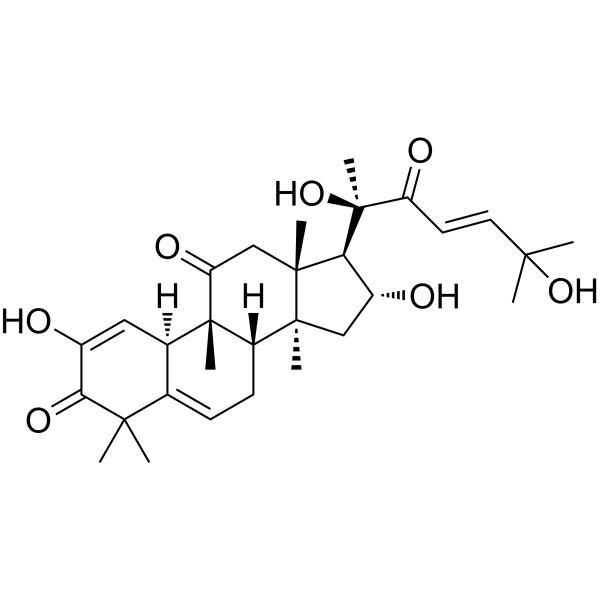 0 ImagesSynonyms: Elatericin B (Standard); JSI-124 (Standard); NSC-521777 (Standard)Cucurbitacin I (Standard) is the analytical standard of Cucurbitacin I. This product is intended for research and analytical applications. Cucurbitacin I is a natural selective inhibitor of JAK2/STAT3, with potent anti-cancer activity.
-
STAT3-IN-33
 0 ImagesCat. No.: HY-164533CAS No.: 2763208-56-4
-
Cycloguanil-d6 nitrate
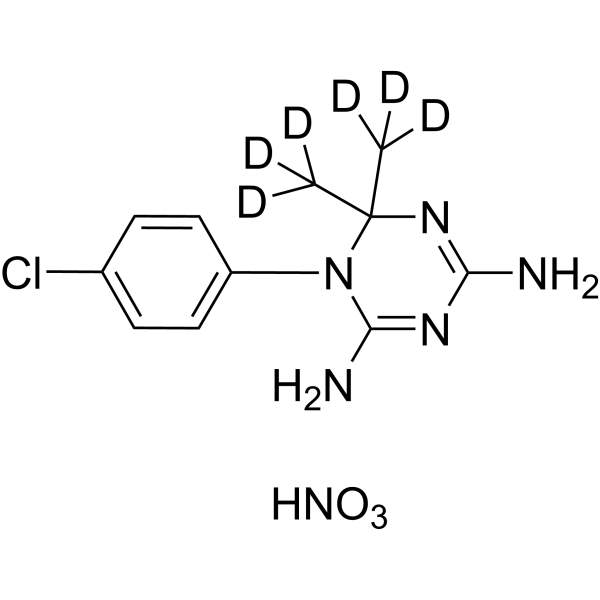 0 ImagesCat. No.: HY-12784S1CAS No.: 2070015-19-7Synonyms: Chlorguanide triazine-d6 nitrateCycloguanil-d6 (Chlorguanide triazine-d6) nitrate is the deuterium labeled Cycloguanil nitrate. Cycloguanil nitrate is a dihydrofolate reductase (DHFR) inhibitor with an IC50 of 10.8 μM against human DHFR. Cycloguanil nitrate blocks the folate metabolic pathway, thereby affecting nucleotide synthesis and interfering with DNA replication. Cycloguanil nitrate inhibits DHFR in Plasmodium and is thus used in malaria research. Cycloguanil nitrate also potently inhibits DHFR in human cancer cells and blocks the transcriptional activity of STAT3, thereby exhibiting anticancer activity.
-
ROCK2-IN-10
 0 ImagesCat. No.: HY-175843ROCK2-IN-10 is a potent and selective ROCK2 inhibitor (IC50 = 0.020 μM) with 41-fold selectivity over isoform ROCK1. ROCK2-IN-10 inhibits metastasis by disrupting the cytoskeleton, independent of proliferative suppression. ROCK2-IN-10 shows superior inhibitory potency against cancer cell metastasis, which closely related to the suppression of STAT3 phosphorylation. ROCK2-IN-10 can be used for breast cancer metastasis research.
-
CDK6/9-IN-2
 0 ImagesCat. No.: HY-175013CAS No.: 3068529-24-5CDK6/9-IN-2 is a highly active dual inhibitor of CDK6 (IC50 = 15 nM) and CDK9 (IC50 = 22 nM). CDK6/9-IN-2 is selective for CDK2, CDK8, and CDK11. CDK6/9-IN-2 inhibits the proliferation of HaCaT cells induced by IFN-γ/TNF-α and suppresses the STAT3 pathway and the expression of inflammatory factors. CDK6/9-IN-2 can alleviate psoriatic dermatitis and is useful in psoriasis research.
-
Tectochrysin (Standard)
 0 ImagesTectochrysin (Standard) is the analytical standard of Tectochrysin. This product is intended for research and analytical applications. Tectochrysin (Techtochrysin) is one of the major flavonoids of Alpinia oxyphylla Miquel. Tectochrysin inhibits activity of NF-κB.
-
PKM2 activator 11
 0 ImagesCat. No.: HY-180795PKM2 activator 11 (Compound 23) is a PKM2 activator with an AC50 value of 92.12 nM. PKM2 activator 11 promotes PKM2 tetramerization and inhibits its nuclear translocation. PKM2 activator 11 suppresses glycolysis and the PKM2/STAT3 signaling pathway. PKM2 activator 11 induces Apoptosis. PKM2 activator 11 exhibits anti-CRC activity in vitro with potency and selectivity.




