



mTOR
Mammalian target of Rapamycin
mTOR (mammalian target of Rapamycin) is a protein that in humans is encoded by the mTOR gene. mTOR is a serine/threonine protein kinase that regulates cell growth, cell proliferation, cell motility, cell survival, protein synthesis, and transcription. mTOR belongs to the phosphatidylinositol 3-kinase-related kinase protein family. mTOR integrates the input from upstream pathways, including growth factors and amino acids. mTOR also senses cellular nutrient, oxygen, and energy levels. The mTOR pathway is dysregulated in human diseases, such as diabetes, obesity, depression, and certain cancers. Rapamycin inhibits mTOR by associating with its intracellular receptor FKBP12. The FKBP12-rapamycin complex binds directly to the FKBP12-Rapamycin Binding (FRB) domain of mTOR, inhibiting its activity.
mTOR Isoform Specific Products
All Product Categories
-
mTOR Inhibitors
(563)
View all products
-
mTOR Agonists
(8)
View all products
-
mTOR Antagonist
(1)
View all products
-
mTOR Activators
(82)
View all products
-
mTOR Modulators
(16)
View all products
-
mTOR p53 Inhibitor
(1)
View all products
-
mTOR Degraders
(2)
View all products
-
mTOR Control
(1)
View all products
-
mTOR Substrate
(1)
View all products
-
mTOR Ligands
(2)
View all products
-
mTOR Related Products (717)
Related Products (717)

-
Antibodies (14)
-
mTOR Signaling Pathway
-
mTOR Isoform Comparison
-
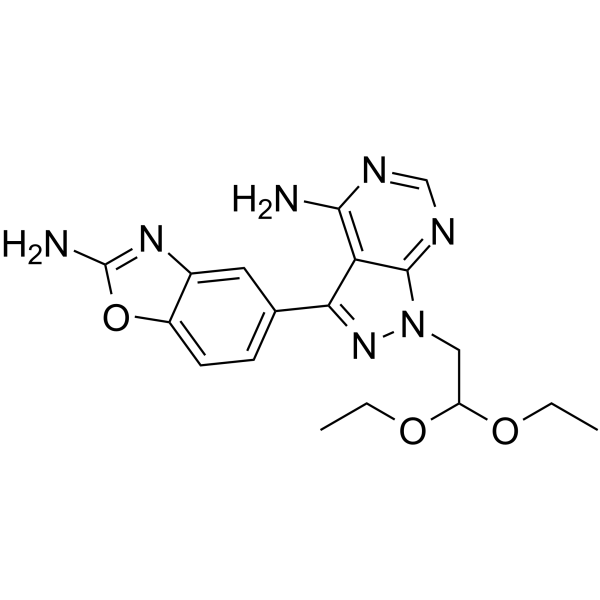
Rohitukine
 0 ImagesCat. No.: HY-119831CAS No.: 71294-60-5Rohitukine is an orally active CDK9/T1 inhibitor with an IC50 of 0.3 μM. Rohitukine blocks ATP binding sites of CDK2/A and CDK9/T1, suppresses PPARγ, AKT, mTOR, C/EBPα, SREBP-2, and NF-κB signaling, and increases hepatic LXRα expression. Rohitukine induces S-phase cell cycle arrest, ROS generation, apoptosis, and exhibits anti-inflammatory activity. Rohitukine can be used for the research of leukemia, pancreatic cancer, prostate cancer, breast cancer, CNS cancer, ovarian cancer, lung cancer, dyslipidemia, inflammatory diseases, inflammatory bowel disease, and arthritis.
-
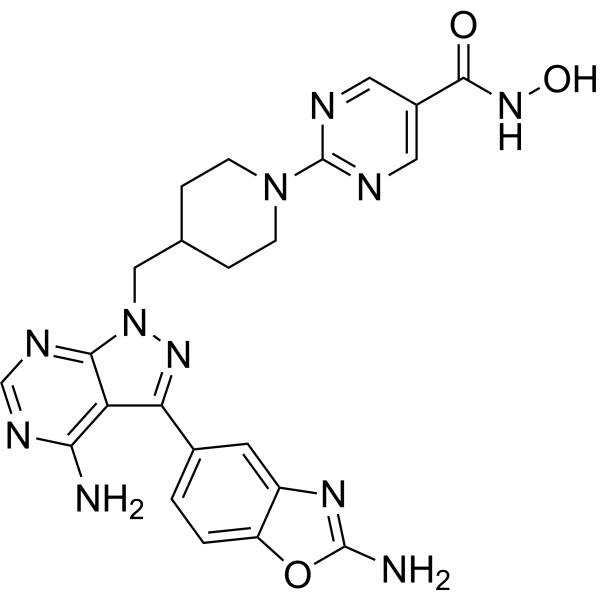
2,6-Dihydroxyacetophenone (Standard)
 0 Images2,6-Dihydroxyacetophenone (Standard) is the analytical standard of 2,6-Dihydroxyacetophenone (HY-Y0106). This product is intended for research and analytical applications. 2,6-Dihydroxyacetophenone, a polyphenolic derivative of Acetophenone (HY-Y0989), is an orally active mTOR inhibitor. 2,6-Dihydroxyacetophenone shows antioxidant activity. 2,6-Dihydroxyacetophenone inhibits cell growth and proliferation in CRC cells. 2,6-Dihydroxyacetophenone arrests at G0/G1 phase of cell cycle, induces apoptosis and suppresses cell migration in CRC cells. 2,6-Dihydroxyacetophenone inhibits xanthine oxidase (XOD) with an IC50 of 1.24 mM. 2,6-dihydroxyacetophenone improves uric acid metabolism in hyperuricemia mice, reduces plasma cholesterol in hypercholesterolemic rats, and inhibits lipid accumulation in HFD-induced obese mice. 2,6-Dihydroxyacetophenone can be used for the study of colorectal cancer (CRC), hyperuricemia and hypercholesterolemia.
-
KIM-161
 0 ImagesCat. No.: HY-172964CAS No.: 2559686-28-9KIM-161 is a PIK3CA inhibitor. KIM-161 has significant antiproliferative activity with IC50 values of 1.428 and 1.562 µM against PI3KCA mutant breast cancer MCF7 and T47D cells, respectively. KIM-161 induces apoptosis and cell cycle arrest by inhibiting the PI3K/AKT/mTOR signaling pathway and inducing ROS production. KIM-161 can be used to study breast cancer and its PI3KCA mutant subtypes.
-
PI3K/mTOR Inhibitor-3
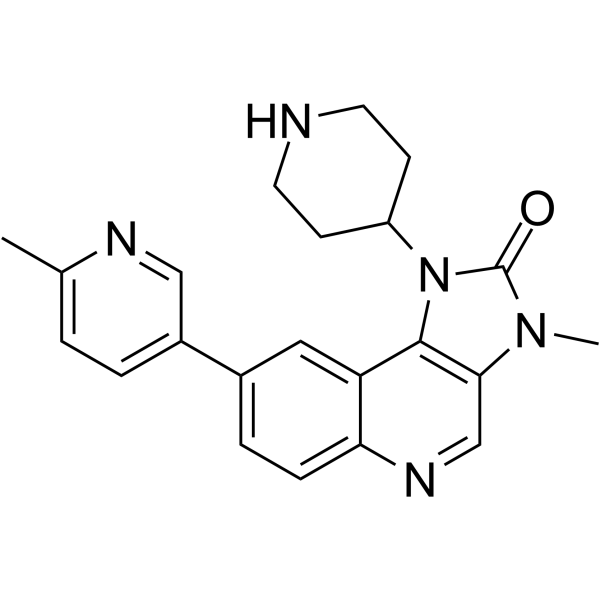 0 ImagesCat. No.: HY-141476CAS No.: 1363338-53-7
-
PI3Kα-IN-5
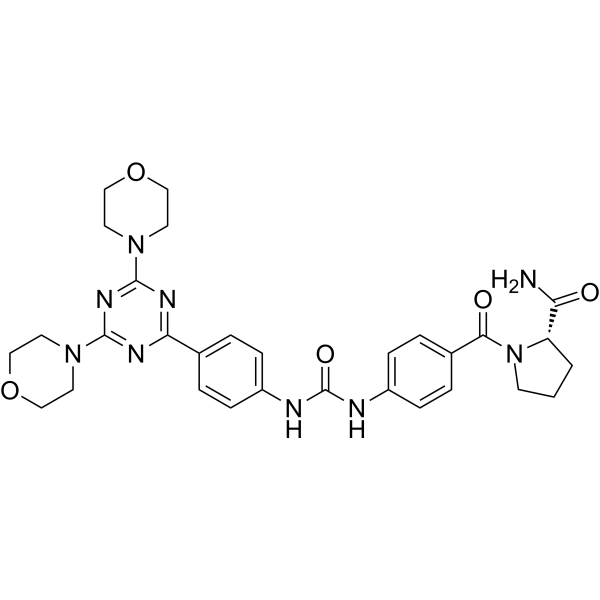 0 ImagesCat. No.: HY-144295CAS No.: 2237953-19-2PI3Kα-IN-5 (compound 6 ab) is a potent PI3Kα/mTOR inhibitor, with an IC50 of 0.7 nM and 3.3 nM, respectively. PI3Kα-IN-5 can be used for the research of colorectal cancer.
-
PI3Kα-IN-29
 0 ImagesCat. No.: HY-179623PI3Kα-IN-29 is a potent, orally active and selective PI3Kα with an IC50 of 2.5 nM. PI3Kα-IN-29 exhibits >400-fold selectivity over PI3Kβ/δ/γ/mTOR. PI3Kα-IN-29 selectively degrades the H1047R mutant p110α protein and inhibits PI3Kα kinase activity. PI3Kα-IN-29 suppresses PI3K/AKT/mTOR signaling, induces G1 arrest, and inhibits migration. PI3Kα-IN-29 inhibits tumor growth in a T47 mouse model. PI3Kα-IN-29 can be used for the research of breast cancer.
-
CRI9
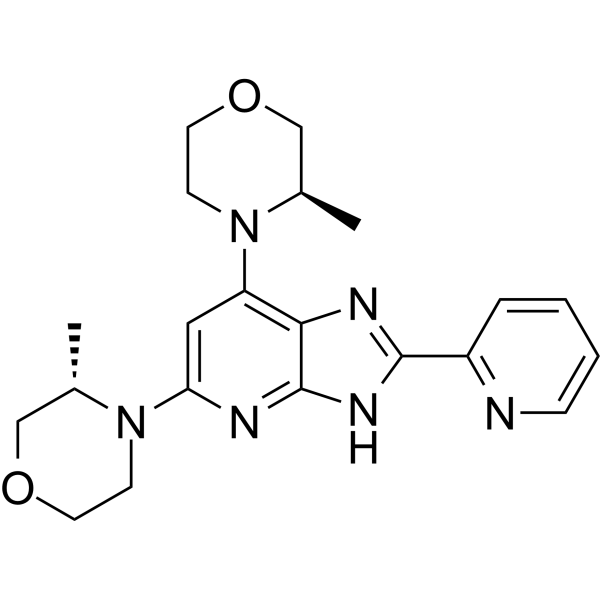
 0 ImagesCat. No.: HY-168609CRI9 inhibits the c-MET/PI3K/Akt/mTOR pathway, suppressing the growth of liver cancer cells. CRI9 shows strong cytotoxicity against HCC cells, inducing apoptosis.
-
Rotundic acid (Standard)
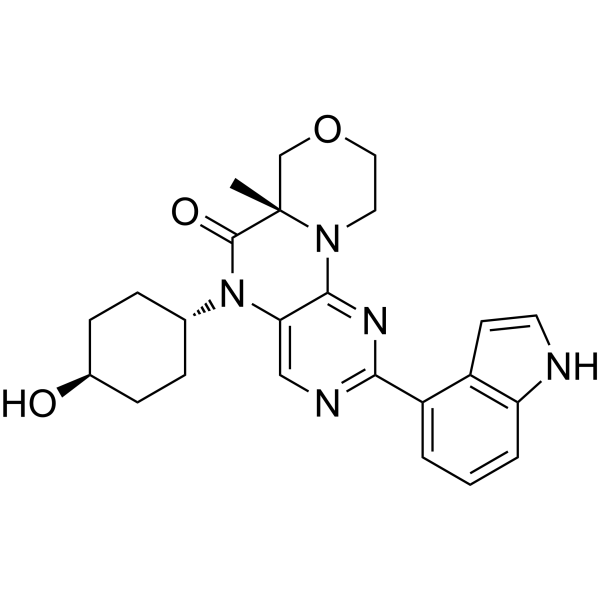
 0 ImagesCat. No.: HY-N2217RCAS No.: 20137-37-5Rotundic acid (Standard) is the analytical standard of Rotundic acid (HY-N2217). This product is intended for research and analytical applications. Rotundic acid is an orally effective triterpenoid with a Kd value of 51.3 µM for PTP1B. Rotundic acid downregulates the AKT/mTOR pro-survival pathway and modulates the MAPK pathway. Rotundic acid induces cell cycle S-phase arrest, DNA damage and apoptosis; it inhibits migration, invasion, angiogenesis and proliferation of cancer cells. Rotundic acid improves leptin sensitivity, regulates gut microbiota and reduces cellular senescence. Rotundic acid can be used in research related to hepatocellular carcinoma, obesity, aging, acute lung injury and type 2 diabetes.
-
BIEGi-1
 0 ImagesCat. No.: HY-17654CAS No.: 1429497-30-2BIEGi-1 is an EGFR inhibitor. BIEGi-1 effectively disrupts the EGFR-Rheb interaction in cells. BIEGi-1 robustly inhibits EGFR kinase activity (reduces p-Y1068-EGFR) as well as mTORC1 activation (reduces p-T389-S6K1) in EGFR-mutant cells. BIEGi-1 shows strong antiproliferative effects on EGFR-mutant PC9 and HCC827 cells with IC50 values of 17 nM and 20 nM, respectively. BIEGi-1 can be used for the study of cancers harboring EGFR mutations, such as non-small cell lung cancer (NSCLC).
-
Cyclocommunol
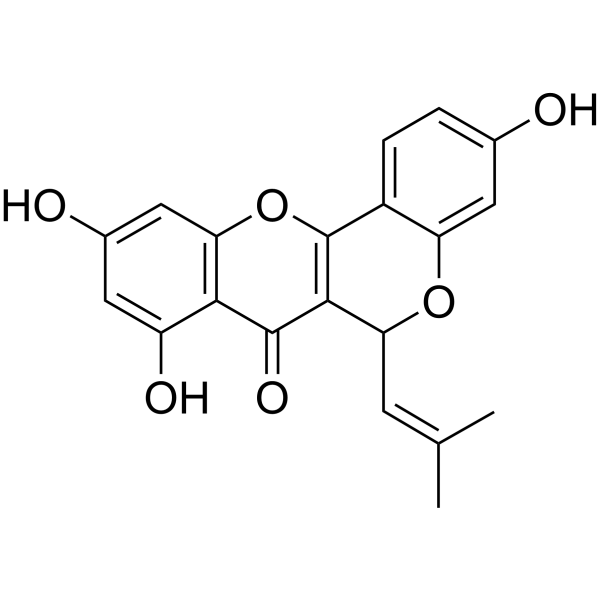 0 ImagesCat. No.: HY-N3665CAS No.: 145643-96-5Cyclocommunol is a GST inhibitor with an IC50 of 3.0 μM. Cyclocommunol downregulates the expression of the anti-apoptotic (apoptosis) protein Mcl-1, reduces the levels of phosphorylated Akt and mTOR, and induces caspase-dependent apoptosis, reactive oxygen species (ROS) production and autophagy. Cyclocommunol can be used in research related to oral squamous cell carcinoma, breast cancer, lung cancer, norovirus-induced gastroenteritis and bacterial infections.

-
N1,N11-Diethylnorspermine
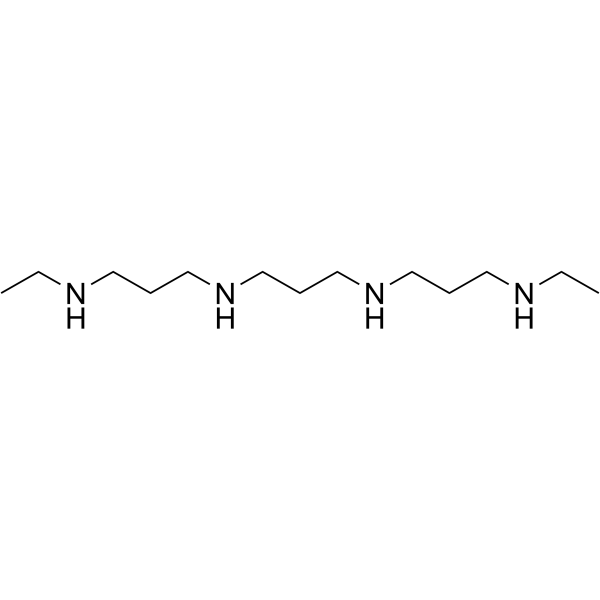 0 ImagesCat. No.: HY-13610CAS No.: 121749-39-1Synonyms: Diethylnorspermine; BENSPM; DENSPM; BE-333N1,N11-Diethylnorspermine is a synthetic analog of the naturally occurring polyamine spermine, can induce polyamine depletion and inhibit tumor cell growth. N1,N11-Diethylnorspermine activates polyamine catabolism and downregulates mTOR protein. N1,N11-Diethylnorspermine induces the release of cytochrome c from mitochondria, resulting in activation of caspase 3. N1,N11-Diethylnorspermine tetrahydrochloride kills glioblastoma multiforme (GBM) through induction of SSAT (spermidine/spermine N1-acetyltransferase) coupled with H2O2 production.
-
L-Glutamine (GMP)
 0 ImagesL-Glutamine GMP is L-Glutamine (HY-N0390) produced by using GMP guidelines. GMP small molecules works appropriately as an auxiliary reagent for cell therapy manufacture. L-Glutamine is an orally active nutritional agent and cellular metabolism regulator. L-Glutamine is taken up in a Na+-dependent manner and targets multiple key molecules including glutaminase, mTORC1, NF-κB, STAT-3 and HIF-1α. L-Glutamine enhances glutaminolytic catabolism, drives the conversion of glutamate to α-ketoglutarate, thereby regulating gene expression, integrating metabolic signals, mediating glutamine flux and maintaining redox homeostasis. L-Glutamine also promotes cell proliferation, osteogenic differentiation and fracture healing, exerts neuroprotective and cardioprotective effects, and inhibits osteoarthritis. L-Glutamine can be applied to research related to osteoporosis, osteoarthritis, ischemic stroke and acute cantharidin-induced cardiotoxicity.
-
Meranzin hydrate (Standard)
 0 ImagesMeranzin hydrate (Standard) is the analytical standard of Meranzin hydrate (HY-N3297). This product is intended for research and analytical applications. Meranzin hydrate is an orally active antidepressant and GHSR modulator. Meranzin hydrate significantly upregulates the expression levels of brain-derived neurotrophic factor and p-mTOR in the hippocampus via the ghrelin-growth hormone secretagogue receptor pathway. Meranzin hydrate regulates blood oxygen level-dependent signals in the hippocampus-thalamus-basal ganglia circuit, attenuates reward system activation, and promotes the normalization of related hormone levels. Meranzin hydrate effectively ameliorates depression-like behaviors and gastrointestinal hypomotility, and can be used in research related to depression and major depressive disorder.
-
JPS004
 0 ImagesCat. No.: HY-176904CAS No.: 2559747-12-3JPS004 is a PROTAC degrader targeting HDAC1, HDAC2 and HDAC3. JPS004 induces extensive transcriptomic changes in human colon cancer cell line HCT116, including downregulation of HDAC complex components and cell cycle regulatory machinery, modulation of the AKT/mTOR signaling pathway, and upregulation of FOXO-mediated apoptosis and autophagy related genes. JPS004 can be used in colon cancer-related research.
-
HDAC-IN-43
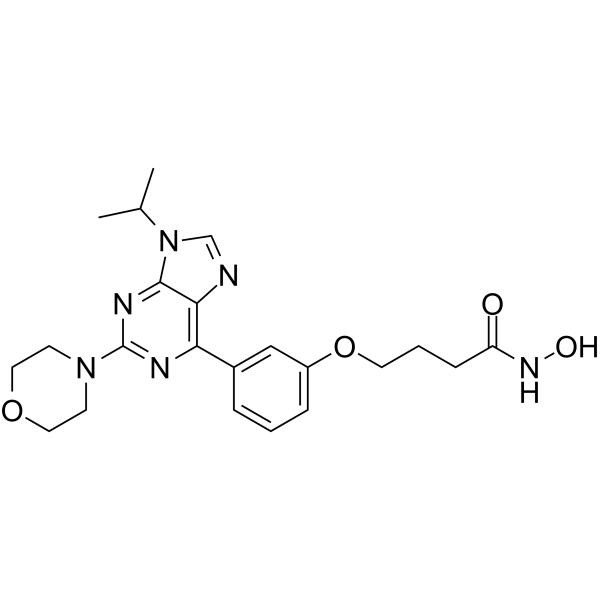 0 ImagesCat. No.: HY-147966CAS No.: 1809163-24-3HDAC-IN-43 is a potent HDAC 1/3/6 inhibitor with IC50 values of 82, 45, and 24 nM, respectively. HDAC-IN-43 is a weak PI3K/mTOR inhibitors with IC50 values of 3.6 and 3.7 μM, respectively. HDAC-IN-43 shows broad anti-proliferative activity .




