



Fezakinumab

Based on 1 Customer Validation
Fezakinumab (ILV 094) is an anti-IL-22 monoclonal antibody. Fezakinumab inhibits IL-22 signal transduction, and regulates the JAK1/STAT3 pathway as well as apoptotic proteins. Fezakinumab alleviates airway remodeling, alveolar enlargement and inflammatory cell infiltration in lung tissues. Fezakinumab reduces the levels of neutrophils, lymphocytes, eosinophils and macrophages in lung tissues. Fezakinumab can be used in the research of chronic obstructive pulmonary disease and skin diseases.
Para uso exclusivo en investigación. No vendemos a pacientes.
- Pureza : 99.9%
- No. CAS: 1007106-86-6
- Peso molecular:144.84 kDa
-
Almacenamiento:
Please store the product under the recommended conditions in the Certificate of Analysis.



To place orders, for customer services and technical support, please contact: MedChemExpress USA
Tel: 609-228-6898 E-mail: [email protected] [email protected]


-
 Actividad biológica
-
Chemical Information
- Protocolo
- Pureza y Documentación
- Referencias
-
 Help & FAQs


-

HY-P99025
LebrikizumabIL-13 Inhibitor -

HY-P9931
GuselkumabIL-23 Neutralizing Antibody -

HY-P99248
RisankizumabIL-23 IgG Monoclonal Antibody -

HY-P99053
TralokinumabIL-13 Inhibitor -

HY-P99198
FletikumabIL-20 Antibody -

HY-P9956
SiltuximabAnti-IL-6 mAb -

HY-P99737
MirikizumabIL-23 Antibody -

HY-P99256
TildrakizumabAnti-IL-23 mAb -

HY-P99491
CamoteskimabMonoclonal antibody -

HY-P990016
TemtokibartIL-22RA1 Inhibitor -

HY-P99193
EnokizumabIL-9 Antibody -

HY-P9909
Ustekinumab
Ver todos los productos específicos de isoformas Caspase
More

Actividad biológica
Descripciòn
Isotype
Human IgG1 lambda2
Recommend Isotype Controls
Species Reactivity
Human
IC50 & Target
[1]|
IL-22 |
JAK1 |
STAT3 |
Caspase 3 |
Bcl-2 |
In Vivo
MedChemExpress (MCE) has not independently confirmed the accuracy of these methods. They are for reference only.
-
Animal Model:C57BL/6 (male, 8-10 weeks old, 18-22 g, cigarette smoke-induced COPD model)[1]
-
Dosage:5 mg/kg
-
Administration:i.p.; once daily; 8 weeks
-
Result:Reduced T-22 cell levels in BALF.
Reduced IL-22 levels in BALF.
Reduced average alveolar intercept.
Increased alveolar count.
Lowered lung tissue inflammatory cell infiltration (neutrophils, lymphocytes, eosinophils, macrophages).
Reduced IL-22R1 expression in lung tissue.
Reduced lung tissue levels of JAK1, p-STAT3, Caspase3, and STAT3.
Increased lung tissue levels of Bcl-2.
Showed no significant difference in Bax and TYK2 levels compared to the CS group.
Improved lung architecture, with more uniform alveolar size, reduced airway epithelial proliferation, minimal interstitial thickening, and markedly reduced inflammatory cell infiltration.
Ensayo clínico
| NCT Number | Sponsor | Condition | Start Date |
Phase

|
|---|---|---|---|---|
| NCT01329991 | Plexxikon| | 2011-05 | PHASE1 |
Gene ID
Accession
Conjugated
Unconjugated
Reconsititution
The product can be reconstituted/diluted with sterile PBS or saline.
Format
-
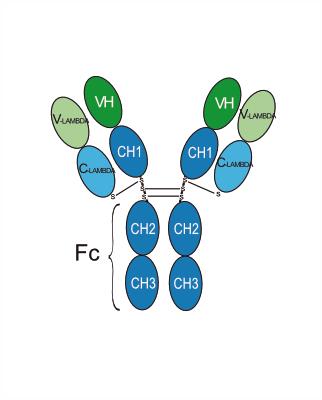
Human IgG1 lambda2
Aplicación
ELISA, FACS, Functional assay
Verified Bioactivity


Chemical Information
-
No. CAS 1007106-86-6
-
Appearance Liquid
-
Peso molecular 144.84 kDa
-
Color Colorless to light yellow
-
SMILES
[Fezakinumab]
-
Synonyms
ILV 094
-
Envío
Shipping with dry ice.
-
Formulation
Please refer to the lot-specific COA for specific buffer information.
-
Almacenamiento
Please store the product under the recommended conditions in the Certificate of Analysis.


Pureza y Documentación
-
Ficha de datos (260 KB)
-
SDS (252 KB)
- English - EN (252 KB)
- Français - FR (252 KB)
- Deutsch - DE (252 KB)
- Norwegian - NO (252 KB)
- Español - ES (252 KB)
- Swedish - SV (252 KB)
- Italian - IT (252 KB)
- Korean - KR (252 KB)
- Portuguese - PT (252 KB)
-
Inhibitory Antibodies User Guide (603 KB)
Referencias

Calculators
Concentration (start) × Volume (start) = Concentration (final) × Volume (final)


Fezakinumab Related Classifications
HY-P99244 Related Classifications
 Powered by Bioz