



CDK
Cyclin dependent kinase
CDKs (Cyclin-dependent kinases) are serine-threonine kinases first discovered for their role in regulating the cell cycle. They are also involved in regulating transcription, mRNA processing, and the differentiation of nerve cells. CDKs are relatively small proteins, with molecular weights ranging from 34 to 40 kDa, and contain little more than the kinase domain. In fact, yeast cells can proliferate normally when their CDK gene has been replaced with the homologous human gene. By definition, a CDK binds a regulatory protein called a cyclin. Without cyclin, CDK has little kinase activity; only the cyclin-CDK complex is an active kinase.
There are around 20 Cyclin-dependent kinases (CDK1-20) known till date. CDK1, 4 and 5 are involved in cell cycle, and CDK 7, 8, 9 and 11 are associated with transcription.
CDK levels remain relatively constant throughout the cell cycle and most regulation is post-translational. Most knowledge of CDK structure and function is based on CDKs of S. pombe (Cdc2), S. cerevisia (CDC28), and vertebrates (CDC2 and CDK2). The four major mechanisms of CDK regulation are cyclin binding, CAK phosphorylation, regulatory inhibitory phosphorylation, and binding of CDK inhibitory subunits (CKIs).
CDK Isoform Specific Products
-
CDK
(486)
View all products
-
CDK1
(198)
View all products
-
CDK2
(316)
View all products
-
CDK3
(28)
View all products
-
CDK4
(236)
View all products
-
CDK5
(98)
View all products
-
CDK6
(179)
View all products
-
CDK7
(119)
View all products
-
CDK8
(57)
View all products
-
CDK9
(206)
View all products
-
CDK11
(9)
View all products
-
CDK12
(54)
View all products
-
CDK13
(28)
View all products
-
CDK14
(6)
View all products
-
CDK16
(8)
View all products
-
CDK19
(25)
View all products
-
CDC
(21)
View all products
-
CLK
(31)
View all products
-
Pho85
(1)
View all products
-
CDK10
(1)
View all products
-
CDK15
(1)
View all products
-
CDK17
(2)
View all products
-
CDK18
(1)
View all products
-
CDK20
(1)
View all products
-
PITSLRE
(1)
View all products
All Product Categories
-
CDK Inhibitors
(1088)
View all products
-
CDK Agonists
(3)
View all products
-
CDK Antagonists
(2)
View all products
-
CDK Activators
(18)
View all products
-
CDK Modulators
(15)
View all products
-
CDK Degraders
(95)
View all products
-
CDK Controls
(4)
View all products
-
CDK Substrate
(1)
View all products
-
CDK Ligands
(16)
View all products
-
Cyclin-Dependent Kinases (CDKs) Proteins
(80)
View all products
-
Cyclin Dependent Kinase 1 (CDK1) Proteins
(9)
View all products
-
Cyclin-Dependent Kinase 2 (CDK2) Proteins
(12)
View all products
-
Cyclin-Dependent Kinase 3 (CDK3) Proteins
(6)
View all products
-
Cyclin-Dependent Kinase 4 (CDK4) Proteins
(4)
View all products
-
Cyclin-Dependent Kinase 5 (CDK5) Proteins
(5)
View all products
-
Cyclin-Dependent Kinase 6 (CDK6) Proteins
(6)
View all products
-
Cyclin-Dependent Kinase 7 (CDK7) Proteins
(4)
View all products
-
CDK Related Products (1364)
Related Products (1364)

-
Recombinant Proteins (82)
-
Antibodies (42)
-
CDK Isoform Comparison
-
CDK-IN-16
 0 ImagesCat. No.: HY-170507CAS No.: 3103862-82-1CDK-IN-16 (Compound 5g) is a CDK2/cyclin A2 inhibitor with an IC50 of 1.67 μM. CDK-IN-16 exhibits anticancer activity. The IC50 of CDK-IN-16 against the AGS cell line is 3.5 μM.
-
PROTAC CDK9 degrader-8
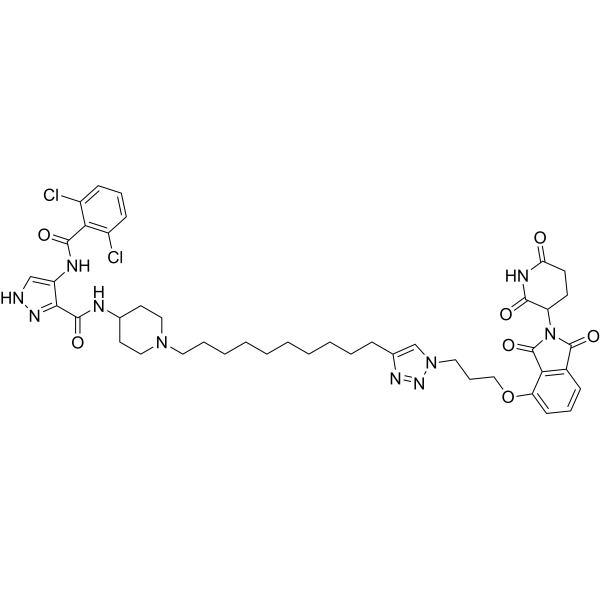 0 ImagesCat. No.: HY-149870CAS No.: 2994191-89-6PROTAC CDK9 degrader-8 is a CDK9 PROTAC degrader that recruits cereblon. PROTAC CDK9 degrader-8 inhibits the growth of acute myeloid leukemia cells by inducing the degradation of CDK9 protein. PROTAC CDK9 degrader-8 can be used in studies related to CDK9-targeted degradation and acute myeloid leukemia.


-
SR-5037
 0 ImagesSR-5037 is an orally active CDK12 (IC50 = 31 nM)/CDK13 inhibitor and CycK (DC50 = 30 nM; Dmax > 98%) molecular glue degrader. SR-5037 inhibits the enzymatic activity of CDK12/CycK and CDK13/CycK complexes. SR-5037 promotes the recruitment of DDB1 to the CDK12/CycK complex, thereby triggering proteasome-mediated CycK degradation. SR-5037 degrades active CycK in mouse models of triple-negative breast cancer. SR-5037 can be used in the research of cancers such as triple-negative breast cancer.
-
CDK7-IN-17
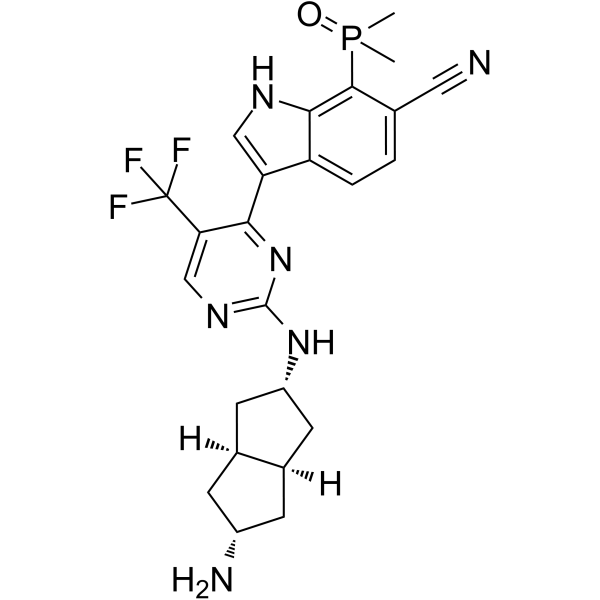 0 ImagesCat. No.: HY-147602CAS No.: 2765676-60-4
-
CDK4/6-IN-30
 0 ImagesCat. No.: HY-189130CAS No.: 2699091-14-8CDK4/6-IN-30 is a selective, orally active CDK4 and CDK6 inhibitor with IC50 values of 10 nM and 16 nM, respectively. CDK4/6-IN-30 induces cell cycle arrest at G1 phase, inhibits RB phosphorylation, and decreases c-MYC and Cyclin D1 levels. CDK4/6-IN-30 exhibits anticancer activity against breast cancer. CDK4/6-IN-30 can be used for research on breast cancer.
-
SW393109
 0 ImagesCat. No.: HY-187688SW393109 is a CDK8 inhibitor with an IC50 of 3.16 nM and an EC50 of 5 nM against the DKK1 reporter gene. SW393109 inhibits IFNγ-induced phosphorylation of STAT1 S727, impairs the EWSR1::FLI1 transcriptional program in Ewing sarcoma cells and suppresses tumor cell proliferation. SW393109 acts as a gain-of-function molecular trap that induces the retention of the CDK8 kinase module (CKM) and Mediator complex on chromatin. SW393109 can be used in studies related to Ewing sarcoma.
-
CDK4/6-IN-26
 0 ImagesCat. No.: HY-179151CDK4/6-IN-26 is a carbamate derivative that targets CDK4/CDK6. CDK4/6-IN-26 reduces CDK4/CDK6 levels, resulting in cell cycle arrest in the G0/G1 phase and in the S phase. CDK4/6-IN-26 exhibits high potency against SW480 cells (IC50 = 6.3 μM). CDK4/6-IN-26 affects ROS levels by increasing the expression of SOD2/MnSOD. CDK4/6-IN-26 establishes several interactions with the amino acids of the CDK6 active site. CDK4/6-IN-26 can be used for the research of colorectal cancer.
-
UNPD139734
 0 ImagesCat. No.: HY-181140CAS No.: 116764-24-0UNPD139734 is a CDK-1 inhibitor and PARP-1 inhibitor that forms stable complexes with each target protein. UNPD139734 serves as a lead compound for structural optimization to develop dual-target anticancer agents targeting CDK-1 and PARP-1. UNPD139734 can be used for the research of breast cancer.
-
STAT3-IN-53
 0 ImagesCat. No.: HY-181514CAS No.: 3113051-34-3STAT3-IN-53 (Compound L20) is a STAT3 inhibitor with a Kd value of 6.16 μM. STAT3-IN-53 binds directly to the SH2 domain of STAT3, inhibits phosphorylation at the Y705 site without affecting the total STAT3 protein level, and suppresses the IL-6/JAK/STAT3 pathway. STAT3-IN-53 downregulates the transcription and expression of cyclin-D1 and c-Myc. STAT3-IN-53 induces cell cycle arrest and promotes Apoptosis. STAT3-IN-53 exhibits anticancer activity against colorectal cancer.
-
Dimethoxycurcumin-d6
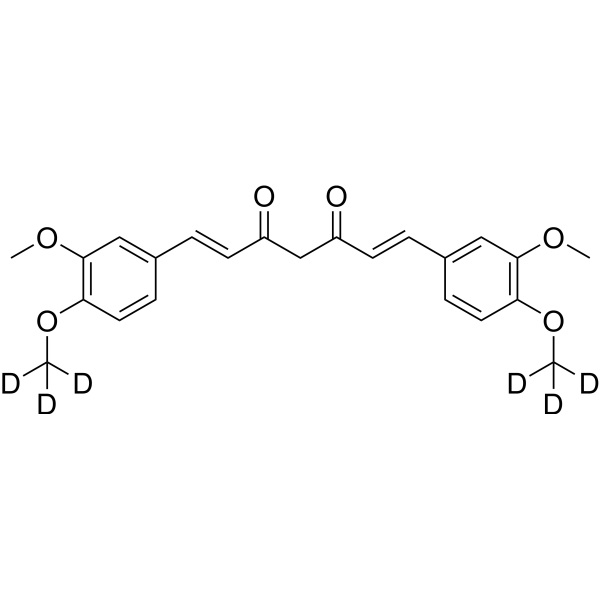 0 ImagesCat. No.: HY-100977SCAS No.: 3006902-95-7Synonyms: DiMC-d6; CHC 004-d6; Di-O-methylcurcumin-d6Dimethoxycurcumin-d6 (DiMC-d6; CHC 004-d6; Di-O-methylcurcumin-d6) is the deuterated-labeled Dimethoxycurcumin (HY-100977). Dimethoxycurcumin (DiMC) is a curcuminoid compound found in Curcuma longa. Dimethoxycurcumin is also an orally active thioredoxin reductase inhibitor (IC50 = 5.4 μM) and androgen receptor antagonist. Dimethoxycurcumin inhibits thioredoxin reductase, leading to oxidized thioredoxin accumulation, ROS production, DNA damage, glutathione depletion, mitochondrial membrane potential decrease, ATP depletion, S phase arrest, and apoptosis. Dimethoxycurcumin inhibits NF-κB, NADPH oxidase subunits, ATP synthase subunits, CDK4, cyclin-D1, FASN, ACC, and the IRS2-PI3K-Akt pathway, while activating AMPK, ERK, and JNK. Dimethoxycurcumin can be used for research on cancer, arsenic-induced hepatotoxicity, and tuberculosis.
-
CDK7-IN-31
 0 ImagesCat. No.: HY-169344CAS No.: 2943043-62-5CDK7-IN-31 (compound 13) is a potent and orally active cyclin-dependent kinase 7 (CDK7) inhibitor with a Kd value of 0.18 nM. CDK7-IN-31 shows anticancer activity.

-
DCB-3503
 0 ImagesCat. No.: HY-111244CAS No.: 87302-58-7DCB-3503 is an allosteric modulator of heat shock cognate protein HSC70 and an inhibitor of Cyclin D1. DCB-3503 inhibits Cyclin D1 translation by allosterically modulating the ATPase and chaperone activities of HSC70. DCB-3503 may inhibit malignancies such as hepatocellular carcinoma or breast cancer with elevated expression of cyclin D1.
-
3-ATA
 0 ImagesCat. No.: HY-133956CAS No.: 129821-08-5Synonyms: NSC 6804343-ATA (NSC 680434) is a selective inhibitor of cyclin-dependent kinase 4 (CDK4) with neuroprotective and antitumor effects. 3-ATA can alleviate kainic acid (HY-N2309)-induced apoptosis in cerebellar granule neurons, which can be used in the study of neurodegenerative diseases.
-
CGP-74514 dihydrochloride
 0 ImagesCat. No.: HY-110359CGP-74514 dihydrochloride is a highly selective cyclin-dependent kinase 1 (CDK1) inhibitor (IC50=25 nM). CGP-74514 dihydrochloride inhibits CDK1/cyclin B complex activity, arrests the cell cycle at G2/M phase and induces tumor cell apoptosis. CGP-74514 dihydrochloride is promising for research of bladder cancer.
-
CDC25A/NF-κB-IN-1
 0 ImagesCat. No.: HY-184446CDC25A/NF-κB-IN-1 is an effective dual-target inhibitor of CDC25A and NF-κB, and is a prodrug of Pt(IV). CDC25A/NF-κB-IN-1 has anticancer activity and low cytotoxicity to normal cells. CDC25A/NF-κB-IN-1 can trigger a variety of anticancer mechanisms, including S phase cell cycle arrest, mitochondrial endogenous apoptosis, endoplasmic reticulum stress, autophagy-dependent ferroptosis. CDC25A/NF-κB-IN-1 has good safety and can be used for ovarian cancer research.
-
CDK8-IN-14
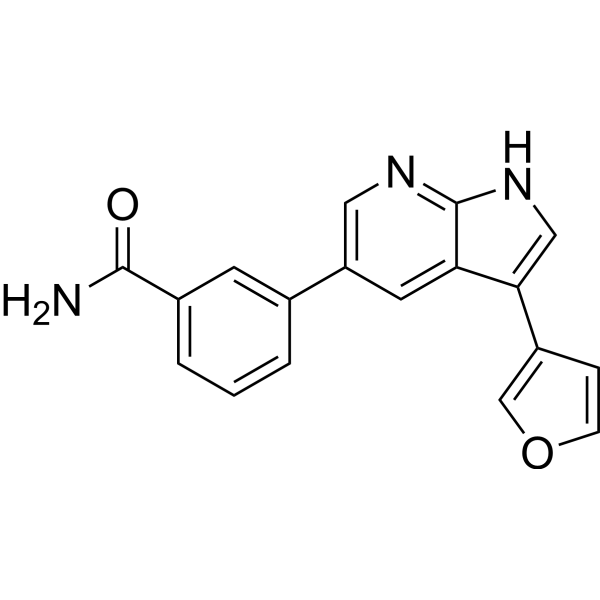 0 ImagesCat. No.: HY-162293CAS No.: 2924193-12-2CDK8-IN-14 (compound 12) inhibits CDK8 with an IC50 value of 39.2 nM and has anti-AML cell proliferation activity (molm-13 GC50 = 0.02±0.01μM, MV4-11 GC50 = 0.03±0.01μM).
-
PKMYT1-IN-13
 0 ImagesCat. No.: HY-181004PKMYT1-IN-13 is a potent, orally active and selective PKMYT1 inhibitor that inhibits PKMYT1 with IC50 values < 10.0 nM in ADP-Glo assay and 19.9 nM in NanoBRET cellular assay. PKMYT1-IN-13 exhibits high selectivity over WEE1. PKMYT1-IN-13 shows selective antiproliferative activity in CCNE1-amplified cells, while showing minimal wild-type effects. PKMYT1-IN-13 shows antitumor efficacy in HCC1569 mouse xenografts. PKMYT1-IN-13 can be used for the research of CCNE1-amplified cancers, such as gastric, ovarian, and breast cancer.




