



CDK
Cyclin dependent kinase
CDKs (Cyclin-dependent kinases) are serine-threonine kinases first discovered for their role in regulating the cell cycle. They are also involved in regulating transcription, mRNA processing, and the differentiation of nerve cells. CDKs are relatively small proteins, with molecular weights ranging from 34 to 40 kDa, and contain little more than the kinase domain. In fact, yeast cells can proliferate normally when their CDK gene has been replaced with the homologous human gene. By definition, a CDK binds a regulatory protein called a cyclin. Without cyclin, CDK has little kinase activity; only the cyclin-CDK complex is an active kinase.
There are around 20 Cyclin-dependent kinases (CDK1-20) known till date. CDK1, 4 and 5 are involved in cell cycle, and CDK 7, 8, 9 and 11 are associated with transcription.
CDK levels remain relatively constant throughout the cell cycle and most regulation is post-translational. Most knowledge of CDK structure and function is based on CDKs of S. pombe (Cdc2), S. cerevisia (CDC28), and vertebrates (CDC2 and CDK2). The four major mechanisms of CDK regulation are cyclin binding, CAK phosphorylation, regulatory inhibitory phosphorylation, and binding of CDK inhibitory subunits (CKIs).
CDK Isoform Specific Products
-
CDK
(486)
View all products
-
CDK1
(198)
View all products
-
CDK2
(316)
View all products
-
CDK3
(28)
View all products
-
CDK4
(236)
View all products
-
CDK5
(98)
View all products
-
CDK6
(179)
View all products
-
CDK7
(119)
View all products
-
CDK8
(57)
View all products
-
CDK9
(206)
View all products
-
CDK11
(9)
View all products
-
CDK12
(54)
View all products
-
CDK13
(28)
View all products
-
CDK14
(6)
View all products
-
CDK16
(8)
View all products
-
CDK19
(25)
View all products
-
CDC
(21)
View all products
-
CLK
(31)
View all products
-
Pho85
(1)
View all products
-
CDK10
(1)
View all products
-
CDK15
(1)
View all products
-
CDK17
(2)
View all products
-
CDK18
(1)
View all products
-
CDK20
(1)
View all products
-
PITSLRE
(1)
View all products
All Product Categories
-
CDK Inhibitors
(1088)
View all products
-
CDK Agonists
(3)
View all products
-
CDK Antagonists
(2)
View all products
-
CDK Activators
(18)
View all products
-
CDK Modulators
(15)
View all products
-
CDK Degraders
(95)
View all products
-
CDK Controls
(4)
View all products
-
CDK Substrate
(1)
View all products
-
CDK Ligands
(16)
View all products
-
Cyclin-Dependent Kinases (CDKs) Proteins
(80)
View all products
-
Cyclin Dependent Kinase 1 (CDK1) Proteins
(9)
View all products
-
Cyclin-Dependent Kinase 2 (CDK2) Proteins
(12)
View all products
-
Cyclin-Dependent Kinase 3 (CDK3) Proteins
(6)
View all products
-
Cyclin-Dependent Kinase 4 (CDK4) Proteins
(4)
View all products
-
Cyclin-Dependent Kinase 5 (CDK5) Proteins
(5)
View all products
-
Cyclin-Dependent Kinase 6 (CDK6) Proteins
(6)
View all products
-
Cyclin-Dependent Kinase 7 (CDK7) Proteins
(4)
View all products
-
CDK Related Products (1364)
Related Products (1364)

-
Recombinant Proteins (82)
-
Antibodies (42)
-
CDK Isoform Comparison
-
CDK8-IN-17
 0 ImagesCat. No.: HY-169633CAS No.: 451458-32-5

-
HLDA-212
 0 ImagesCat. No.: HY-173499CAS No.: 3077339-88-6HLDA-212 is a non-covalent RIPTAC that targets FKBP (target protein, TP) and multiple CDK (effector protein, EP). HLDA-212 binds to FKBP and CDK to form a stable ternary complex (TP:RIPTAC:EP), and induces cell death by blocking FKBP function. HLDA-212 selectively inhibits the proliferation of CDK-expressing cells and accumulates in CDK-expressing cells in a CDK-dependent manner. HLDA-212 exhibits antiproliferative activity in 293_HFL cells (with a GI50 of 0.011 μM). HLDA-212 holds promise for the treatment of cancers with high FKBP expression.
-
CDK9-IN-51
 0 ImagesCat. No.: HY-183698CAS No.: 2853500-43-1CDK9-IN-51 is a CDK9 inhibitor. CDK9-IN-51 binds stably to purified CDK9 protein via interactions with key active-site residues Cys106, Asp109, and Phe103. CDK9-IN-51 exhibits antiproliferative activity against multiple cancer cells. CDK9-IN-51 can be used for the research of cancer, such as lung carcinoma, cervical carcinoma and breast carcinoma.
-
CDK2-IN-12
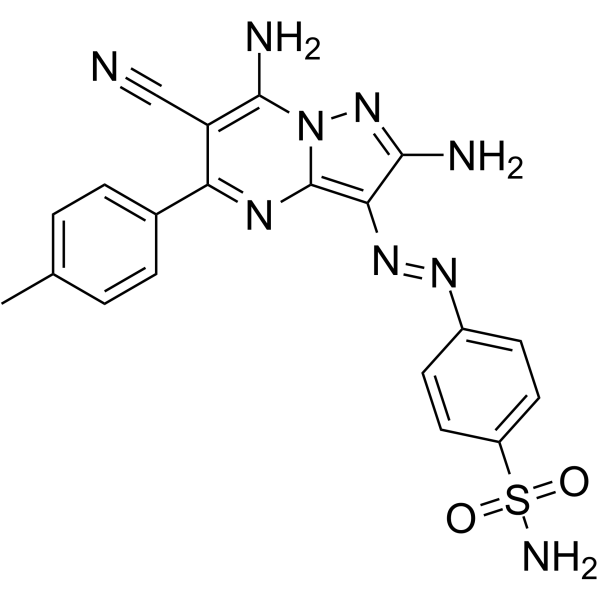 0 ImagesCat. No.: HY-150573CAS No.: 2410402-88-7CDK2-IN-12 (compound 10b) is a potent CDK2 inhibitor, with an IC50 of 11.6 μM. CDK2-IN-12 inhibits hCA (carbonic anhydrase) isoforms I, II, IX and XII, with KI values of 3534, 638.4, 44.3, and 48.8 nM. CDK2-IN-12 shows anticancer activity.

-
CDK9-IN-45
 0 ImagesCat. No.: HY-179023CDK9-IN-45 (Compound B11) is a highly selective CDK9 inhibitor with IC50 values for CDK9 and CDK1 of 7.13 and 489.5 nM respectively. CDK9-IN-45 exhibits a potent inhibitory effect on colorectal cancer cells. CDK9-IN-45 induces cell apoptosis and leads to significant accumulation of ROS. CDK9-IN-45 activates Caspase-3, downregulates Mcl-1, XIAP, and c-Myc. CDK9-IN-45 can be used for research on colorectal cancer.
-
CDK9-IN-31
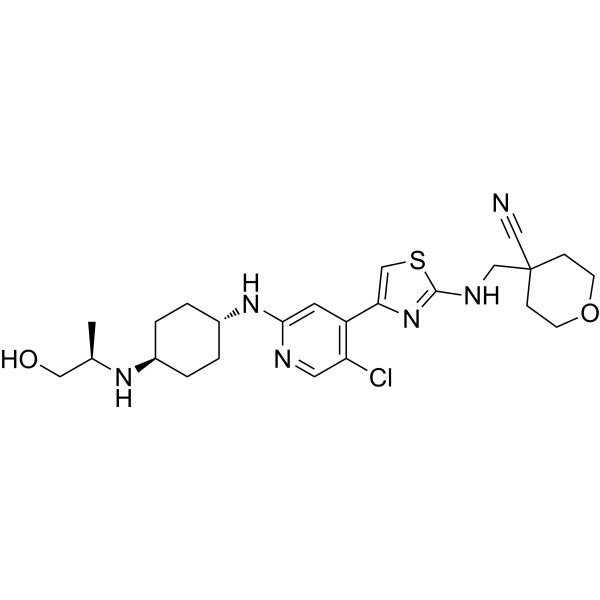 0 ImagesCat. No.: HY-160171CAS No.: 2991074-93-0CDK9-IN-31 (Compound Z1) is a CDK9 inhibitor that inhibits cancer cell growth. CDK9-IN-31 has the potential to be developed as an anticancer agent.

-
CDK/HDAC-IN-1
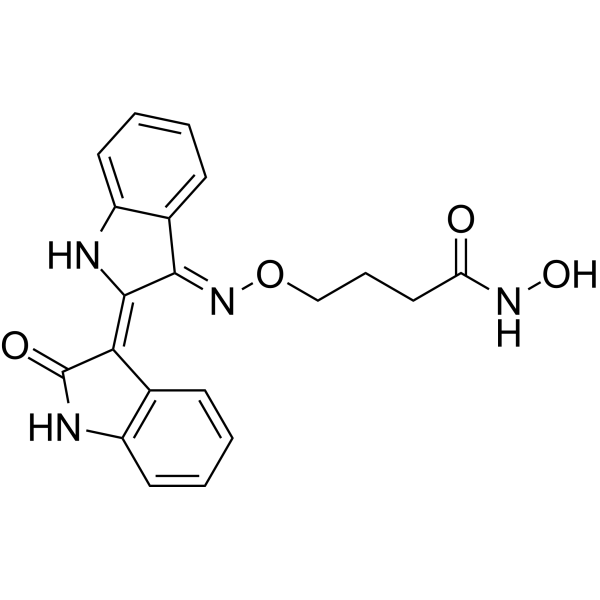 0 ImagesCat. No.: HY-132914CAS No.: 2762181-73-5CDK/HDAC-IN-1 shows remarkable CDK2/4/6 and HDAC6 inhibitory activity of IC50 = 60.9 ± 2.9, 276 ± 22.3, 27.2 ± 4.2, and 128.6 ± 0.4 nM, respectively.
-
CDK7-IN-10
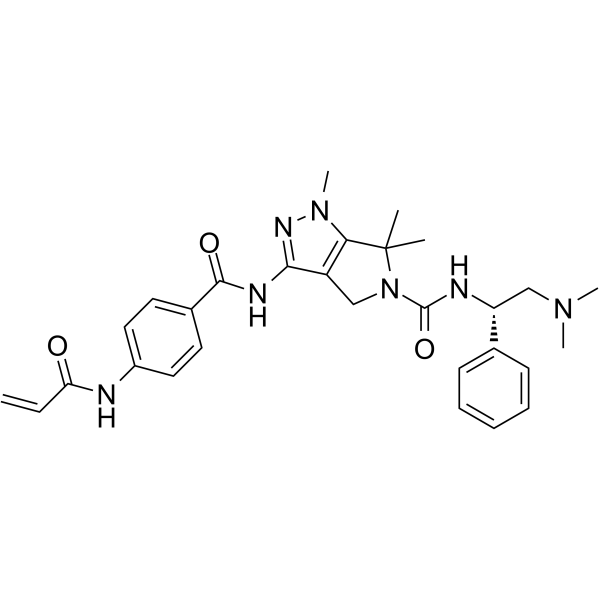 0 ImagesCat. No.: HY-145424CAS No.: 2588110-62-5
-
CDK9-IN-38
 0 ImagesCat. No.: HY-172582CAS No.: 2773402-44-9
-
EGFR/CDK2-IN-2
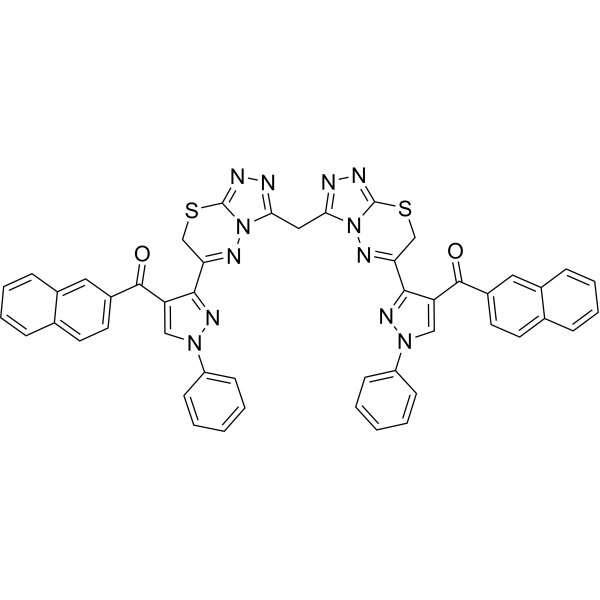 0 ImagesCat. No.: HY-156114EGFR/CDK2-IN-2 (compound 6a) is a dual inhibitor of EGFR and CDK-2 with IC50s of 19.6 and 87.9 nM, respectively. EGFR/CDK2-IN-2 induces apoptosis in MCF-7 cells and arrests the cell cycle in the S phase. EGFR/CDK2-IN-2 has significant anti-cancer cell toxicity and inhibits MCF-7 with an IC50 of 0.39 μM.
-
HDAC1/CDK7-IN-1
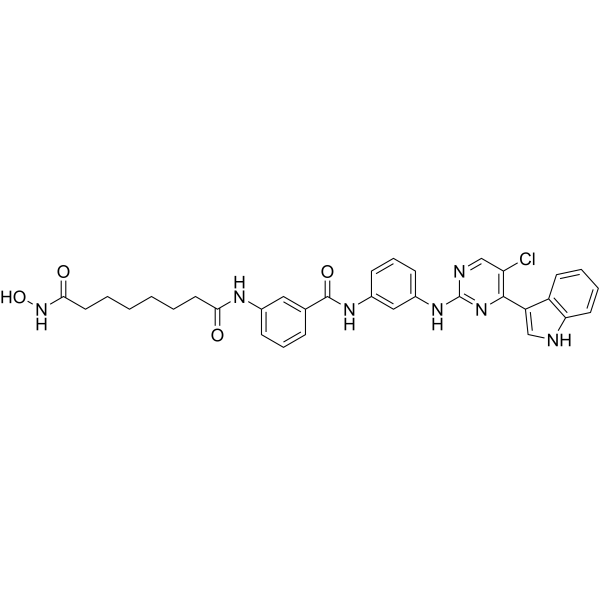 0 ImagesCat. No.: HY-156444CAS No.: 2987905-95-1HDAC1/CDK7-IN-1 (compound 8e) is a dual CDK7 and HDAC1 inhibitor with IC50s of 893 nM and 248 nM, respectively. HDAC1/CDK7-IN-1 inhibits the growth cells of MDA-MB-231, MCF-7, A549, and HCT-116 cancer cells. HDAC1/CDK7-IN-1 induces cell cycle arrest and apoptosis in HCT-116 cells, as well as hindered the migration of HCT-116 cells.
-
AR/AR-V7 degrader-1
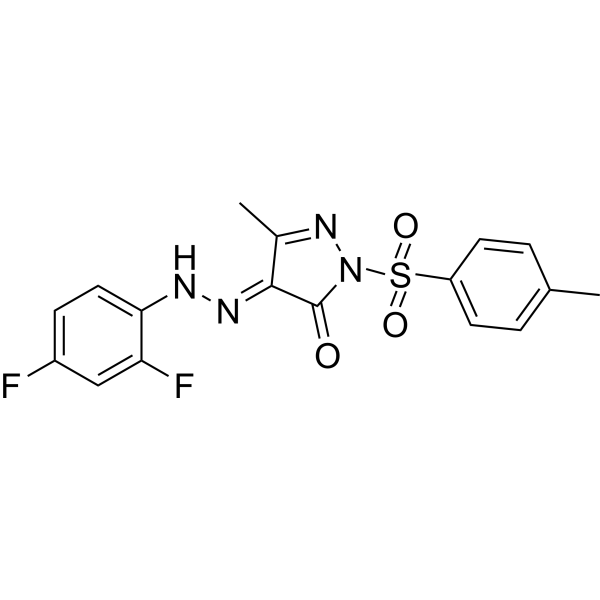
 0 ImagesCat. No.: HY-181727AR/AR-V7 degrader-1 is an orally active AR and AR-V7 degrader. AR/AR-V7 degrader-1 disrupts the interaction between AR/AR-V7 and HSP90, leading to their ubiquitination and degradation in castration-resistant prostate cancer cells. AR/AR-V7 degrader-1 regulates the expression of cell cycle-related proteins in prostate cancer cells (downregulates CDK4, CDK6, Cyclin D1, Cyclin E1; upregulates P21) and induces G0/G1 phase arrest. AR/AR-V7 degrader-1 inhibits the proliferation and migration of prostate cancer cells. AR/AR-V7 degrader-1 suppresses the growth of castration-resistant prostate cancer tumors in nude mice and induces the degradation of AR and AR-V7 in tumor tissues. AR/AR-V7 degrader-1 is applicable to the research of castration-resistant prostate cancer.
-
ZLMT-72
 0 ImagesCat. No.: HY-179633ZLMT-72 is an orally active dual CDK2 and CDK9 inhibitor with IC50s of 0.741 nM and 1.03 nM, respectively. ZLMT-72 shows good selectivity in kinase profiling andcholinesterase inhibition activity. ZLMT-72 has strong antiproliferative effects in the colorectal cancer (CRC) cell line HCT116 (GI50 < 0.1 nM). ZLMT-72 induces apoptosis by inhibiting thephosphorylation of retinoblastoma and RNA polymerase II, resulting in downregulation of antiapoptotic proteins (Mcl-1 and XIAP). ZLMT-72 can be used for the study of colorectal cancer (CRC).
-
P-gp/CDK2-IN-1
 0 ImagesCat. No.: HY-161776P-gp/CDK2-IN-1 (Compound 4j) is an inhibitor for is inhibitor for P-glycoprotein (P-gp) and for cyclin-dependent kinase-2 (CDK2). P-gp/CDK2-IN-1 inhibits the proliferation of cancer cells SW-480 and MCF-7 wit IC50 of 38.6 μM and 26.6 μM. P-gp/CDK2-IN-1 exhibits antioxidant efficacy with EC50 of 580 μM in DPPH experiment.
-
MAPK-IN-3
 0 ImagesCat. No.: HY-169412CAS No.: 2848599-79-9MAPK-IN-3 (Compound 4a) is an anti-proliferative agent that shows particularly strong inhibitory effects on KYSE 30, HCT 116, and HGC 27, with IC50 values of 0.57 μM, 3.27 μM, and 2.28 μM, respectively. MAPK-IN-3 blocks the cell cycle via a p53-dependent mechanism and induces cell apoptosis through a p53-independent mechanism. MAPK-IN-3 downregulates the expression of cell cycle-related proteins like Cyclin D1 and cyclin B1, upregulates pro-apoptotic proteins such as cleaved PARP, cleaved caspase-7, and cleaved caspase-9, and reduces the expression of anti-apoptotic proteins like Bcl-2. Additionally, MAPK-IN-3 increases the intracellular level of ROS in KYSE 30 cells and upregulates the expression of members of the MAPK signaling pathway associated with ROS, such as p-ERK, p-p38 and p-JNK.
-
CDK7/CycH/MAT1 Recombinant Human Active Protein Kinase
 0 ImagesCat. No.: HY-E70689CDK7/CycH/MAT1 Recombinant Human Active Protein Kinase acts as a cyclin-dependent kinase activating kinase. CDK7 exists in several forms including a core tri-partite CDK7/CycH/MAT1 complex known as CAK (cyclin-dependent kinase activating kinase), as a component in the general transcription factor TFIIH and as a component of larger complexes containing pol II and other transcription factors.




