



PI3K
Phosphoinositide 3-kinase
PI3K (Phosphoinositide 3-kinase), via phosphorylation of the inositol lipid phosphatidylinositol 4,5-bisphosphate (PI(4,5)P2), forms the second messenger molecule phosphatidylinositol (3,4,5)-trisphosphate (PI(3,4,5)P3) which recruits and activates pleckstrin homology domain containing proteins, leading to downstream signalling events crucial for proliferation, survival and migration. Class I PI3K enzymes consist of four distinct catalytic isoforms, PI3Kα, PI3Kβ, PI3Kδ and PI3Kγ.
There are three major classes of PI3K enzymes, being class IA widely associated to cancer. Class IA PI3K are heterodimeric lipid kinases composed of a catalytic subunit (p110α, p110β, or p110δ; encoded by PIK3CA, PIK3CB, and PIK3CD genes, respectively) and a regulatory subunit (p85).
The PI3K pathway plays an important role in many biological processes, including cell cycle progression, cell growth, survival, actin rearrangement and migration, and intracellular vesicular transport.
PI3K Isoform Specific Products
-
PI3Kα
(240)
View all products
-
PI3Kβ
(165)
View all products
-
PI3Kγ
(185)
View all products
-
PI3Kδ
(205)
View all products
-
PI3KC2α
(8)
View all products
-
PI3KC2β
(12)
View all products
-
PI3KC2γ
(4)
View all products
-
Vps34
(25)
View all products
-
PI3K
(671)
View all products
-
PI3KC3
(1)
View all products
-
p120γ
(1)
View all products
All Product Categories
-
PI3K Inhibitors
(881)
View all products
-
PI3K Agonists
(9)
View all products
-
PI3K Antagonist
(1)
View all products
-
PI3K Activators
(133)
View all products
-
PI3K Modulators
(23)
View all products
-
PI3K Inducers
(3)
View all products
-
PI3K Degraders
(7)
View all products
-
PI3K Controls
(4)
View all products
-
PI3K Substrate
(1)
View all products
-
PI3K Ligands
(9)
View all products
-
PI3K Related Products (1133)
Related Products (1133)

-
Antibodies (16)
-
PI3K Signaling Pathway
-
PI3K Isoform Comparison
-
PI3Kα-IN-26
 0 ImagesCat. No.: HY-176281PI3Kα-IN-26 (Compound 11e) is a PI3Kα inhibitor with an IC50 of 75.31 nM. PI3Kα-IN-26 has a broad-spectrum anticancer activity, such as leukemia, colon and breast cancer, without significant cytotoxic effect on the normal Vero cells (mean IC50s of 2.74, 3.50, 3.34 and 85.29 μM, respectively).
-
Gedatolisib-d6
 0 ImagesCat. No.: HY-10681S1Synonyms: PKI-587-d6; PF-05212384-d6Gedatolisib-d6 (PKI-587-d6) is the deuterium labeled Gedatolisib (HY-10681). Gedatolisib (PKI-587) is a highly potent dual inhibitor of PI3Kα, PI3Kγ, and mTOR with IC50s of 0.4 nM, 5.4 nM and 1.6 nM, respectively. Gedatolisib is equally effective in both complexes of mTOR, mTORC1 and mTORC2.
-
LNP23
 0 ImagesCat. No.: HY-189462CAS No.: 3136664-01-9LNP23 is a selective PI3Kα inhibitor with an IC50 of 5.15 nM. LNP23 inhibits PI3K/AKT signaling and induces apoptosis and G1 phase arrest in MCF-7 cells. LNP23 also inhibits cancer cell proliferation, colony formation, and migration. LNP23 can be used for breast cancer and lung adenocarcinoma research.
-
PI3K/AKT/JAK2-IN-1
 0 ImagesCat. No.: HY-184385PI3K/AKT/JAK2-IN-1 is a potent multi-target inhibitor of the PI3K/AKT/JAK2 signaling pathway. PI3K/AKT/JAK2-IN-1 suppresses NO production (IC50 = 1.0 μM), reduces pro-inflammatory cytokines (TNF-α, IL-6, IL-1β, IL-17A, IL-22), and inhibits keratinocyte hyperproliferation by downregulating Ki67 and PCNA. PI3K/AKT/JAK2-IN-1 can be used for psoriasis research.
-
JE-133
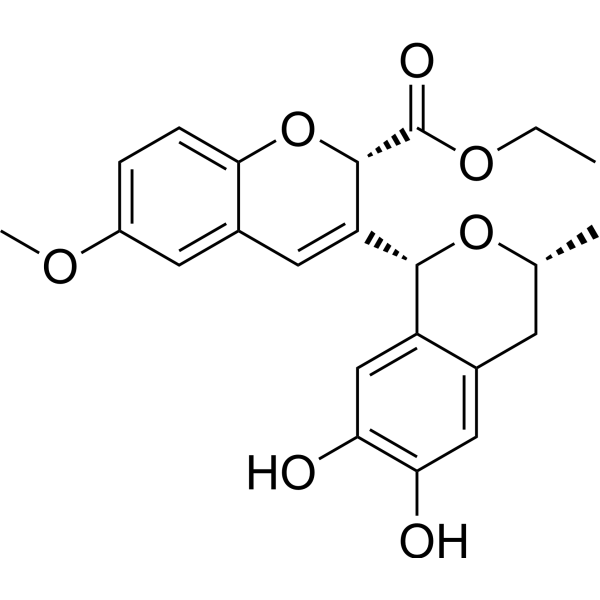 0 ImagesCat. No.: HY-163151CAS No.: 2579171-69-8JE-133 is an optically active isochromane-2H-chromene conjugate. JE-133 exhibits antioxidant and anti-inflammatory activities. JE-133 is a neuroprotective agent that effectively inhibits neuronal oxidative damage associated with PI3K/Akt and MAPK signaling pathways. JE-133 can also inhibit lipopolysaccharide (LPS) (HY-D1056)-induced neuroinflammation by regulating JAK/STAT and Nrf2 signaling pathways.
-
YVPGP
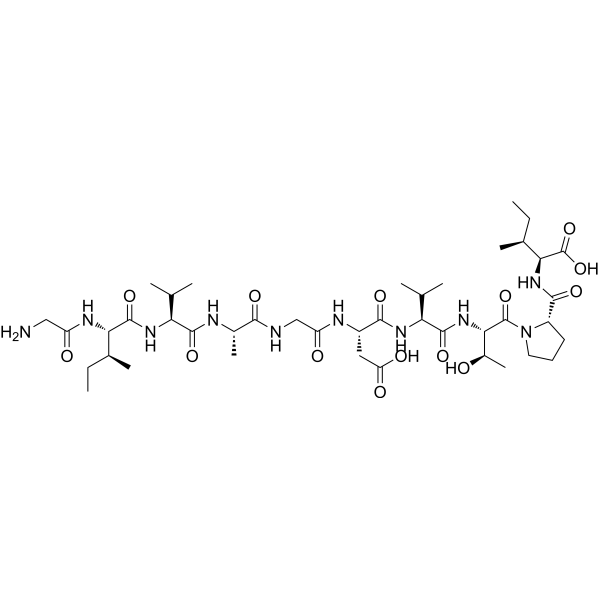
 0 ImagesCat. No.: HY-P10992CAS No.: 2095286-57-8YVPGP is an oligopeptide exacted from Anthopleura anjunae. YVPGP has a significant antitumor activity by mediating PI3K/AKT/mTOR signaling pathway. YVPGP arrests DU-145 cells in the S phase and induces apoptosis via mitochondrial and death receptor pathways (caspase3, 7, 8, 9). YVPGP effectively inhibits tumor growth in DU-145 xenografts mice model, promising for prostate cancer research.
-
Levomilnacipran-d10 hydrochloride
 0 ImagesCat. No.: HY-14794ASCAS No.: 2747914-23-2Synonyms: (1S,2R)-Milnacipran-d10 hydrochloride; F2695-d10 hydrochlorideLevomilnacipran-d10 ((1S,2R)-Milnacipran-d10) hydrochloride is deuterium labeled Levomilnacipran hydrochloride (HY-B0168B). Levomilnacipran ((1S,2R)-Milnacipran) hydrochloride is the enantiomer of Milnacipran (HY-B0168) and a strong substrate of P-gp that can cross the blood-brain barrier. Levomilnacipran hydrochloride is a serotonin and norepinephrine reuptake inhibitor, with IC50 values of 10.5 nM and 19.0 nM, and Ki values of 92.2 nM and 1.2 nM for human norepinephrine transporter (NET) and serotonin transporter (SERT), respectively. Levomilnacipran hydrochloride has antidepressant and anxiolytic activities. Levomilnacipran hydrochloride can be used for the research of depression.
-
PI3K-IN-48
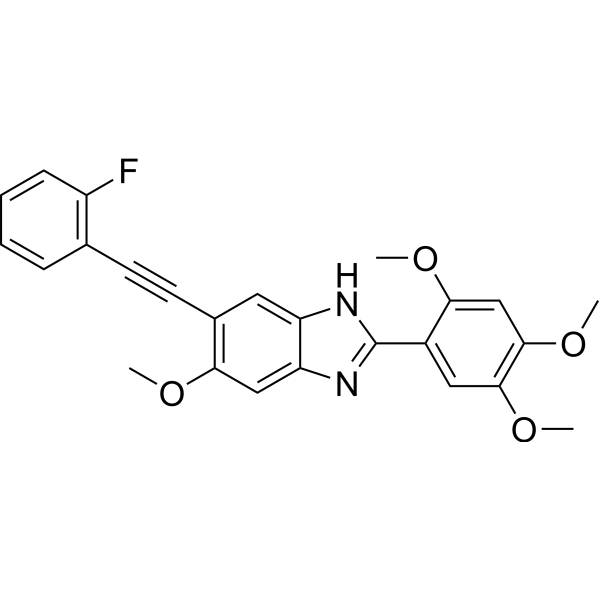 0 ImagesCat. No.: HY-156080CAS No.: 3052306-60-9PI3K-IN-48 is a PI3K inhibitor with IC50 value of 1.55 ± 0.18 μM for A549 cells. PI3K-IN-48 can induce G0/G1 phase arrest, cell apoptosis, and down-regulate expression of p-PI3K and p-Akt. PI3K-IN-48 can be used for human lung cancers diseases research.
-
eNOS activator-1
 0 ImagesCat. No.: HY-189214eNOS activator-1 is an orally active, blood-brain barrier permeable endothelial nitric oxide synthase (eNOS) activator. eNOS activator-1 upregulates eNOS mRNA expression, enhances endogenous NO biosynthesis, and activates the eNOS signaling pathway to maintain blood-brain barrier integrity. eNOS activator-1 upregulates the protein expression levels of PI3K, AKT, p-PI3K, and p-AKT. eNOS activator-1 reduces oxidative stress levels by decreasing lipid peroxidation and restoring antioxidant enzyme activities. eNOS activator-1 upregulates the expression of tight junction proteins ZO-1 and occludin, increases Cav-1 expression, and inhibits MMP-9-mediated blood-brain barrier disruption. eNOS activator-1 can be used in the research of ischemic stroke.
-
NVP-CLR457
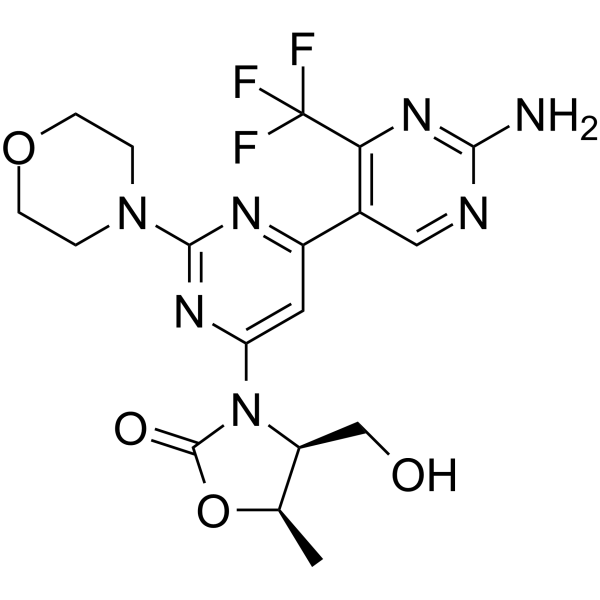 0 ImagesCat. No.: HY-146260CAS No.: 1453082-52-4NVP-CLR457 (compound 40) is an orally active, potent and balanced pan-class I PI3K inhibitor. NVP-CLR457 shows a clear dose-dependent PK/PD/efficacy relationship. NVP-CLR457 has antitumor activity.
-
Pertuzumab-LD3
 0 ImagesCat. No.: HY-185460Pertuzumab-LD3 is a humanized antibody-drug conjugate (ADC) targeting HER2. Pertuzumab-LD3 consists of the anti-HER2 humanized IgG1 monoclonal antibody Pertuzumab (HY-P9912), the cleavable linker Gly-Gly-Phe-Gly (HY-P3669), and the PI3K/mTOR-IN-21 (HY-185456) payload. Pertuzumab-LD3 can be used in research on metastatic HER2-positive breast cancer.
-
RMC-4998 TFA
 0 ImagesCat. No.: HY-156671BPurity: 99.02%RMC-4998 TFA is an orally active inhibitor targeting the active or GTP-bound state of the KRASG12C mutant. RMC-4998 TFA can form a ternary complex with intracellular CYPA and the activated KRASG12C mutant, with an IC50 value of 28 nM. RMC-4998 TFA can inhibit ERK signaling in KRASG12C mutant cancer cells and induce apoptosis. RMC-4998 TFA can be used for for non-small cell lung cancer (NSCLC) research.
-
PI3Kα-IN-22
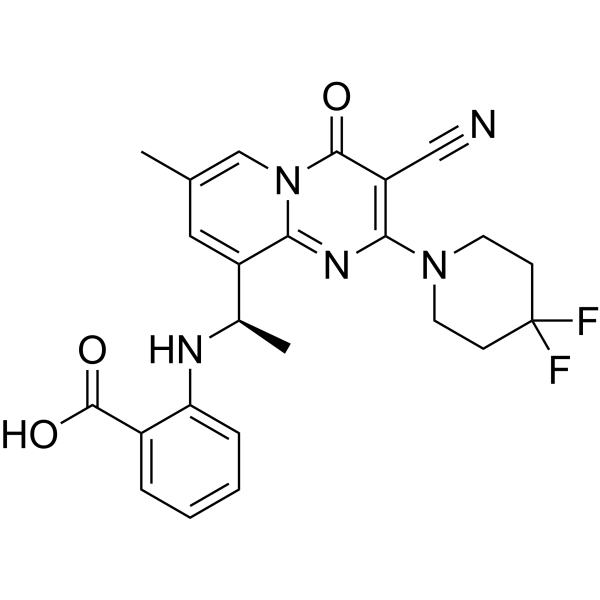 0 ImagesCat. No.: HY-161373CAS No.: 2925030-26-6PI3Kα-IN-22 (Compound 17) is an orally active, potent and selective inhibitor of PI3KαH1047R, with an IC50 of 1 nM for pAKT T47D AlphaLISA. PI3Kα-IN-22 can induce tumor regressions in the HCC1954 tumor model in mice.
-
PI3Kα/CDK7-IN-1
 0 ImagesCat. No.: HY-187454PI3Kα/CDK7-IN-1 is a dual-target hybrid inhibitor of PI3Kα and CDK7, with IC50 values of 87.9 nM and 638 nM, respectively. PI3Kα/CDK7-IN-1 acts as a cytotoxic agent and cell death inducer that triggers apoptotic death in cancer cells. PI3Kα/CDK7-IN-1 can be used in cancer research such as colorectal cancer.
-
TGX-155
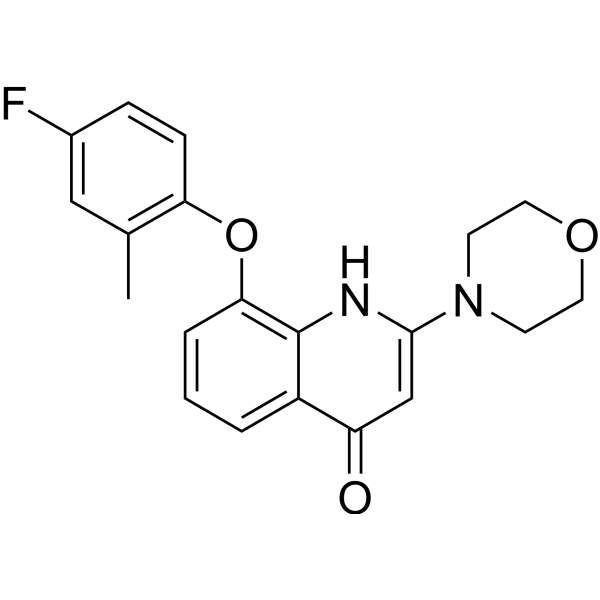 0 ImagesCat. No.: HY-105666CAS No.: 351071-90-4Synonyms: AZ12649385TGX-155 (AZ12649385) is a selective inhibitor of PI3Kβ. TGX-155 has potential applications in antithrombotic therapy.
-
PI3K-IN-34
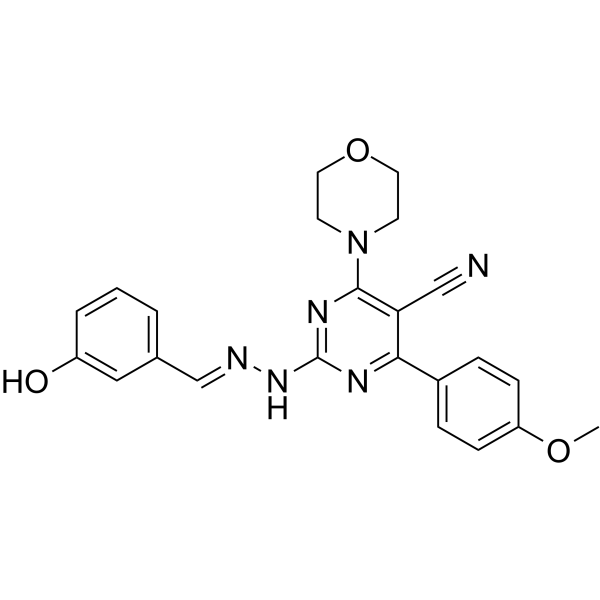 0 ImagesCat. No.: HY-147899CAS No.: 2458163-94-3
-
Antitumor agent-86
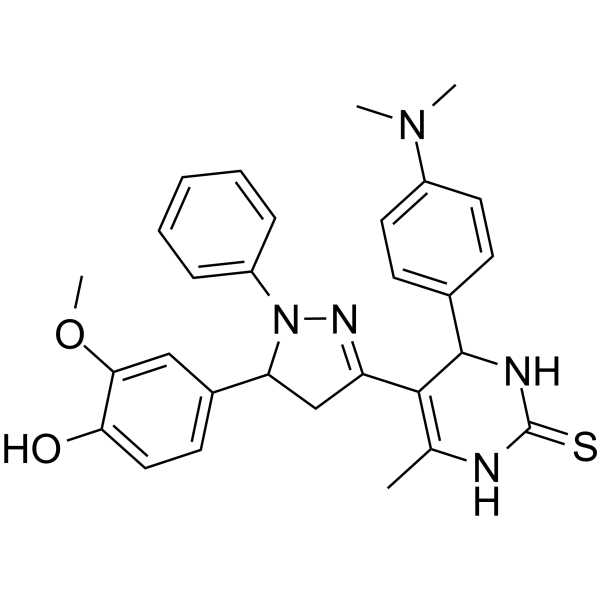 0 ImagesCat. No.: HY-152774CAS No.: 2907704-65-6
-
ATM Inhibitor-4
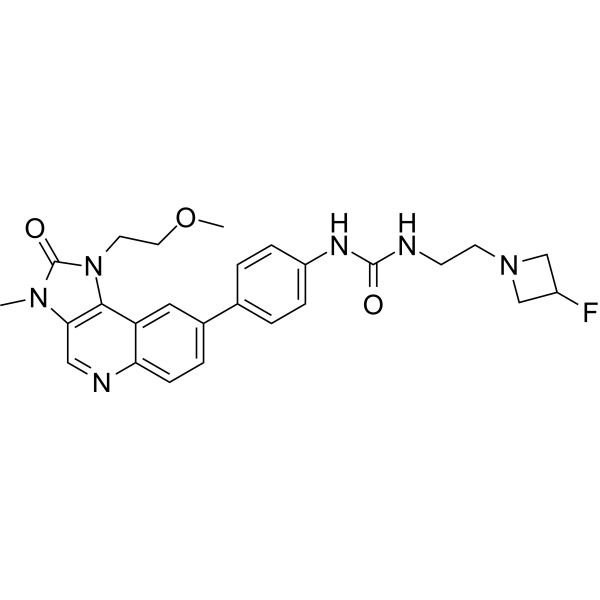 0 ImagesCat. No.: HY-144687CAS No.: 2769140-74-9
-
Fenitrothion-d6
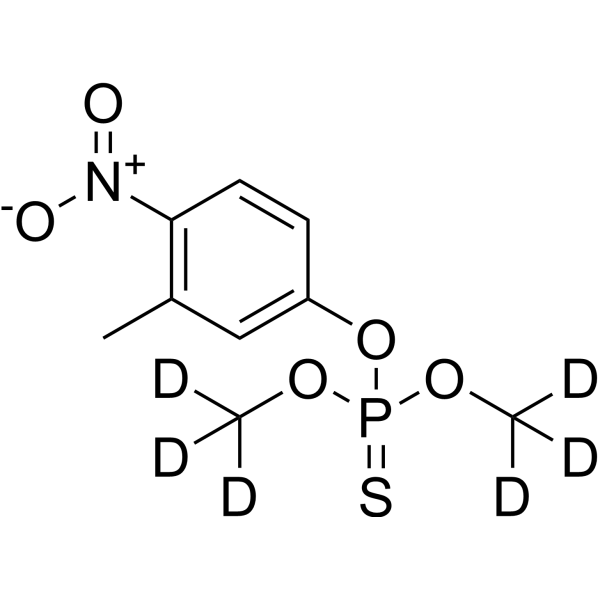 0 ImagesCat. No.: HY-B1885SCAS No.: 203645-59-4Fenitrothion-d6 is the deuterium labeled Fenitrothion (HY-B1885). Fenitrothion is a broad-spectrum and orally active insecticide/acaricide. Fenitrothion inhibits cholinesterase, AMPKα and IRS1/PI3K/AKT. Fenitrothion causes Apoptosis, reduces SOD activity. Fenitrothion shows insecticidal effect against Rhyzopertha dominica and Tribolium castaneum adults. Fenitrothion is widely used in cotton crops, vegetable crops, fruit crops and field crops, especially rice. Fenitrothion can be used for brain and spleen toxicology studies.




