



Roemerine

Based on 1 Customer Validation
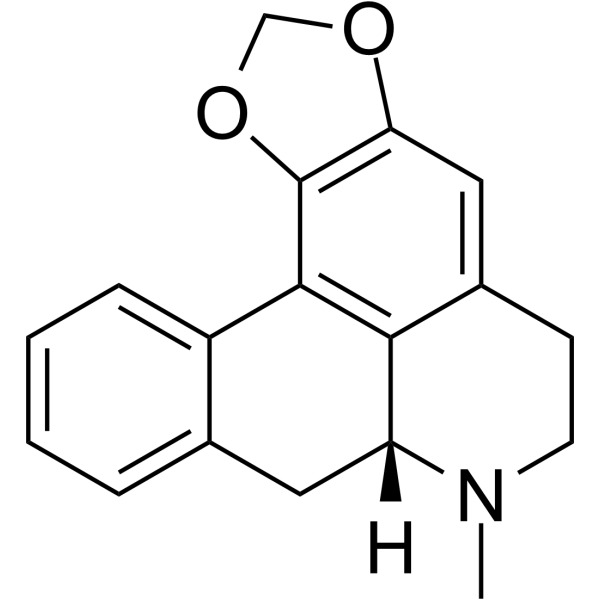
Roemerine is an alkaloid that has been identified from the leaves of Fibraurea recisa Pierre. Roemerine exhibits antibacterial, anticancer, and antidepressant activities, can reverse the multidrug resistance phenotype in cultured cells, and exerts antibacterial effects by regulating the cAMP signaling pathway. Additionally, Roemerine influences neuronal activity by increasing BDNF protein expression and modulating the serotonergic and glutamatergic systems. Roemerine holds promise for research in the fields of cancer, infections, and neurological diseases.
For research use only. We do not sell to patients.
- Purity : 99.89%
- CAS No.: 548-08-3
- Formula: C18H17NO2
- Molecular Weight:279.33
-
Storage:
4°C, sealed storage, away from moisture and light
* In solvent : -80°C, 6 months; -20°C, 1 month (sealed storage, away from moisture and light)

To place orders, for customer services and technical support, please contact: MedChemExpress USA
Tel: 609-228-6898 E-mail: [email protected] [email protected]


-
 Biological Activity
-
Chemical Information
-
Solvent & Solubility
- Protocols
- Purity & Documentation
- References
-
 Help & FAQs


-
HY-N6932
VoacamineCB1/P-gp Inhibitor -
HY-50879
ElacridarP-gp And BCRP Dual-Inhibitor -
HY-14275
VerapamilCalcium Channel Blocker -

HY-50879R
Elacridar (Standard)P-gp And BCRP Dual-Inhibitor -
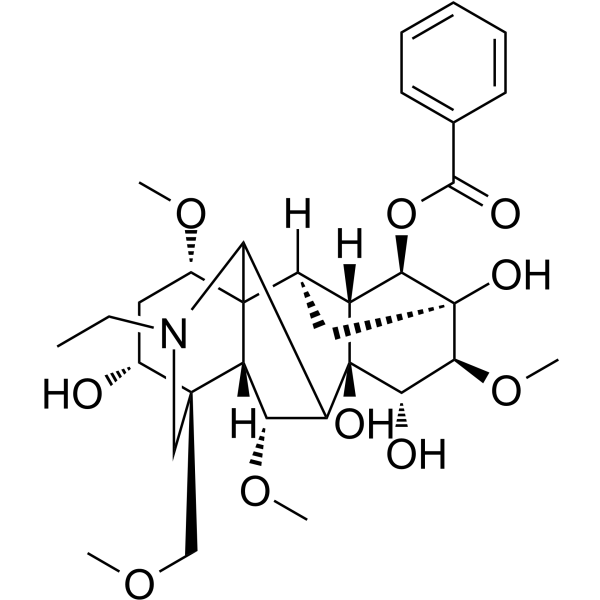
HY-N0217
BenzoylaconineAnti-inflammatory Agent -
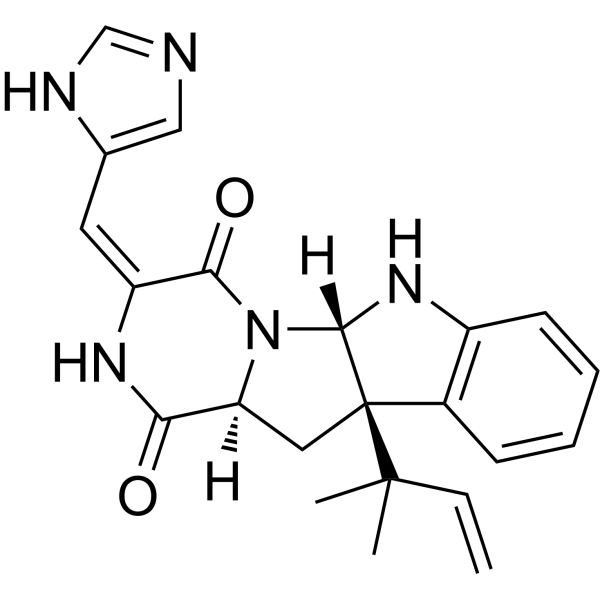
HY-N6748
Roquefortine CMycotoxin -
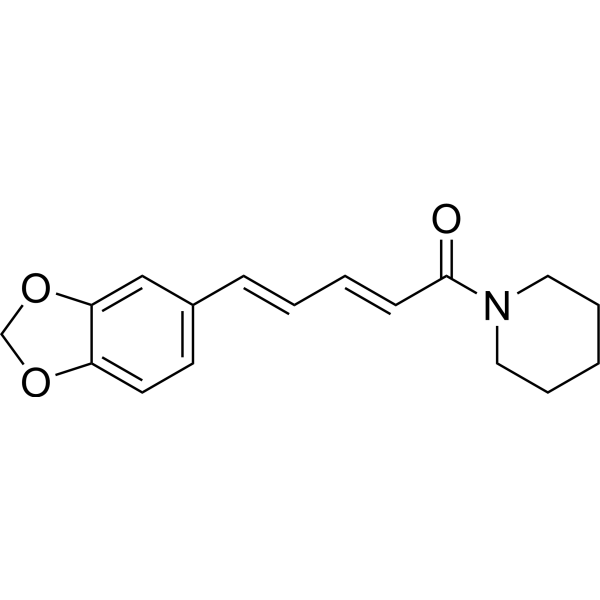
HY-N0144
PiperineAutophagy Inducer -

HY-14275R
Verapamil (Standard)Calcium Channel Blocker -
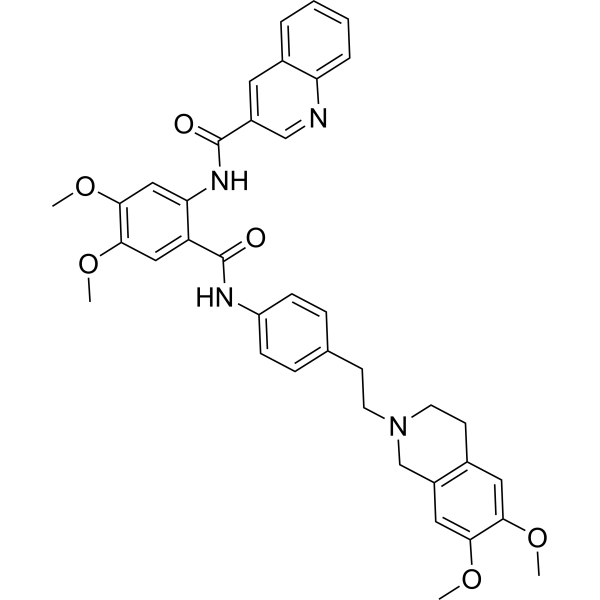
HY-10550
TariquidarP-gp Inhibitor -
HY-N1916
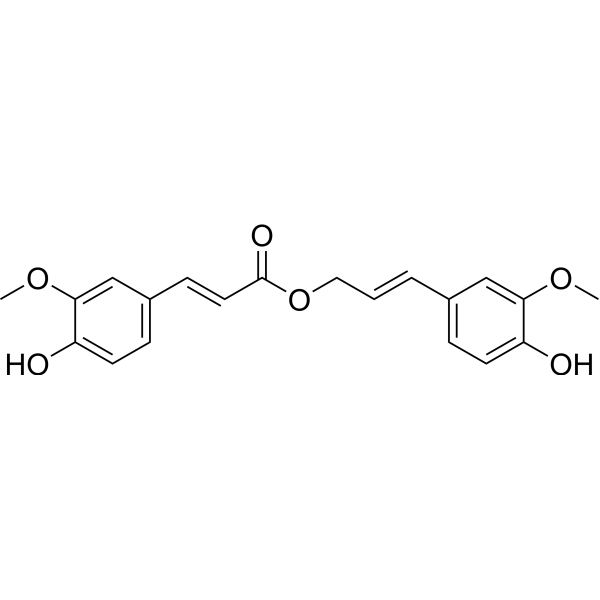
Coniferyl ferulateGST Inhibitor -

HY-N0144R
Piperine (Standard)Autophagy Inducer -
HY-17384
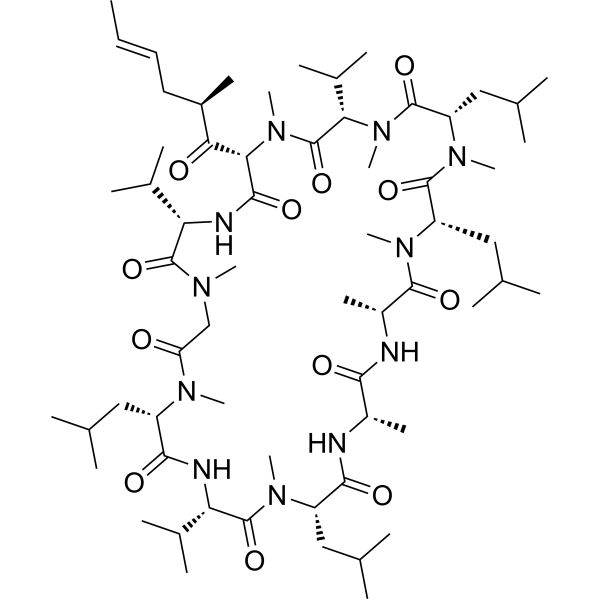
ValspodarP-glycoprotein Inhibitor
All Endogenous Metabolite Isoforms
MoreAll 5-HT Receptor Isoforms
MoreAll iGluR Isoforms
MoreAll Antibiotic Isoforms
More

Biological Activity
Description
Cellular Effect
|
Cell Line

|
Type | Value | Description | References |
|---|---|---|---|---|
| A-431 | ED50 |
4.3 μg/mL
Compound: 1
|
Cytotoxicity against human A431 cells after 72 hrs by SRB assay
Cytotoxicity against human A431 cells after 72 hrs by SRB assay
|
[PMID: 7623038] |
| BC1 cell line | ED50 |
8.3 μg/mL
Compound: 1
|
Cytotoxicity against human BC1 cells after 72 hrs by SRB assay
Cytotoxicity against human BC1 cells after 72 hrs by SRB assay
|
[PMID: 7623038] |
| Col2 | ED50 |
5.8 μg/mL
Compound: 1
|
Cytotoxicity against human Col2 cells after 72 hrs by SRB assay
Cytotoxicity against human Col2 cells after 72 hrs by SRB assay
|
[PMID: 7623038] |
| HT | ED50 |
6.4 μg/mL
Compound: 1
|
Cytotoxicity against human HT cells after 72 hrs by SRB assay
Cytotoxicity against human HT cells after 72 hrs by SRB assay
|
[PMID: 7623038] |
| KB-V1 | ED50 |
>20 μg/mL
Compound: 1
|
Cytotoxicity against human multidrug resistant KBV1 cells in absence of vinblastine after 72 hrs by SRB assay
Cytotoxicity against human multidrug resistant KBV1 cells in absence of vinblastine after 72 hrs by SRB assay
|
[PMID: 7623038] |
| KB-V1 | ED50 |
0.6 μg/mL
Compound: 1
|
Cytotoxicity against human multidrug resistant KBV1 cells in presence of vinblastine
Cytotoxicity against human multidrug resistant KBV1 cells in presence of vinblastine
|
[PMID: 7623038] |
| LNCaP | ED50 |
10.7 μg/mL
Compound: 1
|
Cytotoxicity against human LNCAP cells after 72 hrs by SRB assay
Cytotoxicity against human LNCAP cells after 72 hrs by SRB assay
|
[PMID: 7623038] |
| Lu1 | ED50 |
6.6 μg/mL
Compound: 1
|
Cytotoxicity against human Lu1 cells after 72 hrs by SRB assay
Cytotoxicity against human Lu1 cells after 72 hrs by SRB assay
|
[PMID: 7623038] |
| P388 | ED50 |
>5 μg/mL
Compound: 1
|
Cytotoxicity against mouse P388 cells after 72 hrs by SRB assay
Cytotoxicity against mouse P388 cells after 72 hrs by SRB assay
|
[PMID: 7623038] |
| RAW264.7 | IC50 |
1.39 μM
Compound: 130
|
Inhibition of NO production in LPS-stimulated mouse RAW264.7 cells incubated for 24 hrs by Griess reagent-based assay
Inhibition of NO production in LPS-stimulated mouse RAW264.7 cells incubated for 24 hrs by Griess reagent-based assay
|
[PMID: 33454546] |
| SK-MEL-2 | ED50 |
>20 μg/mL
Compound: 1
|
Cytotoxicity against human SK-MEL-2 cells after 72 hrs by SRB assay
Cytotoxicity against human SK-MEL-2 cells after 72 hrs by SRB assay
|
[PMID: 7623038] |
| U-373MG ATCC | ED50 |
5 μg/mL
Compound: 1
|
Cytotoxicity against human U373 cells after 72 hrs by SRB assay
Cytotoxicity against human U373 cells after 72 hrs by SRB assay
|
[PMID: 7623038] |
| ZR-75-1 | ED50 |
>20 μg/mL
Compound: 1
|
Cytotoxicity against human ZR-75-1 cells after 72 hrs by SRB assay
Cytotoxicity against human ZR-75-1 cells after 72 hrs by SRB assay
|
[PMID: 7623038] |
In Vitro
Roemerine (0-1 mM, 48 h) significantly reduces cell viability in RM-1 cells, with IC50 of 1177.4 µM [2]. Roemerine (8 µg/mL, 8 h) can influence biofilm formation in Candida albicans SC5314 through the regulation of the cAMP signaling pathway[3]. Roemerine (10 μM, 48 h) affects neuronal activity by increasing BDNF protein expression and modulating the serotonergic and glutamatergic systems in SH-SY5Y cells, exhibiting antidepressant-like effects[4].
MedChemExpress (MCE) has not independently confirmed the accuracy of these methods. They are for reference only.
-
Cell Line:RM-1 cells (prostate cancer, mouse)
-
Concentration:0 µM, 1 µM, 2 µM, 5 µM, 10 µM, 20 µM, 50 µM, 100 µM, 200 µM, 500 µM, 1000 µM
-
Incubation Time:48 h
-
Result:Significantly reduced RM-1 cell viability, with IC50 of 1177.4 µM.
-
Cell Line:Candida albicans SC5314
-
Concentration:8 µg/mL
-
Incubation Time:8 h
-
Result:Significantly upregulated YWP1, SAP5, SAP6, HWP1, and ECE1 genes while downregulating EFG1 gene.
In Vivo
MedChemExpress (MCE) has not independently confirmed the accuracy of these methods. They are for reference only.
-
Animal Model:Prostate cancer BALB/C nude mouse model (established by subcutaneous implantation of RM-1 cells)[3]
-
Dosage:30 mg/kg
-
Administration:Intraperitoneal injection (i.p.), once every three days for 30 days
-
Result:Significantly reduced tumor volume and weight in the experimental group (P < 0.05), with an inhibition rate of 41.2%.
-
Animal Model:MRSA XJ75302-induced sepsis BALB/C mouse model[5]
-
Dosage:20 mg/kg
-
Administration:Intraperitoneal injection (i.p.), once daily, for 2 days
-
Result:Increased the 7-day survival rate of mice to 58.3% (p < 0.05) and reduced bacterial loads in the liver (4.71 to 4.38 log CFU/mL), kidney (4.37 to 3.79 log CFU/mL), heart (5.44 to 3.76 log CFU/mL), and blood (6.52 to 4.55 log CFU/mL). Note: CFU/mL represents the number of bacteria per milliliter of culture medium or tissue sample that can form colonies (CFU, Colony-Forming Units).


Chemical Information
-
CAS No. 548-08-3
-
Appearance Solid
-
Molecular Weight 279.33
-
Formula C18H17NO2
-
Color White to off-white
-
SMILES
CN1CCC(C2=C3C4=CC=CC=C4C[C@@]12[H])=CC5=C3OCO5
-
Synonyms
(-)-Roemerine
-
Structure Classification
-
Shipping
Room temperature in continental US; may vary elsewhere.
-
Storage
4°C, sealed storage, away from moisture and light
* In solvent : -80°C, 6 months; -20°C, 1 month (sealed storage, away from moisture and light)


Solvent & Solubility
In Vitro:
DMSO : 100 mg/mL (358.00 mM; Need ultrasonic; Hygroscopic DMSO has a significant impact on the solubility of product, please use newly opened DMSO)
Please refer to the solubility information to select the appropriate solvent. Once prepared, please aliquot and store the solution to prevent product inactivation from repeated freeze-thaw cycles.
Storage method and period of stock solution: -80°C, 6 months; -20°C, 1 month (sealed storage, away from moisture and light). When stored at -80°C, please use it within 6 months. When stored at -20°C, please use it within 1 month.
Please refer to the solubility information to select the appropriate solvent. Once prepared, please aliquot and store the solution to prevent product inactivation from repeated freeze-thaw cycles.
Storage method and period of stock solution: -80°C, 6 months; -20°C, 1 month (sealed storage, away from moisture and light). When stored at -80°C, please use it within 6 months. When stored at -20°C, please use it within 1 month.
Concentration (start) × Volume (start) = Concentration (final) × Volume (final)
In Vivo:
Select the appropriate dissolution method based on your experimental animal and administration route.
- For the following dissolution methods, please ensure to first prepare a clear stock solution using an In Vitro approach and then sequentially add co-solvents:
- To ensure reliable experimental results, the clarified stock solution can be appropriately stored based on storage conditions. As for the working solution for In Vivo experiments, it is recommended to prepare freshly and use it on the same day.
- The percentages shown for the solvents indicate their volumetric ratio in the final prepared solution. If precipitation or phase separation occurs during preparation, heat and/or sonication can be used to aid dissolution.
Add each solvent one by one: 10% DMSO 40% PEG300 5% Tween-80 45% Saline
Solubility: ≥ 2.5 mg/mL (8.95 mM); Clear solution
This protocol yields a clear solution of ≥ 2.5 mg/mL (saturation unknown).
Taking 1 mL working solution as an example, add 100 μL DMSO stock solution (25.0 mg/mL) to 400 μL PEG300, and mix evenly; then add 50 μL Tween-80 and mix evenly; then add 450 μL Saline to adjust the volume to 1 mL.
Preparation of Saline: Dissolve 0.9 g sodium chloride in ddH₂O and dilute to 100 mL to obtain a clear Saline solution.
Add each solvent one by one: 10% DMSO 90% (20% SBE-β-CD in Saline)
Solubility: ≥ 2.5 mg/mL (8.95 mM); Clear solution
This protocol yields a clear solution of ≥ 2.5 mg/mL (saturation unknown).
Taking 1 mL working solution as an example, add 100 μL DMSO stock solution (25.0 mg/mL) to 900 μL 20% SBE-β-CD in Saline, and mix evenly.
Preparation of 20% SBE-β-CD in Saline (4°C, storage for one week): 2 g SBE-β-CD powder is dissolved in 10 mL Saline, completely dissolve until clear.
In Vivo Dissolution Calculator
Please enter the basic information of animal experiments:
-
-
-
-
Recommended: Prepare an additional quantity of animals to account for potential losses during experiments.
Please enter your animal formula composition:
-
%DMSO +
Recommended: Keep the proportion of DMSO in working solution below 2% if your animal is weak.
-
%+
-
+%Tween-80 + +
-
%Saline +
The co-solvents required include: DMSO, . All of co-solvents are available by MedChemExpress (MCE). , Tween 80. All of co-solvents are available by MedChemExpress (MCE).
Working solution concentration: 0.22 mg/mL
Method for preparing stock solution: mg drug dissolved in μL DMSO. Stock solution concentration: mg/mL. * In solvent : -80°C, 6 months; -20°C, 1 month (sealed storage, away from moisture and light)
1. Take μL DMSO stock solution;
2. Add μL .
μL , mix evenly;
3. Then add μL Tween 80, mix evenly;
4. Then add μL
Please ensure that the stock solution in the first step is dissolved to a clear state, and add co-solvents in sequence. You can use ultrasonic heating (ultrasonic cleaner, recommended frequency 20-40 kHz), vortexing, etc. to assist dissolution.


Purity & Documentation
-
Data Sheet (285 KB)
-
SDS (252 KB)
- English - EN (252 KB)
- Français - FR (252 KB)
- Deutsch - DE (252 KB)
- Norwegian - NO (252 KB)
- Español - ES (252 KB)
- Swedish - SV (252 KB)
- Italian - IT (252 KB)
- Korean - KR (252 KB)
- Portuguese - PT (252 KB)
-
Handling Instructions (2659 KB)
References
[1]. M You, et al. (-)-Roemerine, an Aporphine Alkaloid From Annona Senegalensis That Reverses the Multidrug-Resistance Phenotype With Cultured Cells. J Nat Prod. 1995 Apr;58(4):598-604. [Content Brief]
[2]. Xu J, et al. Inhibition of proliferation, migration and invasion of RM-1 cells by roemerine: Insights from in vitro and in vivo studies. Tissue Cell. 2024 Dec 20;93:102693. [Content Brief]
[3]. Ma C, et al. Potent Activities of Roemerine against Candida albicans and the Underlying Mechanisms. Molecules. 2015 Sep 29;20(10):17913-28. [Content Brief]
[4]. Bayazeid O, et al. Neuroactivity of the naturally occurring aporphine alkaloid, roemerine. Nat Prod Res. 2021 Dec;35(24):6147-6152. [Content Brief]
[5]. Yin S, et al. Roemerine Improves the Survival Rate of Septicemic BALB/c Mice by Increasing the Cell Membrane Permeability of Staphylococcus aureus. PLoS One. 2015 Nov 25;10(11):e0143863. [Content Brief]


Complete Stock Solution Preparation Table
Please refer to the solubility information to select the appropriate solvent. Once prepared, please aliquot and store the solution to prevent product inactivation from repeated freeze-thaw cycles.
Storage method and period of stock solution: -80°C, 6 months; -20°C, 1 month (sealed storage, away from moisture and light). When stored at -80°C, please use it within 6 months. When stored at -20°C, please use it within 1 month.
| Optional Solvent | Concentration Solvent Mass | 1 mg | 5 mg | 10 mg | 25 mg |
|---|---|---|---|---|---|
| DMSO | 1 mM | 3.5800 mL | 17.9000 mL | 35.8000 mL | 89.4999 mL |
| 5 mM | 0.7160 mL | 3.5800 mL | 7.1600 mL | 17.9000 mL | |
| 10 mM | 0.3580 mL | 1.7900 mL | 3.5800 mL | 8.9500 mL | |
| 15 mM | 0.2387 mL | 1.1933 mL | 2.3867 mL | 5.9667 mL | |
| 20 mM | 0.1790 mL | 0.8950 mL | 1.7900 mL | 4.4750 mL | |
| 25 mM | 0.1432 mL | 0.7160 mL | 1.4320 mL | 3.5800 mL | |
| 30 mM | 0.1193 mL | 0.5967 mL | 1.1933 mL | 2.9833 mL | |
| 40 mM | 0.0895 mL | 0.4475 mL | 0.8950 mL | 2.2375 mL | |
| 50 mM | 0.0716 mL | 0.3580 mL | 0.7160 mL | 1.7900 mL | |
| 60 mM | 0.0597 mL | 0.2983 mL | 0.5967 mL | 1.4917 mL | |
| 80 mM | 0.0447 mL | 0.2237 mL | 0.4475 mL | 1.1187 mL | |
| 100 mM | 0.0358 mL | 0.1790 mL | 0.3580 mL | 0.8950 mL |


Roemerine Related Classifications
HY-121793 Related Classifications
 Powered by Bioz