



CDK
Cyclin dependent kinase
CDKs (Cyclin-dependent kinases) are serine-threonine kinases first discovered for their role in regulating the cell cycle. They are also involved in regulating transcription, mRNA processing, and the differentiation of nerve cells. CDKs are relatively small proteins, with molecular weights ranging from 34 to 40 kDa, and contain little more than the kinase domain. In fact, yeast cells can proliferate normally when their CDK gene has been replaced with the homologous human gene. By definition, a CDK binds a regulatory protein called a cyclin. Without cyclin, CDK has little kinase activity; only the cyclin-CDK complex is an active kinase.
There are around 20 Cyclin-dependent kinases (CDK1-20) known till date. CDK1, 4 and 5 are involved in cell cycle, and CDK 7, 8, 9 and 11 are associated with transcription.
CDK levels remain relatively constant throughout the cell cycle and most regulation is post-translational. Most knowledge of CDK structure and function is based on CDKs of S. pombe (Cdc2), S. cerevisia (CDC28), and vertebrates (CDC2 and CDK2). The four major mechanisms of CDK regulation are cyclin binding, CAK phosphorylation, regulatory inhibitory phosphorylation, and binding of CDK inhibitory subunits (CKIs).
CDK Isoform Specific Products
-
CDK
(482)
View all products
-
CDK1
(195)
View all products
-
CDK2
(313)
View all products
-
CDK3
(28)
View all products
-
CDK4
(229)
View all products
-
CDK5
(97)
View all products
-
CDK6
(176)
View all products
-
CDK7
(118)
View all products
-
CDK8
(57)
View all products
-
CDK9
(203)
View all products
-
CDK11
(9)
View all products
-
CDK12
(52)
View all products
-
CDK13
(26)
View all products
-
CDK14
(6)
View all products
-
CDK16
(8)
View all products
-
CDK19
(25)
View all products
-
CDC
(21)
View all products
-
CLK
(31)
View all products
-
Pho85
(1)
View all products
-
CDK10
(1)
View all products
-
CDK15
(1)
View all products
-
CDK17
(2)
View all products
-
CDK18
(1)
View all products
-
CDK20
(1)
View all products
-
PITSLRE
(1)
View all products
All Product Categories
-
CDK Inhibitors
(1065)
View all products
-
CDK Agonists
(3)
View all products
-
CDK Antagonists
(2)
View all products
-
CDK Activators
(18)
View all products
-
CDK Modulators
(15)
View all products
-
CDK Degraders
(93)
View all products
-
CDK Controls
(4)
View all products
-
CDK Substrate
(1)
View all products
-
CDK Ligands
(16)
View all products
-
Cyclin-Dependent Kinases (CDKs) Proteins
(81)
View all products
-
Cyclin Dependent Kinase 1 (CDK1) Proteins
(9)
View all products
-
Cyclin-Dependent Kinase 2 (CDK2) Proteins
(12)
View all products
-
Cyclin-Dependent Kinase 3 (CDK3) Proteins
(6)
View all products
-
Cyclin-Dependent Kinase 4 (CDK4) Proteins
(5)
View all products
-
Cyclin-Dependent Kinase 5 (CDK5) Proteins
(5)
View all products
-
Cyclin-Dependent Kinase 6 (CDK6) Proteins
(6)
View all products
-
Cyclin-Dependent Kinase 7 (CDK7) Proteins
(4)
View all products
-
CDK Related Products (1339)
Related Products (1339)

-
Recombinant Proteins (83)
-
Antibodies (42)
-
CDK Isoform Comparison
-
Ribociclib succinate hydrate
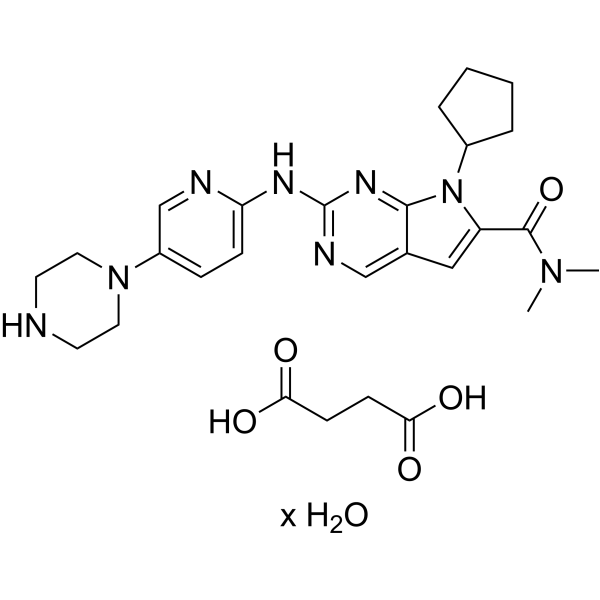 0 ImagesSynonyms: LEE011 succinate hydrateRRibociclib (LEE011) succinate hydrate is an ATP-competitive and orally active CDK4/6 inhibitor that crosses the blood-brain barrier with IC50 values of 10 nM and 39 nM, respectively, and is over 1,000-fold less potent against the cyclin B/CDK1 complex.
-
M2N12
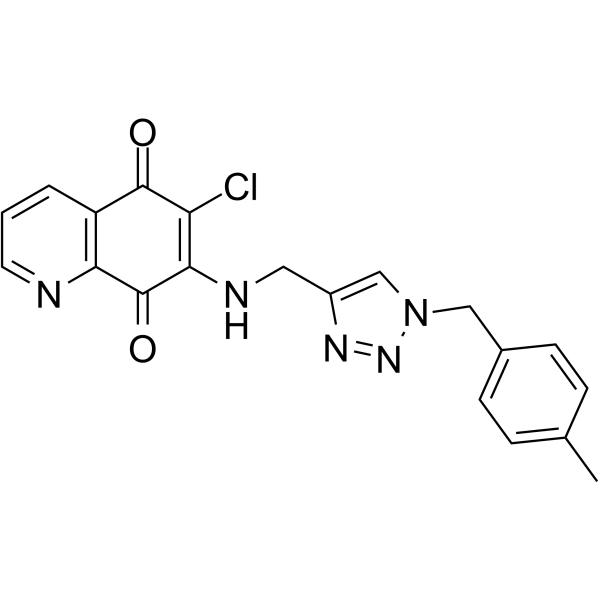 0 ImagesM2N12 is a potent and highly selective cell division cycle 25C protein phosphatase (Cdc25C) inhibitor with an IC50 value of 0.09 μM. M2N12 also has promising activity against Cdc25A and Cdc25B with IC50 values of 0.53 μM and 1.39 μM, respectively. M2N12 has anti-tumor activity and can be used for cancer research.
-
Samuraciclib hydrochloride hydrate
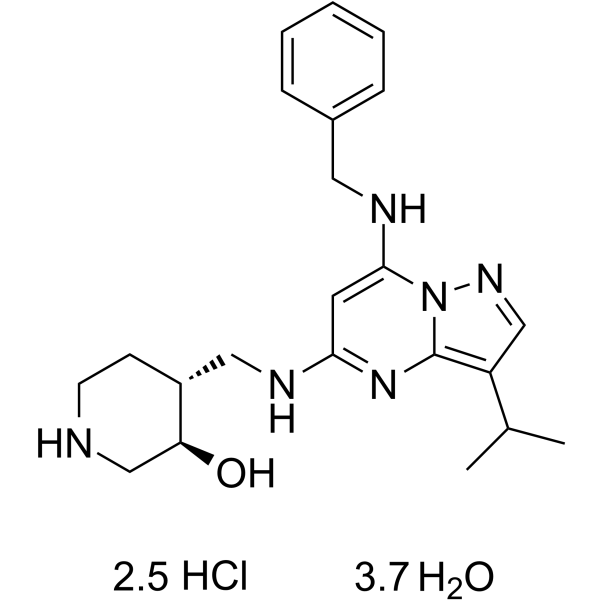 0 ImagesCat. No.: HY-103712CPurity: 99.80%Synonyms: CT7001 hydrochloride hydrate; ICEC0942 hydrochloride hydrateSamuraciclib (CT7001) hydrochloride hydrate is a potent, selective, ATP-competitive and orally active CDK7 inhibitor, with an IC50 of 41 nM. Samuraciclib hydrochloride hydrate displays 45-, 15-, 230- and 30-fold selectivity over CDK1, CDK2 (IC50 of 578 nM), CDK5 and CDK9, respectively. Samuraciclib hydrochloride hydrate inhibits the growth of breast cancer cell lines with GI50 values between 0.2-0.3 μM. Samuraciclib hydrochloride hydrate has anti-tumor effects.
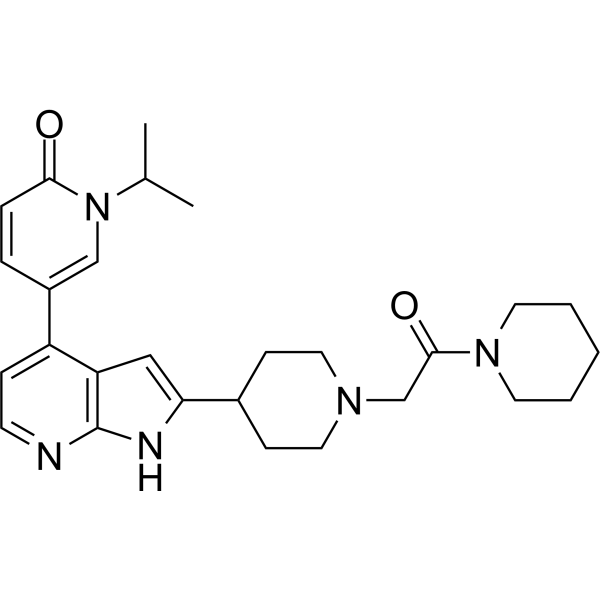
-
TP-1287
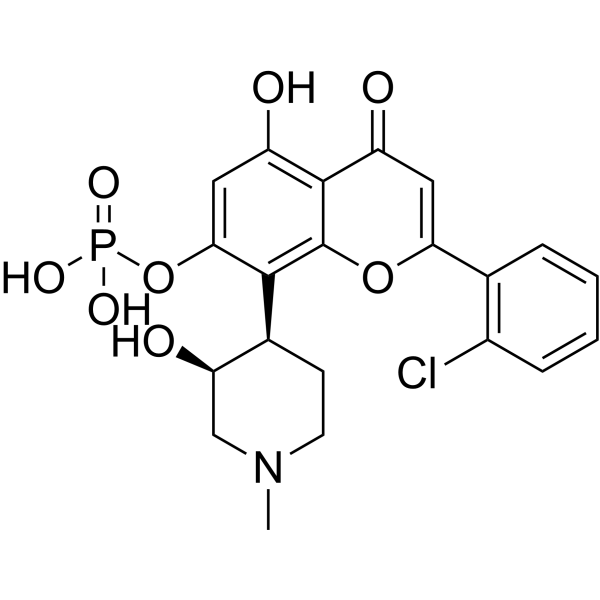 0 ImagesCat. No.: HY-153260CAS No.: 2044686-42-0
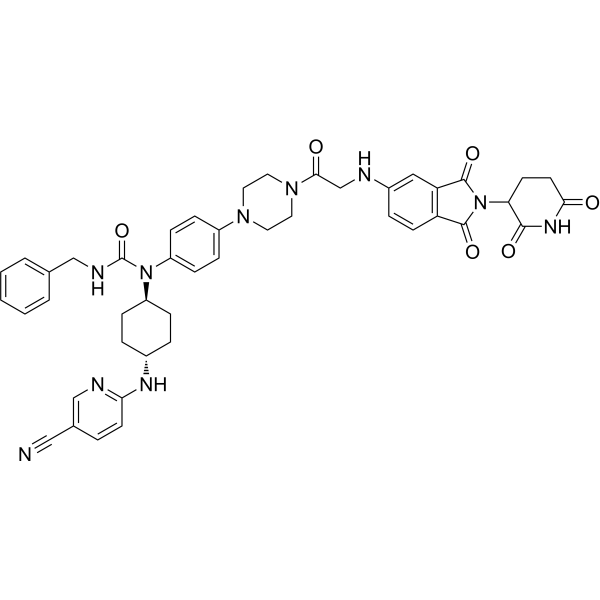
-
HEMTAC CDK4/6 degrader 1
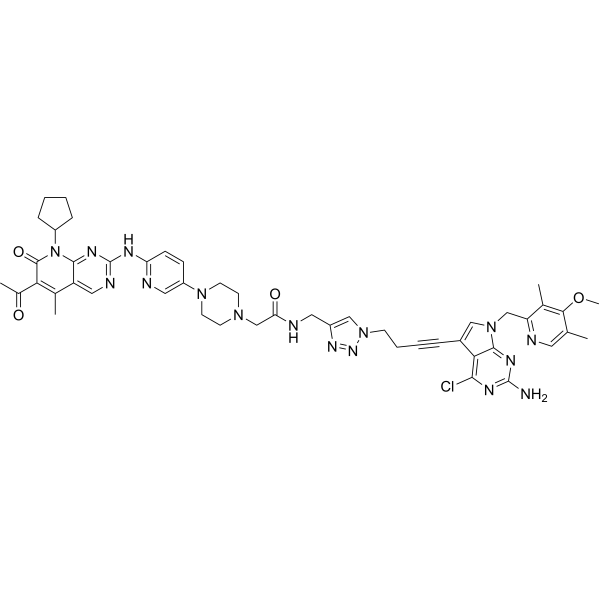 0 ImagesHEMTAC CDK4/6 degrader 1 is a PROTAC connected by ligands for HSP90 and CDK4/6 with a Kd value of 35.7 μM. HEMTAC CDK4/6 degrader 1 induces CDK4/6 degradation in B16F10 melanoma cells. HEMTAC CDK4/6 degrader 1 arrests cell cycle at G0/G1 phase and induces apoptosis. HEMTAC CDK4/6 degrader 1 can be used in research of cancer. HEMTAC CDK4/6 degrader 1 is a click chemistry reagent, it contains an Alkyne group and can undergo copper-catalyzed azide-alkyne cycloaddition (CuAAc) with molecules containing Azide groups.
-
Aristolochic acid D
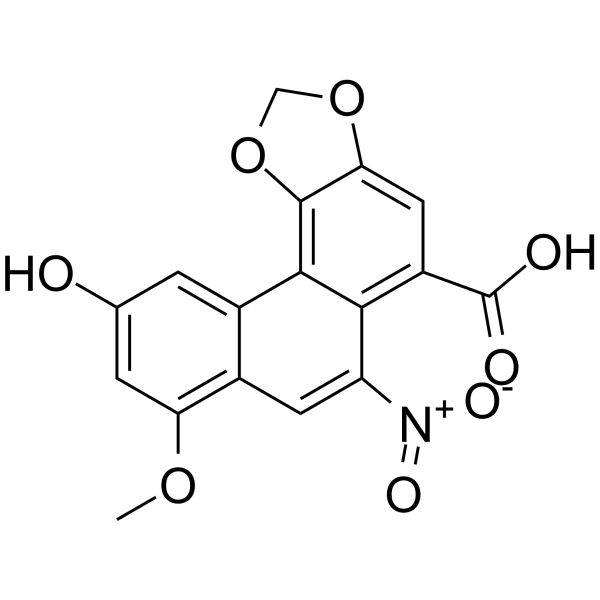 0 ImagesSynonyms: Aristolochic acid-IVaAristolochic acid D (Aristolochic acid-IVa) is an orally active PDE2 (IC50: 4.673 μM) and CDK2 (IC50: 25 μM) inhibitor that can be isolated from Aristolochia indica L. Aristolochic acid D exhibits anti-inflammatory activity and is non-carcinogenic and non-nephrotoxic. Aristolochic acid D can be used in the research of inflammation and tumor-related diseases.
-
FIT-039
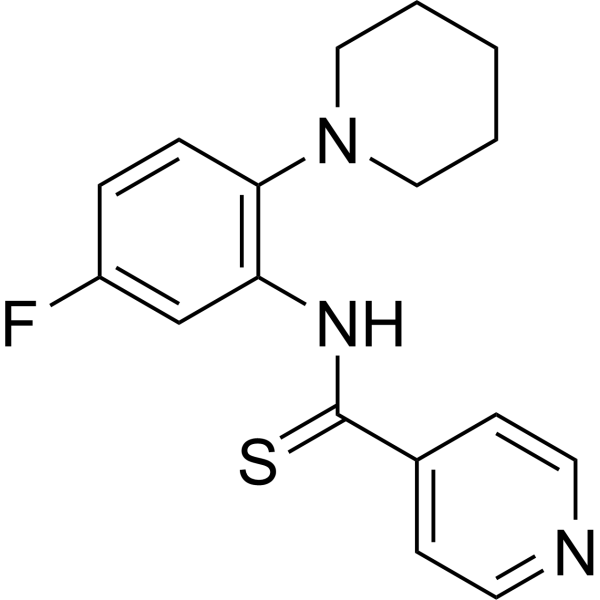 0 ImagesFIT-039 is a selective, ATP-competitive and orally active CDK9 inhibitor with an IC50 of 5.8 μM for CKD9/cyclin T1. FIT-039 does not inhibit other CDKs and other kinases. FIT-039 inhibits replication of HSV-1 (IC50 of 0.69 μM), HSV-2, human adenovirus, and human CMV. FIT-039 is a promising antiviral agent for inhibiting drug-resistant HSVs and other DNA viruses.
-
PPA-037 TFA
 0 ImagesCat. No.: HY-171787APurity: 99.42%PPA-037 TFA is an orally active, highly potent and selective inhibitor of cyclin-dependent kinase 12 (CDK12). PPA-037 TFA induces the degradation of cyclin K (Cyclin K), enhancing antiproliferative effects on tumor cells. PPA-037 TFA is promising for research of cancers.
-
7BIO
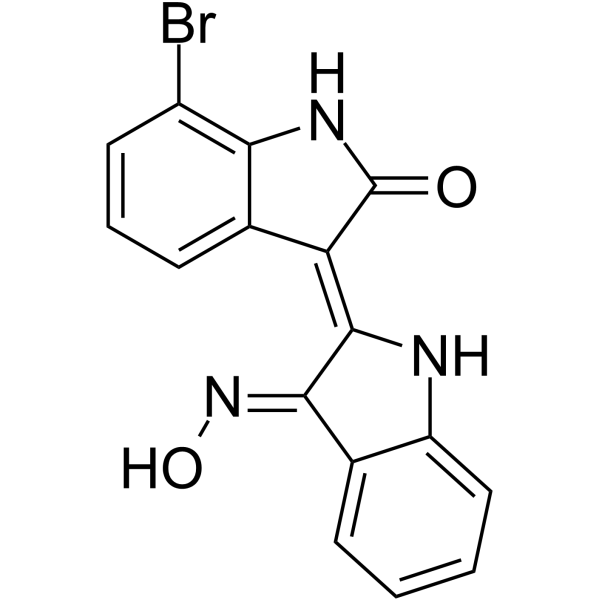 0 ImagesSynonyms: 7-Bromoindirubin-3-Oxime7BIO (7-Bromoindirubin-3-Oxime) is the derivate of indirubin. 7BIO (7-Bromoindirubin-3-Oxime) has inhibitory effects against cyclin-dependent kinase-5 (CDK5) and glycogen synthase kinase-3β (GSK3β). 7BIO (7-Bromoindirubin-3-Oxime) inhibits Aβ oligomer-induced neuroinflammation, synaptic impairments, tau hyper-phosphorylation, activation of astrocytes and microglia, and attenuates Aβ oligomer-induced cognitive impairments in mice[1].
-
CDK4-IN-3
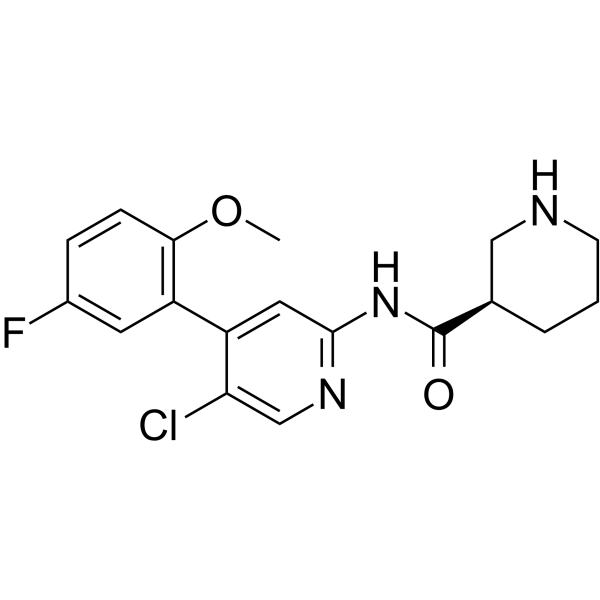
 0 ImagesCDK4-IN-3 (Compound 389) is a potent irreversible cyclin-dependent kinase 4 (CDK4) inhibitor (IC50=25 nM, >10-fold selective over CDK6). CDK4-IN-3 arrests the cell cycle at G₁ phase, and induces tumor cell apoptosis. CDK4-IN-3 is promising for research of solid tumors such as breast and lung cancers.
-
SRX3177
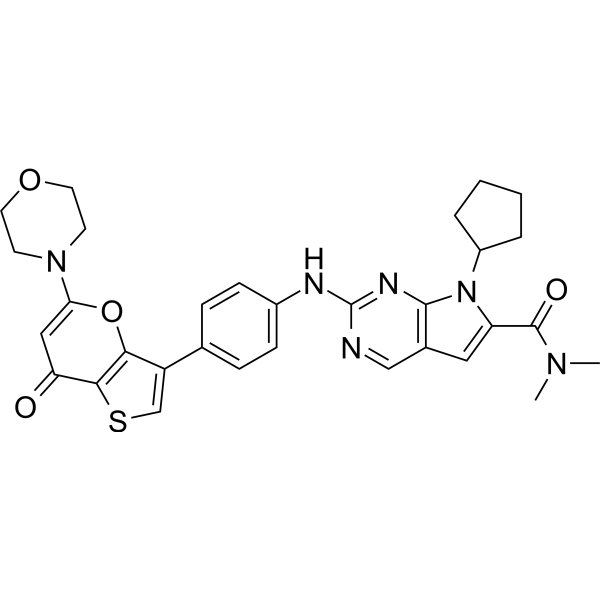 0 ImagesSRX3177 is a triple inhibitor of CDK4/6, PI3K, and BRD4, with IC50s of <2.5 nM (CDK4), 3.3 nM (CDK6), 33 nM (BRD4 BD1), 89 nM (BRD4 BD2), 79 nM (PI3Kα), 83 nM (PI3Kδ), 3.18 μM (PI3Kγ) , respectively. SRX3177 blocks the interaction between the SARS-CoV-2 E protein and the BRD2/4 BD1 domain, restores E protein-attenuated NF-κB activity. SRX3177 exerts broad cytotoxic activity against cancer cells. SRX3177 can be used for the study of anti-SARS-CoV-2 and cancer.
-
Isosilybin B
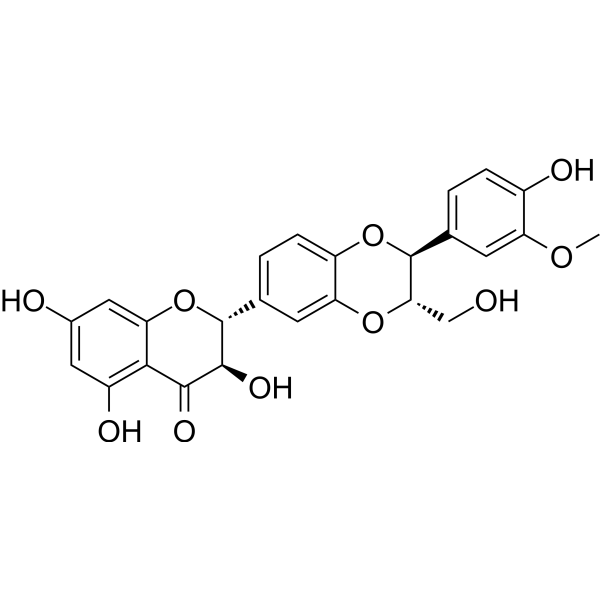 0 ImagesIsosilybin B is a flavonolignan. Isosilybin B can be isolated from Silybum marianum. Isosilybin B can regulate cell cycle-related proteins (e.g., reduce cyclins (D3, D1, A, E), Cdk4, Cdk2, Cdc25A), and activate Caspases (Caspase-9 and Caspase-3). Isosilybin B can promote Apoptosis, reduce androgen receptor (AR) and PSA. Isosilybin B has anticancer activity against prostate cancer.
-
DB1113
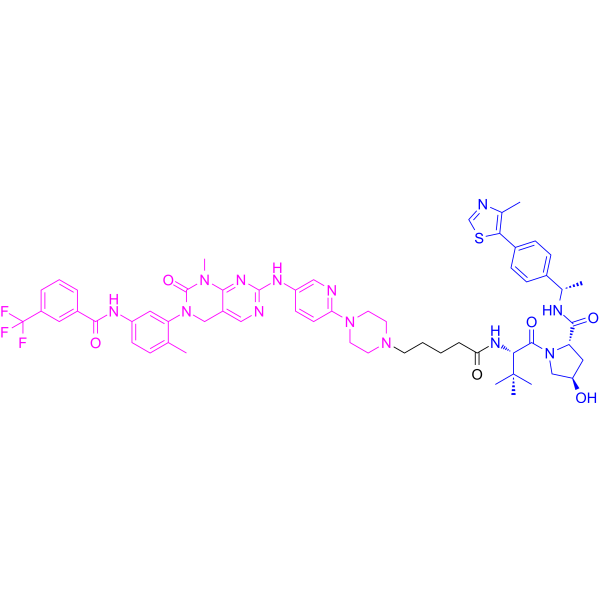 0 ImagesDB1113 (Example 24) is a bifunctional compound targeted protein degradation of kinases. DB1113 degrades ABL1, ABL2, BLK, CDK11B, CDK4, CSK, EPHA3, FER, GAK, LIMK1, MAP3K20, MAP4K1, MAP4K2, MAP4K3, MAP4K5, MAPK14, MAPK7, MAPK8, MAPK9, MAPKAPK2, MAPKAPK3, NLK, PDIK1L, PTK2B, RIPK1, RPS6KA1, RPS6KA3, SIK2, SIK3, STK35, TNK2, and ULK1. DB1113 can be used for research of disease or disorder mediated by aberrant kinase activity.
-
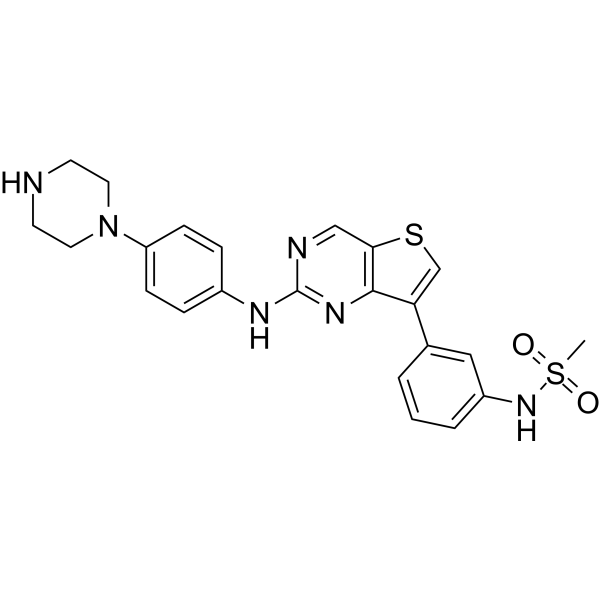
CDK2 degrader 2
 0 ImagesCDK2 degrader 2 (Compound I-10) is a PROTAC degrader for CDK2 that degrades CDK2 in MKN1 cell with a DC50 <100 nM.




