HDAC
Histone deacetylases
HDAC (Histone deacetylases) are a class of enzymes that remove acetyl groups (O=C-CH3) from an ε-N-acetyl lysine amino acid on ahistone, allowing the histones to wrap the DNA more tightly. This is important because DNA is wrapped around histones, and DNA expression is regulated by acetylation and de-acetylation. Its action is opposite to that of histone acetyltransferase. HDAC proteins are now also called lysine deacetylases (KDAC), to describe their function rather than their target, which also includes non-histone proteins. Together with the acetylpolyamine amidohydrolases and the acetoin utilization proteins, the histone deacetylases form an ancient protein superfamily known as the histone deacetylase superfamily.
HDAC Isoform Specific Products
-
HDAC
(393)
View all products
-
HDAC1
(316)
View all products
-
HDAC2
(210)
View all products
-
HDAC3
(204)
View all products
-
HDAC4
(72)
View all products
-
HDAC5
(56)
View all products
-
HDAC6
(337)
View all products
-
HDAC7
(53)
View all products
-
HDAC8
(189)
View all products
-
HDAC9
(41)
View all products
-
HDAC10
(67)
View all products
-
HDAC11
(73)
View all products
-
HD1
(3)
View all products
-
HD2
(4)
View all products
All Product Categories
-
HDAC Inhibitors
(781)
View all products
-
HDAC Antagonists
(3)
View all products
-
HDAC Activators
(14)
View all products
-
HDAC Modulators
(4)
View all products
-
HDAC MDM2 Inhibitor
(1)
View all products
-
HDAC Degraders
(45)
View all products
-
HDAC Controls
(4)
View all products
-
HDAC Substrates
(4)
View all products
-
HDAC Ligands
(15)
View all products
-
HDAC Related Products (920)
Related Products (920)

-
Antibodies (16)
-
HDAC Signaling Pathway
-
HDAC Isoform Comparison
-
BRD2492
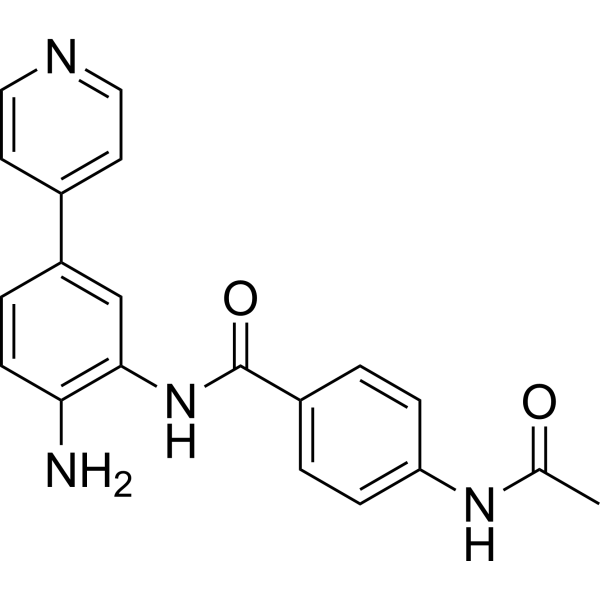 0 ImagesBRD2492 (compound 6d) is a potent, selective HDAC1 and HDAC2 inhibitor with IC50s of 13.2 nM and 77.2 nM, respecrtively. BRD2492 exhibits >100-fold selectivity for HDAC1/2 over selectivity over HDAC3 and HDAC6. BRD2492 inhibits breast cancer cell lines growth with IC50s of 1.01 μM and 11.13 μM for T-47D and MCF-7 cells, respectively.

-
PROTAC HDAC6 degrader 11
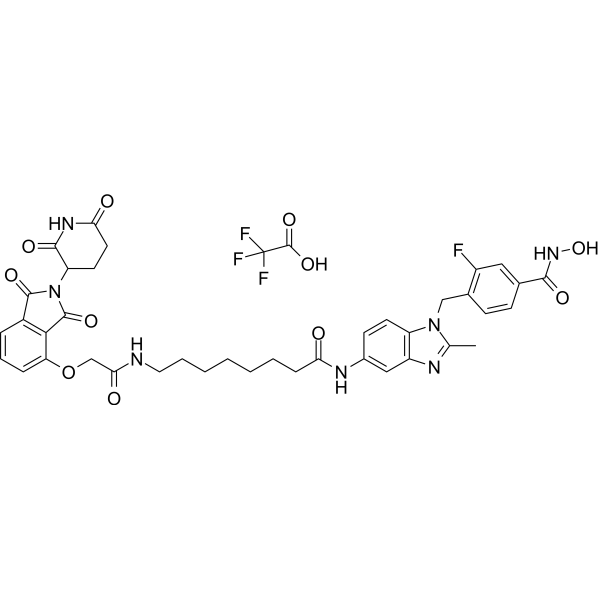 0 ImagesPROTAC HDAC6 degrader 11 is a PROTAC degrader targeting HDAC6, with a DC50 of 19.39 nM in HL-60 leukemia cells. PROTAC HDAC6 degrader 11 can form a ternary complex with HDAC6 and the cereblon E3 ligase, inducing polyubiquitination and proteasomal degradation of HDAC6. PROTAC HDAC6 degrader 11 inhibits the enzymatic activity of HDAC1 and does not trigger HDAC1 degradation. PROTAC HDAC6 degrader 11 induces hyperacetylation of α-tubulin. PROTAC HDAC6 degrader 11 can be used in related research on leukemia.
-
HD-TAC7
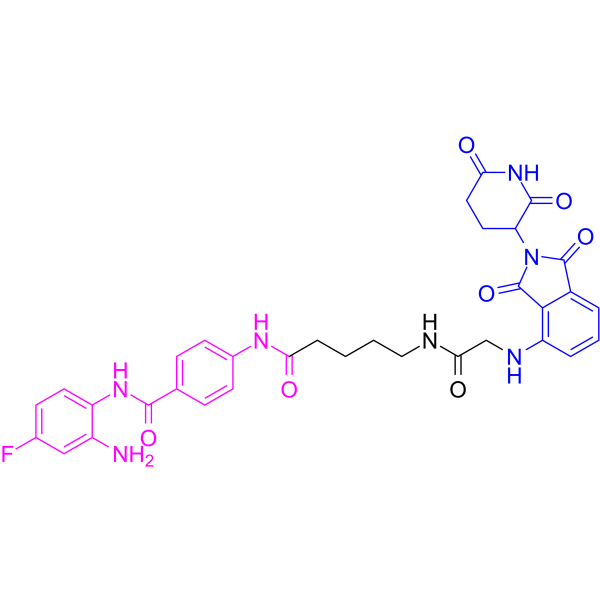 0 ImagesHD-TAC7 is a selective HDAC3 PROTAC degrader with an IC50 of 1.1 μM. By recruiting the CRBN E3 ligase, HD-TAC7 induces ubiquitin-proteasome degradation and selective downregulation of HDAC3, which in turn increases H3K27 acetylation levels and downregulates the NF-κB subunit p65, exerting anti-inflammatory activity. HD-TAC7 is used in research on COVID-19, SARS-CoV-2 infection, asthma, chronic obstructive pulmonary disease, and colon cancer.
-
MIR002
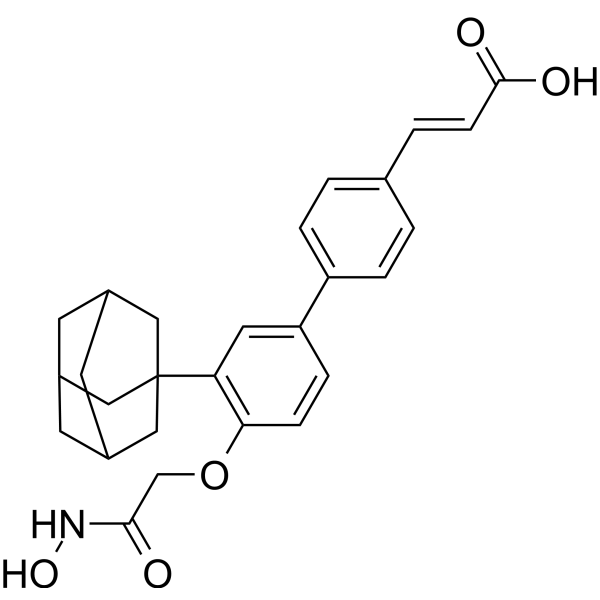 0 ImagesMIR002 is a potent and orally active DNA polymerase α (POLA1) and HDAC 11 dual inhibitor. MIR002 induces acetylation of p53, activation of p21, G1/S cell cycle arrest, and apoptosis. MIR002 shows significant antitumor activity in vivo.
-
HDAC11-IN-2
 0 ImagesHDAC11-IN-2 (compound B6) is a high selective Histone Deacetylase 11 (HDAC11) inhibitor. HDAC11-IN-2 inhibits HDAC11 and HDAC8 with IC50s of 51.1 ×10⁻³ μM and 5 μM, respectively. HDAC11-IN-2 inhibits denovolipogenesis (DNL) and promotes fatty acid oxidation, thus mitigating hepaticlipid accumulation and pathological symptoms in MASLD mice. HDAC11-IN-2 enhances the phosphorylation of AMPKα1 at Thr172 through the inhibition of HDAC11, consequently modulating DNL and fatty acid oxidation in the liver.
-
KR-39038
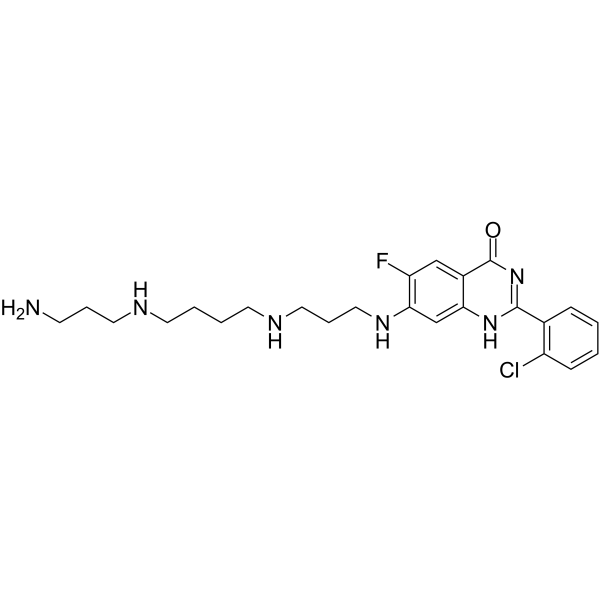 0 ImagesKR-39038 is an orally active and potent GRK5 (G protein-coupled receptor kinase 5) inhibitor, with an IC50 of 0.02 μM. KR-39038 significantly inhibits angiotensin II-induced cellular hypertrophy through suppression of HDAC5 pathway in neonatal cardiomyocytes. KR-39038 shows profound anti-hypertrophic effects and improved cardiac function. KR-39038 can be used for heart failure research.
-
Panobinostat (Standard)
 0 ImagesSynonyms: LBH589 (Standard); NVP-LBH589 (Standard)Panobinostat (Standard) (LBH589 (Standard)) is the analytical standard of Panobinostat (HY-10224). This product is intended for research and analytical applications. Panobinostat is a potent and orally active non-selective HDAC inhibitor, and has antineoplastic activities. Panobinostat induces HIV-1 virus production even at low concentration range 8-31 nM, stimulates HIV-1 expression in latently infected cells. Panobinostat induces cell apoptosis and autophagy. Panobinostat can be used for the study of refractory or relapsed multiple myeloma.
-
Puzerinostat
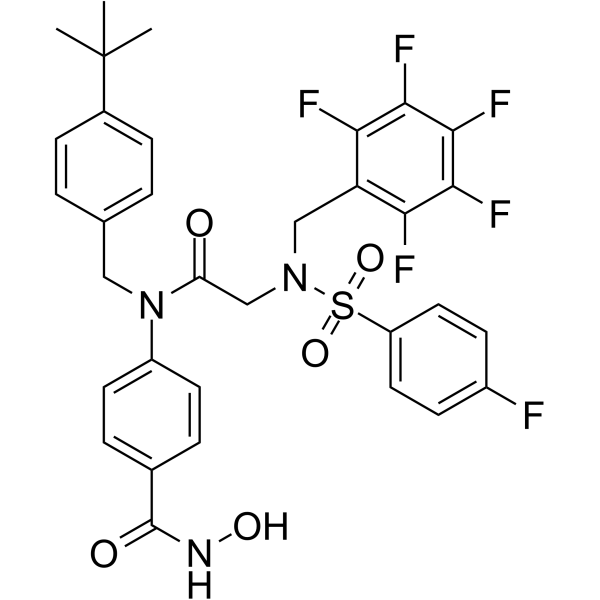
 0 ImagesSynonyms: PurinostatPuzerinostat (Purinostat) is a highly selective class I/IIb histone deacetylase (HDAC) inhibitor, with IC50 values of 0.81 nM, 1.4 nM, 1.7 nM, 3.8 nM, 11.5 nM, and 1.1 nM against HDAC1, HDAC2, HDAC3, HDAC8, HDAC6, and HDAC10, respectively. Puzerinostat enhances glutamine metabolism by upregulating GLS1. Puzerinostat induces cell Apoptosis and downregulates the expression of BCR-ABL and c-MYC. Puzerinostat delays the progression of Ph+ B-cell acute lymphoblastic leukemia and prolongs the survival of relevant mouse models. Puzerinostat regulates the immune microenvironment. Puzerinostat can be used in research related to chronic myeloid leukemia, Philadelphia chromosome-positive B-cell acute lymphoblastic leukemia, relapsed/refractory multiple myeloma, relapsed/refractory lymphoma, diffuse large B-cell lymphoma, and double-expression lymphoma.
-
Valproic acid-d6
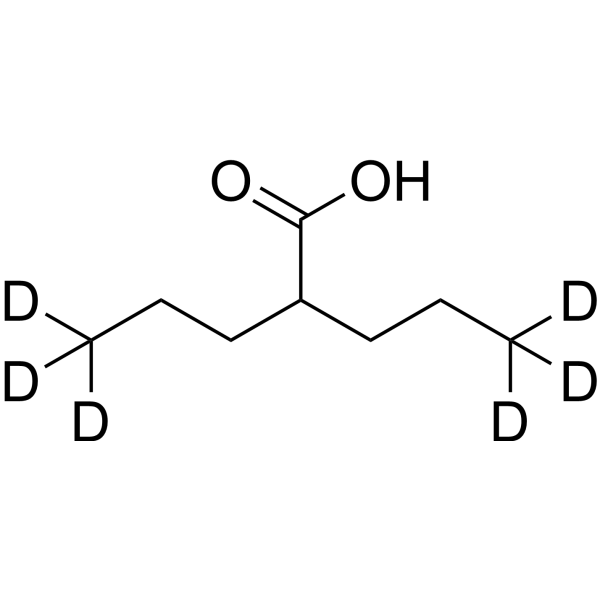 0 ImagesSynonyms: VPA-d6; 2-Propylpentanoic acid-d6Valproic acid-d6 is the deuterium labeled Valproic acid. Valproic acid (VPA; 2-Propylpentanoic Acid) is an HDAC inhibitor, with IC50 in the range of 0.5 and 2 mM, also inhibits HDAC1 (IC50, 400 μM), and induces proteasomal degradation of HDAC2. Valproic acid activates Notch1 signaling and inhibits proliferation in small cell lung cancer (SCLC) cells. Valproic acid sodium salt is used in the treatment of epilepsy, bipolar disorder and prevention of migraine headaches.
-
JNJ-16241199
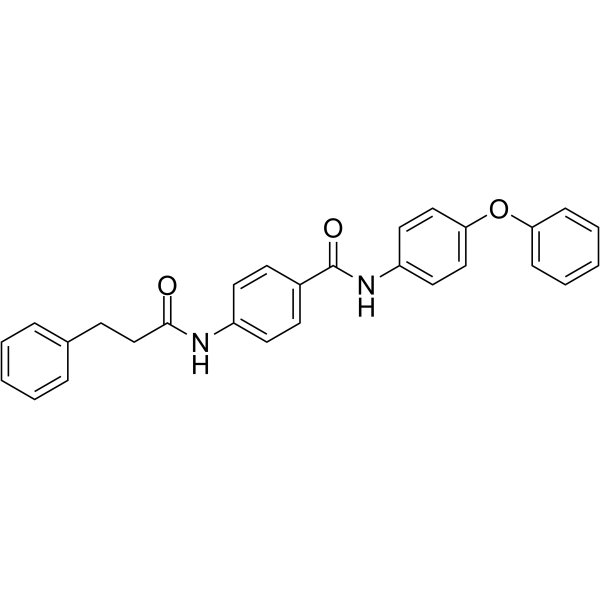
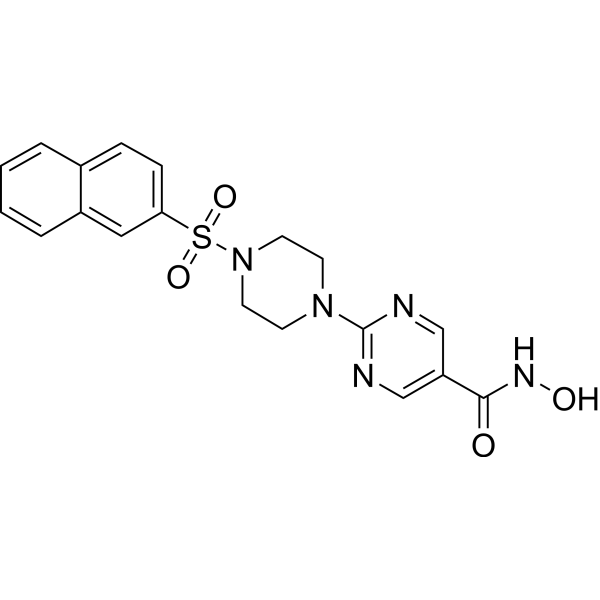 0 ImagesSynonyms: R306465JNJ-16241199 (R306465) is an orally active, selectivehydroxamate-based histone deacetylase (HDAC) inhibitor, with theIC50of 3.3 nM and 23 nM for HDAC1and HDAC8, respectively.JNJ-16241199induces histone 3 acetylation and strongly increases the expression of p21waf1, cip1 in A2780 ovarian carcinoma cells.JNJ-16241199 inducescell apoptosisand shows anticancer activityin a broad spectrum of human malignancies. JNJ-16241199 can be used for cancer study.

-
Phenylbutyrate-d11 sodium
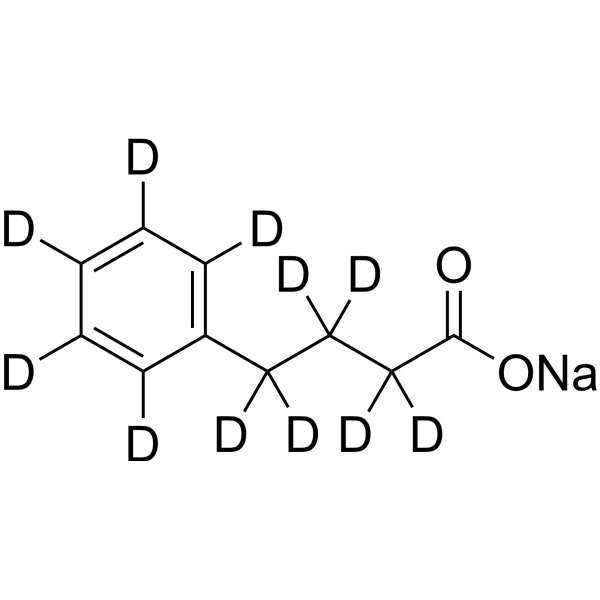 0 ImagesSynonyms: 4-PBA-d11 sodium; 4-Phenylbutyric acid-d11 sodium; Benzenebutyric acid-d11 sodium
-
HL23
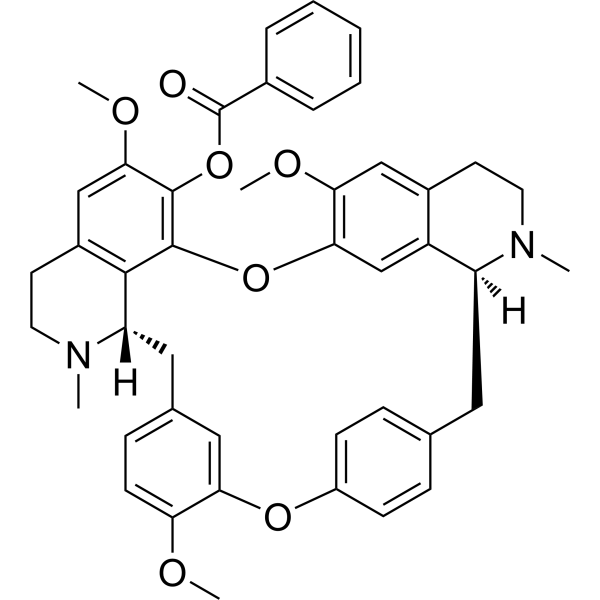 0 ImagesHL23 is a histone deacetylase (HDAC) inhibitor with activity against hepatocellular carcinoma (HCC). HL23 enhances acetylation of the TXNIP promoter and upregulates TXNIP expression, thereby mediating potassium channel activity and triggering TXNIP-dependent potassium deprivation. HL23 inhibits HCC progression and metastasis and has a synergistic effect with Sorafenib (HY-10201) and is more potent than Sorafenib+Vorinostat (HY-10221).
-
RSC133
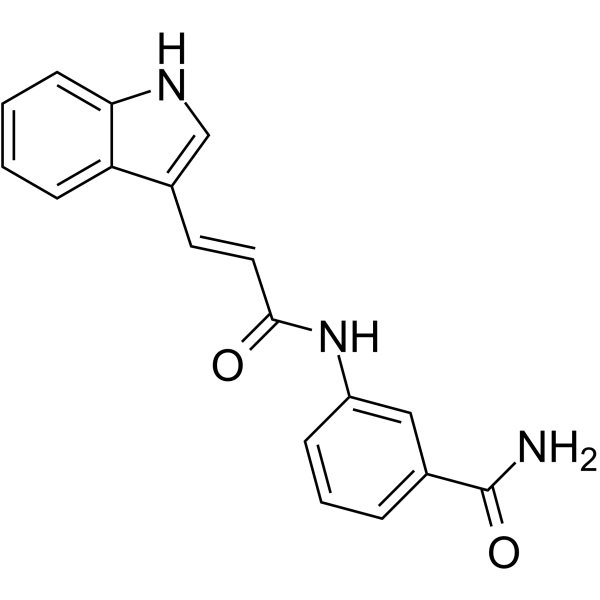 0 ImagesRSC133 is a dual inhibitor of DNA methyltransferase 1 and histone deacetylase 1 inhibitor. RSC133 promotes cell proliferation, up-regulates H3K9 histone acetylation, down-regulates p53, p21, p16/INK4A, and ablates pro-senescence phenotypes.