



Arnicolide D
Based on 2 publication(s) in Google Scholar
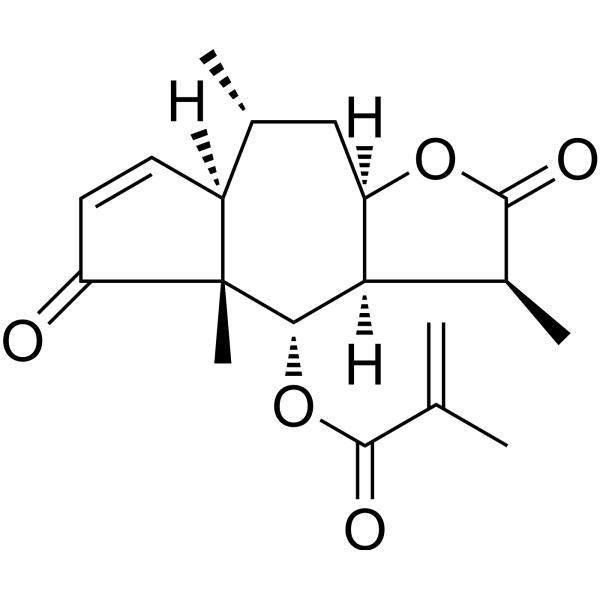
Arnicolide D is a sesquiterpene lactone that can be isolated from Centipeda minima. Arnicolide D is cytotoxic to tumor cells and can induce cell cycle arrest, apoptosis, and oncosis in tumor cells. Arnicolide D has anti-tumor activity.
For research use only. We do not sell to patients.
- Purity : 99.69%
- CAS No.: 34532-68-8
- Formula: C19H24O5
- Molecular Weight:332.39
-
Storage:
4°C, protect from light
* In solvent : -80°C, 6 months; -20°C, 1 month (protect from light)

To place orders, for customer services and technical support, please contact: MedChemExpress USA
Tel: 609-228-6898 E-mail: [email protected] [email protected]


-
 Biological Activity
-
Chemical Information
-
Solvent & Solubility
- Protocols
- Purity & Documentation
- References
-
 Help & FAQs


-
HY-N0643
CarnosolEndogenous Metabolite -
HY-N1318
SalvigeninAnticancer Agent -
HY-N4322
Decursinol angelate"PKC Activator, GDH Inhibitor" -

HY-N9481
Lipoteichoic acidAnti-inflammatory agent -
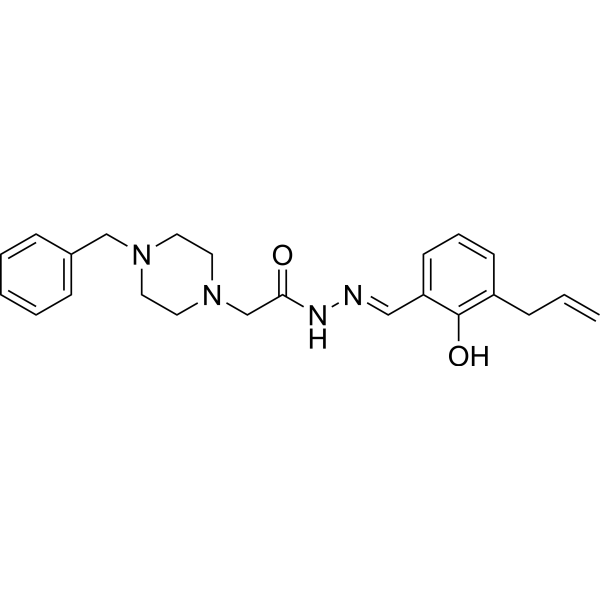
HY-13523
PAC-1Caspase Activator -
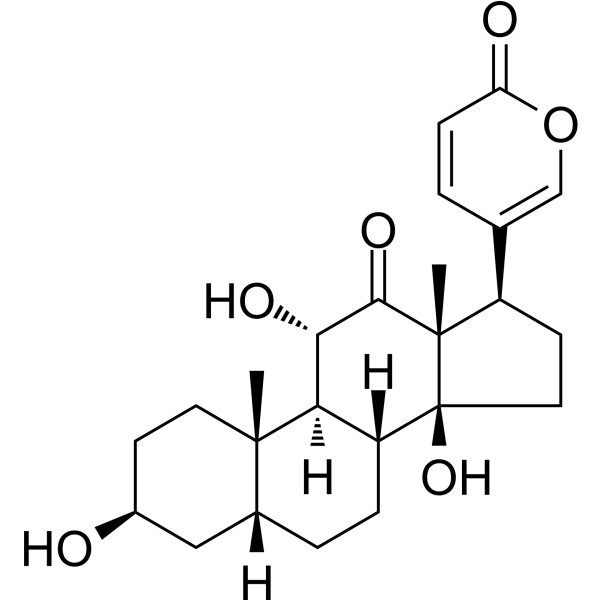
HY-N0876
ArenobufaginAnticancer Agent -
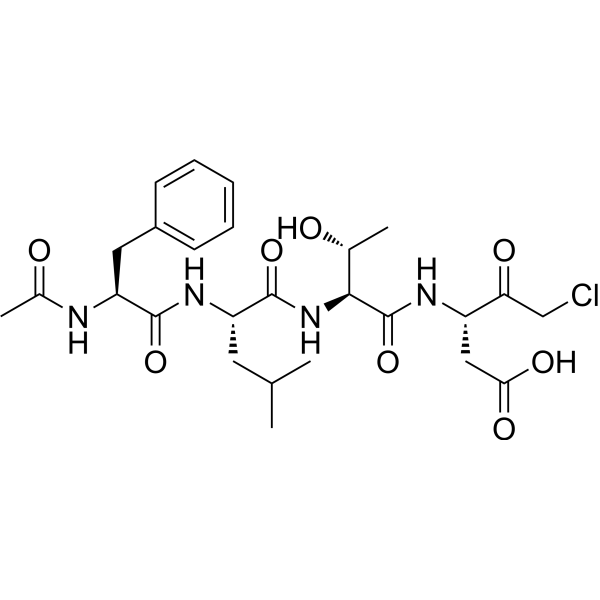
HY-111675
Ac-FLTD-CMKCaspase Inhibitor -
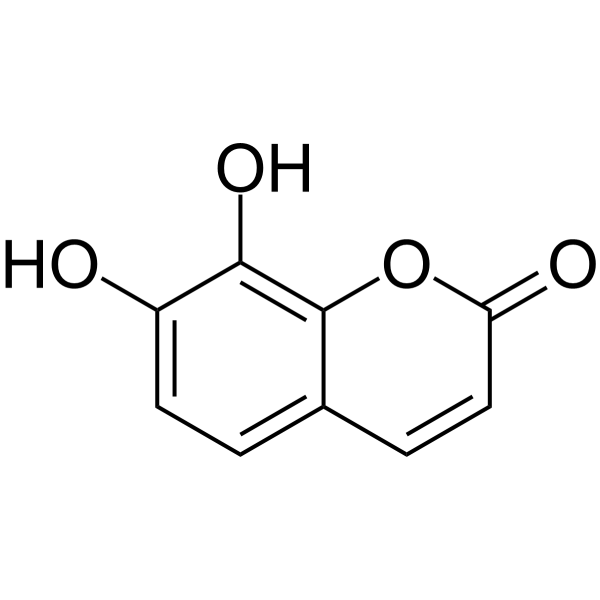
HY-N0281
DaphnetinProtein Kinase Inhibitor -
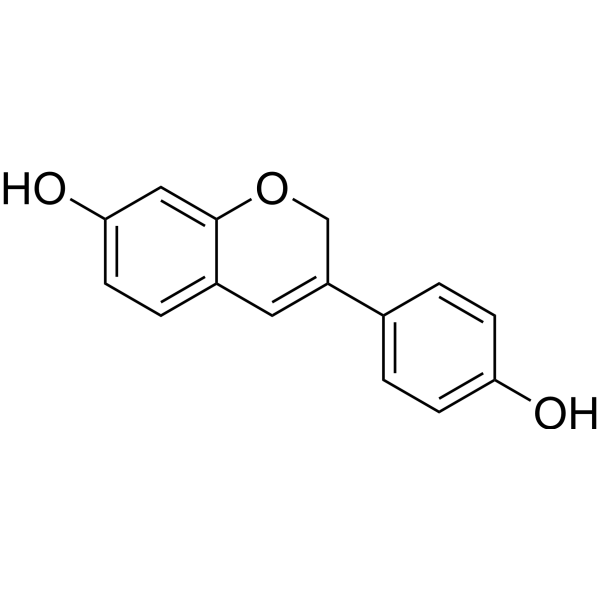
HY-13721
PhenoxodiolAnticancer Agent -
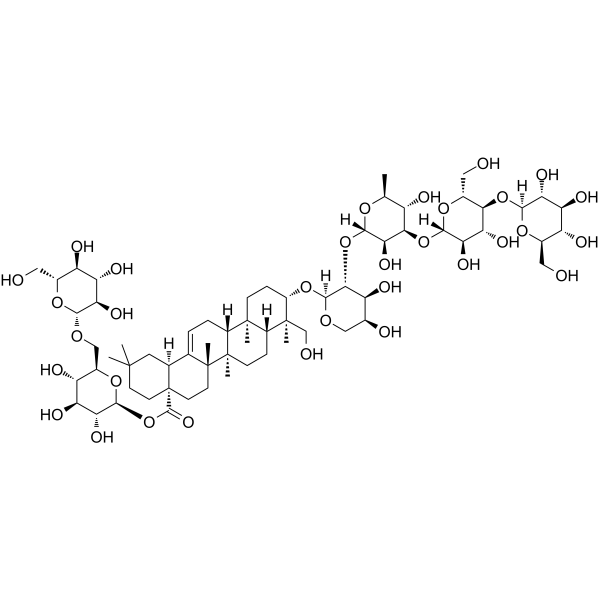
HY-N0864
Macranthoidin BTriterpene Saponin -
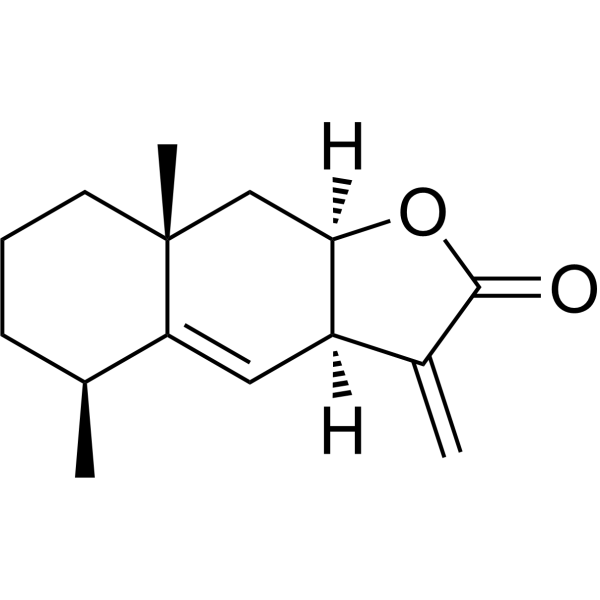
HY-N0038
AlantolactoneApoptosis Inducer -
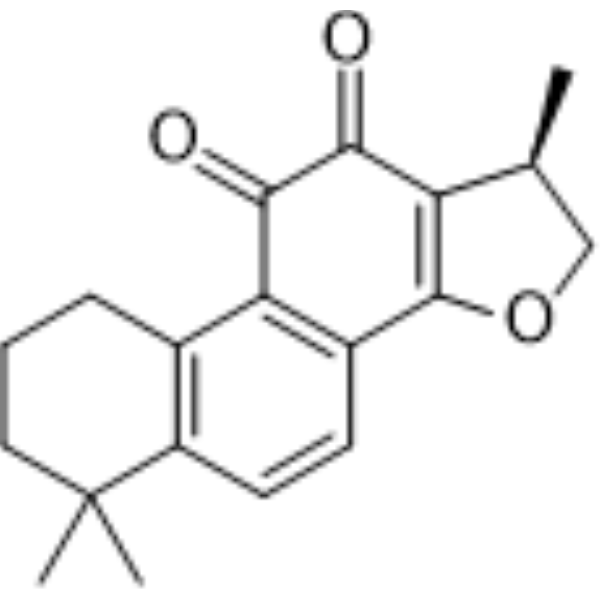
HY-N0174
CryptotanshinoneAutophagy Inducer
Publications Citing Use of MedChemExpress (MCE) Arnicolide D
MoreAll Caspase Isoforms
More

Biological Activity
Description
In Vitro
Arnicolide D (0-50 μM; 24-72 h) exhibits significant cytotoxicity against nasopharyngeal carcinoma cells, capable of inducing cell cycle arrest at the G2/M phase and apoptosis. The mechanism involves the activation of the caspase signaling pathway and the inhibition of the PI3K/AKT/mTOR and STAT3 signaling pathways[1].
Arnicolide D (0-20 μM; 8-24 h) induces endoplasmic reticulum stress-mediated and ROS-dependent oncosis in hepatocellular carcinoma cells via ATF4 and CHOP[2].
MedChemExpress (MCE) has not independently confirmed the accuracy of these methods. They are for reference only.
-
Cell Line:CNE-2 cells
-
Concentration:0, 1.56, 3.12, 6.25, 12.5, 25 and 50 μM
-
Incubation Time:24, 48 and 72 h
-
Result:Inhibited cell growth in a concentration- and time-dependent manner.
-
Cell Line:CNE-2 cells
-
Concentration:0, 1.25, 2.5, 5, 10 and 20 μM
-
Incubation Time:24 and 48 h
-
Result:Downregulate cyclin D3, cdc2, p-PI3K, p-AKT, p-mTOR, and p-STAT3.
Upregulated cleaved PARP, cleaved caspase 9, and Bax.
In Vivo
MedChemExpress (MCE) has not independently confirmed the accuracy of these methods. They are for reference only.
-
Animal Model:Male 6-week old C57/BL6 mice treated B16F10[3]
-
Dosage:4 and 8 mg/kg
-
Administration:Intraperitoneal injection (i.p.); 15 days
-
Result:Reduced the average tumor weight by 53.7% compared with the vehicle-treated group at a dose of 4 mg/kg.
Did not cause death, toxic symptoms in mice, and no abnormalities were found during autopsy.
Was more effective at 4 mg/kg than at 8 mg/kg in suppressing tumor growth.


Chemical Information
-
CAS No. 34532-68-8
-
Appearance Solid
-
Molecular Weight 332.39
-
Formula C19H24O5
-
Color White to off-white
-
SMILES
CC(C(O[C@H]1[C@@]([C@@H]2C)([H])[C@@](OC2=O)([H])C[C@@H](C)[C@@]3([H])[C@]1(C(C=C3)=O)C)=O)=C
-
Structure Classification
-
Shipping
Room temperature in continental US; may vary elsewhere.
-
Storage
4°C, protect from light
* In solvent : -80°C, 6 months; -20°C, 1 month (protect from light)


Publications (2)
-
Journal Impact Factor
-
Most Recent
-
Phytomedicine
Huaier-derived arnicolide D induces ferroptosis in gastric cancer via SRC/TNF-mediated GPX4 inactivation. [Abstract]2026 May:154:158029. PMID: 41818944 -
J Ethnopharmacol
Screening tumor specificity targeted by arnicolide D, the active compound of Centipeda minima and molecular mechanism underlying by integrative pharmacology. [Abstract]2022 Jan 10:282:114583. PMID: 34487850


Solvent & Solubility
In Vitro:
DMSO : 100 mg/mL (300.85 mM; Need ultrasonic; Hygroscopic DMSO has a significant impact on the solubility of product, please use newly opened DMSO)
Please refer to the solubility information to select the appropriate solvent. Once prepared, please aliquot and store the solution to prevent product inactivation from repeated freeze-thaw cycles.
Storage method and period of stock solution: -80°C, 6 months; -20°C, 1 month (protect from light). When stored at -80°C, please use it within 6 months. When stored at -20°C, please use it within 1 month.
Please refer to the solubility information to select the appropriate solvent. Once prepared, please aliquot and store the solution to prevent product inactivation from repeated freeze-thaw cycles.
Storage method and period of stock solution: -80°C, 6 months; -20°C, 1 month (protect from light). When stored at -80°C, please use it within 6 months. When stored at -20°C, please use it within 1 month.
Concentration (start) × Volume (start) = Concentration (final) × Volume (final)
In Vivo:
Select the appropriate dissolution method based on your experimental animal and administration route.
- For the following dissolution methods, please ensure to first prepare a clear stock solution using an In Vitro approach and then sequentially add co-solvents:
- To ensure reliable experimental results, the clarified stock solution can be appropriately stored based on storage conditions. As for the working solution for In Vivo experiments, it is recommended to prepare freshly and use it on the same day.
- The percentages shown for the solvents indicate their volumetric ratio in the final prepared solution. If precipitation or phase separation occurs during preparation, heat and/or sonication can be used to aid dissolution.
Add each solvent one by one: 10% DMSO 40% PEG300 5% Tween-80 45% Saline
Solubility: ≥ 2.5 mg/mL (7.52 mM); Clear solution
This protocol yields a clear solution of ≥ 2.5 mg/mL (saturation unknown).
Taking 1 mL working solution as an example, add 100 μL DMSO stock solution (25.0 mg/mL) to 400 μL PEG300, and mix evenly; then add 50 μL Tween-80 and mix evenly; then add 450 μL Saline to adjust the volume to 1 mL.
Preparation of Saline: Dissolve 0.9 g sodium chloride in ddH₂O and dilute to 100 mL to obtain a clear Saline solution.
In Vivo Dissolution Calculator
Please enter the basic information of animal experiments:
-
-
-
-
Recommended: Prepare an additional quantity of animals to account for potential losses during experiments.
Please enter your animal formula composition:
-
%DMSO +
Recommended: Keep the proportion of DMSO in working solution below 2% if your animal is weak.
-
%+
-
+%Tween-80 + +
-
%Saline +
The co-solvents required include: DMSO, . All of co-solvents are available by MedChemExpress (MCE). , Tween 80. All of co-solvents are available by MedChemExpress (MCE).
Working solution concentration: 0.22 mg/mL
Method for preparing stock solution: mg drug dissolved in μL DMSO. Stock solution concentration: mg/mL. * In solvent : -80°C, 6 months; -20°C, 1 month (protect from light)
1. Take μL DMSO stock solution;
2. Add μL .
μL , mix evenly;
3. Then add μL Tween 80, mix evenly;
4. Then add μL
Please ensure that the stock solution in the first step is dissolved to a clear state, and add co-solvents in sequence. You can use ultrasonic heating (ultrasonic cleaner, recommended frequency 20-40 kHz), vortexing, etc. to assist dissolution.


Purity & Documentation
-
Data Sheet (282 KB)
-
SDS (393 KB)
- English - EN (393 KB)
- Français - FR (393 KB)
- Deutsch - DE (393 KB)
- Norwegian - NO (393 KB)
- Español - ES (393 KB)
- Swedish - SV (393 KB)
- Italian - IT (393 KB)
- Korean - KR (393 KB)
- Portuguese - PT (393 KB)
-
Handling Instructions (2659 KB)
References
[1]. Liu R, et al. Arnicolide D, from the herb Centipeda minima, Is a Therapeutic Candidate against Nasopharyngeal Carcinoma. Molecules. 2019 May 17;24(10). [Content Brief]
[2]. Lin YS, et al. Arnicolide D induces endoplasmic reticulum stress-mediated oncosis via ATF4 and CHOP in hepatocellular carcinoma cells. Cell Death Discov. 2024 Mar 12;10(1):134. [Content Brief]
[3]. Zhu P, et al. Arnicolide D exerts anti-melanoma effects and inhibits the NF-κB pathway. Phytomedicine. 2019 Nov;64:153065. [Content Brief]


Complete Stock Solution Preparation Table
Please refer to the solubility information to select the appropriate solvent. Once prepared, please aliquot and store the solution to prevent product inactivation from repeated freeze-thaw cycles.
Storage method and period of stock solution: -80°C, 6 months; -20°C, 1 month (protect from light). When stored at -80°C, please use it within 6 months. When stored at -20°C, please use it within 1 month.
| Optional Solvent | Concentration Solvent Mass | 1 mg | 5 mg | 10 mg | 25 mg |
|---|---|---|---|---|---|
| DMSO | 1 mM | 3.0085 mL | 15.0426 mL | 30.0851 mL | 75.2128 mL |
| 5 mM | 0.6017 mL | 3.0085 mL | 6.0170 mL | 15.0426 mL | |
| 10 mM | 0.3009 mL | 1.5043 mL | 3.0085 mL | 7.5213 mL | |
| 15 mM | 0.2006 mL | 1.0028 mL | 2.0057 mL | 5.0142 mL | |
| 20 mM | 0.1504 mL | 0.7521 mL | 1.5043 mL | 3.7606 mL | |
| 25 mM | 0.1203 mL | 0.6017 mL | 1.2034 mL | 3.0085 mL | |
| 30 mM | 0.1003 mL | 0.5014 mL | 1.0028 mL | 2.5071 mL | |
| 40 mM | 0.0752 mL | 0.3761 mL | 0.7521 mL | 1.8803 mL | |
| 50 mM | 0.0602 mL | 0.3009 mL | 0.6017 mL | 1.5043 mL | |
| 60 mM | 0.0501 mL | 0.2507 mL | 0.5014 mL | 1.2535 mL | |
| 80 mM | 0.0376 mL | 0.1880 mL | 0.3761 mL | 0.9402 mL | |
| 100 mM | 0.0301 mL | 0.1504 mL | 0.3009 mL | 0.7521 mL |


Arnicolide D Related Classifications
HY-N6843 Related Classifications
 Powered by Bioz