



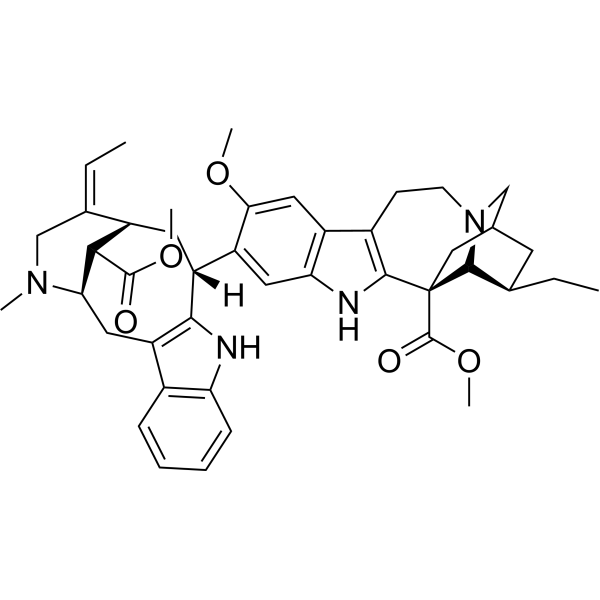
Voacamine
Based on 1 publication(s) in Google Scholar
Voacamine is an indole alkaloid with cannabinoid 1 (CB1) antagonistic activity. Voacamine can inhibit nuclear translocation. Voacamine is effective in enhancing the effect of Doxorubicin (HY-15142A) as it interferes with the P-glycoprotein (P-gp) function. Voacamine promotes apoptosis-independent autophagic cell death in human osteosarcoma cells. Voacamine activates mitochondrial-associated apoptosis signaling pathway and inhibition of PI3K/Akt/mTOR signaling pathway to suppress breast cancer progression. Voacamine inhibits EGFR to exert oncogenic activity against colorectal cancer.
For research use only. We do not sell to patients.
- Purity : 99.64%
- CAS No.: 3371-85-5
- Formula: C43H52N4O5
- Molecular Weight:704.90
-
Storage:
4°C, protect from light
* In solvent : -80°C, 6 months; -20°C, 1 month (protect from light)

To place orders, for customer services and technical support, please contact: MedChemExpress USA
Tel: 609-228-6898 E-mail: [email protected] [email protected]


-
 Biological Activity
-
Chemical Information
-
Solvent & Solubility
- Protocols
- Purity & Documentation
- References
-
 Help & FAQs


-
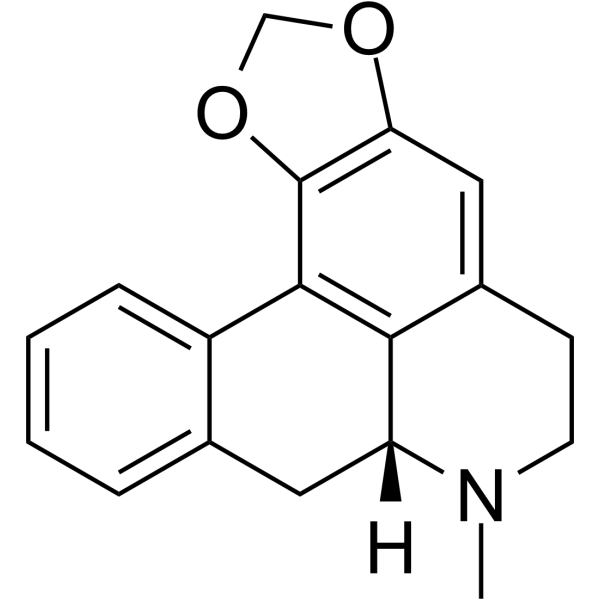
HY-121793
RoemerineEndogenous Metabolite -
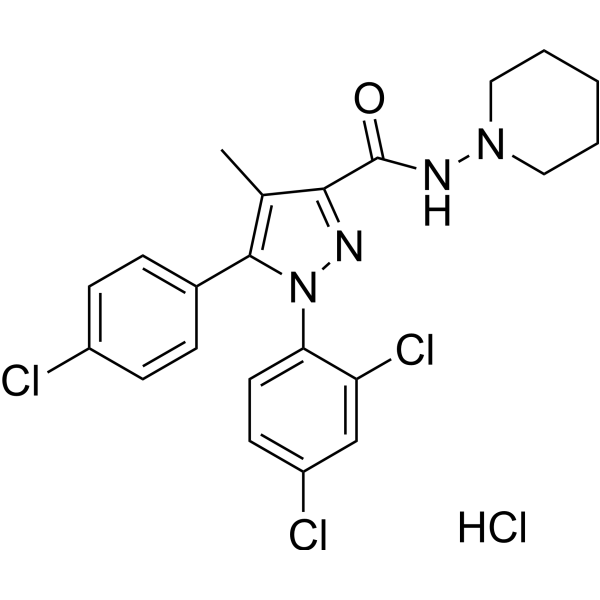
HY-14137
Rimonabant HydrochlorideCB1 Antagonist -
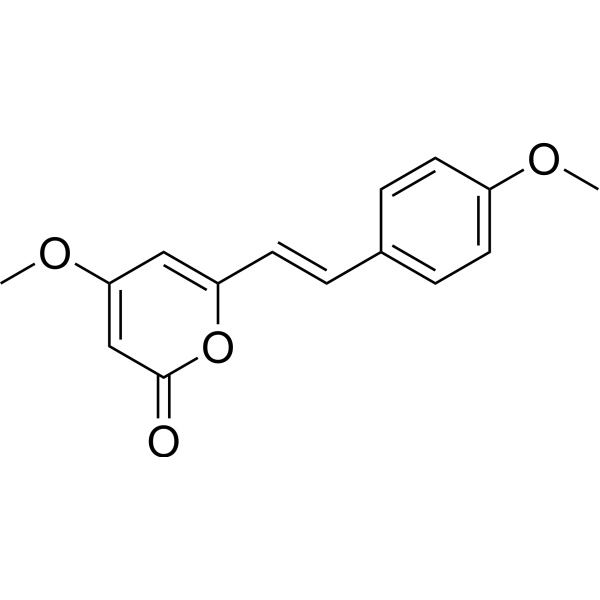
HY-N0919
YangoninCannabinoid Receptor Inhibitor -
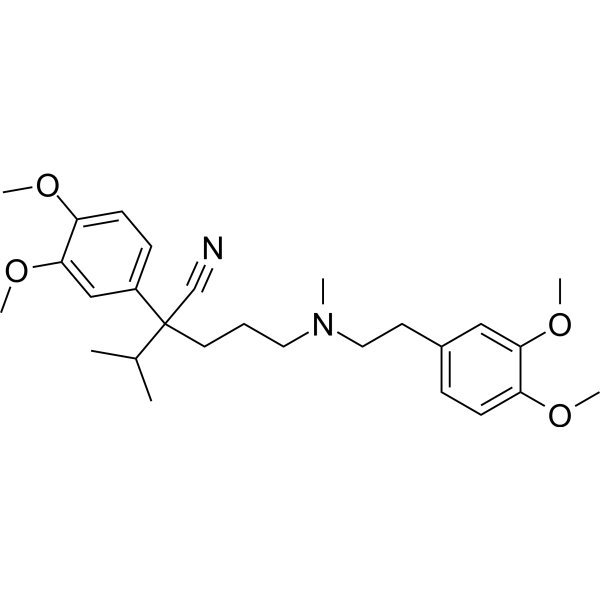
HY-14275
VerapamilCalcium Channel Blocker -
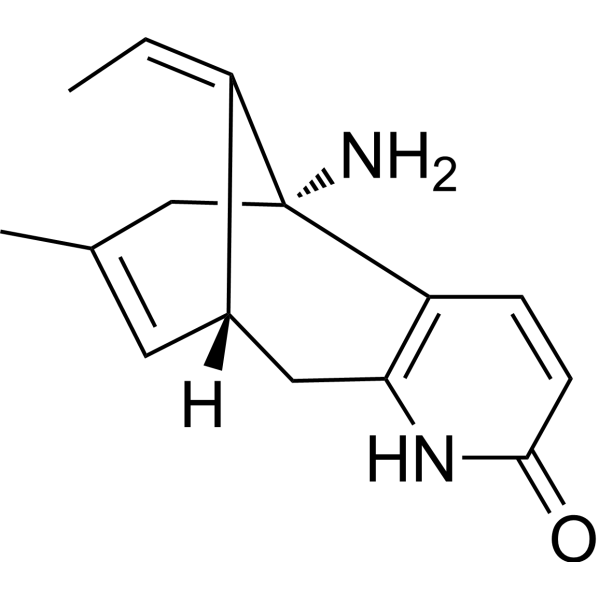
HY-17387
(-)-Huperzine AAChE/NMDA Receptor Inhibitor -
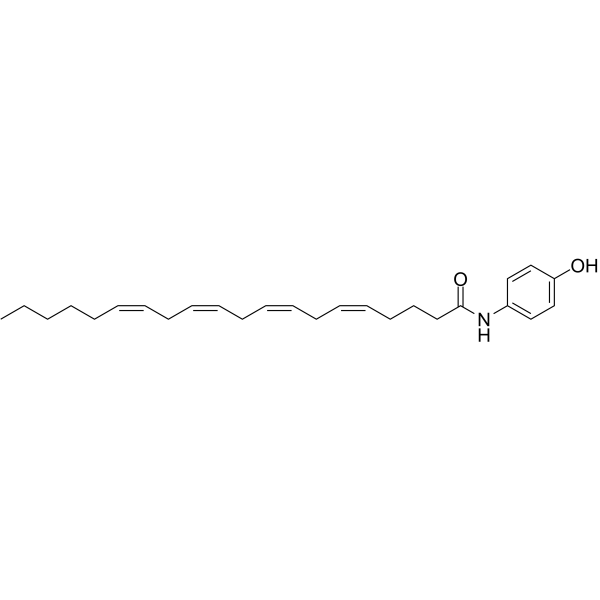
HY-101388
AM404Anandamide Inhibitor -
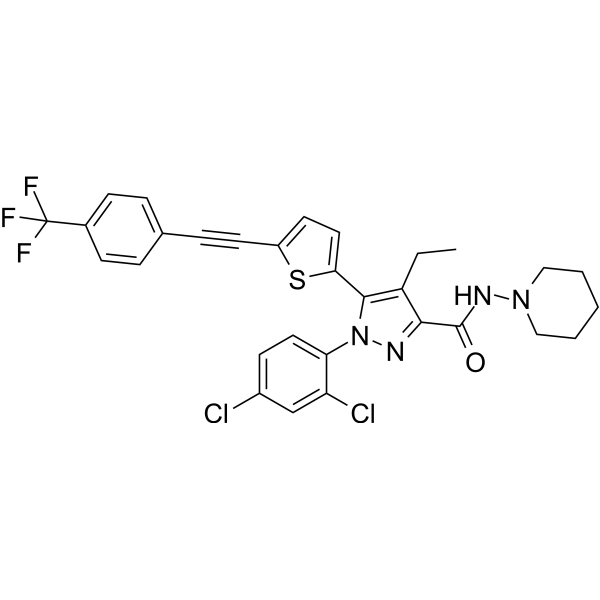
HY-112340
CB1 antagonist 4CB1 Receptor Antagonist -
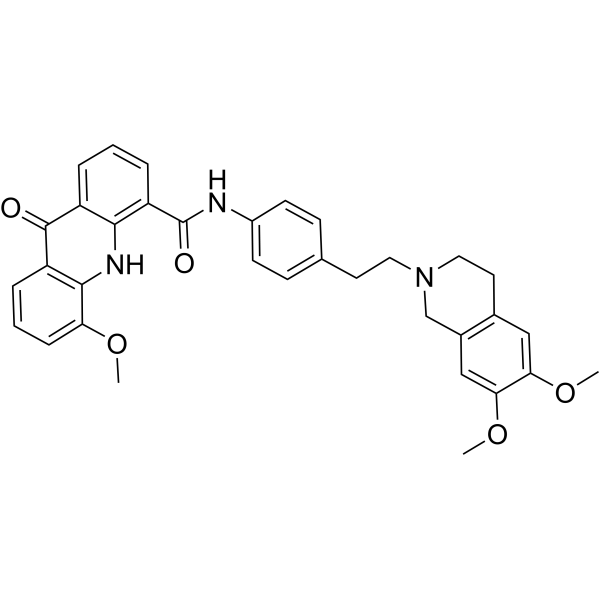
HY-50879
ElacridarP-gp And BCRP Dual-Inhibitor -
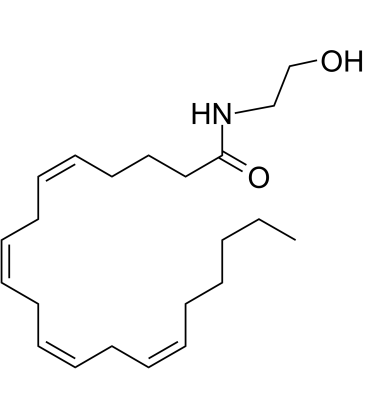
HY-10863
AnandamideCB1/2 Agonist -
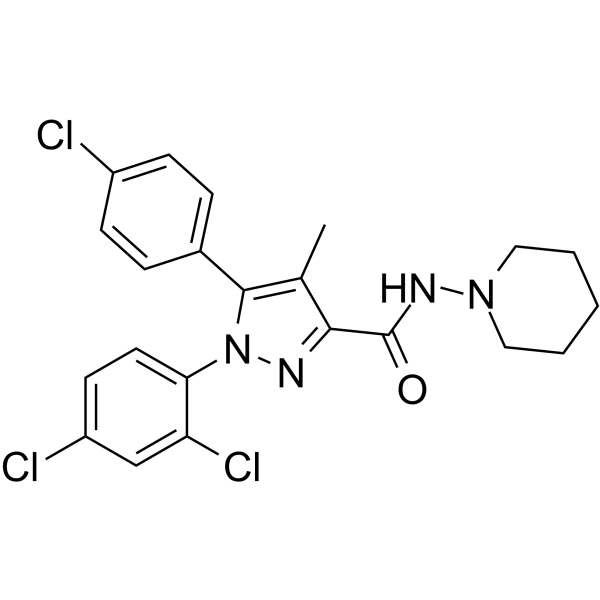
HY-14136
Rimonabant -
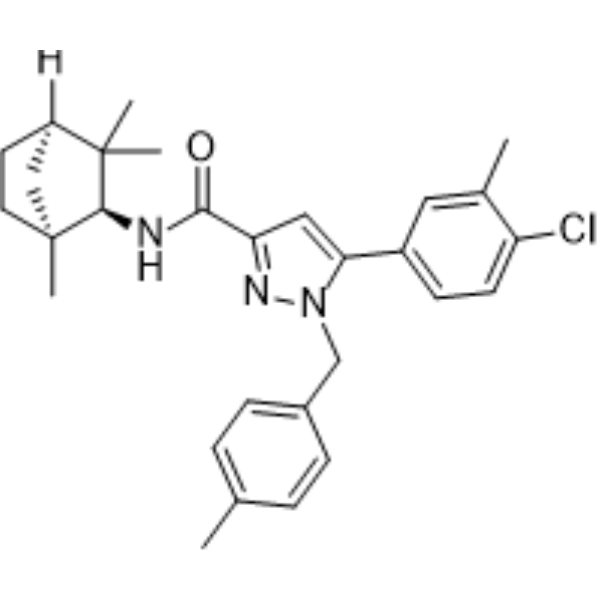
HY-13439
SR144528CB2 Receptor Antagonist -
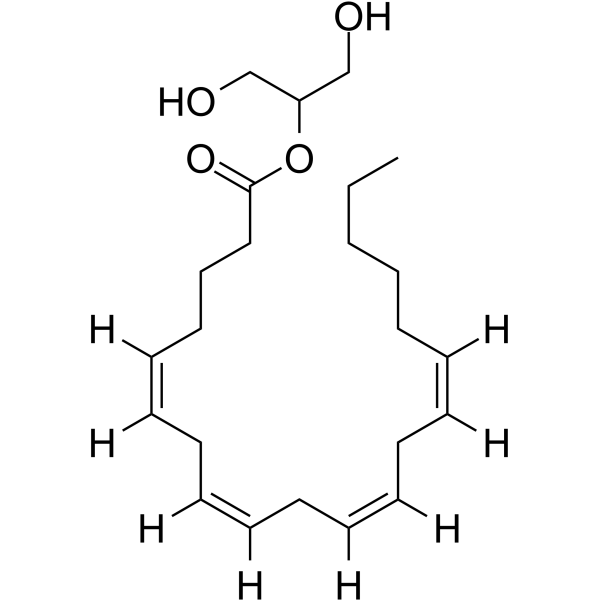
HY-W011051
2-Arachidonoylglycerol
Publications Citing Use of MedChemExpress (MCE) Voacamine
MoreAll EGFR Isoforms
More

Biological Activity
Description
In Vitro
Voacamine (1.4 μM) induces a slight increase in the apoptotic fraction of 23.6% in A2780 cells[2].
Voacamine (Compound VOA) (0-18 μM, 24-48 h) has antiproliferative activities against breast cancer cell lines (MCF-7 and 4T1)[3].
Voacamine (0-10 μM, 24-48 h) has anti-migratory and proapoptotic effect on MCF-7 and 4T1 cells[3].
Voacamine (1.5-5 μM) significantly diminishes the G0/G1 and G2/M phase of MCF-7 and 4T1 cells[3].
Voacamine (2.5-9 μM) collapses MMP and induces ROS production in MCF-7 and 4T1 cells[3].
Voacamine (0-8 μM) induces inhibition of p-PI3K/p-Akt/p-mTOR pathway and interacts with PI3K protein via molecular docking simulation[3].
Voacamine (1-10 μM, 24-72 h) results in a dose- and time-dependent reduction in the cell survival in U-2 osteosarcoma cells[4].
Voacamine (5 μM, 24 h) shows a higher number of cells in G1 phase than control and abundant formation of autophagosomes in U-2 osteosarcoma cells[4].
Voacamine (0-10 μM, 24-48 h) substantially restrains the viability of CRC cell lines (CT26 and HCT116) [5].
Voacamine (0-10 μM) induces apoptisis via EGFR/PI3K/Akt signaling pathway in CT26 and HCT116 cells[5].
MedChemExpress (MCE) has not independently confirmed the accuracy of these methods. They are for reference only.
-
Cell Line:MCF-7 and 4T1 cells
-
Concentration:0, 3, 6, 9, 12, 15, 18 μM (for MCF-7); 0, 2.5, 5, 7.5, 10, 12.5, 15 μM (for 4T1)
-
Incubation Time:24 and 48 h
-
Result:Exhibited low toxicities against human normal breast epithelial cells.
Had the most potent cytotoxic effect on breast cancer cells for 48 h with an IC50 of 0.99 and 1.42 μM for MCF-7 and 4T1 cells, respectively.
Reduced colony formation of MCF-7 and 4T1 cells.
In Vivo
Voacamine (15-30 mg/kg, i.p., 2 w) suppresses the progression of xenograft colorectal tumor in BALB/c mice injected with CT26 cells[5].
MedChemExpress (MCE) has not independently confirmed the accuracy of these methods. They are for reference only.
-
Animal Model:BALB/c mice with 4T1 cells induced xenograft tumor[3]
-
Dosage:15 and 30 mg/kg
-
Administration:Subcutaneous injection (s.c.)
-
Result:Increased body weights of mice whilst reduced the tumor volume and weight with 30 mg/kg dose.
Significantly downregulated levels of p-PI3K in a dose-dependent manner.
- Cytoplasmic-Nuclear Fractionated Protein Extraction
- Detection of Apoptosis
- TUNEL staining for apoptotic DNA fragmentation
- Cell Cytotoxicity Assay
- Mammalian live/dead viability and cytotoxicity staining
- Annexin V plus membrane-impermeant dye apoptosis staining
- Autophagy
- Apoptosis Solutions
- Breast Cancer Modeling


Chemical Information
-
CAS No. 3371-85-5
-
Appearance Solid
-
Molecular Weight 704.90
-
Formula C43H52N4O5
-
Color White to off-white
-
SMILES
O=C(OC)[C@]1([C@@H]2[N@](CC(C[C@H]2CC)C1)CC3)C4=C3C(C=C5OC)=C(N4)C=C5[C@](C[C@@H]6[C@H](C(OC)=O)[C@H](N(C)C/C6=C/C)C7)([H])C8=C7C9=C(N8)C=CC=C9
-
Structure Classification
-
Initial Source
-
Shipping
Room temperature in continental US; may vary elsewhere.
-
Storage
4°C, protect from light
* In solvent : -80°C, 6 months; -20°C, 1 month (protect from light)


Publications (1)
-
Journal Impact Factor
-
Most Recent
-
RSC Adv
A multi-stage computational pipeline and in vitro validation for the discovery of small-molecule translation inhibitors targeting the bacterial ribosome. [Abstract]2026 Apr 7;16(20):18359-18373. PMID: 41953617


Solvent & Solubility
In Vitro:
DMSO : ≥ 100 mg/mL (141.86 mM; Hygroscopic DMSO has a significant impact on the solubility of product, please use newly opened DMSO)
* "≥" means soluble, but saturation unknown.
Please refer to the solubility information to select the appropriate solvent. Once prepared, please aliquot and store the solution to prevent product inactivation from repeated freeze-thaw cycles.
Storage method and period of stock solution: -80°C, 6 months; -20°C, 1 month (protect from light). When stored at -80°C, please use it within 6 months. When stored at -20°C, please use it within 1 month.
Please refer to the solubility information to select the appropriate solvent. Once prepared, please aliquot and store the solution to prevent product inactivation from repeated freeze-thaw cycles.
Storage method and period of stock solution: -80°C, 6 months; -20°C, 1 month (protect from light). When stored at -80°C, please use it within 6 months. When stored at -20°C, please use it within 1 month.
Concentration (start) × Volume (start) = Concentration (final) × Volume (final)
In Vivo:
Select the appropriate dissolution method based on your experimental animal and administration route.
- For the following dissolution methods, please ensure to first prepare a clear stock solution using an In Vitro approach and then sequentially add co-solvents:
- To ensure reliable experimental results, the clarified stock solution can be appropriately stored based on storage conditions. As for the working solution for In Vivo experiments, it is recommended to prepare freshly and use it on the same day.
- The percentages shown for the solvents indicate their volumetric ratio in the final prepared solution. If precipitation or phase separation occurs during preparation, heat and/or sonication can be used to aid dissolution.
Add each solvent one by one: 10% DMSO 40% PEG300 5% Tween-80 45% Saline
Solubility: ≥ 2.5 mg/mL (3.55 mM); Clear solution
This protocol yields a clear solution of ≥ 2.5 mg/mL (saturation unknown).
Taking 1 mL working solution as an example, add 100 μL DMSO stock solution (25.0 mg/mL) to 400 μL PEG300, and mix evenly; then add 50 μL Tween-80 and mix evenly; then add 450 μL Saline to adjust the volume to 1 mL.
Preparation of Saline: Dissolve 0.9 g sodium chloride in ddH₂O and dilute to 100 mL to obtain a clear Saline solution.
Add each solvent one by one: 10% DMSO 90% (20% SBE-β-CD in Saline)
Solubility: 2.5 mg/mL (3.55 mM); Suspended solution; Need ultrasonic
This protocol yields a suspended solution of 2.5 mg/mL. Suspended solution can be used for oral and intraperitoneal injection.
Taking 1 mL working solution as an example, add 100 μL DMSO stock solution (25.0 mg/mL) to 900 μL 20% SBE-β-CD in Saline, and mix evenly.
Preparation of 20% SBE-β-CD in Saline (4°C, storage for one week): 2 g SBE-β-CD powder is dissolved in 10 mL Saline, completely dissolve until clear.
In Vivo Dissolution Calculator
Please enter the basic information of animal experiments:
-
-
-
-
Recommended: Prepare an additional quantity of animals to account for potential losses during experiments.
Please enter your animal formula composition:
-
%DMSO +
Recommended: Keep the proportion of DMSO in working solution below 2% if your animal is weak.
-
%+
-
+%Tween-80 + +
-
%Saline +
The co-solvents required include: DMSO, . All of co-solvents are available by MedChemExpress (MCE). , Tween 80. All of co-solvents are available by MedChemExpress (MCE).
Working solution concentration: 0.22 mg/mL
Method for preparing stock solution: mg drug dissolved in μL DMSO. Stock solution concentration: mg/mL. * In solvent : -80°C, 6 months; -20°C, 1 month (protect from light)
1. Take μL DMSO stock solution;
2. Add μL .
μL , mix evenly;
3. Then add μL Tween 80, mix evenly;
4. Then add μL
Please ensure that the stock solution in the first step is dissolved to a clear state, and add co-solvents in sequence. You can use ultrasonic heating (ultrasonic cleaner, recommended frequency 20-40 kHz), vortexing, etc. to assist dissolution.


Purity & Documentation
-
Data Sheet (285 KB)
-
SDS (252 KB)
- English - EN (252 KB)
- Français - FR (252 KB)
- Deutsch - DE (252 KB)
- Norwegian - NO (252 KB)
- Español - ES (252 KB)
- Swedish - SV (252 KB)
- Italian - IT (252 KB)
- Korean - KR (252 KB)
- Portuguese - PT (252 KB)
-
Handling Instructions (2659 KB)
References
[1]. Kitajima M, et al. Discovery of indole alkaloids with cannabinoid CB1 receptor antagonistic activity. Bioorg Med Chem Lett. 2011 Apr 1;21(7):1962-4. [Content Brief]
[2]. Pellegrini, E., et al., (2022). A natural product, voacamine, sensitizes paclitaxel-resistant human ovarian cancer cells. Toxicology and applied pharmacology, 434, 115816. [Content Brief]
[3]. Zuo, Y., et al., (2022). Activation of mitochondrial-associated apoptosis signaling pathway and inhibition of PI3K/Akt/mTOR signaling pathway by voacamine suppress breast cancer progression. Phytomedicine : international journal of phytotherapy and phytopharmacology, 99, 154015. [Content Brief]
[4]. Meschini, S., et al., (2008). The plant alkaloid voacamine induces apoptosis-independent autophagic cell death on both sensitive and multidrug resistant human osteosarcoma cells. Autophagy, 4(8), 1020–1033. [Content Brief]
[5]. Chen, Y., et al., (2022). Voacamine is a novel inhibitor of EGFR exerting oncogenic activity against colorectal cancer through the mitochondrial pathway. Pharmacological research, 184, 106415. [Content Brief]


Complete Stock Solution Preparation Table
Please refer to the solubility information to select the appropriate solvent. Once prepared, please aliquot and store the solution to prevent product inactivation from repeated freeze-thaw cycles.
Storage method and period of stock solution: -80°C, 6 months; -20°C, 1 month (protect from light). When stored at -80°C, please use it within 6 months. When stored at -20°C, please use it within 1 month.
| Optional Solvent | Concentration Solvent Mass | 1 mg | 5 mg | 10 mg | 25 mg |
|---|---|---|---|---|---|
| DMSO | 1 mM | 1.4186 mL | 7.0932 mL | 14.1864 mL | 35.4660 mL |
| 5 mM | 0.2837 mL | 1.4186 mL | 2.8373 mL | 7.0932 mL | |
| 10 mM | 0.1419 mL | 0.7093 mL | 1.4186 mL | 3.5466 mL | |
| 15 mM | 0.0946 mL | 0.4729 mL | 0.9458 mL | 2.3644 mL | |
| 20 mM | 0.0709 mL | 0.3547 mL | 0.7093 mL | 1.7733 mL | |
| 25 mM | 0.0567 mL | 0.2837 mL | 0.5675 mL | 1.4186 mL | |
| 30 mM | 0.0473 mL | 0.2364 mL | 0.4729 mL | 1.1822 mL | |
| 40 mM | 0.0355 mL | 0.1773 mL | 0.3547 mL | 0.8867 mL | |
| 50 mM | 0.0284 mL | 0.1419 mL | 0.2837 mL | 0.7093 mL | |
| 60 mM | 0.0236 mL | 0.1182 mL | 0.2364 mL | 0.5911 mL | |
| 80 mM | 0.0177 mL | 0.0887 mL | 0.1773 mL | 0.4433 mL | |
| 100 mM | 0.0142 mL | 0.0709 mL | 0.1419 mL | 0.3547 mL |


Voacamine Related Classifications
HY-N6932 Related Classifications
 Powered by Bioz