



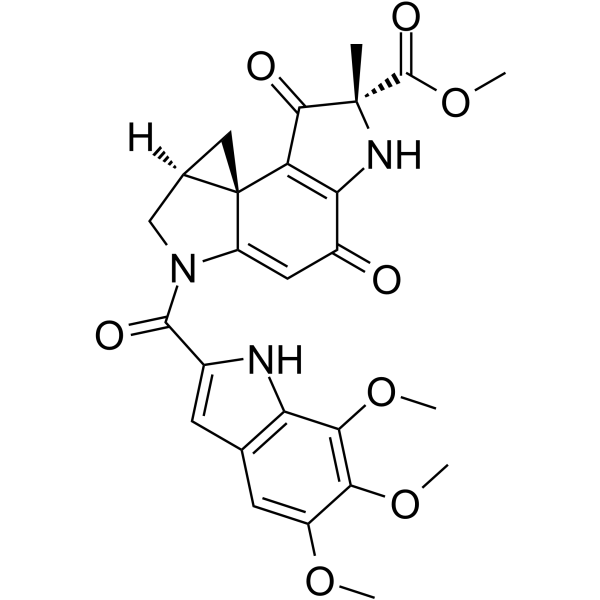
Duocarmycin A
Duocarmycin A is an antitumor antibiotic and DNA alkylating agent with broad-spectrum antibacterial activity, which can serve as a payload for synthesizing antibody-drug conjugates (ADCs). Duocarmycin A selectively binds to the AT-rich minor groove of DNA, forms covalent adducts by alkylating the adenine N3 residue, thereby disrupting DNA structure and inhibiting its replication and transcription. Duocarmycin A induces apoptosis, sub-G1 phase accumulation and chromatin condensation, reduces the levels of pro-caspase-3/9, and induces p53-independent p21 expression. Duocarmycin A is widely used in the research of various malignancies, including leukemia, sarcoma, glioblastoma, as well as multiple solid tumor models such as lung cancer, breast cancer, and colorectal cancer.
商品は「研究用試薬」です。人や動物の医療用・臨床診断用・食品用の製品ではありません。
研究用途以外に使用した場合、当社は一切の責任を負いかねます。
- CAS 番号: 118292-34-5
- 分子式: C26H25N3O8
- 分子量:507.49
-
保管条件:
Please store the product under the recommended conditions in the Certificate of Analysis.

To place orders, for customer services and technical support, please contact: MedChemExpress USA
Tel: 609-228-6898 E-mail: [email protected] [email protected]


-
 生物活性
生物活性
-
化学情報
- プロトコル
- 純度とドキュメンテーション
- 参考文献
-
 Help & FAQs


-
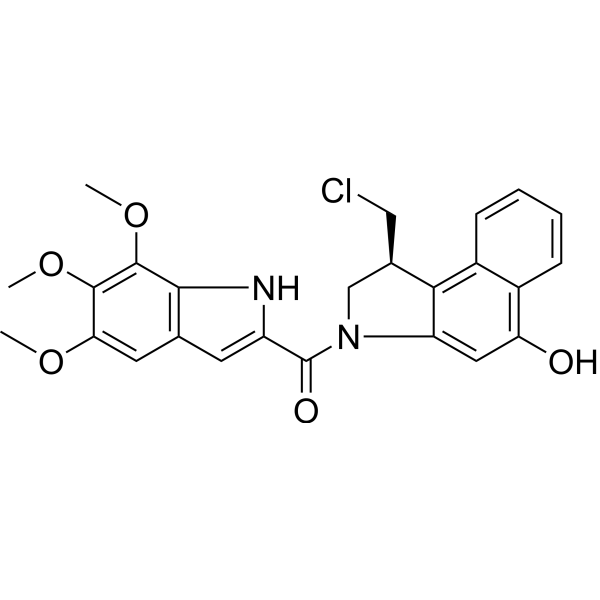
HY-107769
Duocarmycin TMDNA Alkylator -
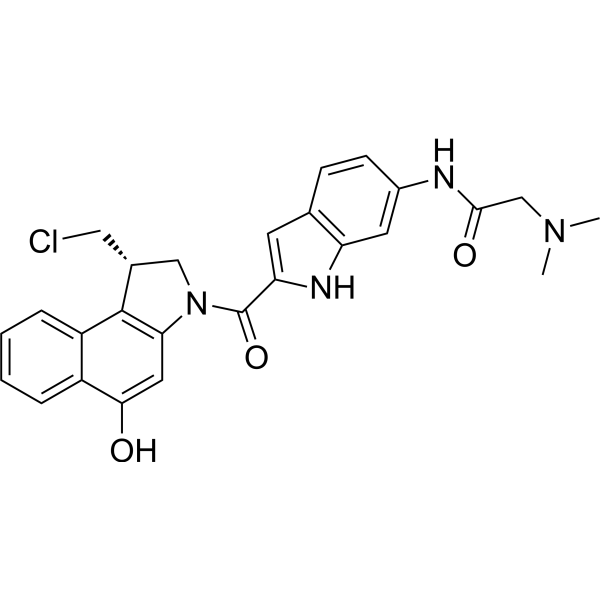
HY-128873
Duocarmycin GAADC Cytotoxin -
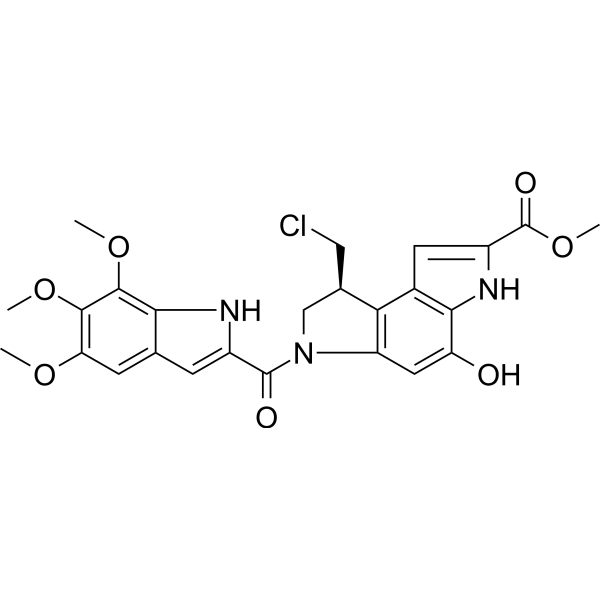
HY-129356A
(S)-Seco-Duocarmycin SAS-enantiomer -
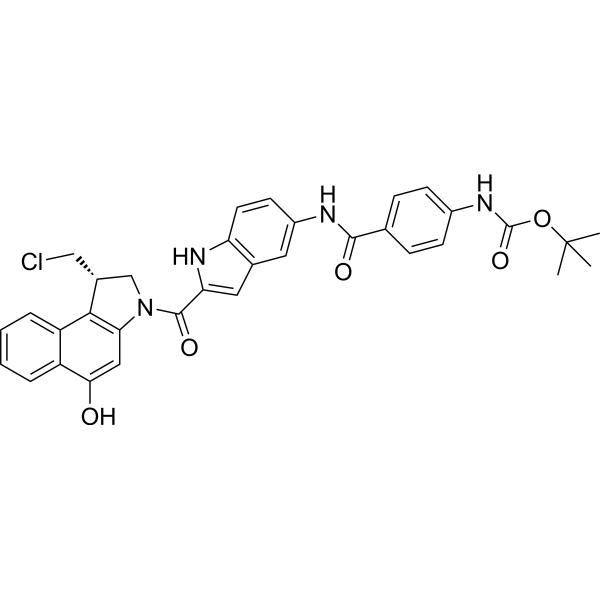
HY-129355
Duocarmycin analog-1DNA Alkylator/Crosslinker -

HY-107769R
Duocarmycin TM (Standard)Reference Standard -
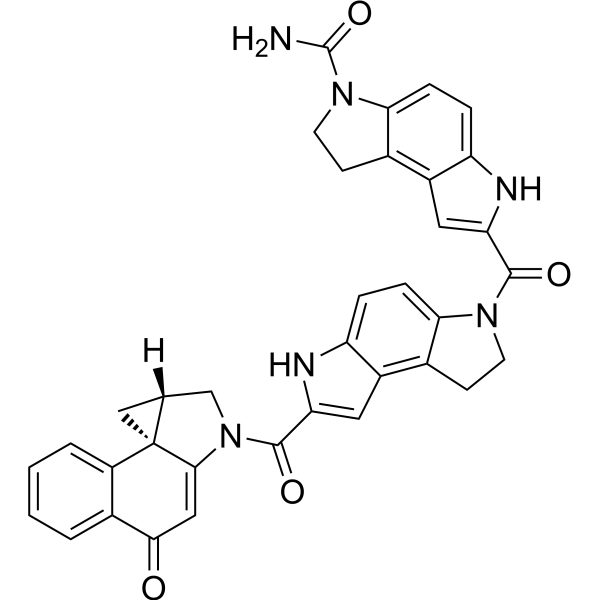
HY-128881
(+)-CBI-CDPI2DNA Alkylating Agent -
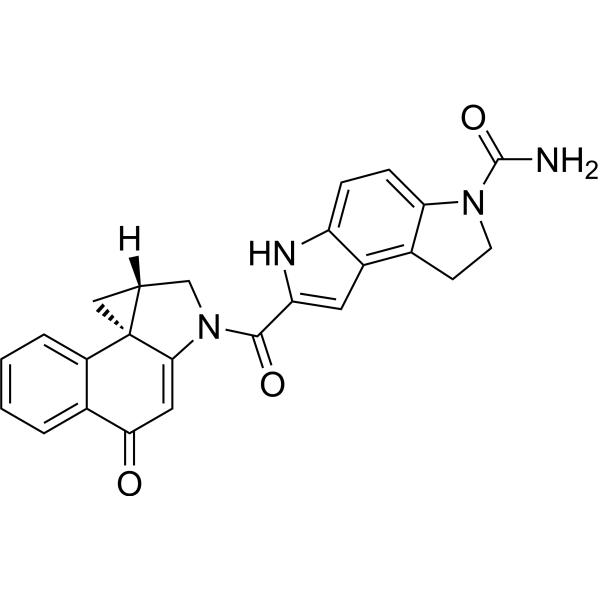
HY-128880
(+)-CBI-CDPI1DNA Alkylating Agent
ADC Payloads アイソフォーム固有の製品をすべて表示
MoreAntibiotic アイソフォーム固有の製品をすべて表示
MoreCaspase アイソフォーム固有の製品をすべて表示
More

生物活性
製品説明
IC50 & Target
|
Procaspase-3 |
Caspase-9 |
Duocarmycins |
体外実験
Duocarmycin A (0.0016-0.0064 μg/ml; 0.032-42 μg/ml) potently inhibits the growth of Gram-positive bacterial strains (MIC 0.0016-0.0064 μg/ml) and exhibits variable inhibitory activity against Gram-negative bacterial and fungal strains (MIC 0.032-42 μg/ml)[1].
Duocarmycin A (0.003-0.03 μg/mL) induces intrinsic pathway apoptosis and G1 phase cell cycle arrest in HLC-2 cells in vitro in a dose-dependent manner, with altered expression of key apoptotic proteins (caspase-3, caspase-9, Bax) at 0.03 μg/mL[2].
Duocarmycin A (0.003-0.03 μg/ml; 72 h) induces concentration-dependent apoptosis in HLC-2 cells, with 27% apoptosis at 0.003 μg/ml and 51% apoptosis at 0.03 μg/ml after 72 h of treatment, accompanied by characteristic apoptotic nuclear morphology[3].
Duocarmycin A (0.003-0.03 μg/ml; 24-72 h) induces time- and concentration-dependent accumulation of apoptotic sub-G1 phase cells in HLC-2 cultures, with higher sub-G1 populations observed at 0.03 μg/ml compared to 0.003 μg/ml across 24, 48, and 72 h treatments[3].
MedChemExpress (MCE) has not independently confirmed the accuracy of these methods. They are for reference only.
-
Cell Line:human acute myeloid leukemia HL-60 (H2O2-sensitive) and HP100 (H2O2-resistant) cells
-
Concentration:10 nM
-
Incubation Time:30 min, 1 h, 2 h, 3 h, 4 h
-
Result:Induced DNA fragments in both cell lines at 30 min. Triggered DNA ladder formation at 2 h in HL-60 cells and at 3-4 h in HP100 cells.
Reached maximal caspase-3 activity at 3 h in HL-60 cells and 4 h in HP100 cells; did not induce detectable caspase-1 activity in either cell line.
-
Cell Line:human lung carcinoma (HLC-2) cells
-
Concentration:0.003 μg/ml; 0.03 μg/ml
-
Incubation Time:24 h; 48 h; 72 h
-
Result:Resulted in sub-G1 phase (apoptotic) cell populations of 3.94% at 24 h, 12.37% at 48 h, and 6.86% at 72 h at 0.003 μg/ml. Resulted in sub-G1 phase cell populations of 5.56% at 24 h, 15.26% at 48 h, and 20.72% at 72 h at 0.03 μg/ml.
-
Cell Line:human lung carcinoma (HLC-2) cells
-
Concentration:0.003 μg/ml; 0.03 μg/ml
-
Incubation Time:72 h (procaspase-3, procaspase-9, procaspase-8, Bax, Bcl-2); 24, 48, 72 h (p53, p21)
-
Result:Decreased levels of the 32-kDa procaspase-3 and 47-kDa procaspase-9 precursors, and increased levels of pro-apoptotic Bcl-2 family protein Bax after 72 h of treatment; showed no change in procaspase-8 or Bcl-2 levels. Induced relatively high expression of p21, with extremely low accumulation of p53 across 24, 48, and 72 h of treatment.
体内実験
Duocarmycin-based B2M-ADC selectively targets senescent cancer cells and reduces their viability in in vivo models, with its activity exhibiting senescence phenotype specificity[2].
Galactose-modified Duocarmycin can selectively induce cell death in senescent cancer cells in mice by targeting SA-β-gal activity[2].
MedChemExpress (MCE) has not independently confirmed the accuracy of these methods. They are for reference only.
-
Animal Model:ddY mice with Murine sarcoma 180[1]
-
Dosage:0.04 mg/kg (i.p.);
0.03 mg/kg (i.v.);
0.015 mg/kg (i.v.);
0.0075 mg/kg (i.v.) -
Administration:i.p. or i.v.; single dose
-
Result:Achieved a T/C ratio of 0.35 at 0.04 mg/kg i.p. single dose.\nExhibited T/C ratios ranging from 0.26 to 0.42 at 0.03-0.0075 mg/kg i.v. single doses.
- Research Protocol for Infectious Diseases
- RNA extraction experimental
- Detection of Apoptosis
- TUNEL staining for apoptotic DNA fragmentation
- Annexin V plus membrane-impermeant dye apoptosis staining
- Nuclear DNA counterstaining and nuclear morphology staining
- Apoptosis Solutions
- Bacterial live/dead nucleic-acid viability staining
- Breast Cancer Modeling


化学情報
-
CAS 番号 118292-34-5
-
分子量 507.49
-
分子式 C26H25N3O8
-
SMILES
O=C([C@@](N1)(C)C(C([C@@]23[C@@](C3)([H])CN(C(C(N4)=CC5=C4C(OC)=C(OC)C(OC)=C5)=O)C2=C6)=C1C6=O)=O)OC
-
輸送条件
Room temperature in continental US; may vary elsewhere.
-
保管条件
Please store the product under the recommended conditions in the Certificate of Analysis.


純度とドキュメンテーション
参考文献
[2]. Morcos A, et al. A Comprehensive Review of the Antitumor Properties and Mechanistic Insights of Duocarmycin Analogs. Cancers (Basel). 2024;16(19):3293. Published 2024 Sep 27. [Content Brief]
[3]. Hirota M, et al. Distamycin A enhances the cytotoxicity of duocarmycin A and suppresses duocarmycin A-induced apoptosis in human lung carcinoma cells. Int J Biochem Cell Biol. 2007;39(5):988-996. [Content Brief]

Calculators
濃度 (開始) × 体積 (開始) = 濃度 (終了) × 体積 (終了)


Duocarmycin A 関連分類
HY-12455 関連分類
 Powered by Bioz