



Betahistine
Based on 2 publication(s) in Google Scholar
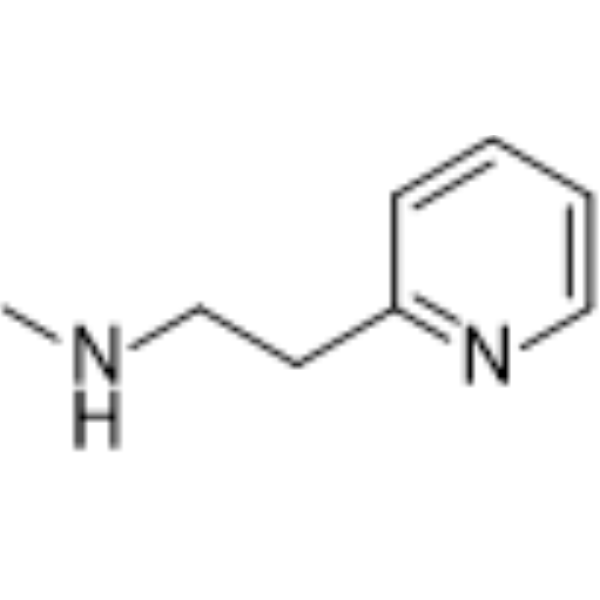
Betahistine (OBE-101) is an orally active histamine receptor modulator with blood-brain barrier permeability. Betahistine antagonizes presynaptic H3 receptors and weakly activates H1 receptors, thereby enhancing histamine/acetylcholine release and cholinergic neurotransmission. Betahistine inhibits pro-inflammatory cytokines, RORγt/Th17 differentiation, and type II collagen-specific lymph node cell proliferation. Betahistine promotes ERK1/2 and AKT phosphorylation, upregulates PPARγ, induces CTRP1/3/6/9/12, and produces histaminergic vasodilation; it also ameliorates vestibular dysfunction. Betahistine is used in research related to neurological disorders such as cognitive impairment and inflammatory diseases such as rheumatoid arthritis and otitis media.
연구목적의 판매만을 진행합니다. 환자를 대상으로 한 판매는 하지 않습니다.
- Purity : 99.84%
- CAS No.: 5638-76-6
- 화학식: C8H12N2
- 분자량:136.19
-
보관:
4°C, sealed storage, away from moisture
* In solvent : -80°C, 6 months; -20°C, 1 month (sealed storage, away from moisture)

To place orders, for customer services and technical support, please contact: MedChemExpress USA
Tel: 609-228-6898 E-mail: [email protected] [email protected]


-
 Biological Activity
-
Chemical Information
-
용액&용해도
- Protocol
- 순도&문서
- References
-
 Help & FAQs


-
HY-14541
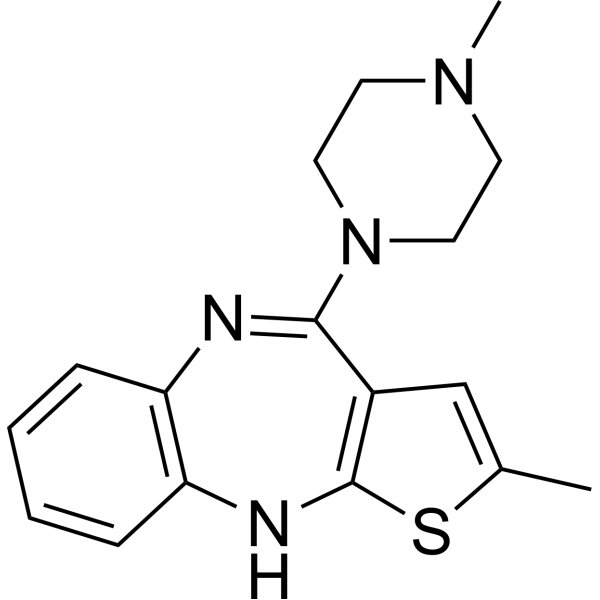
Olanzapine5-HT2/D1/D2 Antagonist -
HY-B1204
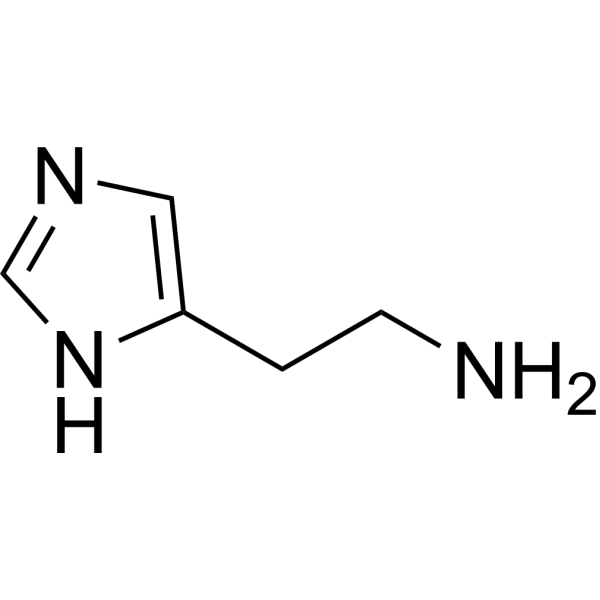
HistamineNeurotransmitter -
HY-B1204R
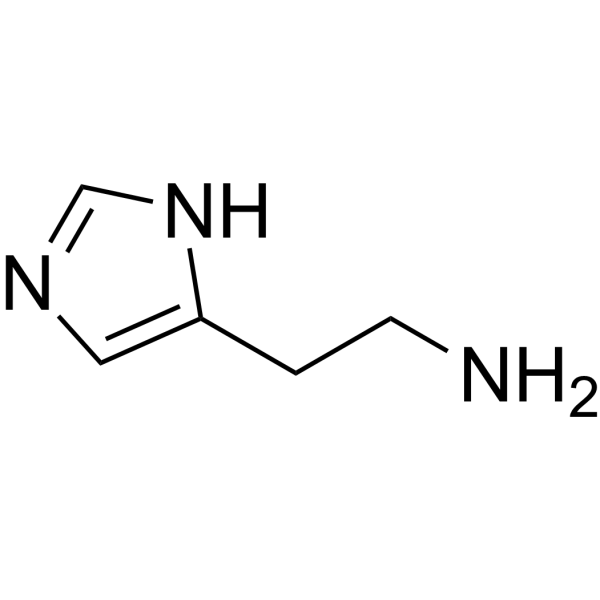
Histamine (Standard)Neurotransmitter -
HY-D0237
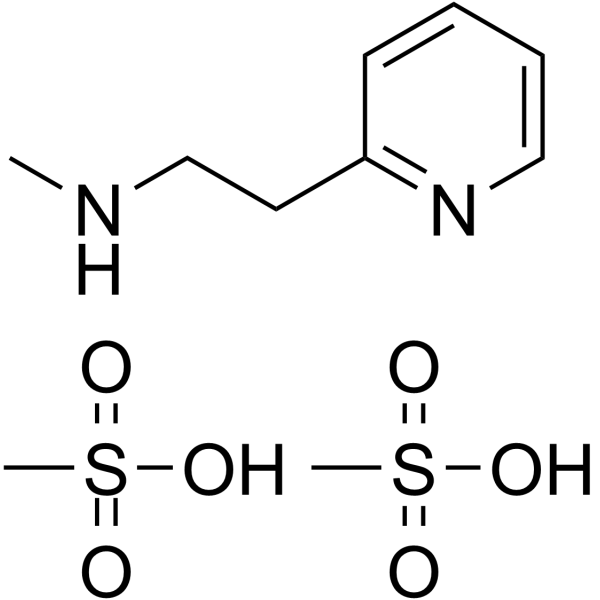
Betahistine mesylateHistamine Receptor Modulator -
HY-101420
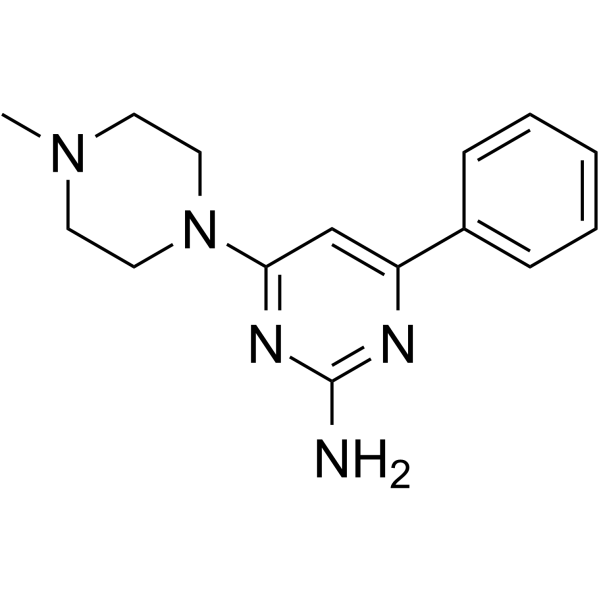
VUF10460H4 Receptor Agonist -

HY-D0237R
Betahistine mesylate (Standard)Reference Standard -

HY-101420R
VUF10460 (Standard)H4 Receptor Agonist


Biological Activity
제품 설명
|
H1 Receptor |
H3 receptor |
IL-17A |
IL-6 |
TNF-α |
ERK1 |
ERK2 |
Akt |
PPAR-γ |
In Vitro
Betahistine inhibits the binding of [3H]Mepyramine in guinea pig cerebellar membranes with a Ki of 31 μM[5].
Betahistine is not an H3 autoreceptor agonist in rat brain cortex slices, but it antagonizes the inhibitory effect of exogenous histamine on [3H] histamine release, with a Ki of 6.9 μM[5].
MedChemExpress (MCE) has not independently confirmed the accuracy of these methods. They are for reference only.
In Vivo
Betahistine (10 mg/Kg; s.c.; for 15 consecutive days) ameliorates gentamicin-induced vestibular dysfunction in mice by inducing CTRP and activating ERK1/2-AKT/PPARγ, whereas inhibition of ERK and PPARγ blocks the behavioral benefits without altering CTRP induction[3].
Betahistine (10 mg/Kg; s.c.; for 15 consecutive days) improves vestibular behavioral dysfunction in Slc26a4loop/loop mutant mice and increases the levels of CTRP1, CTRP3, CTRP6, CTRP9, and CTRP12[3].
Betahistine (25-300 mg/kg; i.p.; single administration; 30 or 60 min before [3H]Mepyramine) reduces in vivo specific [3H]Mepyramine binding in the cerebral cortex of male albino mice only at high doses, with 300 mg/kg reducing binding to 32% of control at 30 min[5].
Betahistine (1-8 mg/mL; nasopharyngeal) improves eustachian tube function in rats, and this effect is independent of the H1 receptor and can be reproduced by the H3 agonist Ciproxifan (HY-14567)[6].
MedChemExpress (MCE) has not independently confirmed the accuracy of these methods. They are for reference only.
-
Animal Model:ICR (adult male, 8-12 weeks old, 25-35 g)[1]
-
Dosage:5 mg/kg/day; 10 mg/kg/day
-
Administration:p.o.; once daily; 28 days
-
Result:Disclosed that 5 and 10 mg/kg/day shortened elevated plus maze transfer latency in acquisition and retention phases.
Found that both doses improved novel-object exploration and discrimination index in novel object recognition test, without altering familiar-object exploration.
Observed that 10 mg/kg/day increased known-arm entries, and both doses enhanced novel-arm visits, novel-arm time and total entries in Y-maze.
Confirmed that both doses dose-dependently restored brain acetylcholine and decreased brain IL-6 and TNF-α versus doxorubicin.
-
Animal Model:C57BL/6J (female, 8 weeks of age, 22-24 g, were fed HFD (60 E% fat
content) for 30 days)[2] -
Dosage:26 mg/kg/day
-
Administration:s.c.; continuous infusion via micro-osmotic pump; 30 days
-
Result:Prevented high-fat diet-induced endolymphatic hydrops, as assessed by contrast-enhanced MRI.
Did not significantly affect high-fat diet-induced weight gain.
High-fat diet reduced adipose IRS1 expression.
High-fat diet increased adipose Nedd4-2 expression, and this increase was prevented.
-
Animal Model:Kunming SPF (25 g; 8-10 weeks of age)[3]
-
Dosage:10 mg/Kg
-
Administration:s.c.; for 15 days
-
Result:Ameliorated gentamicin-induced vestibular dysfunction in mice through CTRP induction and ERK1/2-AKT/PPARγ activation, while ERK and PPARγ inhibition blocks the behavioral benefit without altering CTRP induction.
-
Animal Model:Slc26a4loop/loop mutant and wild-type (25 g; 8-10 weeks of age)[3]
-
Dosage:10 mg/Kg
-
Administration:s.c.; for 15 days
-
Result:Improved vestibular behavioral dysfunction and raises CTRP1, CTRP3, CTRP6, CTRP9, and CTRP12 levels.
-
Animal Model:DBA1/J (male, 6 weeks old)[4]
-
Dosage:1 mg/kg; 5 mg/kg
-
Administration:p.o.; daily; day 21-42 after primary immunization
-
Result:Showed that 1 and 5 mg/kg alleviated arthritis severity, paw swelling and erythema, with 5 mg/kg as the optimal dose, and mitigated ankle inflammatory infiltration, synovial hyperplasia and cartilage injury.
Found that paw TNF‑α, IL‑6, IL‑23 and IL‑17A declined, whereas IFN‑γ, IL‑4, IL‑10, TGF‑β and serum anti‑CII IgG remained unchanged.
Observed suppressed CII‑triggered lymph node cell proliferation and selectively lowered Th17 frequency and RORγt expression, while Th1, Th2 and Treg populations and their master transcription factors were unaltered.
-
Animal Model:albino (male; 18-20 g)[5]
-
Dosage:25, 50, 100, or 300 mg/kg at 30 min before [3H]Mepyramine; 25, 50, 75, 150, or 200 mg/kg at 60 min before [3H]Mepyramine
-
Administration:i.p.; single dose; 30 or 60 min before [3H]mepyramine
-
Result:In vivo specific [3H]Mepyramine binding in cerebral cortex was 127% of controls at 25 mg/kg and 30 min, 103% at 50 mg/kg, 118% at 100 mg/kg, and 32% at 300 mg/kg.
At 60 min, binding was 125% at 25 mg/kg, 128% at 50 mg/kg, 120% at 75 mg/kg, 65% at 150 mg/kg, and 75% at 200 mg/kg.
Non-specific binding was 57 pCi/mg protein in controls versus 60 pCi/mg protein at 300 mg/kg.
- Western Blot
- Naïve CD4+ T-cell subset differentiation/polarization
- BrdU Incorporation Assay
- Somatic Cell Culture
- CFSE Dye Dilution Proliferation Assay
- Dye-dilution cell tracking and proliferation staining
- CCK-8/WST-8 Cell Proliferation Assay
- Protocol for Cell Cycle
- Research Protocol for Inflammation-related Diseases
- Cell Counting-Based Growth Curve Assay
- Colony Formation (Clonogenic) Assay
- Cell Viability Determination by MTT Colorimetric Assay
- Alzheimer’s Disease Modeling
- Kinase activity and phosphorylation assays
- EdU Incorporation Assay (Click Chemistry-Based DNA Synthesis Measurement)
- Collagen-Induced Arthritis
- Ki-67 Immunostaining Proliferation Assay
- LPS-Induced Endotoxemia/Systemic Inflammation
- PCNA Immunodetection Proliferation Assay
- Protocol for Cell Counting and Cell Density Analysis
- Transepithelial/transendothelial electrical resistance assay
- Protocol for Kinase activity and phosphorylation assays
- MTT Cell Proliferation Assay
Clinical Trial
| NCT Number | Sponsor | Condition | Start Date |
Phase

|
|---|---|---|---|---|
| NCT01329991 | 2011-05 | PHASE1 |


Chemical Information
-
CAS No. 5638-76-6
-
Appearance Liquid (Density: 0.984 g/cm3)
-
분자량 136.19
-
화학식 C8H12N2
-
Color Light yellow to yellow
-
SMILES
CNCCC1=NC=CC=C1
-
Synonyms
OBE-101
-
선적
Room temperature in continental US; may vary elsewhere.
-
보관
4°C, sealed storage, away from moisture
* In solvent : -80°C, 6 months; -20°C, 1 month (sealed storage, away from moisture)


Publications (2)
-
Journal Impact Factor
-
Most Recent
-
Pharm Res
Investigation of the Binding Characteristics of Agonists and Various Antagonists Targeting Histamine 1 Receptor. [Abstract]2025 Aug;42(8):1315-1329. PMID: 40760405 -
Brain Sci
Combination Lorcaserin and Betahistine Treatment Improves Cognitive Dysfunction and Dopaminergic Neuron Activity in a Rat Model of Diet-Induced Obesity. [Abstract]2025 Aug 25;15(9):913. PMID: 41008273


용액&용해도
In Vitro:
DMSO : 100 mg/mL (734.27 mM; Need ultrasonic; Hygroscopic DMSO has a significant impact on the solubility of product, please use newly opened DMSO)
Please refer to the solubility information to select the appropriate solvent. Once prepared, please aliquot and store the solution to prevent product inactivation from repeated freeze-thaw cycles.
Storage method and period of stock solution: -80°C, 6 months; -20°C, 1 month (sealed storage, away from moisture). When stored at -80°C, please use it within 6 months. When stored at -20°C, please use it within 1 month.
Concentration (start) × Volume (start) = Concentration (final) × Volume (final)
In Vivo:
Select the appropriate dissolution method based on your experimental animal and administration route.
- For the following dissolution methods, please ensure to first prepare a clear stock solution using an In Vitro approach and then sequentially add co-solvents:
- To ensure reliable experimental results, the clarified stock solution can be appropriately stored based on storage conditions. As for the working solution for In Vivo experiments, it is recommended to prepare freshly and use it on the same day.
- The percentages shown for the solvents indicate their volumetric ratio in the final prepared solution. If precipitation or phase separation occurs during preparation, heat and/or sonication can be used to aid dissolution.
Add each solvent one by one: 10% DMSO 40% PEG300 5% Tween-80 45% Saline
Solubility: ≥ 2.5 mg/mL (18.36 mM); Clear solution
This protocol yields a clear solution of ≥ 2.5 mg/mL (saturation unknown).
Taking 1 mL working solution as an example, add 100 μL DMSO stock solution (25.0 mg/mL) to 400 μL PEG300, and mix evenly; then add 50 μL Tween-80 and mix evenly; then add 450 μL Saline to adjust the volume to 1 mL.
Preparation of Saline: Dissolve 0.9 g sodium chloride in ddH₂O and dilute to 100 mL to obtain a clear Saline solution.
Add each solvent one by one: 10% DMSO 90% (20% SBE-β-CD in Saline)
Solubility: ≥ 2.5 mg/mL (18.36 mM); Clear solution
This protocol yields a clear solution of ≥ 2.5 mg/mL (saturation unknown).
Taking 1 mL working solution as an example, add 100 μL DMSO stock solution (25.0 mg/mL) to 900 μL 20% SBE-β-CD in Saline, and mix evenly.
Preparation of 20% SBE-β-CD in Saline (4°C, storage for one week): 2 g SBE-β-CD powder is dissolved in 10 mL Saline, completely dissolve until clear.
In Vivo Dissolution Calculator
Please enter the basic information of animal experiments:
-
-
-
-
Recommended: Prepare an additional quantity of animals to account for potential losses during experiments.
Please enter your animal formula composition:
-
%DMSO +
Recommended: Keep the proportion of DMSO in working solution below 2% if your animal is weak.
-
%+
-
+%Tween-80 + +
-
%Saline +
The co-solvents required include: DMSO, . All of co-solvents are available by MedChemExpress (MCE). , Tween 80. All of co-solvents are available by MedChemExpress (MCE).
Working solution concentration: 0.22 mg/mL
Method for preparing stock solution: mg drug dissolved in μL DMSO. Stock solution concentration: mg/mL. * In solvent : -80°C, 6 months; -20°C, 1 month (sealed storage, away from moisture)
1. Take μL DMSO stock solution;
2. Add μL .
μL , mix evenly;
3. Then add μL Tween 80, mix evenly;
4. Then add μL
Please ensure that the stock solution in the first step is dissolved to a clear state, and add co-solvents in sequence. You can use ultrasonic heating (ultrasonic cleaner, recommended frequency 20-40 kHz), vortexing, etc. to assist dissolution.


순도&문서


References

Complete Stock Solution Preparation Table
Please refer to the solubility information to select the appropriate solvent. Once prepared, please aliquot and store the solution to prevent product inactivation from repeated freeze-thaw cycles.
Storage method and period of stock solution: -80°C, 6 months; -20°C, 1 month (sealed storage, away from moisture). When stored at -80°C, please use it within 6 months. When stored at -20°C, please use it within 1 month.
| Optional Solvent | Concentration Solvent Mass | 1 mg | 5 mg | 10 mg | 25 mg |
|---|---|---|---|---|---|
| DMSO | 1 mM | 7.3427 mL | 36.7134 mL | 73.4268 mL | 183.5671 mL |
| 5 mM | 1.4685 mL | 7.3427 mL | 14.6854 mL | 36.7134 mL | |
| 10 mM | 0.7343 mL | 3.6713 mL | 7.3427 mL | 18.3567 mL | |
| 15 mM | 0.4895 mL | 2.4476 mL | 4.8951 mL | 12.2378 mL | |
| 20 mM | 0.3671 mL | 1.8357 mL | 3.6713 mL | 9.1784 mL | |
| 25 mM | 0.2937 mL | 1.4685 mL | 2.9371 mL | 7.3427 mL | |
| 30 mM | 0.2448 mL | 1.2238 mL | 2.4476 mL | 6.1189 mL | |
| 40 mM | 0.1836 mL | 0.9178 mL | 1.8357 mL | 4.5892 mL | |
| 50 mM | 0.1469 mL | 0.7343 mL | 1.4685 mL | 3.6713 mL | |
| 60 mM | 0.1224 mL | 0.6119 mL | 1.2238 mL | 3.0595 mL | |
| 80 mM | 0.0918 mL | 0.4589 mL | 0.9178 mL | 2.2946 mL | |
| 100 mM | 0.0734 mL | 0.3671 mL | 0.7343 mL | 1.8357 mL |


Betahistine Related Classifications
HY-B0524 Related Classifications
 Powered by Bioz
Keywords
- Betahistine
- 5638-76-6
- OBE-101
- OBE101
- OBE 101
- Histamine Receptor
- Interleukin Related
- TNF Receptor
- ERK
- Akt
- PPAR
- IL
- Tumor Necrosis Factor Receptor
- TNFR
- Extracellular signal regulated kinases
- PKB
- Protein kinase B
- Peroxisome proliferator-activated receptors
- ERK1/2
- H1 receptor
- H3 autoreceptor
- PPARγ
- RORγt
- Th17 differentiation
- acetylcholine
- cholinergic neurotransmission
- histamine receptor
- histamine release
- Inhibitor
- inhibitor
- inhibit