



HDAC
Histone deacetylases
HDAC (Histone deacetylases) are a class of enzymes that remove acetyl groups (O=C-CH3) from an ε-N-acetyl lysine amino acid on ahistone, allowing the histones to wrap the DNA more tightly. This is important because DNA is wrapped around histones, and DNA expression is regulated by acetylation and de-acetylation. Its action is opposite to that of histone acetyltransferase. HDAC proteins are now also called lysine deacetylases (KDAC), to describe their function rather than their target, which also includes non-histone proteins. Together with the acetylpolyamine amidohydrolases and the acetoin utilization proteins, the histone deacetylases form an ancient protein superfamily known as the histone deacetylase superfamily.
HDAC Isoform Specific Products
-
HDAC
(393)
View all products
-
HDAC1
(316)
View all products
-
HDAC2
(210)
View all products
-
HDAC3
(204)
View all products
-
HDAC4
(72)
View all products
-
HDAC5
(56)
View all products
-
HDAC6
(337)
View all products
-
HDAC7
(53)
View all products
-
HDAC8
(189)
View all products
-
HDAC9
(41)
View all products
-
HDAC10
(67)
View all products
-
HDAC11
(73)
View all products
-
HD1
(3)
View all products
-
HD2
(4)
View all products
All Product Categories
-
HDAC Inhibitors
(781)
View all products
-
HDAC Antagonists
(3)
View all products
-
HDAC Activators
(14)
View all products
-
HDAC Modulators
(4)
View all products
-
HDAC MDM2 Inhibitor
(1)
View all products
-
HDAC Degraders
(45)
View all products
-
HDAC Controls
(4)
View all products
-
HDAC Substrates
(4)
View all products
-
HDAC Ligands
(15)
View all products
-
HDAC Related Products (920)
Related Products (920)

-
Antibodies (16)
-
HDAC Signaling Pathway
-
HDAC Isoform Comparison
-
HDAC8/PIM1-IN-1
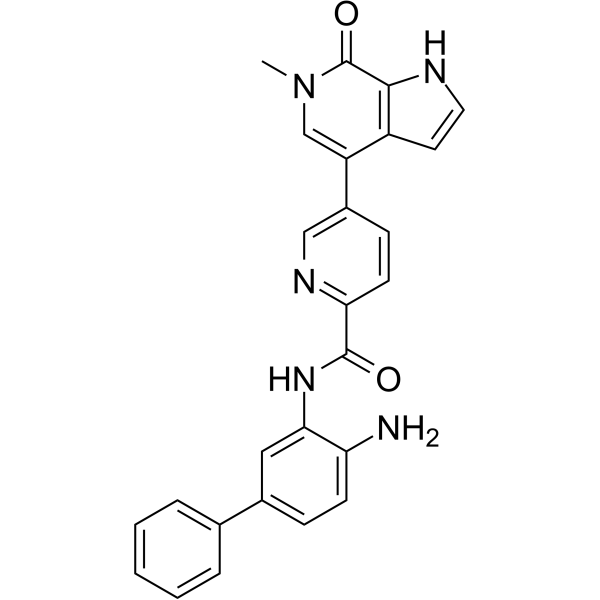
 0 ImagesCat. No.: HY-189297HDAC8/PIM1-IN-1 is a synthetic multi-target-directed ligand (MTDL) derived from 2-ureido-6-nitrobenzamide, and computational simulations predict it to be a dual-target inhibitor of HDAC8 and PIM1. HDAC8/PIM1-IN-1 holds potential for applications in research related to cancer and neurodegenerative diseases.
-
HDAC6-IN-62
 0 ImagesCat. No.: HY-174449CAS No.: 3056725-89-1HDAC6-IN-62 (Compound 2.12) is a selective HDAC6 inhibitor, with an IC50 value of 0.25 nM. HDAC6-IN-62 can be used in the research of Charcot-Marie-Tooth disease.
-
Rodin-C
 0 ImagesCat. No.: HY-176868CAS No.: 2065162-16-3Rodin-C is a selective HDAC inhibitor with IC50s of 0.059, 0.18 and 5.39 μM for HDAC1, HDAC2 and HDAC11, respectively, over HDAC3-10. Rodin-C significantly inhibits the HDAC-CoREST complex with low hematological toxicity. Rodin-C can be used for neurologic disorders such as Alzheimer’s disease research.
-
HDAC-IN-74
 0 ImagesCat. No.: HY-162603CAS No.: 1449310-17-1HDAC-IN-74 (PA) is a dual HDAC/Rribonucleotide reductase(RR) inhibitor, with IC50 values of 10.80 μM and 9.34 μM for HDAC and HDAC, respectively. HDAC-IN-74 can be used in anticancer research.
-
HDAC1-IN-14
 0 ImagesCat. No.: HY-183366HDAC1-IN-14 is an indole-based benzamide selective HDAC1 inhibitor with an IC50 of 77 nM. HDAC1-IN-14 acts as an antiproliferative agent, with GI50 values ranging from nanomolar to low micromolar levels in various cancer cells. HDAC1-IN-14 induces G0-G1 cell cycle arrest in colon cancer cells. HDAC1-IN-14 upregulates the expression of Caspase-3, Cyto-C and Bax, and downregulates the expression of AKT-1. HDAC1-IN-14 can be used in research related to leukemia, non-small cell lung cancer, colon cancer, central nervous system cancer, melanoma, ovarian cancer, renal cancer, prostate cancer and breast cancer.
-
MFDCH016
 0 ImagesCat. No.: HY-178350MFDCH016 is a potent HDAC1/6 (IC50 = 38/59 nM) and CDK4/6 (IC50 = 680/720 nM) inhibitor. MFDCH016 induces apoptosis and cell cycle arrest in G2/M and G0/G1 phases in MCF-7 cells. MFDCH016 can modulate the HDAC-p21-CDK signaling pathway, increasing the levels of acetylated H3 and p21. MFDCH016 can be used for the study of breast cancer.
-
JAK/HDAC-IN-4
 0 ImagesCat. No.: HY-169290CAS No.: 3064994-08-4JAK/HDAC-IN-4 (compound 11 i) is a JAK/HDAC inhibitor with the IC50 values of 0.49 nM and 12 nM for JAK2 and HDAC6, respectively. JAK/HDAC-IN-4 inhibits the cell proliferation and the production of nitric oxide. JAK/HDAC-IN-4 ameliorates psoriasis-like skin lesions in an Imiquimod (HY-B0180)-induced murine model with low toxicity.
-
HDAC6-IN-82
 0 ImagesCat. No.: HY-183560CAS No.: 1228571-33-2HDAC6-IN-82 is a selective HDAC6 inhibitor with an IC50 of 4.9 nM against HDAC6. HDAC6-IN-82 inhibits HDAC1 (112 nM), HDAC2 (737 nM), HDAC3 (623 nM), HDAC8 (1140 nM), HDAC10 (91.4 nM) and HDAC11 (219 nM). HDAC6-IN-82 reduces cancer cell viability, induces cell cycle arrest, triggers apoptosis, and increases the acetylation levels of H3K9 and α-tubulin. HDAC6-IN-82 can be used in cancer-related research such as leukemia.
-
HDAC-IN-46
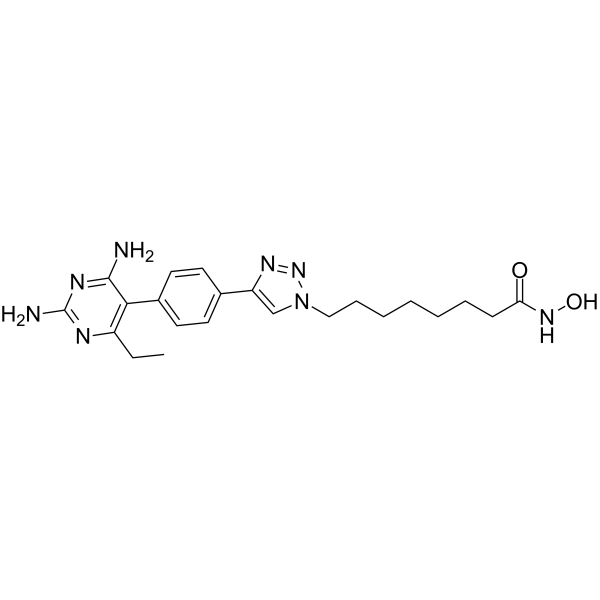 0 ImagesCat. No.: HY-150597CAS No.: 2562386-85-8HDAC-IN-46 (compound 12c) is a potent HDAC inhibitor with an IC50 value of 0.21 μM and 0.021 μM for HDAC1 and HDAC6, respectively. HDAC-IN-46 upregulates p-p38, and downregulates Bcl-xL and cyclin D1 in MDA-MB-231 cells. HDAC-IN-46 induces significant G2 phase arrest and apoptosis. HDAC-IN-46 can be used for researching triple-negative breast cancer (TNBC).
-
GRK2 modulator 1
 0 ImagesCat. No.: HY-183057CAS No.: 2234900-83-3GRK2 modulator 1 is an orally active, brain-penetrant and selective GRK2 modulator. GRK2 modulator 1 enhances the active, non-phosphorylated GRK2 and prevents mitochondrial GRK2 and TOMM6 aggregation. GRK2 modulator 1 enhances the non-amyloidogenic processing of APP and prevent PHF-tau, neurodegeneration, and neuronal loss. GRK2 modulator 1 decreases the senescence marker, UPAR, reduces the Alzheimer disease (AD)-related mortality, and prolongs survival. GRK2 modulator 1 exerts neuroprotection by inhibiting HDAC6, and counteracts age-related cardiac dysfunction. GRK2 modulator 1 can be used for research on AD.
-
LW479
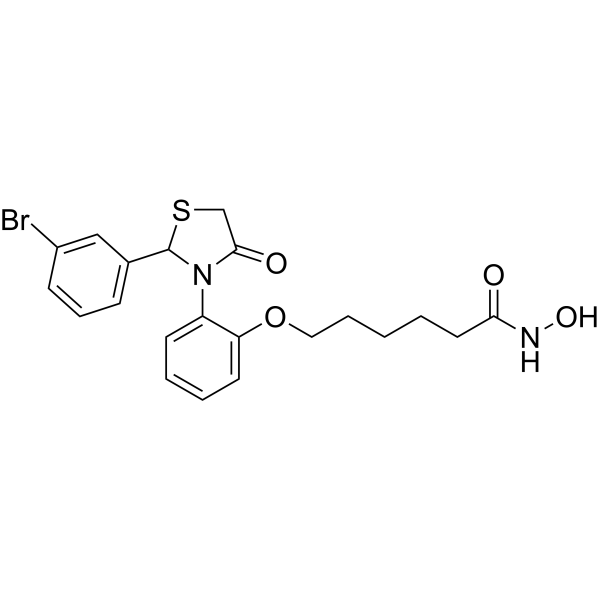 0 ImagesCat. No.: HY-135606CAS No.: 1688677-89-5
-
PROTAC HDAC6 degrader 10
 0 ImagesCat. No.: HY-184389PROTAC HDAC6 degrader 10 is a highly efficient, safe and selective HDAC6 PROTAC degrader with a pIC50 of 8.75 and a pDC50 of 9.2 in BEAS-2B cells. PROTAC HDAC6 degrader 10 recruits cereblon to form a ternary complex with HDAC6, thereby achieving the degradation of HDAC6. PROTAC HDAC6 degrader 10 significantly induces hyperacetylation of α-tubulin without affecting the acetylation of H3, and achieves sustained HDAC6 knockdown in mouse lung tissues. PROTAC HDAC6 degrader 10 exhibits high bioavailability after subcutaneous administration in mice. PROTAC HDAC6 degrader 10 enables the study of HDAC6 pharmacology via chemical knockdown of HDAC6 in vitro and in vivo, and can be used for research on pulmonary diseases.
-
HDAC6-IN-75
 0 ImagesHDAC6-IN-75 is a selective HDAC6 inhibitor with an IC50 of 0.17 nM against HDAC6. HDAC6-IN-75 induces the accumulation of acetylated α-tubulin in glioma cells. HDAC6-IN-75 triggers cell cycle changes, increases the SubG1 cell population, and promotes apoptosis in glioma cells and glioblastoma stem cells. HDAC6-IN-75 is applicable for glioma-related research.
-
Antitumor agent-225
 0 ImagesCat. No.: HY-187003CAS No.: 1338320-95-8Antitumor agent-225 is an orally effective and potent HDAC inhibitor with an IC50 value of 4.17 nM. Antitumor agent-225 inhibits HDAC activity by chelating zinc ions through its hydroxamic acid group, downregulates iNOS and COX-2 proteins, and suppresses the production of multiple inflammatory factors induced by LPS (HY-D1056). Antitumor agent-225 can be used for research on cancer and inflammation-related diseases.
-
HDAC-IN-51
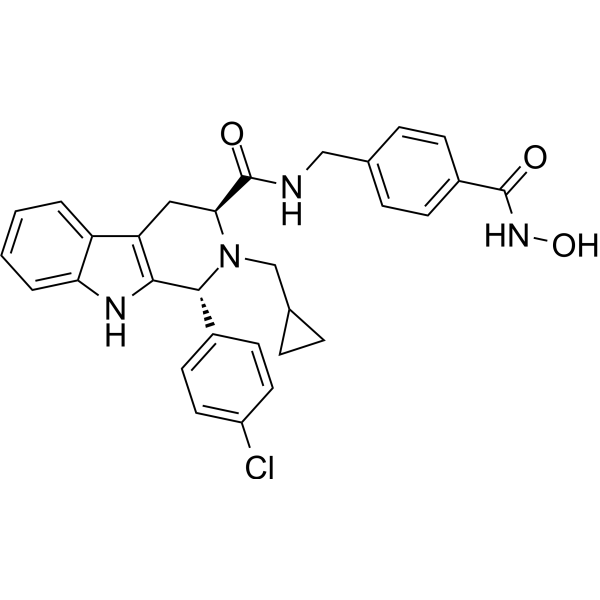
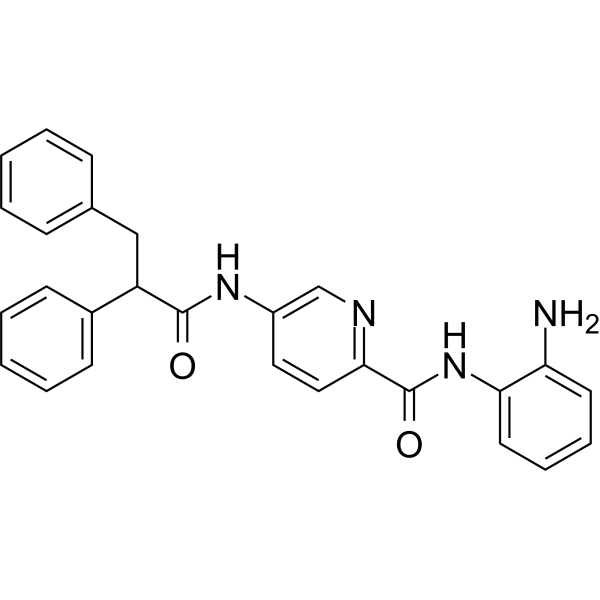 0 ImagesCat. No.: HY-152173CAS No.: 3026728-28-6HDAC-IN-51 is a potent histone deacetylase (HDAC) inhibitor with IC50 values of 0.32, 0.353, 0.431, 0.515, and 85.4 μM for HDAC10, HDAC1, HDAC2, HDAC3 and HDAC11, respectively. HDAC-IN-51 induces cell cycle arrest and apoptosis, modulating cell cycle-/apoptosis-related miRNAs expression. HDAC-IN-51 can be used in research of cancer.

-
BChE/HDAC6-IN-2
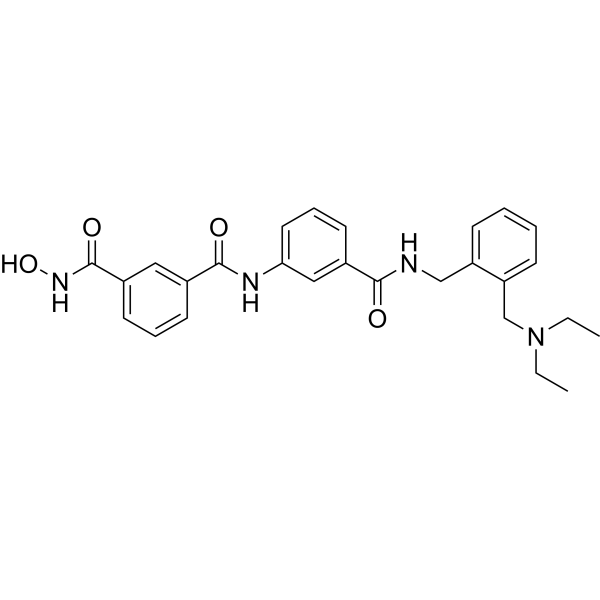 0 ImagesCat. No.: HY-149418CAS No.: 2925457-33-4BChE/HDAC6-IN-2 (compound 29a) is a dual inhibitor of BChE and HDAC6 with IC50s of 1.8 nM and 71.0 nM, respectively. BChE/HDAC6-IN-2 has prominently neuroprotective effects and reactive oxygen species (ROS) scavenging activity. BChE/HDAC6-IN-2 is also an effective chelator of metal ion (Fe2+ and Cu2+). BChE/HDAC6-IN-2 inhibits phosphorylation of tau, and exhibits moderate immunomodulatory effect.
-
HDAC6-IN-61
 0 ImagesCat. No.: HY-176733HDAC6-IN-61 (Compound 4e) is a HDAC6 inhibitor (IC50: 73 nM) with selectivity over other HDAC isoforms. HDAC6-IN-61 is also a GPR40 activator. HDAC6-IN-61 increases acetylated tubulin and ERK phosphorylation levels. HDAC6-IN-61 can be used for research of neuroinflammation such as Alzheimer's disease.




