



Isoviolanthin
Based on 1 publication(s) in Google Scholar
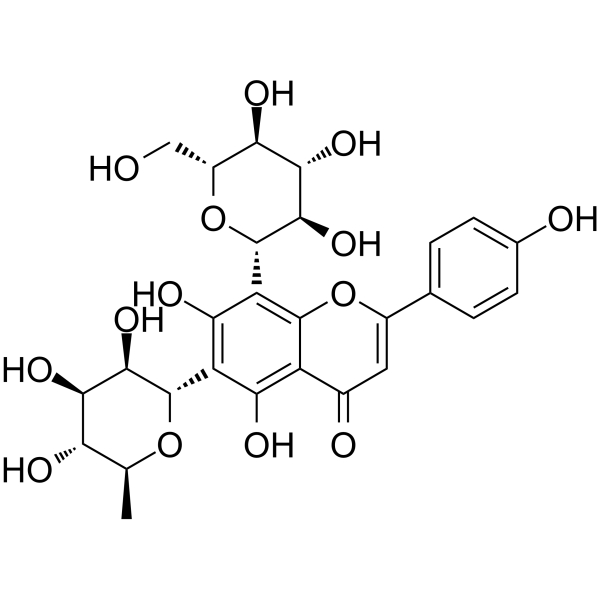
Isoviolanthin is a flavonoid glycoside. Isoviolanthin can be extracted from Dendrobium officinale. Isoviolanthin has a strong affinity for binding to KDM6B, CHAC2, ESCO2, and IPO4. Isoviolanthin decreases MMP-2 and MMP-9. Isoviolanthin inhibits TGF-β/Smad and PI3K/Akt/mTOR signaling pathways. Isoviolanthin increases Fhl3 expression. Isoviolanthin has cytoprotective effects. Isoviolanthin has anticancer activity against hepatocellular carcinoma.
For research use only. We do not sell to patients.
- Purity : 99.87%
- CAS No.: 40788-84-9
- Formula: C27H30O14
- Molecular Weight:578.52
-
Storage:
4°C, protect from light
* In solvent : -80°C, 6 months; -20°C, 1 month (protect from light)

To place orders, for customer services and technical support, please contact: MedChemExpress USA
Tel: 609-228-6898 E-mail: [email protected] [email protected]


-
 Biological Activity
-
Chemical Information
-
Solvent & Solubility
- Protocols
- Purity & Documentation
- References
-
 Help & FAQs


-
HY-N0439
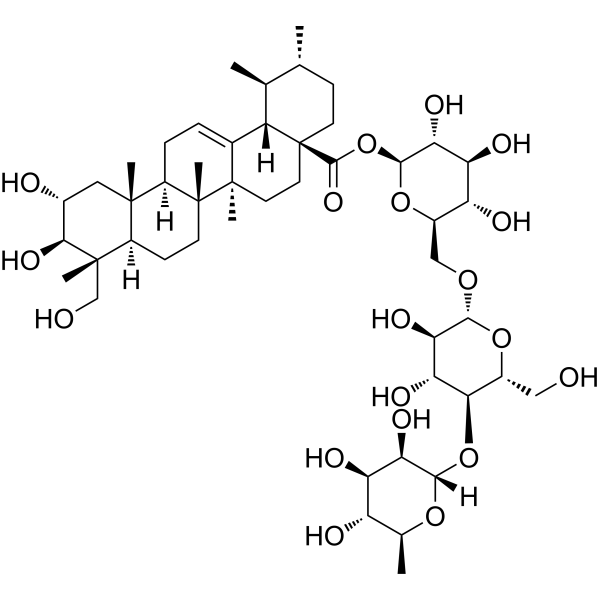
AsiaticosideTriterpene Glycoside -
HY-B0673
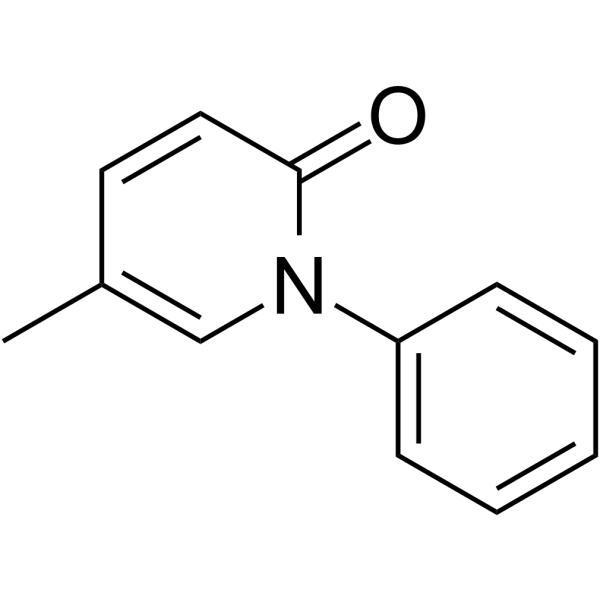
PirfenidoneAntifibrotic Agent -
HY-N1584
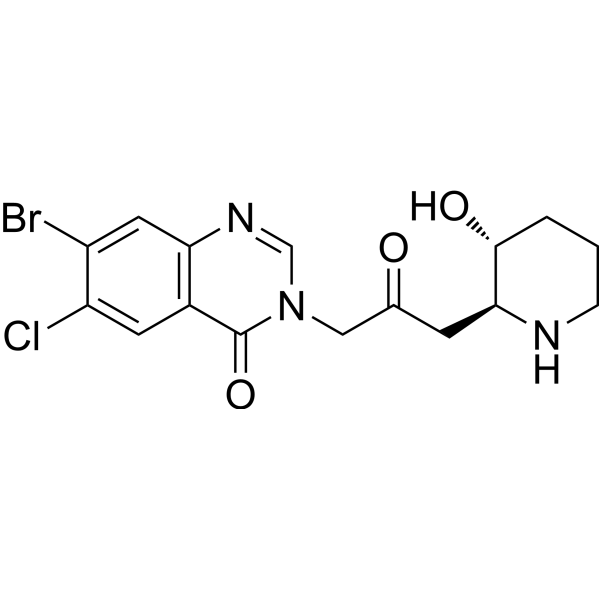
HalofuginoneNatural Product -
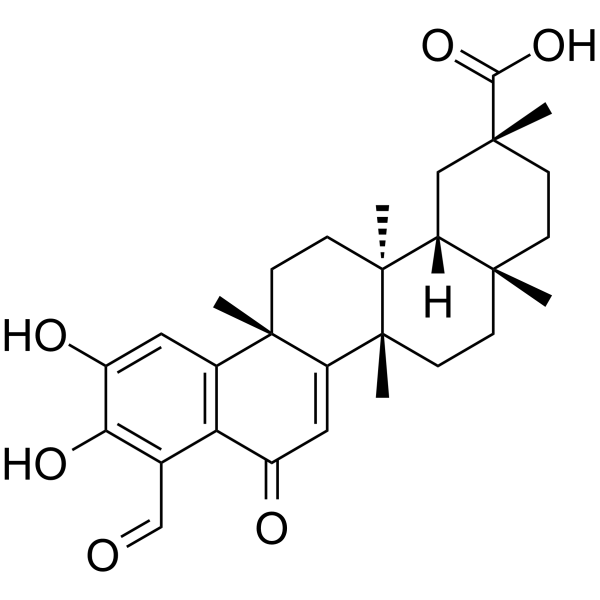
HY-N0587
DemethylzeylasteralApoptosis Inducer -

HY-N6896R
Isoviolanthin (Standard)Standard Of Isoviolanthin -

HY-B0673R
Pirfenidone (Standard)Antifibrotic Agent -
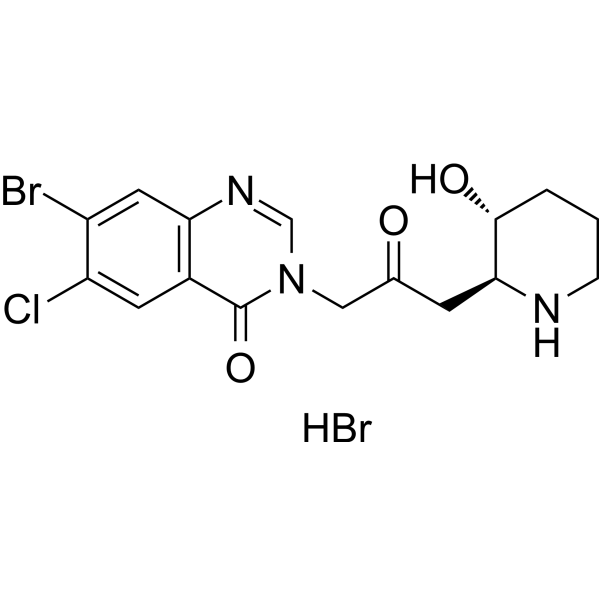
HY-N1584A
Halofuginone hydrobromideNatural Product -
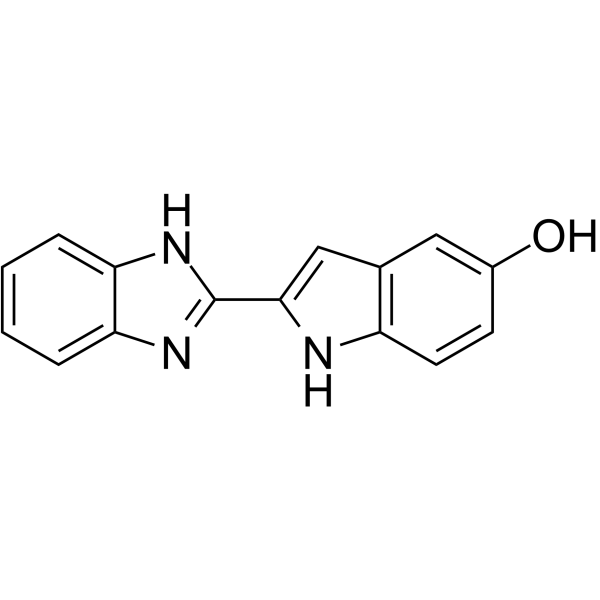
HY-150795
SY-LB-35BMP Receptor Agonist -
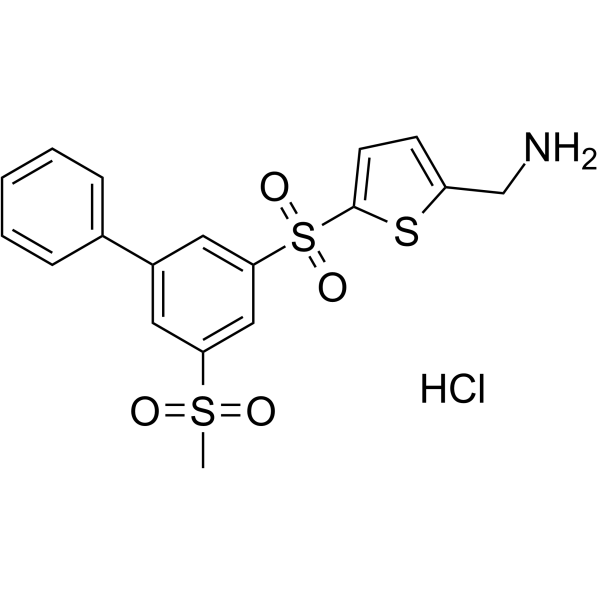
HY-124674A
CCT365623 hydrochlorideLysyl Oxidase Inhibitor -

HY-N1584R
Halofuginone (Standard)Reference Standard -

HY-N0587R
Demethylzeylasteral (Standard)Apoptosis Inducer -

HY-N1584AR
Halofuginone hydrobromide (Standard)Reference Standard
Publications Citing Use of MedChemExpress (MCE) Isoviolanthin
More

Biological Activity
Description
|
MMP-9 |
MMP-2 |
In Vitro
Isoviolanthin (2.5-10 μM; 24 h) reverses TGF-β1-mediated epithelial-mesenchymal transition in hepatocellular carcinoma cells via deactivating the TGF-β/Smad and PI3K/Akt/mTOR signaling pathways[1].
Isomeranzin (0.1-10 μM) can protect skin keratinocytes (HaCaT) from Hydrogen peroxide-induced damage[2].
Isomeranzin (2.5-100 μM; 72 h) plays a positive role in enhancing Schwann cells' activity via increasing Fhl3 expression[3].
MedChemExpress (MCE) has not independently confirmed the accuracy of these methods. They are for reference only.
-
Cell Line:HCC cells (HepG2 and Bel-7402) pretreated with TGF-β1
-
Concentration:2.5 µM, 5 µM, and 10 µM
-
Incubation Time:24 h
-
Result:Inhibited the TGF-β1-induced migration of HCC cells in a dose-dependent manner.
-
Cell Line:HCC cells (HepG2 and Bel-7402) pretreated with TGF-β1
-
Concentration:2.5 µM, 5 µM, and 10 µM
-
Incubation Time:24 h
-
Result:Inhibited the TGF-β1-induced invasion of HCC cells in a dose-dependent manner.


Chemical Information
-
CAS No. 40788-84-9
-
Appearance Solid
-
Molecular Weight 578.52
-
Formula C27H30O14
-
Color Light yellow to yellow
-
SMILES
OC1=C([C@H]2[C@@H]([C@@H]([C@@H](O)[C@H](C)O2)O)O)C(O)=C(C(C=C(C3=CC=C(O)C=C3)O4)=O)C4=C1[C@@H]5O[C@@H]([C@@H](O)[C@H](O)[C@H]5O)CO
-
Structure Classification
-
Initial Source
-
Shipping
Room temperature in continental US; may vary elsewhere.
-
Storage
4°C, protect from light
* In solvent : -80°C, 6 months; -20°C, 1 month (protect from light)


Publications (1)
-
Journal Impact Factor
-
Most Recent
-
Exp Eye Res
DAPL1 inhibits epithelial-mesenchymal transition of retinal pigment epithelial cells by regulating the TGF-β/MITF pathway. [Abstract]2025 Sep:258:110473. PMID: 40466854


Solvent & Solubility
In Vitro:
DMSO : 250 mg/mL (432.14 mM; Need ultrasonic; Hygroscopic DMSO has a significant impact on the solubility of product, please use newly opened DMSO)
Please refer to the solubility information to select the appropriate solvent. Once prepared, please aliquot and store the solution to prevent product inactivation from repeated freeze-thaw cycles.
Storage method and period of stock solution: -80°C, 6 months; -20°C, 1 month (protect from light). When stored at -80°C, please use it within 6 months. When stored at -20°C, please use it within 1 month.
Please refer to the solubility information to select the appropriate solvent. Once prepared, please aliquot and store the solution to prevent product inactivation from repeated freeze-thaw cycles.
Storage method and period of stock solution: -80°C, 6 months; -20°C, 1 month (protect from light). When stored at -80°C, please use it within 6 months. When stored at -20°C, please use it within 1 month.
Concentration (start) × Volume (start) = Concentration (final) × Volume (final)
In Vivo:
Select the appropriate dissolution method based on your experimental animal and administration route.
- For the following dissolution methods, please ensure to first prepare a clear stock solution using an In Vitro approach and then sequentially add co-solvents:
- To ensure reliable experimental results, the clarified stock solution can be appropriately stored based on storage conditions. As for the working solution for In Vivo experiments, it is recommended to prepare freshly and use it on the same day.
- The percentages shown for the solvents indicate their volumetric ratio in the final prepared solution. If precipitation or phase separation occurs during preparation, heat and/or sonication can be used to aid dissolution.
Add each solvent one by one: 10% DMSO 40% PEG300 5% Tween-80 45% Saline
Solubility: ≥ 2.08 mg/mL (3.60 mM); Clear solution
This protocol yields a clear solution of ≥ 2.08 mg/mL (saturation unknown).
Taking 1 mL working solution as an example, add 100 μL DMSO stock solution (20.8 mg/mL) to 400 μL PEG300, and mix evenly; then add 50 μL Tween-80 and mix evenly; then add 450 μL Saline to adjust the volume to 1 mL.
Preparation of Saline: Dissolve 0.9 g sodium chloride in ddH₂O and dilute to 100 mL to obtain a clear Saline solution.
Add each solvent one by one: 10% DMSO 90% (20% SBE-β-CD in Saline)
Solubility: ≥ 2.08 mg/mL (3.60 mM); Clear solution
This protocol yields a clear solution of ≥ 2.08 mg/mL (saturation unknown).
Taking 1 mL working solution as an example, add 100 μL DMSO stock solution (20.8 mg/mL) to 900 μL 20% SBE-β-CD in Saline, and mix evenly.
Preparation of 20% SBE-β-CD in Saline (4°C, storage for one week): 2 g SBE-β-CD powder is dissolved in 10 mL Saline, completely dissolve until clear.
In Vivo Dissolution Calculator
Please enter the basic information of animal experiments:
-
-
-
-
Recommended: Prepare an additional quantity of animals to account for potential losses during experiments.
Please enter your animal formula composition:
-
%DMSO +
Recommended: Keep the proportion of DMSO in working solution below 2% if your animal is weak.
-
%+
-
+%Tween-80 + +
-
%Saline +
The co-solvents required include: DMSO, . All of co-solvents are available by MedChemExpress (MCE). , Tween 80. All of co-solvents are available by MedChemExpress (MCE).
Working solution concentration: 0.22 mg/mL
Method for preparing stock solution: mg drug dissolved in μL DMSO. Stock solution concentration: mg/mL. * In solvent : -80°C, 6 months; -20°C, 1 month (protect from light)
1. Take μL DMSO stock solution;
2. Add μL .
μL , mix evenly;
3. Then add μL Tween 80, mix evenly;
4. Then add μL
Please ensure that the stock solution in the first step is dissolved to a clear state, and add co-solvents in sequence. You can use ultrasonic heating (ultrasonic cleaner, recommended frequency 20-40 kHz), vortexing, etc. to assist dissolution.


Purity & Documentation
-
Data Sheet (295 KB)
-
SDS (393 KB)
- English - EN (393 KB)
- Français - FR (393 KB)
- Deutsch - DE (393 KB)
- Norwegian - NO (393 KB)
- Español - ES (393 KB)
- Swedish - SV (393 KB)
- Italian - IT (393 KB)
- Korean - KR (393 KB)
- Portuguese - PT (393 KB)
-
Handling Instructions (2659 KB)
References
[1]. Xing S, et al. Isoviolanthin Extracted from Dendrobium officinale Reverses TGF-β1-Mediated Epithelial⁻Mesenchymal Transition in Hepatocellular Carcinoma Cells via Deactivating the TGF-β/Smad and PI3K/Akt/mTOR Signaling Pathways. Int J Mol Sci. 2018 May 23;19(6). [Content Brief]
[2]. Wang J, et al. Research on the resistance of isoviolanthin to hydrogen peroxide-triggered injury of skin keratinocytes based on Transcriptome sequencing and molecular docking. Medicine (Baltimore). 2023 Nov 24;102(47):e36119. [Content Brief]
[3]. Su Y, et al. Isoviolanthin promotes Schwann cells activity in peripheral nerve regeneration via Fhl3-mediated epithelial-mesenchymal transition-like process: An in vitro study. Heliyon. 2024 Dec 12;11(1):e41087. [Content Brief]


Complete Stock Solution Preparation Table
Please refer to the solubility information to select the appropriate solvent. Once prepared, please aliquot and store the solution to prevent product inactivation from repeated freeze-thaw cycles.
Storage method and period of stock solution: -80°C, 6 months; -20°C, 1 month (protect from light). When stored at -80°C, please use it within 6 months. When stored at -20°C, please use it within 1 month.
| Optional Solvent | Concentration Solvent Mass | 1 mg | 5 mg | 10 mg | 25 mg |
|---|---|---|---|---|---|
| DMSO | 1 mM | 1.7285 mL | 8.6427 mL | 17.2855 mL | 43.2137 mL |
| 5 mM | 0.3457 mL | 1.7285 mL | 3.4571 mL | 8.6427 mL | |
| 10 mM | 0.1729 mL | 0.8643 mL | 1.7285 mL | 4.3214 mL | |
| 15 mM | 0.1152 mL | 0.5762 mL | 1.1524 mL | 2.8809 mL | |
| 20 mM | 0.0864 mL | 0.4321 mL | 0.8643 mL | 2.1607 mL | |
| 25 mM | 0.0691 mL | 0.3457 mL | 0.6914 mL | 1.7285 mL | |
| 30 mM | 0.0576 mL | 0.2881 mL | 0.5762 mL | 1.4405 mL | |
| 40 mM | 0.0432 mL | 0.2161 mL | 0.4321 mL | 1.0803 mL | |
| 50 mM | 0.0346 mL | 0.1729 mL | 0.3457 mL | 0.8643 mL | |
| 60 mM | 0.0288 mL | 0.1440 mL | 0.2881 mL | 0.7202 mL | |
| 80 mM | 0.0216 mL | 0.1080 mL | 0.2161 mL | 0.5402 mL | |
| 100 mM | 0.0173 mL | 0.0864 mL | 0.1729 mL | 0.4321 mL |


Isoviolanthin Related Classifications
HY-N6896 Related Classifications
 Powered by Bioz