



Daphnetin
Based on 10 publication(s) in Google Scholar
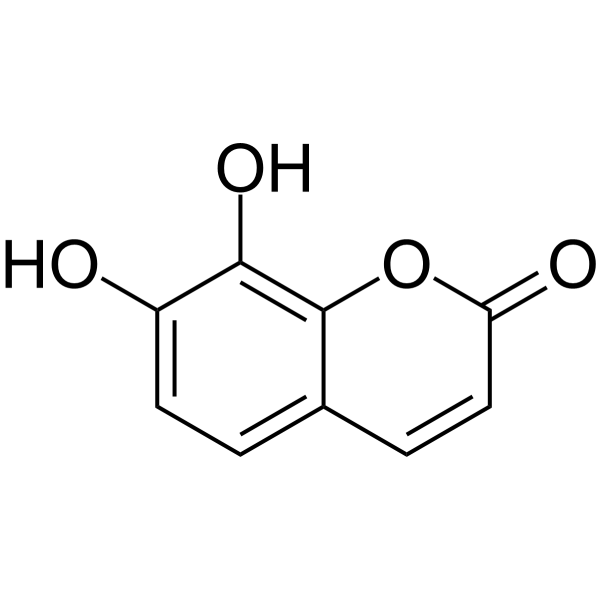
Daphnetin (7,8-dihydroxycoumarin), one coumarin derivative can be found in plants of the Genus Daphne, is a potent, oral active protein kinase inhibitor, with IC50s of 7.67 μM, 9.33 μM and 25.01 μM for EGFR, PKA and PKC in vitro, respectively. Daphnetin triggers ROS-induced cell apoptosis and induces cytoprotective autophagy by modulating the AMPK/Akt/mTOR pathway. Daphnetin has anti-inflammation activitity and inhibits TNF-α, IL-1β, ROS, and MDA production. Daphnetin has schizontocidal activity against malaria parasites. Daphnetin can be used for rheumatoid arthritis , cancer and anti-malarian research.
For research use only. We do not sell to patients.
- Purity : 99.77%
- CAS No.: 486-35-1
- Formula: C9H6O4
- Molecular Weight:178.14
-
Storage:Powder -20°C, 3 years , 4°C, 2 years ; In solvent -80°C, 6 months , -20°C, 1 month

To place orders, for customer services and technical support, please contact: MedChemExpress USA
Tel: 609-228-6898 E-mail: [email protected] [email protected]


-
 Biological Activity
-
Chemical Information
-
Solvent & Solubility
- Protocols
- Purity & Documentation
- References
-
 Help & FAQs


-
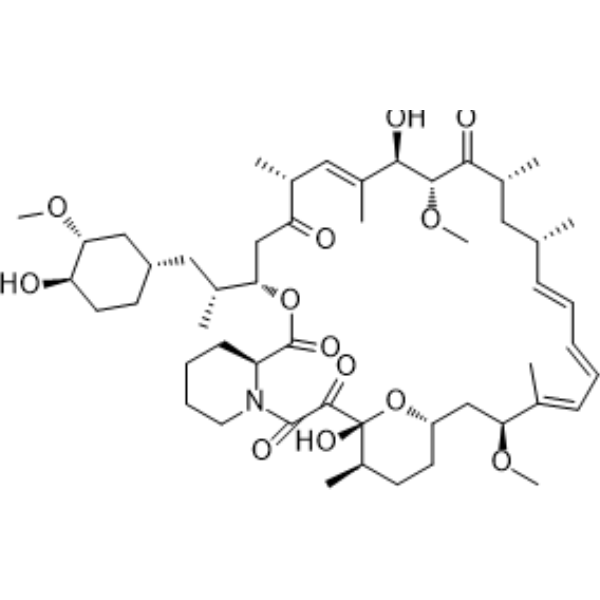
HY-10219
RapamycinmTOR Inhibitor -
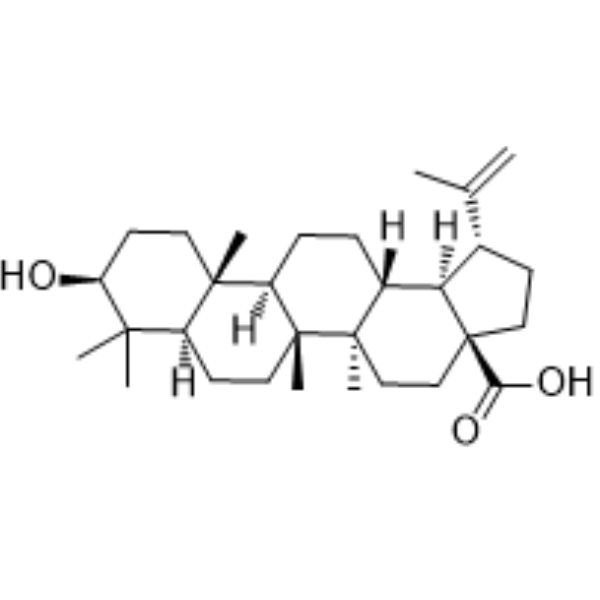
HY-10529
Betulinic acidApoptosis Inducer -
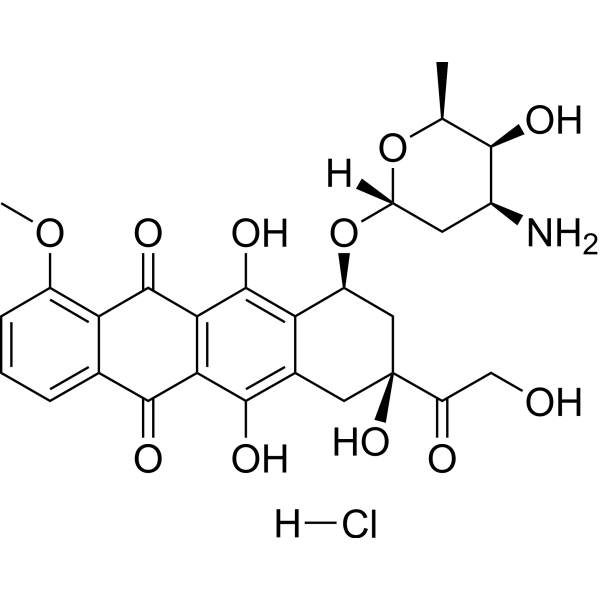
HY-15142
Doxorubicin hydrochlorideTopoisomerase Inhibitor -
HY-N0005
Curcuminp300 Histone Acetylatransferase Inhibitor -
HY-13753
StreptozotocinDiabetes Modeling Agent -
HY-N0102
IsoliquiritigeninAutophagy Inducer -
HY-B0579
Cyclosporin ACalcineurin Inhibitor -
HY-13867
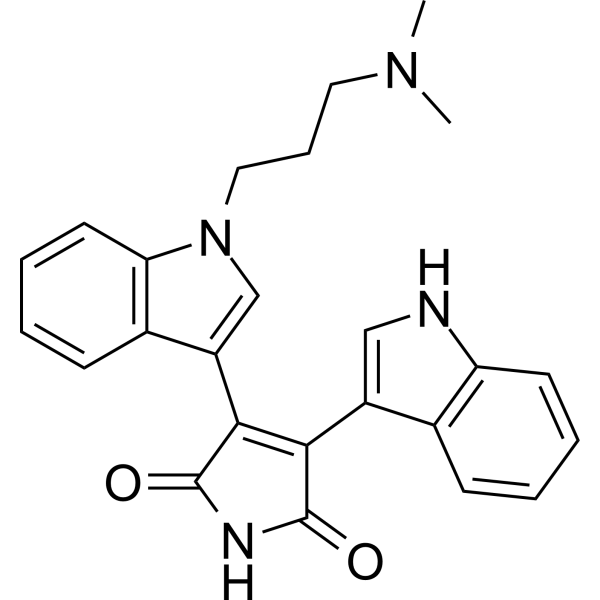
Bisindolylmaleimide IPKC Inhibitor -
HY-N1366
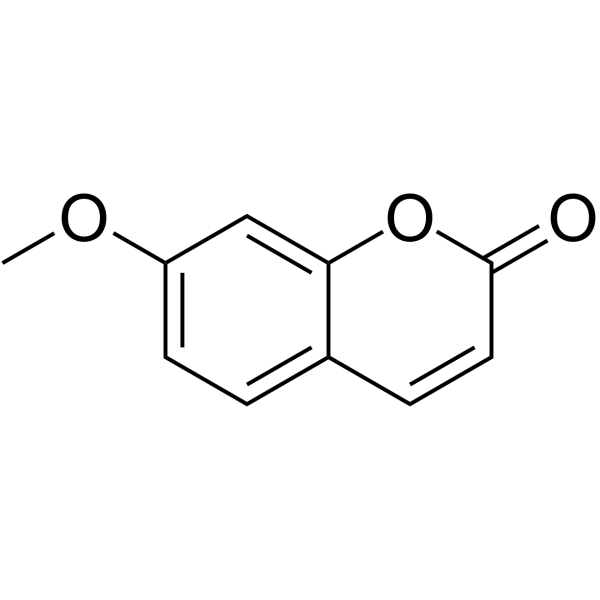
HerniarinAnticancer Agent -
HY-N1365
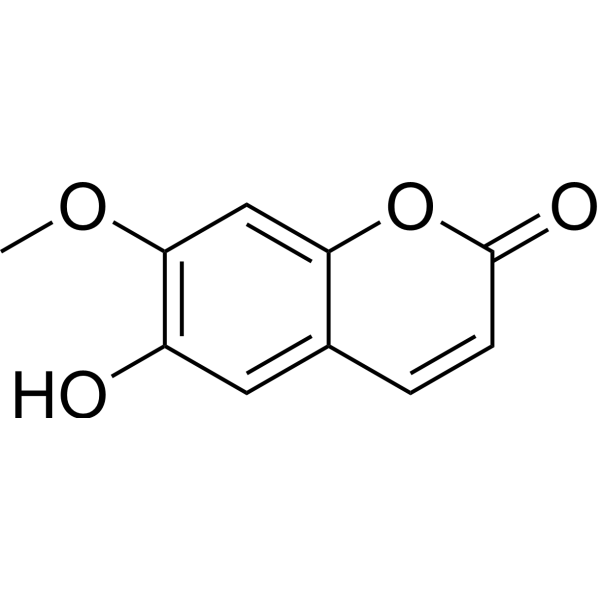
IsoscopoletinHBV Inhibitor -
HY-101053
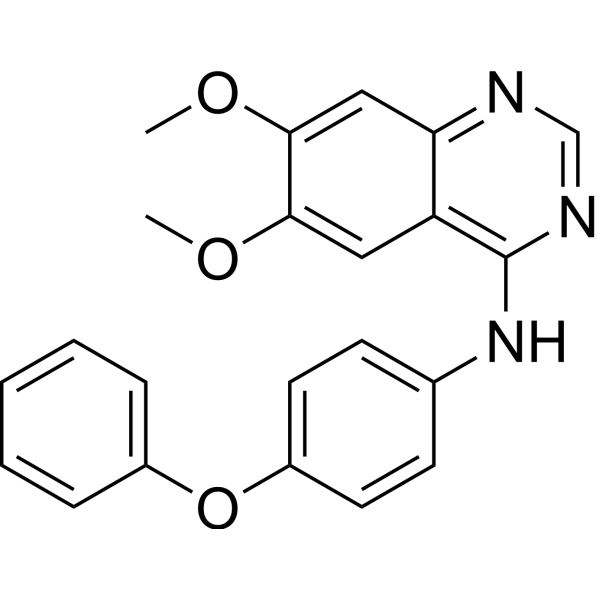
Src Inhibitor 1Src Inhibitor
Publications Citing Use of MedChemExpress (MCE) Daphnetin
More- Phytomedicine. 2026 Sep:159:158517.
- Int Immunopharmacol. 2026 Jun 17:185:116986. [Abstract]
- Int Immunopharmacol. 2024 May 30:133:112004. [Abstract]
- Biol Res. 2025 Dec 29;58(1):77. [Abstract]
- Am J Pathol. 2022 Dec;192(12):1725-1744. [Abstract]
- Rheumatology (Oxford). 2025 Aug 13:keaf437. [Abstract]
- J Cell Commun Signal. 2025 Apr 28;19(2):e70011. [Abstract]
- Pharmacology. 2021;106(7-8):369-383. [Abstract]
- Histol Histopathol. 2025 Sep 3:18978. [Abstract]
- In Vitro Cell Dev Biol Anim. 2026 Jul 24.
 Customer Validation & Images

-
In Vivo Efficacy Study

-
Histological Imaging/Staining

-
IHC

-
Flow Cytometry

-
Cell Proliferation/Viability Assay

All EGFR Isoforms
MoreAll AMPK Isoforms
MoreAll Caspase Isoforms
MoreAll Parasite Isoforms
More

Biological Activity
Description
IC50 & Target
[4]|
EGFR 7.67 μM (IC50) |
Plasmodium |
PKA 9.33 μM (IC50) |
PKC 25.01 μM (IC50) |
Cellular Effect
|
Cell Line

|
Type | Value | Description | References |
|---|---|---|---|---|
| MCF7 | IC50 |
73 μM
Compound: Daphnetin
|
Antiproliferative activity against human MCF7 cells measured after 72 hrs by MTT assay
Antiproliferative activity against human MCF7 cells measured after 72 hrs by MTT assay
|
[PMID: 38340509] |
| U-937 | CC50 |
120.2 μM
Compound: 20
|
Cytotoxicity against human U937 cells assessed as decrease in cell viability after 48 hrs
Cytotoxicity against human U937 cells assessed as decrease in cell viability after 48 hrs
|
[PMID: 26188907] |
| U-937 | IC50 |
83.2 μM
Compound: 20
|
Antiproliferative activity against human U937 cells after 3 days
Antiproliferative activity against human U937 cells after 3 days
|
[PMID: 26188907] |
In Vitro
Daphnetin (7,8-dihydroxycoumarin) (0-40 μg/mL; 24-48 hours) inhibits the proliferation of ovarian cancer cells[1].
Daphnetin (7,8-dihydroxycoumarin) (0-40 μg/mL; 24 hours; A2780 cells) induces apoptosis and increases ROS production in a dose-dependent manner[1].
Daphnetin (7,8-dihydroxycoumarin) (0-40 μg/mL; 24 hours; A2780 cells) induces autophagy through modulation of the AMPK/Akt/mTOR pathway[1].
Daphnetin (7,8-dihydroxycoumarin) (1-10 μM; plasmodium falciparum) exhibits schizontocidal activity in a dose-dependent manner[3].
MedChemExpress (MCE) has not independently confirmed the accuracy of these methods. They are for reference only.
-
Cell Line:IOSE8C, A2780, SKOV3 and OVCAR8 cells
-
Concentration:0, 5, 10, 20 and 40 µg/mL
-
Incubation Time:24 h and 48 hours
-
Result:Inhibited growth in ovarian cancer cells but not in normal cells.
-
Cell Line:A2780 and SKOV3 cells
-
Concentration:0, 10, 20 and 40 µg/mL
-
Incubation Time:24 hours
-
Result:Increased apoptosis in a dose-dependent manner in A2780 and SKOV3 cells.
-
Cell Line:A2780 and SKOV3 cells
-
Concentration:0, 10, 20 and 40 µg/mL
-
Incubation Time:24 hours
-
Result:Increased proapoptotic protein (Caspase 3, Bax, and PARP) expression but decreased antiapoptotic protein (Bcl2) expression.
-
Cell Line:A2780 cells
-
Concentration:0, 10, 20 and 40 µg/mL
-
Incubation Time:24 hours
-
Result:Increased LC3 II and p62 expression in a dose-dependent manner and reduced the expression levels of p-Akt, p-mTOR, but increased the expression level of p-AMPK.
In Vivo
Daphnetin (7,8-dihydroxycoumarin) (2.5-10 mg/kg; i.p.; daily; for three days; C57BL/6 mice) inhibits cisplatin-induced inflammation, decreases TNF-α, IL-1β, ROS and MDA production in a dose-dependent manner in kidney tissues. Daphnetin inhibits cisplatin-induced NF-κB activation and up-regulated Nrf2 and HO-1[2].
Daphnetin (7,8-dihydroxycoumarin) (10-100 mg/kg; i.g. and i.p.; every four days, for 30 days; male Kunming outbred strain mice) displays certain schizontocidal activity in vivo[3].
MedChemExpress (MCE) has not independently confirmed the accuracy of these methods. They are for reference only.
-
Animal Model:BALB/c nude mice[1]
-
Dosage:30 mg/kg
-
Administration:Intraperitoneal injection; Daily; for 12 days
-
Result:Decreased tumor volume and weight in a xenograft animal model.
-
Animal Model:Male Kunming outbred strain mice[3]
-
Dosage:10, 50 or 100 mg/kg
-
Administration:Oral gavage and intraperitoneal injection; every four days, for 30 days
-
Result:Reduced the number of parasites in mice.
- Collagen-Induced Arthritis
- Detection of Apoptosis
- TUNEL staining for apoptotic DNA fragmentation
- Annexin V plus membrane-impermeant dye apoptosis staining
- ROS/oxidative-stress fluorescent staining
- Autophagy
- Apoptosis Solutions
- Lysosome and acidic-vesicle live-cell staining
- Research Protocol for Inflammation-related Diseases
- Macroautophagy Solutions
- Pyroptosis Solutions
Clinical Trial
| NCT Number | Sponsor | Condition | Start Date |
Phase
|
|---|---|---|---|---|
| NCT01329991 | Plexxikon| | 2011-05 | PHASE1 |


Chemical Information
-
CAS No. 486-35-1
-
Appearance Solid
-
Molecular Weight 178.14
-
Formula C9H6O4
-
Color Off-white to yellow
-
SMILES
O=C1C=CC2=CC=C(O)C(O)=C2O1
-
Synonyms
7,8-Dihydroxycoumarin
-
Structure Classification
-
Initial Source
-
Shipping
Room temperature in continental US; may vary elsewhere.
-
Storage
Powder -20°C 3 years 4°C 2 years In solvent -80°C 6 months -20°C 1 month


Publications (10)
-
Journal Impact Factor
-
Most Recent
-
-
Int Immunopharmacol
Daphnetin alleviates neuropathic pain in rats by modulating spinal microglial polarization via the Nrf2/NLRP3 inflammasome pathway. [Abstract]2026 Jun 17:185:116986. PMID: 42308799
Daphnetin purchased from MedChemExpress. Usage Cited in: Int Immunopharmacol. 2026 Jun 17:185:116986. [Abstract]
Representative images showing the embryo resorption sites of URSA mice treated with NS or Daphnetin (1, 10, 20 mg/kg, i.g.) at different doses on the 13th day of pregnancy.
Daphnetin purchased from MedChemExpress. Usage Cited in: Int Immunopharmacol. 2026 Jun 17:185:116986. [Abstract]
Morphologic changes (the black arrow indicates the site of hemorrhage, while the green arrow indicates the area of necrosis) in decidual tissues of URSA mice treated with NS or Daphnetin (10 mg/kg, i.g.) were assessed by HE staining.
Daphnetin purchased from MedChemExpress. Usage Cited in: Int Immunopharmacol. 2026 Jun 17:185:116986. [Abstract]
Positive cells of IGFBP-1 and PRL in decidual tissues of mice were detected by immunohistochemistry treated with Daphnetin (10 mg/kg, i.g.).
Daphnetin purchased from MedChemExpress. Usage Cited in: Int Immunopharmacol. 2026 Jun 17:185:116986. [Abstract]
Treg and Th17 cell populations in the spleens of mice were analyzed using flow cytometry treated with Daphnetin (10 mg/kg, i.g.).
Daphnetin purchased from MedChemExpress. Usage Cited in: Int Immunopharmacol. 2026 Jun 17:185:116986. [Abstract]
Effect of different concentrations of Daphnetin (0, 5, 0, 20, 40, 80 μM) for 48 h on CD4+ T cell viability using the CCK-8 assay.

Daphnetin purchased from MedChemExpress. Usage Cited in: Int Immunopharmacol. 2026 Jun 17:185:116986. [Abstract]
Detection of mRNA expression of FoxP3 and RORγt in CD4+ T cells by RT-qPCR treated with Daphnetin (20 μM).

Daphnetin purchased from MedChemExpress. Usage Cited in: Int Immunopharmacol. 2026 Jun 17:185:116986. [Abstract]
The residual intracellular NR4A1 protein expression in CD4+ T cells with 20 μM Daphnetin and 10 μg/mL CHX for varying durations was measured using Western blot analysis.
-
Int Immunopharmacol
Daphnetin alleviates silica-induced pulmonary inflammation and fibrosis by regulating the PI3K/AKT1 signaling pathway in mice. [Abstract]2024 May 30:133:112004. PMID: 38613881 -
Biol Res
Daphnetin alleviates unexplained recurrent spontaneous abortion by regulating the NR4A1/BACH2 axis in mice. [Abstract]2025 Dec 29;58(1):77. PMID: 41462398 -
Am J Pathol
α-Subunit Tyrosine Phosphorylation Is Required for Activation of the Large Conductance Ca2+-Activated Potassium Channel in the Rabbit Sphincter of Oddi. [Abstract]2022 Dec;192(12):1725-1744. PMID: 36150507 -
Rheumatology (Oxford)
Autophagy inhibitors block pathogenic NET release in immune-mediated inflammatory disease without impairing host defence. [Abstract]2025 Aug 13:keaf437. PMID: 40802538 -
J Cell Commun Signal
Daphnetin alleviates inflammation and promotes autophagy via the AMPK/mTOR pathway in gouty arthritis. [Abstract]2025 Apr 28;19(2):e70011. PMID: 40304008 -
Pharmacology
Daphnetin Preconditioning Decreases Cardiac Injury and Susceptibility to Ventricular Arrhythmia following Ischaemia-Reperfusion through the TLR4/MyD88/NF-Κb Signalling Pathway. [Abstract]2021;106(7-8):369-383. PMID: 33902056 -
Histol Histopathol
Daphnetin alleviates renal inflammation, oxidative stress, and apoptosis in septic rats via the JAK2/STAT3 signaling pathway. [Abstract]2025 Sep 3:18978. PMID: 40899121 -


Solvent & Solubility
In Vitro:
DMSO : 50 mg/mL (280.68 mM; Need ultrasonic; Hygroscopic DMSO has a significant impact on the solubility of product, please use newly opened DMSO)
H2O : < 0.1 mg/mL (insoluble)
Please refer to the solubility information to select the appropriate solvent. Once prepared, please aliquot and store the solution to prevent product inactivation from repeated freeze-thaw cycles.
Storage method and period of stock solution: -80°C, 6 months; -20°C, 1 month. When stored at -80°C, please use it within 6 months. When stored at -20°C, please use it within 1 month.
Please refer to the solubility information to select the appropriate solvent. Once prepared, please aliquot and store the solution to prevent product inactivation from repeated freeze-thaw cycles.
Storage method and period of stock solution: -80°C, 6 months; -20°C, 1 month. When stored at -80°C, please use it within 6 months. When stored at -20°C, please use it within 1 month.
Concentration (start) × Volume (start) = Concentration (final) × Volume (final)
In Vivo:
Select the appropriate dissolution method based on your experimental animal and administration route.
- For the following dissolution methods, please ensure to first prepare a clear stock solution using an In Vitro approach and then sequentially add co-solvents:
- To ensure reliable experimental results, the clarified stock solution can be appropriately stored based on storage conditions. As for the working solution for In Vivo experiments, it is recommended to prepare freshly and use it on the same day.
- The percentages shown for the solvents indicate their volumetric ratio in the final prepared solution. If precipitation or phase separation occurs during preparation, heat and/or sonication can be used to aid dissolution.
Add each solvent one by one: 10% DMSO 40% PEG300 5% Tween-80 45% Saline
Solubility: ≥ 2.5 mg/mL (14.03 mM); Clear solution
This protocol yields a clear solution of ≥ 2.5 mg/mL (saturation unknown).
Taking 1 mL working solution as an example, add 100 μL DMSO stock solution (25.0 mg/mL) to 400 μL PEG300, and mix evenly; then add 50 μL Tween-80 and mix evenly; then add 450 μL Saline to adjust the volume to 1 mL.
Preparation of Saline: Dissolve 0.9 g sodium chloride in ddH₂O and dilute to 100 mL to obtain a clear Saline solution.
Add each solvent one by one: 10% DMSO 90% (20% SBE-β-CD in Saline)
Solubility: ≥ 2.5 mg/mL (14.03 mM); Clear solution
This protocol yields a clear solution of ≥ 2.5 mg/mL (saturation unknown).
Taking 1 mL working solution as an example, add 100 μL DMSO stock solution (25.0 mg/mL) to 900 μL 20% SBE-β-CD in Saline, and mix evenly.
Preparation of 20% SBE-β-CD in Saline (4°C, storage for one week): 2 g SBE-β-CD powder is dissolved in 10 mL Saline, completely dissolve until clear.
For the following dissolution methods, please prepare the working solution directly:
It is recommended to prepare fresh solutions and use them promptly within a short period of time.
The percentages shown for the solvents indicate their volumetric ratio in the final prepared solution. If precipitation or phase separation occurs during preparation, heat and/or sonication can be used to aid dissolution.
Add each solvent one by one: 50% PEG300 50% Saline
Solubility: 25 mg/mL (140.34 mM); Suspended solution; Need ultrasonic
In Vivo Dissolution Calculator
Please enter the basic information of animal experiments:
-
-
-
-
Recommended: Prepare an additional quantity of animals to account for potential losses during experiments.
Please enter your animal formula composition:
-
%DMSO +
Recommended: Keep the proportion of DMSO in working solution below 2% if your animal is weak.
-
%+
-
+%Tween-80 + +
-
%Saline +
The co-solvents required include: DMSO, . All of co-solvents are available by MedChemExpress (MCE). , Tween 80. All of co-solvents are available by MedChemExpress (MCE).
Working solution concentration: 0.22 mg/mL
Method for preparing stock solution: mg drug dissolved in μL DMSO. Stock solution concentration: mg/mL.
1. Take μL DMSO stock solution;
2. Add μL .
μL , mix evenly;
3. Then add μL Tween 80, mix evenly;
4. Then add μL
Please ensure that the stock solution in the first step is dissolved to a clear state, and add co-solvents in sequence. You can use ultrasonic heating (ultrasonic cleaner, recommended frequency 20-40 kHz), vortexing, etc. to assist dissolution.


Purity & Documentation
-
Data Sheet (283 KB)
-
SDS (393 KB)
- English - EN (393 KB)
- Français - FR (393 KB)
- Deutsch - DE (393 KB)
- Norwegian - NO (393 KB)
- Español - ES (393 KB)
- Swedish - SV (393 KB)
- Italian - IT (393 KB)
- Korean - KR (393 KB)
- Portuguese - PT (393 KB)
-
Handling Instructions (2659 KB)
References
[1]. Fan X, et, al. Daphnetin triggers ROS-induced cell death and induces cytoprotective autophagy by modulating the AMPK/Akt/mTOR pathway in ovarian cancer. Phytomedicine. 2021 Feb;82:153465. [Content Brief]
[2]. Zhang L, et, al. Daphnetin protects against cisplatin-induced nephrotoxicity by inhibiting inflammatory and oxidative response. Int Immunopharmacol. 2018 Dec;65:402-407. [Content Brief]
[3]. Wang QM, et, al. The schizontocidal activity of daphnetin against malaria parasites in vitro and in vivo. Zhongguo Ji Sheng Chong Xue Yu Ji Sheng Chong Bing Za Zhi. 2000;18(4):204-6. [Content Brief]
[4]. Yang EB, Zhao YN, Zhang K, Mack P. Daphnetin, one of coumarin derivatives, is a protein kinase inhibitor. Biochem Biophys Res Commun. 1999 Jul 14;260(3):682-5. [Content Brief]


Complete Stock Solution Preparation Table
Please refer to the solubility information to select the appropriate solvent. Once prepared, please aliquot and store the solution to prevent product inactivation from repeated freeze-thaw cycles.
Storage method and period of stock solution: -80°C, 6 months; -20°C, 1 month. When stored at -80°C, please use it within 6 months. When stored at -20°C, please use it within 1 month.
| Optional Solvent | Concentration Solvent Mass | 1 mg | 5 mg | 10 mg | 25 mg |
|---|---|---|---|---|---|
| DMSO | 1 mM | 5.6136 mL | 28.0678 mL | 56.1356 mL | 140.3391 mL |
| 5 mM | 1.1227 mL | 5.6136 mL | 11.2271 mL | 28.0678 mL | |
| 10 mM | 0.5614 mL | 2.8068 mL | 5.6136 mL | 14.0339 mL | |
| 15 mM | 0.3742 mL | 1.8712 mL | 3.7424 mL | 9.3559 mL | |
| 20 mM | 0.2807 mL | 1.4034 mL | 2.8068 mL | 7.0170 mL | |
| 25 mM | 0.2245 mL | 1.1227 mL | 2.2454 mL | 5.6136 mL | |
| 30 mM | 0.1871 mL | 0.9356 mL | 1.8712 mL | 4.6780 mL | |
| 40 mM | 0.1403 mL | 0.7017 mL | 1.4034 mL | 3.5085 mL | |
| 50 mM | 0.1123 mL | 0.5614 mL | 1.1227 mL | 2.8068 mL | |
| 60 mM | 0.0936 mL | 0.4678 mL | 0.9356 mL | 2.3390 mL | |
| 80 mM | 0.0702 mL | 0.3508 mL | 0.7017 mL | 1.7542 mL | |
| 100 mM | 0.0561 mL | 0.2807 mL | 0.5614 mL | 1.4034 mL |


Daphnetin Related Classifications
HY-N0281 Related Classifications
 Powered by Bioz